- Product Description Description
- Table of Contents TOC
- List of Table & Figure LOT
- Get Free Sample PDF Sample PDF
Market Size, 2025
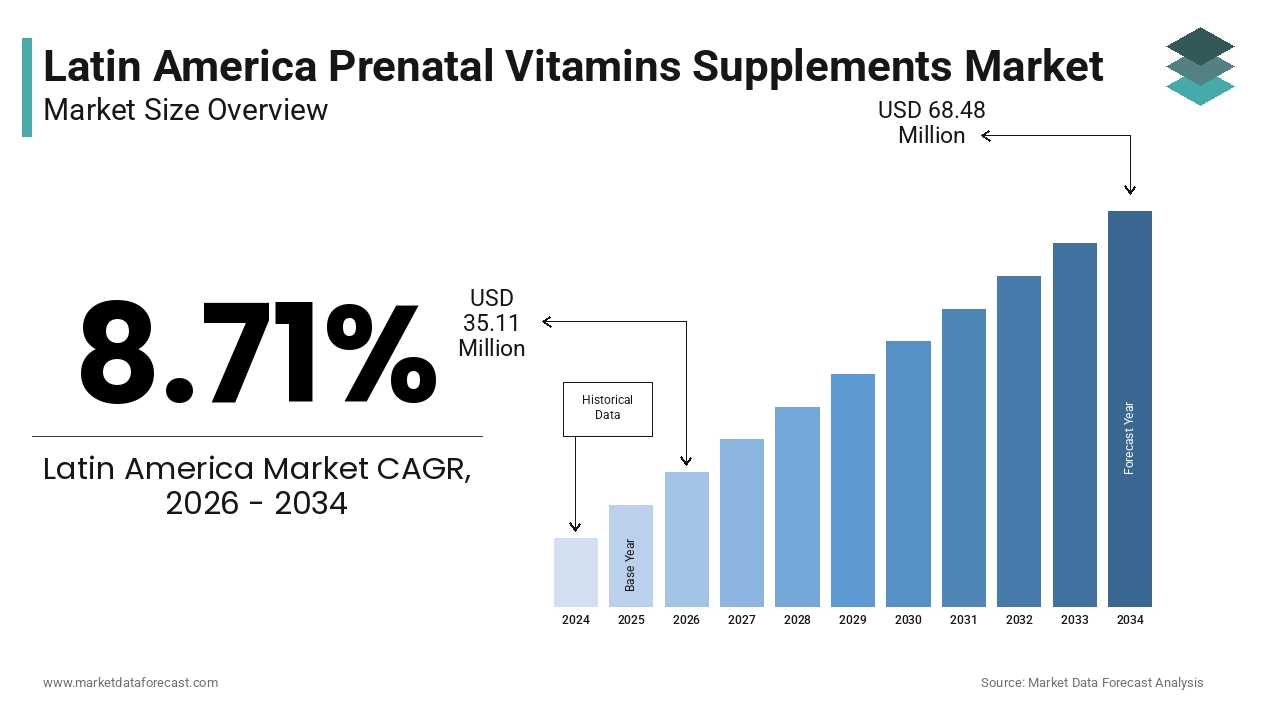
$32.30 MnMarket Estimate, 2026
$35.11 MnMarket Forecast, 2034
$68.48 MnCAGR, 2026–2034
8.71%Executive Summary: Latin America Prenatal Vitamins Supplements Market
- Market Scope: Comprehensive Latin America prenatal vitamins supplements market analysis covering product types, sales channels, country-level leadership frameworks, and key health drivers.
- Market Valuation: Valued at USD 32.30 million (2025), estimated at USD 35.11 million (2026), and projected to reach USD 68.48 million by 2034, registering a robust CAGR of 8.71% (2026–2034).
- Primary Growth Drivers: Growing health awareness among pregnant women regarding proper nutrition to reduce risks of birth defects, preterm birth, and low birth weight; rising income levels; and targeted promotional initiatives by market vendors.
Key Market Segment Metrics (2026–2034)
| Category | Leading Segment (2025 Position) | Fastest-Growing Segment |
|---|---|---|
| By Type | Folic Acid (held the largest market share, crucial for early fetal development and pre-conception care) | Essential Fatty Acids (expected to witness the highest growth rate driven by working women trends and product innovations) |
| By Sales Channel | Online Sales (accounted for the largest share due to wide variety, competitive price points, and discounts) | Retail Sales / Supermarkets & Hypermarkets (growing steadily as manufacturers target mass reach) |
| By Country | Brazil (leading market fueled by a large target population and continuous economic development) | Argentina and Mexico (experiencing lucrative growth through rising health awareness among upper-middle-income segments) |
Major Market Players & Market Structure
Market Structure: Competitive regional landscape featuring specialized nutritional and health product manufacturers competing on formulation quality, diverse distribution channels, and aggressive promotional strategies.
Key Companies: Church & Dwight Co. Inc., Country Life, Bayer AG, Garden of Life, Rainbow Light, Biotics Research Corporation, MegaFood, Pfizer Inc., Metagenics, Nutramark, New Chapter, Pharmavite, GlaxoSmithKline plc, and Twinlab.
 Download Free Sample Report
Latin America Prenatal Vitamins Supplements Market Size
The Latin America prenatal vitamins supplements market size was valued at USD 32.30 million in 2025 and is projected to reach USD 68.48 million by 2034 from USD 35.11 million in 2026, growing at a CAGR of 8.71%.
According to the Pan American Health Organization, approximately 10 million births occur annually in Latin America, creating a substantial baseline demand for essential micronutrient supplementation during gestation. This market is distinct due to significant disparities in access between private healthcare sectors and public distribution programs that influence product availability and formulation standards. According to the United Nations Children’s Fund, iron deficiency anemia affects nearly 30% of pregnant women in the region, which drives government-led fortification initiatives and over-the-counter supplement sales. The definition includes multivitamins containing folic acid, iron, calcium, and DHA tailored to address specific regional nutritional gaps identified by local health authorities. Regulatory frameworks vary significantly across countries, with some nations mandating free distribution through public clinics while others rely on commercial retail channels. Consumer behavior is increasingly influenced by digital health education and physician recommendations, which shape purchasing decisions toward clinically validated products rather than generic alternatives.
MARKET DRIVERS
Public Health Initiatives Addressing Micronutrient Deficiencies
Government-led public health initiatives addressing micronutrient deficiencies propel the Latin America prenatal vitamins supplements market expansion by establishing mandatory supplementation protocols in national prenatal care guidelines. According to the Pan American Health Organization, 28 countries in the region have implemented national policies requiring folic acid supplementation during the first trimester to prevent neural tube defects, which directly stimulates institutional procurement volumes. These programs create guaranteed demand streams for manufacturers who secure government contracts for large-scale supply tenders. According to the World Health Organization Regional Office for the Americas, antenatal care coverage reached 90% in 2024, ensuring that most pregnant women receive standardized nutritional guidance and supplements through public health facilities. This widespread integration of supplements into routine care normalizes their use and reduces stigma associated with pharmaceutical interventions during pregnancy. Manufacturers benefit from predictable volume requirements that enable efficient production planning and cost optimization. The alignment of commercial interests with public health objectives creates a sustainable ecosystem where market growth supports broader maternal health outcomes across underserved populations in rural and periurban areas.
Rising Maternal Health Awareness Through Digital Channels
Rising maternal health awareness through digital channels supports the Latin America prenatal vitamins supplements market growth by empowering consumers to make informed purchasing decisions based on scientific evidence rather than tradition alone. According to the Inter-American Development Bank, internet penetration in Latin America exceeded 75% in 2024, enabling widespread access to prenatal nutrition education through social media platforms and health applications. This digital connectivity allows expectant mothers to research ingredient profiles, read peer reviews, and compare product efficacy before visiting pharmacies or clinics. According to the United Nations Population Fund, mobile health initiatives targeting pregnant women have increased knowledge about essential nutrients by 40% in participating communities, leading to higher compliance rates with supplementation regimens. Educated consumers actively seek premium formulations containing bioavailable forms of iron and methylated folate, which drives product innovation and premiumization trends. Healthcare providers leverage these digital tools to reinforce clinical recommendations, creating a synergistic effect between professional advice and consumer self-education. This informed demand base supports market expansion beyond basic government-supplied products toward differentiated commercial offerings that address specific health concerns and preferences.
MARKET RESTRAINTS
Economic Volatility Limiting Out-of-Pocket Expenditure
Economic volatility limiting out-of-pocket expenditure severely hampers the Latin America prenatal vitamins supplements market growth by reducing disposable income available for non-subsidized nutritional products. According to the Economic Commission for Latin America and the Caribbean, inflation rates in several major economies exceeded 8% in 2024, eroding household purchasing power and forcing families to prioritize essential goods over premium supplements. This financial pressure causes many expectant mothers to discontinue commercial prenatal vitamins once free public supplies are exhausted or unavailable. According to the World Bank, poverty rates in the region remain above 30%, meaning a significant portion of the target population cannot afford consistent supplementation without external assistance. Price sensitivity forces retailers to stock lower-cost generic options with inferior bioavailability, which undermines health outcomes and brand loyalty. Manufacturers face margin compression as they attempt to maintain affordable price points amid rising raw material and logistics costs. Currency fluctuations further complicate import-dependent supply chains, making long-term pricing strategies difficult to sustain. This economic fragility creates an unstable demand environment where market growth correlates more with fiscal stability than demographic trends or health needs.
Regulatory Fragmentation across National Jurisdictions
Regulatory fragmentation across national jurisdictions further hinders the regional market expansion by creating complex compliance barriers that hinder regional scalability and product standardization. According to the Pan American Health Organization, each country maintains distinct registration requirements, labeling standards, and permissible ingredient levels for prenatal supplements, which necessitates separate product formulations and packaging for each market. This regulatory divergence increases development costs and delays time to market for multinational manufacturers seeking regional expansion. According to the Inter-American Network of Drug Regulatory Authorities, harmonization efforts have stalled on key technical specifications, leaving companies to navigate 30 different regulatory frameworks independently. Small and medium enterprises often lack resources to maintain multiple registrations, thereby limiting competition and innovation in smaller markets. Frequent regulatory changes require continuous monitoring and reformulation, which adds operational complexity and uncertainty. The absence of mutual recognition agreements means safety and efficacy data generated in one country cannot be leveraged elsewhere, forcing redundant testing expenditures. This bureaucratic maze discourages investment and perpetuates market fragmentation that prevents economies of scale from benefiting consumers through lower prices or improved product quality.
MARKET OPPORTUNITIES
Expansion of E-Commerce Platforms Reaching Underserved Areas
Expansion of e-commerce platforms reaching underserved areas is a notable opportunity for the Latin America prenatal vitamins supplements market by bypassing traditional distribution limitations in remote regions. According to the United Nations Conference on Trade and Development, e-commerce sales in Latin America grew by 20% annually in 2024 as logistics infrastructure improved and digital payment adoption accelerated among urban and rural populations. Online retailers can deliver specialized prenatal formulations directly to consumers in areas where pharmacy shelves carry only basic government-supplied options. According to the Inter-American Development Bank, digital health platforms integrating supplement subscriptions with telemedicine consultations have achieved 35% higher retention rates compared to standalone retail purchases. This integrated model ensures continuous adherence while providing personalized nutritional guidance that enhances perceived value. E-commerce enables brands to test niche products like vegan or allergen-free formulations without committing to expensive physical retail placement. Data analytics from online transactions reveal emerging consumer preferences faster than traditional market research, allowing agile product development. This digital channel democratizes access to premium nutrition while creating new revenue streams independent of constrained brick-and-mortar infrastructure.
Growing Demand for Personalized Nutrition Solutions
Growing demand for personalized nutrition solutions is another prominent opportunity for the Latin America prenatal vitamins supplements market as consumers seek tailored formulations based on individual health profiles and genetic markers. According to the Pan American Health Organization, noncommunicable disease risk factors among women of reproductive age have increased, prompting interest in precision nutrition approaches that address specific metabolic needs during pregnancy. According to the Journal of Nutrition, clinical studies conducted in Brazil demonstrate that genotype-guided folate supplementation improves biomarker outcomes by 25% compared to standard dosing protocols, validating the clinical utility of personalization. Diagnostic laboratories and wellness clinics are partnering with supplement manufacturers to offer bundled testing and customized product packages that command premium pricing. This convergence of diagnostics and therapeutics transforms prenatal vitamins from commodity products into high-value health services. Urban professionals with higher health literacy drive initial adoption, but decreasing testing costs are expanding accessibility to broader demographics. Brands investing in proprietary algorithms and flexible manufacturing capabilities can capture this emerging segment before commoditization occurs. Personalization also enhances adherence by aligning formulations with individual tolerances and preferences, which is reducing gastrointestinal side effects that commonly cause discontinuation.
MARKET CHALLENGES
Supply Chain Vulnerabilities Disrupting Product Availability
Supply chain vulnerabilities disrupting product availability challenge the Latin America prenatal vitamins supplements market expansion by creating inconsistent access to essential nutrients for vulnerable populations. According to the World Food Programme, logistics disruptions in Central America and the Caribbean increased lead times for imported pharmaceutical ingredients by 40% in 2024, causing stockouts at critical distribution points. Many countries depend heavily on imported active pharmaceutical ingredients from Asia and Europe, making them susceptible to global shipping delays and geopolitical tensions. According to the Pan American Health Organization, 60% of prenatal vitamin shortages reported in public health facilities during 2024 were attributed to supply chain failures rather than budget constraints. These interruptions force healthcare providers to ration supplies or substitute with suboptimal alternatives, compromising maternal health outcomes. Cold chain requirements for certain formulations add complexity in tropical climates where temperature excursions degrade product potency. Local manufacturing capacity remains insufficient to buffer against import disruptions due to limited domestic API production infrastructure. Manufacturers must maintain expensive safety stocks or diversify supplier bases, which increases working capital requirements and operational costs. This systemic fragility undermines consumer trust and hampers market growth despite strong underlying demand.
Misinformation and Cultural Beliefs Undermining Adherence
Misinformation and cultural beliefs undermining adherence further challenge the Latin America prenatal vitamins supplements market expansion by reducing compliance rates and the perceived necessity of scientifically formulated products. According to the Pan American Health Organization, surveys indicate that 35% of pregnant women in rural communities believe natural diets provide sufficient nutrition, rendering supplements unnecessary or potentially harmful. Traditional healers and family elders often discourage pharmaceutical interventions during pregnancy based on generational knowledge that conflicts with modern medical guidance. According to the United Nations Children’s Fund, misinformation spread through social media about synthetic vitamins causing adverse effects has contributed to a 15% decline in supplement uptake among young urban mothers in certain regions. Healthcare providers struggle to counter these narratives within brief consultation windows, limiting effective patient education. Cultural preferences for herbal remedies divert spending away from evidence-based prenatal formulations toward unregulated alternatives with variable safety profiles. Language barriers and low health literacy exacerbate misunderstandings about dosage timing and benefits. Addressing these deep-rooted beliefs requires sustained community engagement and culturally sensitive communication strategies that respect traditional practices while demonstrating supplement value. Until trust is rebuilt through credible messengers and relatable messaging, market potential will remain unrealized despite product availability and affordability improvements.
 REPORT COVERAGE
| REPORT METRIC | DETAILS |
| Market Size Available | 2025 to 2034 |
| Base Year | 2025 |
| Forecast Period | 2026 to 2034 |
| CAGR | 8.97% |
| Segments Covered | By Type, Sales Channel, and Region |
| Various Analyses Covered | Global, Regional, & Country Level Analysis; Segment-Level Analysis; DROC; PESTLE Analysis; Porter’s Five Forces Analysis; Competitive Landscape; Analyst Overview of Investment Opportunities |
| Regions Covered | Latin America include Brazil, Argentina, Mexico, and the Rest of Latin America |
| Market Leaders Profiled | Church & Dwight Co. Inc., Country Life, Bayer AG, Garden of Life, Rainbow Light, Biotics Research Corporation, MegaFood, Pfizer Inc., Metagenics, Nutramark, New Chapter, Pharmavite, GlaxoSmithKline plc, and Twinlab |
SEGMENTAL ANALYSIS
By Type Insights
The folic acid holds segment dominated the market by holding 46.4% of the regional market share in 2025 because it is the primary intervention mandated by national health ministries to prevent neural tube defects, holding 48.5% of share in 2025. According to the Pan American Health Organization, over 25 countries in the region have established mandatory folic acid fortification programs for staple foods and direct supplementation protocols for pregnant women attending public clinics. This regulatory mandate creates a guaranteed baseline demand that dwarfs voluntary consumption of other micronutrients. According to the World Health Organization Regional Office for the Americas, adherence to folic acid supplementation during the first trimester has increased to 70% in urban centers due to standardized antenatal care guidelines. The low cost and high efficacy of folic acid make it the most accessible supplement for low-income populations who rely on public health systems. Manufacturers benefit from large-volume government tenders that ensure consistent production schedules and revenue stability. The clinical consensus on its necessity eliminates consumer hesitation and educational barriers that plague other supplement categories. This universal acceptance ensures that folic acid remains the cornerstone of prenatal nutrition strategies across diverse socioeconomic groups in the region.
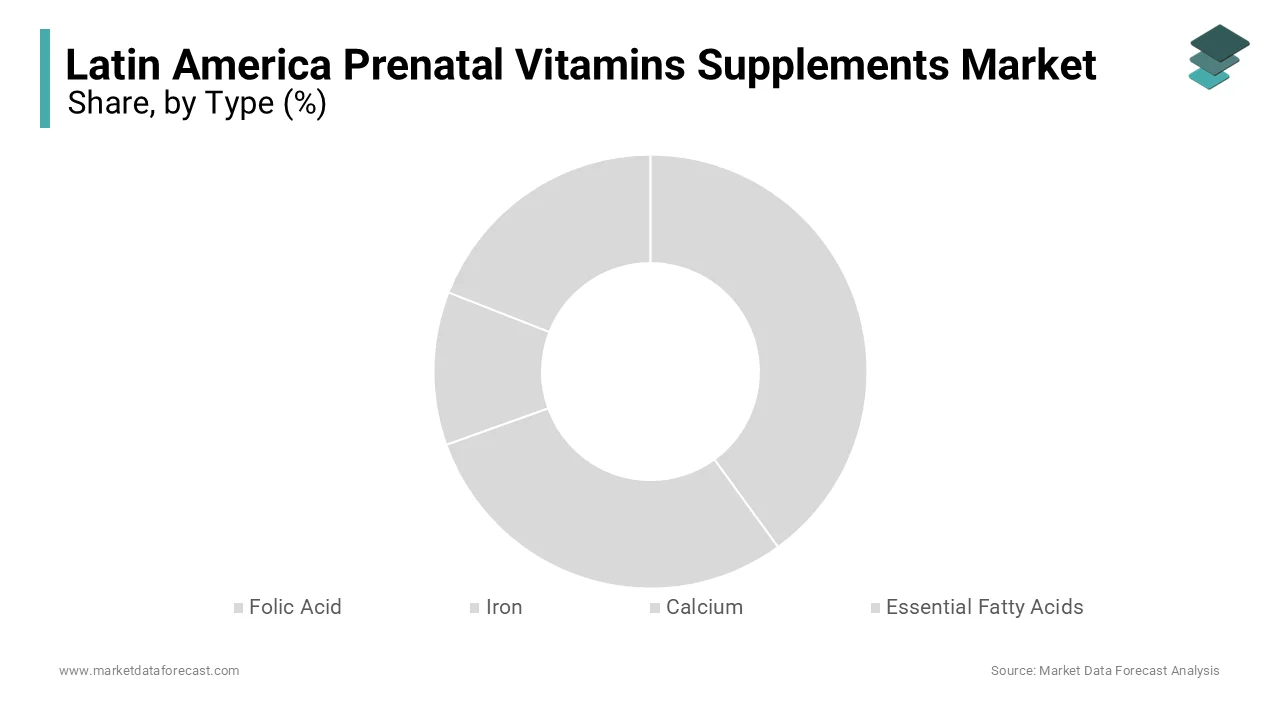
However, the essential fatty acids segment is anticipated to showcase the fastest CAGR of 10.1% over the forecast period owing to the increasing awareness of fetal brain development. According to the Latin American Society for Pediatric Gastroenterology, Hepatology and Nutrition, recent clinical guidelines have emphasized the role of docosahexaenoic acid in neurogenesis, leading to a surge in physician recommendations for DHA-rich supplements. This scientific endorsement transforms essential fatty acids from optional additives into critical components of prenatal care protocols. According to the National Institute of Medical Sciences and Nutrition in Mexico, research indicates that maternal DHA levels correlate directly with improved cognitive scores in infants at age two, which motivates health-conscious parents to invest in premium formulations. The rising number of educated urban mothers who actively seek evidence-based nutrition solutions accelerates adoption rates beyond traditional multivitamin offerings. Marketing campaigns highlighting long-term intellectual benefits resonate strongly with middle-class families aspiring to provide competitive advantages for their children. This shift in consumer mindset from basic survival to optimal development drives robust growth in this specialized segment.
By Sales Channel Insights
The retail sales segment held the leading position in the Latin America prenatal vitamins supplements market by capturing 61.5% of the regional market share in 2025 because established pharmacy networks provide immediate access and professional guidance to consumers across urban and semi-urban areas. According to the International Pharmaceutical Federation, the density of community pharmacies in countries like Brazil and Argentina exceeds 1 per 2000 inhabitants, creating convenient touchpoints for prenatal product purchases. Pharmacists often serve as trusted advisors who recommend specific brands based on patient needs and insurance coverage, facilitating informed decision-making. According to the Pan American Health Organization, over 60% of prenatal supplement acquisitions occur through physical retail channels where consumers can verify product authenticity and check expiration dates personally. The tactile nature of retail shopping allows expectant mothers to inspect packaging and read labels carefully, which builds confidence in product safety. Major retail chains negotiate bulk purchasing agreements with manufacturers, ensuring consistent stock availability and competitive pricing. This widespread infrastructure supports high-volume transactions and serves as the primary distribution arm for both generic and branded products. The reliability of retail supply chains makes it the default choice for most consumers despite the emergence of digital alternatives.
On the other end, the online sales segment is predicted to register a CAGR of 15.2% over the forecast period in the Latin American market due to the seamless integration with digital health platforms. According to the Inter-American Development Bank, telemedicine consultations have increased by 50% in the region, allowing doctors to prescribe supplements digitally with direct home delivery options. This integrated workflow removes friction from the purchasing process and ensures timely adherence to medical advice. According to the E-Commerce Foundation of Latin America, mobile commerce accounts for 60% of online health product sales, reflecting the convenience of ordering via smartphones during daily routines. Subscription models offered by online retailers automate replenishment cycles, reducing the risk of missed doses and enhancing customer retention. Digital platforms provide extensive product comparisons and user reviews, which empower consumers to make informed choices beyond local pharmacy limitations. The ability to access niche or imported brands not available in physical stores attracts discerning buyers seeking specific formulations. This digital convenience coupled with personalized health tracking features drives rapid adoption among tech-savvy expectant mothers.
REGIONAL ANALYSIS
Brazil Market Analysis
Brazil led the market by accounting for 40.5% of the Latin American market share in 2025 and is poised to experience steady expansion and strengthen its leadership in maternal healthcare innovation over the next few years. According to the Brazilian Ministry of Health, the national prenatal care protocol mandates free distribution of folic acid and iron supplements to all registered pregnant women, covering over 2 million births annually. This massive public program establishes a strong foundation for supplement usage while the private sector drives demand for premium multivitamins containing DHA and probiotics. According to the Brazilian Association of Dietary Food Industries, the private supplement market grew by 8% in 2024, driven by rising disposable income and health consciousness among urban middle-class families. Major pharmaceutical companies invest heavily in marketing campaigns targeting expectant mothers through digital channels and obstetrician partnerships. The country’s large population and high birth rate create substantial volume opportunities for both domestic and international manufacturers. Regulatory oversight by ANVISA ensures product quality and safety, fostering consumer trust in branded supplements. The dual system of public provision and private consumption creates a dynamic market with diverse price points and product offerings.
Mexico Market Analysis
Mexico is expected to maintain robust growth driven by expanding domestic manufacturing and increased health education over the next few years. Mexico occupies a significant position in the Latin America prenatal vitamins supplements market driven by strong manufacturing capabilities and growing health awareness. According to the Mexican Social Security Institute, prenatal care coverage has expanded to include nutritional counselling and supplement prescriptions for millions of beneficiaries, enhancing adherence rates. The country serves as a production hub for many global supplement brands due to favorable trade agreements and skilled labor forces. According to the National Institute of Public Health, studies show that awareness of folic acid benefits has reached 80% among urban women, leading to higher preconception supplementation rates. Private retail chains compete aggressively on price and variety, offering extensive selections of imported and local brands. The rise of e-commerce platforms has further democratized access to premium products in smaller cities where physical specialty stores are scarce. Government initiatives to reduce maternal mortality reinforce the importance of prenatal nutrition, creating a supportive policy environment. Cultural emphasis on family well-being supports consistent demand for high-quality supplements across socioeconomic strata.
Argentina Market Analysis
Argentina maintains a mature position in the Latin America Prenatal Vitamins Supplements Market with high literacy rates and sophisticated consumer preferences. According to the Argentine Ministry of Health, national guidelines recommend comprehensive prenatal supplementation including iodine and vitamin D alongside standard folic acid and iron protocols. Consumers in Argentina are highly informed and often seek specialized formulations such as gluten-free or vegan prenatal vitamins, reflecting global wellness trends. According to the Chamber of Pharmaceutical Products, local production meets a significant portion of domestic demand, ensuring stable supply and competitive pricing. Economic volatility occasionally impacts purchasing power, leading to fluctuations in premium segment sales, but basic supplement demand remains resilient due to public health provisions. Pharmacies play a central role in education and distribution, with pharmacists providing personalized advice to expectant mothers. The market is characterized by strong brand loyalty and preference for clinically validated products. Digital health apps are increasingly used to track pregnancy progress and supplement intake, driving engagement and adherence.
Chile Market Analysis
Chile is anticipated to achieve continued excellence in maternal care standards and technological integration over the next few years, registering the fastest-growing regional CAGR of 8.4%. Chile holds a progressive position in the Latin America Prenatal Vitamins Supplements Market supported by advanced healthcare infrastructure and strict regulatory standards. According to the Chilean Ministry of Health, the national prenatal program provides free supplements and regular monitoring for all pregnant women, achieving high coverage rates and positive health outcomes. The country has one of the lowest maternal mortality rates in the region, reflecting the effectiveness of its nutritional interventions. According to the National Institute of Statistics, private spending on health supplements has increased by 10% annually as consumers seek additional benefits beyond basic government-provided nutrients. Chilean consumers prioritize quality and safety, often preferring imported brands with international certifications. The retail landscape is dominated by large pharmacy chains that offer loyalty programs and personalized health services. Regulatory clarity from the Institute of Public Health facilitates market entry for new products and innovations. The small but affluent population supports a niche market for premium and specialized prenatal formulations.
COMPETITIVE LANDSCAPE
The competition in the Latin America prenatal vitamins supplements market is characterized by a mix of multinational pharmaceutical giants and local manufacturers vying for dominance in both public and private sectors. Major players leverage their global brand equity and clinical validation to secure preferred status in hospital formularies and pharmacy recommendations. Local competitors compete by offering affordable generic alternatives that cater to price sensitive consumers in lower income segments. Price competition is intense in the public procurement sector where government tenders dictate volume allocation based on cost efficiency. Marketing efforts focus on building trust through medical endorsements and community outreach programs that address cultural beliefs about supplementation. The rise of e commerce has lowered barriers to entry allowing niche brands to reach specific demographic groups with tailored messaging. Regulatory compliance remains a key differentiator as consumers increasingly prioritize safety and quality assurance. This dynamic environment requires continuous innovation in product formulation and distribution channels to maintain competitive advantage and drive growth.
KEY MARKET PLAYERS
Some of the key players in the Latin America prenatal vitamins supplements market are
- Church & Dwight Co Inc.
- Country Life
- Bayer AG
- Garden of Life
- Rainbow Light
- Biotics Research Corporation,
- MegaFood
- Pfizer Inc
- Metagenics
- Nutramark
- New Chapter
- Pharmavite
- GlaxoSmithKline plc
- Twinlab
Top Players in the Market
- Bayer AG maintains a strong presence through its Elevit brand which is widely recognized for comprehensive prenatal nutrition support across Latin America. The company leverages its extensive pharmaceutical distribution network to ensure product availability in both urban pharmacies and rural health clinics. Recent initiatives focus on digital health partnerships that integrate supplement recommendations with telemedicine platforms used by expectant mothers. They invest heavily in medical education programs to train obstetricians on the benefits of advanced micronutrient formulations. Their commitment to clinical research validates product efficacy and builds trust among healthcare providers. By aligning with public health goals Bayer supports government initiatives aimed at reducing neural tube defects. This strategic approach reinforces brand credibility and drives consistent demand in competitive markets.
- Pfizer Inc strengthens its position in the Latin America Prenatal Vitamins Supplements Market through its robust portfolio of consumer health products including specialized prenatal multivitamins. The company focuses on expanding access via e commerce channels to reach underserved populations in remote areas. They recently launched targeted awareness campaigns highlighting the importance of early supplementation during preconception stages. Pfizer collaborates with local NGOs to distribute supplements in low income communities thereby enhancing brand visibility and social impact. Their supply chain optimizations ensure consistent product availability despite regional logistical challenges. The company emphasizes quality assurance and regulatory compliance to maintain consumer confidence. These efforts collectively enhance market penetration and foster long term loyalty among health conscious consumers.
- GlaxoSmithKline plc contributes significantly to the market with its trusted prenatal vitamin brands that are staples in many Latin American households. The company targets niche segments by offering formulations tailored to specific dietary needs such as vegetarian or allergen free options. They have recently expanded their retail presence by partnering with major pharmacy chains to provide exclusive promotional bundles. GSK collaborates with maternal health influencers to disseminate accurate nutritional information through social media platforms. Their focus on sustainable packaging appeals to environmentally conscious buyers in the region. By maintaining close relationships with healthcare professionals they ensure their products remain top recommendations in clinical settings. This responsiveness helps them capture growth opportunities in emerging urban centers.
Top Strategies Used by Key Market Participants
Key players in the Latin America Prenatal Vitamins Supplements Market primarily employ educational marketing strategies to build trust and drive adoption among expectant mothers. Companies organize webinars and workshops with obstetricians to educate consumers about the critical role of specific nutrients like folic acid and DHA. Strategic partnerships with telemedicine platforms ensure seamless prescription and delivery services that enhance convenience for users. Distributors focus on strengthening relationships with public health agencies to secure government contracts for large scale supplementation programs. Digital engagement through social media influencers helps reach younger demographics who value peer recommendations and authentic content. Brands also emphasize transparency in ingredient sourcing and manufacturing processes to appeal to safety conscious buyers. Limited edition formulations targeting specific health concerns create differentiation in a crowded marketplace. These combined efforts help maintain brand relevance and stimulate demand in a price sensitive environment.
MARKET SEGMENTATION
This research report on the Latin America prenatal vitamins supplements market has been segmented and sub-segmented into the following categories.
By Type
- Folic Acid
- Iron
- Calcium
- Essential Fatty Acids
By Sales Channel
- Retail Sales
- Direct Selling
- Online Sales
By Country
- Brazil
- Argentina
- Mexico
- Rest of Latin America