- Product Description Description
- Table of Contents TOC
- List of Table & Figure LOT
- Get Free Sample PDF Sample PDF
Market Size, 2025
$695.7 MnMarket Estimate, 2026
$752.9 MnMarket Forecast, 2034
$1,416.5 MnCAGR, 2026–2034
8.22%Executive Summary: Latin America Soy Protein Ingredients Market
- Market Scope: Overview of the Latin America soy protein ingredients market covering product categories, functional applications, country-level distribution, and key industry competitors.
- Market Valuation: Valued at USD 695.79 million in 2025, reaching USD 752.98 million in 2026, and projected to expand to USD 1,416.59 million by 2034, registering a healthy CAGR of 8.22% (2026–2034).
- Primary Growth Drivers: High functional properties of soy proteins combined with eco-friendly and natural health benefits, cost-effectiveness compared to animal protein while matching protein content, and increased adoption across processed foods for enhanced shelf life and sustainable nutrition.
Key Market Segment Metrics (2026–2034)
| Category | Leading Segment Position | Core Focus / Alternative Segment |
|---|---|---|
| By Type | Soy Protein Isolates and Soy Protein Concentrates | Soy Flours |
| By Application | Meat Alternatives and Functional Foods (acting as quality meat extenders and dairy replacements) | Bakery & Confectionery, Dairy Replacement, and Infant Foods |
| By Country / Region | Brazil (major regional revenue contributor) | Mexico, Argentina, and Rest of Latin America |
Major Market Players & Market Structure
Market Structure: Competitive regional landscape featuring major global agricultural and food processing corporations alongside regional ingredient specialists addressing rising plant-based consumer trends.
Key Companies: Archer Daniels Midland (ADM) Company, Dean Foods Company, Armor Proteins, Gelita Group, Bunge Alimentos SA, Kerry Ingredients Inc, Burcon NutraScience, Cargill Health & Food Technologies, E. I. du Pont de Nemours and Company, Kellogg Company, Doves Farm Foods, Kraft Foods Group Inc., Manildra Group, MGP Ingredients, Omega Protein Corporation, and George Weston Foods.
 Download Free Sample Report
Latin America Soy Protein Ingredients Market Size
The size of the Latin America soy protein ingredients market was valued at USD 695.79 million in 2025 and is estimated to reach USD 1,416.59 million by 2034 from USD 752.98 million in 2026, growing at a CAGR of 8.22% from 2026 to 2034.
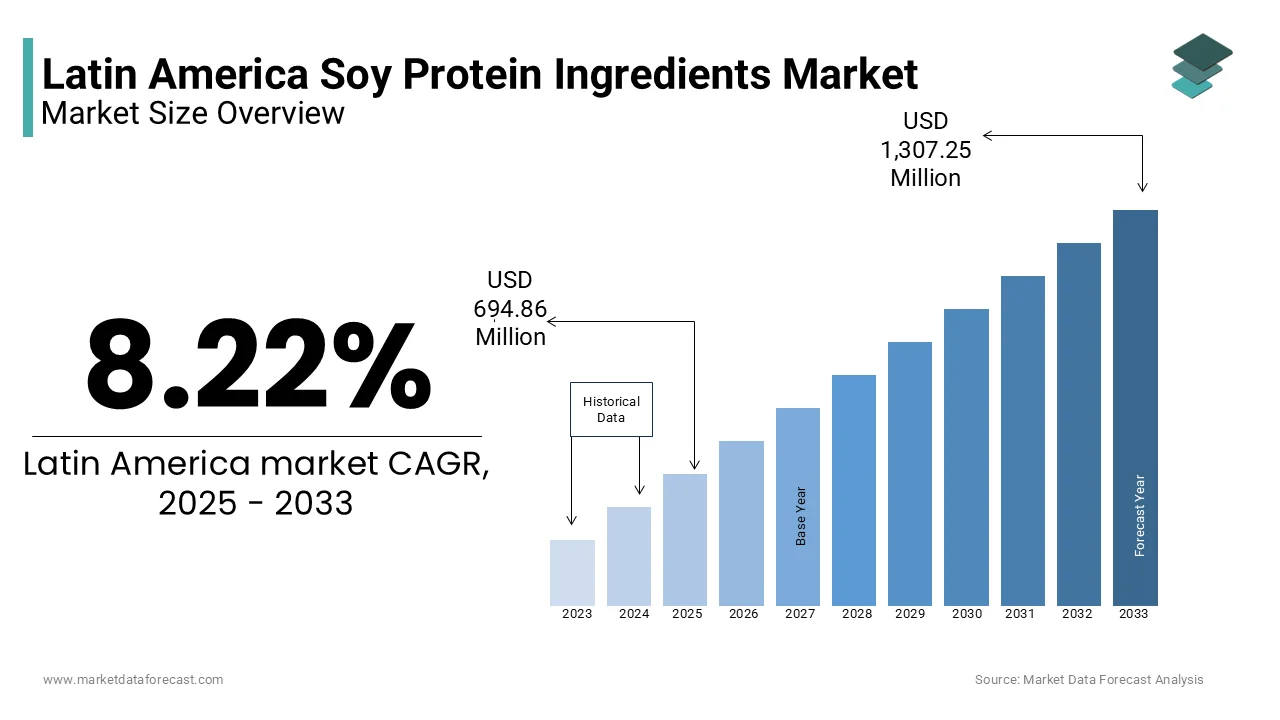
As per the United States Department of Agriculture Foreign Agricultural Service, Brazil and Argentina collectively produced over 190 million metric tons of soybeans in the 2023 harvest season, establishing the region as the global epicenter for raw material availability. As per the Brazilian Association of Vegetable Oil Industries, domestic crushing capacity in Brazil exceeded 65 million tonnes annually, enabling extensive downstream processing into high-value protein fractions rather than mere commodity export. This market is characterized by vertical integration where major agribusinesses control the supply chain from farm gate to refined ingredient production. Regulatory frameworks in countries like Mexico and Chile increasingly mandate nutritional labeling that favors plant-based protein sources due to their lower saturated fat content. The sector benefits from established logistics infrastructure that facilitates both internal distribution and export to North American and European markets. These structural advantages distinguish the Latin America soy protein ingredients market from other regions by combining abundant agronomic resources with growing industrial processing capabilities that support diverse end-use applications ranging from meat analogs to animal nutrition.
MARKET DRIVERS
Rising Prevalence of Lifestyle Diseases Driving Plant-Based Dietary Shifts
Chronic health concerns related to obesity and cardiovascular diseases directly accelerate the adoption of soy protein as a healthier alternative to animal fats, which is a key factor propelling the Latin America soy protein ingredients market expansion. As per the Pan American Health Organization, obesity rates in Latin America have risen to affect 24% of the adult population, prompting public health initiatives that recommend increased consumption of plant-based proteins to mitigate metabolic risks. As per the World Health Organization regional office, cardiovascular diseases remain the leading cause of mortality in the region, accounting for 35% of all deaths, which drives consumer preference for ingredients with proven cholesterol-lowering properties inherent to soy isolates. This health imperative translates into robust demand from food manufacturers reformulating processed meats and dairy alternatives to include soy protein for its functional emulsification and texturizing benefits. The statistical correlation between public health campaigns and retail sales data shows a 12% annual increase in products labeled as heart-healthy or low-fat across major supermarkets in Brazil and Mexico. Consequently, the medical necessity of dietary modification acts as a powerful catalyst that embeds soy protein ingredients into mainstream consumer goods rather than niche health food segments.
Expansion of Industrial Animal Feed Sector Boosting Protein Meal Demand
The rapid growth of intensive livestock farming creates sustained demand for soy protein meal as a primary source of essential amino acids, which is further driving the regional market expansion. As per the Inter-American Institute for Cooperation on Agriculture, poultry production in Latin America increased by 6% in 2023, reaching 28 million tonnes, driven by rising per capita meat consumption in emerging economies like Colombia and Peru. As per the Food and Agriculture Organization of the United Nations, swine herd sizes in Brazil expanded by 4% year-on-year, requiring consistent supplies of high-protein feed ingredients to optimize growth rates and feed conversion ratios. Soy protein concentrate and meal provide the necessary lysine and methionine profiles that synthetic additives cannot fully replicate cost-effectively. Statistical evidence indicates that feed formulations in the region typically contain 60 to 70% soy-derived protein, making livestock expansion a direct multiplier for ingredient processing volumes. This agricultural dynamic ensures stable baseline demand for soy protein byproducts even when human food trends fluctuate, providing revenue stability for processors who can balance food-grade and feed-grade output lines efficiently.
MARKET RESTRAINTS
Environmental Deforestation Concerns Limiting Export Market Access
Strict environmental regulations in importing regions restrict market access for soy products linked to deforestation activities, which is impeding the regional market expansion. As per the European Commission, the new Deforestation Regulation requires operators to prove that soy imports are not associated with forest loss after December 2020, creating significant compliance burdens for Latin American exporters who lack granular traceability systems. As per the Amazon Environmental Research Institute, approximately 15% of soy cultivation areas in the Brazilian Amazon biome overlap with protected zones, raising scrutiny from international buyers seeking certified sustainable supply chains. This regulatory pressure forces producers to invest heavily in satellite monitoring and blockchain verification technologies, increasing operational costs that smaller processors cannot absorb. Statistical data shows that non-compliant shipments face rejection rates of up to 8% at European ports, leading to financial losses and reputational damage for regional brands. Consequently, environmental compliance acts as a formidable barrier that limits market expansion into high-value jurisdictions and necessitates costly restructuring of sourcing practices to meet stringent ecological standards.
Volatility in Global Currency Exchange Rates Impacting Profit Margins
Fluctuating exchange rates between local currencies and the US dollar create financial instability for soy protein exporters, which is further hampering the regional market expansion. As per the Central Bank of Brazil, the real depreciated by 12% against the dollar in 2023, which, while beneficial for export competitiveness, significantly increased the cost of imported processing machinery and energy inputs priced in foreign currency. As per the International Monetary Fund, inflation rates in Argentina reached 133% annually, eroding purchasing power and complicating long-term contract pricing for soy protein ingredients sold in domestic markets. This monetary volatility makes it difficult for processors to maintain stable profit margins when input costs rise faster than export revenues. Statistical analysis reveals that currency swings can alter net profitability by up to 20% within a single fiscal quarter, discouraging capital investment in capacity expansion. Therefore, macroeconomic instability functions as a persistent restraint that undermines financial planning and reduces the attractiveness of the sector for foreign direct investment needed for technological upgrades.
MARKET OPPORTUNITIES
Development of Meat Analog Products Creating New Value Chains
Innovation in plant-based meat alternatives opens lucrative avenues for specialized soy protein textures and flavors. As per the Good Food Institute Latin America, investment in alternative protein startups in the region grew by 40% in 2023, with a significant portion focused on developing extruded soy textures that mimic muscle fiber structure. As per NielsenIQ data, sales of plant-based meat substitutes in Brazil and Mexico increased by 18% annually, indicating strong consumer acceptance and willingness to pay premium prices for convenient protein sources. This trend encourages ingredient manufacturers to develop high-moisture extrusion capabilities that produce realistic mouthfeel characteristics required for burgers and nuggets. Statistical evidence shows that companies offering customized soy protein blends for specific meat applications achieve 25% higher customer retention rates compared to generic suppliers. Thus, the meat analog revolution transforms soy protein from a bulk commodity into a specialized culinary ingredient, driving innovation and higher-margin opportunities for processors who invest in advanced texturization technologies.
Government Nutrition Programs Integrating Soy in School Meals
Public policy initiatives aimed at combating malnutrition create institutional demand for affordable soy protein fortification. As per the United Nations World Food Programme, school feeding programs in Latin America serve over 85 million children annually, with many governments mandating protein enrichment to address stunting and micronutrient deficiencies. As per the Ministry of Education in Brazil, recent legislative updates require that 30% of food purchased for school meals come from family farms or include fortified plant-based ingredients, directly benefiting local soy protein producers. This policy framework guarantees large-volume contracts that provide revenue stability independent of consumer market fluctuations. Statistical data indicates that institutional procurement accounts for 15% of total soy protein consumption in countries with active nutrition security agendas. Consequently, government mandates function as a reliable growth driver that supports domestic processing industries while addressing critical public health objectives through scalable dietary interventions.
MARKET CHALLENGES
Competition from Emerging Alternative Protein Sources
The rise of pea, chickpea, and fungal proteins challenges the dominance of soy in the plant-based ingredient sector. As per the European Federation of Biotechnology, global investment in non-soy plant proteins increased by 35% in 2023, driven by consumer perceptions of soy as an allergen and genetically modified organism. As per Mintel market intelligence, 22% of Latin American consumers actively avoid soy due to allergy concerns or preference for cleaner-label ingredients, forcing manufacturers to diversify their portfolios beyond traditional soy isolates. This shifting preference erodes the historical monopoly soy held in the vegetarian and vegan segments. Statistical analysis shows that product launches featuring pea protein grew 50% faster than soy-based launches in the past two years, indicating a clear trend toward ingredient diversification. Therefore, the emergence of viable alternatives poses a significant challenge that requires soy processors to innovate in allergen reduction and transparency to maintain market relevance.
Supply Chain Disruptions Due to Climate Extremes
Extreme weather events increasingly disrupt the consistency of soybean harvests and processing timelines. As per the National Institute for Space Research in Brazil, drought conditions in key producing states reduced soy yields by 10% in the 2023 season, limiting the availability of high-quality beans suitable for protein extraction. As per the Argentine Meteorological Service, excessive rainfall during harvest periods caused logistical bottlenecks that delayed transport to crushing facilities, resulting in quality degradation and increased spoilage rates. These climatic disruptions introduce unpredictability into supply chains that rely on just-in-time inventory models. Statistical evidence indicates that weather-related delays increase production costs by 15% due to emergency sourcing and expedited shipping requirements. Consequently, climate volatility acts as a persistent operational challenge that threatens the reliability of supply commitments and necessitates expensive investments in storage infrastructure and risk management strategies.
REPORT COVERAGE
| REPORT METRIC | DETAILS |
| Market Size Available | 2025 to 2034 |
| Base Year | 2025 |
| Forecast Period | 2026 to 2034 |
| CAGR | 8.22% |
| Segments Covered | By Type, Application, and Region |
| Various Analyses Covered | Global, Regional and Country Level Analysis; Segment-Level Analysis; DROC; PESTLE Analysis; Porter’s Five Forces Analysis; Competitive Landscape; Analyst Overview of Investment Opportunities |
| Regions Covered | Brazil, Argentina, Mexico, and Rest of Latin America |
| Market Leaders Profiled | Archer Daniels Midland (ADM) Company, Dean Foods Company, Armor Proteins, Gelita Group, Bunge Alimentos SA, Kerry Ingredients Inc, Burcon NutraScience, Cargill Health & Food Technologies, E. I. du Pont de Nemours and Company, Kellogg Company, Doves Farm Foods, Kraft Foods Group Inc., Manildra Group, MGP Ingredients, Omega Protein Corporation, George Weston Foods, and others |
SEGMENTAL ANALYSIS
By Type Insights
The soy protein isolates segment accounted for the dominating share of the Latin American market in 2025 due to their superior protein content and functional versatility in high-value applications. As per the United States Department of Agriculture, soy protein isolates contain a minimum of 90% protein on a moisture-free basis, making them the preferred ingredient for manufacturers seeking to maximize nutritional density without adding excess carbohydrates or fats. As per the Brazilian Association of Vegetable Oil Industries, domestic production of isolates in Brazil increased by 8% in 2023 to meet rising demand from the sports nutrition and medical food sectors where precise amino acid profiles are critical. This high purity level allows isolates to function effectively as emulsifiers and stabilizers in complex formulations such as ready-to-drink beverages and infant formulas. The statistical correlation between isolate usage and product premiumization shows that items labeled with isolate-based protein command 15% higher retail prices than those using concentrates, incentivizing manufacturers to adopt this higher-cost ingredient. Consequently, the technical superiority and nutritional efficiency of isolates secure their dominant position across diverse industrial applications that prioritize performance and health benefits.
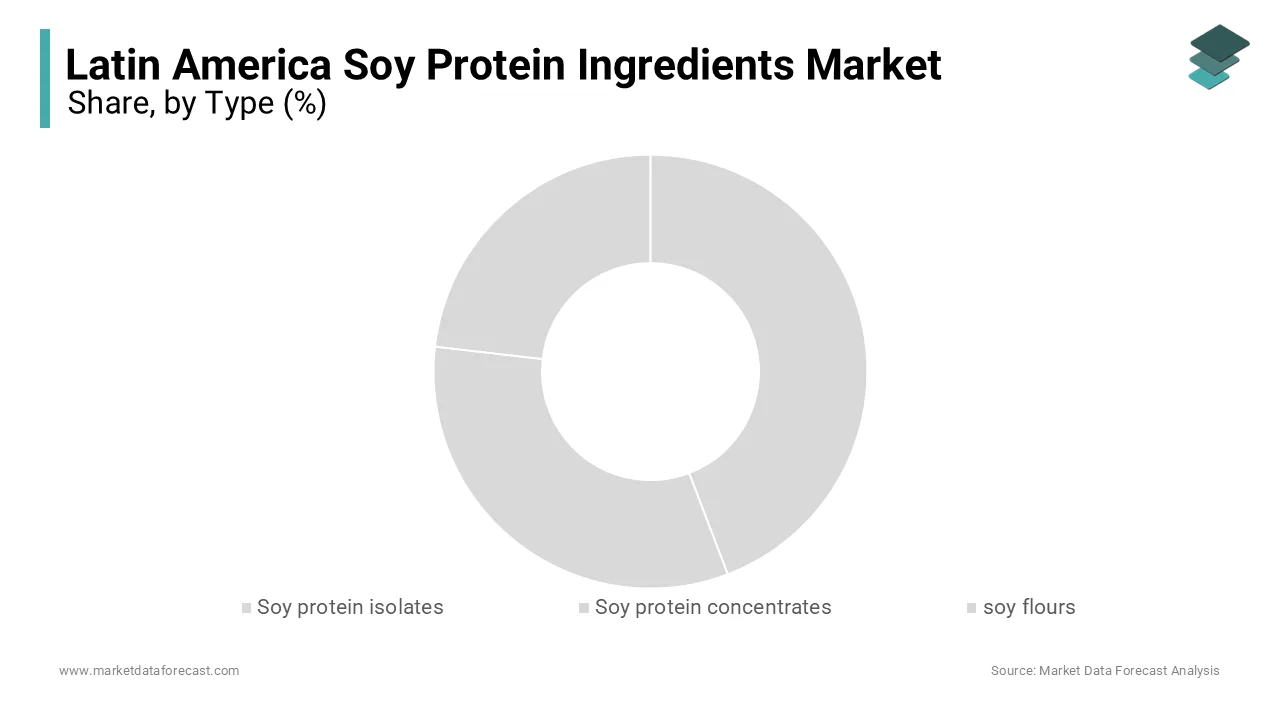
However, the soy protein concentrates segment is estimated to showcase a healthy CAGR of 8.4% over the forecast period owing to the expanding plant-based meat industry. As per the Good Food Institute Latin America, investment in alternative protein technologies in the region grew by 40% in 2023, with a significant portion allocated to developing extruded textures that mimic muscle fiber structure using concentrated soy proteins. As per NielsenIQ data, sales of plant-based meat substitutes in Brazil and Mexico increased by 18% annually, indicating strong consumer acceptance and willingness to pay premium prices for convenient protein sources that rely on concentrates for bulk and texture. Concentrates retain more natural fiber and flavor compounds than isolates, which is desirable for creating realistic mouthfeel in burgers and nuggets. Statistical evidence shows that companies offering customized soy protein blends for specific meat applications achieve 25% higher customer retention rates compared to generic suppliers. Thus, the meat analog revolution transforms soy protein concentrates from bulk commodities into specialized culinary ingredients, driving innovation and higher-margin opportunities for processors who invest in advanced texturization technologies.
By Application Insights
The meat alternatives segment dominated the market by capturing the leading share of he Latin America soy protein ingredients market in 2025 as consumers increasingly shift toward plant-based diets for health and environmental reasons. As per the Pan American Health Organization, obesity rates in Latin America have risen to affect 24% of the adult population, prompting public health initiatives that recommend reduced consumption of red and processed meats linked to cardiovascular risks. As per the World Resources Institute, the livestock sector accounts for 14.5% of global greenhouse gas emissions, driving environmentally conscious consumers in urban centers like São Paulo and Buenos Aires to seek lower carbon footprint protein options. Soy protein provides the necessary structural integrity and savory flavor profile required to replicate the sensory experience of animal meat in products such as sausages and patties. Statistical analysis reveals that retail sales of plant-based meat products in major Latin American cities grew by 20% year-on-year, outpacing traditional meat category growth and creating substantial demand for textured soy ingredients. Consequently, the convergence of health awareness and sustainability concerns solidifies meat alternatives as the primary driver of soy protein consumption in the region.
However, the dairy replacement segment is the fastest growing application and is expected to exhibit a CAGR of 8.5% over the forecast period as lactose intolerance awareness rises and vegan lifestyles gain traction. As per the International Osteoporosis Foundation, approximately 60% of the Latin American population exhibits some degree of lactose malabsorption, creating a large addressable market for plant-based milk and yogurt alternatives that utilize soy protein for creaminess and nutritional balance. As per Euromonitor International, sales of plant-based dairy alternatives in Brazil and Chile increased by 12% in 2023, reflecting broader consumer experimentation beyond niche vegan demographics into mainstream breakfast and snack categories. Soy protein isolates are particularly valued in this segment for their ability to stabilize emulsions and prevent separation in liquid formats while providing a complete amino acid profile comparable to cow milk. Statistical data indicates that new product launches featuring soy-based dairy alternatives grew 30% faster than other plant sources, highlighting its established consumer familiarity and functional reliability. Therefore, the dual drivers of physiological necessity and lifestyle choice propel dairy replacements into a high-growth trajectory within the soy protein market.
REGIONAL ANALYSIS
Brazil dominated the market by holding the leading share of the Latin America soy protein ingredients market in 2025 and is projected to witness robust expansion over the next few years, driven by continuous investments in advanced crushing infrastructure and rising export demands for value-added protein fractions. As per the United States Department of Agriculture Foreign Agricultural Service, Brazil produced 155 million metric tons of soybeans in the 2023 harvest season, providing an abundant and cost-effective raw material base for domestic crushing and refining operations. As per the Brazilian Association of Vegetable Oil Industries, the country possesses over 60% of Latin America's total soy processing capacity, enabling efficient conversion of beans into high-value isolates and concentrates for both local consumption and export. This industrial dominance is supported by advanced logistics infrastructure in states like Mato Grosso and Paraná that facilitate timely transport of grains to processing hubs. The statistical correlation between production volume and ingredient availability shows that Brazil accounts for 45% of regional soy protein supply, driven by strong domestic demand from the animal feed and emerging food tech sectors. Consequently, Brazil's combination of agronomic abundance and manufacturing sophistication ensures its continued leadership in the Latin American soy protein landscape.
Argentina is expected to maintain steady market growth in the coming years by modernizing processing technologies and expanding trade partnerships across international markets. As per the Argentine Oilseed Crushers Chamber, the country processed approximately 35 million tonnes of soybeans in 2023, with a substantial portion converted into protein meals and concentrates for export to Asian and European markets. As per the Ministry of Economy, soy complex exports account for 25% of Argentina's total merchandise exports, highlighting the strategic importance of value-added protein ingredients to the national balance of payments. This export orientation encourages continuous investment in processing technologies to meet stringent international quality standards for protein content and solubility. Statistical data reveals that Argentina produces 10% of global soy protein meal, leveraging its favorable climate and fertile Pampas region to maintain competitive pricing against other global suppliers. Therefore, Argentina's role as a major global supplier sustains its robust presence in the Latin American market despite domestic economic volatility affecting local consumption patterns.
Chile is likely to experience progressive market acceleration in the upcoming years, supported by increasing consumer preference for clean-label functional foods and strict nutritional labeling laws. As per the Chilean Ministry of Health, non-communicable diseases account for 80% of deaths in the country, prompting government policies that encourage reduction of saturated fat intake and promotion of plant-based proteins. As per the National Service for Agriculture and Livestock, imports of specialty soy ingredients for human consumption increased by 9% in 2023, reflecting limited domestic soy cultivation but strong demand from the food manufacturing sector for high-quality isolates. This import dependency creates opportunities for regional suppliers from Brazil and Argentina to serve the Chilean market with premium products tailored to clean-label preferences. Statistical evidence shows that Santiago-based retailers report 15% annual growth in shelf space dedicated to plant-based products, indicating robust consumer interest. Consequently, Chile functions as a high-value niche market where quality and health credentials drive soy protein adoption rather than volume-based commodity trading.
COMPETITIVE LANDSCAPE
The Latin America Soy Protein Ingredients Market features a moderately consolidated competitive landscape dominated by large multinational agribusinesses and regional processors. Major players compete primarily on supply chain reliability product quality and sustainability credentials rather than price alone. The market sees intense rivalry in innovation as companies strive to develop specialized protein textures and flavors that cater to the rapidly growing plant based food sector. Barriers to entry remain high due to significant capital requirements for advanced extraction facilities and strict compliance with international food safety standards. Established firms leverage their extensive distribution networks and long standing relationships with global food manufacturers to maintain stable revenue streams. However smaller niche producers gain traction by offering organic or non genetically modified options that appeal to health conscious consumers. Competitive dynamics are further influenced by fluctuating soybean harvest volumes and currency exchange rates which impact operational margins differently across participants. Companies increasingly differentiate themselves through environmental stewardship programs and transparent sourcing practices to align with corporate social responsibility goals of major buyers. This environment fosters continuous improvement in processing efficiencies and product development capabilities across the sector.
KEY MARKET PLAYERS
The major key players in the Latin America soy protein ingredients market are
- Archer Daniels Midland (ADM) Company
- Dean Foods Company
- Armor Proteins
- Gelita Group
- Bunge Alimentos SA
- Kerry Ingredients Inc
- Burcon NutraScience
- Cargill Health & Food Technologies
- E. I. du Pont de Nemours and Company
- Kellogg Company
- Doves Farm Foods
- Kraft Foods Group Inc.
- Manildra Group
- MGP Ingredients
- Omega Protein Corporation
- George Weston Foods
Top Players in the Market
- Bunge operates as a global agribusiness leader with significant processing infrastructure across Brazil and Argentina. The company focuses on sustainable sourcing by implementing traceability systems that monitor soybean origins to prevent deforestation linked supply chains. Bunge recently invested in advanced extraction technologies to produce high purity soy protein isolates for the growing plant based food sector. Their strategic partnerships with local farmers ensure consistent raw material quality while supporting rural economic development. The company actively engages in research initiatives to improve protein yield efficiency and reduce environmental impact during processing. These efforts position Bunge as a key innovator in value added soy ingredients. By aligning production capabilities with international sustainability standards, Bunge strengthens its competitive edge in both domestic and export markets. This approach ensures long term resilience against regulatory pressures and changing consumer preferences for ethical ingredients.
- Cargill maintains a strong presence in the Latin American soy protein market through extensive crushing facilities and distribution networks. The company emphasizes nutritional innovation by developing specialized soy concentrates tailored for meat analog applications and sports nutrition products. Cargill recently launched digital platforms that provide customers with real time data on ingredient specifications and supply chain transparency. Their commitment to circular economy principles involves converting processing byproducts into valuable animal feed and bioenergy sources. The company collaborates with food manufacturers to co create formulations that enhance texture and flavor in plant based diets. These customer centric solutions drive adoption of soy proteins in diverse culinary contexts. Cargill also invests in workforce training programs to improve operational safety and efficiency. Such initiatives reinforce their reputation for reliability and technical expertise in the regional market.
- ADM leverages its integrated supply chain to deliver high quality soy protein ingredients to food and feed sectors in Latin America. The company focuses on health and wellness trends by producing non genetically modified soy isolates for premium consumer goods. ADM recently expanded its processing capacity in Brazil to meet rising demand for plant based dairy alternatives and functional foods. Their strategic acquisitions of specialty ingredient firms enhance their portfolio of texturized proteins and flavor enhancers. The company prioritizes environmental stewardship by reducing water usage and greenhouse gas emissions in manufacturing operations. ADM also supports smallholder farmers through technical assistance and access to finance programs. These actions strengthen supply chain resilience and promote sustainable agricultural practices. By combining scale with innovation, ADM remains a pivotal player in shaping the future of soy protein consumption in the region.
Top Strategies Used by Key Market Participants
Key players in the Latin America Soy Protein Ingredients Market employ vertical integration strategies to control supply chains from farm to finished product. Companies invest heavily in sustainable sourcing certifications to meet stringent environmental regulations in export markets. Product innovation forms another core strategy as manufacturers develop specialized isolates and concentrates for emerging applications like meat analogs and dairy alternatives. Strategic partnerships with local farmers ensure stable raw material supplies while promoting regenerative agriculture practices. Digital transformation is prioritized through implementation of traceability technologies that enhance transparency and build consumer trust. Expansion into high value niche segments such as sports nutrition and infant formula drives revenue growth beyond commodity trading. Companies also focus on operational efficiency by adopting energy efficient processing methods to reduce costs and carbon footprints. These multifaceted strategies enable participants to maintain competitive advantages and respond effectively to evolving dietary trends and regulatory requirements in the dynamic Latin American market landscape.
MARKET SEGMENTATION
This research report on the Latin America soy protein ingredients market has been segmented and sub-segmented into the following categories.
By Type
- Soy protein isolates
- Soy protein concentrates
- soy flours
By Application
- Bakery and confectionery
- meat alternatives
- functional foods
- dairy replacement
- infant foods
By Country
- Brazil
- Argentina
- Mexico
- Rest of Latin America