- Product Description Description
- Table of Contents TOC
- List of Table & Figure LOT
- Get Free Sample PDF Sample PDF
Market Size, 2025
$1.70 BnMarket Estimate, 2026
$1.78 BnMarket Forecast, 2034
$2.61 BnCAGR, 2026–2034
4.91%Executive Summary: Latin America Spices and Seasonings Market
- Market Scope: Comprehensive market assessment of the Latin American spices and seasonings sector covering product types, application segments, country-level performance, and major industry players.
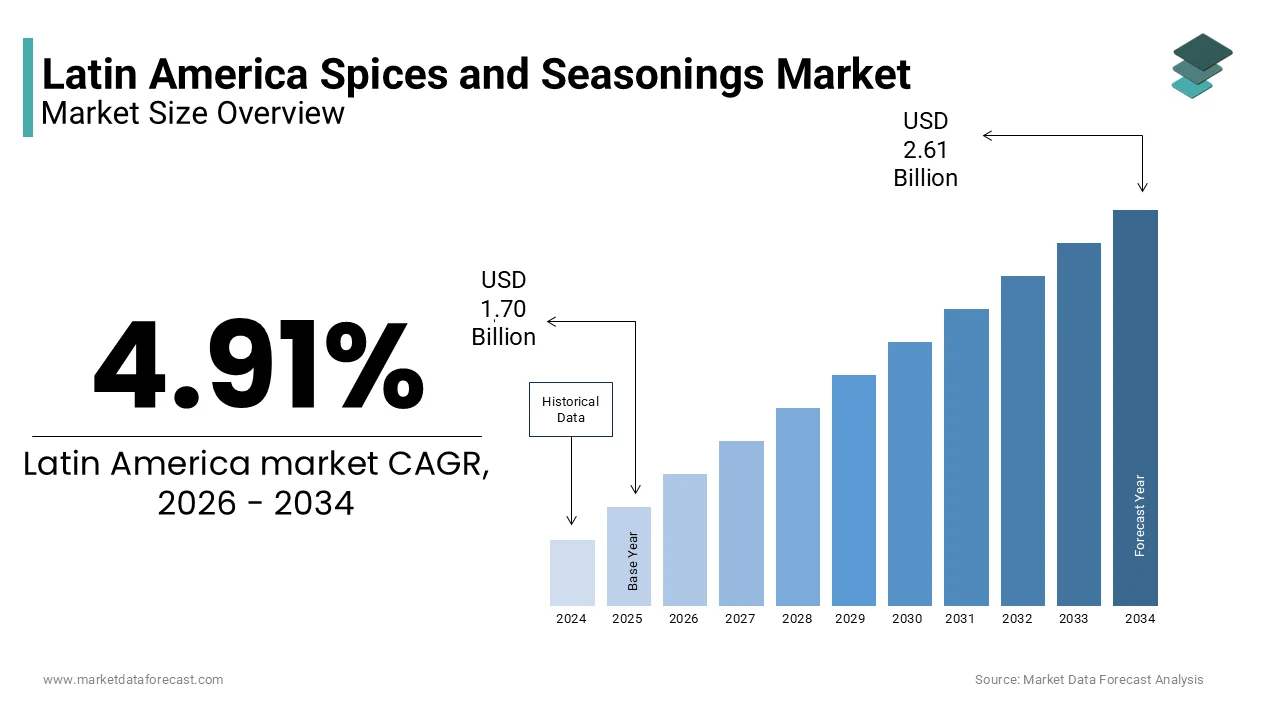
- Market Valuation: Valued at USD 1.70 billion in 2025, estimated at USD 1.78 billion in 2026, and projected to reach USD 2.61 billion by 2034, expanding at a compound annual growth rate (CAGR) of 4.91% during the forecast period from 2026 to 2034.
- Primary Growth Drivers: High consumer preference for in-house prepared meals (recession-proof nature), increasing demand for flavor enhancement in snacks, rising disposable incomes, rapid urbanization, globalization, and changing dietary patterns.
Key Market Segment Metrics (2026–2034)
| Category | Leading Segment Focus | Fastest-Growing / High-Impact Focus |
|---|---|---|
| By Type | Pepper followed by Capsicum (dominant market share) | Ginger, Cinnamon, Cumin, and Turmeric |
| By Application | Meat & Poultry Products | Snacks & Convenience Food (driven by shifting lifestyles) |
| By Country / Region | Brazil (leading market player in the region) | Chile & Argentina |
Major Market Players & Market Structure
Market Structure: Competitive landscape characterized by prominent global food and ingredient multinationals addressing rising regional demand for authentic flavor profiles and high-quality spice sourcing.
Key Companies: McCormick & Company (U.S.), Associated British Foods (U.K.), Kerry Group Plc. (Ireland), Olam International Limited (Singapore), Ajinomoto Co., Inc. (Japan), Ariake Japan Company (Japan), SHS Group (U.K.), Döhler Group (Germany), Worlée Gruppe (Germany), and Sensient Technologies (U.S.).
 Download Free Sample Report
Latin America Spices and Seasonings Market Size
The Latin America spices and seasonings market size was valued at USD 1.70 billion in 2025 and is projected to reach USD 2.61 billion by 2034 from USD 1.78 billion in 2026, growing at a CAGR of 4.91%.
According to the Food and Agriculture Organization of the United Nations, Latin America contributes approximately 14% of global spice production volume, with Brazil and Peru serving as primary cultivation hubs for indigenous varieties like achiote and ají amarillo. According to the Inter-American Development Bank, the regional food and beverage processing sector expanded by 3.2% in 2023, directly correlating to increased industrial demand for standardized seasoning blends in packaged goods. This market is distinct due to its reliance on native biodiversity and traditional preparation methods that influence both domestic consumption and export profiles. It includes whole spices, ground powders, herb mixes, and functional seasonings used across household, foodservice, and industrial applications. Regulatory frameworks under national food safety agencies govern quality standards while trade agreements facilitate cross border commerce. The sector acts as a critical link between smallholder farmers and multinational food manufacturers, embedding cultural identity into commercial supply chains while adapting to modern requirements for traceability and safety in an increasingly integrated global food system.
MARKET DRIVERS
Expansion of Processed Food Manufacturing Sector
The rapid expansion of processed food manufacturing is propelling the Latin America spices and seasonings market growth by creating sustained industrial demand for consistent and scalable seasoning solutions. According to the Economic Commission for Latin America and the Caribbean, the regional food processing industry generated over 280 billion dollars in output value during 2023, reflecting deep integration of spices into mass market products like snacks, sauces, and ready meals. The Brazilian Association of Food Industries reports that 78% of member companies increased their procurement of customized seasoning blends in the last fiscal year to maintain product uniformity across expanding distribution networks. Manufacturers require precise formulations to ensure batch consistency, driving contracts with specialized spice processors who can deliver standardized flavor profiles at scale. This industrial reliance transforms spices from artisanal commodities into essential technical ingredients. The growth of private label brands further amplifies volume requirements as retailers seek cost effective yet distinctive flavor signatures. Consequently, spice suppliers are investing in blending facilities and quality control laboratories within the region to serve this B2B segment efficiently. This structural shift ensures that industrial application remains the primary volume driver, anchoring market stability against fluctuations in retail consumer spending.
Rising Culinary Tourism and Gastronomic Identity
The flourishing culinary tourism sector favors the Latin America spices and seasonings market by elevating the economic value of native spices and stimulating demand for authentic regional flavors among both locals and international visitors. According to the World Tourism Organization, Latin America welcomed over 58 million international tourists in 2023, with gastronomy cited as a primary travel motivation for 42% of visitors to destinations like Mexico City and Lima. The Pacific Alliance Trade Council notes that exports of high value native spices such as Peruvian rocoto and Mexican epazote grew by 11% year on year, driven by global interest in authentic Latin American cuisine. This external validation encourages domestic producers to formalize supply chains for heritage varieties that were previously informal or subsistence crops. Restaurants and hotels catering to tourists prioritize premium, traceable spices to differentiate their offerings, creating a high margin niche for certified organic or single origin products. Furthermore, media exposure through cooking shows and social platforms reinforces local pride in indigenous ingredients, spurring retail sales of specialty seasonings. This dual dynamic of export potential and domestic premiumization diversifies revenue streams beyond commodity pricing, fostering sustainable growth rooted in cultural capital rather than mere volume.
MARKET RESTRAINTS
Volatility in Agricultural Yields Due to Climate Change
Climate induced agricultural volatility severely restrains the Latin America spices and seasonings market by causing erratic yields and price instability for key raw materials. According to the World Meteorological Organization, extreme weather events including droughts and excessive rainfall affected 65% of major spice growing zones in Latin America during 2023, leading to significant crop losses. The International Center for Tropical Agriculture estimates that coffee and pepper yields in vulnerable regions declined by up to 18% in the past two years due to shifting precipitation patterns and rising temperatures. Since many spices are cultivated by smallholders lacking irrigation infrastructure or climate resilient varieties, supply shocks translate immediately into scarcity and inflated costs for processors and exporters. This unpredictability complicates long term contracting and inventory planning for industrial buyers who depend on stable inputs. Unlike temperate crops, many Latin American spices have narrow ecological niches making relocation difficult. Insurance mechanisms remain underdeveloped leaving farmers exposed to total loss. Consequently, buyers may substitute with cheaper imported alternatives or synthetic flavorings, eroding market share for genuine regional spices. This systemic vulnerability undermines the region’s competitive advantage as a reliable source of unique botanicals despite strong underlying demand.
Informal Trade Channels Undermining Quality Standards
The prevalence of informal trade channels further hinders the Latin America spices and seasonings market expansion by introducing unverified products that fail to meet safety and quality benchmarks required by formal retailers and exporters. According to the International Labour Organization, approximately 55% of agricultural employment in Latin America occurs in the informal economy, resulting in vast quantities of spices entering the market without sanitary certification or traceability documentation. The Pan American Health Organization has identified microbial contamination and adulteration as recurring issues in unregulated spice batches sold in open markets, posing public health risks and damaging the reputation of regional origins. Formal processors face unfair competition from these low cost, non-compliant alternatives which depress overall price levels and discourage investment in quality upgrades. Exporters struggle to guarantee lot integrity when sourcing from fragmented informal networks, limiting access to premium international markets with strict residue limits. Efforts to integrate smallholders into formal value chains are hampered by bureaucratic hurdles and lack of incentives. Until regulatory enforcement strengthens and inclusive certification models scale, the persistence of informal trade will continue to cap the market’s ability to command premium valuations and ensure consumer safety across all segments.
MARKET OPPORTUNITIES
Development of Functional and Fortified Seasonings
The convergence of nutrition and flavor is a major opportunity for the Latin America spices and seasonings market through the development of functional seasonings that address regional health concerns while delivering taste. According to the Pan American Health Organization, over 60% of adults in Latin America are overweight or obese, driving urgent demand for sodium reduction strategies that do not sacrifice palatability. As per the Latin American Society of Nutrition, consumer trials of potassium enriched herb blends showed 85% acceptance rates when positioned as heart healthy alternatives to salt. Spices like oregano, cumin, and chili possess natural bioactive compounds with antioxidant and anti-inflammatory properties that can be leveraged in clean label formulations. Manufacturers can reformulate traditional mixes to reduce sodium by 30 to 40% using umami rich native ingredients, aligning with public health guidelines and retailer wellness initiatives. This innovation opens doors to institutional buyers like schools and hospitals seeking compliant seasoning options. Moreover, functional positioning allows brands to escape commodity price wars by commanding premiums tied to verified health benefits. With regulatory support for front of pack warning labels pushing reformulation, the window for proactive innovation in functional seasonings is wide open for agile regional players.
Digital Direct to Consumer Platforms for Artisanal Producers
The proliferation of digital direct to consumer platforms offers a prominent opportunity for the Latin America spices and seasonings market by enabling small scale producers to bypass intermediaries and reach niche audiences globally. According to the eTrade for All initiative, cross border e commerce sales of Latin American specialty foods grew by 27% in 2023, facilitated by improved logistics and payment infrastructure. As per the Digital Economy Report, 38% of consumers aged 18 to 34 in North America and Europe actively seek out ethically sourced, story driven spice brands online, willing to pay 2 to 3 times retail prices for verified origin and fair compensation. These platforms allow artisans to showcase terroir specific varieties like Bolivian locoto or Colombian guasca that lack volume for supermarket shelves but possess high cultural and sensory value. Subscription models and curated boxes build recurring revenue and community engagement. Crucially, digital transparency tools enable real time traceability from farm to table, addressing trust deficits associated with informal trade. By leveraging storytelling and data analytics, producers can optimize harvests based on actual demand signals rather than speculative wholesale orders. This disintermediation not only improves farmer margins but also enriches the global perception of Latin American spices as premium, culturally embedded products worthy of investment.
MARKET CHALLENGES
Adulteration and Fraud in Complex Supply Chains
Widespread adulteration is a critical challenge to the Latin America spices and seasonings market by undermining consumer confidence and devaluing authentic regional products. According to the European Commission’s Rapid Alert System for Food and Feed, spices originating from Latin America accounted for 12% of all fraud notifications in 2023, primarily involving undeclared fillers, artificial colorants, or substitution with inferior species. The Journal of Food Protection published findings indicating that up to 25% of ground paprika and chili samples tested in regional markets contained extraneous starches or synthetic dyes to mask poor quality or extend volume. Such practices distort true market pricing, penalizing honest producers who invest in proper cultivation and processing. Detection requires expensive analytical testing that many local labs cannot afford, creating asymmetry where fraud goes undetected until export rejection. Reputational damage spills over to entire origin categories; a single scandal can tarnish Mexican chili or Peruvian saffron for years. Combating this requires coordinated investment in blockchain traceability, third party certification, and capacity building for regulatory bodies. Without systemic integrity assurance, the market cannot fully capitalize on its premium potential or secure long term partnerships with quality conscious global buyers.
Regulatory Fragmentation Across National Borders
Regulatory fragmentation across Latin American nations challenges the Latin America spices and seasonings market by creating costly compliance barriers that impede intra regional trade and economies of scale. According to the Organization of American States, there are currently 19 distinct national food codes governing spice labeling, additive permissions, and maximum residue limits within the region, with mutual recognition agreements covering less than 30% of traded spice categories. The Inter American Institute for Cooperation on Agriculture notes that exporters spend an average of 18 months and 45 thousand dollars navigating disparate approval processes to sell a single blended seasoning across just three neighboring countries. This complexity disproportionately burdens small and medium enterprises unable to maintain dedicated regulatory affairs teams. Harmonization efforts under regional blocs remain slow due to differing risk assessments and protectionist interests. Consequently, companies often formulate separate SKUs for each market, increasing production costs and reducing agility. The lack of unified standards also complicates recall management and crisis response. Until deeper regulatory alignment is achieved, the region’s internal market will remain balkanized, preventing the emergence of truly pan Latin American spice brands capable of competing with global multinationals on efficiency and consistency.
 REPORT COVERAGE
| REPORT METRIC | DETAILS |
| Market Size Available | 2025 to 2034 |
| Base Year | 2025 |
| Forecast Period | 2026 to 2034 |
| CAGR | 4.91% |
| Segments Covered | By Type, Application, and Region |
| Various Analyses Covered | Global, Regional, & Country Level Analysis; Segment-Level Analysis; DROC; PESTLE Analysis; Porter’s Five Forces Analysis; Competitive Landscape; Analyst Overview of Investment Opportunities |
| Regions Covered | Latin America include Brazil, Argentina, Mexico, and the Rest of Latin America |
| Market Leaders Profiled | McCormick & Company (U.S.), Associated British Foods (U.K.), Kerry Group Plc. (Ireland), Olam International Limited (Singapore), Ajinomoto Co., Inc. (Japan), Ariake Japan Company (Japan), SHS Group (U.K.), Döhler Group (Germany), Worlée Gruppe (Germany), and Sensient Technologies (U.S.). |
SEGMENTAL ANALYSIS
By Type Insights
The capsicum segment accounted for the largest share of the Latin America spices and seasonings market in 2025 and is estimated to maintain its position as the leading segment in the Latin America spices and seasonings market over the forecast period due to its foundational role in regional cuisines and extensive industrial processing capabilities. According to the Food and Agriculture Organization of the United Nations, Latin America produced over 1.8 million tons of peppers and chilies in 2023 with Mexico and Peru accounting for nearly 45% of this volume which ensures a robust supply base for both fresh and dried spice markets. The Mexican Association of Spice Producers reports that domestic consumption of chili powder and paprika blends increased by 12% in 2023 driven by the popularity of traditional dishes like mole and adobo in household cooking. This deep cultural integration ensures consistent demand regardless of economic fluctuations. Industrial manufacturers also rely heavily on capsicum extracts for coloring and flavoring in processed snacks and sauces due to its natural pigment properties. The versatility of capsicum varieties ranging from mild bell peppers to hot habaneros allows it to cater to diverse consumer preferences across the region. Export demand further supports production scale as global interest in Latin American heat profiles grows. Consequently capsicum remains the most traded and consumed spice category anchoring the market with high volume and established supply chains that benefit from economies of scale in harvesting and processing infrastructure.
On the other end, the turmeric segment is anticipated to register a notable CAGR of 7.5% over the forecast period in this regional market owing to the rising consumer awareness of its anti-inflammatory and antioxidant properties. According to the Pan American Health Organization, chronic diseases related to inflammation affect over 30% of the adult population in Latin America prompting a shift toward functional foods and natural remedies including turmeric enriched products. The Brazilian Society of Food Science notes that sales of turmeric based supplements and culinary powders grew by 18% in 2023 as consumers sought preventive health solutions amid rising healthcare costs. This trend is amplified by the influence of global wellness trends promoted through digital media which highlight curcumin as a key bioactive compound. Food manufacturers are incorporating turmeric into ready to eat meals beverages and snack bars to appeal to health conscious demographics seeking clean label ingredients. The expansion of organic farming initiatives in countries like Colombia and Ecuador provides high quality raw materials that meet international safety standards for export. Additionally the rise of plant based diets encourages the use of turmeric for its earthy flavor profile and vibrant color in vegan alternatives. These factors collectively drive rapid adoption making turmeric a standout performer in the spice sector despite its traditionally smaller footprint compared to native staples.
By Application Insights
The food products segment led the market by capturing the major share of the Latin America spices and seasonings market in 2025. The growth of the food products segment in the Latin American market is primarily because spices are essential components of daily meals and traditional recipes across the region. According to the Economic Commission for Latin America and the Caribbean, household expenditure on food accounted for 24% of total consumer spending in 2023 indicating that cooking at home remains a primary activity driving ingredient procurement. The Inter American Institute for Cooperation on Agriculture states that over 80% of families in rural and urban areas prepare meals from scratch using basic spice mixes such as cumin oregano and garlic powder. This habitual usage creates a stable baseline demand that is less susceptible to short term economic shocks compared to discretionary dining. The prevalence of street food and local eateries further reinforces the need for bulk spice supplies for marinades stews and rice dishes. Industrial food processors also contribute significantly by incorporating spices into packaged goods like instant noodles canned beans and frozen dinners to enhance flavor retention. The diversity of regional cuisines requires a wide array of spice combinations ensuring that no single type dominates exclusively but rather the collective category thrives. This broad application base across homemade and commercial food preparation secures the food products segment as the primary revenue driver for spice distributors and retailers throughout Latin America.
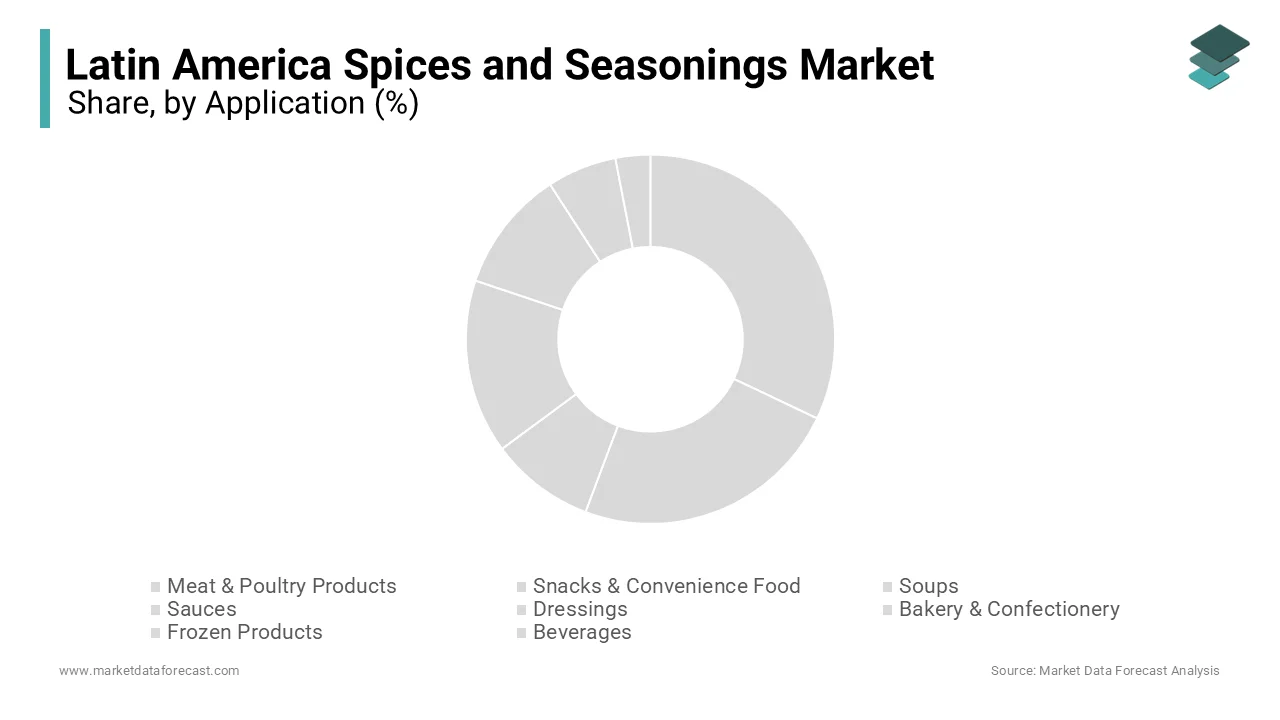
However, the beverages segment exhibits the fastest growth and is predicted to expand at a CAGR of7.04% over the forecast period as consumers increasingly seek functional and exotic flavor profiles in non-alcoholic and alcoholic drinks. According to the International Beverage Association, the Latin American market for functional beverages expanded by 15% in 2023 with ingredients like ginger cinnamon and turmeric gaining prominence for their perceived health benefits. The Brazilian Association of Soft Drink Industries reports that sales of spiced teas and infused waters rose by 22% year over year driven by urban consumers looking for refreshing yet healthy alternatives to sugary sodas. Craft beer breweries are also experimenting with local spices such as achiote and chili to create unique regional identities attracting tourism and local pride. Coffee shops are introducing spiced latte variations using native cinnamon and cardamom appealing to younger demographics interested in global flavor trends. The rise of mixology in bars has led to increased use of aromatic bitters and spiced syrups enhancing the complexity of cocktails. These innovations transform spices from mere culinary additives into key differentiators in the competitive beverage landscape. The ability of spices to offer both sensory enjoyment and functional wellness attributes makes them ideal for product development in this dynamic sector driving sustained investment and innovation.
REGIONAL ANALYSIS
Brazil Market Analysis
Brazil held a dominant spot in the Latin America spices and seasonings market in 2025 and is likely to achieve robust expansion and steady market leadership over the next few years driven by its vast agricultural capacity and diverse culinary traditions that integrate native and imported spices. According to the Brazilian Institute of Geography and Statistics, the country produced over 200 thousand tons of black pepper and other spices in 2023 establishing itself as a major global supplier particularly for the European and North American markets. The Brazilian Association of Food Industries reports that domestic demand for seasoning blends grew by 9% in 2023 fueled by the popularity of hearty stews and grilled meats that require robust flavor profiles. The Amazon region provides unique biodiversity allowing for the cultivation of rare spices like jambu and cumaru which are gaining traction in gourmet segments. Government incentives for sustainable agriculture support smallholder farmers in adopting best practices for spice cultivation improving yield and quality. The presence of large multinational food processors in Sao Paulo and Rio de Janeiro drives industrial demand for standardized spice inputs. Consumer trends toward healthier eating are boosting sales of organic and low sodium spice options. Brazil’s strong export orientation combined with a large internal market creates a balanced growth environment. Infrastructure improvements in logistics facilitate efficient distribution from rural farms to urban centers ensuring steady supply. This dual focus on domestic consumption and international trade solidifies Brazil’s leadership position in the regional spice industry.
Mexico Market Analysis
Mexico is projected to experience steady growth and influence over the next few years characterized by its rich heritage of chili cultivation and profound influence on global cuisine. According to the Ministry of Agriculture and Rural Development, Mexico is the world’s largest producer of chili peppers exporting over 150 thousand tons annually to the United States and other key markets. The National Chamber of the Food Industry states that the domestic market for spice mixes and salsas expanded by 11% in 2023 driven by the enduring popularity of traditional dishes like tacos enchiladas and moles. Mexican consumers prioritize authenticity leading to high demand for pure ground spices rather than artificial flavorings. The tourism sector further stimulates demand as visitors seek authentic culinary experiences featuring local ingredients like epazote and hoja santa. Small scale artisanal producers play a significant role in preserving heirloom varieties contributing to market diversity. Trade agreements facilitate seamless export of processed spice products reducing tariffs and boosting competitiveness. Urbanization is shifting consumption patterns toward convenient packaged seasonings while maintaining preference for traditional flavors. Innovation in spicy snack foods and beverages continues to drive growth in value added segments. Mexico’s cultural capital in the spice world combined with strong production capabilities ensures its continued dominance and influence in shaping regional and global spice trends.
Argentina Market Analysis
Argentina is anticipated to record moderate and stable development over the next few years primarily driven by its robust meat industry and European influenced culinary habits. According to the Argentine Chamber of Commerce and Services, the country consumes approximately 50 kilograms of meat per capita annually creating substantial demand for marinades and rubs containing oregano paprika and garlic. The National Institute of Agricultural Technology reports that local production of aromatic herbs has increased by 8% in recent years to meet the needs of both domestic processors and export markets. Argentine consumers value high quality ingredients often preferring imported spices like saffron and cardamom for special occasions and gourmet cooking. The wine industry also contributes to demand as spiced infusions and pairings gain popularity among sommeliers and enthusiasts. Economic volatility affects purchasing power leading to a shift toward private label spice brands that offer affordability without compromising quality. Supermarkets are expanding their spice aisles to include international varieties reflecting growing cosmopolitan tastes. The emphasis on asado culture ensures that basic grilling spices remain staple items in every household. Argentina’s focus on quality and tradition supports a mature market where brand loyalty and product purity are key determinants of consumer choice.
Chile Market Analysis
Chile is forecasted to witness accelerated expansion in high value categories over the next few years by leveraging its unique geography to produce high value organic and export oriented spice crops. According to the Chilean Foreign Trade Agency, exports of dried herbs and spices grew by 12% in 2023 with key destinations including Europe and Asia where demand for clean label products is high. The Office of Agricultural Studies and Policies notes that the country has expanded its cultivation of oregano rosemary and thyme under controlled irrigation systems ensuring consistent quality and yield. Chilean consumers are increasingly health conscious driving demand for organic spices and functional blends available in specialized health food stores. The thriving restaurant scene in Santiago and coastal cities promotes the use of fresh and dried local herbs in contemporary fusion cuisine. Trade openness allows for easy import of exotic spices not grown locally diversifying the retail offering. Sustainability certifications are becoming a standard requirement for exporters enhancing Chile’s reputation as a reliable source of premium botanicals. The government supports research into drought resistant spice varieties adapting to climate change challenges. This combination of export strength and domestic sophistication positions Chile as a leader in high value niche segments of the spice market.
COMPETITIVE LANDSCAPE
The competitive landscape of the Latin America spices and seasonings market et features a mix of multinational corporations and local artisanal producers vying for consumer attention through quality and authenticity. Global giants leverage extensive distribution networks and brand recognition to dominate mainstream retail channels while smaller players focus on niche segments with unique native varieties. Competition intensifies as private label offerings from major supermarket chains gain traction due to lower price points and improved quality standards. Companies differentiate themselves through sustainable sourcing practices and transparent supply chains that appeal to ethically conscious shoppers. Marketing efforts emphasize cultural heritage and culinary education to build emotional connections with consumers. Strategic alliances with local farmers ensure consistent raw material quality and support community development. Innovation in packaging formats such as resealable pouches and single serve sachets enhances convenience for busy urban households. The market remains fragmented with significant opportunities for growth in underpenetrated rural areas. Success depends on balancing cost efficiency with product differentiation and maintaining agility to adapt to changing consumer trends and regulatory requirements across diverse national markets.
KEY MARKET PLAYERS
Some of the key players in the Latin America spices and seasonings market are
- McCormick & Company (U.S.)
- Associated British Foods (U.K.)
- Kerry Group Plc. (Ireland)
- Olam International Limited (Singapore)
- Ajinomoto Co., Inc. (Japan)
- Ariake Japan Company (Japan)
- SHS Group (U.K.)
- Dohler Group (Germany)
- Worlee Gruppe (Germany),
- Sensient Technologies (U.S.)
Top Players in the Market
- McCormick and Company leverages its global sourcing network to provide high quality spices and seasoning blends tailored to Latin American culinary preferences. The company focuses on sustainable agriculture practices ensuring consistent supply of key ingredients like black pepper and chili from regional farmers. Recent initiatives include expanding manufacturing facilities in Mexico to enhance local production capabilities and reduce lead times for domestic customers. McCormick invests heavily in consumer research to develop authentic flavor profiles that resonate with traditional dishes such as mole and adobo. Their strong brand recognition allows them to command premium pricing in retail channels while maintaining robust relationships with foodservice providers. By prioritizing quality control and traceability McCormick reinforces trust among consumers and industrial buyers alike. This strategic focus on localization and sustainability strengthens their market position and drives long term growth in the diverse Latin American landscape.
- Ajinomoto do Brasil plays a pivotal role in the market by offering innovative seasoning solutions that combine umami richness with traditional Latin American flavors. The company utilizes advanced fermentation technologies to create unique flavor enhancers that appeal to both household cooks and industrial food processors. Recent actions involve launching new product lines specifically designed for meat marinades and snack applications which are popular categories in the region. Ajinomoto collaborates with local chefs to validate taste profiles ensuring cultural authenticity and consumer acceptance. Their commitment to health conscious formulations includes reducing sodium content while maintaining robust flavor impact. The company also engages in educational campaigns to promote the benefits of balanced seasoning in daily meals. Through continuous innovation and strategic partnerships Ajinomoto strengthens its presence in the competitive Latin American market by addressing evolving consumer needs for convenience and taste.
- Kerry Group contributes significantly to the Latin America Spices And Seasonings Market et through its comprehensive portfolio of natural extracts and customized flavor systems. The company emphasizes clean label ingredients sourced from native plants such as oregano and cilantro to meet growing demand for transparent products. Recent efforts include establishing technical centers in Brazil and Argentina to support local clients with rapid product development and application expertise. Kerry focuses on sustainability by partnering with smallholder farmers to improve agricultural practices and secure raw material supplies. Their digital tools enable precise flavor matching helping brands create distinctive products efficiently. By integrating sensory science with local insights Kerry delivers solutions that enhance taste and texture in various food categories. This customer centric approach combined with a strong commitment to ethical sourcing solidifies their reputation as a trusted partner for innovation in the region.
Top Strategies Used by Key Market Participants
Key players in the Latin America Spices And Seasonings Market et primarily employ localization strategies to align product offerings with diverse regional culinary traditions and taste preferences. Companies invest in research and development to create authentic blends that reflect local heritage while meeting modern convenience demands. Sustainable sourcing initiatives are central to corporate strategies ensuring ethical procurement of raw materials from smallholder farmers and enhancing supply chain resilience. Strategic partnerships with local distributors and retailers facilitate deeper market penetration and improved accessibility in remote areas. Innovation in clean label and organic products addresses rising health consciousness among consumers seeking transparent ingredient lists. Digital marketing campaigns leverage social media platforms to engage younger demographics and promote recipe inspiration using branded spices. Expansion of manufacturing capabilities within the region reduces logistical costs and improves response times to market fluctuations. These combined approaches enable companies to build strong brand loyalty and maintain competitive advantages in a dynamic and culturally rich market environment.
MARKET SEGMENTATION
This research report on the Latin America spices and seasonings market has been segmented and sub-segmented into the following categories.
By Type
- Pepper
- Capsicum
- Ginger
- Cinnamon
- Cumin
- Turmeric
- Nutmeg
- Mace
- Cardamom
- Coriander
- Cloves
By Application
- Meat & Poultry Products
- Snacks & Convenience Food
- Soups
- Sauces
- Dressings
- Bakery & Confectionery
- Frozen Products
- Beverages
By Country
- Brazil
- Argentina
- Mexico
- Rest of Latin America