- Product Description Description
- Table of Contents TOC
- List of Table & Figure LOT
- Get Free Sample PDF Sample PDF
Market Size, 2025
$0.28 BnMarket Estimate, 2026
$0.31 BnMarket Forecast, 2034
$0.78 BnCAGR, 2026–2034
12.1%Latin America Teleradiology Market Size, Growth, Trends & Forecast (2026–2034)
The Latin America teleradiology market was valued at USD 0.28 billion in 2025, is estimated to reach USD 0.31 billion in 2026, and is projected to expand up to USD 0.78 billion by 2034, growing at a compound annual growth rate (CAGR) of 12.1% from 2026 to 2034. Propelled by severe rural radiologist shortages, rising chronic disease burdens, and expanding digital health networks, the regional market demonstrates dynamic, high-growth expansion.
Key Executive Metrics (At-a-Glance)
- 2025 Base Valuation: USD 0.28 Billion
- 2026 Current Valuation: USD 0.31 Billion
- 2034 Forecast Valuation: USD 0.78 Billion
- Compound Annual Growth Rate (CAGR): 12.1% (2026–2034)
- Dominant Application Segment: Picture Archiving and Communication Systems (PACS)
- Fastest-Growing Application Segment: Radiology Information Systems (RIS) (Projected at 14.2% CAGR)
- Dominant Modality Segment: X-Ray Modality
- Fastest-Growing Modality Segment: Magnetic Resonance Imaging (MRI) (Projected at 15.4% CAGR)
- Leading Country Market: Brazil (Holding 36.4% market share in 2025)
Core Market Drivers
- Rural Specialist Shortages: Acute deficits of qualified radiologists in peripheral and remote zones driving immediate demand for remote diagnostic platforms.
- Rising Chronic Diseases: Surging prevalence of cancer and cardiovascular conditions requiring high-volume imaging capacity and off-hours interpretations.
Primary Market Restraints & Challenges
- Connectivity & Broadband Gaps: Limited fixed-line broadband, high latency, and frequent power outages in rural areas hindering real-time image transfers.
- Cybersecurity & Compliance Threats: Rising ransomware attacks and data exposure risks compounded by limited staff cybersecurity training.
Latin America Teleradiology Market Segmentation Breakdown
| Segment Category | Leading Sub-Segment (2025 Base) | Fastest-Growing Segment |
|---|---|---|
| By Application | PACS (Captures highest share due to centralized medical image storage and routing) | RIS (Fastest at 14.2% CAGR, driven by workflow automation and administrative efficiency) |
| By Modality | X-Ray (Dominates due to high volume in trauma, bone fractures, and respiratory diagnostics) | MRI (Fastest at 15.4% CAGR, propelled by growing neurological and musculoskeletal disorders) |
| By Country | Brazil (36.4% market share led by private healthcare and telehealth programs) | Chile & Mexico (Advanced digital health integration and public-private models) |
Major Industry Players Profiled
Key corporations leading the Latin American teleradiology market include 4ways Healthcare Limited, RamSoft, Inc., Virtual Radiologic (vRad), Agfa-Gevaert N.V., ONARD North America Diagnostics, Everlight Radiology, Sectra AB, HealthWatch TeleDiagnostics Pvt. Ltd., and Teleradiology Solutions.
Latin America Teleradiology Market Size
The Latin America Teleradiology Market is projected to grow from USD 0.28 billion in 2025 to USD 0.31 billion in 2026 and reach USD 0.78 billion by 2034, registering a CAGR of 12.1% from 2026 to 2034.
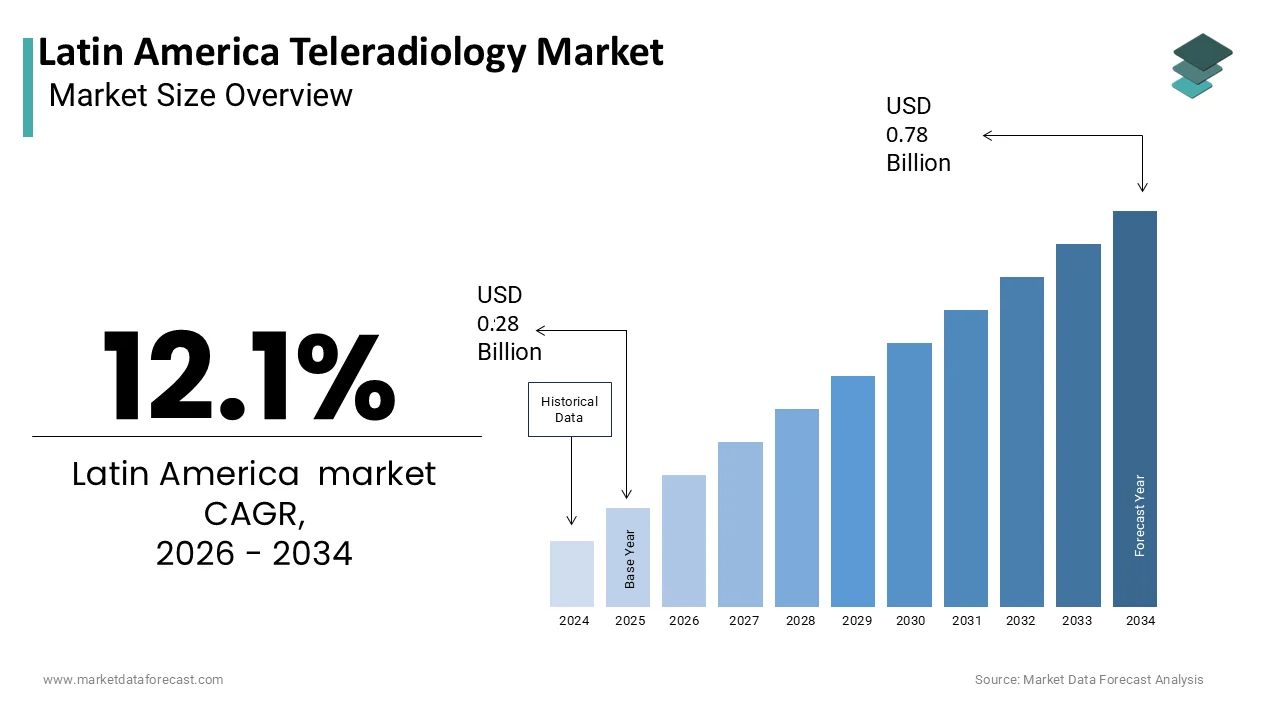
The adoption of teleradiology in Latin America is driven by the need to reduce diagnostic turnaround times and improve patient outcomes through timely and accurate reporting. According to the Pan American Health Organization, there is a significant shortage of medical specialists in rural areas of Latin America, with some regions having fewer than one radiologist per 100,000 inhabitants. According to the World Bank, healthcare expenditure in Latin America averages 8.5% of GDP, yet efficiency remains low due to fragmented infrastructure and the uneven distribution of resources. As per data from the Inter-American Development Bank, digital health initiatives have gained momentum, with over 60% of hospitals in major urban centers adopting some form of telemedicine infrastructure. The region faces a high burden of non-communicable diseases requiring frequent imaging, which strains existing physical facilities. Teleradiology offers a scalable solution by leveraging cloud-based platforms and secure networks to connect peripheral clinics with central diagnostic hubs, thereby optimizing resource utilization and enhancing the overall quality of care across diverse geographical terrains.
MARKET DRIVERS
Critical Shortage Of Radiologists In Rural And Remote Areas
The acute shortage of qualified radiologists in rural and remote areas of Latin America is primarily driving the expansion of the Latin American teleradiology market, which is also creating an urgent demand for remote diagnostic solutions. Many countries in the region exhibit a highly centralized healthcare system where specialists are concentrated in major metropolitan areas, leaving vast rural populations without access to timely expert interpretation of medical images. According to the Pan American Health Organization, the ratio of radiologists to population in rural areas of countries like Peru and Bolivia is significantly lower than the World Health Organization recommendation, leading to diagnostic delays that can exceed several weeks. According to the Federal Council of Medicine, over 70% of radiologists in Brazil are located in the southeast region, while the north and northeast regions face severe deficits despite having large populations. This imbalance forces patients to travel long distances for basic diagnostic services, increasing out-of-pocket expenses and reducing adherence to follow-up care. Teleradiology bridges this gap by allowing images acquired in local clinics to be transmitted instantly to specialists in urban centers, or even abroad, for interpretation. According to the Mexican Ministry of Health, implementing teleradiology networks in indigenous communities has reduced diagnostic waiting times by 40%, improving early detection rates for conditions such as tuberculosis and cancer. These structural inefficiencies make teleradiology not just a convenience, but a necessity for equitable healthcare delivery in the region.
Increasing Burden Of Chronic Diseases Requires High Volume Imaging Capacity
The rising prevalence of chronic diseases in Latin America necessitates high-volume imaging capacity, which existing local infrastructure often cannot support efficiently, and this is further aiding the regional market expansion. As populations age and lifestyle-related risk factors increase, the demand for diagnostic imaging grows exponentially, straining the limited pool of available radiologists. According to the International Agency for Research on Cancer, Latin America recorded over 1.5 million new cancer cases in 2020, requiring extensive imaging for staging and monitoring treatment response. According to the World Heart Federation, cardiovascular diseases are the leading cause of death in the region, accounting for nearly 30% of all deaths, which drives the frequent use of echocardiography and cardiac imaging. Local hospitals in secondary cities often lack the staff to handle this surge in workload, leading to backlogs and delayed reports that compromise patient care. Teleradiology providers offer scalable solutions by distributing the workload across a network of radiologists who can interpret studies during off-hours or peak periods. According to the Colombian National Institute of Health, outsourcing complex imaging interpretations to teleradiology firms has improved report accuracy and reduced burnout among local staff. This ability to manage fluctuating volumes ensures consistent service quality and supports the growing clinical needs of the aging population without requiring immediate capital investment in new hiring.
MARKET RESTRAINTS
Limited Broadband Infrastructure And Connectivity Issues
Limited broadband infrastructure and inconsistent internet connectivity are significant restraints on the widespread adoption of teleradiology in Latin America, particularly in rural and semi-urban areas where it is needed most. High-resolution medical images, such as those from computed tomography and magnetic resonance imaging, require substantial bandwidth for rapid and secure transmission, which many regions lack. According to the International Telecommunication Union, only 72% of the population in Latin America had access to mobile broadband services in 2022, with significant gaps in fixed-line infrastructure in remote locations. In countries like Honduras and Nicaragua, internet penetration rates remain below 50%, making real-time image transfer unreliable and prone to interruptions. According to the Inter-American Development Bank, latency issues and low upload speeds in rural clinics can delay image transmission by hours, rendering emergency teleradiology services ineffective. Additionally, frequent power outages in these areas further disrupt connectivity and equipment operation. Healthcare providers are often forced to rely on physical media, such as CDs or USB drives, to transport images, which defeats the purpose of rapid digital consultation. These technological barriers limit the scalability of teleradiology networks and restrict their effectiveness to well-connected urban centers, thereby exacerbating healthcare inequalities rather than resolving them.
High Costs Of Upgrading Network Infrastructure Strain Budgets
The high costs associated with upgrading network infrastructure to support secure and high-speed data transmission strain the limited budgets of public healthcare institutions in Latin America, which further hinders the growth of the Latin American teleradiology market. Implementing teleradiology requires not only reliable internet connections, but also robust cybersecurity measures, firewalls, and dedicated servers to protect sensitive patient data in compliance with local regulations. According to the Economic Commission for Latin America and the Caribbean, public health spending in the region averages only 3.5% of GDP, which is insufficient to cover both clinical operations and major IT upgrades. Many public hospitals operate with legacy systems that are incompatible with modern cloud-based teleradiology platforms, requiring costly replacements or extensive modifications. According to the Brazilian Ministry of Health, budget constraints have delayed the rollout of national telehealth initiatives in several states due to the high upfront investment required for fiber optic cabling and network hardware. Private clinics also face financial pressures as they must balance technology investments with operational costs in a price-sensitive market. Without adequate funding for infrastructure development, healthcare providers struggle to maintain the continuous connectivity required for seamless teleradiology workflows. This financial barrier slows down market penetration and limits the ability of smaller facilities to participate in digital health networks.
MARKET OPPORTUNITIES
Expansion of Public-Private Partnerships In Healthcare
The expansion of public-private partnerships in healthcare presents significant opportunities for the teleradiology market in Latin America as governments increasingly seek to digitize health records and improve service efficiency through collaboration with private technology providers. Several Latin American countries are launching national digital health strategies that prioritize interoperability and remote diagnostics to enhance access to care. According to the Ministry of Health in Chile, the national telehealth strategy aims to connect all primary care centers with specialized hospitals, creating a vast network for teleradiology services. The Argentine Ministry of Health has initiated pilot programs partnering with private teleradiology firms to provide overnight coverage for emergency departments in public hospitals, reducing wait times and improving patient flow. These collaborations allow governments to leverage private sector expertise and infrastructure without bearing the full cost of development. According to the Peruvian Ministry of Health, public-private partnerships have enabled the deployment of teleradiology units in over 100 remote health posts, improving diagnostic capabilities in underserved regions. Such initiatives create stable revenue streams for teleradiology providers and facilitate the standardization of protocols across the public health system. As more countries adopt similar models, the market potential for integrated teleradiology solutions continues to grow, driven by policy support and shared investment goals.
Integration With Emerging Telemedicine Platforms Enhances Service Offerings
The integration of teleradiology with emerging telemedicine platforms offers substantial opportunities for market growth by creating comprehensive virtual care ecosystems that address multiple aspects of patient management. As teleconsultation becomes more common, patients and providers require seamless access to diagnostic results to inform treatment decisions during virtual visits. According to the Global System for Mobile Communications Association, mobile health applications in Latin America have seen a 50% increase in usage since 2020, driving demand for integrated diagnostic services. Teleradiology providers are partnering with telemedicine platforms to embed image viewing and reporting tools directly into consultation interfaces, enabling real-time discussion of findings between referring physicians and radiologists. According to the Mexican Social Security Institute, integrated platforms have been implemented where primary care doctors can order imaging and receive reports within the same digital workflow, improving coordination and reducing administrative burdens. This synergy enhances the value proposition of teleradiology by making it an integral part of the patient journey rather than a standalone service. Furthermore, the rise of artificial intelligence tools within these platforms allows for preliminary image analysis, which can prioritize urgent cases and assist radiologists in interpretation. These technological convergences drive innovation and expand the addressable market for teleradiology services across the region.
MARKET CHALLENGES
Cybersecurity Threats And Data Breach Risks
The increasing frequency of cyberattacks targeting healthcare data is a major challenge to the teleradiology market in Latin America as digital platforms become attractive targets for malicious actors. The region has seen a surge in ransomware attacks on hospitals and diagnostic centers, compromising patient confidentiality and disrupting operations. According to Kaspersky Lab, Latin America experienced a 35% increase in cyberattacks on the healthcare sector, with medical imaging data being a primary target due to its high value on the black market. Teleradiology platforms, which transmit sensitive images over networks, are vulnerable to interception and unauthorized access if not properly secured. According to the Brazilian National Health Surveillance Agency, several incidents were reported where patient data was exposed due to weak encryption protocols in telehealth systems. These breaches erode trust among patients and providers, hindering the adoption of digital solutions. Healthcare providers must invest heavily in advanced cybersecurity measures, such as end-to-end encryption, multi-factor authentication, and regular security audits, to protect their systems. However, many smaller clinics lack the resources and expertise to implement robust security frameworks, leaving them exposed to significant risks.
Insufficient Awareness Of Data Protection Best Practices Among Staff
Insufficient awareness of data protection best practices among healthcare staff further exacerbates cybersecurity risks in the teleradiology market, which is limiting the effectiveness of technical safeguards. Human error remains a leading cause of data breaches, with employees often falling victim to phishing scams or using insecure passwords. According to a study by the Pontifical Catholic University of Chile, over 60% of healthcare workers in the region had not received formal training on cybersecurity protocols for handling digital patient data. In many teleradiology workflows, images are shared via email or unsecured messaging apps due to convenience, bypassing secure platforms and exposing data to potential leaks. According to the Mexican Institute of Social Security, internal audits frequently reveal violations of data handling policies among junior staff who are unaware of the legal implications. This lack of cultural emphasis on data security undermines the integrity of teleradiology systems regardless of the technological protections in place. Addressing this challenge requires comprehensive training programs and strict enforcement of security policies, which many organizations struggle to implement consistently. Until workforce behavior aligns with security requirements, the risk of data breaches will remain a persistent barrier to market confidence.
REPORT COVERAGE
| REPORT METRIC | DETAILS |
| Market Size Available | 2025 to 2034 |
| Base Year | 2025 |
| Forecast Period | 2026 to 2034 |
| Segments Covered | By Application, Modality, Technology Solutions, and Region. |
| Various Analyses Covered | Global, Regional, and Country-Level Analysis, Segment-Level Analysis, Drivers, Restraints, Opportunities, Challenges; PESTLE Analysis; Porter’s Five Forces Analysis, Competitive Landscape, Analyst Overview of Investment Opportunities |
| Countries Covered | Mexico, Brazil, Argentina, Chile, Rest of Latin America |
| Market Leaders Profiled |
|
SEGMENTAL ANALYSIS
By Application Insights
The picture archiving and communication systems (PACS) segment led the market by capturing the highest share of the Latin American market in 2025 due to its fundamental role in storing, retrieving, and distributing medical images across healthcare networks. PACS serves as the backbone of digital radiology, enabling seamless integration with teleradiology platforms by providing a centralized repository for high-resolution diagnostic images. According to the Pan American Health Organization, over 65% of tertiary care hospitals in Latin America have implemented PACS infrastructure to manage the increasing volume of digital imaging data generated daily. The ability of PACS to eliminate physical film storage reduces operational costs and space requirements, which is critical for resource-constrained healthcare facilities in the region. As per data from the Brazilian Society of Radiology and Diagnostic Imaging, the adoption of DICOM-compliant PACS has increased by 40% in the last five years, facilitating interoperability between different imaging modalities and vendor systems. This standardization allows radiologists to access patient histories and previous studies remotely, ensuring comprehensive diagnostic accuracy. Furthermore, PACS enables efficient workflow management by automating image routing to available specialists, reducing turnaround times for reports. The integration of advanced visualization tools within modern PACS platforms enhances diagnostic capabilities, allowing for detailed analysis of complex cases. These functional advantages sustain the dominance of PACS as the primary application segment supporting teleradiology services across Latin America.
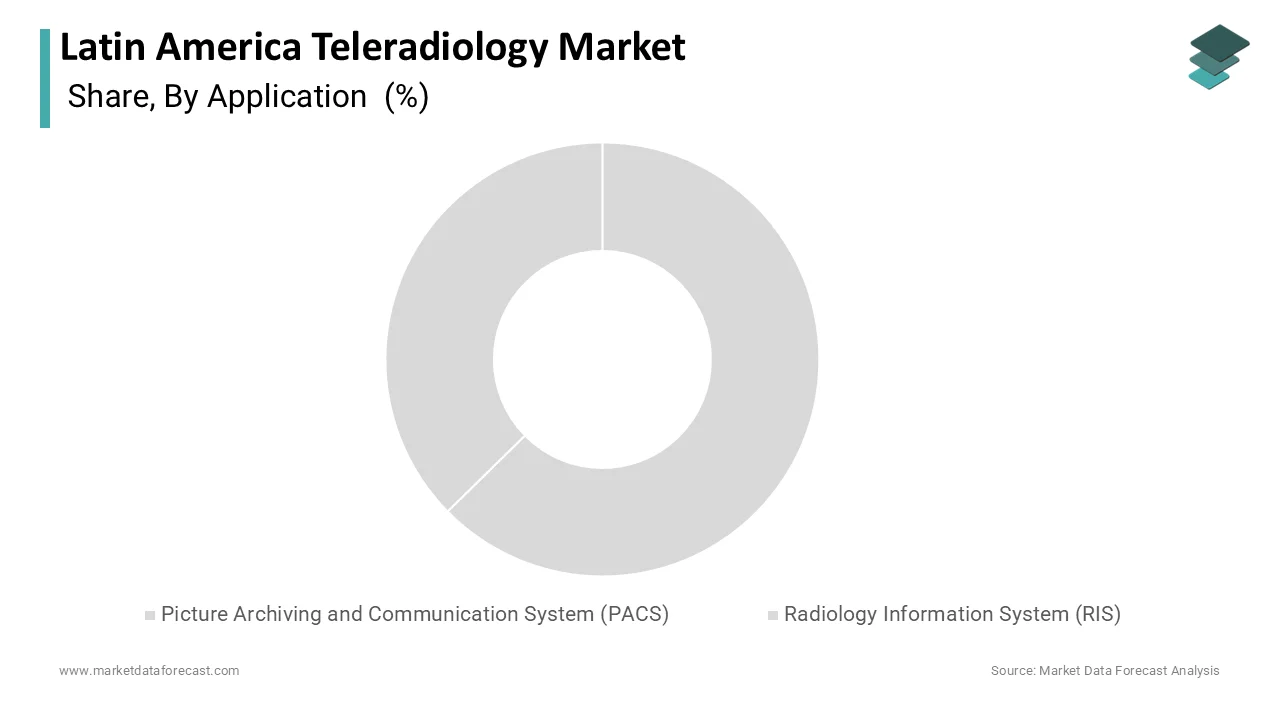
On the other hand, the radiology information systems (RIS) segment is the fastest-growing segment in the Latin America teleradiology market and is expected to witness a CAGR of 14.2% over the forecast period owing to the need for workflow automation and administrative efficiency in busy diagnostic centers. RIS manages patient scheduling, registration, billing, and report generation, streamlining operations and reducing manual errors. According to the Inter-American Development Bank, healthcare facilities in Latin America lose an estimated 15% of revenue due to billing inefficiencies and scheduling conflicts, which RIS solutions effectively mitigate. As per data from the Colombian Association of Radiology, clinics implementing RIS have reported a 30% reduction in administrative workload, allowing staff to focus more on patient care. The integration of RIS with teleradiology platforms ensures that patient demographic and clinical information accompanies imaging data, facilitating accurate reporting and faster turnaround times. Modern RIS solutions offer cloud-based accessibility, enabling remote management of appointments and resources, which is particularly beneficial for multi-site healthcare networks. According to the World Health Organization, efficient health information systems are vital in improving service delivery, and RIS plays a crucial role in this digital transformation. The growing adoption of value-based care models further drives demand for RIS as providers seek to track performance metrics and optimize resource utilization. These operational benefits accelerate the adoption of RIS across the region.
By Modality Insights
The X-Ray modality segment occupied the dominant share of the regional market in 2025 due to its widespread use in diagnosing respiratory conditions, bone fractures, and trauma, which are prevalent in the region. X-Ray remains the most accessible and cost-effective imaging technique, making it the first line of defense in many healthcare settings. According to the World Health Organization, respiratory infections remain major public health challenges in Latin America, requiring frequent chest X-Rays for diagnosis and monitoring. As per data from the Brazilian Ministry of Health, over 10 million chest X-Rays are performed annually in the public health system, creating a substantial volume of images requiring interpretation. The high incidence of road traffic accidents in countries like Mexico and Colombia also drives demand for skeletal X-Rays to assess injuries. Teleradiology allows these high-volume studies to be interpreted rapidly by remote specialists, ensuring timely treatment, especially in emergencies. The low cost of X-Ray equipment compared to other modalities means it is available even in small rural clinics, generating a steady stream of digital images for teleradiology networks. According to the Pan American Health Organization, strengthening diagnostic capacity for tuberculosis through digital X-Ray and teleradiology is a priority in several endemic countries. These factors sustain the dominance of X-Ray in the teleradiology market.
However, the MRI segment is anticipated to record a CAGR of 15.4% over the forecast period in the global market owing to the growing incidence of neurological and musculoskeletal disorders. MRI provides superior soft tissue contrast, making it essential for diagnosing brain tumors, spinal cord injuries, and joint abnormalities. According to the Global Burden of Disease Study, neurological disorders account for 12% of disability-adjusted life years in Latin America, driving increased demand for advanced neuroimaging. As per data from the Argentine Society of Neuroradiology, the number of MRI scans performed for stroke and multiple sclerosis diagnosis has increased by 20% annually in recent years. The aging population in countries like Chile and Uruguay contributes to a higher prevalence of degenerative joint diseases requiring detailed MRI evaluation. Teleradiology enables subspecialized neuroradiologists and musculoskeletal experts to interpret these complex studies remotely, ensuring high-quality diagnoses even in locations lacking local specialists. The complexity of MRI interpretation necessitates expert review, which teleradiology networks provide efficiently. According to the Colombian Ministry of Health, referrals for remote MRI interpretation have doubled as awareness of the technology grows. These clinical needs drive the rapid adoption of MRI teleradiology services.
COUNTRY LEVEL ANALYSIS
Brazil Teleradiology Market Analysis
Brazil led the market by holding 36.4% of the Latin American market share in 2025 and is likely to experience robust expansion over the next few years, driven by government telehealth investments and strong private sector adoption. The country accounts for approximately 35% of the regional market share, driven by a large private healthcare sector and government initiatives to expand telehealth. According to the Brazilian Ministry of Health, the Telessaúde Brasil Redes program has established hundreds of telemedicine centers, including teleradiology hubs, to support primary care in remote areas. As per data from the Brazilian Society of Radiology and Diagnostic Imaging, the private sector performs over 60% of all imaging exams, creating substantial demand for efficient reporting solutions. Major cities like São Paulo and Rio de Janeiro serve as central nodes for teleradiology networks serving smaller municipalities. The implementation of the General Data Protection Law has accelerated the adoption of secure cloud-based teleradiology platforms. Additionally, the high prevalence of chronic diseases drives continuous imaging needs. These factors establish Brazil as the primary driver of innovation and volume in the Latin American teleradiology market.
Mexico Teleradiology Market Analysis
Mexico is expected to witness steady market growth in the coming years, supported by strengthening public-private integration and regulatory harmonization. According to the Mexican Social Security Institute, teleradiology services are increasingly used to support its extensive network of family medicine units, reducing referral times to specialist centers. As per data from the Federal Commission for the Protection against Sanitary Risk, regulatory clarity around telemedicine has encouraged private investment in teleradiology startups. The proximity to the United States facilitates technology transfer and partnerships with North American teleradiology firms. Border states benefit from cross-border teleconsultations, enhancing service quality. The rising burden of diabetes and obesity drives frequent imaging requirements, supporting market growth. These dynamics sustain robust activity in the Mexican teleradiology sector.
Argentina Teleradiology Market Analysis
Argentina is poised for stable technological advancement over the next few years, focusing heavily on cost-efficient, subscription-based digital deployments. Argentina represents a mature market in the region, characterized by a high density of medical specialists and advanced healthcare infrastructure in major urban centers. According to the Argentine Ministry of Health, national telehealth guidelines promote the use of teleradiology to balance specialist distribution across provinces. As per data from the Argentine Society of Radiology, private diagnostic chains are leading adopters of cloud-based teleradiology to optimize workflow and reduce costs. Economic volatility has pushed providers toward scalable subscription-based models rather than capital-intensive investments. Buenos Aires serves as a hub for teleradiology services, exporting expertise to neighboring countries. The high literacy rate and tech-savviness of the population support digital health adoption. These factors contribute to a stable and sophisticated teleradiology market in Argentina.
Chile Teleradiology Market Analysis
Chile is anticipated to maintain rapid market progression in the upcoming years, driven by strict regulatory standards and nationwide interoperability initiatives. Chile emerges as a technologically advanced market driven by strong government support for digital health integration and high internet penetration rates. According to the Chilean Ministry of Health, the national telehealth strategy prioritizes connecting rural primary care centers with urban hospitals through teleradiology networks. As per data from the Superintendence of Health, strict quality standards ensure that teleradiology services meet rigorous diagnostic criteria. The private insurance sector actively reimburses teleradiology consultations, encouraging provider participation. Chile’s stable regulatory environment attracts international teleradiology vendors seeking to establish regional headquarters. The aging population increases demand for advanced imaging services. These elements position Chile as a leader in regulated and integrated teleradiology solutions in Latin America.
COMPETITIVE LANDSCAPE
The competition in the Latin America teleradiology market is characterized by a mix of global teleradiology firms, regional specialized providers,s and emerging local startups. Major players compete based on diagnostic accuracy, turnaround time,e subspecialty coverage,ge and technological integration capabilities. The market exhibits a fragmented structure with numerous small providers serving niche segments while larger companies target enterprise contracts with hospital networks. Competitive dynamics are influenced by the ability to offer localized support and comply with diverse regulatory frameworks across different countries. Price sensitivity is high, particularly in the public sector,r prompting providers to offer flexible pricing models and subscription-based services. Differentiation increasingly relies on advanced technology features such as artificial intelligence-assisted diagnosis and seamless electronic health record integration. Strategic alliances with local distributors and healthcare associations help companies gain market entry and build credibility. The entry of new players offering innovative cloud-based solutions intensifies competition by providing more affordable and scalable options. Companies must continuously innovate and demonstrate value through improved patient outcomes and operational efficiency to maintain their competitive edge in this dynamic region.
KEY MARKET PLAYERS
Some of the companies that are playing a dominant role in the Latin America Teleradiology Market include:
- 4ways Healthcare Limited
- RamSoft, Inc.
- Virtual Radiologic (vRad)
- Agfa-Gevaert N.V.
- ONARD
- North America Diagnostics
- Everlight Radiology
- Sectra AB
- HealthWatch TeleDiagnostics Pvt. Ltd.
TOP LEADING PLAYERS IN THE MARKET
- Teleradiology Solutions stands as a prominent provider in the Latin American teleradiology market,t offering comprehensive remote diagnostic services across multiple specialties,s including neuroradiology and musculoskeletal imaging. The company leverages a global network of board-certified radiologists to provide timely and accurate interpretations for healthcare facilities in Brazil, Mexico,o and other regional markets. Recently, ly Teleradiology Solutions strengthened its position by expanding its Spanish-speaking radiologist pool to better serve local clients and reduce language barriers. The firm implemented advanced artificial intelligence tools to prioritize urgent cases, enhancing workflow efficiency for partner hospitals. Their commitment to quality is demonstrated through rigorous peer review processes and continuous professional development programs for their radiologists. By focusing on subspecialty expertise and rapid turnaround times, Teleradiology Solutions addresses critical staffing shortages in the region. This strategic emphasis on clinical excellence and cultural alignment solidifies their reputation as a trusted partner for healthcare providers seeking reliable remote diagnostic support.
- Everlight Radiology contributes significantly to the Latin America teleradiology market by delivering high-quality remote reading services supported by robust technology platforms and customer-centric operations. The company serves a diverse client base including private hospitals, diagnostic centers,s and government health systems across the region. Recently,y Everlight Radiology strengthened its market position by launching a dedicated portal for Latin American clients featuring seamless integration with local picture archiving and communication systems. The firm invested in enhanced cybersecurity measures to comply with stringent data protection regulations such as the Brazilian General Data Protection Law. Everlight also expanded its service offerings to include second opinion consultations and multidisciplinary team meetings, facilitating complex case management. Their focus on building long-term relationships through personalized account management and responsive support teams differentiates them in the competitive landscape. These actions enhance operational reliability and trust among healthcare providers, driving sustained growth in the Latin American market.
- vRad plays a pivotal role in the Latin American teleradiology market by providing scalable enterprise-level teleradiology services powered by proprietary technology and a large network of radiologists. The company offers comprehensive coverage,e including emergency after-hours and subspecialty readings, for healthcare institutions in key markets like Chile and Argentina. Recently, ly vRad strengthened its position by partnering with local technology distributors to improve connectivity and support for rural clinics with limited infrastructure. The firm introduced advanced analytics dashboards that allow clients to monitor performance metrics and optimize resource utilization. vRad also focused on regulatory compliance by obtaining necessary local certifications and aligning its practices with regional healthcare standards. Their ability to handle high-volume workflows while maintaining diagnostic accuracy makes them a preferred choice for large hospital networks. These strategic initiatives enhance service accessibility and quality, reinforcing vRad’s strong presence in the evolving Latin American digital health ecosystem.
TOP STRATEGIES USED BY THE KEY MARKET PARTICIPANTS
Key players in the Latin America teleradiology market primarily employ localization strategies to address specific regional needs and regulatory requirements. Companies invest in hiring native Spanish- and Portuguese-speakingradiologists to ensure clear communication and cultural competence with referring physicians. Strategic partnerships with local healthcare providers and technology vendors facilitate smoother integration of teleradiology platforms into existing hospital workflows. Participants focus on achieving compliance with local data privacy laws such as the Brazilian General Data Protection Law by implementing secure cloud infrastructure and local data storage options. Investment in artificial intelligence and automation tools helps manage high volumes of images and prioritize urgent cases, improving efficiency and turnaround times. Marketing efforts emphasize cost-effectiveness and access to subspecialty expertise, which are critical value propositions in resource-constrained settings. Continuous training and quality assurance programs build trust and ensure consistent diagnostic accuracy. These multifaceted strategies enable key participants to navigate complex market dynamics and establish strong footholds in the Latin American region.
MARKET SEGMENTATION
This research report on the Latin America teleradiology market has been segmented and sub-segmented into the following categories.s
By Application
- Picture Archiving and Communication System (PACS)
- Radiology Information System (RIS)
By Modality
- X-Ray
- Magnetic Resonance Imaging
- Computed Tomography
- Ultrasound Systems
- Nuclear Imaging
By Technology Solutions
- Web-Based Teleradiology Solutions
- Cloud-Based Teleradiology Solutions
By Country
- Mexico
- Brazil
- Argentina
- Chile
- Rest of Latin America