Global Landfill Gas Market Size, Share, Trends, & Growth Forecast Report – Segmented By Application ( Electricity Generation, Upgrading to Renewable Natural Gas (RNG), Combined Heat and Power (CHP), Direct Use, Other Applications), Type of Landfill Gas, Technology & Region - Industry Analysis From 2026 to 2034
Market Size, 2025
$4.30 BnMarket Estimate, 2026
$4.58 BnMarket Forecast, 2034
$7.56 BnCAGR, 2026–2034
6.47%Global Landfill Gas Market Report Summary
The global landfill gas market was valued at USD 4.30 billion in 2025 and is anticipated to reach USD 4.58 billion in 2026 from USD 7.56 billion by 2034, growing at a CAGR of 6.47% during the forecast period from 2026 to 2034. The growth of the global landfill gas market is driven by stringent environmental regulations aimed at reducing methane emissions, increasing demand for renewable energy, and growing adoption of circular economy principles. Expanding investments in landfill gas collection infrastructure, rising deployment of renewable natural gas (RNG) production facilities, and increasing government incentives for methane capture and waste-to-energy projects are further accelerating market growth. Moreover, advancements in gas upgrading technologies, integration of carbon capture and storage (CCS) solutions, and increasing utilization of landfill gas for electricity generation and transportation fuel applications are supporting the expansion of the global landfill gas market.
Key Market Trends
-
Rising adoption of landfill gas upgrading technologies for renewable natural gas (RNG) production.
-
Increasing deployment of methane capture systems to meet global greenhouse gas reduction targets.
-
Growing integration of carbon capture and storage technologies with landfill gas facilities.
-
Rising investments in advanced gas treatment and purification systems for biomethane production.
-
Increasing utilization of landfill gas as a renewable transportation fuel and grid-injected biomethane.
Segmental Insights
- Based on application, the electricity generation segment dominated the global landfill gas market in 2025. The dominance of the segment is attributed to its well-established infrastructure, direct integration with existing power grids, mature gas-to-energy technologies, and growing utilization of landfill methane as a reliable source of baseload renewable electricity. Government incentives such as feed-in tariffs and renewable energy certificates continue to strengthen segment growth.
- The upgrading to renewable natural gas (RNG) segment is projected to witness the fastest CAGR during the forecast period owing to increasing demand for low-carbon transportation fuels, expanding natural gas infrastructure, rising adoption of biomethane for pipeline injection, and growing regulatory incentives supporting renewable natural gas production.
- Based on type of landfill gas, the methane segment dominated the global landfill gas market in 2025. The growth of the segment is driven by its high calorific value, increasing focus on greenhouse gas mitigation, widespread adoption in electricity generation and renewable fuel production, and stringent global regulations promoting methane capture from municipal solid waste landfills.
- The carbon dioxide segment is anticipated to register the fastest CAGR during the forecast period due to increasing investments in carbon capture, utilization, and storage (CCUS) technologies, growing industrial applications for captured carbon dioxide, expanding synthetic fuel production, and rising demand for negative-emission technologies supporting global decarbonization initiatives.
- Based on technology, the landfill gas collection systems segment dominated the global landfill gas market in 2025. The dominance of the segment is attributed to its essential role in methane recovery, regulatory requirements mandating gas collection systems at municipal landfills, increasing investments in collection infrastructure, and continuous advancements in well design, piping systems, and gas extraction technologies.
- The gas treatment systems segment is expected to witness the fastest growth during the forecast period owing to increasing production of pipeline-quality renewable natural gas, growing demand for contaminant removal technologies, expanding deployment of membrane separation and pressure swing adsorption systems, and stricter gas quality standards for biomethane utilization.
Regional Insights
- North America dominated the global landfill gas market in 2025 due to its mature landfill gas recovery infrastructure, favorable regulatory environment, extensive renewable natural gas production, and widespread implementation of methane capture programs. Strong government incentives, advanced waste management practices, and growing investments in biomethane production continue to strengthen regional market growth.
- Europe held a significant share of the global landfill gas market owing to stringent waste management regulations, ambitious climate targets, increasing biomethane production, and strong adoption of circular economy initiatives. The European Union's landfill directives and renewable energy policies continue to accelerate investments in landfill gas recovery and upgrading technologies.
- Asia Pacific is projected to witness the fastest growth during the forecast period due to rapid urbanization, increasing municipal solid waste generation, expanding waste-to-energy infrastructure, rising government initiatives promoting renewable energy, and growing investments in landfill gas collection projects across China, India, Japan, and Southeast Asia.
- Latin America continues to maintain steady growth owing to increasing implementation of national waste management policies, expanding landfill gas utilization projects, rising international funding for renewable energy infrastructure, and growing carbon credit opportunities supporting methane recovery projects.
- The Middle East & Africa is expected to experience notable growth during the forecast period due to increasing urban waste generation, expanding waste-to-energy initiatives, growing investments in sustainable waste management infrastructure, and rising government efforts to diversify renewable energy sources while reducing greenhouse gas emissions.
Competitive Landscape
The global landfill gas market is highly competitive and characterized by the presence of waste management companies, renewable energy developers, and environmental technology providers competing through technological innovation, operational efficiency, and integrated waste-to-energy solutions. Leading companies are focusing on expanding renewable natural gas production, developing advanced gas collection and purification technologies, integrating carbon capture systems, and strengthening partnerships with municipalities and utility providers. Strategic acquisitions, investments in digital monitoring systems, expansion of landfill gas upgrading facilities, and continuous innovation in biomethane production technologies continue to strengthen competitive positioning across the global landfill gas market. The prominent players operating in the global landfill gas market include Geotech, Covanta Holding Corporation, Waste Management, Inc., Veolia Environnement S.A., SUEZ SA, Kohler Co., Inc., Aria Energy Corp., Granite Acquisition, Inc., Vectren Corporation, Shanghai Chengtou Holding Co., Ltd., and Pennon Group Plc.
Global Landfill Gas Market Size
The Global landfill gas market size was valued at USD 4.30 billion in 2025 and is anticipated to reach USD 7.56 billion by 2034 from USD 4.58 billion in 2026 and increase at a CAGR of 6.47% between 2026 and 2034.
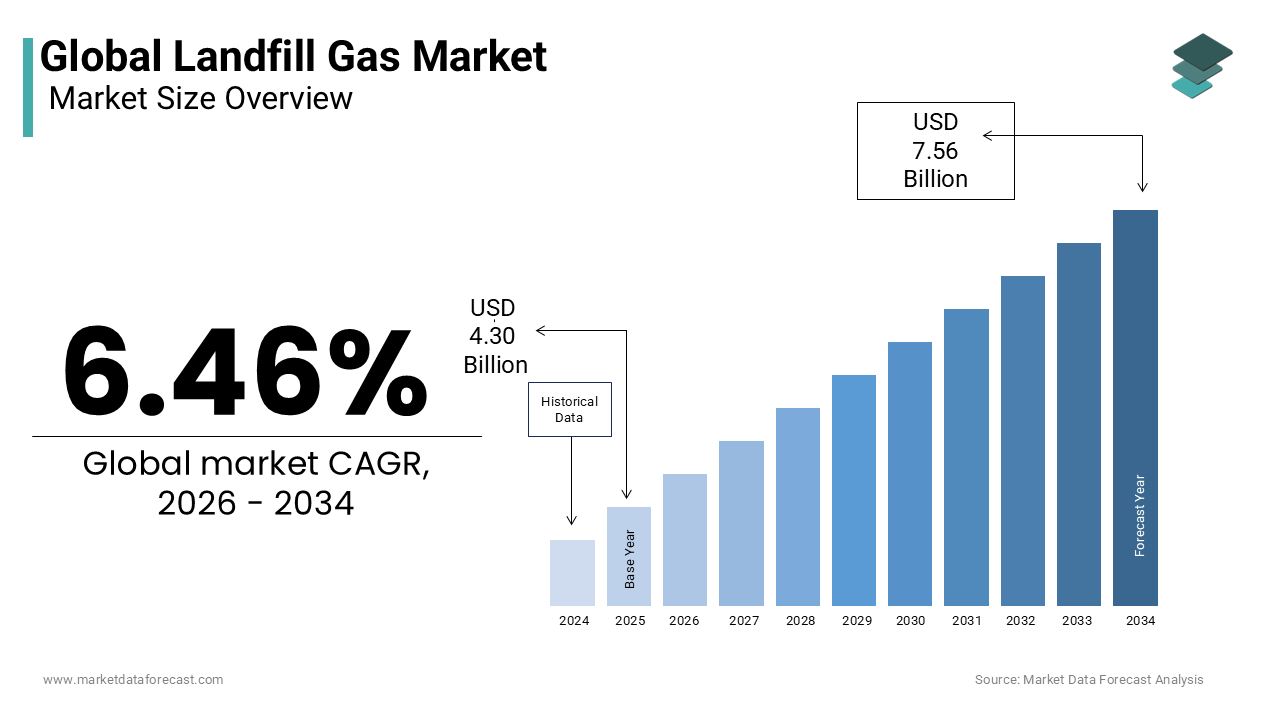
Landfill gas is methane and carbon dioxide generated by the anaerobic decomposition of organic waste in municipal solid waste landfills. This sector plays a critical role in mitigating greenhouse gas emissions while simultaneously producing renewable energy in the form of electricity, heat, or upgraded biomethane. According to the Intergovernmental Panel on Climate Change, methane has a global warming potential approximately 28 to 30 times greater than carbon dioxide over a 100-year period, making its capture from landfills a priority for climate action strategies worldwide. As per the United States Environmental Protection Agency, municipal solid waste landfills represent the third-largest source of human-related methane emissions in the United States, accounting for approximately 14.4% of total methane output. The European Union’s Waste Framework Directive mandates that member states reduce the amount of biodegradable municipal waste sent to landfills, thereby influencing the volume of gas available for recovery. Furthermore, the International Energy Agency states that the energy sector is responsible for around 40% of methane emissions from human activity, with waste management contributing a significant portion that can be abated through existing technologies. Regulatory frameworks such as the Global Methane Pledge, which aims to reduce global methane emissions by at least 30% by 2030, are accelerating investment in gas collection infrastructure. The transition toward circular economy principles further supports the valorization of landfill gas, transforming an environmental liability into a valuable energy resource. These dynamics establish a robust foundation for the landfill gas market, driven by environmental compliance, energy security needs, and technological advancements in gas upgrading and utilization.
MARKET DRIVERS
Stringent Environmental Regulations and Methane Reduction Targets
Governments worldwide are implementing rigorous environmental regulations aimed at reducing methane emissions from waste management facilities, which is one of the key factors propelling the expansion of the landfill gas market. Methane is a potent greenhouse gas, and its uncontrolled release from decomposing waste contributes significantly to global warming. According to the United Nations Environment Programme, the waste sector accounts for approximately 20% of global anthropogenic methane emissions, prompting international bodies to enforce stricter control measures. As per the European Commission, the revised Landfill Directive requires member states to ensure that all existing landfills have gas collection systems in place to minimize emissions and utilize the captured gas for energy production. In the United States, the Environmental Protection Agency has updated its New Source Performance Standards to require more frequent monitoring and repair of leaks in landfill gas collection systems. These regulatory mandates compel landfill operators to invest in advanced collection infrastructure, including vertical wells, horizontal trenches, and high-density polyethylene piping networks. Non-compliance can result in substantial financial penalties and operational shutdowns, making adherence to these standards a business imperative. Additionally, national climate action plans often include specific targets for methane reduction, further driving the adoption of gas recovery technologies. The legal obligation to mitigate environmental impact ensures a steady demand for landfill gas management solutions, as operators seek to align with evolving legislative frameworks and avoid reputational damage associated with environmental negligence.
Growing Demand for Renewable Energy and Resource Recovery
The increasing global demand for renewable energy sources and the push for resource recovery are significantly driving the expansion of the landfill gas market. Landfill gas, primarily composed of methane, serves as a reliable and continuous source of baseload renewable energy that can be converted into electricity, thermal energy, or vehicle fuel. According to the International Renewable Energy Agency, bioenergy, including landfill gas, plays a crucial role in the global energy transition, providing a stable alternative to intermittent solar and wind power. As per the U.S. Energy Information Administration, landfill gas is a consistent energy source with a heating value of 350 to 600 Btu per cubic foot, demonstrating the viability of this resource. Many countries offer incentives such as feed-in tariffs, renewable energy certificates, and tax credits to encourage the development of landfill gas-to-energy projects. These financial mechanisms improve the economic feasibility of gas capture and utilization, making it an attractive investment for utility companies and independent power producers. Furthermore, the concept of a circular economy emphasizes the value of recovering energy from waste streams rather than treating waste solely as a disposal problem. Upgrading landfill gas to renewable natural gas allows it to be injected into existing natural gas grids, expanding its market reach beyond local electricity generation. This dual benefit of waste management and energy production positions landfill gas as a key component in sustainable energy portfolios, which is driving sustained market growth.
MARKET RESTRAINTS
High Initial Capital Investment and Operational Costs
The substantial financial burden associated with the installation and maintenance of landfill gas collection and utilization systems is hampering the landfill gas market growth. Establishing a comprehensive gas collection network requires extensive drilling, piping, and monitoring equipment, along with expensive processing units for electricity generation or gas upgrading. According to the World Bank, the capital expenditure for a typical landfill gas-to-energy project can range from several million to tens of millions of dollars, depending on the size of the landfill and the chosen technology. As per the American Biogas Council, ongoing operational costs include regular maintenance of wells, replacement of filters, and management of condensate, which can strain the budgets of smaller municipal landfill operators. The economic viability of these projects is highly sensitive to fluctuations in energy prices and the availability of government subsidies. In regions where electricity prices are low or renewable incentives are insufficient, the return on investment may be prolonged or negative, discouraging new developments. Additionally, the complexity of integrating gas collection systems with existing landfill operations requires specialized engineering expertise, further increasing costs. For many developing nations and smaller municipalities, the upfront financial requirement is prohibitive, limiting the adoption of advanced gas recovery technologies. Until financing mechanisms become more accessible and operational efficiencies improve, the high cost structure will continue to restrain widespread market penetration, particularly in economically constrained regions.
Declining Quality and Quantity of Landfill Gas over Time
The inherent nature of landfill gas production that declines in both volume and quality as the waste mass stabilizes is further hindering the landfill gas market growth. Methane generation follows a predictable curve, peaking several years after waste deposition and then gradually decreasing as the organic material is fully decomposed. According to the Intergovernmental Panel on Climate Change, the rate of methane production depends on factors such as waste composition, moisture content, and temperature, leading to variability in gas yield over the lifespan of a landfill. As per the U.S. Environmental Protection Agency, the average productive life of a landfill gas well is typically between 10 and 20 years, after which the gas flow may become insufficient to sustain energy generation operations. This decline necessitates continuous adjustments to the collection system and may eventually render the project economically unviable, requiring early decommissioning. Furthermore, the presence of contaminants such as siloxanes, hydrogen sulfide, and volatile organic compounds can damage engines and upgrading equipment, increasing maintenance costs and reducing efficiency. The uncertainty regarding future gas volumes makes it challenging to secure long-term power purchase agreements or financing. Operators must carefully model gas production profiles to ensure that revenue projections are realistic, but unexpected changes in waste input or environmental conditions can disrupt these estimates. This temporal limitation restricts the attractiveness of landfill gas as a permanent energy solution compared to other renewable sources with more consistent outputs.
MARKET OPPORTUNITIES
Upgrading Landfill Gas to Renewable Natural Gas
The advancement of gas upgrading technologies that convert raw landfill gas into renewable natural gas is expected to see strong growth in the coming years, which is a promising opportunity for the global landfill gas market. Renewable natural gas, also known as biomethane, has a higher methane content and fewer impurities than raw landfill gas, making it suitable for injection into existing natural gas distribution networks or use as a transportation fuel. According to Fortune Business Insights, the global renewable natural gas market is projected to grow from USD 17.00 billion in 2026 to USD 43.03 billion by 2034, exhibiting a CAGR of 12.31% over the forecast period. As per the California Air Resources Board, renewable natural gas derived from landfills qualifies for high-value carbon credits under low-carbon fuel standards, significantly enhancing its economic attractiveness. Upgrading technologies such as membrane separation, pressure swing adsorption, and water scrubbing are becoming more efficient and cost-effective, allowing for larger scale production. This process enables landfill operators to access broader markets beyond local electricity generation, including industrial users and vehicle fleets. The ability to store and transport renewable natural gas provides flexibility that electricity generation lacks, addressing issues of intermittency and grid capacity. Governments are increasingly supporting biomethane production through specific incentives and mandates, creating a favorable regulatory environment. By shifting focus from simple electricity generation to high-value biomethane production, landfill operators can maximize revenue potential and contribute more effectively to national energy security and climate goals.
Integration with Carbon Capture and Storage Technologies
The integration of landfill gas collection with carbon capture and storage technologies offers a significant opportunity to the landfill gas market expansion. While methane capture addresses the most potent greenhouse gas, the carbon dioxide component of landfill gas can also be captured and sequestered to achieve net negative emissions. According to the Global CCS Institute, carbon capture and storage is a critical technology for achieving net-zero emissions targets, and applying it to biogenic sources like landfills can result in carbon removal from the atmosphere. As per the European Commission, projects that combine biogas production with carbon capture are eligible for additional funding and support under Green Deal initiatives. Capturing carbon dioxide from landfill gas prevents its release into the atmosphere and allows for its utilization in industrial applications such as enhanced oil recovery or synthetic fuel production. This approach transforms landfills from mere waste disposal sites into carbon sinks, aligning with ambitious climate goals. Technological advancements in direct air capture and point-source capture are reducing costs and improving efficiency, making this integration more feasible. Companies that pioneer these hybrid systems can differentiate themselves in the market and attract investment from sustainability-focused funds. The potential to generate negative emission credits further enhances the financial viability of such projects, opening new revenue streams and reinforcing the role of landfill gas in the broader carbon management landscape.
MARKET CHALLENGES
Technical Complexities in Gas Collection and Purification
The technical challenges associated with efficiently collecting and purifying landfill gas pose significant hurdles for market participants. Landfills are heterogeneous environments with varying waste compositions, moisture levels, and settlement patterns, which can lead to uneven gas migration and collection inefficiencies. According to the Journal of Environmental Management, irregular gas flow can cause vacuum imbalances in the collection system, leading to air intrusion that dilutes the methane content and increases the risk of underground fires. As per the Waste Management Industry Association, the presence of siloxanes and other trace contaminants in landfill gas can cause severe damage to internal combustion engines and gas upgrading membranes, requiring frequent and costly maintenance. Removing these impurities requires sophisticated purification systems that add complexity and expense to the operation. Additionally, the corrosion of pipes and wells due to acidic condensate and hydrogen sulfide necessitates the use of specialized materials and regular inspection. Managing leachate levels is also critical, as excessive moisture can block gas pathways and reduce extraction rates. The dynamic nature of landfills means that collection systems must be continuously adjusted and expanded and this require skilled technical personnel and advanced monitoring tools. Failure to address these technical issues can result in reduced gas yields, equipment failure, and safety hazards, undermining the operational reliability and profitability of landfill gas projects.
Regulatory Uncertainty and Policy Fluctuations
The landfill gas market faces significant challenges due to regulatory uncertainty and fluctuating policy frameworks that impact project economics and long-term planning. Government incentives such as tax credits, feed-in tariffs, and renewable energy mandates are often subject to political changes and budgetary constraints, creating an unstable investment environment. According to the International Monetary Fund, policy inconsistency is a major barrier to renewable energy investment, as developers struggle to predict future revenue streams and regulatory requirements. As per the European Biogas Association, changes in subsidy schemes across different European countries have led to the cancellation or delay of several landfill gas projects, highlighting the risks associated with policy dependence. In some regions, the definition of what constitutes renewable energy or eligible biomass is debated, affecting the eligibility of landfill gas for certain incentives. Additionally, evolving environmental standards regarding emissions and waste management may require unexpected upgrades to existing facilities, increasing compliance costs. The lack of harmonized regulations across borders complicates the development of international projects and technology transfer. Investors and operators require stable and predictable policy environments to justify the high capital expenditures associated with landfill gas infrastructure. Without clear long-term commitments from governments, the market remains vulnerable to sudden shifts in the regulatory landscape, hindering sustained growth and innovation in the sector.
REPORT COVERAGE
| REPORT METRIC | DETAILS |
| Market Size Available | 2025 to 2034 |
| Base Year | 2025 |
| Forecast Period | 2026 to 2034 |
| CAGR | 6.47% |
| Segments Covered | By Application, Type of Landfill Gas, Technology and Region. |
| Various Analyses Covered | Global, Regional & Country Level Analysis, Segment-Level Analysis, DROC, PESTLE Analysis, Porter’s Five Forces Analysis, Competitive Landscape, Analyst Overview of Investment Opportunities |
| Regions Covered | North America, Europe, APAC, Latin America, Middle East & Africa |
| Market Leaders Profiled | Geotech, Covanta Holding Corporation, Waste Management, Inc., Veolia Environnement S.A, SUEZ SA, Kohler Co., Inc., Aria Energy Corp, Granite Acquisition, Inc., Vectren Corporation, Shanghai Chengtou Holding Co., Ltd., Pennon Group Plc., and Others. |
SEGMENTAL ANALYSIS
By Application Insights
The electricity generation segment accounted for the largest share of the global landfill gas market in 2025. The dominance of electricity generation segment in the global market is primarily driven by its established infrastructure, mature technology, and direct integration with existing power grids. This application utilizes internal combustion engines or turbines to convert methane into electrical energy, providing a reliable source of baseload renewable power. According to the U.S. Energy Information Administration, landfill gas is a widely used source for electricity generation in the United States, providing a stable, renewable alternative in the power sector. As per the International Renewable Energy Agency, bioenergy from waste represents a stable and dispatchable energy source that complements intermittent renewables like wind and solar. The widespread availability of standardized generator sets and the familiarity of utility companies with biogas-fueled power plants facilitate easy adoption and operation. Furthermore, many regions offer feed-in tariffs and renewable energy certificates specifically for waste-derived electricity, enhancing the financial viability of these projects. The ability to sell excess power to the grid provides a consistent revenue stream for landfill operators, offsetting the high costs of gas collection systems. This mature ecosystem of technology, regulation, and market access ensures that electricity generation remains the primary application for landfill gas globally, driving sustained investment and operational expansion in this segment.
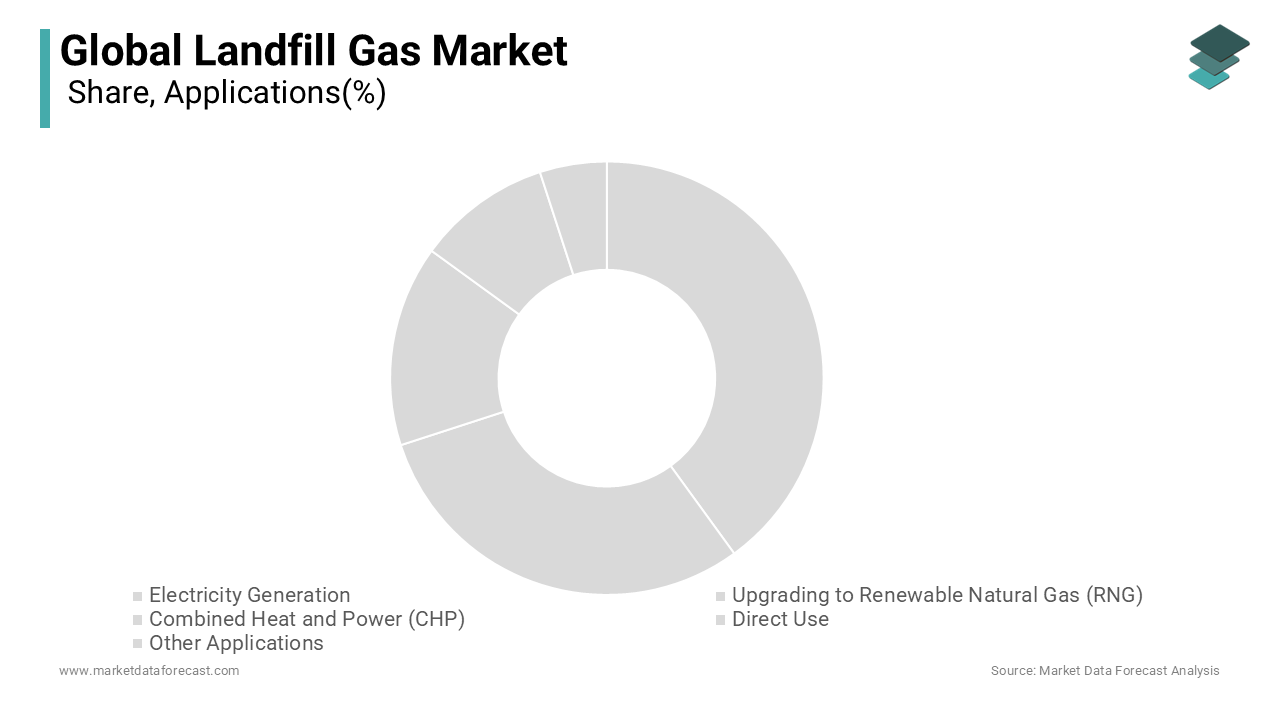
On the other hand, the upgrading of landfill gas to renewable natural gas segment is experiencing the fastest growth and is expected to register a promising CAGR during the forecast period owing to the increasing demand for low-carbon transportation fuels and the expansion of natural gas infrastructure. This process involves removing carbon dioxide and impurities from raw landfill gas to produce biomethane with a purity level suitable for injection into natural gas pipelines or use as vehicle fuel. According to the International Gas Union, the global production of biomethane has increased significantly, with landfill gas being a major feedstock due to its consistent availability. As per the California Air Resources Board, renewable natural gas derived from landfills qualifies for high-value credits under low-carbon fuel standards, making it economically attractive compared to electricity generation. The transportation sector, particularly heavy-duty trucks and buses, is increasingly adopting compressed natural gas vehicles, creating a robust demand for renewable alternatives. Government mandates in Europe and North America are pushing for higher blends of renewable gases in the grid, further stimulating investment in upgrading technologies such as membrane separation and pressure swing adsorption. The ability to store and transport renewable natural gas offers flexibility that electricity lacks, allowing it to reach markets beyond the immediate vicinity of the landfill. These factors combine to propel the upgrading segment as the fastest-growing application, reflecting a strategic shift toward higher-value and versatile energy products.
By Type of Landfill Gas Insights
The methane segment had the major share of the global market in 2025. The growth of the methane segment in the global market can be credited to its high energy content and status as the primary target for recovery and utilization. Typically comprising 45% to 60% of landfill gas by volume, methane is the key driver of economic value in gas-to-energy projects. According to the Intergovernmental Panel on Climate Change, methane has a global warming potential approximately 28 to 30 times greater than carbon dioxide over a 100-year period, making its capture a critical environmental priority. As per the United States Environmental Protection Agency, capturing methane from landfills prevents its release into the atmosphere while providing a valuable fuel source for electricity and heat generation. The high calorific value of methane allows it to efficiently power internal combustion engines and turbines, making it the preferred component for energy recovery. Regulatory frameworks worldwide focus heavily on methane reduction, offering incentives and mandates that specifically target this gas. The technological maturity of methane extraction and purification processes further supports its dominance. Industries ranging from power generation to vehicle fueling rely on the consistent quality and energy density of methane derived from landfills. This central role in both environmental compliance and energy production ensures that methane remains the focal point of landfill gas management strategies, driving the majority of market activities and investments.
However, the carbon dioxide segment within landfill gas is witnessing the fastest growth and is estimated to record a prominent CAGR in the global market during the forecast period owing to the emerging opportunities in carbon capture, utilization, and storage technologies. While historically considered a waste product to be separated and vented, carbon dioxide is increasingly recognized as a valuable resource for industrial applications and climate mitigation. According to the Global CCS Institute, the demand for captured carbon dioxide is rising for use in enhanced oil recovery, food and beverage carbonation, and synthetic fuel production. As per the European Commission, initiatives under the Green Deal encourage the capture of biogenic carbon dioxide, which can contribute to negative emissions when combined with storage. Advances in separation technologies have made it more economical to isolate high-purity carbon dioxide from landfill gas streams. The integration of carbon capture systems with landfill gas upgrading facilities allows operators to monetize both methane and carbon dioxide components. Additionally, stricter regulations on greenhouse gas emissions are prompting facilities to capture carbon dioxide rather than releasing it, even if immediate commercial uses are limited. The development of markets for recycled carbon materials and the push for circular economy principles are further accelerating interest in this segment. These evolving dynamics position carbon dioxide not just as a byproduct but as a growing revenue stream, driving rapid expansion in capture and utilization technologies.
By Technology Insights
The landfill gas collection systems segment held the dominant share in the global market in 2025 because they form the foundational infrastructure required for any subsequent gas treatment or utilization. Without effective collection, the gas cannot be captured for energy recovery or emission control, making this technology indispensable. According to the Waste Management Industry Association, the installation of vertical wells and horizontal trenches is the first critical step in landfill gas management, accounting for a significant portion of initial capital expenditure. As per the U.S. Environmental Protection Agency, proper collection system design is essential to maximize gas recovery efficiency and minimize air intrusion, which can compromise safety and gas quality. The complexity of landfill geometry and waste settlement requires customized engineering solutions, driving demand for specialized drilling and piping services. Regulatory mandates in many countries require active gas collection systems for all municipal solid waste landfills above a certain size, ensuring a steady baseline demand for this technology. The ongoing maintenance and expansion of collection networks as landfills grow further sustain market activity. Innovations in well design, monitoring sensors, and vacuum control systems enhance the performance of collection infrastructure. This fundamental role in the landfill gas value chain ensures that collection systems remain the largest technology segment, underpinning the entire industry’s operations and compliance efforts.
On the other end, the gas treatment systems segment is estimated to grow at a healthy CAGR in the global market during the forecast period owing to the rising need for high-purity gas for renewable natural gas production and stringent emission standards. As applications shift from simple electricity generation to pipeline injection and vehicle fuel, the requirement for removing contaminants such as siloxanes, hydrogen sulfide, and volatile organic compounds becomes critical. According to the International Biogas Association, the adoption of advanced treatment technologies like activated carbon filtration, chemical scrubbing, and membrane separation is rising rapidly to meet quality specifications. As per the European Biogas Association, upgraded biomethane must meet strict purity standards to be injected into natural gas grids, necessitating sophisticated treatment processes. The presence of siloxanes can damage engines and upgrading equipment, making their removal essential for operational reliability. Growing environmental regulations also mandate lower emissions of hazardous air pollutants, driving the installation of additional treatment stages. Technological advancements are making these systems more efficient and cost-effective, encouraging wider adoption. The shift toward higher-value end uses for landfill gas directly correlates with increased investment in treatment infrastructure. This trend positions gas treatment systems as the fastest-growing technology segment, reflecting the industry’s evolution toward premium-quality renewable energy products.
REGIONAL ANALYSIS
North America Landfill Gas Market Analysis
North America held the largest share of the global market in 2025 and is expected to maintain its leadership position through continued innovation in renewable natural gas production, mature regulatory frameworks and extensive existing infrastructure. The United States is the largest contributor due to federal and state-level mandates for methane capture and renewable energy production. According to the U.S. Environmental Protection Agency, there are over 500 operational landfill gas-to-energy projects in the United States, which is indicating the region’s leadership in this sector. As per the American Biogas Council, favorable policies such as the Renewable Fuel Standard and state-level low-carbon fuel standards provide strong economic incentives for project development. Canada also contributes to the market with growing investments in waste-to-energy technologies, particularly in provinces with aggressive climate goals. The presence of major technology providers and experienced operators facilitates efficient project execution and maintenance. The well-established natural gas infrastructure in North America supports the growing trend of upgrading landfill gas to renewable natural gas for pipeline injection. High labor and compliance costs are offset by robust revenue streams from energy sales and environmental credits. The region’s focus on innovation and digital monitoring enhances operational efficiency. North America’s mature market continues to drive technological advancements and serves as a model for other regions seeking to expand their landfill gas capabilities.
Europe Landfill Gas Market Analysis
Europe will likely continue its trend toward high-efficiency biomethane production and circular economy integration in the next few years. Europe represents a highly regulated and advanced market for landfill gas, driven by stringent environmental directives and a strong commitment to the circular economy. The European Union’s Landfill Directive and Waste Framework Directive mandate the reduction of biodegradable waste sent to landfills, influencing gas availability and recovery strategies. According to Eurostat, many European countries have significantly reduced landfill rates, shifting focus toward recycling and incineration, yet existing landfills remain important sources of renewable gas. As per the European Biogas Association, there is a strong push toward upgrading landfill gas to biomethane for injection into the natural gas grid, supported by national incentives in countries like Germany, Sweden, and the United Kingdom. The region leads in adopting advanced gas treatment and upgrading technologies to meet high-purity standards. Strict emissions regulations drive continuous improvement in collection efficiency and leak detection. The integration of landfill gas into broader bioenergy strategies supports energy security and climate goals. Public acceptance and political will for sustainable waste management are high, fostering a supportive environment for investment. Europe’s emphasis on quality and sustainability ensures that landfill gas projects are integrated into comprehensive waste management systems, maintaining the region’s prominent position in the global market.
Asia Pacific Landfill Gas Market Analysis
The Asia-Pacific region is poised for significant expansion as governments implement new waste-to-energy policies, rapid urbanization, increasing waste generation, and improving environmental regulations. Countries such as China, India, and Japan are investing in waste-to-energy technologies to address mounting landfill challenges and energy demands. According to the Asian Development Bank, municipal solid waste generation in Asia is projected to increase significantly, creating a large potential resource for gas recovery. As per the Ministry of Ecology and Environment in China, government initiatives are promoting the construction of landfill gas power plants to reduce methane emissions and generate renewable energy. India is also seeing growth in this sector, with policies supporting waste-to-energy projects under its national action plan on climate change. Japan, with its advanced waste management infrastructure, focuses on high-efficiency gas utilization and upgrading. The region faces challenges related to informal waste picking and mixed waste composition, which can affect gas quality and collection efficiency. However, increasing technical expertise and international collaborations are improving project viability. The vast untapped potential in developing economies offers significant growth opportunities for technology providers and investors. Asia-Pacific’s dynamic growth trajectory positions it as a key future driver of the global landfill gas market.
Latin America Landfill Gas Market Analysis
Latin America is likely to see steady growth as regulatory frameworks mature and international funding supports new infrastructure, increasing awareness of environmental issues and gradual implementation of waste management regulations. Brazil and Mexico are the leading countries in the region, with several operational landfill gas-to-energy projects. According to the Inter-American Development Bank, there is growing interest in leveraging landfill gas for renewable energy production to support national climate goals. As per the Brazilian Ministry of Environment, policies such as the National Solid Waste Policy encourage the recovery of energy from waste, driving investment in gas collection infrastructure. Mexico has also implemented regulations requiring methane capture from large landfills, stimulating market activity. The region benefits from abundant organic waste resources and a growing need for affordable renewable energy. However, financial constraints and limited technical expertise can hinder project development. International funding and technology transfer are playing crucial roles in overcoming these barriers. The potential for carbon credit revenue under international mechanisms adds economic incentive for project developers. As regulatory frameworks strengthen and capacity builds, Latin America is poised for steady growth in the landfill gas sector, contributing to regional sustainability and energy diversification.
Middle East and Africa Landfill Gas Market Analysis
The Middle East and Africa region is expected to undergo a gradual transition toward structured waste-to-energy solutions, urbanization and increasing focus on sustainable waste management. South Africa and the United Arab Emirates are leading the way with pilot projects and regulatory developments. According to the World Bank, waste generation in Sub-Saharan Africa is rising rapidly, creating an urgent need for improved management solutions including gas recovery. As per the South African Department of Forestry, Fisheries and the Environment, there are initiatives to capture landfill gas for electricity generation to address energy shortages and reduce emissions. The United Arab Emirates is investing in advanced waste-to-energy facilities as part of its diversification strategy away from oil. The region faces challenges such as limited infrastructure and funding, but international partnerships and climate finance are helping to bridge these gaps. The high solar potential in some areas competes with landfill gas for renewable investment, but the baseload nature of biogas offers a unique advantage for grid stability.
COMPETITIVE LANDSCAPE
The competition in the landfill gas market is characterized by a mix of large integrated waste management companies specialized energy firms and technology providers. Large waste operators leverage their ownership of landfill assets to control feedstock supply and capture value across the entire chain from collection to energy sales. Specialized energy companies compete by offering advanced upgrading technologies and accessing broader distribution networks for renewable natural gas. Technology providers differentiate themselves through innovative gas collection and purification systems that improve efficiency and reduce costs. The market sees increasing collaboration between waste managers and energy utilities to develop large scale renewable gas projects. Regulatory incentives such as carbon credits and renewable fuel standards play a crucial role in shaping competitive dynamics by influencing project economics. Price competition is moderate but intensifies in regions with saturated markets or limited policy support. Intellectual property related to upgrading technologies is a key differentiator. Customer relationships and long term contracts are vital for securing revenue streams. As the market matures companies must balance operational excellence with strategic innovation to maintain leadership and drive growth in the renewable energy sector.
KEY MARKET PLAYERS
Companies playing a prominent role in the global landfill gas market include
- Geotech
- Covanta Holding Corporation
- Waste Management, Inc.
- Veolia Environnement S.A.
- SUEZ SA
- Kohler Co., Inc.
- Aria Energy Corp.
- Granite Acquisition, Inc.
- Vectren Corporation
- Shanghai Chengtou Holding Co., Ltd.
- Pennon Group Plc.
- Others
Top Players in the Global Landfill Gas Market
Waste Management Inc
Waste Management Inc is a leading provider of environmental services with extensive involvement in landfill gas recovery and renewable energy generation. The company operates one of the largest networks of landfill gas to energy projects in North America, converting methane into electricity and renewable natural gas. Recently Waste Management has accelerated its investment in renewable natural gas upgrading facilities to supply low carbon fuel to transportation markets. They have partnered with major energy companies to expand distribution channels for their biomethane products. By integrating advanced monitoring technologies they enhance collection efficiency and reduce emissions. Their commitment to sustainability drives continuous innovation in gas capture systems. This strategic focus on high value energy products strengthens their position as a key player in the global transition toward circular waste management solutions.
Veolia Environnement SA
Veolia Environnement SA is a global leader in ecological transformation with significant expertise in landfill gas treatment and energy recovery. The company designs and operates comprehensive waste management solutions that include gas collection and upgrading systems for municipalities and industrial clients. Veolia recently expanded its portfolio by acquiring specialized biogas technology firms to enhance its upgrading capabilities. They have implemented innovative projects that convert landfill gas into hydrogen and other sustainable fuels. By leveraging digital tools they optimize plant performance and ensure regulatory compliance. Their strong presence in Europe and Asia allows them to address diverse market needs. Veolia’s emphasis on resource recovery and decarbonization supports its goal of becoming a reference in ecological transformation while strengthening its competitive edge in the landfill gas sector.
Engie SA
Engie SA is a major global energy group actively involved in the production and distribution of renewable gases including those derived from landfills. The company develops and manages landfill gas projects that produce biomethane for injection into natural gas grids and use as vehicle fuel. Engie recently launched several large scale renewable natural gas plants in Europe and North America to meet growing demand for green energy. They have formed strategic alliances with waste operators to secure long term feedstock supplies. By investing in advanced purification technologies Engie ensures high quality gas output. Their integrated approach combines waste management with energy production creating synergies that enhance profitability. Engie’s focus on sustainability and innovation positions it as a vital contributor to the global landfill gas market and the broader energy transition.
Top Strategies Used by Key Market Participants
Key players in the landfill gas market primarily focus on vertical integration and technological innovation to maximize value from waste streams. Companies invest heavily in upgrading technologies to convert raw landfill gas into renewable natural gas which commands higher prices than electricity. Strategic partnerships with waste management firms ensure consistent feedstock supply and operational efficiency. Expansion into transportation fuel markets allows participants to access lucrative low carbon credit programs. Digitalization of monitoring systems enhances collection efficiency and predictive maintenance reducing operational costs. Mergers and acquisitions are used to acquire specialized technologies and expand geographic reach. Sustainability reporting and carbon credit monetization are increasingly central to business models. These strategies enable companies to adapt to regulatory changes and capitalize on the growing demand for renewable energy sources while maintaining competitive advantages in an evolving market landscape.
MARKET SEGMENTATION
This global landfill gas market research report has been segmented and sub-segmented based on application and region.
By Application
- Electricity Generation
- Upgrading to Renewable Natural Gas (RNG)
- Combined Heat and Power (CHP)
- Direct Use
- Other Applications
By Type of Landfill Gas
- Methane
- Carbon Dioxide
- Trace Gases
By Technology
- Landfill Gas Collection Systems
- Gas Treatment Systems
- Gas Flaring Systems
- Gas-to-Energy (Power Generation) Systems
- Monitoring & Control Systems
By Region
- North America
- Europe
- Asia Pacific
- Latin America
- Middle East & Africa
Frequently Asked Questions
What are the key drivers of the landfill gas market globally?
Key drivers include the global push for cleaner energy, increasing waste generation, and growing awareness about methane emissions. Governments worldwide are setting stricter regulations on waste management and landfill gas emissions, which has led to higher adoption of technologies that capture and utilize landfill gas for energy production.
How does landfill gas contribute to renewable energy?
Landfill gas, primarily composed of methane, can be captured and used as a renewable energy source. When processed, it can be converted into electricity, heat, or even upgraded to natural gas quality for use as vehicle fuel. This contributes to reducing reliance on fossil fuels and helps mitigate greenhouse gas emissions.
What are the environmental benefits of using landfill gas for energy?
Using landfill gas for energy reduces methane emissions from landfills, which is a potent greenhouse gas. By capturing and utilizing methane, landfill gas projects prevent harmful environmental effects, contribute to the reduction of global warming potential, and promote cleaner air quality.
What is the future outlook for the global landfill gas market?
The future outlook for the landfill gas market is positive, driven by increasing investments in renewable energy, stricter environmental regulations, and the growing need to reduce methane emissions. As more countries and regions set ambitious climate goals, the market for landfill gas is expected to expand, with technological advancements improving efficiency and cost-effectiveness.
Access the study in MULTIPLE FORMATS
Purchase options starting from
$ 2500
Didn’t find what you’re looking for?
TALK TO OUR ANALYST TEAM
Need something within your budget?
NO WORRIES! WE GOT YOU COVERED!
Call us on: +1 888 702 9696 (U.S Toll Free)
Write to us: sales@marketdataforecast.com