- Product Description Description
- Table of Contents TOC
- List of Table & Figure LOT
- Get Free Sample PDF Sample PDF
Market Size, 2025
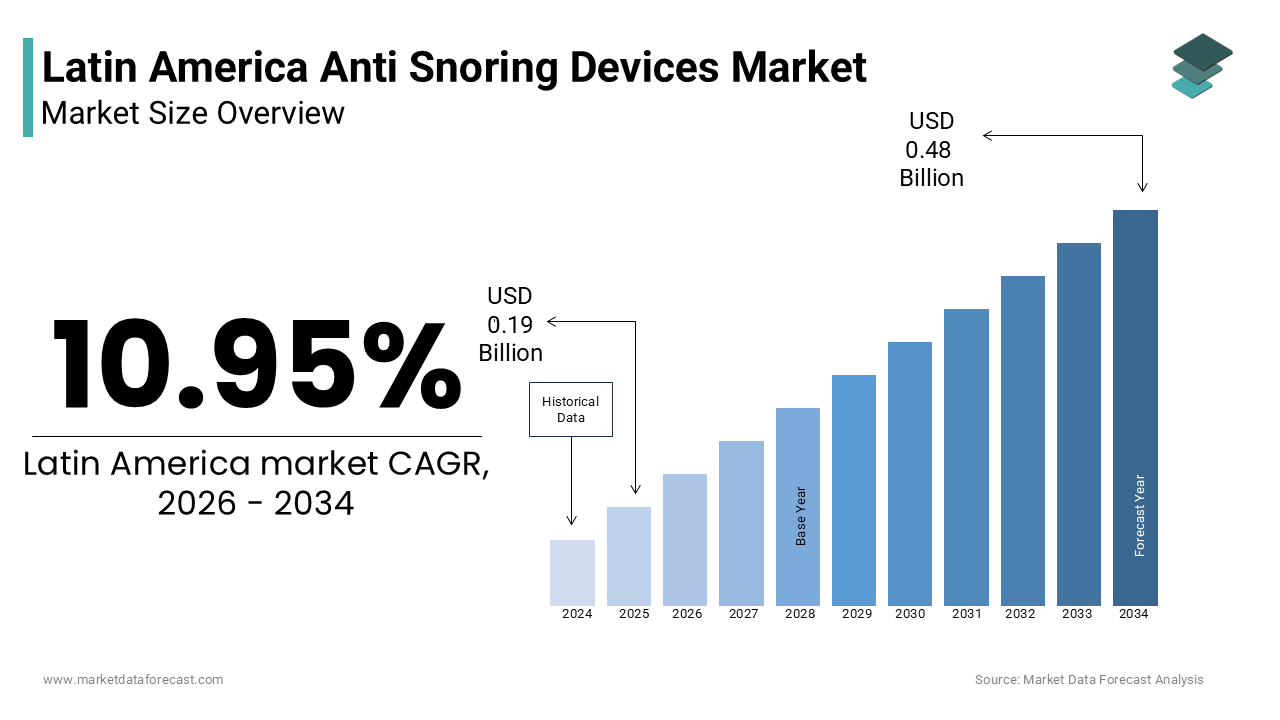
$0.19 BnMarket Estimate, 2026
$0.21 BnMarket Forecast, 2034
$0.48 BnCAGR, 2026–2034
10.95%Executive Summary: Latin America Anti Snoring Devices Market
- Market Scope: Comprehensive analysis of the Latin American anti-snoring devices market evaluating device types, surgical procedures, and country-level performances.
- Market Valuation: Valued at USD 0.19 billion in 2025, estimated at USD 0.21 billion in 2026, and projected to reach USD 0.48 billion by 2034, expanding at a robust CAGR of 10.95% from 2026 to 2034.
- Primary Growth Drivers: Rising prevalence of obesity and sedentary lifestyles across the region, alongside increasing public awareness of chronic sleep apnea risks.
Key Market Segment Metrics (2026–2034)
| Category | Leading Segment (Base Position) | Fastest-Growing / High-Growth Segment |
|---|---|---|
| By Device Type | Mandibular Advancement Devices (MADs) (dominant share backed by proven clinical efficacy for primary snoring and mild-to-moderate OSA) | Nasal Dilators (projected to showcase high growth driven by over-the-counter availability and non-invasive convenience) |
| By Surgical Procedure | Uvulopalatopharyngoplasty (UP3) (major share as the established gold-standard surgical procedure for severe airway obstructions) | Radiofrequency Ablation (RFA) (estimated to register strong growth due to minimally invasive outpatient application and faster recovery times) |
| By Country / Region | Brazil (led the market with a 41.1% share in 2025 supported by robust healthcare infrastructure and large demographic volume) | Mexico & Argentina (high-growth hubs leveraging medical tourism, specialized professional expertise, and expanding private insurance coverage) |
Major Market Players & Industry Landscape
Market Structure: Competitive ecosystem featuring global medical technology giants providing advanced CPAP and digital health platforms, alongside specialized regional manufacturers offering custom oral appliances and over-the-counter solutions.
Key Companies: ResMed Inc., Philips NV, SomnoMed Ltd, Sleeping Well LLC, Apnea Sciences Corporation, Tomed Dr. Toussaint GmbH, AccuMED Corp, Fisher & Paykel Healthcare, ImThera Medical Inc., Sleep Well Enjoy Life Ltd., and MEDiTAS Ltd.
Latin America Anti Snoring Devices Market Size
The Latin America anti snoring devices market size was valued at USD 0.19 billion in 2025 and is anticipated to reach USD 0.21 billion in 2026 from USD 0.48 billion by 2034, growing at a CAGR of 10.95% during the forecast period from 2026 to 2034.
According to the Pan American Health Organization, sleep disorders affect approximately 30% of the adult population in Latin America with snoring being one of the most commonly reported symptoms. The rising awareness of the health risks associated with chronic snoring, such as cardiovascular disease and daytime fatigue has shifted consumer perception from viewing it as a nuisance to recognizing it as a medical condition. As per data from the World Health Organization, obesity rates in countries like Mexico and Chile have reached alarming levels, with over 35% of adults classified as obese, creating a substantial patient pool for anti-snoring interventions. Regulatory frameworks in major economies such as Brazil and Argentina are strengthening standards for medical device safety, ensuring that consumers have access to effective and safe treatments. The integration of digital health technologies, allowing for remote monitoring and personalized therapy adjustments, is further transforming the landscape, making treatment more accessible and manageable for patients across the region.
MARKET DRIVERS
Rising Prevalence of Obesity and Sedentary Lifestyles
The escalating prevalence of obesity and sedentary lifestyles is a key factor propelling the Latin American anti snoring devices market as excess weight is a leading cause of airway obstruction during sleep. Adipose tissue accumulation in the neck area narrows the airway, increasing the likelihood of vibration and snoring. According to the World Health Organization, obesity rates in Latin America have doubled since 1990, with countries like Mexico and Argentina reporting adult obesity prevalence exceeding 30%. This demographic trend creates a large addressable population requiring intervention for sleep-related breathing disorders. In urban centers where physical activity levels are declining due to desk-bound jobs and car-dependent infrastructure, the incidence of snoring continues to rise among younger demographics. According to the data from the International Diabetes Federation, type-2 diabetes that is closely linked to obesity and sleep apnea and affects over 60 million people in the region and further highlighting the interconnectedness of metabolic health and sleep quality. Healthcare providers are increasingly screening for snoring in obese patients, leading to higher diagnosis rates and subsequent demand for therapeutic devices. The correlation between body mass index and snoring severity drives patients to seek effective solutions ranging from lifestyle changes to mechanical devices. This sustained health crisis ensures a steady and growing demand for anti-snoring devices as individuals seek to improve their overall health and quality of life.
Increasing Awareness of Sleep Apnea and Associated Health Risks
Increasing awareness of sleep apnea and its severe associated health risks is further contributing to the regional market expansion. Public health campaigns and media coverage have educated consumers about the link between chronic snoring and serious conditions such as hypertension, stroke, and heart failure. According to the Pan American Health Organization, cardiovascular diseases remain the leading cause of death in the region, prompting individuals to address risk factors including poor sleep quality. Medical professionals are more actively diagnosing obstructive sleep apnea using home sleep tests and clinical evaluations, which leads to higher prescription rates for continuous positive airway pressure machines and oral appliances. As per the data from the Latin American Thoracic Society, awareness of sleep disorders among primary care physicians has increased by 20% in the last five years, which is facilitating earlier intervention. Patients are no longer dismissing snoring as a harmless habit but are seeking professional help to prevent long-term health complications. The availability of user-friendly devices that offer immediate relief from snoring encourages trial and adherence. Insurance coverage for sleep studies and treatments is expanding in countries like Brazil and Chile, making these devices more financially accessible. This shift in medical paradigm from reactive to preventive care drives the robust growth of the anti-snoring devices market.
MARKET RESTRAINTS
High Cost of Advanced Therapeutic Devices
The high cost of advanced therapeutic devices such as continuous positive airway pressure machines and custom-fitted oral appliances is hindering the growth of the Latin America anti-snoring devices market. These devices often require significant upfront investment, which is prohibitive for a large portion of the population in regions with economic disparities. According to the World Bank, out-of-pocket health expenditure in several Latin American countries accounts for over 40% of total health spending, placing a heavy financial burden on patients. In nations with limited public healthcare coverage for sleep disorders, individuals must bear the full cost of diagnosis and treatment, which can exceed several thousand dollars for comprehensive therapy. As per the data from the Inter-American Development Bank, income inequality remains high in the region, limiting the purchasing power of the middle and lower classes. Consequently, many potential users resort to cheaper, less effective over-the-counter solutions or forego treatment entirely. The lack of widespread insurance reimbursement for anti-snoring devices further exacerbates this issue. Manufacturers face challenges in pricing their products competitively while maintaining profitability and quality standards. This financial barrier restricts market penetration to affluent urban segments, leaving a vast underserved population without access to effective treatments. Until affordability improves through local manufacturing or subsidy programs, the market growth will remain constrained.
Lack of Specialized Sleep Clinics and Diagnostic Infrastructure
The lack of specialized sleep clinics and diagnostic infrastructure is further hampering the regional market growth. Sleep medicine is a relatively new specialty in many Latin American countries, resulting in a shortage of trained somnologists and dedicated sleep centers. According to the World Sleep Society, there is a significant disparity in the number of sleep clinics per capita between Latin America and developed regions like North America and Europe. In rural areas and smaller cities, access to polysomnography, this is the gold standard for diagnosing sleep apnea and is virtually non-existent. Data from the Pan American Health Organization reveals that only a fraction of primary care facilities are equipped to screen for sleep disorders effectively. This diagnostic gap means that many individuals suffering from severe snoring and sleep apnea remain undiagnosed and untreated. Without a formal diagnosis, patients are unlikely to invest in prescribed medical devices, relying instead on unproven remedies. The limited availability of trained professionals to fit and adjust oral appliances also restricts the adoption of these effective therapies. Healthcare systems are overwhelmed with acute care priorities, leaving little resource allocation for chronic sleep management. This infrastructural deficit creates a bottleneck that slows down market expansion and limits the effectiveness of public health interventions.
MARKET OPPORTUNITIES
Expansion of Telemedicine and Remote Patient Monitoring
The expansion of telemedicine and remote patient monitoring is a significant opportunity for the Latin American anti snoring devices market to overcome geographical and infrastructural barriers. Digital health platforms enable patients to consult with sleep specialists remotely, reducing the need for physical visits to scarce sleep clinics. According to the Inter-American Development Bank, telemedicine adoption in Latin America surged by 50% during the post-pandemic period, creating a lasting shift in healthcare delivery. Integrated anti-snoring devices with Bluetooth connectivity allow for real-time data transmission of sleep patterns and therapy adherence to healthcare providers. This capability facilitates personalized treatment adjustments and improves patient compliance without frequent office visits. Companies can leverage these technologies to offer subscription-based services, including device maintenance and clinical support, enhancing customer retention. Data from the Latin American Telemedicine Association indicates that patient satisfaction with remote monitoring services is high due to convenience and accessibility. Regulatory bodies in countries like Brazil and Mexico are updating frameworks to support digital health innovations, encouraging investment in connected medical devices. By integrating hardware with software solutions, manufacturers can differentiate their offerings and provide comprehensive care ecosystems. This digital transformation opens new revenue streams and expands market reach to underserved remote populations.
Development of Affordable and Locally Manufactured Solutions
The development of affordable and locally manufactured solutions offers a lucrative opportunity for the Latin American anti snoring devices market to address price sensitivity and import dependency. Local production can significantly reduce costs by eliminating tariffs and logistics expenses associated with imported devices. According to the Economic Commission for Latin America and the Caribbean, regional integration initiatives promote industrial cooperation and technology transfer among member states. Manufacturers can partner with local universities and research institutions to develop cost-effective materials and designs tailored to regional anatomical characteristics. Data from the Brazilian Association of Medical Device Industries highlights that local production incentives have led to a 15% increase in domestic manufacturing capacity in recent years. Governments are increasingly supporting local industry through tax breaks and procurement preferences for domestically produced medical devices. This policy environment encourages international players to establish assembly plants in the region, fostering job creation and technology diffusion. Affordable generic versions of oral appliances and nasal dilators can capture the mass market segment that is currently underserved. By focusing on value engineering and local sourcing, companies can offer competitive pricing while maintaining quality. This strategy not only enhances market penetration but also builds resilience against global supply chain disruptions.
MARKET CHALLENGES
Cultural Stigma and Low Perception of Snoring As a Medical Issue
Cultural stigma and the low perception of snoring as a serious medical issue is a major challenge to the Latin American anti snoring devices market. In many Latin American cultures, snoring is often viewed as a normal part of aging or a humorous trait rather than a symptom of a health condition. According to a survey by the Latin American Sleep Society, over 60% of respondents considered snoring to be a minor annoyance rather than a medical concern requiring intervention. This misconception delays seeking professional help and reduces the willingness to invest in therapeutic devices. Family members may encourage sufferers to tolerate the noise rather than seek treatment, normalizing the behavior. The lack of public discourse around sleep health perpetuates this stigma, making it difficult for marketers to educate consumers effectively. Healthcare providers often prioritize acute conditions over chronic sleep issues due to resource constraints, further reinforcing the idea that snoring is not a priority. Overcoming this cultural barrier requires sustained educational campaigns that reframe snoring as a preventable health risk. Without shifting societal attitudes, the market will struggle to convert the large pool of undiagnosed sufferers into active users of anti-snoring devices.
Regulatory Fragmentation and Compliance Complexities
Regulatory fragmentation and compliance complexities pose a significant challenge for companies operating in the Latin American anti snoring devices market. Each country in the region has its own regulatory agency and approval process for medical devices, creating a disjointed and time-consuming landscape. According to the Pan American Health Organization, harmonization of medical device regulations in Latin America remains incomplete, requiring manufacturers to navigate distinct legal requirements for each jurisdiction. In Brazil, the National Health Surveillance Agency has stringent registration processes that can take up to two years for approval. Similarly, in Argentina and Mexico, separate approvals are needed, involving extensive documentation and local testing. For instance, regulatory compliance costs can account for up to 20% of total operational expenses for multinational device suppliers. This fragmentation delays product launches and increases administrative burdens, particularly for small and medium-sized enterprises. The lack of mutual recognition agreements means that approvals in one country do not automatically apply to others, forcing redundant submissions. Until greater regional harmonization is achieved, the complexity of regulatory landscapes will remain a persistent barrier to efficient market expansion and innovation.
SEGMENTAL ANALYSIS
| REPORT METRIC | DETAILS |
| Market Size Available | 2025 to 2034 |
| Base Year | 2025 |
| Forecast Period | 2026 to 2034 |
| CAGR | 6.45% |
| Segments Covered | By Device Type, Surgical Procedure, and Region. |
| Various Analyses Covered | Global, Regional, & Country Level Analysis; Segment-Level Analysis, DROC, PESTLE Analysis, Porter’s Five Forces Analysis, Competitive Landscape, Analyst Overview of Investment Opportunities |
| Regions Covered | Mexico, Brazil, Argentina, Chile, and the Rest of Latin America. |
| Market Leaders Profiled | Sleeping Well LLC., Apnea Sciences Corporation, Tomed Dr. Toussaint Gmbh, AccuMED Corp, Fisher & Paykel Healthcare, Apnea Sciences Corporation, ImThera Medical Inc., ResMed Inc., SomnoMed, Sleep Well Enjoy Life, Ltd., MEDiTAS Ltd, and Nasal Devices. |
SEGMENTAL ANALYSIS
By Device Type Insights
The mandibular advancement devices segment accounted for the dominant share of the Latin American market in 2025 due to their proven clinical efficacy in treating both primary snoring and mild to moderate obstructive sleep apnea. These oral appliances function by repositioning the lower jaw forward, which prevents the collapse of soft tissues in the throat during sleep. According to the American Academy of Sleep Medicine, mandibular advancement devices are recommended as a first-line therapy for patients who cannot tolerate continuous positive airway pressure machines. In Latin America, where access to specialized sleep clinics is limited, these devices offer a portable and non-invasive alternative that patients can use at home. According to the data from the Pan American Health Organization, adherence rates for oral appliances are significantly higher than for mechanical ventilation devices, particularly among younger and middle-aged adults. The customization of these devices by dental professionals ensures a comfortable fit, which reduces side effects such as jaw pain or tooth movement. Dentists across Brazil and Mexico are increasingly integrating sleep medicine into their practices, providing easy access to fittings and adjustments. This professional endorsement builds consumer trust and drives prescription volumes. The durability and reusability of high-quality mandibular advancement devices also provide long-term value for patients, making them a cost-effective solution compared to disposable alternatives. This combination of medical validation, ease of use, and professional support sustains the market leadership of this segment.
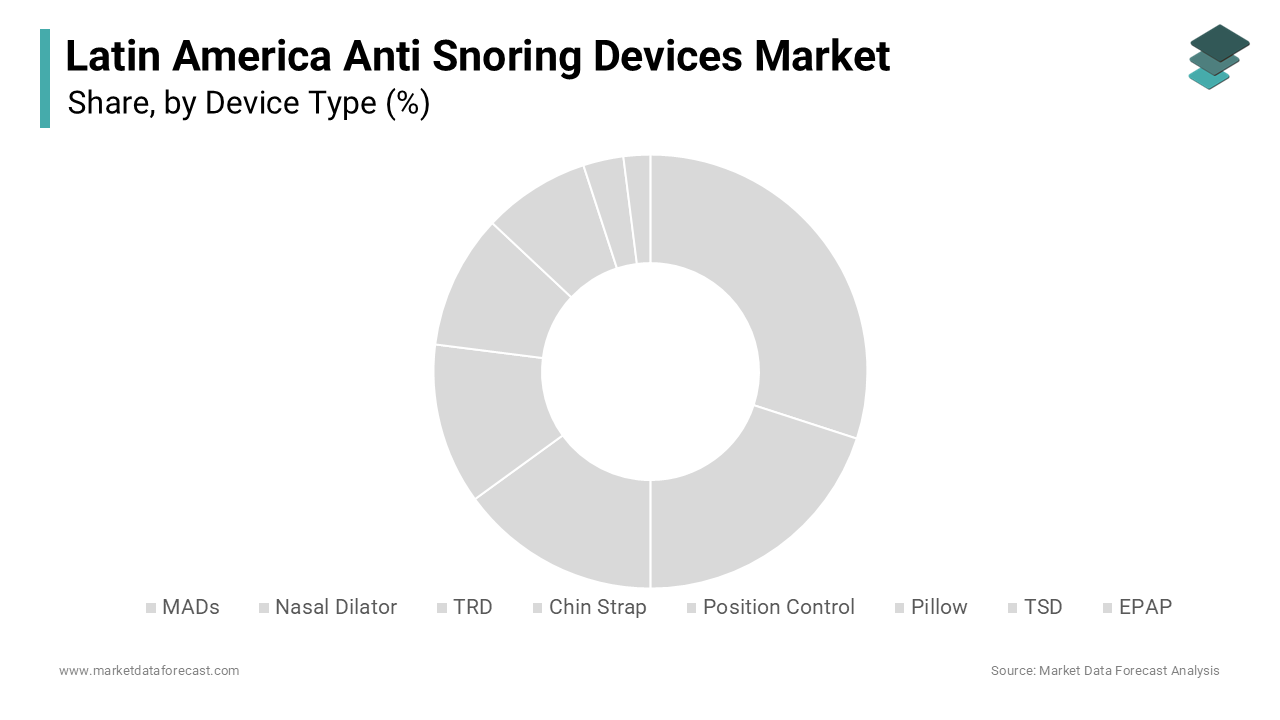
However, the nasal dilators segment is expected to showcase the fastest CAGR in the Latin American market over the forecast period owing to their non-invasive nature and widespread over-the-counter availability. These simple devices work by physically expanding the nasal passages to improve airflow and reduce turbulence that causes snoring. According to Euromonitor International, sales of over-the-counter sleep aids in Latin America grew by 12% in 2024, with nasal strips and dilators representing a significant portion of this growth. Consumers prefer these products because they do not require a prescription or professional fitting, making them accessible to a broad demographic. The low cost of nasal dilators compared to custom oral appliances or electronic devices makes them an attractive entry point for individuals experimenting with snoring solutions. Pharmacies and supermarkets in urban centers like Sao Paulo and Bogota stock a variety of brands, ensuring immediate availability. Social media influencers and digital marketing campaigns highlight the ease of use and instant results of nasal dilators, appealing to younger consumers. The lack of side effects associated with internal oral devices further enhances their appeal among cautious users. As awareness of snoring as a treatable condition rises, many individuals start with these low-risk options before progressing to more complex therapies. This accessibility and convenience drive the rapid adoption of nasal dilators at a projected CAGR of 8.5% through 2030.
By Surgical Procedure Insights
The uvulopalatopharyngoplasty segment held the major share of the Latin American market in 2025 due to its status as the most established and widely performed procedure for treating severe snoring and obstructive sleep apnea. This surgery involves the removal of excess tissue from the soft palate and uvula to widen the airway. According to the Latin American Society of Otorhinolaryngology, UP3 remains the gold standard surgical intervention for patients who have failed conservative therapies. The extensive training of otolaryngologists in this technique ensures high procedural competence and predictable outcomes. Hospitals and private clinics in major cities like Buenos Aires and Santiago have dedicated sleep surgery units equipped to perform UP3 safely. For instance, UP3 accounts for over 40% of all sleep-related surgeries performed annually in the public sector. The procedure is often covered by public and private insurance plans for severe cases, making it financially accessible to patients with critical conditions. The long track record of success and well-documented safety profile build confidence among both surgeons and patients. Despite the emergence of newer minimally invasive techniques, UP3 continues to be the preferred option for cases with significant anatomical obstruction. This entrenched clinical preference sustains its leadership in the surgical market.
On the other end, the radiofrequency ablation segment is estimated to register a promising CAGR in the regional market during the forecast period owing to its minimally invasive nature and faster recovery times. This procedure uses radiofrequency energy to shrink tissue in the soft palate and tongue base, reducing airway obstruction with minimal trauma. According to the International Journal of Otolaryngology, patient satisfaction with RFA is significantly higher than with traditional surgery due to reduced post-operative pain and shorter hospital stays. Patients can often return to normal activities within a few days, making it an attractive option for working professionals. The procedure can be performed under local anesthesia in outpatient settings, reducing overall healthcare costs. Data from private clinic reports in Colombia and Peru indicate that referrals for RFA have increased by 20% annually as patients seek less disruptive treatments. The lower risk of complications such as bleeding or infection appeals to elderly patients and those with comorbidities. Advances in radiofrequency technology have improved the precision and efficacy of the procedure, enhancing clinical outcomes. Surgeons are increasingly adopting RFA as a first-line surgical option for mild to moderate cases. This shift toward patient-centric care and efficiency drives the rapid expansion of the RFA segment at a projected CAGR of 9.2% through 2030.
COUNTRY ANALYSIS
Brazil Anti Snoring Devices Market Analysis
Brazil led the market by accounting for 41.1% of the regional market share in 2025. The dominance of Brazil in the Latin American anti snoring devices market is primarily driven by its robust healthcare infrastructure and large population. The country has a well-developed network of private and public hospitals equipped with sleep diagnostic tools and surgical facilities. According to the Brazilian Ministry of Health, the number of sleep studies performed annually has increased by 10%, reflecting growing awareness of sleep disorders. Major cities like Sao Paulo and Rio de Janeiro serve as hubs for medical tourism, attracting patients from neighboring countries seeking high-quality anti-snoring treatments. The presence of leading medical device distributors ensures wide availability of both oral appliances and surgical equipment. Regulatory approval processes by ANVISA are stringent but clear, providing a stable environment for market entry. The high prevalence of obesity and respiratory issues in Brazil creates a substantial demand for effective snoring solutions. Local manufacturing of certain medical devices reduces costs and improves accessibility. Government programs aimed at improving primary care include screening for sleep apnea, further driving diagnosis and treatment rates. Brazil’s combination of market size, medical expertise, and regulatory stability solidifies its position as the regional leader.
Mexico Anti Snoring Devices Market Analysis
Mexico is estimated to grow at a prominent CAGR in the regional market during the forecast period owing to its thriving medical tourism industry and increasing domestic awareness. The country is a preferred destination for patients from the United States and Canada seeking affordable yet high-quality sleep treatments, including custom oral appliances and surgical interventions. According to the Mexican Association of Medical Tourism, health services exports grew by 12% in 2024, with sleep medicine being a key specialty. Domestic demand is also rising due to urbanization and lifestyle changes that contribute to higher rates of snoring and sleep apnea. Private clinics in Mexico City and Guadalajara offer state-of-the-art diagnostic and treatment facilities catering to affluent locals and international visitors. The proximity to the US facilitates the adoption of advanced technologies and treatment protocols. Regulatory harmonization efforts with North American standards enhance consumer confidence in Mexican healthcare providers. Insurance coverage for sleep disorders is expanding in the private sector, making treatments more accessible to the middle class. The competitive pricing of medical services in Mexico compared to developed nations attracts a steady flow of patients. This dual driver of domestic growth and international demand ensures sustained market expansion.
Argentina Anti Snoring Devices Market Analysis
Argentina is anticipated to account for a notable share of the Latin American market during the forecast period and is demonstrating potential due to its high level of medical expertise and educated population. The country has a strong tradition of medical education, producing highly skilled otolaryngologists and dentists specializing in sleep medicine. According to the Argentine Society of Otorhinolaryngology, the number of certified sleep specialists has grown steadily, supporting the adoption of advanced treatments. Economic challenges have impacted purchasing power, but the demand for essential health services remains resilient. Patients often prioritize effective long-term solutions such as mandibular advancement devices over temporary fixes. The public healthcare system provides basic coverage for sleep studies, although wait times can be long, prompting many to seek private care. Import restrictions on medical devices have encouraged local innovation and assembly of certain anti-snoring products. The cultural emphasis on health and wellness drives consumers to seek professional advice for snoring. Collaborations between universities and hospitals foster research and development in sleep disorders. Argentina’s strong human capital and medical reputation maintain its significant position in the regional market despite economic fluctuations.
COMPETITIVE LANDSCAPE
The competition in the Latin America Anti Snoring Devices Market is characterized by a mix of global medical device giants and specialized regional manufacturers who compete on technology quality and service. Major multinational corporations leverage their extensive resources and brand recognition to dominate the high end segment with advanced continuous positive airway pressure systems and integrated digital health solutions. Local players and smaller specialists focus on niche markets such as custom oral appliances and over the counter nasal devices offering personalized service and competitive pricing. Competitive intensity is driven by the need to demonstrate clinical efficacy and improve patient adherence which are critical for long term success. Regulatory compliance and certification requirements act as barriers to entry protecting established players with robust quality assurance systems. The rise of telemedicine and remote monitoring technologies introduces new dimensions to competition requiring companies to invest in software and connectivity features. Price sensitivity in certain segments prompts manufacturers to offer tiered product ranges catering to different economic groups. Collaboration with dental and medical professionals remains a key differentiator as referrals drive a significant portion of sales. Overall success depends on balancing innovation with affordability while maintaining strong relationships with healthcare providers in a fragmented and evolving market environment.
KEY MARKET PLAYERS
Key Market Participants leading the Latin America Anti Snoring Devices Market include
- Sleeping Well LLC.
- Apnea Sciences Corporation
- Tomed Dr. Toussaint GmbH
- AccuMED Corp
- Fisher & Paykel Healthcare
- ImThera Medical Inc.
- ResMed Inc.
- SomnoMed
- Sleep Well Enjoy Life, Ltd.
- MEDiTAS Ltd
- Nasal Devices
Top Players in the Market
ResMed Inc
ResMed Inc maintains a robust presence in the Latin America Anti Snoring Devices Market through its advanced continuous positive airway pressure machines and integrated digital health solutions. The company leverages its global expertise to provide high quality therapy devices that address obstructive sleep apnea and severe snoring across the region. Recent strategic initiatives include expanding its distribution network in Brazil and Mexico to enhance accessibility for patients in remote areas. ResMed has also invested in telemedicine platforms that allow remote monitoring of therapy adherence improving patient outcomes and compliance. The company collaborates with local healthcare providers to offer training and support ensuring proper device usage. By focusing on innovation and patient centric care ResMed strengthens its reputation as a leader in sleep therapy solutions. Its commitment to clinical excellence and technological advancement ensures it remains a preferred partner for medical professionals and patients alike.
Philips NV
Philips NV contributes significantly to the Latin America Anti Snoring Devices Market by offering a comprehensive portfolio of sleep and respiratory care products including premium CPAP devices and mask interfaces. The company emphasizes user comfort and ease of use designing products that encourage long term adherence among patients. Philips has recently strengthened its market position by launching connected health applications that integrate with its devices providing real time data to clinicians and users. Strategic partnerships with regional distributors have improved supply chain efficiency and product availability in key markets like Argentina and Chile. The firm actively participates in medical conferences and educational programs to raise awareness about sleep disorders and treatment options. By combining hardware innovation with digital services Philips enhances the overall patient experience. Its strong brand recognition and focus on sustainability reinforce its leadership in the regional healthcare technology sector.
SomnoMed Ltd
SomnoMed Ltd plays a pivotal role in the Latin America Anti Snoring Devices Market as a leading manufacturer of custom made oral appliances for snoring and sleep apnea. The company specializes in mandibular advancement devices that are fabricated based on individual dental impressions ensuring optimal fit and efficacy. SomnoMed has recently expanded its laboratory capabilities in the region to reduce turnaround times for device production and delivery. The firm collaborates extensively with dentists and orthodontists providing specialized training in dental sleep medicine and device fitting techniques. Marketing efforts focus on educating dental professionals about the benefits of oral appliance therapy compared to traditional surgical interventions. By supporting the growth of dental sleep practices SomnoMed drives demand for its proprietary products. Its dedication to clinical research and product innovation establishes it as a trusted provider of non invasive snoring solutions in Latin America.
Top Strategies Used by Key Market Participants
Key players in the Latin America Anti Snoring Devices Market primarily focus on product innovation and strategic partnerships to maintain competitive advantage. Companies invest in developing connected devices with remote monitoring capabilities to enhance patient adherence and clinical oversight. Collaborations with local distributors and healthcare providers improve market access and ensure timely delivery of products across diverse regions. Educational initiatives targeting dentists and physicians raise awareness about sleep disorders and promote the adoption of advanced therapies. Expansion into telemedicine platforms allows for remote patient management and personalized care adjustments. Compliance with regional regulatory standards is prioritized to facilitate smooth market entry and build trust. Marketing campaigns emphasize the health benefits of treating snoring appealing to both consumers and medical professionals. These strategies collectively strengthen market positions by addressing clinical needs improving patient outcomes and navigating regulatory landscapes effectively in the Latin American context.
MARKET SEGMENTATION
This research report on the Latin America Anti Snoring Devices Market has been segmented and sub-segmented into the following categories.
By Device Type
- MADs
- Nasal Dilator
- TRD
- Chin Strap
- Position Control
- Pillow
- TSD
- EPAP
By Surgical Procedures
- UP3
- LAUP
- RFA
- Sclerotherapy
- Pillar
- Others
By Country
- Mexico
- Brazil
- Argentina
- Chile
- The Rest of Latin America