- Product Description Description
- Table of Contents TOC
- List of Table & Figure LOT
- Get Free Sample PDF Sample PDF
Market Size, 2025
$167.39 MnMarket Estimate, 2026
$179.86 MnMarket Forecast, 2034
$319.58 MnCAGR, 2026–2034
7.45%Executive Summary: Latin America Cardiac Assist Devices Market
- Market Scope: Regional analysis of the Latin American cardiac assist devices market covering product types, modalities, end users, flow types, applications, and country-level insights.
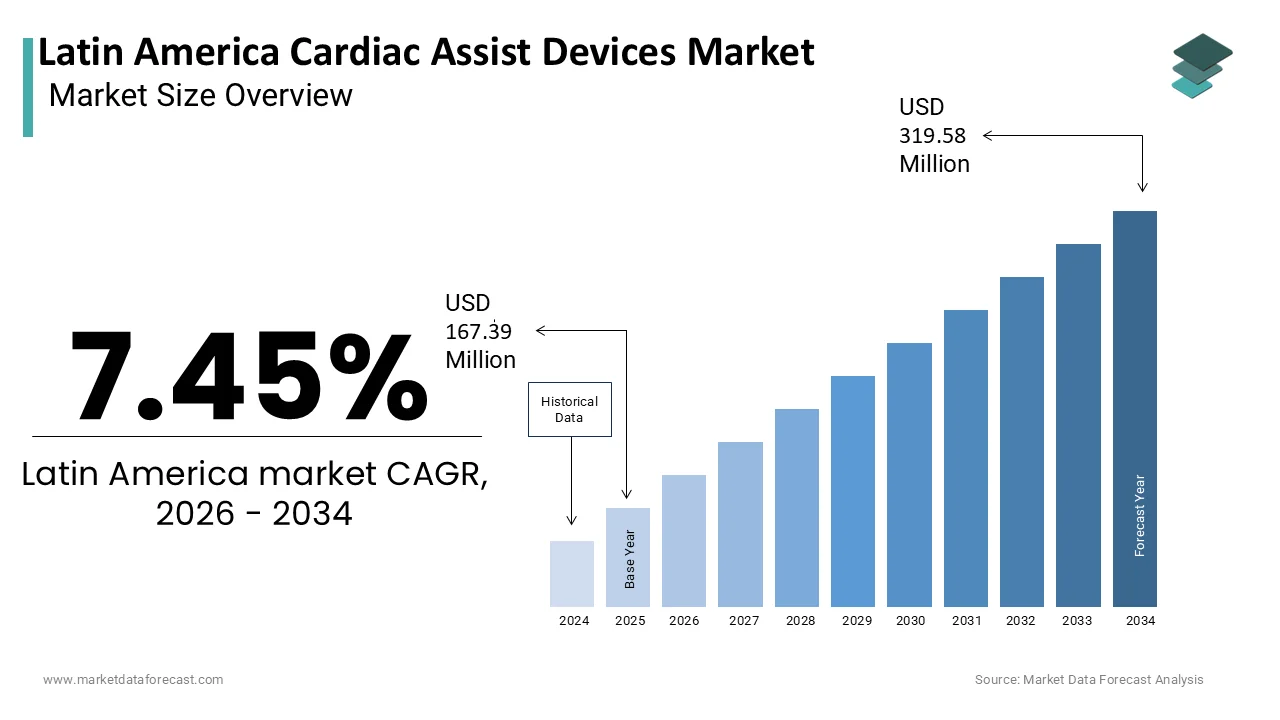
- Market Valuation: Valued at USD 167.39 million in 2025, estimated at USD 179.86 million in 2026, and projected to reach USD 319.58 million by 2034, registering a steady CAGR of 7.45% from 2026 to 2034.
- Primary Growth Drivers: Rising prevalence of heart failure and coronary artery disease due to sedentary lifestyles and aging populations; shortage of heart donors fueling bridge-to-transplant alternatives; and rapid technological advancements in mechanical circulatory support.
Key Market Segment Metrics (2026–2034)
| Category | Leading Segment / Position | Segment Details / Breakdown |
|---|---|---|
| By Product Type | Ventricular Assist Devices (LVADs, RVADs, BiVADs, External VADs), Intra-Aortic Balloon Pumps (IABPs) & Total Artificial Hearts (TAHs) | VADs and IABPs command significant clinical adoption for managing acute and chronic heart failure. |
| By Modality | Implantable Devices & Transcutaneous Devices | Implantable devices lead long-term heart failure management pipelines. |
| By End User | Hospitals & Ambulatory Surgical Centers (ASCs) | Hospitals form the primary environment for surgical device implantation and post-operative monitoring. |
| By Flow Type | Pulsatile Flow Devices & Continuous Flow Devices | Continuous flow devices drive modern clinical preferences due to higher durability and efficiency. |
| By Application | Bridge to Transplant (BTT), Destination Therapy (DT), Bridge to Recovery (BTR) & Bridge to Candidacy (BTC) | Bridge-to-transplant and destination therapy applications dominate due to donor scarcity. |
| By Country / Region | Mexico (Leading Market) & Brazil (Accounted for >30% of CAD implants) | Mexico and Brazil drive regional volume through high cardiovascular disease incidence and expanding specialized surgical programs. Additional coverage includes Argentina, Chile, Peru, and Rest of Latin America. |
Major Market Players & Market Structure
Market Structure: Specialized cardiovascular device landscape driven by pioneering multinational medical technology leaders and mechanical circulatory support developers.
Key Companies: Thoratec Corporation, MAQUET GmbH & Co, Teleflex Incorporated, Abiomed, Inc., CardiacAssist, Inc., CorAssist Cardiovascular Ltd., Evaheart Medical USA, Inc., CardioBridge GmbH, Carmat SAS, Cleveland Heart, Inc., and Berlin Heart GmbH.
Latin America Cardiac Assist Devices Market Size
The Latin America Cardiac Assist Devices Market is projected to grow from USD 167.39 million in 2025 to USD 179.86 million in 2026 and reach USD 319.58 million by 2034, registering a CAGR of 7.45% from 2026 to 2034.
Cardiac Assist Devices are mechanical pumps surgically placed in patients with severe heart failure to help circulate blood when the heart muscle is too weak to pump effectively on its own. They take over the workload of one or both lower heart chambers to deliver oxygen-rich blood to the body. These technologies include intra-aortic balloon pumps, ventricular assist devices, extracorporeal membrane oxygenation units, and total artificial hearts utilized in critical care and bridge-to-transplant scenarios. According to the Pan American Health Organization, cardiovascular diseases remain the leading cause of death in the Region of the Americas, accounting for more than 2.2 million deaths annually, accelerating the deployment of specialized mechanical circulatory infrastructure across localized critical care facilities. As per the World Bank, total health expenditure in Latin America and the Caribbean represents an average of 7.09% of gross domestic product, shifting institutional procurement dynamics for high-cost cardiac assistance systems across the regional marketplace. According to the Interamerican Society of Cardiology, regional disparities in specialist availability restrict advanced heart failure therapy access to major metropolitan clusters, concentrating advanced durable mechanical circulatory support within complex tertiary medical networks. This market segment is defined not merely by device sales but by the complex integration of specialized surgical expertise, postoperative management infrastructure, and regulatory frameworks unique to each national jurisdiction within this diverse geographic landscape.
MARKET DRIVERS
Escalating Burden of Ischemic Heart Disease and Advanced Heart Failure
The rising incidence of ischemic cardiomyopathy is driving the Latin America cardiac assist devices market. According to the Global Burden of Disease Study 2021, ischemic heart disease remains the primary driver of cardiovascular mortality across the Region of the Americas, prompting localized expansions in cardiac intensive care infrastructures to mitigate long-term health loss. This epidemiological shift stems from aging populations combined with high rates of uncontrolled hypertension and diabetes mellitus across the region. As per data from the Mexican National Institute of Cardiology, specialized hemodynamic units are prioritizing percutaneous coronary interventions and temporary mechanical stabilization to reduce in-hospital mortality among high-risk acute coronary syndrome cohorts. Moreover, healthcare systems face mounting pressure to acquire short-term support devices like intra-aortic balloon pumps and extracorporeal membrane oxygenation systems to manage these critical presentations. This clinical necessity transcends economic cycles because untreated cardiogenic shock carries mortality rates exceeding significant levels, making device procurement an unavoidable operational requirement for intensive care units managing end-stage cardiac pathology in major metropolitan hospitals across Mexico, Brazil, Colombia, and Chile.
Expansion of Specialized Transplant and Ventricular Assist Device Programs
Institutional development of advanced heart failure programs fuels sustained demand for durable mechanical circulatory support technologies, which in turn accelerate the expansion of the Latin American cardiac assist devices market. According to the International Society for Heart and Lung Transplantation, surgical networks across Latin America are implementing standardized data collection and clinical sharing registries to evaluate survival outcomes for advanced heart failure therapies. As per the Argentine Society of Cardiology, localized working panels are developing institutional guidelines for durable mechanical circulatory systems to bridge the gap in therapeutic access for end-stage cardiac conditions. This expansion responds to persistent organ shortages. Medical device manufacturers have responded by establishing local training partnerships and technical support networks to reduce procedural complications and improve long-term patient outcomes. Furthermore, academic medical centers increasingly incorporate mechanical circulatory support into fellowship curricula, creating a growing cohort of qualified implanters and perfusionists. This human capital development reduces dependency on foreign expertise and enables more consistent device utilization, transforming ventricular assist devices from experimental interventions into standardized therapeutic options for destination therapy and bridge to candidacy indications across private and select public healthcare networks.
MARKET RESTRAINTS
Severe Fiscal Constraints and Fragmented Reimbursement Landscapes
Limited public healthcare financing profoundly restricts widespread adoption of expensive cardiac assist technologies across most jurisdictions in the region, which hampers the growth of the Latin America cardiac assist devices market. According to the Economic Commission for Latin America and the Caribbean (ECLAC), public social spending allocations are expanding across regional institutional networks to enhance foundational infrastructure and optimize universal health coverage frameworks. As per the Inter-American Development Bank (IDB), healthcare co-payments and household out-of-pocket costs drive a significant shift toward the implementation of standardized basic universalism frameworks to safeguard vulnerable communities. Even in nations with universal coverage such as Brazil, the Unified Health System frequently experiences budgetary shortfalls that delay equipment procurement and limit reimbursement approvals for durable ventricular assist devices. These structural financial barriers create a two-tiered system where advanced cardiac support is available only to affluent patients or those treated at elite institutions, while public hospitals must ration resources and prioritize lower-cost interventions despite clear clinical indications for mechanical assistance.
Critical Shortage of Trained Multidisciplinary Support Personnel
A shortage of specialized clinicians who can manage complex mechanical circulatory support systems severely constrains the growth of the Latin American cardiac assist devices market. This restraint goes far beyond simple device acquisition. According to the World Federation of Societies of Intensive and Critical Care Medicine, regional clinical networks are scaling up advanced medical residency programs and continuous professional education models to alleviate operational constraints in high-dependency care environments. As per the Latin American Society of Perfusion, specialized clinical committees are updating academic guidelines for extracorporeal technology curricula to standardize the operational capabilities of cardiovascular perfusion professionals. The human resource deficit translates directly into higher complication rates. Without adequate multidisciplinary teams comprising specialized surgeons, cardiologists, perfusionists, nurses, and biomedical engineers, institutions cannot safely expand their device portfolios regardless of capital availability. Training programs remain scarce and underfunded, perpetuating a cycle where experienced personnel concentrate in a few elite centers while emerging programs struggle to achieve competency thresholds necessary for sustainable clinical operations.
MARKET OPPORTUNITIES
Emergence of Public-Private Partnership Models for Technology Access
Collaborative financing arrangements between governments and private sector entities provide viable pathways for the Latin American cardiac assist devices market. This approach helps to overcome traditional procurement barriers. According to the Inter-American Development Bank (IDB), strategic public-private guarantees and digital transformation health programs are expanding regional hospital infrastructures to maximize complex specialist care access across regional municipalities. As per the Chilean Ministry of Health, specialized surgical departments are standardizing long-term institutional mechanical circulatory support protocols to systematically register patient survival and bridge-to-transplant outcomes within the public safety net. The innovative structures address fiscal limitations while ensuring technology transfer and local capacity building. Manufacturers who adapt commercial strategies to accommodate outcome-based pricing, leasing arrangements, and bundled service packages can access previously untapped public sector demand. Such partnerships also facilitate regulatory harmonization and standardization of clinical protocols across multiple institutions, creating scalable platforms for sustainable market expansion beyond traditional fee-for-service paradigms.
Growing Medical Tourism Ecosystem for Advanced Cardiac Interventions
The region is gaining a strong reputation as a destination for high-quality, affordable cardiac care, which is likely to promote the expansion of the Latin America cardiac assist devices market. This growth will generate incremental demand for mechanical circulatory support services targeting international patients. According to the Medical Tourism Association, regional health hubs across Latin America are experiencing a massive influx of international medical travelers seeking specialized elective treatments due to substantial cost advantages. As per data from Patients Beyond Borders, cost-conscious North American medical travelers are increasingly migrating to major Latin American metropolitan medical clusters for highly complex cardiovascular valve and bypass operations to capture significant retail savings. The cross-border demand creates opportunities for device manufacturers to establish regional distribution hubs and technical support centers serving both tourist and domestic markets simultaneously. Additionally, medical tourism revenue streams help justify capital investments in newer generation devices that might otherwise be deemed economically unviable based solely on local payer reimbursement rates, accelerating technology diffusion throughout the regional ecosystem.
MARKET CHALLENGES
Regulatory Heterogeneity and Prolonged Approval Timelines
Navigating disparate national regulatory frameworks imposes significant operational complexity for manufacturers operating across the region, which constrains the growth of the Latin America cardiac assist devices market. This challenge ultimately delays their market entry into the region. According to the Pan American Health Organization, regional health bodies are accelerating medical device regulatory reliance principles to streamline fragmented cross-border registration dossiers and improve tech adoption across member nations. As per the Regulatory Affairs Professionals Society, regional differences in health technology risk classifications result in variable approval timelines for complex Class III implants across Latin American sanitary authorities. The fragmentation prevents manufacturers from achieving economies of scale in regulatory affairs and necessitates maintaining multiple product configurations to satisfy divergent technical specifications. Smaller innovators lacking extensive regulatory resources often abandon regional expansion plans entirely, limiting patient access to next-generation technologies and reinforcing market dominance by established multinational corporations with dedicated Latin American compliance teams capable of managing parallel submission processes across numerous jurisdictions.
Supply Chain Vulnerabilities and Import Dependency Risks
Geopolitical disruptions, currency volatility, and logistical barriers threaten continuity of care in the Latin America Cardiac Assist Devices Market. These risks stem from a heavy reliance on imported components and finished devices. According to the Economic Commission for Latin America and the Caribbean (ECLAC), the regional medical product marketplace experiences a deep, structurally driven dependency on imports for specialized high-tech medical devices. As per the Secretariat of Foreign Trade of Brazil (SECEX), specialized customs single-window updates and rapid-clearance health protocols aim to reduce overall transit and inspection times for imported surgical device shipments. Venezuela’s ongoing economic crisis has rendered mechanical circulatory support virtually unavailable due to the inability to secure foreign exchange for imports, despite documented clinical need. Regional manufacturing capacity remains negligible, with no domestic production facilities for durable ventricular assist devices or extracorporeal membrane oxygenation consoles. Just-in-time inventory practices common in global supply chains prove inadequate when applied to life-sustaining technologies in regions prone to administrative delays and trade policy shifts. Hospitals must maintain larger safety stocks, increasing carrying costs and expiration risks for disposable components, while patients face treatment interruptions when replenishment shipments encounter unforeseen obstacles at borders or ports of entry.
REPORT COVERAGE
| REPORT METRIC | DETAILS |
| Market Size Available | 2025 to 2034 |
| Base Year | 2025 |
| Forecast Period | 2026 to 2034 |
| Segments Analysed | By Product Type, Modality, End User, Flow Type,p Application, and Country |
| Various Analyses Covered | Regional & Country Level Analysis, Segment-Level Analysis, Drivers, Restraints, Opportunities, Challenges; PESTLE Analysis; Porter’s Five Forces Analysis, Competitive Landscape; Analyst Overview of Investment Opportunities |
| Countries Analysed | Mexico, Brazil, Argentina, Chile, Peru and Rest of Latin America |
| Market Leaders Profiled | Thoratec Corporation, MAQUET GmbH & Co, Teleflex Incorporated, Abiomed, Inc. |
SEGMENTAL ANALYSIS
By Product Type Insights
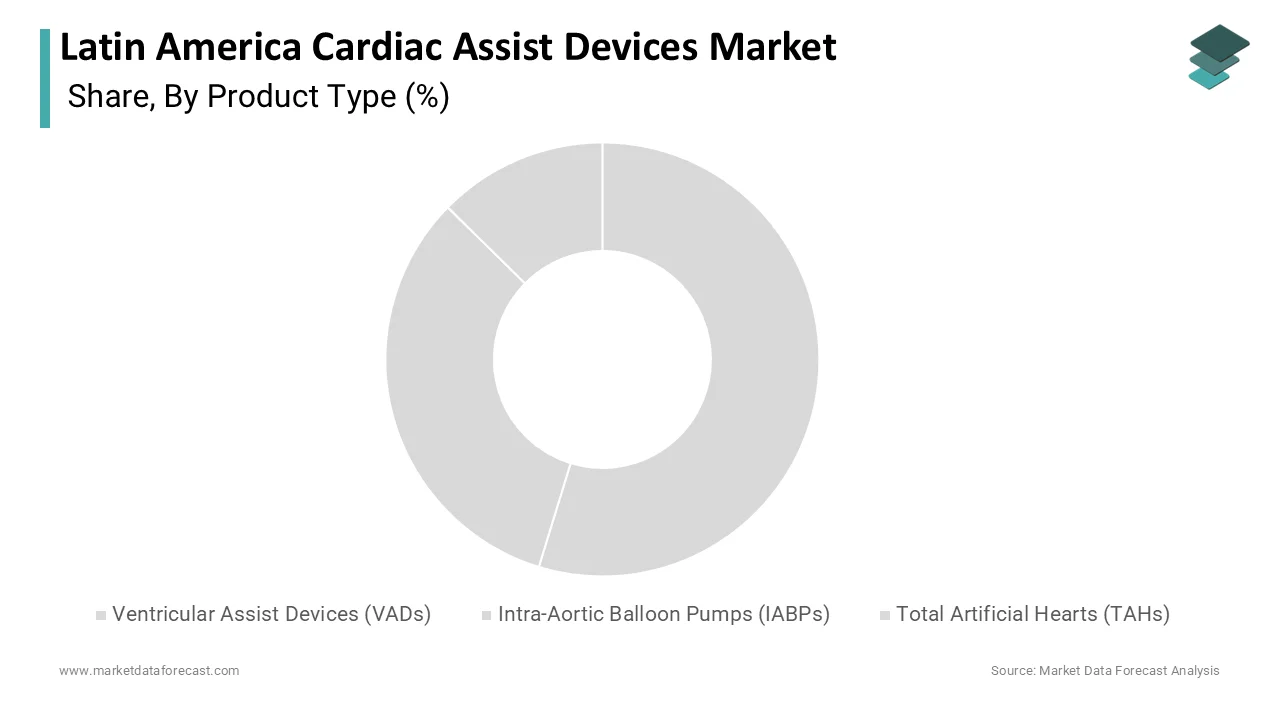
The intra-aortic balloon pumps segment was the largest in the Latin America Cardiac Assist Devices Market and occupied a commanding share in 2025. This supremacy of the segment was credited to its established role as first-line mechanical support in acute cardiac care settings. The widespread clinical adoption stems from lower acquisition costs and simpler operational requirements compared to durable ventricular assist devices, making them accessible across diverse hospital tiers throughout the region.
The swift expansion of this segment gains further momentum from their favorable cost profile relative to alternative mechanical circulatory support technologies in resource-constrained environments. According to the Pan American Health Organization, regional health ministries are prioritizing procurement frameworks for foundational cardiovascular tech lines to maximize clinical cost-efficiencies within public hospital setups. As per data from the Brazilian Ministry of Health, the Unified Health System (SUS) monitors nationwide highly complex cardiothoracic intervention statistics to optimize strategic funding allocations for temporary hemodynamic support infrastructure. This economic accessibility enables smaller regional hospitals without advanced heart failure programs to provide temporary hemodynamic support for cardiogenic shock patients awaiting transfer or recovery. Furthermore, reimbursement policies in Mexico and Colombia explicitly cover intra-aortic balloon pump therapy under standard critical care bundles, while durable device approval requires exceptional authorization processes that delay treatment initiation. The combination of affordable capital expenditure, predictable consumable costs, and streamlined payment mechanisms ensures continued dominance despite technological advances in longer term support options.
Decades of clinical experience with intra-aortic balloon pumps have created deep institutional knowledge that reinforces their market leadership across Latin America. According to the Latin American Society of Interventional Cardiology (SOLACI), specialized clinical consensus panels establish standardized quality metrics for catheterization laboratories to enhance patient safety profiles during complex percutaneous coronary interventions. As per the Argentine Society of Intensive Care (SATI), multi-professional critical care groups are upgrading professional training tracks to standardize standard operating procedures for severe mechanical circulatory support complications. Medical school curricula and residency training programs throughout the region universally include intra-aortic balloon pump instruction, creating successive generations of clinicians comfortable with this technology. Manufacturer-sponsored workshops and simulation labs have further standardized best practices across multiple countries, reducing variability in outcomes and strengthening clinician preference. This entrenched educational ecosystem creates substantial switching barriers, as institutions would need to invest heavily in retraining personnel and developing new competency frameworks before adopting more complex alternatives at scale, thereby preserving intra-aortic balloon pump market share despite emerging competitive technologies.
The left ventricular assist devices segment is on the rise and is expected to be the fastest-growing segment in the market, witnessing a CAGR of 19.4% between 2026 and 2034. This accelerated expansion is propelled by shifting clinical paradigms toward long term mechanical support as transplant alternatives gain acceptance among physicians and payers across major urban centers.
The principal driver of left ventricular assist device market acceleration is the growing acceptance of destination therapy as a legitimate treatment pathway for transplant-ineligible patients. According to the International Society for Heart and Lung Transplantation, multi-center surgical data networks log advanced mechanical circulatory support interventions to systematically evaluate long-term destination therapy survival rates. As per clinical guidelines from the Interamerican Society of Cardiology, localized heart failure management teams utilize structured diagnostic criteria to optimize patient selection for advanced mechanical bridge therapies. The indication expansion transforms left ventricular assist devices from bridge-to-transplant temporizing measures into permanent therapeutic options, multiplying addressable patient populations and justifying capital investments by hospitals seeking to capture high-acuity chronic heart failure cases previously managed conservatively or referred abroad.
Next-generation left ventricular assist device platforms featuring enhanced durability and reduced adverse event profiles are accelerating market adoption throughout Latin America. According to the International Society for Heart and Lung Transplantation, continuous global mechanical circulatory support registries indicate that fully magnetically levitated device designs lower overall adverse event rates compared to historic axial-flow models. As per engineering analyses published in the Journal of Artificial Organs, modernized internal impeller geometries reduce fluid shear forces to optimize baseline blood compatibility characteristics during clinical deployment. Manufacturers have introduced Spanish and Portuguese language interfaces and culturally adapted patient education materials specifically for Latin American markets, improving adherence and self-management capabilities. Remote monitoring capabilities integrated into latest-generation systems enable specialist oversight across geographic distances, addressing workforce shortages in rural areas. These technological improvements reduce perceived procedural risks among referring cardiologists and increase patient willingness to accept implantation, converting previously hesitant candidates into active recipients and driving volume growth beyond what demographic trends alone would predict.
By Modality Insights
In 2025, the implantable devices segment held the majority share in the Latin America Cardiac Assist Devices Market because of the high unit value of durable ventricular assist systems and total artificial hearts used in chronic heart failure management. Despite lower procedural volumes compared to transcutaneous options, the substantial per-case economics of implantable technologies secure their revenue dominance across the regional landscape.
The fundamental reason implantable devices lead market revenue is their significantly higher price points relative to temporary external support technologies. According to the Inter-American Development Bank (IDB), public social sector investments and digital healthcare program expansions are strengthening critical hospital asset modernizations to establish resilient clinical operations across public facilities. As per the National Supplementary Health Agency (ANS) of Brazil, private healthcare networks utilize localized clinical protocols and surgical product management models to enhance resource cost-efficiencies across private medical institutions. Public procurement tenders in Chile and Colombia consistently allocate disproportionate budget shares to implantable technologies because they address chronic conditions requiring ongoing care rather than acute episodic interventions. Insurance reimbursement schedules in Argentina establish separate diagnosis-related group payments for ventricular assist device implantation that are higher than those for temporary mechanical support, reflecting recognition of greater resource intensity and long-term value. This economic structure ensures that even modest increases in implantable device utilization translate into substantial revenue gains, maintaining segment leadership regardless of volume fluctuations in lower-priced transcutaneous categories.
Healthcare system evolution toward managing heart failure as a chronic condition rather than an acute crisis reinforces implantable device revenue dominance. According to the Pan American Health Organization, aging regional populations and non-communicable disease morbidity trends are accelerating institutional expansion requirements for specialized critical cardiovascular networks. As per the National Commission for Incorporation of Technologies in SUS (CONITEC), multi-criteria clinical analyses govern public funding recommendations for highly complex medical technologies to balance budgetary impacts across the unified network. Clinical practice guidelines increasingly recommend early consideration of implantable options before patients deteriorate to inotrope dependence, expanding eligibility windows and procedure timing flexibility. Post-implantation care infrastructure development, including specialized nurse coordinators and remote monitoring programs,s creates recurring revenue streams through follow-up visits, component replacements, and technical support services that extend beyond initial device sale. This longitudinal care model aligns with healthcare system objectives of reducing preventable readmissions and improving quality-adjusted life years, securing policy support and payer coverage that sustains implantable device market leadership through structural rather than cyclical demand factors.
The transcutaneous devices segment is likely to experience the fastest CAGR of 21.7% during the forecast period, owing to the increasing utilization of temporary mechanical support in emergency departments and intensive care units, as clinicians recognize the benefits of early intervention before irreversible end-organ damage occurs. Systematic implementation of cardiogenic shock protocols incorporating early transcutaneous device deployment drives accelerated market growth across Latin America. According to the Pan American Health Organization, public hospitals are expanding multi-professional emergency algorithms and acute response frameworks to decrease global time-to-treatment intervals during severe cardiogenic shock events. As per the Mexican Society of Cardiology, the integration of structured institutional pathways for mechanical circulatory assistance helps standardize intensive care delivery profiles and improve critical cardiovascular patient outcomes. Emergency medicine residency programs in Brazil and Chile now mandate competency in percutaneous device insertion, expanding the pool of qualified operators beyond traditional cardiac surgery and interventional cardiology silos. Mobile extracorporeal membrane oxygenation retrieval services established in São Paulo and Buenos Aires extend advanced support capabilities to referring hospitals lacking on-site expertise, effectively multiplying addressable patient populations. These systematic approaches transform transcutaneous devices from rescue therapies deployed after failed conventional management into proactive interventions initiated earlier in disease trajectories, substantially expanding utilization frequency and driving segment growth beyond historical patterns.
Advances in percutaneous insertion techniques for transcutaneous devices reduce procedural complexity and expand eligible provider bases throughout Latin America. According to technical updates from the Society for Cardiovascular Angiography and Interventions, next-generation percutaneous microaxial blood pumps utilize refined catheter sizes and specialized access tracks to allow flexible deployment within modern interventional catheterization suites. As per clinical training registries from the Colombian College of Hemodynamics and Interventional Cardiology, interventional tracking models document specialized provider learning curves to standardize procedural competency for advanced mechanical assist insertions. Device manufacturers have introduced simplified console interfaces with automated flow adjustment algorithms, reducing cognitive burden during high-stress resuscitation scenarios. These technical refinements democratize access to temporary mechanical support by enabling broader specialist participation, extending availability beyond tertiary academic centers to community hospitals with basic catheterization capabilities, and accelerating market penetration across previously underserved geographic regions and institutional tiers.
By Application Insights
The bridge to transplant segment dominated the Latin America Cardiac Assist Devices Market and accounted for a substantial share in 2025. This dominance of the segment was driven by persistent organ shortages and established regulatory frameworks supporting this indication. In addition, this clinical pathway serves as the foundational use case upon which regional mechanical circulatory support programs were originally built and continues to dominate procedural volumes.
Chronic insufficiency of donor hearts available for transplantation fundamentally sustains bridge to transplant as the dominant application across Latin America. According to the International Society for Heart and Lung Transplantation (ISHLT), regional heart failure consortiums are standardizing surgical bridge-to-transplant parameters to manage prolonged waitlist distributions across South American medical registries. As per the Pan American Health Organization (PAHO), regional clinical bodies are expanding the deployment of mechanical circulatory support systems as critical lifelines to offset severe donor organ scarcity and mitigate pre-transplant mortality. National allocation systems in Mexico and Chile prioritize patients already supported by ventricular assist devices due to demonstrated stability and rehabilitation potential, creating positive feedback loops reinforcing bridge-to-transplant utilization. Public funding mechanisms in Brazil explicitly link ventricular assist device reimbursement to active transplant listing status, financially incentivizing this indication over destination therapy alternatives. Cultural and religious factors influencing donation consent rates vary significantly across jurisdictions but collectively contribute to supply constraints unlikely to resolve in the near term. Until organ availability improves substantially through legislative reform, public education campaigns, or expanded donor criteria, bridge to transplant will remain the predominant application driving device volumes and shaping clinical decision-making frameworks throughout the region.
Established policy structures preferentially support bridge-to-transplant applications over alternative indications, cementing its market leadership position. According to the National Commission for Incorporation of Technologies in SUS (CONITEC), structured clinical evidence evaluations guide public reimbursement protocols for durable mechanical circulatory systems across the Brazilian healthcare network. As per the Interamerican Society of Cardiology, clinical practice working groups update multi-tiered treatment algorithms for advanced heart failure to guide regional physicians on mechanical circulatory support selections. Insurance contracts in private markets frequently mirror public sector policies, extending bridge preference beyond government-funded care. These aligned regulatory, reimbursement, and evidentiary ecosystems create structural advantages for bridge to transplant that persist despite evolving clinical perspectives favoring broader indication expansion.
The destination therapy segment is expected to exhibit a noteworthy CAGR of 24.8% over the forecast period, due to the maturation of mechanical circulatory support programs beyond transplant bridging toward comprehensive chronic heart failure management strategies addressing larger patient populations ineligible for organ replacement. Demographic shifts producing older heart failure cohorts with comorbidities excluding transplant candidacy drive destination therapy growth across Latin America. According to the Economic Commission for Latin America and the Caribbean (ECLAC), shifting demographic trends and rapid population aging are driving institutional expansions of non-transplant complex cardiac care pathways across the region. As per the Argentine Society of Cardiology, localized working committees are implementing multi-center heart failure registries to characterize the prevalence of age-related comorbidities among patients undergoing advanced cardiac evaluations. According to the National Ministry of Health of Argentina, the academic integration of specialized geriatric cardiology models updates risk-stratification criteria for complex surgical cohorts across metropolitan tertiary centers. Family caregiver infrastructure and home health nursing availability have expanded in urban areas, addressing historical concerns about post-implantation support for elderly patients living outside immediate family networks. Pension system reforms in Chile and Brazil have improved financial security for retirees, enabling out-of-pocket contributions toward destination therapy costs when insurance coverage remains incomplete. These converging demographic, clinical, and socioeconomic trends create sustainable demand foundations for destination therapy independent of transplant system dynamics, supporting continued above-market growth rates.
Accumulating regional evidence demonstrating acceptable survival and quality of life outcomes with destination therapy reduces historical hesitancy among referring physicians. According to the Ministry of Health of Brazil, long-term national medical tracking registries utilize standardized quality-of-life indicators to systematically assess functional recovery outcomes following highly complex cardiovascular device augmentations. As per patient outcomes research in the Journal of Heart and Lung Transplantation, specialized clinician panels monitor patient-reported quality-of-life data to refine follow-up protocols for mechanical circulatory support device recipients. Peer-to-peer education initiatives through professional societies have disseminated successful program models and complication management strategies, building collective expertise beyond isolated pioneer institutions. Industry-sponsored post-market registries specifically tracking destination therapy outcomes in Latin American contexts provide locally relevant evidence addressing concerns about extrapolating North American or European data to different genetic, nutritional, and healthcare delivery environments. This strengthening evidence base progressively converts skeptics into advocates, accelerating referral patterns and supporting sustained segment growth.
COUNTRY LEVEL ANALYSIS
Brazil Cardiac Assist Devices Market Analysis
Brazil led the Latin America Cardiac Assist Devices Market and captured a 38.5% share in 2025. This leading position was attributed to its status as the region’s most populous nation with the most developed advanced heart failure infrastructure. The country’s unified health system, combined with a robust private sector, creates dual demand channels supporting both high-volume temporary support and growing durable device utilization across numerous tertiary centers. According to the Brazilian Ministry of Health, the Unified Health System (SUS) manages standardized reimbursement tables for highly complex cardiothoracic interventions to expand structural heart disease therapy across public hospitals. As per the Brazilian Society of Cardiovascular Surgery, specialized medical centers are establishing long-term mechanical circulatory support guidelines to standardize institutional requirements for advanced heart failure treatments. According to the National Commission for Incorporation of Technologies in SUS (CONITEC), structural health technology assessments dictate the regional expansion of specialized left ventricular assist devices within public clinical infrastructure. As per the National Supplementary Health Agency (ANS), private healthcare operators are expanding regulatory coverage criteria for complex cardiovascular implants to meet shifting regional demographics. Domestic manufacturing partnerships with international device companies have reduced import dependency and stabilized supply chains against currency volatility. Research consortia linking academic centers generate regional clinical evidence informing local practice guidelines and regulatory decisions. This multifaceted ecosystem combining public funding, private insurance, geographic distribution, and research capacity solidifies Brazil’s market leadership position for the foreseeable future.
Mexico Cardiac Assist Devices Market Analysis
Mexico was positioned second in the Latin America Cardiac Assist Devices Market and accounted for a 24.6% share in 2025. This expansion of the Mexican market was fueled by proximity to the United States medical technology supply chains and concentrated private healthcare infrastructure in major metropolitan areas. The country serves as an important regional hub for medical tourism and cross-border care coordination, influencing device adoption patterns. According to the Mexican Social Security Institute (IMSS), specialized cardiothoracic units are accelerating the deployment of temporary hemodynamic stabilization technologies to manage severe cardiogenic shock. As per the Mexican Society of Cardiology, clinical working groups are launching national cardiovascular registries to catalog therapeutic trends and improve outcomes for heart failure patients. According to the Ministry of Health of Mexico, binational clinical exchange programs are driving the adoption of specialized ventricular assist methodologies within modernizing urban surgical centers. Medical tourism demand from American patients seeking cost-effective alternatives contributes incremental volume. As per the Ministry of Tourism of Mexico, regional medical tourism infrastructure is experiencing an influx of North American patients seeking highly competitive pricing for major surgical interventions. Regulatory alignment through the United States-Mexico-Canada Agreement provisions streamlines device approvals relative to other regional jurisdictions. However, fragmented insurance coverage and variable state-level health budgets create uneven access patterns, concentrating advanced therapies in affluent urban enclaves while limiting penetration in rural and southern regions despite clear clinical need.
Argentina Cardiac Assist Devices Market Analysis
Argentina holds a significant share of the Latin American Cardiac Assist Devices Market because of strong academic medical traditions and pioneering roles in regional mechanical circulatory support development, despite recent economic volatility. The country’s historical leadership in cardiac surgery continues to influence practice patterns across neighboring nations. According to the Argentine Society of Cardiology, localized clinical panels are standardizing regional guidelines for mechanical circulatory assistance to optimize the selection criteria for heart failure patients awaiting transplantation. As per the National Ministry of Health of Argentina, highly specialized centers including Hospital Garrahan and Fundación Favaloro drive complex cardiovascular intervention networks to expand pediatric and adult mechanical bridge-to-transplant registries. Currency depreciation and import restrictions have created supply chain vulnerabilities, forcing hospitals to maintain extended inventory buffers and occasionally defer elective implantations during foreign exchange shortages. However, strong domestic clinical research output published in regional journals maintains intellectual leadership and informs practice guideline development adopted across multiple countries. Public hospital networks in Córdoba and Rosario have developed intermediate complexity programs handling intra-aortic balloon pumps and extracorporeal membrane oxygenation, creating tiered service delivery extending beyond capital city concentration. Government price controls on medical devices intended to preserve affordability paradoxically discourage manufacturer market investment, creating tension between access objectives and commercial sustainability. Despite these contradictions, Argentina’s accumulated human capital and institutional memory ensure continued relevance in regional market dynamics beyond what current economic indicators might suggest.
Chile Cardiac Assist Devices Market Analysis
Chile grew steadily in the Latin America Cardiac Assist Devices Market due to sophisticated healthcare financing mechanisms and relatively equitable access to advanced cardiac technologies compared to regional peers. The country’s mixed public-private system with universal coverage guarantees creates stable demand foundations supporting sustained technology adoption. According to the Chilean Ministry of Health, the Universal Access with Explicit Guarantees (GES) framework establishes strict clinical access parameters and coverage limits for complex cardiovascular pathologies across public and private provider networks. As per the Chilean Society of Cardiology, regional surgical teams are tracking long-term clinical registries of mechanical circulatory support systems to evaluate survival metrics and postoperative complications in destination therapy cohorts. Public procurement through the centralized purchasing agency CENABAR leverages volume negotiating power to secure favorable pricing and supply terms, reducing cost barriers that constrain adoption elsewhere. High internet penetration and digital health infrastructure enable remote monitoring programs extending specialist oversight to patients in distant regions like Punta Arenas and Arica. Strong regulatory alignment with European Union standards facilitates timely access to next-generation devices without redundant local testing requirements. Private ISAPRE insurers complement public coverage by funding premium device options and expedited access pathways for members willing to pay supplementary premiums. This integrated approach, balancing equity, efficiency, and innovation,n positions Chile as a model for sustainable advanced cardiac care delivery in middle-income settings, influencing policy discussions throughout the region despite smaller absolute market size.
COMPETITIVE LANDSCAPE
Competition in the Latin America Cardiac Assist Devices Market remains concentrated among a few multinational corporations with established regulatory approvals and clinical evidence bases, creating substantial entry barriers for emerging players. Incumbents compete primarily through clinical education investments and service infrastructure development rather than price competition,n given limited payer sensitivity in life-sustaining therapy categories. Differentiation increasingly focuses on ecosystem completeness, including training programs,s remote monitoring capabilities, and post-implantation support services, rather than device specifications alone. Regional distributors wield significant influence as gatekeepers, navigating complex import regulations and hospital procurement processes,s making partnership selection strategically critical. New entrants face challenges demonstrating equivalence to established platforms without extensive local outcome data influencing physician confidence and reimbursement decisions. Competitive dynamics vary substantially across national markets, ts reflecting heterogeneous regulatory environments and healthcare financing structures requiring tailored approaches rather than uniform regional strategies. Consolidation trends among distributors may further concentrate channel access, intensifying competitive pressures on manufacturers lacking established local relationships or sufficient scale to justify direct subsidiary operations across multiple jurisdictions simultaneously.
KEY MARKET PLAYERS
Some of the companies that are playing a dominating role in the Latin America Cardiac Assist Devices Market include:
- Thoratec Corporation
- MAQUET GmbH & Co. KG
- Teleflex Incorporated
- Abiomed, Inc.
- CardiacAssist, Inc.
- CorAssist Cardiovascular Ltd.
- Evaheart Medical USA, Inc.
- CardioBridge GmbH
- CARMAT SA
- Cleveland Heart, Inc.
- Berlin Heart GmbH
TOP LEADING PLAYERS IN THE MARKET
- Abbott Laboratories maintains significant involvement in the Latin America Cardiac Assist Devices Market through its HeartMate 3 left ventricular assist device platform, widely adopted across major Brazilian and Mexican tertiary centers. The company recently expanded regional training infrastructure by establishing dedicated clinical education hubs in São Paulo and Mexico City to address specialized workforce shortages limiting device adoption. Abbott strengthened its position by launching Portuguese-language remote monitoring capabilities, es enabling specialists to oversee patients across geographic distances. The firm also partnered with local distributors to streamline import processes and reduce supply chain vulnerabilities affecting device availability. These initiatives demonstrate commitment to building sustainable ecosystems beyond mere product sales while adapting global technologies to meet specific Latin American healthcare delivery challenges and regulatory requirements effectively.
- Medtronic Public Limited Company contributes substantially to the Latin America Cardiac Assist Devices Market through its HeartWare HVAD system legacy installed base and ongoing technical support commitments despite global product transitions. The company recently intensified its focus on intra-aortic balloon pump and extracorporeal membrane oxygenation portfolios to capture growing temporary mechanical support demand across emergency departments. Medtronic launched bilingual physician training programs in Colombia and Chile addressing critical care specialist shortages hindering broader technology adoption. The firm established regional service centers in Brazil,l reducing equipment downtime and improving hospital operational reliability. These strategic actions reinforce Medtronic's presence in acute care segments while maintaining relationships with existing durable device customers during technology transition periods, ensuring continuity of care and preserving institutional trust throughout Latin American markets.
- Getinge AB plays a vital role in the Latin American Cardiac Assist Devices Marketas aa leading provider of extracorporeal membrane oxygenation systems increasingly utilized for cardiogenic shock and respiratory failure management. The company recently opened a logistics hub in Panama, facilitating faster distribution across Central America and Caribbean territories previously underserved due to supply chain complexities. Getingstrengthened it marketet position by introducing simplified console interfaces with Spanish language options, reducing cognitive burden during high-stress resuscitation scenarios. The firm partnered with academic medical centers in Argentina and Brazil, conducting regional outcome studies generating locally relevant evidence supporting technology adoption decisions. These efforts demonstrate adaptation to Latin American clinical workflows and regulatory environments while expanding geographic reach beyond traditional strongholds in larger national markets.
TOP STRATEGIES USED BY KEY MARKET PARTICIPANTS
Key players in the Latin America Cardiac Assist Devices Market prioritize localization strategies including language adaptation and culturally relevant patient education materials to improve technology acceptance and adherence outcomes. Companies invest heavily in clinical training programs addressing specialized workforce shortages that constrain device utilization regardless of capital availability. Manufacturers establish regional service centers and logistics hubs to mitigate supply chain vulnerabilities caused by import dependencies and customs delays. Strategic partnerships with local distributors navigate complex regulatory landscapes and reimbursement processes unique to each national jurisdiction. Firms develop outcome-based contracting models aligning vendor incentives with clinical results rather than unit sales alone to overcome budgetary constraints in public healthcare systems. Companies conduct regional clinical studies generating local evidence bases addressing concerns about extrapolating international data to Latin American populations. These multifaceted approaches reflect recognition that success requires deep integration into local healthcare ecosystems rather than simple export of global commercial models.
MARKET SEGMENTATION
This research report on the Latin American cardiac assist devices market has been segmented and sub-segmented into the following categories.
By Product Type
- Ventricular Assist Devices (VADs)
- Left Ventricular Assist Devices (LVADs)
- Right Ventricular Assist Devices (RVADs)
- Biventricular Assist Devices (BiVADs)
- External Ventricular Assist Devices
- Intra-Aortic Balloon Pumps (IABPs)
- Total Artificial Hearts (TAHs)
By Modality
- Implantable Devices
- Transcutaneous Devices
By End User
- Hospitals
- Ambulatory Surgical Centers (ASCs)
By Flow Type
- Pulsatile Flow Devices
- Continuous Flow Devices
By Application
- Bridge to Transplant (BTT)
- Destination Therapy (DT)
- Bridge to Recovery (BTR)
- Bridge to Candidacy (BTC)
By Country
- Brazil
- Mexico
- Argentina
- Chile
- Rest of Latin America