- Product Description Description
- Table of Contents TOC
- List of Table & Figure LOT
- Get Free Sample PDF Sample PDF
Market Size, 2025
$297.2 MnMarket Estimate, 2026
$318.6 MnMarket Forecast, 2034
$556.1 MnCAGR, 2026–2034
7.21%Latin America Casein and Caseinates Market Size, Growth, Trends & Forecast (2026–2034)
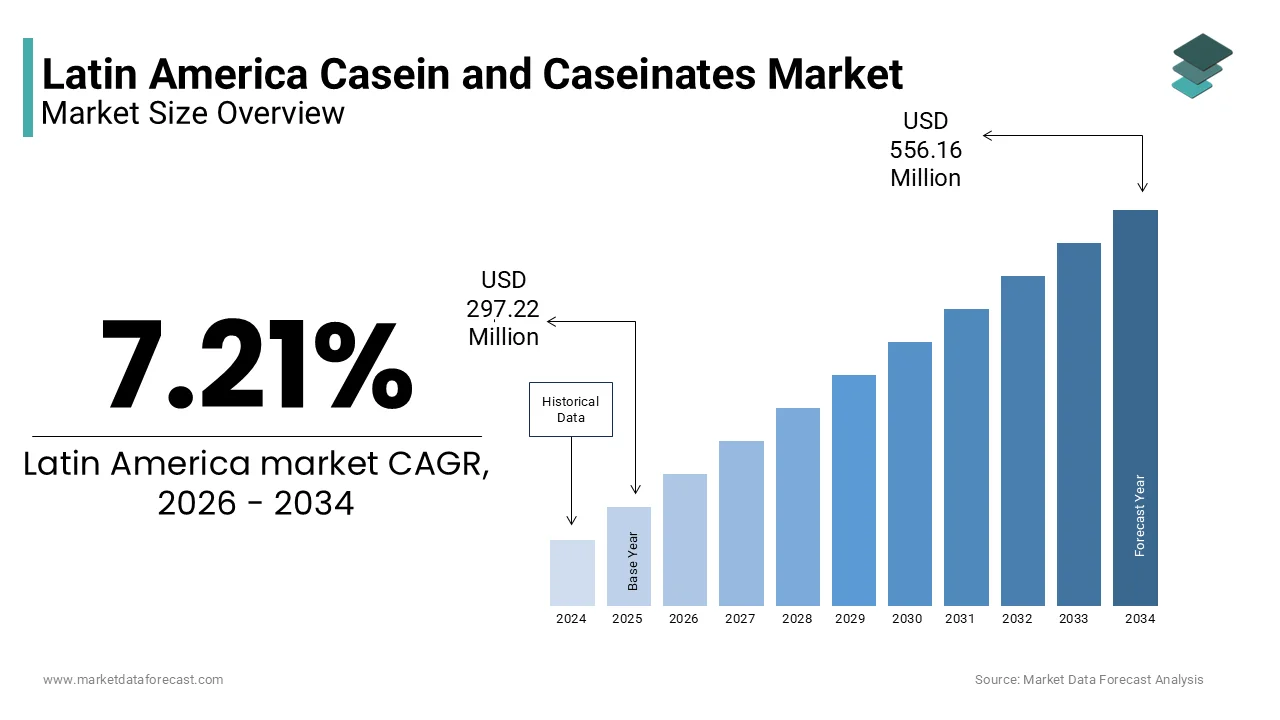
The Latin America casein and caseinates market size was valued at USD 297.22 million in 2025, reached USD 318.65 million in 2026, and is projected to scale up to USD 556.16 million by 2034, registering a compound annual growth rate (CAGR) of 7.21% during the forecast period from 2026 to 2034. Driven by the expansion of the regional processed food sector, increasing utilization in pharmaceutical and medical nutrition applications, and robust dairy production in key economies like Brazil and Argentina, the market continues to experience steady growth.
Key Executive Metrics (At-a-Glance)
- 2025 Base Valuation: USD 297.22 Million
- 2026 Current Valuation: USD 318.65 Million
- 2034 Forecast Valuation: USD 556.16 Million
- Compound Annual Growth Rate (CAGR): 7.21% (2026–2034)
- Leading Regional Country: Brazil (Accounting for 40.3% share in 2025)
- Leading Type Segment: Sodium Caseinate (44.3% share in 2025)
- Fastest-Growing Type Segment: Calcium Caseinate (Projected CAGR of 7.8%)
- Fastest-Growing Application Segment: Pharmaceutical Applications (Projected CAGR of 8.2%)
Core Market Drivers
- Processed Food Expansion: Rapid growth of urbanization and packaged convenience foods utilizing caseinates as emulsifiers, stabilizers, and texturizers.
- Medical Nutrition Demand: Rising prevalence of chronic diseases and hospital malnutrition prompting specialized dietary interventions and protein fortification.
Primary Market Restraints & Challenges
- Raw Milk Volatility: Fluctuations in raw milk prices, climate variability, and feed cost increases impacting supply chain reliability.
- Regulatory Fragmentation: Complex, divergent labeling and approval frameworks across individual Latin American countries creating regional trade barriers.
Latin America Casein and Caseinates Market Segmentation Highlights
| Segment Category | Leading / Dominant Segment | Fastest-Growing / Prominent Segment |
|---|---|---|
| By Type | Sodium Caseinate (44.3% share in 2025) | Calcium Caseinate (Projected CAGR of 7.8%) |
| By Application | Food and Beverage (Dominant market share) | Pharmaceutical (Projected CAGR of 8.2%) |
| By Country | Brazil (40.3% share in 2025) | Argentina & Mexico (Strong regional hubs) |
Major Industry Players Profiled
Key global and regional dairy leaders operating in the Latin American market include Arla Foods AMBA, Fonterra Co-operative Group Limited, DMK Deutsches Milchkontor GmbH, Amco Proteins, Armor Proteins, Erie Foods International Inc., EPI Ingredients, FrieslandCampina, Kerry Ingredients, Glanbia Plc., Lactoprot, and Clarion Casein Ltd.
Latin America Casein and Caseinates Market Size
The Latin America casein and caseinates market size was valued at USD 297.22 million in 2025 and is expected to reach USD 556.16 million by 2034 from USD 318.65 million in 2026. The market is growing at a CAGR of 7.21% during the forecast period.
The casein and caseinates are milk derived proteins extracted through acid or enzymatic precipitation processes. Casein represents approximately 80% of the total protein content in cow milk and serves as a critical functional ingredient in food pharmaceutical and industrial applications across the region. This market is deeply integrated into the dairy processing infrastructure of major economies such as Brazil Argentina and Uruguay which are significant global milk producers. As per data from the Food and Agriculture Organization of the United Nations, Latin America produces roughly 125 million tons of milk annually providing a substantial raw material base for casein extraction. The region faces unique dynamics where domestic consumption of liquid milk competes with industrial processing for value added derivatives. Furthermore, the Pan American Health Organization notes that malnutrition rates remain a concern in certain rural areas driving initiatives for protein fortification in staple foods. Caseinates offer superior solubility and emulsification properties compared to native casein making them indispensable for processed cheese meat products and infant formulas. The regulatory landscape varies significantly across nations influencing trade flows and local manufacturing capabilities. Growing awareness of clean label ingredients and natural preservatives further shapes consumer preference toward dairy based additives over synthetic alternatives establishing a complex, yet promising environment for market participants.
MARKET DRIVERS
Expansion of Processed Food Industry and Convenience Food Demand
The rapid growth of the processed food sector due to their essential functional properties is propelling the growth of the Latin America casein and caseinates market. As per Euromonitor International, the packaged food market in Latin America reached a value of 180 billion dollars in 2023 driven by urbanization and changing lifestyle patterns. Caseinates serve as effective emulsifiers stabilizers and texturizers in processed cheeses sausages and ready to eat meals, which constitute a growing share of household diets. The urban population in the region exceeds 80% creating a large consumer base reliant on convenient food options. Similarly, the cheese industry utilizes calcium caseinate to improve meltability and sliceability in processed varieties. The new product launches in the Latin American dairy category featured enhanced texture claims often achieved through caseinate incorporation. The demand for shelf stable products in remote areas further boosts usage as caseinates extend product life and maintain quality during distribution. Manufacturers prioritize these ingredients to meet consumer expectations for consistent taste and mouthfeel in affordable food items.
Rising Adoption in Pharmaceutical and Medical Nutrition Applications
The increasing utilization of casein and caseinates in pharmaceutical formulations and medical nutrition products due to their high biological value and slow digestion rate is accelerating the growth of the Latin America casein and caseinates market. As per the Pan American Health Organization, the prevalence of chronic diseases such as diabetes and cardiovascular conditions affects over 40% of adults in Latin America necessitating specialized dietary interventions. Casein is widely used in clinical nutrition formulas because it provides a steady release of amino acids supporting muscle maintenance and metabolic health during recovery periods. The hospital malnutrition rates in the region average 30%, prompting healthcare providers to prescribe protein rich supplements containing caseinates for improved patient outcomes, according to the study. In the pharmaceutical sector, casein serves as a binder and filler in tablet manufacturing due to its excellent compressibility and stability. Additionally, infant formula manufacturers incorporate micellar casein to mimic the protein profile of breast milk enhancing digestibility for newborns. The sales of medical nutrition products in Latin America increased by 8% in 2023, reflecting heightened awareness of therapeutic nutrition, as per the study. Regulatory support for fortification programs further encourages the use of high-quality dairy proteins in public health initiatives.
MARKET RESTRAINTS
Volatility in Raw Milk Prices and Supply Chain Instability
The fluctuations in raw milk prices and inconsistent supply chain reliability is restricting the growth of the Latin America casein and caseinates market. As per the Food and Agriculture Organization of the United Nations milk prices in Latin America experienced volatility of up to 15% in 2023, influenced by climate variability and feed cost increases. Drought conditions in key producing regions such as Southern Brazil and Northern Argentina reduced milk yields during peak dry seasons, limiting the availability of skim milk powder for casein production. Currency depreciation against the US dollar further complicates import dependencies for processing chemicals and equipment required for casein extraction. The logistical inefficiencies at major ports cause delays averaging 5 to 7 days leading to inventory shortages and increased warehousing expenses. Small and medium sized dairy cooperatives often lack the financial reserves to hedge against price swings forcing them to reduce production volumes during unfavorable conditions. This instability disrupts long term supply contracts with industrial buyers, who require consistent quality and quantity. Consequently, manufacturers face margin pressures and struggle to maintain competitive pricing, while ensuring product availability.
Stringent Regulatory Frameworks and Labeling Requirements
The complex and divergent regulations is additionally hindering the growth of the Latin America casein and caseinates market. Each country maintains distinct standards for food additives labeling requirements and safety assessments creating barriers to regional trade. Brazil requires rigorous pre-market approval from the National Health Surveillance Agency for all food ingredients, involving extensive toxicological data that can take 12 to 18 months to process. Mexico follows norms established by the Federal Commission for Protection against Sanitary Risk, which mandates specific labeling declarations for allergens, including milk derivatives. Argentina enforces additional restrictions on imported dairy products requiring sanitary certificates and origin verification that add weeks to clearance times, according to the study. Small manufacturers often lack resources to manage multi-jurisdictional compliance limiting their market reach. Furthermore, frequent updates to labeling laws such as Chile, front of package warning system require continuous monitoring and adaptation. Such regulatory fragmentation impedes economies of scale and slows the introduction of innovative casein based products. Companies must invest heavily in legal and regulatory affairs to ensure compliance thereby reducing funds available for research and development.
MARKET OPPORTUNITIES
Growth of Plant Based Alternatives and Consumer Shift Toward Veganism
The rising popularity of plant-based protein alternatives is creating new opportunities for the growth of the Latin America casein and casinates market. New launches of plant based food and beverage products in Latin America increased by 22% in 2023, driven by health consciousness and environmental concerns. While this trend challenges dairy dominance, it also creates opportunities for hybrid products that combine casein with plant proteins to improve texture and nutritional profile. The plant-based economy in Latin America generated revenues exceeding 2 billion dollars in 2023, indicating strong consumer interest. Manufacturers can leverage caseinates to enhance the mouthfeel and creaminess of plant-based cheeses and yogurts, which often lack the functional properties of dairy. Additionally, casein can be used in encapsulation technologies for plant based nutraceuticals improving stability and bioavailability. The sustainability initiatives are gaining traction among regional investors encouraging innovation in efficient protein extraction methods.
Expansion into Industrial and Technical Applications Beyond Food
The diversification of casein and caseinates into non-food industrial applications for manufacturers seeking to reduce dependency on volatile food areas is also to accelerate the growth of the Latin America casein and caseinates market. Casein exhibits excellent adhesive properties and is increasingly used in wood glues paper coatings and textile sizing agents, as a sustainable alternative to synthetic polymers. The manufacturing sector in Latin America is adopting green chemistry principles to reduce carbon footprints creating demand for biodegradable industrial ingredients. In the paper industry, caseinates improve printability and gloss finish meeting quality standards for premium packaging materials. Additionally, the cosmetics sector utilizes hydrolyzed casein in hair care and skin conditioning products due to its film forming and moisturizing capabilities. Technical grade casein also finds application in leather tanning and water treatment processes, where its binding characteristics are valuable.
MARKET CHALLENGES
High Energy Costs and Environmental Compliance Burdens
The production of casein and caseinates involves energy intensive processes, including pasteurization separation and drying, which are significantly impacted by rising energy costs in Latin America. The high energy costs and environmental compliance burdens are to pose as a challenge for the growth of the Latin America casein and caseinates market. Dairy processors in countries like Chile and Colombia face higher operational expenses, as they transition to cleaner energy sources to meet environmental standards. The need for sustainable manufacturing practices prompting stricter regulations on wastewater discharge and carbon emissions from dairy plants. Compliance with these environmental norms requires substantial capital investment in treatment facilities and energy efficient technologies, which many small producers cannot afford. The industrial waste management costs have risen by 8% annually, affecting profit margins. Additionally, water scarcity in key dairy regions such as Northern Mexico, imposes further constraints on processing capacities. Manufacturers must balance production efficiency with environmental stewardship to avoid penalties and maintain social license to operate. These cost pressures limit the ability to compete with imports from regions with lower energy costs. Consequently, local producers face challenges in scaling up operations and investing in innovation.
Limited Technical Expertise and Innovation Capacity
The suffers from a shortage of specialized technical expertise and limited research and development capacity compared to global leaders is additionally to impede the growth of the Latin America casein and caseinates market. As per the United Nations Educational Scientific and Cultural Organization, spending on research and development in Latin America averages only 0.7% of gross domestic product which is below the global average. This underinvestment restricts the ability of local manufacturers to develop advanced casein derivatives with enhanced functional properties tailored to specific industrial needs. The dairy firms in the region have dedicated innovation labs limiting product differentiation. Most producers rely on traditional extraction methods that yield standard grade casein rather than high value specialized fractions. This technological gap makes it difficult to compete with imported premium products from Europe and North America which offer superior consistency and performance. Additionally, there is a lack of skilled personnel in protein chemistry and application science hindering collaboration with end users for custom solutions. Universities and technical institutes often do not offer specialized courses in dairy technology resulting in a talent pipeline deficit. Without adequate technical support manufacturers struggle to troubleshoot application issues and optimize formulations for clients. This limitation slows down the adoption of innovative casein-based products and restricts market growth potential.
REPORT COVERAGE
| REPORT METRIC | DETAILS |
| Market Size Available | 2025 to 2034 |
| Base Year | 2025 |
| Forecast Period | 2026 to 2034 |
| CAGR | 7.21% |
| Segments Covered | By Type, Application, and Region. |
| Various Analyses Covered | Global, Regional and Country Level Analysis; Segment-Level Analysis; DROC; PESTLE Analysis; Porter’s Five Forces Analysis; Competitive Landscape; Analyst Overview of Investment Opportunities |
| Regions Covered | Brazil, Mexico, Argentina, Chile & Rest of Latin America |
| Market Leaders Profiled | Arla Foods AMBA, Amco Proteins, Bhole Baba Dairy Industries Ltd, Armor Proteins, Clarion Casein Ltd., Charotar Casein Company, DE CV, Dilac SA, Erie Foods International Inc., EPI Ingredients, FrieslandCampina, Fonterra, Kerry Ingredients, Glanbia Plc., Lactoprot, Kerui Dairy Products Development Co., Ltd., and Venus Casein Products |
SEGMENTAL ANALYSIS
By Type Insights
The sodium caseinate segment was accounted in holding 44.3% of the Latin America casein and caseinates market share in 2025 due to its superior solubility emulsifying properties and widespread acceptance in food processing applications. The growth of the segment is driven by the exceptional solubility across a wide pH range, making it indispensable for various food formulations. As per the study, sodium caseinate accounts for approximately 65% of total caseinate consumption in Latin America due to its ability to dissolve completely in water without forming gels. This property is crucial for the production of coffee whiteners whipped toppings and processed cheeses, which are staple items in urban diets, across Brazil and Mexico. The processed cheese manufacturers in the country rely on sodium caseinate to ensure uniform melting and smooth texture. Furthermore, its emulsifying capacity allows for the incorporation of fats into aqueous systems enhancing mouthfeel and stability in ready to drink beverages. Its neutral flavor profile also ensures that it does not alter the taste of final products making it preferred by product developers. The ease of handling and storage compared to other caseinates further reinforces its position. Manufacturers favor sodium caseinate for its consistent performance in large scale industrial operations reducing production variability.
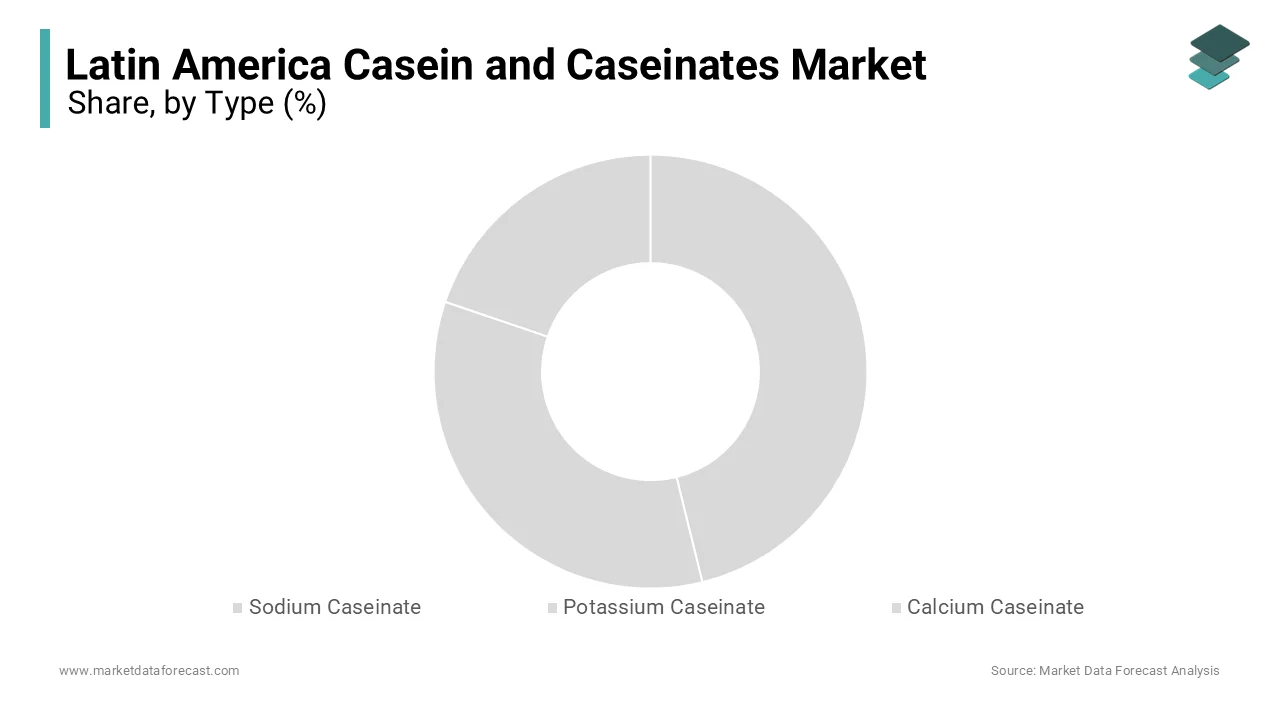
The calcium caseinate segment is likely to grow at a fastest CAGR of 7.8% during the forecast period owing to the consumer preference for clean label products that avoid synthetic additives and artificial stabilizers. Calcium caseinate is perceived as a natural and wholesome ingredient, since it is derived directly from milk without chemical modification beyond precipitation. The initiatives to reduce additive consumption encouraging manufacturers to reformulate products using natural alternatives. In the bakery and confectionery sectors, calcium caseinate improves dough strength and moisture retention without triggering allergen concerns associated with gluten or soy. Its ability to provide structural integrity in gluten free products, particularly for dietary restriction friendly foods is boosting the growth of the segment. Furthermore, calcium caseinate contributes to the calcium content of fortified foods aligning with public health goals to combat osteoporosis.
By Application Insights
The food and beverage segment was the largest by accounting for a dominant share of the Latin America casein and caseinates market in 2025 with the role of caseinates in processed cheese and dairy alternative formulations. Caseinates prevent fat separation and ensure smooth melting characteristics which are essential for consumer acceptance in sandwiches and culinary applications. The region has a strong cultural affinity for cheese consumption with per capita intake reaching 12 kilograms annually in countries like Argentina and Uruguay, according to the study. Additionally, the rise of plant based dairy alternatives has created new demand for caseinates to improve mouthfeel and stability in non-dairy yogurts and creams. The versatility of caseinates allows them to function effectively in both acidic and neutral systems by making them suitable for a wide range of dairy products. Manufacturers rely on these ingredients to maintain consistency and quality in mass produced items.
The pharmaceutical application segment is likely to grow at an anticipated CAGR of 8.2% from 2026 to 2034 owing to the rising healthcare expenditure and the increasing prevalence of chronic diseases requiring specialized medication formulations. Casein is widely used as an excipient in tablet manufacturing due to its excellent compressibility and binding properties which ensure drug stability and controlled release. Additionally, casein based micelles are increasingly explored for targeted drug delivery systems offering improved bioavailability for poorly soluble drugs. The non communicable diseases such as diabetes and hypertension affect over 40% of adults in the region necessitating long term medication adherence. Pharmaceutical companies are investing in advanced formulation technologies where casein plays a crucial role in enhancing efficacy. Regulatory approvals for new drug formulations containing casein derivatives are streamlining market entry.
REGIONAL ANALYSIS
Brazil Market Analysis
Brazil was the top performer in the Latin America casein and caseinates market by accounting for 40.3% of the share in 2025 with its massive dairy industry and diverse food processing sector. Brazil robust processed food industry, including cheese meat and bakery segments consumes significant volumes of sodium and calcium caseinates for functional enhancement. Government initiatives under the National Dairy Plan aim to boost value added dairy exports, including caseinates enhancing competitiveness. Urbanization rates exceeding 85% drive consumption of convenience foods relying on caseinates for stability and texture. However, economic volatility and currency fluctuations impact import costs for processing chemicals. Local manufacturers are investing in technology upgrades to improve yield and quality. The presence of major multinational food companies in Brazil that further stimulates demand for high quality caseinates.
Mexico Market Analysis
Mexico was the second largest contributor in the Latin America casein and caseinates market by occupying 25.3% of share in 2025 with the strong trade links with North America and growing processed food consumption. The proximity to the United States facilitates access to advanced dairy technologies and export opportunities for Mexican casein producers. Mexico imports significant quantities of caseinates to supplement domestic production, which focuses mainly on acid casein. Rising middle class income increases purchasing power for premium dairy products containing caseinates. Regulatory frameworks under the Federal Commission for Protection against Sanitary Risk are aligned with international standards facilitating trade. However, water scarcity in northern dairy regions poses challenges for processing expansion. Local companies are adopting water recycling technologies to mitigate this issue. E-commerce growth for food ingredients enables smaller manufacturers to access caseinates more easily.
Argentina Market Analysis
Argentina casein and caseinates market growth is expected to have dominant growth opportunities throughout the forecast period with its strong dairy tradition and export orientation. Argentina specializes in high-quality acid casein and sodium caseinate production leveraging its pasture based dairy systems, which yield milk with favorable protein composition. The casein exports account for a substantial portion of dairy revenue despite domestic economic challenges. Hyperinflation and currency controls impact local purchasing power but export revenues remain stable due to dollar denominated contracts. The government supports dairy exports through tax incentives aiming to generate foreign exchange. Domestic consumption of processed foods using caseinates is moderate due to economic constraints but industrial demand persists. Logistical improvements at ports have reduced export delays enhancing competitiveness. Technical expertise in dairy processing is well established allowing for efficient production.
Chile Market Analysis
Chile casein and caseinates market is steadily growing with the high regulatory standards and focus on premium niche applications. The country has a smaller dairy base compared to Brazil or Argentina but focuses on high value-added products. As per the Office of Agricultural Studies and Policies, Chile dairy sector emphasizes sustainability and quality certification appealing to discerning international buyers. Chile imports most of its caseinates for use in pharmaceutical and specialty food applications due to limited domestic production capacity. The high per capita income supports demand for premium health products containing casein derivatives. Regulatory standards under the Ministry of Health are stringent ensuring high purity levels for imported ingredients. The pharmaceutical sector in Chile is well-developed driving demand for pharmaceutical grade casein. Trade agreements with Asia and Europe facilitate access to diverse suppliers. However, high logistics costs due to geographic isolation impact pricing. Local distributors focus on technical support to add value for clients.
COMPETITIVE LANDSCAPE
The competition in the Latin America casein and caseinates market is characterized by the presence of established global suppliers and emerging local producers vying for dominance in a fragmented landscape. International players leverage their advanced processing technologies and brand reputation to offer premium products, while local manufacturers compete on price and proximity to raw material sources. Product innovation remains a critical differentiator as companies develop specialized caseinates for niche applications in pharmaceuticals and clean label foods. Price sensitivity among industrial buyers drives frequent negotiations and promotional activities impacting profit margins. Regulatory compliance varies across countries creating additional barriers for new entrants and requiring significant investment in legal and quality assurance teams. The rise of plant based alternatives poses an indirect threat prompting dairy companies to promote the unique functional benefits of caseinates. E-commerce platforms are increasingly used for ingredient sourcing enabling smaller manufacturers to access competitive supplies.
KEY MARKET PLAYERS
Some of the key players in the Latin America casein and caseinates market are
- Arla Foods AMBA
- Amco Proteins
- Bhole Baba Dairy Industries Ltd
- Armor Proteins
- Clarion Casein Ltd.
- Charotar Casein Company
- DE CV
- Dilac SA
- Erie Foods international Inc.
- EPI Ingredients
- FrieslandCampina.
- Fonterra
- Kerry Ingredients
- Glanbia, Plc.
- Lactoprot
- Kerui Dairy Products Development Co., Ltd.
- Venus Casein Products
Top Players in the Market
- Fonterra Co operative Group Limited maintains a strong presence in the Latin America casein and caseinates market through its extensive dairy processing network and global supply chain capabilities. The company supplies high quality sodium and calcium caseinates to food manufacturers across Brazil and Mexico focusing on consistency and functional performance. Fonterra recently invested in upgrading its production facilities in New Zealand to increase output of specialized caseinate grades tailored for industrial applications. This enhancement allows the company to meet growing demand for clean label ingredients in the region. The company also engages in technical partnerships with local distributors to provide formulation support ensuring optimal use of its products.
- Arla Foods Ingredients contributes significantly to the Latin America casein and caseinates market by offering innovative protein solutions designed for specific functional requirements. The company focuses on providing high purity caseinates that enhance texture and stability in processed foods and beverages. Arla recently launched new product lines featuring improved solubility profiles, which are crucial for ready to drink applications popular in urban centers. The company collaborates closely with regional formulators to develop customized solutions that address local taste preferences and regulatory standards. Arla also participates in industry workshops to educate customers on the benefits of caseinates in clean label formulations. These efforts demonstrate its commitment to supporting innovation and quality in the Latin American food industry.
- DMK Deutsches Milchkontor GmbH plays a vital role in the Latin America casein and caseinates market by supplying premium acid casein and sodium caseinate to industrial buyers. The company leverages its large scale production capacity in Europe to ensure consistent supply and competitive pricing for regional customers. DMK recently optimized its logistics operations to reduce delivery times to major ports in South America enhancing service reliability. The company also introduced sustainable packaging options for its caseinate products by aligning with environmental goals of Latin American manufacturers. DMK actively engages in trade missions to strengthen relationships with key distributors and end users in Brazil and Argentina.
Top Strategies Used by the Key Market Participants
Key players in the Latin America casein and caseinates market primarily employ product differentiation and strategic partnerships to enhance their competitive position. Companies invest in research and development to create specialized caseinate grades with improved functionality such as enhanced solubility and neutral flavor profiles. Collaborations with local distributors and technical experts enable better market penetration and customer support across diverse regions. Manufacturers also focus on sustainability initiatives including eco-friendly packaging and carbon footprint reduction to appeal to environmentally conscious buyers. Pricing strategies often involve volume discounts and long-term contracts to secure loyalty from large industrial clients. Additionally, companies engage in educational campaigns to highlight the benefits of caseinates in clean label and fortified products.
Latin America Casein and Caseinates Market News
- In March 2024, Fonterra Co operative Group Limited upgraded its caseinate production facility in New Zealand to increase output of specialized grades for industrial applications in Latin America.
- In February 2024, DMK Deutsches Milchkontor GmbH optimized its logistics network to reduce delivery times to major ports in South America enhancing service reliability.
- In June 2024, a leading regional distributor partnered with international suppliers to introduce sustainable packaging options for caseinate products targeting environmentally conscious manufacturers in Brazil.
- In January 2024, a major local producer in Argentina invested in water recycling technology to mitigate scarcity issues and ensure continuous casein production during dry seasons.
MARKET SEGMENTATION
This research report on the Latin America casein and caseinates market has been segmented and sub-segmented based on type, application & region.
By Type
- Sodium Caseinate
- Potassium Caseinate
- Calcium Caseinate
By Application
- Food and Beverage
- Industrial
- Pharmaceutical
- Cosmetics
- Other
By Country
- Brazil
- Argentina
- Mexico
- Rest of Latin America