- Product Description Description
- Table of Contents TOC
- List of Table & Figure LOT
- Get Free Sample PDF Sample PDF
Market Size, 2025
$708.9 MnMarket Estimate, 2026
$733.4 MnMarket Forecast, 2034
$962.6 MnCAGR, 2026–2034
3.46%Latin America Chickpeas Market Size, Growth, Trends & Forecast (2026–2034)
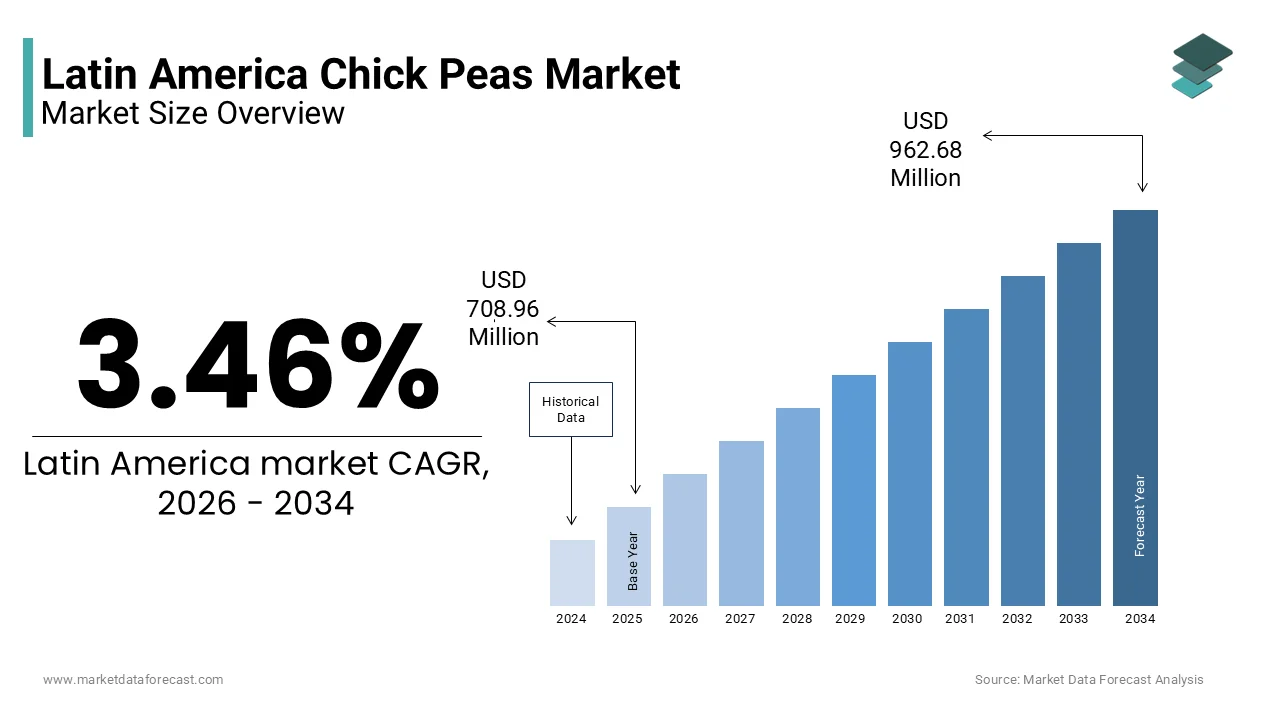
The Latin America chickpeas market size was valued at USD 708.96 million in 2025, is estimated at USD 733.49 million in 2026, and is projected to reach USD 962.68 million by 2034, registering a compound annual growth rate (CAGR) of 3.46% during the forecast period from 2026 to 2034. Driven by a rising health consciousness, preventative regional health policies, and the rapid expansion of plant-based and vegan diets, the market continues to experience steady regional demand.
Key Executive Metrics (At-a-Glance)
- 2025 Base Valuation: USD 708.96 Million
- 2026 Current Valuation: USD 733.49 Million
- 2034 Forecast Valuation: USD 962.68 Million
- Compound Annual Growth Rate (CAGR): 3.46% (2026–2034)
- Dominant Type Segment: Kabuli Chickpeas (holding a 65.8% market share in 2025 due to large grain size, culinary versatility, and export demand)
- Fastest-Growing Type Segment: Desi Chickpeas (projected at a rapid 9.5% CAGR driven by high fiber, antioxidant profiles, and affordability)
- Dominant Color Segment: Yellow Chickpeas (capturing 55.7% share in 2025 via standard Kabuli processing demand)
- Fastest-Growing Color Segment: Green Chickpeas (expanding at an 11.2% CAGR supported by fresh, nutrient-rich functional marketing)
- Dominant Distribution Channel: Offline Retailers (commanding over 70% of transactions through physical grocery inspection and traditional markets)
- Fastest-Growing Distribution Channel: Online Retailers (registering an impressive 14.8% CAGR from 2026 to 2034)
- Leading Country: Brazil (holding a 30.2% market share in 2025 backed by agricultural rotation systems and strong domestic processing)
Core Market Drivers
- Nutritional & Preventive Health Shifts: Surging demand for low-glycemic, high-protein plant-based foods to combat regional obesity and noncommunicable diseases.
- Plant-Based & Vegan Sector Expansion: Proliferation of hummus, falafel, and meat analogues across metropolitan food service and retail channels in Brazil and Argentina.
- Export Competitiveness: Favorable counter-seasonal harvest advantages enabling Latin American suppliers to capture premium pricing across North American, European, and Asian markets.
Primary Market Restraints & Challenges
- Climate Variability & Droughts: Unpredictable seasonal rainfall cycles and extreme weather disrupting crop establishment and cutting yields by up to 30%.
- Technological Deficits & Supply Chain Inefficiencies: Low adoption rates of advanced certified seeds, limited irrigation access, and post-harvest storage losses reaching 15%.
Latin America Chickpeas Market Segmentation Breakdown
| Segment Category | Leading Sub-Segment (2025 Base) | Fastest-Growing Sub-Segment (2026–2034) |
|---|---|---|
| By Type | Kabuli Chickpeas (65.8% market share via large size and international hummus demand) | Desi Chickpeas (9.5% CAGR driven by high fiber content and low production costs) |
| By Color | Yellow Chickpeas (55.7% market share through processing and milling uniformity) | Green Chickpeas (11.2% CAGR powered by fresh, nutrient-rich health trends) |
| By Distribution Channel | Offline Retailers (>70% share via traditional brick-and-mortar trust and inspection) | Online Retailers (14.8% CAGR driven by e-commerce convenience and home delivery) |
| By Country | Brazil (30.2% share backed by vast arable land and domestic processing expansion) | Chile & Argentina (expanding via organic farming and specialty export markets) |
Major Industry Players Profiled
Key enterprises shaping the Latin America chickpeas market include Wimmera Grain Company, Arbel S.A., Bean Growers, Isik Tarim, Urunleri Sanayi Ic Ve Dis Ticaret Ltd Sti, JOVA Graneros S.A. de C.V., Mast Qalander Group of Companies, Indraprasth Foods Ltd., R Young Seeds Inc., and OLEGA S.A.
Latin America Chick Peas Market Size
The Latin America chick peas market size was valued at USD 708.96 million in 2025, and is expected to reach USD 962.68 million by 2034 from USD 733.49 million in 2026. The market is growing at a CAGR of 3.46%.
Chickpeas also known as garbanzo beans serve as a vital source of plant based protein and dietary fiber for millions of consumers in the region. The agricultural landscape of Latin America supports diverse legume production with chickpeas gaining prominence due to their adaptability to semi arid conditions and nutritional density. According to the Food and Agriculture Organization (FAO), global pulse production has surpassed 96 million metric tons, with major output expansions led heavily by agricultural smallholders and expanding cultivation networks across Asia and Africa Ecofin Agency. The regional diet increasingly incorporates pulses as consumers shift toward healthier eating patterns driven by rising awareness of chronic disease prevention. Also, the Pan American Health Organization (PAHO) indicates that noncommunicable diseases account for roughly 81% of lives lost across the Region of the Americas, reinforcing preventative regional health policies that emphasize nutrient-dense, legume-based dietary frameworks. Chickpeas offer an affordable alternative to animal protein making them accessible to lower income households while meeting the demands of health conscious urban populations. The crop requires less water compared to other protein sources which aligns with sustainable farming practices promoted by regional agricultural ministries. Local governments have initiated programs to support smallholder farmers in adopting improved chickpeas varieties that yield higher productivity. This market segment continues to evolve as supply chains modernize and consumer preferences diversify across the continent.
MARKET DRIVERS
Rising Health Consciousness and Nutritional Awareness Drive Demand
The growing emphasis on preventive healthcare and nutritional wellness drives the growth of the Latin America chickpeas market. Consumers increasingly recognize the health benefits associated with legumes including high protein content low glycemic index and rich fiber composition. The UN Food and Agriculture Organization (FAO) and PAHO indicates that over 250 million people in Latin America and the Caribbean are overweight or obese, presenting a severe public health crisis that is accelerating regional dietary shifts toward healthier, low-fat plant proteins. This alarming trend has prompted public health campaigns encouraging the adoption of plant based diets that reduce cardiovascular risks and manage weight effectively. Nutritional guidelines from the USDA FoodData Central confirm that raw, dry chickpeas yield roughly 19 grams of protein per 100 grams, making their derivative flours and isolates a premium macro-nutrient base for clean-label meat alternatives. Sources confirms that urban consumption of dry pulses and legume-based foods is expanding steadily across Latin America, driven by targeted food security initiatives and shifting middle-class dietary preferences. Nutritionists and healthcare professionals actively promote chickpeas as part of balanced meal plans targeting diabetes management and heart health. The ingredient versatility allows incorporation into traditional dishes such as stews salads and spreads appealing to diverse culinary traditions. Social media platforms and digital health applications further amplify awareness by sharing recipes and nutritional facts with millions of followers. Government initiatives in countries like Brazil and Mexico include educational programs in schools that teach children about the benefits of legumes. This sustained focus on health drives steady demand growth as consumers prioritize functional foods that deliver tangible wellness outcomes.
Expansion Of Plant Based and Vegan Food Segments
The rapid expansion of plant-based food products creates substantial demand for chickpeas as a key ingredient in alternative protein formulations, which further accelerates the expansion of the Latin America chickpeas market. Latin American consumers particularly in metropolitan areas demonstrate increasing interest in vegan and vegetarian options driven by ethical environmental and health considerations. Chickpeas serve as a foundational component in manufacturing hummus falafel patties and meat analogues due to their neutral flavor and excellent textural properties. Major food manufacturers in Brazil and Argentina have launched dedicated product lines featuring chickpea based snacks and ready to eat meals targeting health oriented demographics. The convenience factor associated with processed chickpea products appeals to busy urban professionals seeking nutritious meal solutions. Food service establishments including restaurants and cafes incorporate chickpea dishes into menus to cater to diverse dietary requirements. Investment in research and development enables innovation in texture enhancement and flavor profiling expanding application possibilities. Export opportunities further stimulate production as international brands source chickpeas from Latin American suppliers for global distribution. This dynamic segment continues to attract venture capital and corporate investment reinforcing the strategic importance of chickpeas in the evolving food landscape.
MARKET RESTRAINTS
Climate Variability and Unpredictable Weather Patterns
Erratic weather conditions are significant constraints to chickpeas cultivation which affect yield stability and farmer incomes across the region, and thereby restrict the overall growth of the Latin America chickpeas market. The crop requires specific temperature ranges and moderate rainfall during critical growth stages making it vulnerable to climate induced stresses. The Intergovernmental Panel on Climate Change (IPCC) highlights that escalating regional temperatures and disrupted rainfall cycles are altering agricultural zoning across South America, intensifying prolonged drought periods. Research confirm that prolonged seasonal droughts in Northern Mexico and Northeastern Brazil have cut pulse crop yields by up to 30%, highlighting the vulnerability of standard chickpea cultivars to extreme weather. Farmers face difficulties in planning planting schedules due to unpredictable onset of rains leading to suboptimal crop establishment. Extreme weather events including floods and hailstorms damage standing crops causing substantial post harvest losses. The Economic Commission for Latin America and the Caribbean (ECLAC) indicate that climate-driven weather extremes cause billions of dollars in annual agricultural damages, severely disrupting seasonal outputs for core pulse crops. Limited access to irrigation infrastructure exacerbates vulnerability among smallholder farmers. Soil degradation resulting from intensive farming practices further compromises productivity requiring costly remediation efforts. Insurance coverage remains inadequate leaving farmers exposed to financial risks when crops fail. These climatic uncertainties discourage investment in area expansion and technology adoption constraining market growth potential despite strong demand fundamentals.
Limited Access To Advanced Agricultural Technologies
The absence of modern farming technologies and improved seed varieties limits productivity gains in the Latin America chickpeas market. Many farmers continue relying on traditional cultivation methods and locally saved seeds that exhibit lower yield potential and susceptibility to pests. The Inter-American Development Bank (IDB) highlight that low adoption rates of certified seed varieties among smallholders limit regional crop uniformity and baseline yield potential. Conventional chickpeas varieties produce approximately 800 kilograms per hectare whereas advanced hybrids can achieve yields exceeding 1500 kilograms per hectare under optimal conditions. As per the International Crops Research Institute for the Semi Arid Tropics adoption of drought resistant cultivars remains below 15 percent in major producing regions limiting resilience against water scarcity. Mechanization levels are low with most harvesting operations performed manually increasing labor costs and post harvest losses. The lack of precision agriculture tools such as soil sensors and drone monitoring prevents efficient resource utilization and timely intervention. Extension services provided by government agencies reach fewer than 40 percent of rural farmers according to the Food and Agriculture Organization leaving knowledge gaps in best practices. Financial barriers prevent investment in equipment and inputs required for technology integration. Research funding for pulse crops lags behind staple cereals resulting in slower varietal development. These technological deficits hinder competitiveness in domestic and export markets where quality consistency and volume reliability determine buyer preferences.
MARKET OPPORTUNITIES
Growing Export Opportunities To Global Markets
Expanding international trade offers lucrative opportunities for producers seeking to diversify revenue streams beyond domestic consumption, which paves the way for the growth of the Latin America chickpeas market. Global demand for pulses continues rising driven by population growth dietary shifts and sustainability imperatives in importing regions. Sources reveal that cross-border chickpea trade volumes surpassed 3.1 million metric tons [Market Reports World], with primary destination markets concentrated across South Asia, Europe, and the Middle East demanding premium caliber variants. Latin American exporters benefit from favorable growing conditions that enable counter seasonal supply relative to major producers in South Asia. Research shows that Mexican and Argentine chickpea exporters are successfully expanding their market share, leveraging their reputation for high-quality, large-caliber Kabuli varieties to capture premium pricing in specialized international markets. Trade agreements such as the Pacific Alliance facilitate tariff reductions and streamlined customs procedures enhancing market access. Quality certification programs enable compliance with stringent food safety standards required by European and North American buyers. Investment in post harvest infrastructure including cleaning sorting and packaging facilities improves product presentation and shelf life. E commerce platforms connect producers directly with international distributors reducing intermediary costs and improving margins. Government export promotion agencies provide technical assistance and market intelligence helping farmers identify emerging opportunities. The reputation of Latin American chickpeas for superior taste and uniform size commands price premiums in gourmet and health food channels. Strategic partnerships with multinational food corporations secure long term off take agreements ensuring stable demand. These export dynamics incentivize production expansion and quality improvement strengthening the regional position in global pulse trade networks.
Development Of Value Added Product Innovations
Innovation in value added chickpeas products creates new revenue avenues and enhances consumer engagement across diverse segments within the Latin America chickpeas market. Food manufacturers invest in research to develop convenient formats that align with modern lifestyles while preserving nutritional integrity. Chickpea flour serves as a gluten free alternative in baking applications appealing to consumers with celiac disease or wheat sensitivities. Ready to eat hummus variants infused with local herbs and spices gain popularity among urban consumers seeking authentic yet convenient options. Beverage manufacturers experiment with chickpea milk as a dairy alternative leveraging its creamy texture and neutral taste. Fortification strategies enhance micronutrient content addressing regional deficiencies in iron and zinc. Collaborative efforts between academia and industry accelerate formulation improvements and sensory optimization. Packaging innovations extend product freshness and communicate sustainability credentials attracting environmentally conscious buyers. Retailers allocate prominent shelf space to innovative chickpeas products reflecting strong consumer acceptance. These developments transform chickpeas from a commodity ingredient into a versatile platform for culinary creativity driving category expansion and margin enhancement throughout the value chain.
MARKET CHALLENGES
Supply Chain Inefficiencies And Post Harvest Losses
Inadequate infrastructure and fragmented supply chains result in substantial post-harvest losses, which impede the growth of the Latin America chickpeas market. These challenges diminish farmer returns and market efficiency. Smallholder farmers lack access to proper drying facilities causing moisture retention that promotes fungal growth and aflatoxin contamination. Research confirms that suboptimal pest management and poor humidity controls degrade up to 15% of stored pulse volume, lowering seed quality before the raw materials ever reach processing facilities. Rural road networks remain underdeveloped in major producing regions increasing transit times and exposure to adverse weather during transport. The absence of standardized grading systems creates information asymmetry between buyers and sellers resulting in price disputes and transaction delays. Middlemen dominate distribution channels capturing disproportionate margins while providing limited value addition. Cold chain infrastructure for perishable chickpea products remains virtually nonexistent restricting geographic market reach. Coordination failures among stakeholders prevent implementation of integrated logistics solutions that could reduce costs and improve traceability. Investment in warehousing and silo capacity lags behind production growth creating bottlenecks during peak harvest seasons. These structural weaknesses undermine competitiveness and discourage participation from formal retail and export buyers who require consistent quality and reliable delivery schedules. Addressing these inefficiencies requires coordinated public private investments and policy reforms to modernize the entire supply ecosystem.
Price Volatility And Market Uncertainty
Fluctuating commodity prices create financial instability for producers and processors in the Latin America chickpeas market. This significantly complicates business planning and investment decisions. Global pulse markets experience significant price swings influenced by production variations in major exporting countries currency fluctuations and speculative trading activities. Domestic markets face additional volatility due to seasonal supply gluts during harvest periods followed by shortages in off season months. As per the Central Bank of Brazil inflation in food prices reached 12 percent in 2024 affecting purchasing power and demand elasticity for non staple items including chickpeas. Farmers struggle to hedge against price risks due to limited access to futures markets and insurance instruments. Processors encounter challenges in maintaining stable input costs while honoring fixed price contracts with retailers. Currency depreciation in several Latin American economies increases the cost of imported inputs such as fertilizers and packaging materials squeezing operational margins. Lack of transparent price discovery mechanisms leaves small producers vulnerable to exploitation by intermediaries who manipulate quotations. Government price support programs remain inconsistent and insufficient to buffer against extreme market movements. This uncertainty discourages long term commitments from both producers and buyers hindering market maturation and value chain integration. Stabilization measures including warehouse receipt systems and forward contracting frameworks could mitigate these risks and promote sustainable growth.
REPORT COVERAGE
| REPORT METRIC | DETAILS |
| Market Size Available | 2025 to 2034 |
| Base Year | 2025 |
| Forecast Period | 2026 to 2034 |
| CAGR | 3.46% |
| Segments Covered | By Type, Color, Distribution Channel, and Region |
| Various Analyses Covered | Global, Regional, & Country Level Analysis; Segment-Level Analysis; DROC; PESTLE Analysis; Porter’s Five Forces Analysis; Competitive Landscape; Analyst Overview of Investment Opportunities |
| Regions Covered | Latin America include Brazil, Argentina, Mexico, and the Rest of Latin America |
| Market Leaders Profiled | Wimmera Grain Company, Arbel S.A., Bean Growers, Isik Tarim, Urunleri Sanayi Ic Ve Dis Ticaret Ltd Sti, JOVA Graneros S.A. de C.V., Mast Qalander Group of Companies, Indraprasth foods Ltd., R Young Seeds Inc. and OLEGA S.A. among others. |
SEGMENTAL ANALYSIS
By Type Insights
The Kabuli chickpeas segment was the largest in the Latin America chickpeas market and occupied a 65.8% share in 2025. This dominance of the segment was driven by its primary use in preparing hummus, falafel, and salads, which are staple dishes in urban dining establishments across Mexico and Brazil. Such overwhelming market dominance is also due to their large size, creamy texture, and widespread acceptance in international cuisines. Consumers prefer this type for its mild flavor and ease of cooking requiring less soaking time compared to smaller varieties. Major retail chains stock Kabuli chickpeas prominently due to higher consumer recognition and willingness to pay premium prices. Export markets in Europe and North America specifically request Kabuli grades creating robust demand for Latin American producers who benefit from counter seasonal harvest cycles. The visual appeal of larger uniform seeds commands better pricing in wholesale markets encouraging farmers to allocate more acreage to this variety. Government agricultural programs in Argentina provide subsidies for Kabuli seed procurement further reinforcing its market leadership through improved availability and affordability for commercial growers.
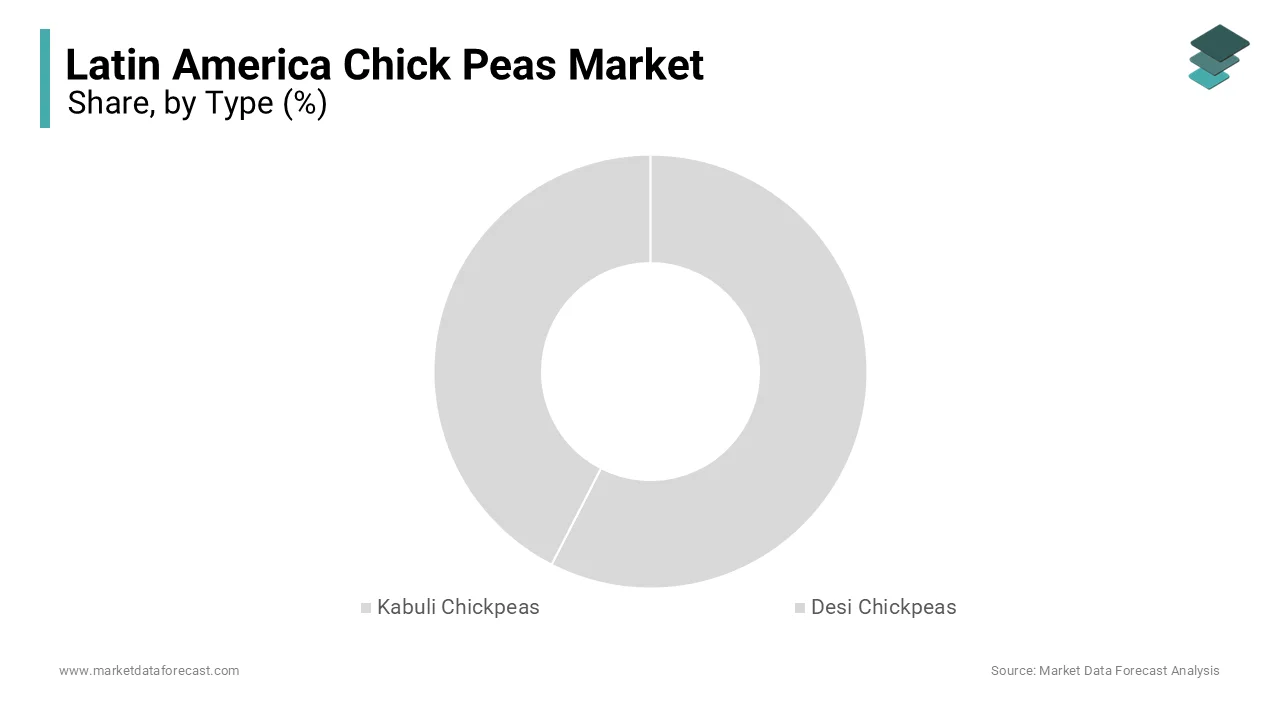
The desi chickpeas segment is estimated to register the fastest CAGR of 9.5% from 2026 to 2034 due to rising awareness of the superior nutritional profile of Desi varieties which contain higher fiber and antioxidant levels than Kabuli types. Traditional Latin American recipes such as stews and soups utilize smaller darker chickpeas aligning with cultural culinary practices in rural and semi urban areas. The lower cost of production makes Desi chickpeas accessible to lower income demographics expanding the consumer base significantly. The Food and Agriculture Organization (FAO) reveals that soaring food inflation drives low-income households to pivot heavily toward dry pulses, expanding Desi chickpea adoption as an affordable baseline protein. Food manufacturers incorporate Desi flour into gluten free products targeting health conscious segments seeking nutrient dense alternatives. Agricultural research institutes have developed drought resistant Desi cultivars that yield 15 percent more under water scarce conditions as reported by the International Crops Research Institute for the Semi Arid Tropics. This resilience encourages cultivation in arid regions of northern Mexico and northeastern Brazil where climate variability poses challenges to other crops.
By Color Insights
The yellow chickpeas segment led the Latin America Chickpeas Market and captured a 55.7% share in 2025. Furthermore, the prevalence of this color variant stems from its association with standard Kabuli types, which are preferred for their aesthetic appeal and neutral taste profile. Food processors favor yellow chickpeas because they maintain consistent color after cooking and canning ensuring product uniformity in retail packages. Retailers report higher turnover rates for yellow varieties compared to colored alternatives indicating stronger brand loyalty and repeat purchases. The milling industry utilizes yellow chickpeas extensively for producing flour and splits used in baking and snack manufacturing. Culinary traditions in major urban centers prioritize light colored legumes for presentation in upscale restaurants and catering services. Export specifications from European buyers often mandate yellow color standards reinforcing production focus among Latin American suppliers. The established supply chain infrastructure supports efficient handling and storage of yellow chickpeas minimizing quality degradation and maximizing shelf life for domestic and international distribution channels.
However, the green chickpeas segment is anticipated to witness the fastest CAGR of 11.2% during the forecast period. This quick surge of the segment is propelled by innovative marketing strategies positioning green chickpeas as fresh young and nutrient rich alternatives to mature dried varieties. Fresh green chickpeas contain higher levels of vitamin C and folate appealing to health focused consumers seeking functional benefits beyond basic protein intake. As per the World Health Organization micronutrient deficiency remains a public health concern in Latin America prompting recommendations for diverse colorful plant foods. Gourmet chefs and food influencers promote green chickpeas in social media campaigns highlighting their unique sweet flavor and tender texture. Specialty grocery stores in Chile and Argentina have expanded shelves dedicated to fresh legumes including green chickpeas responding to urban demand for premium produce. Agricultural cooperatives invest in cold chain logistics to preserve freshness enabling wider geographic distribution. The novelty factor attracts younger demographics willing to experiment with new ingredients in home cooking. Processed versions such as frozen green chickpeas extend availability beyond seasonal harvests supporting year round consumption and steady revenue growth for producers entering this niche but high value segment.
By Distribution Channel Insights
In 2025, the offline retailers segment held the majority share of the Latin America Chickpeas Market because of deeply entrenched shopping habits where consumers prefer physical inspection of bulk legumes for quality assessment before purchase. Traditional markets remain vital in rural and semi urban areas where digital penetration is limited and cash transactions prevail. Research confirms that brick-and-mortar storefronts command over 70% of household food transactions in Latin America, offering the immediate product availability and physical evaluation that consumers prioritize when buying dry food staples. Supermarket chains invest heavily in private label chickpea brands offering competitive pricing and consistent quality that builds consumer loyalty. Promotional activities such as discounts and bundle offers drive volume sales during festive seasons and health awareness campaigns. Wholesalers supply large quantities to small independent grocers ensuring widespread geographic coverage even in remote locations. The trust factor associated with established retail outlets reduces perceived risk for first time buyers. Government regulations favoring local sourcing encourage offline retailers to partner with domestic farmers strengthening supply chain relationships and ensuring stable inventory levels throughout the year.
But the online retailers segment is likely to experience the fastest CAGR of 14.8% between 2026 and 2034. This rapid expansion is fuelled by increasing internet penetration smartphone usage and changing consumer preferences for home delivery services. The pandemic accelerated e commerce adoption with many households continuing online grocery shopping for convenience and safety reasons. Research shows online grocery and e-commerce food sales across major Latin American cities are maintaining robust double-digit annual increases, with shelf-stable dry pantry items becoming routine additions to digital baskets. E commerce platforms offer extensive product variety including organic specialty and imported chickpeas that may not be available in local stores. Subscription models provide regular deliveries of staple items reducing shopping effort for busy urban professionals. A study indicates that a significant and growing percentage of online grocery shoppers in Brazil and Mexico routinely purchase dry pulses online, capitalizing on platform price comparisons and the convenience of home delivery for heavy pantry staples. Digital marketing enables targeted promotions and personalized recommendations enhancing customer engagement. Logistics improvements including last mile delivery networks ensure timely fulfillment and product integrity. Payment flexibility through digital wallets and installment plans lowers barriers to entry for younger consumers. These factors collectively drive sustained growth in online channels as technology infrastructure continues to improve across the region.
COUNTRY LEVEL ANALYSIS
Brazil Chickpeas Market Analysis
Brazil outperformed other countries in the Latin America Chickpeas Market and accounted for a 30.2% share in 2025. The country benefits from vast arable land suitable for legume cultivation particularly in central western states where soybean rotation systems incorporate chickpeas to improve soil health. Research shows that while the chickpea cultivation area remains in an early-stage growth phase, localized technical support and strong pulse export potential are prompting steady year-over-year increases in domestic planting. Domestic demand rises steadily as urban populations adopt healthier diets influenced by global wellness trends. The food processing industry in Brazil utilizes significant volumes of chickpeas for manufacturing snacks canned goods and meat alternatives. South American grocery trends reflect that retail demand for healthy plant-based options and legume packaging is experiencing solid double-digit annual expansions, mirroring broader regional consumer shifts toward health foods. Export markets in Europe and Asia provide additional revenue streams for Brazilian producers who benefit from counter seasonal harvest timing. Research institutions develop high yielding varieties adapted to tropical conditions enhancing productivity and farmer incomes. Infrastructure investments in storage and transportation reduce post harvest losses improving supply chain efficiency. The combination of robust domestic consumption and strong export potential positions Brazil as a key player shaping regional market dynamics through production scale and quality standards.
Mexico Chickpeas Market Analysis
Mexico was the next prominent player in the Latin American chickpeas market and occupied a 25.6% share in 2025. Its market is known for a deep cultural integration of legumes into traditional cuisine and strategic trade relationships. Chickpeas feature prominently in Mexican dishes such as soups stews and salads ensuring consistent domestic demand across all socioeconomic groups. According to the Secretariat of Agriculture and Rural Development (SADER), Mexico's chickpea production consistently clears 120,000 metric tons annually, with northern states positioning the country as a leading global supplier of premium large-caliber Kabuli varieties. Proximity to the United States facilitates efficient export logistics allowing Mexican suppliers to capture premium prices in North American markets. USDA Foreign Agricultural Service (FAS) trade data emphasizes that Mexico ranks among the world's top lucrative exporters of chickpeas, capitalizing on intense global demand for high-caliber organic and non-GMO varieties across European and Mediterranean markets. Government programs support technology adoption and irrigation infrastructure improving yields and quality consistency. Urban consumers increasingly seek convenient chickpea products such as ready to eat meals and snacks driving innovation in the processing sector. The combination of cultural familiarity trade access and agricultural development creates a favorable environment for sustained market expansion and value addition.
Argentina Chickpeas Market Analysis
Argentina remains a key player in the Latin America Chickpeas Market due to favorable climatic conditions and efficient large scale farming practices. Argentine producers focus on high quality Kabuli varieties that meet stringent international standards commanding premium prices in global markets. The Ministry of Agriculture shows that Argentine chickpea production capacity points toward long-term expansion, reinforcing its role as a key exporter of dry pulses to core culinary buyers across Europe and South Asia. The counter seasonal harvest cycle allows Argentina to supply markets when Northern Hemisphere production is low ensuring consistent demand and favorable pricing. Investment in modern harvesting equipment and post harvest processing facilities enhances product quality and reduces contamination risks. As per the International Trade Centre Argentine chickpeas enjoy reputation for uniform size and clean appearance attracting long term contracts with multinational food companies. Domestic consumption remains modest but steady providing a baseline market for producers. Currency fluctuations occasionally impact profitability but strong export demand offsets domestic economic volatility. Strategic partnerships with logistics providers ensure efficient port operations facilitating timely shipments. These factors position Argentina as a reliable supplier influencing global price trends and setting quality benchmarks for the regional industry.
Chile Chickpeas Market Analysis
Chile witnessed consistent growth in the Latin America Chickpeas Market by focusing on premium organic and specialty products that cater to discerning domestic and international consumers. Favorable Mediterranean climate in central regions enables production of high quality chickpeas with excellent taste and texture profiles. The Office of Agricultural Studies and Policies (ODEPA) show that Chilean specialty organic farming acreage is growing steadily, fueled by high consumer demand for chemical-free legumes. Chilean exporters benefit from free trade agreements with multiple countries facilitating market access without tariff barriers. The reputation for strict food safety standards and traceability systems enhances buyer confidence in Chilean products. According to ProChile, exports of Chilean organic pulse products are expanding at a rapid pace, with premium chickpeas serving as a key driver of non-traditional agricultural growth in international wellness markets. Domestic retailers expand organic sections offering locally sourced chickpeas at premium prices to health conscious urban consumers. Research collaborations with universities drive innovation in sustainable farming practices and varietal improvement. The focus on quality over quantity allows Chilean producers to achieve higher margins despite smaller production volumes. This strategic positioning ensures resilience against commodity price fluctuations and strengthens the country role in high value market segments.
COMPETITIVE LANDSCAPE
The competition in the Latin America chickpeas market is characterized by a mix of multinational corporations and regional agribusiness firms vying for dominance through differentiation and efficiency. Large global players leverage extensive distribution networks and financial resources to invest in advanced processing technologies and sustainable farming initiatives. Regional competitors focus on niche segments such as organic and specialty varieties catering to local culinary preferences and emerging health trends. Price competitiveness remains crucial as buyers seek affordable yet high quality options amid economic fluctuations. Innovation in product formats including snacks flours and beverages drives brand loyalty and market expansion. Supply chain reliability determines competitive advantage with companies investing in storage infrastructure and logistics optimization to reduce post harvest losses. Regulatory compliance and certification standards create barriers to entry favoring established entities with robust quality assurance systems. Collaborative efforts between public and private sectors aim to improve agricultural productivity and market access fostering a dynamic competitive landscape shaped by technological advancement and consumer demand evolution.
KEY MARKET PLAYERS
Some of the major players in the Latin America chick peas market are
- Wimmera Grain Company
- Arbel S.A.
- Bean Growers
- Isik Tarim Urunleri Sanayi Ic Ve Dis Ticaret Ltd Sti
- JOVA Graneros S.A. de C.V.
- Mast Qalander Group of Companies
- Indraprasth Foods Ltd.
- R Young Seeds Inc.
- OLEGA S.A.
Top Players in the Market
- Archer Daniels Midland Company operates extensively across Latin America leveraging its robust supply chain infrastructure to source and distribute high quality chickpeas. The company focuses on sustainable sourcing practices by partnering with local farmers in Argentina and Mexico to ensure consistent raw material availability. Recent initiatives include investing in advanced processing facilities that enhance product quality and extend shelf life for export markets. They actively promote nutritional awareness campaigns to boost domestic consumption while expanding their portfolio of value added legume products. Their strategic collaborations with food manufacturers enable integration of chickpeas into diverse culinary applications strengthening their market presence through innovation and reliability in delivery schedules across the region.
- Cargill Incorporated maintains a strong footprint in the Latin America Chickpeas Market by integrating agricultural expertise with global distribution networks. The company supports smallholder farmers through technical assistance programs that improve yield productivity and crop resilience against climate variability. Recent actions involve launching specialized chickpea varieties adapted to regional soil conditions which enhances farmer profitability and supply stability. Cargill invests in digital platforms that connect producers directly with buyers reducing intermediary costs and improving transparency. Their commitment to sustainability drives adoption of regenerative agriculture practices ensuring long term viability of chickpea cultivation while meeting growing demand from health conscious consumers and international export partners seeking certified quality standards.
- Bunge Limited plays a pivotal role in the Latin America Chickpeas Market by optimizing logistics and storage infrastructure to minimize post harvest losses. The company emphasizes quality control through rigorous testing protocols that meet international food safety standards required by premium export destinations. Recent developments include expanding warehousing capacity in key producing regions such as Brazil and Chile to handle increased production volumes efficiently. Bunge collaborates with research institutions to develop improved seed technologies that boost resistance to pests and diseases. Their focus on operational excellence enables competitive pricing and reliable supply chains attracting both domestic processors and global traders who prioritize consistency and traceability in their sourcing strategies for legume commodities.
Top Strategies Used By Key Market Participants
Key players in the Latin America Chickpeas Market employ vertical integration strategies to control supply chains from farm to retail ensuring quality consistency and cost efficiency. Companies invest heavily in research and development to create drought resistant and high yielding chickpea varieties that appeal to farmers facing climate challenges. Strategic partnerships with local agricultural cooperatives help secure stable raw material supplies while supporting rural communities through fair trade practices. Expansion into value added product segments such as ready to eat meals and protein isolates allows firms to capture higher margins and differentiate offerings. Digital transformation initiatives including e commerce platforms and precision agriculture tools enhance market reach and operational productivity. Sustainability certifications serve as competitive advantages enabling access to premium international markets where environmental and social governance criteria influence purchasing decisions significantly.
MARKET SEGMENTATION
This research report on the Latin America chickpeas market is segmented and sub-segmented into the following categories.
By Type
- Kabuli Chickpeas
- Desi Chickpeas
By Color
- Yellow
- Brown
- Green
- Red
By Distribution Channel
- Distributors
- Suppliers
- Online Retailers
- Offline Retailers
By Country
- Brazil
- Argentina
- Mexico
- Rest of Latin America