- Product Description Description
- Table of Contents TOC
- List of Table & Figure LOT
- Get Free Sample PDF Sample PDF
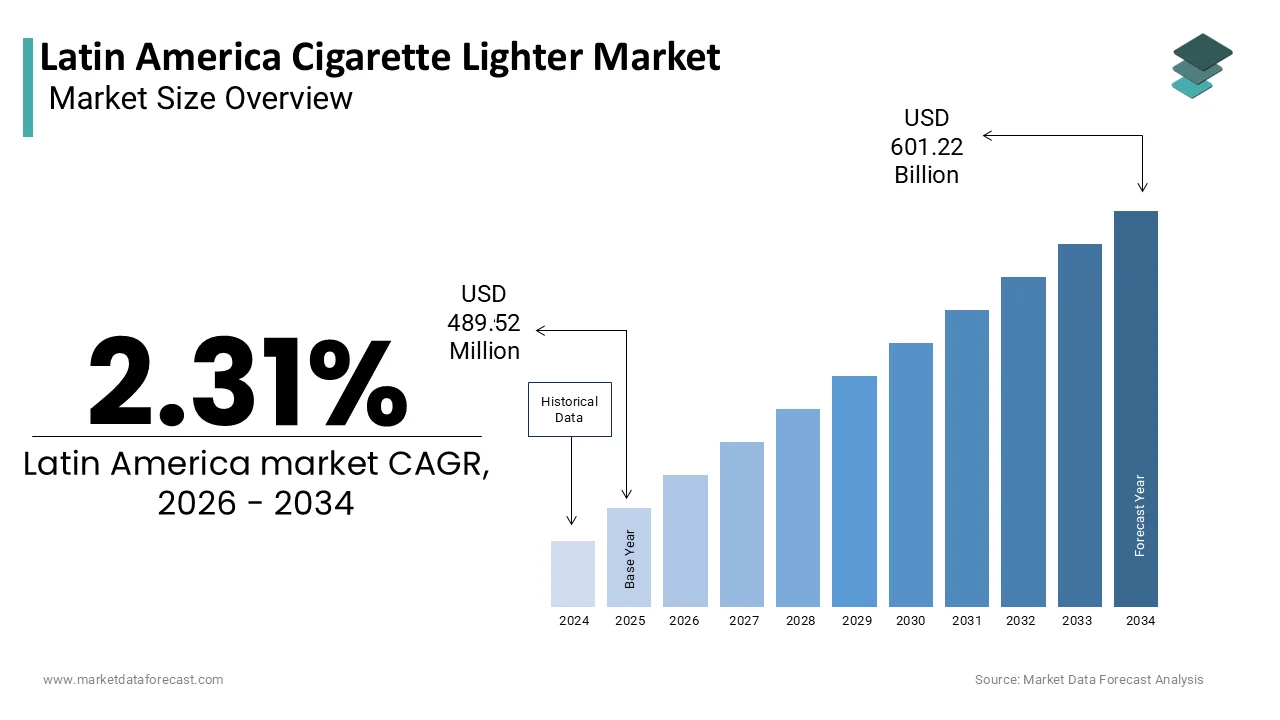
Market Size, 2025
$489.52 MnMarket Estimate, 2026
$500.83 MnMarket Forecast, 2034
$601.22 MnCAGR, 2026–2034
2.31%Latin America Cigarette Lighter Market Size
The Latin American cigarette lighter Market was valued at USD 489.52 million in 2025, and the market size is expected to reach USD 500.83 million in 2026 and USD 601.22 million by 2034, with a CAGR of 2.31% during the forecast period.
The cigarette lighter range from disposable butane lighters to refillable and luxury models, often branded by tobacco companies or sold under independent labels. The market is closely tied to smoking culture and consumer behavior in the region, which has seen shifts due to health awareness and regulatory changes. As of 2025, Brazil remains the largest tobacco-consuming nation in the region, with over 90 billion cigarettes consumed annually, as per data from the Pan American Health Organization (PAHO). This high level of cigarette consumption sustains demand for cigarette lighters.
MARKET DRIVERS
Persistent Cigarette Consumption Despite Health Campaigns
The sustained level of cigarette consumption across the region, despite increasing health awareness and anti-smoking campaigns is majorly propelling the growth of the Latin America cigarette lighter market. According to the World Health Organization (WHO), nearly 18% of adults in Latin America smoked tobacco daily in 2024, with countries like Argentina, Chile, and Peru reporting particularly high rates. This persistent smoking culture is reinforced by socioeconomic factors, including low public health spending and limited enforcement of smoking bans in public places. In Mexico, where smoking prevalence remains above 20%, the National Institute of Public Health (INSP) noted that over 15 billion cigarettes were sold in 2024, a figure that directly correlates with the demand for lighters. Additionally, the presence of informal markets and cross-border smuggling supports the continuity of smoking habits. For example, Paraguay is known for its low excise taxes, which make cigarettes significantly cheaper than in neighboring countries like Brazil and Argentina.
High Demand for Low-Cost and Disposable Lighters
The strong consumer preference for low-cost and disposable lighters, which are widely accessible and affordable is also fuelling the growth of the Latin America cigarette lighter market. This demand is particularly pronounced in countries with large informal economies and lower average incomes. In Brazil, for example, disposable lighters remain the most popular type, with local retailers and street vendors offering them at prices as low as $0.20 per unit. The Brazilian Institute of Consumer Defense (IDEC) reported in 2024 that over 90% of lighters sold in informal markets were disposable, highlighting the affordability factor that drives consumer choice. Moreover, the lack of stringent safety regulations in some countries allows for the proliferation of cheaper, sometimes substandard lighters.
MARKET RESTRAINTS
Rising Anti-Smoking Regulations and Health Awareness
The increasing implementation of anti-smoking regulations and growing public health awareness is impeding the growth of the Latin America cigarette lighter market. Governments across the region have been adopting stricter tobacco control policies, including smoking bans in public places, higher tobacco taxes, and graphic health warnings on cigarette packaging. According to the Pan American Health Organization (PAHO), by 2024, 18 out of 33 countries in Latin America and the Caribbean had comprehensive smoke-free laws in place, covering workplaces, restaurants, and public transport. These regulations have had a measurable impact on smoking rates, which in turn affects the demand for cigarette lighters. In Uruguay, for instance, the Ministry of Public Health reported a 25% decline in daily smoking among adults between 2019 and 2024, following the implementation of strict advertising bans and plain packaging laws. Moreover, public health campaigns have increased awareness of the dangers of smoking, leading to behavioral changes among younger populations.
Environmental Concerns and Regulatory Pressure on Plastic Waste
The growing environmental concern surrounding plastic waste and the increasing regulatory pressure to reduce single-use plastic products is limiting the growth of the Latin America cigarette lighter market. Many cigarette lighters, particularly disposable ones, are made from non-biodegradable plastics and contain residual butane gas, making them difficult to recycle and harmful to the environment. According to the United Nations Environment Programme (UNEP), in 2024, over 40% of the plastic waste in Latin American cities originated from small consumer products, including disposable lighters. Moreover, consumer awareness about environmental sustainability is rising, influencing purchasing behavior. A 2024 survey by the Latin American Consumer Sustainability Institute found that 55% of consumers in Brazil and Colombia were willing to pay a premium for eco-friendly products, including refillable or biodegradable lighters.
MARKET OPPORTUNITIES
Growth in Tourism and Hospitality Sector
The expansion of the tourism and hospitality industry in countries like Mexico, Brazil, and Colombia is ascribed to bolster the growth of the Latin America cigarette lighter market. These nations have seen a steady increase in international visitors, many of whom are smokers and rely on disposable or branded lighters during their stays. According to the World Travel & Tourism Council (WTTC), in 2024, Latin America welcomed over 100 million international tourists, marking a 25% increase compared to pre-pandemic levels. Hotels, restaurants, and bars in popular tourist destinations such as Cancun, Rio de Janeiro, and Cartagena often provide disposable lighters to guests, either as complimentary items or for sale at the front desk. In Mexico, the National Chamber of Tourism (Canatur) reported that in 2024, over 60% of mid- to high-end hotels included lighters in welcome kits or sold them at convenience stores within the premises. Additionally, the rise of duty-free shopping at international airports has contributed to increased lighter sales. At São Paulo’s Guarulhos International Airport, for example, duty-free retailers reported a 30% year-over-year increase in lighter sales in 2024, as per the Brazilian Airport Infrastructure Report.
Increasing Demand for Custom and Branded Lighters
The rising demand for custom and branded lighters, particularly among younger consumers and businesses seeking promotional items is also to promote the growth of the Latin America cigarette lighter market. This trend is driven by the growing influence of branding and personalization in consumer purchasing decisions, especially in urban areas where disposable income is higher and lifestyle preferences are more pronounced. Custom lighters are increasingly being used as promotional tools by tobacco companies, bars, and event organizers. In Colombia, for example, the Colombian Chamber of Commerce reported that in 2024, over 15 million custom lighters were distributed as marketing materials during festivals, concerts, and sporting events. Moreover, luxury lighter brands such as S.T. Dupont and Colibri have begun expanding their presence in Latin America, targeting affluent consumers who seek premium products.
MARKET CHALLENGES
Increasing Availability and Use of Electronic Alternatives
The rising adoption of electronic alternatives such as electric lighters, USB-rechargeable lighters, and smartphone-based ignition devices is quiet challenging factor for the growth of the Latin America cigarette lighter market. These modern alternatives are gaining popularity due to their environmental benefits, reusability, and perceived convenience among younger and tech-savvy consumers. The shift toward electronic ignition devices is particularly evident among urban youth, who are more conscious of sustainability and digital integration in daily life. In Santiago, Chile, a 2024 consumer survey conducted by the University of Chile’s School of Engineering found that 35% of respondents aged 18–30 had switched to electronic lighters due to concerns about plastic waste and frequent wind interference with traditional flame-based models. Moreover, the increasing affordability and accessibility of electronic lighters through online marketplaces and local electronics retailers are accelerating their adoption. In Brazil, e-commerce platforms such as Mercado Livre and Amazon reported a 20% increase in electric lighter sales in 2024, indicating a shift in consumer preference.
Economic Instability and Currency Fluctuations
The economic instability and currency fluctuations in several Latin American countries pose a significant challenge to the cigarette lighter market in Latin America, affecting both production and import dynamics. Countries such as Argentina, Venezuela, and Peru have experienced high inflation rates and volatile exchange rates, which impact the affordability of imported raw materials and finished products. According to the International Monetary Fund (IMF), in 2024, Argentina recorded an inflation rate of over 100%, while Venezuela's inflation remained above 300%, which is making it difficult for local manufacturers to maintain stable pricing. These economic conditions also influence consumer purchasing power, particularly for low-income households that rely on budget-friendly products. Additionally, currency instability affects the importation of butane gas, a key component in refillable lighters.
REPORT COVERAGE
| REPORT METRIC | DETAILS |
| Market Size Available | 2025 to 2034 |
| Base Year | 2025 |
| Forecast Period | 2026 to 2034 |
| Segments Covered | By Product Type, Material Type, Distribution Channel, and Region |
| Various Analyses Covered | Global, Regional, & Country Level Analysis; Segment-Level Analysis; DROC; PESTLE Analysis; Porter’s Five Forces Analysis; Competitive Landscape; Analyst Overview of Investment Opportunities |
| Regions Covered | Latin America include Brazil, Argentina, Mexico, and the Rest of Latin America |
| Market Leaders Profiled | BIC, Clipper, Zippo, S.T. Dupont, Colibri, Visol, XIKAR, Firebird, Bóveda, Scorch Torch, and others. |
SEGMENTAL ANALYSIS
By Product Type Insights
The flint cigarette lighters segment was accounted in holding 55.4% of the Latin America cigarette lighter market share in 2025with the widespread use of disposable lighters in low-income and rural populations across the region. These lighters are inexpensive, easy to use, and widely available through informal retail channels, making them the preferred choice for budget-conscious consumers. According to the National Institute of Statistics and Geography (INEGI) in Mexico, over 80% of lighters sold in 2024 were flint-based, reflecting their entrenched position in the market. Additionally, the lack of stringent safety regulations in many Latin American countries allows for the continued production and sale of low-cost, non-refillable flint lighters, further reinforcing their market dominance.
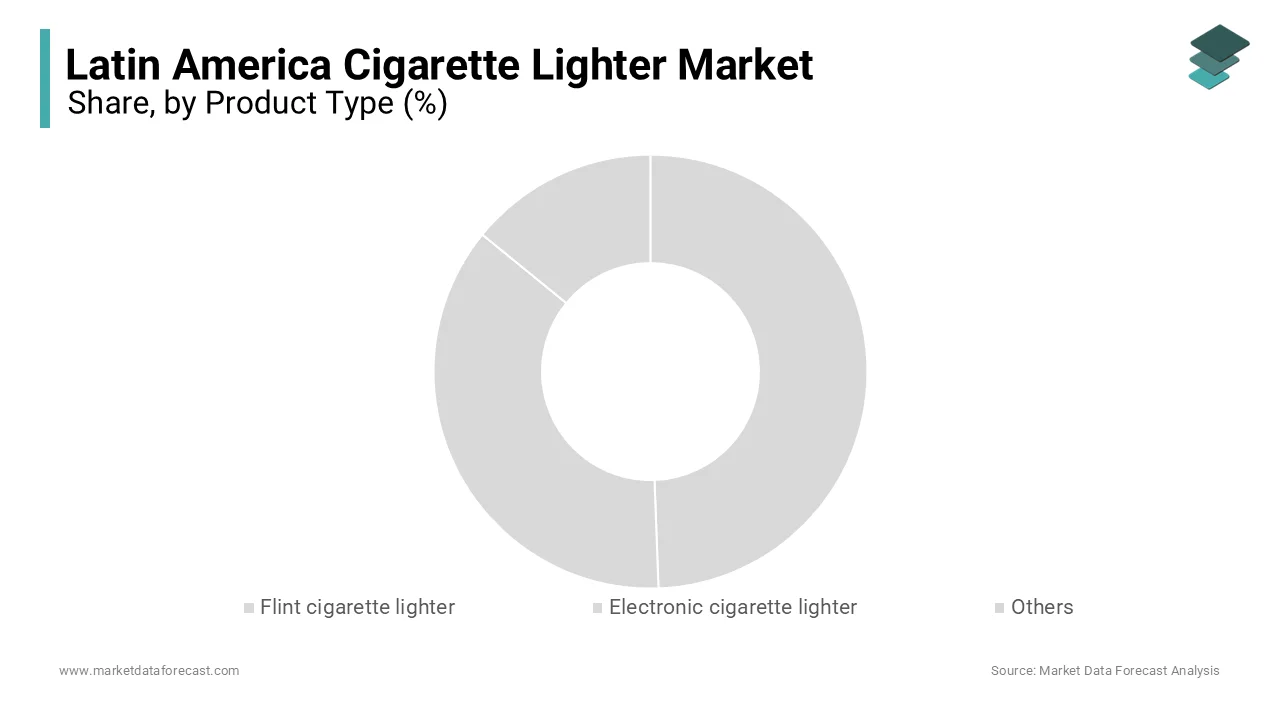
The electronic cigarette lighters segment is augmented in witnessing a CAGR of 9.2% from 2025 to 2033 with the rising environmental consciousness among urban populations. In cities like Buenos Aires and Santiago, where sustainability initiatives are gaining traction, consumers are increasingly opting for reusable and eco-friendly alternatives to disposable plastic lighters. The University of Chile’s 2024 Sustainability Survey found that 42% of respondents aged 18–35 preferred electronic lighters due to their reduced plastic waste and longer lifespan. Additionally, the growing popularity of vaping and e-cigarettes has indirectly boosted demand for electronic lighters, especially among dual users. In Mexico, where e-cigarette use increased by 15% in 2024, as reported by the Mexican Health Foundation, electronic lighters have become a common accessory among users who prefer flame-free ignition methods.
By Material Type Insights
The plastic segment held a dominant share of the Latin America cigarette lighter market in 2025.
The low production cost of plastic lighters makes them an ideal choice for manufacturers targeting price-sensitive consumers in countries like Brazil, Mexico, and Colombia. According to the Brazilian Plastic Institute (ABIPLAST), in 2024, over 85% of disposable lighters sold in Brazil were made of polypropylene, a lightweight and durable plastic commonly used for consumer goods. This material allows for cost-effective manufacturing and easy distribution through informal retail channels. Moreover, the widespread availability of low-cost plastic lighters from Chinese imports further supports this segment’s dominance. The Observatory of Economic Complexity (OEC) noted that in 2024, Brazil imported over $30 million worth of plastic lighters from China, reflecting the strong reliance on inexpensive imported products.
The metal cigarette lighters segment is likely to register a CAGR of 7.8% during the forecast period due to the rising disposable income and changing lifestyle preferences of the middle and upper classes. In Argentina, for instance, the Buenos Aires Chamber of Commerce reported a 12% increase in sales of branded metal lighters in 2024, with brands such as S.T. Dupont and Ronson gaining popularity among affluent consumers. Additionally, the hospitality and tourism sectors are contributing to the demand for metal lighters. Hotels, bars, and upscale lounges often provide metal lighters as premium giveaways or for sale, enhancing brand visibility.
By Distribution Channel Insights
The convenience stores segment was the largest by occupying 38.3% of the Latin America cigarette lighters market share in 2025. The growth of the segment is driven by the proximity to high-traffic zones such as bus stops, gas stations, and commercial hubs, where smokers frequently make last-minute purchases. In Brazil, the National Association of Retailers (ANL) reported that in 2024, over 65% of cigarette lighter sales occurred in convenience stores, especially in neighborhoods with high smoking prevalence. Additionally, convenience stores often serve as a key sales point for informal and low-cost lighters, which are more affordable for price-sensitive consumers. In Colombia, the National Administrative Department of Statistics (DANE) found that 75% of lighters sold in convenience stores were priced below $0.50, reinforcing their role in catering to budget-conscious buyers.
The online stores segment is gaining huge traction with a projected CAGR of 11.3% in the next coming years. E-commerce platforms such as Mercado Livre, Amazon, and Linio have significantly expanded the reach of cigarette lighter brands beyond traditional retail channels. In Brazil, the Brazilian E-commerce Association (ABComm) reported that online lighter sales grew by 18% in 2024, with a notable increase in purchases of refillable and luxury models. Moreover, the convenience of doorstep delivery and the availability of product customization options have enhanced consumer engagement. In Argentina, a 2024 survey by the Buenos Aires Consumer Insights Institute found that 30% of online lighter buyers preferred purchasing custom-engraved or limited-edition models through e-commerce sites.
REGIONAL ANALYSIS
Brazil Cigarette Lighter Market Analysis
Brazil was the top performer of the Latin America cigarette lighter market by accounting for 32.3% of the share in 2025. According to the Pan American Health Organization (PAHO), Brazil recorded over 90 billion cigarette sales in 2024, maintaining its status as the region’s largest tobacco consumer. This high smoking prevalence directly drives demand for cigarette lighters, particularly disposable and budget-friendly models. Additionally, the country’s informal retail sector plays a significant role, with the Brazilian Institute of Consumer Defense (IDEC) estimating that over 70% of lighters sold in 2024 were purchased from informal vendors or street markets. Moreover, Brazil is a major importer of lighters, with the Observatory of Economic Complexity (OEC) reporting that the country imported over $35 million worth of lighters in 2024, primarily from China.
Argentina Cigarette Lighter Market Analysis
Argentina cigarette lighter market was positioned second with 14.3% of the share in 2025. The National Institute of Statistics and Census (INDEC) reported that in 2024, over 35% of Argentina’s adult population were regular smokers, contributing to sustained demand for cigarette lighters. In urban centers like Buenos Aires and Córdoba, where disposable incomes are relatively higher, there is a noticeable shift toward premium and refillable lighters. Furthermore, Argentina’s informal market for lighters remains significant, particularly in border regions where cross-border smuggling of low-cost products from Paraguay and Brazil is common. According to the Argentine Anti-Smuggling Task Force, in 2024, over 20% of lighters sold in northern provinces were illicit imports.
Mexico Cigarette Lighter Market Analysis
Mexico is showcasing new opportunities for the growth of the Latin America cigarette lighter market during the forecast period. According to the National Institute of Public Health (INSP), over 20% of Mexico’s adult population smoked regularly in 2024, translating into high demand for complementary products such as cigarette lighters. The Mexican market is also characterized by a significant presence of informal vendors, with the Federal Commission for the Protection against Sanitary Risk (COFEPRIS) estimating that over 60% of lighters sold in 2024 were purchased from unregulated sources. Additionally, Mexico serves as a key distribution hub for cigarette lighters entering Central America. The Observatory of Economic Complexity (OEC) reported that in 2024, Mexico imported over $40 million worth of lighters, primarily from China, with a significant portion re-exported to neighboring countries.
Chile Cigarette Lighter Market Analysis
Chile cigarette lighter market growth is likely to grow with the high disposable incomes, urbanization rates, and a growing emphasis on premium and eco-friendly lighter options.
The National Institute of Statistics (INE) reported that in 2024, approximately 22% of Chilean adults were regular smokers, a figure that has been declining due to strong anti-smoking legislation. However, despite reduced smoking rates, the cigarette lighter market remains stable due to the continued use of lighters among existing smokers and the growing adoption of premium and reusable models. Moreover, Chile’s e-commerce sector is contributing to the market’s expansion. The Chilean E-commerce Association (ACHIPE) reported that online sales of cigarette lighters increased by 15% in 2024, driven by the availability of international brands and personalized options.
KEY MARKET PLAYERS AND COMPETITIVE LANDSCAPE
Key players in the Latin America cigarette lighter market are
- BIC,
- Clipper,
- Zippo,
- S.T. Dupont,
- Colibri,
- Visol,
- XIKAR,
- Firebird,
- Bóveda,
- Scorch Torch.
The Latin America cigarette lighter market is characterized by a mix of global brands, regional manufacturers, and a strong presence of informal market players. Competition is intense across both price and product segments, with companies vying for dominance in a market shaped by affordability, consumer habits, and regulatory pressures. While global brands like Zippo and S.T. Dupont focus on premium positioning and brand loyalty, regional players such as Flamagas emphasize cost-effective, durable products tailored to local preferences. The informal market remains a significant force, particularly in countries with high smoking rates and limited regulatory enforcement. This dynamic environment encourages innovation, with companies increasingly exploring sustainable materials and digital retail channels to differentiate themselves.
TOP PLAYERS IN THE MARKET
Flamagas S.A.
Flamagas S.A. is a prominent player in the Latin American cigarette lighter market, particularly strong in Argentina and neighboring countries. The company has built a reputation for reliability and affordability, which is known for its durable and refillable metal lighters. Flamagas leverages its regional manufacturing capabilities to maintain competitive pricing while catering to both mass-market and premium segments. Its presence in retail chains and tobacco shops across the region contributes significantly to its market position.
S.T. Dupont
S.T. Dupont, a French luxury lighter brand, has a strong foothold in Latin America’s premium lighter segment. The brand is synonymous with elegance and craftsmanship, appealing to affluent consumers in urban centers like São Paulo, Buenos Aires, and Mexico City. S.T. Dupont’s strategy in the region focuses on brand exclusivity and partnerships with upscale retailers and luxury boutiques, reinforcing its image as a status symbol and driving its influence in the high-end cigarette lighter market.
Zippo Manufacturing Company
Zippo, a globally recognized brand, has a significant presence in Latin America, especially in markets with a strong culture of branded and collectible lighters. Known for its iconic metal casing and windproof design, Zippo appeals to both functional users and collectors. The company has successfully localized its marketing efforts and expanded distribution through specialty stores and online platforms, which is making it a key contributor to the Latin American cigarette lighter market.
TOP STRATEGIES USED BY THE KEY MARKET PLAYERS
Product Diversification and Customization
Leading companies in the Latin America cigarette lighter market focus on offering a diverse range of products to cater to varying consumer preferences. This includes disposable, refillable, luxury, and novelty lighters. Brands also invest in customization, allowing consumers to personalize lighters with engravings, logos, or unique designs. This strategy enhances brand appeal and fosters customer loyalty, particularly in urban and premium segments.
Expansion of Distribution Channels
To strengthen market presence, key players are expanding their distribution networks beyond traditional retail. This includes increasing availability in convenience stores, gas stations, and tobacco shops, as well as leveraging e-commerce platforms.
Strategic Branding and Partnerships
Branding plays a crucial role in differentiating products in a competitive market. Companies engage in strategic partnerships with lifestyle and cultural influencers, as well as sponsorships of events, to enhance brand visibility. Collaborations with tobacco companies and promotional campaigns help reinforce brand identity and drive consumer engagement among younger and fashion-conscious demographics.
RECENT HAPPENINGS IN THE MARKET
- In January 2024, Flamagas S.A. launched a new line of refillable butane lighters tailored for the Brazilian market. This move was aimed at capitalizing on the growing preference for reusable products and positioning the brand as an eco-conscious alternative to disposable lighters.
- In June 2024, Zippo Manufacturing Company expanded its distribution network in Mexico by partnering with leading retail chains and lifestyle boutiques. This initiative was designed to increase brand visibility and accessibility in urban centers where branded products have a strong consumer base.
- In November 2024, S.T. Dupont collaborated with a luxury lifestyle brand in Argentina to release a limited-edition lighter collection. This partnership was intended to reinforce the brand’s premium positioning and attract affluent consumers seeking exclusive and collectible items.
- In February 2025, a leading local manufacturer in Colombia introduced a digital marketing campaign targeting younger consumers through social media influencers and e-commerce platforms. The campaign aimed to reshape perceptions of cigarette lighters as lifestyle accessories rather than just utility products.
- In August 2025, a consortium of regional lighter producers formed a strategic alliance to enhance manufacturing efficiency and streamline supply chains across Latin America. This initiative was intended to reduce production costs and improve competitiveness against imported products, particularly from Asia.
MARKET SEGMENTATION
This research report on the Latin America cigarette lighter market is segmented and sub-segmented into the following categories.
By Product Type
- Flint cigarette lighter
- Electronic cigarette lighter
- Others
By Material Type
- Metal
- Plastic
- Others
By Distribution Channel
- Tobacco shops
- Supermarkets and hypermarkets
- Convenience stores
- Online Stores
- Others
By Country
- Brazil
- Argentina
- Mexico
- Rest of Latin America