- Product Description Description
- Table of Contents TOC
- List of Table & Figure LOT
- Get Free Sample PDF Sample PDF
Market Size, 2025
$40.17 MnMarket Estimate, 2026
$41.58 MnMarket Forecast, 2034
$55 MnCAGR, 2026–2034
3.5%Executive Summary: Latin America Dental Chair Market
- Market Scope: Comprehensive regional market evaluation of dental chairs across Latin America covering source types, product variants, end-user settings, and country-level frameworks (Mexico, Brazil, Argentina, Chile, Rest of Latin America).
- Market Valuation: Valued at USD 40.17 million in 2025, estimated at USD 41.58 million in 2026, and projected to reach USD 55 million by 2034, registering a stable CAGR of 3.50% from 2026 to 2034.
- Primary Growth Drivers: Technological advancements focusing on patient comfort, rising adoption of powered dental chairs, increasing number of dental clinics and practices, growing prevalence of oral diseases, and a rising demand for cosmetic dental procedures.
Key Market Segment Metrics (2026–2034)
| Category | Leading Segment (2025 Position) | Segment Framework |
|---|---|---|
| By Source | Powered Dental Chairs (high adoption due to advanced positioning controls and enhanced patient comfort) | Powered and Manual |
| By Product Type | Examination & Oral Surgery Dental Chairs (vital for clinical diagnoses and surgical procedures) | Examination Dental Chairs, Oral Surgery Dental Chairs, Orthodontic Dental Chairs, and Portable Dental Chairs |
| By End-User | Clinics & Ambulatory Surgical Centers (dominant settings for routine and specialized dental practices) | Hospitals and Clinics & Ambulatory Surgical Centers |
| By Country / Region | Mexico (leading country in Latin America) & Brazil (experiencing considerable growth driven by healthcare expansion and dental tourism) | Mexico, Brazil, Argentina, Chile, and Rest of Latin America |
Major Market Players & Market Structure
Market Structure: Highly competitive Latin American dental equipment sector featuring prominent global medtech manufacturers competing on ergonomic designs, advanced digital integrations, and clinical reliability.
Key Companies: Dexta Corp., Dome Inc., Midmark Corp., Planmeca Oy, Danaher, A-dec Inc., DentalEZ Inc., Dentsply Sirona Inc., Technodent, and Forest Dental.
 Download Free Sample Report
Latin America Dental Chair Market Size
The size of the Latin America dental chair market was worth USD 40.17 million in 2025. The market is anticipated to grow at a CAGR of 3.50% from 2026 to 2034 and be worth USD 55 million by 2034, up from USD 41.58 million in 2026.

A dental chair is a specialised medical device designed to support and position a patient during oral exams and procedures. These ergonomic units integrate hydraulic or electric mechanisms with auxiliary equipment such as delivery systems and lighting, forming the central hub of modern dental operatories. The region exhibits a growing emphasis on patient comfort and practitioner efficiency, driven by rising oral health awareness and aesthetic dentistry trends. According to the Pan American Health Organization, approximately 60% of school-aged children suffer from dental caries globally, creating a substantial baseline demand for clinical infrastructure. As per data from the World Bank, out-of-pocket health expenditure in Latin America and the Caribbean accounts for 29.69% of current health spending, indicating a robust private sector where individuals directly invest in dental care services. The market is characterised by a shift toward digital integration, with chairs increasingly featuring connectivity for diagnostic imaging and practice management software. Regulatory frameworks in countries like Brazil and Mexico are tightening standards for medical device safety, influencing procurement decisions toward certified, high-quality units. The presence of both international manufacturers and local assemblers fosters a competitive environment focused on durability and after-sales service. This dynamic landscape supports steady expansion as dental professionals prioritize ergonomic designs that reduce occupational strain while enhancing patient experience during increasingly complex restorative and cosmetic treatments.
MARKET DRIVERS
Rising Prevalence of Dental Disorders Drives Infrastructure Expansion
The rising prevalence of oral diseases across the region is a key factor driving the growth of the Latin American dental chair market. This trend directly correlates with a need for expanded clinical capacity to manage growing patient volumes. According to the World Health Organization, untreated dental caries in permanent teeth affects nearly 2.5 billion people globally, with regional data emphasizing the massive health burden driven by limited access to preventive care in rural areas. This high disease burden forces healthcare systems to increase the number of operational dental units to reduce waiting times and improve access. As per the Brazilian Ministry of Health, the National Oral Health Policy "Brasil Sorridente" expands specialized services via Dental Specialty Centres that classify operations into standard clinical tiers, necessitating continuous replacement and addition of dental chairs to maintain service levels. The direct relationship between disease prevalence and equipment demand is evident in government procurement programs that prioritise basic dental infrastructure in underserved communities. Furthermore, according to the World Health Organization, severe periodontal diseases affect approximately 19% of the global adult population, which creates sustained demand for specialized chairs equipped with advanced periodontal therapy modules. These conditions require longer treatment sessions and frequent follow-ups, increasing the utilisation rate of existing chairs and prompting clinics to invest in additional units to handle overflow. The ageing population further amplifies this driver. As per the United Nations Economic Commission for Latin America and the Caribbean, the proportion of older people aged 60 and over in the region reached 11.8% in 2017 and is accelerating rapidly, further amplifying this driver. Older adults typically require more complex restorative work and prosthetic fittings, which demand durable and adjustable dental chairs capable of supporting extended procedures. This demographic shift ensures a steady stream of patients requiring clinical attention. Consequently, it sustains the demand for new and replacement dental chairs across both public and private sectors in the region.
Growth in Medical Tourism and Aesthetic Dentistry Boosts Premium Equipment Demand
The rapid expansion of medical tourism and the booming aesthetic dentistry sector in the region are accelerating the growth of the Latin American dental chair market. This fundamentally drives the demand for high-end dental chairs equipped with advanced comfort and technological features. According to the International Medical Travel Journal, public insurance providers and private networks are expanding overseas medical options for over 1.5 million corporate members, with dental procedures accounting for a core part of inbound cross-border medical travel due to cost advantages and high-quality care. Countries such as Costa Rica, Mexico, and Colombia have emerged as global hubs for dental implants and cosmetic veneers, prompting clinics to invest in premium dental chairs that enhance patient experience and project a modern image. As per the Costa Rican Tourism Board, nearly 46% of international tourists engaging in ecotourism or medical procedures look for local clinics because of low prices and high care standards, directly fueling capital expenditure on state-of-the-art operatory furniture. The direct correlation between tourist expectations and equipment quality forces providers to adopt chairs with superior ergonomics, integrated entertainment systems, and silent operation mechanisms to compete internationally. Additionally, the rise in domestic demand for aesthetic treatments further intensifies the need for visually appealing and comfortable dental units. According to the Argentine Dental Association, public health programs and professional networks emphasize structural and functional rehabilitation to recover complete tooth functionality, further intensifying the need for visually appealing and comfortable dental units. Patients undergoing elective cosmetic procedures are more discerning about their clinical environment, preferring clinics that offer spa like amenities including massage functions and ambient lighting in their dental chairs. This trend pushes manufacturers to innovate with luxury designs and smart connectivity features that appeal to affluent demographics. The competitive nature of the aesthetic market ensures that clinics continuously upgrade their equipment to differentiate themselves. Thus, this dynamic creates a robust demand segment for premium dental chairs that combine functionality with high-end design elements tailored to discerning patients.
MARKET RESTRAINTS
High Initial Investment Costs Restrict Adoption in Small Private Practices
The substantial upfront capital required for purchasing modern dental chairs remains a significant barrier to the penetration of the Latin American market. This financial constraint particularly impacts small, independent practitioners and newly established clinics in the region. According to the FDI World Dental Federation, standard dental practices utilize dental treatment units as core investments, where equipment requirements adapt globally based on the clinic's specialized service lines and localized market access. The price point remains prohibitive for many solo practitioners who operate with thin profit margins and limited access to credit. As per the Mexican Dental Association, macroeconomic changes directly alter the capital availability for independent practitioners establishing localized private clinics. The high expenditure extends beyond the chair itself, encompassing installation, plumbing modifications, and electrical upgrades that can add to the total investment. Small practices often prioritise immediate operational needs over equipment upgrades, leading to the continued use of outdated or refurbished chairs that may not meet current ergonomic or safety standards. Furthermore, the limited availability of affordable financing options specifically tailored for dental equipment acquisition exacerbates this restraint, as traditional banks often view small healthcare businesses as high-risk borrowers in economically volatile regions. Currency fluctuations in countries like Argentina and Brazil also complicate procurement planning, as imported chairs subject to exchange rate volatility create budget uncertainty for practitioners pricing services in local currency. This financial constraint forces many smaller facilities to postpone investments in new technology, limiting overall market growth potential among the extensive network of small private providers that constitute a significant portion of the regional dental care landscape.
Shortage of Skilled Biomedical Technicians Impairs Maintenance and Longevity
The scarcity of qualified biomedical technicians and maintenance specialists across the region greatly impedes the effective upkeep and longevity of advanced chairs in the Latin America dental chair market. This acts as a critical restraint on market confidence. According to the Pan American Health Organization's health workforce projections, the Latin America and Caribbean region faces a projected deficit of 600,000 health professionals by 2030, intensifying structural strain across the entire healthcare ecosystem. This shortage directly impacts the operational reliability of dental chairs, as delayed repairs lead to prolonged downtime and lost revenue for practitioners. As per the Brazilian Clinical Engineering Association, rigorous preventative maintenance workflows optimize medical equipment lifecycles and reduce unexpected clinical downtime within hospital networks. The complexity of modern electric dental chairs, which feature sophisticated control systems and integrated digital components, requires specialized knowledge for troubleshooting and repair that is often unavailable in smaller cities. Educational institutions across Latin America produce insufficient numbers of biomedical engineering graduates to meet the growing demand from expanding dental practices. This skills gap forces clinic owners to either rely on expensive remote support from manufacturers or accept suboptimal equipment performance, both of which increase operational costs. The high turnover rate among trained technicians further exacerbates the problem by creating constant knowledge gaps within service networks. According to studies, technical workforce retention strongly dictates the long-term reliability and operational stability of distributed medical service networks. Consequently, many practitioners hesitate to invest in high-tech chairs, fearing they cannot maintain them properly, opting instead for simpler mechanical models. This human capital limitation restricts the market's ability to realize the full potential of advanced dental furniture, as equipment reliability concerns discourage further investment in sophisticated technologies across the region.
MARKET OPPORTUNITIES
Digital Integration and Smart Operatory Solutions Create New Value Propositions
The integration of digital technologies into dental chairs presents substantial opportunities for manufacturers in the Latin America dental chair market. This helps them to differentiate their products and capture value in the evolving healthcare landscape in the region. According to the Inter-American Development Bank, digital transformation initiatives prioritize the integration of telehealth infrastructure and digitized diagnostic platforms to bridge regional equity gaps between remote communities and primary clinical centers. This shift creates demand for dental chairs equipped with connectivity features that allow seamless integration with intraoral scanners, radiography units, and practice management software. As per sources, modern dental units increasingly feature integrated touchscreen displays, sensor-based adjustments, and programmable memory presets to streamline clinical workflows and optimize ergonomic efficiency. The opportunity lies in developing chairs that serve as central hubs for digital data collection, enabling real-time monitoring of patient vitals and procedure documentation. Manufacturers can leverage this trend by offering bundled packages that include software licenses and training, creating recurring revenue streams beyond the initial hardware sale. Furthermore, according to the Ministry of Health of Peru, the national "Teleatiendo" platform expands remote healthcare accessibility, highlighting a structural shift toward integrated telemedicine infrastructure across rural and urban public clinics. These setups allow specialists to guide local practitioners through complex procedures via video link, necessitating chairs with adjustable camera mounts and stable positioning capabilities. The push toward paperless clinics and data-driven decision-making further amplifies this opportunity, as digital chairs facilitate accurate record-keeping and compliance with regulatory standards. By focusing on interoperability and user-friendly interfaces, manufacturers can address the specific needs of modernising dental practices. Doing so will open new avenues for growth in an increasingly technology-driven market.
Government Programs for Rural Oral Health Access Open Untapped Segments
Strategic government initiatives aimed at improving oral health access in rural and underserved areas across the region create significant prospects for manufacturers of durable and cost-effective dental chairs in the Latin American market. According to the Pan American Health Organization, regional collaborations with member states emphasize primary healthcare strengthening and the expansion of information systems to optimize equitable access within regional public health networks. These programs directly generate demand for robust dental chairs designed to withstand variable environmental conditions and limited utility infrastructure. As per the Ministry of Health and Social Protection of Colombia, the diversification of basic health care delivery through localized rural outreach squads targets structural service access barriers across decentralized municipal territories. According to research, decentralized administrative frameworks shift medical equipment procurement mandates toward smaller, local primary care facilities to rebalance regional clinical resource distribution. The policy shift creates volume opportunities for manufacturers offering standardised entry-level dental chairs that meet basic functional requirements at competitive prices. Furthermore, international development agencies including the World Bank have committed funds for primary healthcare infrastructure projects in the region, which often include dental equipment packages. These funded projects provide manufacturers with structured tender opportunities and guaranteed payment mechanisms, reducing commercial risk. The emphasis on preventive care in rural areas also increases the volume of basic restorative procedures performed locally, sustaining ongoing demand for reliable dental chairs in previously neglected geographic segments. By tailoring products to meet the specific durability and cost constraints of public health programs, manufacturers can tap into a vast, untapped market segment. This expansive segment is primarily driven by regional social equity goals.
MARKET CHALLENGES
Complex Import Regulations and Tariff Barriers Hinder Market Entry
The fragmented and complex import regulatory landscape across countries in the region generates significant challenges for manufacturers in the Latin American dental chair market. Consequently, these regulatory hurdles impede the development of efficient market entry and distribution strategies. According to sources, import duties on medical devices vary widely by country, with Brazil's Mercosur common external tariff imposing significantly higher rates than the preferential structures found in Chile's bilateral trade agreements. The disparity forces manufacturers to navigate distinct customs procedures and certification requirements for each national market, increasing administrative costs and delaying product availability. As per the Brazilian National Health Surveillance Agency, medical device authorization workflows follow distinct safety classifications, where specific documentation requirements and audit timelines heavily influence commercial product launch schedules. The lack of harmonized standards means that certification obtained in one country does not automatically grant access to neighboring markets, duplicating regulatory efforts and expenses. Smaller manufacturers particularly struggle with these complexities, as maintaining separate compliance dossiers for multiple jurisdictions requires dedicated legal and regulatory resources that may exceed their operational capacities. Furthermore, according to the Ministry of Economy of Argentina, the federal government restructured international trade entry processes by entirely eliminating the non-automatic import licensing system and replacing it with the Importation Statistical System. This regulatory instability discourages long-term investment commitments and complicates strategic pricing decisions due to fluctuating tax liabilities. The resulting delays and increased costs are often passed on to consumers, potentially reducing affordability and slowing market adoption. The inconsistency extends to post-market surveillance requirements, where some countries mandate rigorous local testing while others accept international certifications. This uneven regulatory environment creates competitive distortions and impedes optimal market development across the region.
Volatility in Local Currencies Impacts Procurement and Pricing Stability
The significant volatility in local currencies across major economies in the region presents substantial challenges for dental chair manufacturers and distributors in the Latin American dental chair market. As a result, this fluctuating environment complicates pricing stability and procurement planning. According to the International Monetary Fund, macroeconomic stabilization programs and real exchange rate corrections altered domestic purchasing power in South American markets, causing massive devaluations in local currencies against the United States Dollar. Since most high-end dental chairs are manufactured in Europe, Asia, or North America, their prices are tied to foreign exchange rates, making them susceptible to sudden cost increases. As per studies, high currency volatility drives regional equipment distributors to actively adjust domestic pricing schedules to offset fluctuating procurement costs. This volatility forces practitioners to delay purchases in anticipation of more favourable exchange rates, leading to irregular demand patterns and inventory buildup for suppliers. Furthermore, the difficulty in hedging currency risk for small and medium-sized distributors exacerbates the problem, as they lack the financial instruments available to larger multinational corporations. The resulting price instability undermines consumer confidence and can lead to a shift toward lower-cost domestic alternatives or refurbished equipment, even if quality is compromised. Manufacturers must constantly renegotiate contracts with local partners to share currency risks, straining business relationships. The unpredictability of exchange rates also affects after-sales service costs, as spare parts imported for repairs become more expensive, potentially reducing the profitability of maintenance contracts. This financial challenge restricts market growth by making long term investment in high quality dental infrastructure less attractive for risk-averse practitioners in economically unstable environments.
REPORT COVERAGE
| REPORT METRIC | DETAILS |
| Market Size Available | 2025 to 2034 |
| Base Year | 2025 |
| Forecast Period | 2026 to 2034 |
| Segments Covered | By Source, Product Type, End-User, and Country. |
| Various Analyses Covered | Global, Regional, and Country-Level Analysis, Segment-Level Analysis, Drivers, Restraints, Opportunities, Challenges; PESTLE Analysis; Porter’s Five Forces Analysis, Competitive Landscape, Analyst Overview of Investment Opportunities |
| Countries Covered | Brazil, Mexico, Argentina, Chile, Rest of Latin America |
| Market Leaders Profiled | Dexta Corp., Dome Inc., Midmark Corp., Planmeca Oy, Danaher, A-dec Inc., DentalEZ Inc., Dentsply Sirona Inc., Technodent, and Forest Dental. |
SEGMENTAL ANALYSIS
By Source Insights
In 2025, the powered dental chairs segment held the majority share of the Latin America Dental Chair Market because of its ability to enhance practitioner ergonomics and patient comfort through precise electronic or hydraulic adjustments. According to the World Health Organisation, ergonomics in oral health delivery plays a vital role in preventing physical stress, where adopting multi-positional clinical units allows practitioners to maintain neutral working postures. As per the Brazilian Dental Association, strategic coordination between clinical labor and capital equipment parameters optimizes appointment duration, driving overall operational reliability within high-volume public and private healthcare facilities. The direct correlation between ergonomic design and practitioner health sustains the dominance of this segment, as dental schools and professional associations increasingly mandate the use of adjustable equipment to prevent career limiting injuries. Furthermore, the rising complexity of restorative and implant procedures requires stable and precise chair positioning, which powered systems provide through memory presets and smooth motion control. According to the FDI World Dental Federation, aging demographics across the global dental workforce influence industry requirements for long-term health preservation and ergonomic enhancements in modern clinical workspaces. Powered chairs also integrate seamlessly with digital diagnostic tools, allowing synchronised movement with imaging devices, a feature increasingly required in modern practices. As per research, integrated electric actuators and automated lifting assemblies provide precise patient positioning options that extend the overall operational utility of dental treatment platforms. This combination of health benefits, operational efficiency, and technological integration ensures that powered chairs remain the preferred choice for established practices and new installations across the region.
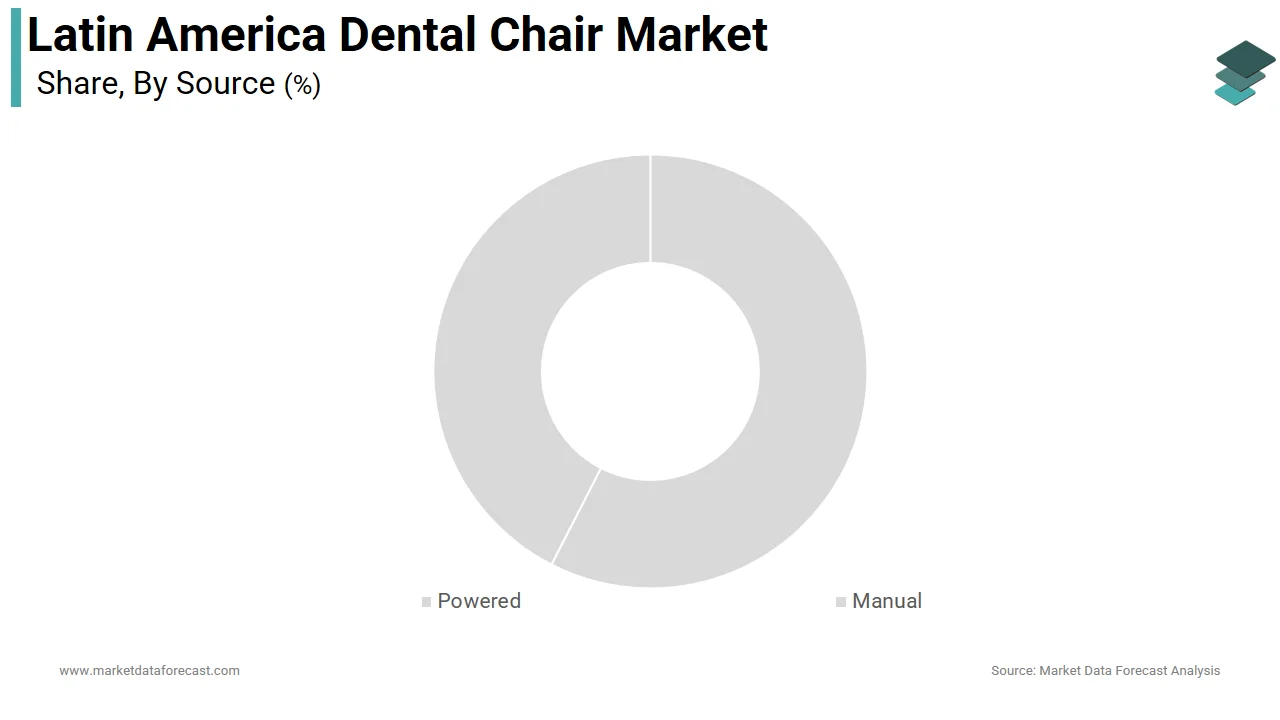
The manual dental chair segment is likely to experience the fastest CAGR of 7.8% from 2026 to 2034 due to its affordability and suitability for resource-constrained environments. According to the Inter-American Development Bank, nearly 18 million people across Latin America and the Caribbean still completely lack access to electricity services, highlighting major last-mile infrastructure gaps in rural territories. As per the Ministry of Health and Social Protection of Colombia, territorial primary health network initiatives emphasize localized service access expansion across remote regions using robust field equipment designs suited for challenging rural topographies. The direct relationship between infrastructure limitations and equipment choice drives this growth, as government programs prioritise functional reliability over advanced features in underserved regions. Additionally, according to sources, the proliferation of independent private practices alters local equipment procurement trends, expanding the market footprint for cost-effective operatory assets. New graduates often face significant student debt and limited capital, making manual chairs an attractive initial investment that allows them to establish practices without substantial overhead. The simplicity of manual mechanisms also appeals to technicians in areas with scarce biomedical support, as repairs can be performed locally without specialised tools or parts. Furthermore, the durability of manual chairs in harsh environmental conditions, including high humidity and temperature fluctuations common in tropical regions, ensures longer service life with less frequent breakdowns. This resilience combined with lower total cost of ownership positions manual chairs as a critical solution for expanding oral health access in economically diverse and geographically challenging parts of Latin America.
By Product Type Insights
The examination dental chairs segment remained the largest in 2025 and occupied a commanding share of the Latin America dental chair market. This segment led because it serves as the foundational equipment for the vast majority of general dental procedures, including checkups, cleanings, and basic restorations. According to the World Health Organization, oral diseases are highly prevalent across Latin America, where comprehensive public health policy frameworks emphasize early clinical screening and preventative care strategies. As per the Mexican Institute of Social Security, integrated dental operatory units are systematically deployed throughout the national primary care network to accommodate standard public health consultations. The direct correlation between primary care utilisation and equipment demand ensures that examination chairs remain the most purchased product type, as every dental facility, regardless of specialisation, must have these units to operate. Furthermore, the standardization of dental education curricula across the region, which focuses heavily on general practice skills, reinforces the preference for versatile examination chairs that can accommodate various clinical scenarios. The affordability of basic examination models compared to specialized surgical or orthodontic units makes them accessible to a broader range of providers, from large hospitals to small private offices. Additionally, the frequent replacement cycle of examination chairs due to high daily usage rates drives recurring sales. Manufacturers focus on enhancing the durability and ease of cleaning of these units to meet infection control standards, ensuring they remain the backbone of dental infrastructure. This universal necessity and high turnover rate secure the leading market position for examination dental chairs.
The portable dental chair segment is expected to exhibit a noteworthy CAGR of 9.5% during the forecast period, owing to expanding mobile health initiatives and community outreach programs across Latin America. According to the Pan American Health Organisation, regional mobile health outreach networks integrate targeted medical field deployment models to deliver essential primary treatments to remote and underserved populations. As per the Brazilian Ministry of Health, national public healthcare investment initiatives expand access to vulnerable communities through the strategic introduction of specialized Mobile Dental Units under the Unified Health System. The direct link between policy-driven access expansion and equipment demand drives this rapid growth, as portable chairs enable dentists to provide services outside traditional fixed locations. Additionally, according to studies, the broader inclusion of preventative dental screenings within corporate wellness benefits accelerates the commercial usage of portable dental diagnostic units. These programs allow employees to receive preventive care without leaving their workplaces, increasing convenience and participation rates. The technological advancement in portable chair design, featuring battery operated hydraulic systems and foldable structures, has improved their functionality and comfort, making them comparable to fixed units for basic procedures. Furthermore, disaster relief efforts and emergency response teams increasingly include dental components in their medical kits, requiring durable portable chairs for immediate care deployment. This versatility and alignment with public health goals ensure sustained high growth for the portable segment as healthcare delivery models evolve toward greater mobility and accessibility.
By End-User Insights
The clinics and ambulatory surgical centres segment dominated the Latin America Dental Chair Market and accounted for a substantial share in 2025. This dominance of the segment was driven by the robust growth of private dental practices and patient preference for specialized outpatient care. According to the FDI World Dental Federation, the expansion of corporate healthcare dentistry models and modern clinics across primary target markets drives a highly competitive service shift toward privatized oral healthcare options. As per the Brazilian Federal Council of Dentistry, the total nationwide network of active dental clinics and healthcare providers fluctuates according to regional registration entries and specialized corporate certification filings. The direct relationship between clinic proliferation and equipment demand secures the dominant position of this segment, as private practitioners invest heavily in modernizing their facilities to attract patients. Furthermore, the rise in aesthetic and cosmetic dentistry, which is predominantly performed in private settings, drives demand for high-end chairs with enhanced comfort and visual appeal. Patients undergoing elective procedures are willing to pay premium prices for superior experiences, encouraging clinics to purchase advanced equipment. The flexibility of private clinics to adopt new technologies faster than public hospitals also contributes to their leadership, as they seek competitive advantages through digital integration and ergonomic improvements. Additionally, the consolidation of dental groups creates bulk procurement opportunities for manufacturers. These groups standardize their equipment across locations, driving significant volume sales. The focus on patient satisfaction and operational efficiency in the private sector ensures that clinics remain the primary consumers of dental chairs in the region.
The hospital segment is predicted to witness the highest CAGR of 8.2% between 2026 and 2034. This quick surge of the segment is fuelled by increased public health investment and the integration of dental services into general healthcare facilities. According to the Pan American Health Organisation, strategic regional frameworks promote the baseline integration of essential oral health screening protocols into national primary healthcare systems. As per the Argentine Ministry of Health, centralized public hospitals coordinate comprehensive multidisciplinary emergency services and clinical interventions to manage complex medical cases. The direct correlation between hospital-based dental services and equipment procurement drives this growth, as hospitals require durable and high-capacity chairs capable of handling emergency and surgical cases. Furthermore, the rising prevalence of systemic diseases with oral manifestations, such as diabetes and cardiovascular conditions, requires coordinated care between medical and dental specialists within hospital settings. This integration demands dental chairs that can accommodate patients with limited mobility or critical health status, often featuring bariatric capabilities and advanced monitoring integration. According to research, expanding clinical teaching facilities and regional university hospitals increases institutional equipment allocations to accommodate larger cohorts of healthcare trainees. Government tenders for hospital modernization projects often include comprehensive dental equipment packages, providing manufacturers with stable and large-scale opportunities. This strategic shift toward integrated care ensures sustained rapid growth for the hospital segment.
COUNTRY LEVEL ANALYSIS
Brazil Dental Chair Market Analysis
Brazil led the Latin America Dental Chair Market and captured a significant share in 2025. This leading position of the country’s market was supported by its extensive public health system and vibrant private dental sector. According to the Brazilian Ministry of Health, the integration of oral health teams into basic health units under the National Oral Health Policy strengthens primary public care infrastructure, creating a massive baseline demand for durable and cost-effective chairs. As per the Brazilian Federal Council of Dentistry, the nationwide directory of active dental surgeons reflects a highly dense and competitive labor pool, driving continuous equipment upgrades and replacements. The country’s leadership in dental tourism, particularly in cities like São Paulo and Rio de Janeiro, encourages private clinics to invest in premium chairs to attract international patients. The implementation of strict biosafety regulations by the National Health Surveillance Agency mandates regular equipment renewal, ensuring a steady replacement market. Additionally, the growing middle class increases disposable income for aesthetic dental procedures, further stimulating private sector demand. According to research, the expansion of the domestic middle class alters consumer purchasing power across regional household tiers, increasing disposable income for aesthetic dental procedures and further stimulating private sector demand. Local manufacturing incentives have also encouraged global brands to assemble chairs domestically, reducing costs and improving availability. The country’s large geographic size necessitates a robust distribution network, which major players have established to reach remote areas. These factors collectively sustain Brazil’s dominant position, with consistent growth expected as healthcare access expands and quality standards rise across both public and private sectors.
Mexico Dental Chair Market Analysis
Mexico was the next prominent region in the Latin America Dental Chair Market and held a noteworthy share in 2025. This growth was propelled by strong cross-border influence and a booming medical tourism industry. According to the Ministry of Health of Mexico, ongoing administrative structural initiatives focus on unifying fragmented subsystems into a coordinated universal care model, driving consistent demand for standardized dental equipment in government facilities. As per sources, cross-border medical commerce between Mexico and North American partners relies on regional logistics hubs, reflecting the impact of trade agreements and proximity on supply chains. According to data from the Ministry of Tourism, inbound medical tourism attracts over one million international travellers annually for cross-border care, fueling investment in high-end clinics equipped with state-of-the-art chairs. Private practitioners in border cities like Tijuana and Cancun prioritize advanced technology to compete with US providers, driving demand for premium models. The government’s commitment to strengthening primary care creates additional opportunities for basic dental units. According to the Ministry of Health of Mexico, public infrastructure modernizations expand medical coverage to underserved communities through regional primary clinic upgrades, creating additional opportunities for basic dental units. Mexico’s regulatory framework, aligned with international standards, facilitates the entry of innovative products, encouraging adoption of digital and ergonomic features. The presence of a large young population ensures long-term demand for preventive and orthodontic care. These dynamics position Mexico as a key growth engine, balancing public health needs with private sector sophistication.
Argentina Dental Chair Market Analysis
Argentina maintains a strong presence in the Latin America Dental Chair Market due to a highly educated population and a tradition of quality healthcare. According to the Argentine Ministry of Health, the geographic distribution of oral health infrastructure shows substantial regional variation, where clinical equipment upgrade cycles are concentrated primarily within dense metropolitan clinic networks. As per studies, all imports of medical devices into Argentina require approval from the National Administration of Drugs, Foods, and Medical Devices (ANMAT) through local registered entities. The country’s economic challenges have led to a preference for durable and repairable models, favoring brands with strong local service networks. The rise in aesthetic dentistry, particularly in Buenos Aires, drives demand for chairs with enhanced comfort and design features to attract discerning patients. Government programs focusing on oral health in schools and communities create periodic bulk procurement opportunities for basic units. Argentina’s strong academic sector, with numerous universities offering dental programs, sustains demand for educational models used in training facilities. The cultural emphasis on personal appearance and hygiene ensures steady demand for cosmetic procedures, supporting the private market. Despite inflationary pressures, the commitment to healthcare quality maintains a stable demand for reliable dental chairs, with practitioners prioritizing long term value over initial cost.
Chile Dental Chair Market Analysis
Chile occupies a significant position in the Latin America Dental Chair Market owing to high regulatory standards and efficient healthcare delivery. According to the Chilean Ministry of Health, national healthcare planning framework strategies focus on expanding preventative screening parameters and public clinical checkups for target age demographics across local municipalities. As per surveys, the ongoing transition toward motorized and automated clinical positioning units dictates long-term equipment acquisition patterns among private dental operators. The country’s robust private insurance landscape fuels investment in high-quality dental facilities. As per the Superintendence of Health of Chile, approximately eight in ten residents are covered by the public National Health Fund (Fonasa), while the remaining workers choose state-regulated private insurers. Chile’s participation in free trade agreements facilitates access to cutting edge technologies from Europe and Asia, encouraging adoption of smart and connected chairs. The government’s focus on reducing waiting times in public services has led to investments in new dental units in primary care centers. Chile’s stable economic environment and strong institutional framework support consistent market growth. The ageing population, with increasing needs for prosthetic and implant services, drives demand for chairs with specialised features for complex procedures. These factors establish Chile as a benchmark for quality and innovation, with steady demand for premium and mid-range dental chairs.
KEY MARKET PLAYERS
The leading companies operating in the Latin America dental chair market include:
- Dexta Corp.
- Dome Inc.
- Midmark Corp.
- Planmeca Oy
- Danaher
- A-dec Inc.
- DentalEZ Inc.
- Dentsply Sirona Inc.
- Technodent
- Forest Dental
MARKET SEGMENTATION
This research report on the Latin American dental chair market has been segmented and sub-segmented into the following categories
By Source
- Powered
- Manual
By Product Type
- Examination Dental Chairs
- Oral Surgery Dental Chairs
- Orthodontic Dental Chairs
- Portable Dental Chairs
By End-User
- Hospitals
- Clinics & Ambulatory Surgical Centers
By Country
- Mexico
- Brazil
- Argentina
- Chile
- Rest of Latin America