- Product Description Description
- Table of Contents TOC
- List of Table & Figure LOT
- Get Free Sample PDF Sample PDF
Market Size, 2025
$22 MnMarket Estimate, 2026
$23.06 MnMarket Forecast, 2034
$34 MnCAGR, 2026–2034
4.8%Executive Summary: Latin America Dental Lasers Market
- Market Scope: Comprehensive regional market evaluation of dental lasers across Latin America covering product types, clinical applications, end-user settings, and country-level frameworks (Brazil, Mexico, Argentina, Chile, Rest of Latin America).
- Market Valuation: Valued at USD 22 million in 2025, estimated at USD 23.06 million in 2026, and projected to reach USD 34 million by 2034, registering a stable CAGR of 4.8% from 2026 to 2034.
- Primary Growth Drivers: Rising geriatric population and edentulous instances, increasing prevalence of periodontal disorders and untreated tooth decay, growing demand for painless and minimally invasive laser dentistry, and rising disposable incomes coupled with higher spending on cosmetic dentistry.
Key Market Segment Metrics (2026–2034)
| Category | Leading Segment (2025 Position) | Segment Framework |
|---|---|---|
| By Product | Soft Tissue & All Tissue Lasers (high adoption in periodontal and conservative dental procedures) | Soft Tissue, All Tissue, and Dental Welding Lasers |
| By Application | Conservative Dentistry & Periodontitis Management (major clinical indications driving laser technology usage) | Conservative Dentistry, Endodontic Treatment, and Periodontitis |
| By End User | Clinics (dominant healthcare setting for outpatient laser treatments) | Hospitals and Clinics |
| By Country / Region | Brazil (leading market growth) & Mexico (positive outlook driven by improving healthcare structures and oral awareness) | Brazil, Mexico, Argentina, Chile, and Rest of Latin America |
Major Market Players & Market Structure
Market Structure: Highly competitive Latin American dental technology sector featuring established international manufacturers competing on product innovation, strategic partnerships, and advanced laser precision.
Key Companies: ZOLAR Technology & Mfg Co. Inc., The Yoshida Dental Mfg. Co., Ltd., Biolase, KaVo Dental, and Sirona Dental Lasers.
Latin America Dental Lasers Market Size
The size of the Latin America dental Lasers market was valued at USD 22 million in 2025. This market is expected to grow at a CAGR of 4.8% from 2026 to 2034, reaching USD 34 million by 2034, up, up from USD 23.06 million in 2026.

Dental lasers are advanced medical tools that use focused beams of light energy to treat oral problems. There are two main types of lasers. They include soft tissue lasers and hard tissue lasers. These systems employ concentrated light beams to perform precise surgical interventions with minimal bleeding, reduced postoperative pain and faster healing times compared to traditional mechanical instruments. The adoption of laser technology in dentistry has gained momentum as practitioners seek to enhance patient comfort and clinical efficiency. According to the Pan American Health Organization, oral disorders represent a widespread public health burden with an estimated regional prevalence of untreated dental caries in permanent teeth affecting up to 28.6% of the population. This high prevalence of dental diseases necessitates efficient and minimally invasive treatment options that lasers provide. As per the World Health Organization Global Health Observatory database, the distribution of dentistry personnel reveals active workforce variances where Uruguay maintains a high density of over 14.5 dentists per 10,000 people to support local population needs. The rising disposable income among the middle class in nations such as Brazil, Mexico, and Chile has facilitated greater spending on cosmetic and restorative dental procedures. Furthermore, the growing awareness of aesthetic dentistry driven by social media influence has increased demand for smile enhancement treatments where lasers play a crucial role. Regulatory bodies in several countries have begun establishing clearer guidelines for laser usage, ensuring safety standards are met. The integration of digital diagnostics with laser systems is also transforming clinical workflows, enabling more accurate treatment planning and execution across the region.
MARKET DRIVERS
Rising Prevalence of Oral Diseases and Demand for Minimally Invasive Procedures Is Accelerating Adoption
The escalating burden of oral diseases across the region drives the growth of the Latin America dental lasers market. These advanced tools offer superior precision and reduced trauma during treatment. According to the Global Burden of Disease Study, untreated dental caries in permanent teeth remains the most widespread health condition worldwide, actively affecting an estimated 2.02 billion people globally. Traditional drilling methods often cause significant patient anxiety and discomfort, leading to avoidance of necessary treatments. Dental lasers mitigate these issues by providing a noiseless and vibration-free alternative that minimizes the need for anesthesia. As per epidemiologic health service tracking conducted in Brazil, clinical data demonstrates that high dental anxiety and the severe fear of localized pain affect roughly 22.4% of patients, presenting a measurable barrier to routine diagnostic attendance. Laser-assisted procedures reduce bleeding and swelling, thereby accelerating recovery time and improving patient satisfaction. The aging population in countries like Argentina and Uruguay further drives demand as older adults require complex periodontal and restorative treatments where lasers excel in preserving healthy tissue. According to the World Health Organization, public and private health funding allocations in Latin America display a continuous shift toward outpatient primary dental frameworks, driving regional medical spending to match approximately 6.5% of total gross domestic product. As per The Lancet, advanced chronic periodontitis and progressive gum tissue disorders actively impact roughly 1.1 billion adults worldwide, intensifying the commercial demand for specialized targeting therapies. The ability of lasers to sterilize the treatment area reduces the risk of infection, a critical advantage in settings with varying hygiene standards. Therefore, the push for minimally invasive dentistry aligned with high disease prevalence is fundamentally reshaping clinical practices and driving equipment procurement.
Growing Aesthetic Dentistry Trends And Cosmetic Procedure Awareness Are Fueling Market Expansion
The surging popularity of aesthetic dentistry and heightened consumer awareness regarding cosmetic oral health further expands the Latin America Dental Lasers Market. Social media platforms and celebrity culture have intensified the desire for perfect smiles, leading to increased demand for teeth whitening, gum contouring, and veneer preparations. According to economic indicators processed by the World Bank, the broad consumer retail and personal care sector across Latin America has entered a high-growth phase, accelerating total regional market valuations past 60 billion dollars. Dental lasers offer precise control for enamel etching and gum reshaping without damaging surrounding tissues, making them ideal for cosmetic applications. As per the International Society of Aesthetic Plastic Surgery global database, surgical and non-surgical cosmetic interventions performed in Brazil alone represent 13.5% of the total global market volume. Consumers are increasingly willing to invest in premium dental services that promise immediate and visible results. According to cross-border statistical frameworks compiled by the Mexican Ministry of Health, international medical migrations and inbound healthcare tourism channel an active gross revenue stream exceeding 3 billion dollars annually. As per the National Institute of Statistics and Geography, structural indicators monitor that urban consumer class expansion maintains a 3.2% annual growth rate, modifying purchasing trends. Dental clinics are responding by investing in laser technologies to differentiate their offerings and attract discerning clients. The versatility of lasers in performing multiple cosmetic tasks such as removing pigmentation and correcting gummy smiles enhances their value proposition. Marketing campaigns emphasizing quick recovery and natural-looking outcomes resonate strongly with younger demographics. This cultural shift toward self-enhancement combined with the technical capabilities of laser systems creates a robust demand environment for advanced dental equipment in the region.
MARKET RESTRAINTS
High Initial Investment Costs and Limited Reimbursement Policies Restrict Market Penetration
The substantial upfront capital required to acquire laser systems is a major restraint for many practitioners in the Latin America dental lasers market. This trend is particularly visible in small- and medium-sized clinics across the region. High-end laser devices can cost a substantial amount, representing a major financial burden for individual dentists or small groups. According to the Inter-American Development Bank, capital distribution reviews reveal that formal interest rate margins for micro-enterprises in Latin America remain elevated due to extensive operating costs and persistent localized market risks. This financial barrier prevents widespread adoption, especially in rural areas where profit margins are thinner. As per the International Finance Corporation, enterprise finance analytics monitor that small and medium businesses experience an active credit gap totaling over 350 billion dollars across regional economies. Additionally, most public and private insurance plans in Latin America do not fully cover laser-assisted procedures, classifying them as elective or experimental. According to the Pan American Health Organization, current health financing profiles document that private out-of-pocket expenditure on health remains stubbornly high and accounts for an average of one-third of current health expenditures. Without adequate reimbursement mechanisms, dentists struggle to justify the return on investment for laser equipment. The lack of standardized pricing for laser procedures further complicates financial planning for clinics. Economic volatility in countries like Argentina and Venezuela exacerbates this issue as currency depreciation increases the cost of imported equipment. Consequently, many dentists continue to rely on traditional, cheaper instruments despite the clinical advantages of lasers. This economic constraint limits market growth to affluent urban centers, leaving a vast portion of the population without access to advanced dental care technologies.
Shortage Of Trained Professionals and Lack of Standardized Training Programs Impede Utilization
The scarcity of adequately trained dental professionals capable of operating laser systems safely and effectively constitutes a major limitation for the Latin America Dental Lasers Market. Operating dental lasers requires specialized knowledge of physics, tissue interaction, and safety protocols, which are not consistently included in standard dental curricula. According to the World Health Organization Global Health Observatory, human resource metrics verify that regional educational networks register over 14.5 dental surgeons per 10,000 people inside advanced care centers to meet local public demands. This educational gap forces practicing dentists to seek external certification, which is often expensive and time-consuming. As per the National Center for Education Statistics, standard healthcare vocational metrics indicate that professional dental degrees require upwards of 4,000 institutional instructional clock hours to achieve full regulatory validation. The absence of standardized certification requirements across different countries leads to variability in skill levels and potential safety risks. The World Health Organization emphasizes the need for rigorous training frameworks to ensure patient safety when using advanced medical devices. In many Latin American countries, regulatory oversight for laser usage is fragmented, leading to inconsistent enforcement of safety standards. Fear of liability and potential complications discourages some dentists from adopting the technology even if they possess the equipment. Furthermore, the rapid evolution of laser technologies requires ongoing education, which many practitioners find difficult to maintain amidst busy schedules. This skills deficit results in underutilization of installed systems, reducing the perceived value of the investment. Addressing this training gap is crucial for unlocking the full potential of dental lasers and ensuring safe widespread adoption across the region.
MARKET OPPORTUNITIES
Expansion Of Medical Tourism And Cross-Border Dental Care Presents Significant Growth Potential
The burgeoning medical tourism industry in the region offers a lucrative opportunity for the expansion of the Latin America dental lasers market. This is because international patients are seeking high-quality, affordable cosmetic and restorative treatments. Countries such as Mexico, Costa Rica, and Brazil have established themselves as premier destinations for dental tourism, attracting millions of visitors annually. According to international market evaluations, cross-border health migrations to Mexico handle a substantial regional treatment volume, drawing an estimated 1.2 to 3 million medical travelers annually to localized healthcare facilities. International patients often demand state-of-the-art facilities and advanced technologies, including dental lasers to ensure premium care standards. As per international health migration reports, cross-border patients from the United States achieve active expenditure relief of 40% to 80% on clinical therapies, reaching up to an 82% cost reduction specifically for full-mouth dental restorations. To compete globally, local clinics are investing heavily in modern equipment to match the technological sophistication of North American and European providers. The presence of internationally accredited hospitals and dental centers enhances confidence among foreign visitors. Government initiatives promoting medical tourism have improved infrastructure and streamlined visa processes, facilitating easier access for patients. The competitive pricing of laser procedures in Latin America compared to the United States and Europe makes it an attractive option for cost-conscious consumers. This influx of international demand encourages domestic clinics to upgrade their capabilities, creating a ripple effect that benefits the local population as well. Strategic partnerships between tourism boards and dental associations further promote the region as a hub for advanced dental care, driving sustained investment in laser technologies.
Technological Advancements And Integration With Digital Dentistry Offer New Avenues For Innovation
The continuous evolution of laser technology and its seamless integration with digital dentistry platforms provides a clear path for the growth of the Latin America dental lasers market. Modern dental lasers are becoming more compact user friendly and versatile allowing for a wider range of applications from caries detection to surgical procedures. According to clinical data published in the World Academy of Sciences Journal, modern soft tissue diode lasers operate with a localized wavelength spectrum ranging from 805 nm to 980 nm to secure surgical cutting performance. As per published dental reviews, the technological merging of advanced intraoral scanners with computer-aided design systems transfers absolute three-dimensional spatial orientations to virtually align custom implant and prosthetic designs. According to institutional consensus updates, a comprehensive digital workflow for static computer-aided implant surgery combines cone-beam computed tomography imaging with dataset interfaces to achieve precise virtual treatment planning in the esthetic zone. Latin American dental schools and research institutions are increasingly collaborating with manufacturers to develop protocols tailored to regional needs. The rise of teledentistry supported by digital diagnostics allows remote consultation and monitoring, enhancing the reach of laser-equipped specialists. Manufacturers are introducing smart lasers with automated settings and safety features, reducing the learning curve for new users. The availability of portable laser units facilitates mobile dental services reaching underserved rural communities. Government grants and private investments in health tech startups are fostering innovation in this space. The convergence of artificial intelligence with laser systems promises predictive analytics for treatment outcomes, further enhancing clinical value. Embracing these technological synergies allows providers to offer superior care while optimizing operational efficiency, positioning Latin America as an emerging adopter of next-generation dental solutions.
MARKET CHALLENGES
Regulatory Fragmentation and Inconsistent Approval Processes Create Operational Complexities
The lack of harmonized regulatory frameworks across the countries in the region creates significant challenges for manufacturers and distributors in the Latin American dental lasers market. Each nation has its own health authority with distinct approval requirements, timelines, and documentation standards, leading to delays and increased compliance costs. According to the Pan American Health Organization, strategic regulatory evaluations verify that the regional alignment of medical device validation protocols minimizes bureaucratic duplication to expedite regional hospital supply acquisitions. In Brazil, the National Health Surveillance Agency ANVISA requires rigorous clinical trials and local testing, which can be prohibitively expensive for smaller manufacturers. As per the Federal Commission for the Protection against Sanitary Risks, a formal regulatory simplification agreement condenses medical device registration protocols and establishes significantly shorter review timelines to accelerate product deployment in Mexico. The absence of mutual recognition agreements means that approval in one country does not guarantee acceptance in another, forcing companies to navigate multiple bureaucratic processes. This fragmentation discourages entry of innovative technologies, particularly from smaller global players who lack resources for complex regulatory navigation. Counterfeit or substandard lasers sometimes enter the market through weak enforcement channels, posing safety risks and undermining trust in legitimate products. Manufacturers must maintain separate inventory and labeling for different markets, increasing logistical burdens. Harmonizing regulations through regional bodies like Mercosur could alleviate these issues but progress has been slow. Until then, market expansion will continue to slow down. Operational problems and slow tech access will also block fair dental care in Latin America.
Maintenance Challenges and Lack of Local Technical Support Infrastructure Hinder Long-Term Usability
The difficulty in maintaining dental laser systems and the scarcity of localized technical support infrastructure are serious hindrances for the Latin America Dental Lasers Market. Laser devices require regular calibration, cleaning, and part replacement to ensure optimal performance and safety. According to the Biomedical Engineering Society, professional workforce metrics indicate that continuous multi-disciplinary integration supports over 6,000 active innovators across global academic, clinical, and industrial healthcare sectors. Delays in obtaining replacement components can leave expensive equipment idle for weeks, resulting in lost revenue for dental practices. In remote areas, the lack of trained service personnel means that minor issues can escalate into major failures requiring shipment to central hubs or abroad. The high cost of imported service contracts further burdens clinics already struggling with economic constraints. Manufacturers often struggle to establish robust after-sales networks due to the fragmented nature of the market and varying import duties. The absence of standardized maintenance protocols across clinics leads to improper handling and premature wear of devices. Training local technicians is a slow process requiring investment in education and certification programs. Without reliable technical support, dentists may hesitate to adopt laser technology, fearing downtime and repair costs. Strengthening the local service ecosystem through partnerships with technical institutes and manufacturer-led training programs is essential to ensure the longevity and reliability of dental laser investments in the region.
REPORT COVERAGE
| REPORT METRIC | DETAILS |
| Market Size Available | 2025 to 2034 |
| Base Year | 2025 |
| Forecast Period | 2026 to 2034 |
| Segments Covered | By Product, Application, End User, and Country. |
| Various Analyses Covered | Global, Regional, and Country-Level Analysis, Segment-Level Analysis, Drivers, Restraints, Opportunities, Challenges; PESTLE Analysis; Porter’s Five Forces Analysis, Competitive Landscape, Analyst Overview of Investment Opportunities |
| Countries Covered |
|
| Market Leaders Profiled | ZOLAR Technology & Mfg Co. Inc., Dentsply Sirona Inc, The Yoshida Dental Mfg. Co., Ltd., Biolase, KaVo Dental, Fotona d.o.o., and Sirona Dental Lasers. |
SEGMENTAL ANALYSIS
By Product Insights
The soft tissue lasers segment maintained dominance in the Latin America dental lasers market in 2025 and accounted for a substantial share. This dominance of the segment was driven by its extensive application in periodontal therapy, cosmetic dentistry, and minor oral surgeries. These devices utilize specific wavelengths such as diode and Nd: YAG to precisely cut, coagulate, and vaporize soft tissues with minimal damage to surrounding structures. The widespread incidence of periodontal diseases across Latin America is a key factor behind the adoption of soft tissue lasers, which offer superior clinical outcomes compared to traditional scalpel surgery. According to the Pan American Health Organization, comprehensive regional health indicators document that oral disorders represent a significant disease burden, where untreated dental caries alone exhibits a high prevalence of up to 28.6% within permanent dentition. This high burden creates a consistent demand for effective treatment modalities that minimize patient discomfort and recovery time. Soft tissue lasers provide hemostasis during procedures, reducing bleeding and eliminating the need for sutures in many cases. As per published dental evidence, short-wavelength soft tissue diode lasers operate effectively at specific emission parameters to deliver optimal hemostatic control and precise ablation performance across regional tissue. The aging population in countries like Argentina and Uruguay further amplifies this demand as older adults are more susceptible to gum recession and periodontal pockets. Dentists prefer soft tissue lasers for their ability to sterilize the surgical site, thereby reducing the risk of infection, which is crucial in regions with varying hygiene standards. The aesthetic benefits of laser gum contouring also attract younger patients seeking smile enhancements. Consequently, the clinical efficacy and patient comfort offered by soft tissue lasers solidify their position as the leading product segment in the market.
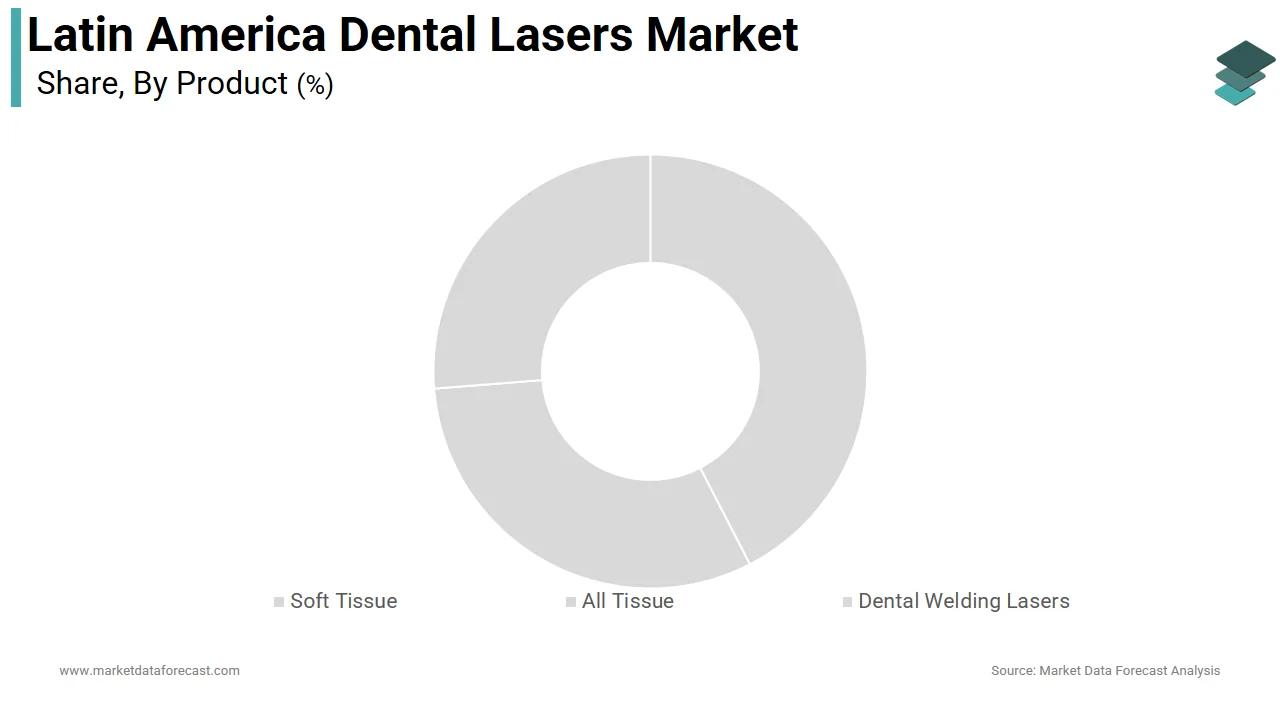
The surging popularity of cosmetic dentistry and the desire for aesthetically pleasing smiles significantly propel the dominance of soft tissue lasers in the Latin America market. Social media influence and celebrity culture have heightened consumer expectations for perfect gums and white teeth, driving demand for procedures such as gingivectomy and crown lengthening. According to economic indicators processed by the World Bank, the broad consumer retail and personal care sector across Latin America has entered a high-growth phase, accelerating total regional market valuations past 60 billion dollars. Soft tissue lasers allow for precise and predictable removal of excess gum tissue without affecting the underlying bone structure, ensuring natural-looking results. As per the International Society of Aesthetic Plastic Surgery global database, surgical and non-surgical cosmetic interventions performed in Brazil alone represent 13.5% of the total global market volume. Patients favor laser treatments due to their minimally invasive nature and immediate visual improvements. In Mexico and Colombia, medical tourism for cosmetic dental work has expanded rapidly, attracting international clients who seek high-quality, affordable care. Clinics investing in soft tissue lasers can differentiate themselves by offering premium cosmetic services that command higher fees. The versatility of these lasers in performing various soft tissue tasks enhances their value proposition for practitioners. Marketing campaigns highlighting painless and quick recovery resonate strongly with image-conscious demographics. This cultural shift toward self-enhancement combined with the technical precision of soft tissue lasers ensures their continued leadership in the product segment.
The All-Tissue Lasers segment is predicted to witness the highest CAGR of 9.2% between 2026 and 2034 owing to its versatility in treating both hard and soft tissues and the trend toward comprehensive dental solutions.
The ability of all tissue lasers to perform a wide range of procedures, including cavity preparation, root canal therapy, and gum surgery, makes them increasingly attractive to dental practitioners seeking efficiency and cost-effectiveness. According to clinical data published in the World Academy of Sciences Journal, advanced erbium lasers emit wavelengths corresponding to maximum water absorption peaks to select hard tissue molecules safely. This dual capability reduces the need for multiple specialized devices, allowing clinics to optimize space and capital investment. In Latin America, where clinic sizes vary, the compact nature of modern all-tissue lasers appeals to small and medium-sized practices. The precision of these lasers in removing decayed tooth structure without generating heat or vibration enhances patient comfort and preserves healthy tissue. Manufacturers are introducing user-friendly interfaces and automated settings that reduce the learning curve for general practitioners. The integration of all tissue lasers with digital imaging systems further enhances diagnostic accuracy and treatment planning. As dental education programs increasingly incorporate training on versatile laser systems, the next generation of dentists is better equipped to adopt this technology. This convergence of functionality, efficiency, and ease of use drives the rapid adoption of all tissue lasers across the region.
Technological advancements in laser engineering and manufacturing processes have greatly reduced the cost of all tissue lasers, making them more accessible to a broader range of dental practices in Latin America. According to clinical equipment registries, standard mid-infrared solid-state medical lasers utilize customized flashlamp or diode-pumping structures to maintain target peak power outputs under high optical loads. Lower costs enable more clinics to invest in advanced technology, enhancing the quality of care provided to patients. Manufacturers are also offering flexible payment plans and leasing options to further facilitate acquisition. The development of portable and battery-operated all-tissue lasers expands their utility in mobile dental units and rural outreach programs. According to the Pan American Health Organization, current health financing profiles document that private out-of-pocket expenditure on health remains stubbornly high and accounts for an average of one-third of current health expenditures. Improved durability and lower maintenance requirements of newer models reduce long term ownership costs. Training programs sponsored by manufacturers help dentists maximize the utility of these versatile devices. The combination of affordability, technological sophistication, and supportive financing mechanisms accelerates the growth of the all-tissue laser segment, positioning it as the fastest expanding category in the market.
By Application Insights
In 2025, the periodontitis treatment segment held the majority share of the Latin America Dental Lasers Market because of the high prevalence of gum diseases and the superior efficacy of lasers in managing periodontal conditions. Laser therapy offers minimally invasive alternatives to traditional scaling and root planing with improved patient outcomes.
The alarming prevalence of chronic periodontitis among adults in Latin America drives substantial demand for laser-assisted therapeutic interventions. According to the Global Burden of Disease Study, global epidemiologic summaries demonstrate that severe periodontitis and advanced chronic gum tissue disorders actively impact roughly 1.1 billion cases worldwide. Traditional mechanical debridement often fails to eliminate bacterial biofilms in deep periodontal pockets, leading to recurrent infections. Lasers provide targeted antimicrobial action that penetrates deeper into tissue structures, ensuring more thorough disinfection. The aging demographic in countries like Argentina and Uruguay exacerbates this issue as older adults are more prone to severe gum deterioration. Patients experiencing less pain and bleeding during laser procedures are more likely to complete full treatment courses. As per the National Institute of Statistics and Geography, structural indicators monitor that the regional consumer class expands through an active 3.2% annual growth rate. Dentists recognize the clinical advantages of lasers in preserving attachment levels and promoting tissue regeneration. This strong clinical evidence base combined with high disease prevalence cements periodontitis treatment as the dominant application segment in the regional market.
Patient preference for minimally invasive and pain-free dental procedures significantly contributes to the supremacy of periodontitis treatment using lasers in the Latin America market. Fear of pain and anxiety associated with traditional periodontal surgery often deter patients from seeking timely care, leading to advanced disease progression. Lasers offer a gentle alternative that minimizes tissue trauma and eliminates the need for sutures in many cases. The ability of lasers to seal nerve endings and blood vessels during treatment provides immediate pain relief and hemostasis. As per the National Institute of Statistics and Geography, structural indicators monitor that urban consumer class expansion maintains a 3.2% annual growth rate, modifying purchasing trends. Social media reviews and word of mouth recommendations highlight the comfort benefits of laser treatments, influencing consumer choice. Dental clinics marketing laser periodontal therapy as a comfortable and efficient solution attract new patients and retain existing ones. The shorter recovery time allows patients to resume normal activities quickly, which is appealing to working professionals. Insurance coverage for periodontal treatments is gradually expanding in some countries, further facilitating access. The combination of clinical efficacy and enhanced patient experience makes laser-assisted periodontitis treatment the preferred choice for both practitioners and patients, sustaining its leadership in the application segment.
The Endodontic Treatment segment is estimated to register the fastest CAGR of 8.8% over the forecast period due to the increasing focus on tooth preservation and the superior disinfection capabilities of lasers in root canal therapy.
The growing emphasis on preserving natural teeth rather than extracting them drives the swift adoption of lasers in endodontic treatments across Latin America. According to clinical data published in the World Academy of Sciences Journal, advanced laser-assisted endodontic protocols utilize target-specific optical parameters to drive thermal vaporization and disrupt intra-canal microorganisms. Patients are increasingly aware of the long term benefits of saving natural teeth, including better chewing function and aesthetics. In Latin America, where dental insurance coverage is limited, many patients prefer to invest in saving existing teeth rather than facing higher costs for prosthetics. The precision of lasers in removing infected pulp tissue while preserving healthy dentin enhances the longevity of treated teeth. Dental schools are incorporating laser endodontics into their curricula, preparing future specialists to utilize this technology. Manufacturers are developing specialized tips and protocols for endodontic applications, making the technology more accessible. The ability of lasers to activate irrigants improves cleaning efficacy in curved and narrow canals. This shift toward conservative care aligned with technological advancements fuels the rapid growth of the endodontic treatment segment in the regional market.
The exceptional disinfection properties of lasers in endodontic procedures contribute significantly to their fast-growing adoption in the Latin America Dental Lasers Market. Root canal failures are often caused by residual bacteria in inaccessible areas of the root system. Lasers emit energy that destroys bacterial cell walls and biofilms, achieving a level of sterility unattainable with mechanical instrumentation alone. According to clinical data published in the World Academy of Sciences Journal, advanced erbium lasers emit wavelengths corresponding to maximum water absorption peaks to select hard tissue molecules safely. This superior disinfection minimizes the risk of reinfection and subsequent treatment failure. Patients benefit from reduced postoperative inflammation and pain due to the biostimulatory effects of laser energy. The ability to perform single-visit root canals with lasers appeals to busy patients and practitioners alike. Economic factors also play a role as successful first-time treatments reduce the need for costly retreatments. Dental clinics promoting high success rates and advanced technology attract discerning patients willing to pay premium prices. Training workshops and certification programs enhance practitioner confidence in using lasers for endodontics. The convergence of scientific evidence, clinical benefits, and economic efficiency positions endodontic treatment as the fastest expanding application segment in the market.
By End User Insights
The dental clinics segment remained the largest in the Latin America Dental Lasers Market in 2025 and occupied a commanding share. Factors such as a high density of private practices and the entrepreneurial nature of dental care delivery in the region have contributed to the prominence of this segment. Most dental services are provided in outpatient settings rather than large hospital institutions. The structure of the dental healthcare system in Latin America is heavily skewed toward private independent clinics, which serve as the primary point of care for the majority of the population. According to the Pan American Health Organization, regional oral health summaries show that unequal professional distribution forces the majority of low-income populations to remain dependent on underfunded primary care facilities. The fragmented landscape creates a vast network of potential buyers for dental laser equipment. Individual dentists and small group practices are motivated to invest in advanced technologies to differentiate themselves in a competitive market. These practitioners seek tools that enhance efficiency and patient satisfaction to build loyal client bases. The flexibility of private clinics allows for quicker adoption of new technologies compared to bureaucratic hospital systems. Entrepreneurs in the dental sector view laser acquisition as a strategic investment to expand service offerings and increase revenue. The availability of financing options tailored for small businesses facilitates these purchases. Marketing efforts by laser manufacturers focus heavily on direct engagement with private practitioners through trade shows and local distributors. The autonomy of clinic owners in purchasing decisions accelerates the diffusion of laser technology. This structural characteristic of the dental market ensures that clinics remain the dominant end-user segment driving sustained demand for dental lasers across Latin America.
Private dental clinics in Latin America increasingly compete based on patient experience and technological sophistication, driving the adoption of dental lasers. In a crowded market, clinics strive to offer premium services that justify higher fees and attract affluent patients. Lasers enable clinics to advertise painless and minimally invasive procedures, which are highly valued by consumers. The ability to perform cosmetic and advanced restorative procedures in-house enhances the convenience for patients. Social media presence and online reviews play a crucial role in clinic reputation management, with laser capabilities often highlighted as a key feature. Younger dentists entering the workforce are trained in laser usage and prefer practices that support modern techniques. Clinic owners invest in lasers to stay current with global trends and maintain professional prestige. The modular nature of laser systems allows clinics to start with basic units and upgrade as demand grows. This strategic focus on differentiation and patient-centric care sustains the leadership of clinics as the primary end-user segment in the Latin America Dental Lasers Market.
The hospitals segment is anticipated to witness the fastest CAGR of 7.5% from 2026 to 2034. This rapid growth of the segment is propelled by the expansion of specialized dental departments in large medical centers and increased government investment in public health infrastructure.
Large hospitals in Latin America are increasingly establishing dedicated dental and maxillofacial surgery departments equipped with advanced technologies, including dental lasers. According to the Inter-American Development Bank, capital distribution reviews reveal that formal interest rate margins for micro-enterprises in Latin America remain elevated due to extensive operating costs and persistent localized market risks. These departments handle complex cases requiring multidisciplinary approaches such as trauma reconstruction and oncology-related oral surgeries, where lasers offer precision and safety. As per the World Health Organization Global Strategy and Action Plan on Oral Health, active integration models focus on embedding essential oral healthcare directly into primary healthcare packages rather than standalone specialized clinics. Public and private hospitals are upgrading their facilities to meet international accreditation standards, which often require advanced surgical capabilities. The presence of dental lasers in hospitals enables comprehensive care for patients with systemic conditions who may not be suitable for outpatient clinic procedures. Teaching hospitals also use lasers for training residents and conducting research, fostering academic excellence. Government initiatives to reduce waiting lists for surgical procedures drive procurement of efficient technologies. The scale of hospital operations allows for bulk purchasing and negotiated pricing, making laser acquisition more feasible. As healthcare systems mature, the integration of dental specialties into hospital settings accelerates the growth of this end-user segment.
Government-led initiatives to improve public health infrastructure and expand access to specialized dental care are fueling the rapid growth of dental laser adoption in hospitals across Latin America. These programs often prioritize technologies that improve surgical outcomes and reduce hospital stays. Brazil's similar investments through the Unified Health System have enabled larger hospitals to procure advanced dental equipment. The focus on reducing out-of-pocket expenses for patients drives demand for high-quality public services. Hospitals equipped with lasers can handle a wider range of cases, reducing the need for referrals to the private sector. International aid and development loans also support infrastructure upgrades in lower-income countries. The standardization of care protocols in public hospitals encourages the adoption of evidence-based technologies like lasers. Training programs for public sector dentists ensure proper utilization of these assets. This sustained government commitment to modernizing public health facilities positions hospitals as the fastest-growing end-user segment in the market.
COUNTRY LEVEL ANALYSIS
Brazil Dental Lasers Market Analysis
Brazil led the Latin America Dental Lasers Market and captured a 38.7% share in 2025. Its leading position in the regional market was attributed to its massive population, robust private dental sector, and high concentration of dental professionals. The country serves as the primary hub for dental innovation and consumption in the region. According to the Federal Dental Council, active registration data confirms that the dentistry workforce in Brazil has surpassed 441,000 enrolled dental surgeons, strengthening the country's status as the largest total professional market globally. The strong culture of aesthetic dentistry and frequent dental visits supports steady demand for advanced equipment. As per data published by the World Bank, healthcare spending in Brazil historically stabilizes at a lower real-world share of national economic activity, actively fluctuating at approximately 6% of the national gross domestic product. The presence of major international laser manufacturers and local distributors ensures wide product availability and competitive pricing. Government programs such as Brasil Sorridente have improved access to basic care, but the private sector drives adoption of premium technologies. Economic stability in recent years has boosted consumer confidence and spending power. The country hosts major dental trade fairs that showcase the latest technologies, fostering industry growth. Regulatory clarity from ANVISA facilitates market entry for new products. The combination of high dentist density, aesthetic consciousness, and economic scale maintains Brazil dominant position in the regional market.
Mexico Dental Lasers Market Analysis
Mexico was positioned second in the Latin America Dental Lasers Market and accounted for a share of 22.4% in 2025. A thriving medical tourism industry and a growing middle class fuel the growth of the Mexican market. The proximity to the United States influences the adoption of advanced dental technologies and standards. According to the Mexican Ministry of Health, cross-border health migration data reveals that medical tourism channels active incoming revenue of more than 3 billion dollars to regional treatment hubs. This demand drives clinics to invest in state-of-the-art equipment, including dental lasers, to compete internationally. As per national macroeconomic evaluations compiled by the National Institute of Statistics and Geography, structural indicators monitor that the domestic consumer class expands through an active 3.2% annual growth rate. Urban centers like Mexico City and Guadalajara have high concentrations of modern dental clinics equipped with lasers. The government has implemented policies to regulate medical tourism, ensuring quality standards are met. Local manufacturing of some dental supplies reduces costs for practitioners. Cultural emphasis on personal appearance fuels demand for cosmetic dental procedures where lasers are essential. Trade agreements facilitate import of advanced technologies from North America. The dynamic interplay of tourism, domestic demand, and regulatory support sustains Mexico's strong market position.
Argentina Dental Lasers Market Analysis
Argentina holds a significant share in the Latin America Dental Lasers Market owing to its highly educated dental workforce and strong tradition of oral healthcare. Despite economic challenges, the country maintains high standards in dental education and practice. According to the National Academy of Odontology, institutional research monitors that the domestic workforce has expanded to roughly 44,000 active dental professionals, which yields an approximate structural density of 1 dentist per 1,000 inhabitants. Dentists invest in lasers to differentiate their services and maintain patient loyalty in a price-sensitive environment. As per consumer price indices updated by the National Institute of Statistics and Censuses, the healthcare expenditure component tracks continuous upward pressure on medical goods and basic treatment costs due to persistent macroeconomic inflation. The country is a regional leader in dental research and continuing education, promoting adoption of new technologies. Private insurance coverage for dental procedures is relatively common, supporting patient access to advanced treatments. Local distributors have established strong networks ensuring service and support for laser equipment. The cultural value placed on smiles and aesthetics drives consistent demand for cosmetic laser procedures. Economic volatility requires manufacturers to offer flexible financing options. Argentina's intellectual capital and professional standards keep it a key player in the regional market.
Chile Dental Lasers Market Analysis
Chile is also a key player in the Latin America Dental Lasers Market due to its stable economy, high healthcare standards, and progressive regulatory environment. The country has one of the most developed healthcare systems in the region, facilitating adoption of advanced technologies. According to the Chilean Ministry of Health, public primary care programs like "Más Sonrisas para Chile" actively expand clinical coverage to deliver free restorative and preventive dental procedures to over 100,000 vulnerable women annually. As per the Organisation for Economic Co-operation and Development, national health funding reviews show that Chile's current overall health spending has risen to 10.5% of its gross domestic product, representing $3,749 per capita in purchasing power parity. The implementation of strict safety regulations ensures high-quality equipment is used in clinical settings. Dental clinics in Santiago and other major cities are early adopters of innovative technologies, including lasers. The country's strong trade agreements enable easy import of advanced dental devices. High literacy rates and health awareness drive demand for minimally invasive procedures. Government initiatives promote preventive care, reducing the burden of advanced diseases but increasing demand for early intervention tools. The stable business environment attracts international manufacturers to establish local presence. Chile's commitment to quality and safety positions it as a premium market for dental lasers.
COMPETITIVE LANDSCAPE
The competition in the Latin America Dental Lasers Market is characterized by intense rivalry among global technology leaders and emerging regional distributors striving for differentiation through innovation and service excellence. Major multinational corporations leverage extensive resources to introduce advanced multifunctional systems while local players compete on price agility and personalized support. The market features a mix of established brands and niche specialists, each targeting specific clinical applications or demographic segments. Regulatory variations across countries create fragmented competitive landscapes requiring tailored strategies for each jurisdiction. Price sensitivity among smaller clinics drives demand for cost-effective solutions, prompting manufacturers to develop tiered product portfolios. Service quality and technical support capabilities have become critical differentiators as equipment reliability directly impacts clinic profitability. Educational initiatives and training partnerships serve as key battlegrounds for influencing practitioner preference and building brand loyalty. Digital marketing and social media engagement are increasingly important for reaching younger dentists and image-conscious patients. Strategic acquisitions and alliances allow companies to consolidate distribution channels and expand geographic reach. This dynamic competitive environment fosters continuous improvement in product offerings and service standards, ultimately benefiting dental professionals and patients across the region through greater choice and accessibility.
KEY MARKET PLAYERS
The leading companies operating in the Latin America dental lasers market include:
- ZOLAR Technology & Mfg Co. Inc.
- Dentsply Sirona Inc.
- The Yoshida Dental Mfg. Co., Ltd.
- BIOLASE
- KaVo Dental
- Fotona d.o.o.
- Sirona Dental Lasers
TOP PLAYERS IN THE MARKET
- Biolase Technology Inc maintains a significant presence in the Latin America Dental Lasers Market through its comprehensive portfolio of all-tissue and soft-tissue laser systems. The company actively engages with regional dental associations to provide certified training programs, ensuring safe and effective clinical application across diverse settings. Recent initiatives include launching localized educational webinars in Spanish and Portuguese to bridge knowledge gaps among practitioners. Biolase has expanded its distributor network in Brazil and Mexico to improve equipment accessibility and after-sales support. The company introduced financing options tailored for small clinics to overcome high upfront cost barriers. By emphasizing clinical evidence and patient comfort benefits, Biolase strengthens brand trust among dentists seeking advanced minimally invasive solutions. Continuous product updates featuring enhanced safety protocols and user-friendly interfaces demonstrate commitment to meeting evolving regional regulatory standards and practitioner needs in the dynamic Latin American healthcare landscape.
- Dentsply Sirona Inc contributes extensively to the Latin American Dental Lasers Market by integrating laser technology with digital dentistry workflows and CAD CAM systems. The company leverages its established infrastructure to distribute advanced Er YAG lasers capable of precise hard and soft tissue procedures. Recent actions involve partnering with leading dental universities in Argentina and Chile to incorporate laser training into undergraduate curricula, fostering early adoption. Dentsply Sirona launched marketing campaigns highlighting the efficiency gains of laser-assisted endodontics and restorative treatments. The company enhanced local technical service teams to reduce equipment downtime and improve maintenance response times. Strategic collaborations with insurance providers aim to expand reimbursement coverage for laser procedures. By aligning product development with regional clinical priorities and investing in professional education, Dentsply Sirona reinforces its position as a trusted provider of integrated dental solutions supporting modern practice transformation throughout Latin America.
- Fotona d.o.o. plays a vital role in the Latin America Dental Lasers Market by offering versatile dual wavelength laser systems suitable for broad clinical applications from periodontics to aesthetics. The company focuses on demonstrating superior clinical outcomes through published regional case studies and hands-on workshops. Recently, Fotona established new service centers in Colombia and Peru to strengthen technical support infrastructure and spare parts availability. The company introduced compact portable laser models designed specifically for mobile dental units serving rural communities. Marketing efforts emphasize the cost-effectiveness and multifunctionality of their systems, appealing to budget-conscious practitioners. Fotona actively participates in major regional dental conferences to showcase innovations and build relationships with key opinion leaders. By addressing specific market needs such as affordability and accessibility while maintaining high performance standards, Fotona continues to expand its footprint and influence within the diverse Latin American dental community.
TOP STRATEGIES USED BY KEY MARKET PARTICIPANTS
Key players in the Latin American Dental Lasers Market primarily employ strategic partnerships with local distributors and academic institutions to enhance market penetration and clinical adoption. Companies invest heavily in localized training programs and certification courses to address the skills gap and ensure safe technology utilization across diverse practitioner levels. Product portfolio diversification focusing on affordable entry-level systems alongside premium multi-functional devices allows manufacturers to cater to varying economic segments effectively. Expanding after-sales service networks and establishing regional technical hubs reduces equipment downtime and builds long-term customer loyalty. Digital marketing campaigns targeting aesthetic trends and patient comfort benefits resonate strongly with urban consumers, driving demand. Flexible financing schemes and leasing options mitigate high initial investment barriers for small clinics. Regulatory compliance strategies involving proactive engagement with national health authorities streamline approval processes and maintain market access. Collaborations with insurance providers aim to broaden reimbursement coverage, increasing patient affordability. These combined approaches enable companies to navigate complex regional dynamics while fostering sustainable growth and technological advancement in the Latin American dental sector.
MARKET SEGMENTATION
This Latin American dental Lasers market research report is segmented and sub-segmented into the following categories.
By Product
- Soft Tissue
- All Tissue
- Dental Welding Lasers
By Application
- Conservative Dentistry
- Endodontic Treatment
- Periodontitis
By End User
- Hospitals
- Clinics
By Country
- Brazil
- Mexico
- Argentina
- Chile
- Rest of Latin America