- Product Description Description
- Table of Contents TOC
- List of Table & Figure LOT
- Get Free Sample PDF Sample PDF
Market Size, 2025
$5.25 BnMarket Estimate, 2026
$5.42 BnMarket Forecast, 2034
$6.97 BnCAGR, 2026–2034
3.20%Executive Summary: Latin America Flavoured Syrups Market
- Market Scope: Comprehensive analysis of the Latin American flavored syrups industry, encompassing flavor variations, product types, application channels, and country-level dynamics.
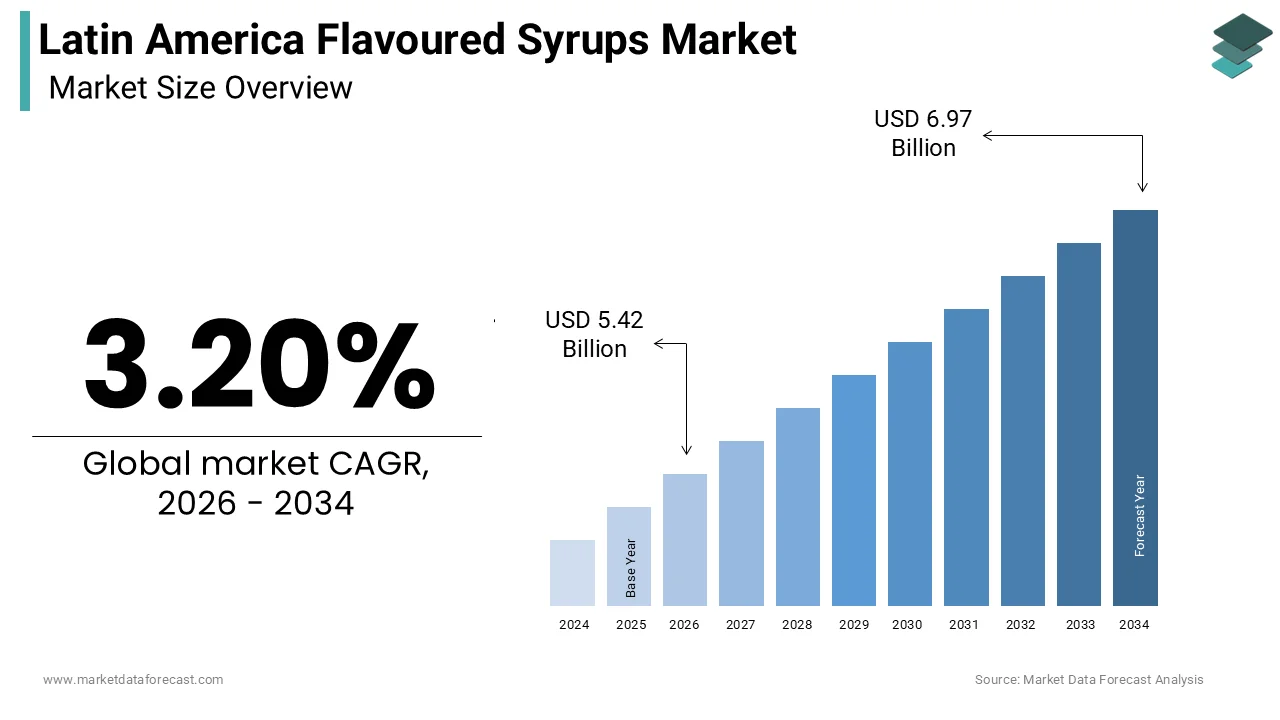
- Market Valuation: Valued at USD 5.25 billion in 2025, reaching USD 5.42 billion in 2026, and projected to expand up to USD 6.97 billion by 2034, growing at a steady CAGR of 3.20% from 2026 to 2034.
- Primary Growth Drivers: Proliferation of specialty coffee shops and café culture, rising demand for premium cocktails and mixology trends, and rapid urbanization.
Key Market Segment Metrics
| Category | Leading Segment (Base Year Position) | Fastest-Growing / High-Impact Segment |
|---|---|---|
| By Flavour | Vanilla (dominates via universal appeal, versatility, and deep integration into regional desserts and coffee habits) | Fruit-Flavoured Syrups (promising growth driven by local tropical fruit abundance and clean-label health trends) |
| By Flavour Type | Sweet Segment (holds major share reflecting regional culinary traditions of sweetened beverages and desserts) | Savoury Segment (fastest-growing CAGR driven by global fusion cuisines, culinary innovation, and umami profiles) |
| By Application | Beverages Segment (led market share in 2025 anchored by massive coffee consumption and soft drink habits) | Dairy & Frozen Desserts (healthy CAGR backed by rising ice cream consumption and artisanal gelato shop creations) |
| By Region / Country | Brazil (dominant regional market share due to massive coffee production, population size, and vibrant café scenes) | Mexico & Argentina (significant growth hubs characterized by strong culinary heritage, tourism, and pastry culture) |
Major Market Players & Market Structure
Market Structure: Highly competitive landscape featuring global international brands alongside agile local manufacturers competing on pricing, clean-label formulation, and regional cultural relevance.
Key Companies: Hershey, Tate & Lyle, Kraft Heinz Company, Monin Inc., Kerry Group Plc, Sonoma Syrup, Cedarvale Maple Syrup, and Sensient Technologies Corporation.
Latin America Flavoured Syrups Market Size
Latin America Flavoured Syrups Market size was calculated to be USD 5.25 billion in 2025 and is anticipated to be worth USD 6.97 billion by 2034 from USD 5.42 billion in 2026, growing at a CAGR of 3.20% during the forecast period.
Latin America is characterized by a deep-rooted tradition of consuming sweetened beverages, which provides a fertile ground for the adoption of flavored variants. According to the International Coffee Organization, coffee consumption in Latin America has seen steady growth, with Brazil remaining one of the largest consumers globally, creating a robust demand base for complementary additives like syrups. Furthermore, as per the data from the Pan American Health Organization, the prevalence of diabetes and obesity in the region has prompted a significant shift toward sugar-free and low-calorie alternatives, driving innovation in stevia- and monk fruit-based syrups. The urbanization rate in Latin America stands at approximately 81%, as per the United Nations Economic Commission for Latin America and the Caribbean, facilitating the spread of modern café culture and quick-service restaurants where flavored syrups are staple inventory items. Regulatory frameworks in key markets are increasingly focusing on labeling transparency and sugar content reduction, influencing product formulation strategies. This convergence of traditional sweetness preferences with modern health consciousness and commercial beverage expansion defines the current trajectory of the market.
MARKET DRIVERS
Proliferation of Specialty Coffee Shops and Café Culture
The rapid expansion of specialty coffee shops and the entrenchment of café culture across Latin America are fuelling the expansion of the Latin American flavoured syrups market. Consumers in urban centers such as São Paulo, Mexico City, and Buenos Aires are increasingly viewing coffee consumption as a lifestyle experience rather than a mere routine, leading to higher demand for customized and premium beverages. As per Euromonitor International, the number of independent coffee shops in Latin America has grown by double digits in recent years, driven by a young demographic seeking social spaces and unique flavor profiles. These establishments rely heavily on flavored syrups to create signature drinks, such as vanilla lattes, caramel macchiatos, and hazelnut cappuccinos, which command higher price points and customer loyalty. The standardization of recipes in franchise models requires consistent, high-quality syrup supplies, ensuring steady business-to-business demand. Additionally, the rise of third-wave coffee movements emphasizes artisanal preparation where syrups are used to complement rather than mask the coffee notes, requiring manufacturers to develop more sophisticated and natural flavor options. The integration of syrups into cold-brew and iced coffee variations further expands usage occasions, particularly in tropical climates. This commercial dependency creates a resilient demand channel that is less susceptible to economic fluctuations compared to retail sales. The continuous opening of new outlets in tier-2 and tier-3 cities ensures that the geographic reach of flavored syrups expands beyond major metropolitan areas.
Rising Demand for Premium Cocktails and Mixology Trends
The burgeoning interest in premium cocktails and professional mixology is further contributing to the Latin American flavoured syrups market expansion. The region boasts a vibrant nightlife and dining scene where bars and restaurants compete through innovative drink menus that feature complex flavor combinations. As per the World Travel and Tourism Council, tourism in Latin America contributes significantly to local economies, bringing international visitors who expect high-quality beverage experiences, including craft cocktails. Flavored syrups, such as elderflower, ginger, and passion fruit, are essential tools for bartenders to achieve consistency and speed in high-volume settings while maintaining artistic presentation. The trend toward experiential dining encourages the use of exotic and locally sourced flavors, which syrup manufacturers are increasingly incorporating into their portfolios. As per the data from the International Spirits and Wine Association, the premium spirits segment in Latin America is outpacing standard categories, suggesting a consumer willingness to pay for elevated drinking experiences. Home mixology has also gained traction post-pandemic, with consumers purchasing bar-grade syrups to recreate hotel-style drinks at home. This dual demand from both commercial and residential sectors amplifies market volume. Manufacturers respond by launching limited-edition and seasonal flavors that align with cultural festivals and holidays, further stimulating purchase frequency. The association of flavored syrups with sophistication and creativity enhances their perceived value beyond simple sweeteners.
MARKET RESTRAINTS
Health Concerns Regarding High Sugar Content and Obesity Rates
Persistent health concerns regarding the high sugar content in traditional flavored syrups are hampering the regional market growth. The region faces a severe public health crisis related to non-communicable diseases, with high rates of obesity and type 2 diabetes, and this is prompting governments and consumers to scrutinize sugary products. As per the Pan American Health Organization, more than 50% of the adult population in several Latin American countries is overweight or obese, leading to strict regulatory measures, such as sugar taxes and warning labels on high-sugar foods and beverages. Consumers are increasingly avoiding products with added sugars, opting instead for water, unsweetened teas, or naturally flavored options. This shift in preference reduces the volume of conventional syrup sales, particularly in the household segment where health-conscious parents limit children’s access to sugary additives. Although sugar-free alternatives exist, they often carry a higher price point and may contain artificial sweeteners that some consumers perceive as unhealthy. The negative perception of syrups as empty calories limits their usage to occasional indulgence rather than daily consumption. Manufacturers face the challenge of reformulating products to reduce sugar without compromising taste and texture, which can be technically difficult and costly. Until the industry successfully transitions to healthier formulations that meet consumer expectations for taste and wellness, the market will face headwinds from public health initiatives and changing dietary habits.
Economic Volatility and Currency Fluctuations Impact Affordability
Economic volatility and frequent currency fluctuations in key Latin American markets are further hindering the regional market expansion. Countries such as Argentina, Venezuela, and Brazil have experienced periods of high inflation and currency devaluation, which erode consumer purchasing power and increase the cost of imported raw materials. As per the International Monetary Fund, inflation rates in several Latin American economies have exceeded double digits in recent years, forcing households to prioritize essential goods over discretionary items like premium flavored syrups. For manufacturers who rely on imported flavorings, packaging materials, or equipment, currency instability leads to unpredictable production costs and pricing challenges. Small and medium-sized enterprises often lack the financial resilience to absorb these shocks, leading to reduced inventory levels and limited product variety. Retailers may pass on cost increases to consumers, resulting in lower sales volumes as buyers switch to cheaper generic brands or homemade alternatives. The economic uncertainty also discourages foreign direct investment in local production facilities, which is limiting the capacity for innovation and expansion. Supply chain disruptions caused by economic instability further exacerbate availability issues, leading to stockouts and lost sales opportunities. This financial unpredictability makes long-term planning difficult for market participants and restricts the ability of companies to invest in marketing and brand-building activities necessary for growth.
MARKET OPPORTUNITIES
Development of Natural and Organic Flavor Profiles
The growing consumer preference for natural and organic ingredients is a substantial opportunity for the Latin America flavored syrups market. Shoppers are increasingly reading labels and seeking products free from artificial colors, preservatives, and synthetic flavors, driven by a broader wellness trend. As per the Organic Trade Association, the demand for organic products in Latin America is rising, particularly among middle- and upper-income consumers in urban areas who are willing to pay a premium for clean-label items. Manufacturers can capitalize on this trend by sourcing natural fruit extracts, herbs, and spices from local farmers, thereby supporting sustainability and reducing carbon footprints. Flavors such as hibiscus, guava, acerola, and yerba mate resonate with regional tastes and offer authentic sensory experiences that appeal to both locals and tourists. Certifications such as USDA Organic or Non-GMO Project Verified enhance brand credibility and facilitate entry into upscale retail channels and specialty stores. The use of natural sweeteners like agave nectar, coconut sugar, or stevia aligns with health-conscious demands while maintaining the desired sweetness profile. Collaborations with local agricultural cooperatives can secure stable supply chains and create compelling marketing narratives around community support. By positioning syrups as wholesome and artisanal rather than industrial, companies can capture a loyal niche market. This strategic pivot allows brands to command higher margins and build emotional connections with consumers who value transparency and purity in their food choices.
Expansion into Emerging E-Commerce and Direct-to-Consumer Channels
The rapid adoption of e-commerce and digital platforms offers a lucrative opportunity for flavored syrup brands to reach consumers directly and bypass traditional retail barriers. Internet penetration in Latin America has surged, with millions of new users coming online in recent years, creating a vast digital marketplace for niche and premium products. As per Statista, e-commerce sales in Latin America are projected to continue their robust growth trajectory, driven by improved logistics and increased consumer confidence in online shopping. Brands can leverage social media influencers and digital marketing campaigns to educate consumers about creative uses for flavored syrups in cooking, baking, and mixology, driving trial and engagement. Direct-to-consumer models allow companies to gather valuable data on customer preferences and behavior, enabling personalized recommendations and targeted promotions. Subscription services for regular delivery of favorite flavors ensure recurring revenue and enhance customer retention. Online platforms also provide access to consumers in remote areas where physical retail distribution is limited or expensive. The ability to showcase detailed product information, reviews, and recipes online helps overcome the lack of physical interaction and builds trust. By investing in user-friendly websites and efficient last-mile delivery partnerships, manufacturers can expand their reach and reduce dependency on traditional distributors. This digital transformation opens new avenues for growth and brand loyalty in an increasingly connected region.
MARKET CHALLENGES
Complex Regulatory Landscape and Labeling Requirements
Navigating the complex and fragmented regulatory landscape across Latin American countries is a significant challenge for the Latin American flavoured syrups market growth. Each country has its own set of food safety standards, labeling laws, and ingredient restrictions, which complicates cross-border trade and increases compliance costs. As per the Inter-American Institute for Cooperation on Agriculture, harmonizing food regulations remains a slow process with significant disparities between nations, such as Brazil’s ANVISA requirements and Mexico’s NOM standards. Recent implementations of front-of-pack warning labels in Mexico and Chile for high-sugar and high-calorie products require manufacturers to redesign packaging and potentially reformulate products to avoid negative consumer perception. The lack of mutual recognition agreements means that companies must undergo separate registration and testing processes for each market, leading to delays and increased administrative burdens. Small- and medium-sized exporters often struggle to keep abreast of changing regulations, risking non-compliance penalties and product recalls. The inconsistency in enforcement and monitoring across regions creates uncertainty for investors and operators. Additionally, restrictions on certain artificial colors and flavors vary by country, requiring multiple SKU variations that complicate supply chain management. These regulatory hurdles increase operational complexity and cost, limiting the agility of companies to respond to market trends. Until greater regional harmonization is achieved, manufacturers will continue to face significant barriers to efficient expansion and standardized product offerings.
Supply Chain Instability and Raw Material Sourcing Issues
Supply chain instability and challenges in sourcing consistent and high-quality raw materials are further challenging the regional market expansion. The region is prone to extreme weather events, such as droughts, floods, and hurricanes, which can devastate agricultural yields of key ingredients like sugar cane, fruits, and herbs. As per the Food and Agriculture Organization of the United Nations, climate change impacts have increased the volatility of crop production in Latin America, affecting availability and prices. Dependence on seasonal harvests means that manufacturers must manage inventory carefully to avoid shortages during off-seasons. Logistics infrastructure in some parts of the region remains underdeveloped, leading to transportation delays and higher costs for moving raw materials from farms to processing facilities. Political unrest and labor strikes in certain countries can further disrupt supply chains, causing unexpected interruptions in production. The reliance on imported packaging materials and flavor concentrates exposes manufacturers to global supply chain risks and currency fluctuations. Ensuring the quality and safety of raw materials from smallholder farmers requires rigorous testing and certification, which adds to operational costs. Any disruption in the supply of key ingredients can lead to production delays and an inability to meet customer orders, damaging brand reputation. Building resilient supply chains requires significant investment in supplier relationships and alternative sourcing strategies, which are resource-intensive.
REPORT COVERAGE
| REPORT METRIC | DETAILS |
| Market Size Available | 2025 to 2034 |
| Base Year | 2025 |
| Forecast Period | 2026 to 2034 |
| CAGR | 3.20% |
| Segments Covered | By Flavour, Flavour Type, Application, and Region |
| Various Analyses Covered | Global, Regional, & Country Level Analysis; Segment-Level Analysis; DROC; PESTLE Analysis; Porter’s Five Forces Analysis; Competitive Landscape; Analyst Overview of Investment Opportunities |
| Regions Covered | Brazil, Mexico, Argentina, Chile, and the Rest of Latin America |
| Market Leaders Profiled | Hershey, Tate & Lyle, Kraft Heinz Company, Monin Inc, Kerry Group Plc, Sonoma Syrup, Cedarvale Maple Syrup, and Sensient Technologies Corporation |
SEGMENTAL ANALYSIS
By Flavour Insights
The vanilla segment led the market by accounting for the largest share of the Latin American market in 2025. The dominance of the vanilla segment in the Latin American market is attributed to its universal appeal, versatility, and deep integration into regional culinary traditions. This segment dominates because vanilla serves as a foundational flavor in both beverages and desserts, acting as a complementary agent that enhances rather than overpowers other ingredients. As per the International Trade Centre, vanilla is one of the most widely used flavorings globally, with Latin America being a significant consumer market due to its strong baking and confectionery industries. The preference for vanilla is deeply rooted in cultural habits where it is a staple ingredient in traditional desserts such as flan, tres leches cake, and churros. Its neutrality makes it an ideal base for coffee shops and bars, allowing baristas to create a wide range of derivative drinks like vanilla lattes without alienating customers who prefer subtle sweetness. The availability of both natural and synthetic vanilla options ensures accessibility across different income segments. Natural vanilla appeals to premium markets, while synthetic vanillin provides a cost-effective solution for mass-market applications. The consistent demand from industrial food manufacturers for standardized vanilla profiles further cements its leadership. Unlike seasonal or trendy flavors, vanilla maintains steady, year-round consumption, making it a reliable revenue stream for producers. Its ability to blend seamlessly with chocolate, fruit, and spice flavors ensures its continued dominance as the primary choice for both commercial and household use in the region.
On the other hand, the fruit-flavored syrups segment is estimated to showcase a promising CAGR in the Latin American market over the forecast period owing to the abundance of local tropical fruits and rising health consciousness. This segment is expanding rapidly as consumers seek natural, vibrant, and refreshing flavor options that align with the region's agricultural strengths. As per the Food and Agriculture Organization of the United Nations, Latin America is a major producer of fruits such as mango, passion fruit, guava, and acerola, providing a cost-effective and fresh supply of raw materials for syrup production. The trend toward clean-label and natural ingredients encourages manufacturers to use real fruit purees and extracts rather than artificial flavorings. Consumers are increasingly attracted to fruit syrups for their perceived health benefits and antioxidant properties. The popularity of healthy smoothies, juices, and detox drinks in urban centers fuels demand for fruit-based flavorings. Additionally, the tourism industry promotes local fruit flavors to international visitors, creating a premium market for exotic varieties. The versatility of fruit syrups in both alcoholic and non-alcoholic beverages allows them to cater to diverse occasions. Innovations in cold-press and freeze-dried technologies enable the retention of fresh fruit flavors in syrup form, enhancing quality. This combination of local availability, health trends, and culinary innovation positions fruit syrups as the dynamic growth engine of the market.
By Flavour Type Insights
The sweet segment dominated the market by holding the major share of the regional market in 2025. The growth of the sweet segment in the Latin American market can be credited to the region’s inherent preference for sugary beverages and desserts. This segment dominates because sweetness is a fundamental taste driver in Latin American culinary culture, influencing everything from morning coffee to evening cocktails. As per the Pan American Health Organization, despite efforts to reduce sugar intake, the average consumption of added sugars in Latin America remains high, reflecting deep-seated dietary habits. Sweet syrups, including vanilla, caramel, chocolate, and fruit varieties, provide the necessary intensity to satisfy these preferences. They are essential in the preparation of traditional drinks such as horchata, agua fresca, and café con leche, which are staples in households and restaurants. The affordability and accessibility of sweet syrups make them a popular choice for mass-market consumers. Industrial food producers rely on sweet syrups to maintain consistency in large-scale production of baked goods and confectionery. The psychological association of sweetness with happiness and reward reinforces frequent consumption. While health trends are emerging, the immediate gratification provided by sweet syrups ensures their continued dominance. Manufacturers continue to innovate within the sweet category by introducing reduced-sugar options that mimic the taste of full-sugar variants. This adaptation allows the segment to retain its leadership while addressing evolving consumer needs. The sheer volume of sweet syrup usage in both commercial and domestic settings secures its top position.
However, the savoury segment is estimated to grow at the fastest CAGR in the regional market over the forecast period owing to culinary innovation and the fusion of global cuisines. This segment is expanding as chefs and home cooks experiment with savory syrups such as herb, garlic, chili, and balsamic to enhance meats, salads, and appetizers. As per the Culinary Institute of America, trends indicate a rising interest in umami and complex flavor profiles in Latin American gastronomy. Savoury syrups offer a convenient way to add depth and richness to dishes without the time-consuming process of making reductions or stocks. They are particularly popular in gourmet burger joints, barbecue restaurants, and upscale dining establishments where they are used as glazes, marinades, and drizzles. The influence of Asian and Mediterranean cuisines has introduced flavors like soy, ginger, and rosemary to the local palate. Consumers are seeking new and exciting taste experiences, moving beyond traditional sweet applications. The versatility of savoury syrups in cooking allows for creative experimentation in home kitchens. Social media food influencers play a crucial role in popularizing savoury syrup recipes, encouraging trial and adoption. This shift toward sophisticated and diverse flavor profiles positions savoury syrups as a dynamic growth area. The ability of these syrups to elevate simple ingredients into gourmet meals drives their rapid adoption.
By Application Insights
The beverages segment led the market with the largest share of the Latin American market in 2025. The growth of the beverages segment in the Latin American market is driven by the region’s strong coffee and soft drink consumption culture. This segment dominates because syrups are primarily used to flavor hot and cold drinks in cafés, bars, and homes. As per the International Coffee Organization, Latin America is one of the largest coffee-consuming regions in the world, creating a massive demand for flavoring agents. Coffee shops rely on flavored syrups to create diverse menu items, such as flavored lattes, cappuccinos, and iced coffees, which are popular among young consumers. The soft drink industry also utilizes syrups for fountain drinks and mixed beverages in restaurants and cinemas. The habit of consuming sweetened beverages throughout the day ensures consistent demand. Syrups offer a cost-effective and versatile way to customize drinks, allowing businesses to offer a wide range of options without maintaining large inventories of pre-flavored products. Home consumers use syrups to enhance water, juice, and tea, making them a staple in many households. The social aspect of drinking coffee and cocktails in Latin America further drives beverage-related syrup usage. The ease of mixing syrups into liquids compared to solids makes them the preferred choice for this application. This deep integration into daily drinking habits secures the beverage segment's leadership position.
On the other hand, the dairy and frozen desserts segment is estimated to record a healthy CAGR in the Latin American market during the forecast period owing to the popularity of ice cream and artisanal desserts. This segment is expanding as consumers seek indulgent treats and innovative flavor combinations in their desserts. As per the International Dairy Federation, ice cream consumption in Latin America is rising, particularly during hot seasons and festive periods. Artisanal ice cream parlors and gelato shops are using flavored syrups to create unique swirls, toppings, and mix-ins that differentiate their products. Syrups such as salted caramel, raspberry ripple, and chocolate fudge are popular choices that add texture and visual appeal. The home-baking and dessert-making trend has also gained traction, with consumers using syrups to flavor yogurts, puddings, and homemade ice creams. The convenience of syrups allows for easy incorporation into dairy bases without affecting the freezing point significantly. Manufacturers are developing syrups specifically designed for frozen applications to prevent crystallization and maintain smoothness. The rise of premium and gourmet dessert options drives demand for high-quality natural syrups. Social media influences dessert trends, with visually striking syrup drizzles becoming popular. This combination of indulgence, innovation, and convenience positions dairy and frozen desserts as a key growth area.
REGIONAL ANALYSIS
Brazil Flavoured Syrups Market Analysis
Brazil held the dominant share of the Latin American market in 2025 and is projected to experience steady and dominant growth over the next few years due to its massive population, robust food service industry, strong coffee culture, and a high demand for both conventional and premium syrups, driven by a vibrant café scene and love for sweet beverages. A primary driver is the country’s status as one of the world’s largest coffee producers and consumers, which creates a natural synergy with flavored syrups. As per the Brazilian Coffee Industry Association, millions of cups of coffee are consumed daily, many of which are customized with syrups in urban cafés. The growing middle class is increasingly experimenting with international flavors and gourmet desserts, boosting demand for diverse syrup varieties. Local manufacturers are leveraging abundant tropical fruits to create unique flavors, such as açaí, guaraná, and cupuaçu, which appeal to domestic pride and tourist interest. The expansion of international coffee chains into secondary cities further distributes syrup usage. Regulatory changes regarding sugar labeling are prompting innovation in low-calorie and natural-sweetener-based syrups. The strong agricultural sector ensures a steady supply of raw materials, keeping production costs competitive. E-commerce growth facilitates direct-to-consumer sales of niche syrup brands. These factors combine to make Brazil the dominant force in the regional market, driving volume and innovation.
Mexico Flavoured Syrups Market Analysis
Mexico is expected to witness continuous expansion and modern adaptation over the next few years, representing a significant and sophisticated segment of the Latin America flavoured syrups market characterized by a deep culinary tradition and high consumption of sweetened beverages. A key driver is the prevalence of street food and informal dining, where flavored syrups are used to enhance aguas frescas and desserts. As per the National Institute of Statistics and Geography, Mexico has a high density of food service establishments per capita, creating substantial B2B demand. The influence of US culture has also introduced coffee shop habits and flavored latte consumption among younger demographics. Government regulations on sugar content have pushed manufacturers to develop stevia- and monk-fruit-based syrups to comply with labeling laws. The tourism industry in coastal areas drives demand for exotic fruit syrups in cocktails and smoothies. Local production capabilities are strong, with many companies exporting to neighboring countries. The cultural importance of celebrations and festivals ensures peak demand during holiday seasons. Consumer awareness of health issues is leading to a gradual shift toward natural and organic syrup options. This blend of tradition and modernization sustains steady market growth.
Argentina Flavoured Syrups Market Analysis
Argentina is likely to maintain resilient and quality-driven progression over the next few years, holding a mature and quality-focused segment of the Latin America flavoured syrups market driven by a strong European influence on its culinary habits. A primary driver is the country’s renowned pastry culture, where flavored syrups are essential for filling cakes, decorating pastries, and flavoring ice creams. As per the Argentine Chamber of Bakeries and Confectioners, the sector is highly developed, with a demand for high-quality vanilla, chocolate, and fruit syrups. Economic volatility has led consumers to seek value for money, preferring versatile syrups that can be used in multiple applications. The coffee culture in Buenos Aires is sophisticated, with a preference for classic flavors and high-quality beans. Local manufacturers focus on natural ingredients and clean labels to differentiate themselves in a competitive market. The export potential for Argentine syrups to neighboring countries is growing due to perceived quality. Economic challenges have also spurred innovation in cost-effective packaging and concentrated formats. The resilience of the food service sector despite economic headwinds ensures consistent demand. This focus on quality and tradition maintains Argentina’s significant position in the regional market.
COMPETITION OVERVIEW
The competition in the Latin America flavoured syrups market is characterized by the presence of established international brands alongside agile local manufacturers vying for market share. Global players leverage their brand recognition and extensive distribution networks to dominate the premium food service sector. Local competitors often compete on price and cultural relevance,ce offering traditional flavors that resonate with domestic consumers. The market sees intense rivalry in terms of product quality, ingredient transparency, and innovation. Health consciousness drives demand for natural and sugar-free options, forcing companies to reformulate products continuously. Regulatory differences across countries create complexities but also opportunities for localized strategies. Price sensitivity remains a factor in emerging markets, while premiumization drives growth in urban centers. Collaborations with cafes and restaurants enhance brand visibility and consumer trial. Digital marketing and social media engagement play crucial roles in building brand loyalty among younger demographics. The entry of private label offerings from major retailers adds pressure on branded players to demonstrate value. This dynamic environment fosters continuous improvement and diversification.
Latin America is characterized by a deep-rooted tradition of consuming sweetened beverages, which provides a fertile ground for the adoption of flavored variants. According to the International Coffee Organization, coffee consumption in Latin America has seen steady growth, with Brazil remaining one of the largest consumers globally, creating a robust demand base for complementary additives like syrups. Furthermore, as per the data from the Pan American Health Organization, the prevalence of diabetes and obesity in the region has prompted a significant shift toward sugar-free and low-calorie alternatives, driving innovation in stevia- and monk fruit-based syrups. The urbanization rate in Latin America stands at approximately 81%, as per the United Nations Economic Commission for Latin America and the Caribbean, facilitating the spread of modern café culture and quick-service restaurants where flavored syrups are staple inventory items. Regulatory frameworks in key markets are increasingly focusing on labeling transparency and sugar content reduction, influencing product formulation strategies. This convergence of traditional sweetness preferences with modern health consciousness and commercial beverage expansion defines the current trajectory of the market.
MARKET DRIVERS
Proliferation of Specialty Coffee Shops and Café Culture
The rapid expansion of specialty coffee shops and the entrenchment of café culture across Latin America are fuelling the expansion of the Latin American flavoured syrups market. Consumers in urban centers such as São Paulo, Mexico City, and Buenos Aires are increasingly viewing coffee consumption as a lifestyle experience rather than a mere routine, leading to higher demand for customized and premium beverages. As per Euromonitor International, the number of independent coffee shops in Latin America has grown by double digits in recent years, driven by a young demographic seeking social spaces and unique flavor profiles. These establishments rely heavily on flavored syrups to create signature drinks, such as vanilla lattes, caramel macchiatos, and hazelnut cappuccinos, which command higher price points and customer loyalty. The standardization of recipes in franchise models requires consistent, high-quality syrup supplies, ensuring steady business-to-business demand. Additionally, the rise of third-wave coffee movements emphasizes artisanal preparation where syrups are used to complement rather than mask the coffee notes, requiring manufacturers to develop more sophisticated and natural flavor options. The integration of syrups into cold-brew and iced coffee variations further expands usage occasions, particularly in tropical climates. This commercial dependency creates a resilient demand channel that is less susceptible to economic fluctuations compared to retail sales. The continuous opening of new outlets in tier-2 and tier-3 cities ensures that the geographic reach of flavored syrups expands beyond major metropolitan areas.
Rising Demand for Premium Cocktails and Mixology Trends
The burgeoning interest in premium cocktails and professional mixology is further contributing to the Latin American flavoured syrups market expansion. The region boasts a vibrant nightlife and dining scene where bars and restaurants compete through innovative drink menus that feature complex flavor combinations. As per the World Travel and Tourism Council, tourism in Latin America contributes significantly to local economies, bringing international visitors who expect high-quality beverage experiences, including craft cocktails. Flavored syrups, such as elderflower, ginger, and passion fruit, are essential tools for bartenders to achieve consistency and speed in high-volume settings while maintaining artistic presentation. The trend toward experiential dining encourages the use of exotic and locally sourced flavors, which syrup manufacturers are increasingly incorporating into their portfolios. As per the data from the International Spirits and Wine Association, the premium spirits segment in Latin America is outpacing standard categories, suggesting a consumer willingness to pay for elevated drinking experiences. Home mixology has also gained traction post-pandemic, with consumers purchasing bar-grade syrups to recreate hotel-style drinks at home. This dual demand from both commercial and residential sectors amplifies market volume. Manufacturers respond by launching limited-edition and seasonal flavors that align with cultural festivals and holidays, further stimulating purchase frequency. The association of flavored syrups with sophistication and creativity enhances their perceived value beyond simple sweeteners.
MARKET RESTRAINTS
Health Concerns Regarding High Sugar Content and Obesity Rates
Persistent health concerns regarding the high sugar content in traditional flavored syrups are hampering the regional market growth. The region faces a severe public health crisis related to non-communicable diseases, with high rates of obesity and type 2 diabetes, and this is prompting governments and consumers to scrutinize sugary products. As per the Pan American Health Organization, more than 50% of the adult population in several Latin American countries is overweight or obese, leading to strict regulatory measures, such as sugar taxes and warning labels on high-sugar foods and beverages. Consumers are increasingly avoiding products with added sugars, opting instead for water, unsweetened teas, or naturally flavored options. This shift in preference reduces the volume of conventional syrup sales, particularly in the household segment where health-conscious parents limit children’s access to sugary additives. Although sugar-free alternatives exist, they often carry a higher price point and may contain artificial sweeteners that some consumers perceive as unhealthy. The negative perception of syrups as empty calories limits their usage to occasional indulgence rather than daily consumption. Manufacturers face the challenge of reformulating products to reduce sugar without compromising taste and texture, which can be technically difficult and costly. Until the industry successfully transitions to healthier formulations that meet consumer expectations for taste and wellness, the market will face headwinds from public health initiatives and changing dietary habits.
Economic Volatility and Currency Fluctuations Impact Affordability
Economic volatility and frequent currency fluctuations in key Latin American markets are further hindering the regional market expansion. Countries such as Argentina, Venezuela, and Brazil have experienced periods of high inflation and currency devaluation, which erode consumer purchasing power and increase the cost of imported raw materials. As per the International Monetary Fund, inflation rates in several Latin American economies have exceeded double digits in recent years, forcing households to prioritize essential goods over discretionary items like premium flavored syrups. For manufacturers who rely on imported flavorings, packaging materials, or equipment, currency instability leads to unpredictable production costs and pricing challenges. Small and medium-sized enterprises often lack the financial resilience to absorb these shocks, leading to reduced inventory levels and limited product variety. Retailers may pass on cost increases to consumers, resulting in lower sales volumes as buyers switch to cheaper generic brands or homemade alternatives. The economic uncertainty also discourages foreign direct investment in local production facilities, which is limiting the capacity for innovation and expansion. Supply chain disruptions caused by economic instability further exacerbate availability issues, leading to stockouts and lost sales opportunities. This financial unpredictability makes long-term planning difficult for market participants and restricts the ability of companies to invest in marketing and brand-building activities necessary for growth.
MARKET OPPORTUNITIES
Development of Natural and Organic Flavor Profiles
The growing consumer preference for natural and organic ingredients is a substantial opportunity for the Latin America flavored syrups market. Shoppers are increasingly reading labels and seeking products free from artificial colors, preservatives, and synthetic flavors, driven by a broader wellness trend. As per the Organic Trade Association, the demand for organic products in Latin America is rising, particularly among middle- and upper-income consumers in urban areas who are willing to pay a premium for clean-label items. Manufacturers can capitalize on this trend by sourcing natural fruit extracts, herbs, and spices from local farmers, thereby supporting sustainability and reducing carbon footprints. Flavors such as hibiscus, guava, acerola, and yerba mate resonate with regional tastes and offer authentic sensory experiences that appeal to both locals and tourists. Certifications such as USDA Organic or Non-GMO Project Verified enhance brand credibility and facilitate entry into upscale retail channels and specialty stores. The use of natural sweeteners like agave nectar, coconut sugar, or stevia aligns with health-conscious demands while maintaining the desired sweetness profile. Collaborations with local agricultural cooperatives can secure stable supply chains and create compelling marketing narratives around community support. By positioning syrups as wholesome and artisanal rather than industrial, companies can capture a loyal niche market. This strategic pivot allows brands to command higher margins and build emotional connections with consumers who value transparency and purity in their food choices.
Expansion into Emerging E-Commerce and Direct-to-Consumer Channels
The rapid adoption of e-commerce and digital platforms offers a lucrative opportunity for flavored syrup brands to reach consumers directly and bypass traditional retail barriers. Internet penetration in Latin America has surged, with millions of new users coming online in recent years, creating a vast digital marketplace for niche and premium products. As per Statista, e-commerce sales in Latin America are projected to continue their robust growth trajectory, driven by improved logistics and increased consumer confidence in online shopping. Brands can leverage social media influencers and digital marketing campaigns to educate consumers about creative uses for flavored syrups in cooking, baking, and mixology, driving trial and engagement. Direct-to-consumer models allow companies to gather valuable data on customer preferences and behavior, enabling personalized recommendations and targeted promotions. Subscription services for regular delivery of favorite flavors ensure recurring revenue and enhance customer retention. Online platforms also provide access to consumers in remote areas where physical retail distribution is limited or expensive. The ability to showcase detailed product information, reviews, and recipes online helps overcome the lack of physical interaction and builds trust. By investing in user-friendly websites and efficient last-mile delivery partnerships, manufacturers can expand their reach and reduce dependency on traditional distributors. This digital transformation opens new avenues for growth and brand loyalty in an increasingly connected region.
MARKET CHALLENGES
Complex Regulatory Landscape and Labeling Requirements
Navigating the complex and fragmented regulatory landscape across Latin American countries is a significant challenge for the Latin American flavoured syrups market growth. Each country has its own set of food safety standards, labeling laws, and ingredient restrictions, which complicates cross-border trade and increases compliance costs. As per the Inter-American Institute for Cooperation on Agriculture, harmonizing food regulations remains a slow process with significant disparities between nations, such as Brazil’s ANVISA requirements and Mexico’s NOM standards. Recent implementations of front-of-pack warning labels in Mexico and Chile for high-sugar and high-calorie products require manufacturers to redesign packaging and potentially reformulate products to avoid negative consumer perception. The lack of mutual recognition agreements means that companies must undergo separate registration and testing processes for each market, leading to delays and increased administrative burdens. Small- and medium-sized exporters often struggle to keep abreast of changing regulations, risking non-compliance penalties and product recalls. The inconsistency in enforcement and monitoring across regions creates uncertainty for investors and operators. Additionally, restrictions on certain artificial colors and flavors vary by country, requiring multiple SKU variations that complicate supply chain management. These regulatory hurdles increase operational complexity and cost, limiting the agility of companies to respond to market trends. Until greater regional harmonization is achieved, manufacturers will continue to face significant barriers to efficient expansion and standardized product offerings.
Supply Chain Instability and Raw Material Sourcing Issues
Supply chain instability and challenges in sourcing consistent and high-quality raw materials are further challenging the regional market expansion. The region is prone to extreme weather events, such as droughts, floods, and hurricanes, which can devastate agricultural yields of key ingredients like sugar cane, fruits, and herbs. As per the Food and Agriculture Organization of the United Nations, climate change impacts have increased the volatility of crop production in Latin America, affecting availability and prices. Dependence on seasonal harvests means that manufacturers must manage inventory carefully to avoid shortages during off-seasons. Logistics infrastructure in some parts of the region remains underdeveloped, leading to transportation delays and higher costs for moving raw materials from farms to processing facilities. Political unrest and labor strikes in certain countries can further disrupt supply chains, causing unexpected interruptions in production. The reliance on imported packaging materials and flavor concentrates exposes manufacturers to global supply chain risks and currency fluctuations. Ensuring the quality and safety of raw materials from smallholder farmers requires rigorous testing and certification, which adds to operational costs. Any disruption in the supply of key ingredients can lead to production delays and an inability to meet customer orders, damaging brand reputation. Building resilient supply chains requires significant investment in supplier relationships and alternative sourcing strategies, which are resource-intensive.
REPORT COVERAGE
| REPORT METRIC | DETAILS |
| Market Size Available | 2025 to 2034 |
| Base Year | 2025 |
| Forecast Period | 2026 to 2034 |
| CAGR | 3.20% |
| Segments Covered | By Flavour, Flavour Type, Application, and Region |
| Various Analyses Covered | Global, Regional, & Country Level Analysis; Segment-Level Analysis; DROC; PESTLE Analysis; Porter’s Five Forces Analysis; Competitive Landscape; Analyst Overview of Investment Opportunities |
| Regions Covered | Brazil, Mexico, Argentina, Chile, and the Rest of Latin America |
| Market Leaders Profiled | Hershey, Tate & Lyle, Kraft Heinz Company, Monin Inc, Kerry Group Plc, Sonoma Syrup, Cedarvale Maple Syrup, and Sensient Technologies Corporation |
SEGMENTAL ANALYSIS
By Flavour Insights
The vanilla segment led the market by accounting for the largest share of the Latin American market in 2025. The dominance of the vanilla segment in the Latin American market is attributed to its universal appeal, versatility, and deep integration into regional culinary traditions. This segment dominates because vanilla serves as a foundational flavor in both beverages and desserts, acting as a complementary agent that enhances rather than overpowers other ingredients. As per the International Trade Centre, vanilla is one of the most widely used flavorings globally, with Latin America being a significant consumer market due to its strong baking and confectionery industries. The preference for vanilla is deeply rooted in cultural habits where it is a staple ingredient in traditional desserts such as flan, tres leches cake, and churros. Its neutrality makes it an ideal base for coffee shops and bars, allowing baristas to create a wide range of derivative drinks like vanilla lattes without alienating customers who prefer subtle sweetness. The availability of both natural and synthetic vanilla options ensures accessibility across different income segments. Natural vanilla appeals to premium markets, while synthetic vanillin provides a cost-effective solution for mass-market applications. The consistent demand from industrial food manufacturers for standardized vanilla profiles further cements its leadership. Unlike seasonal or trendy flavors, vanilla maintains steady, year-round consumption, making it a reliable revenue stream for producers. Its ability to blend seamlessly with chocolate, fruit, and spice flavors ensures its continued dominance as the primary choice for both commercial and household use in the region.
On the other hand, the fruit-flavored syrups segment is estimated to showcase a promising CAGR in the Latin American market over the forecast period owing to the abundance of local tropical fruits and rising health consciousness. This segment is expanding rapidly as consumers seek natural, vibrant, and refreshing flavor options that align with the region's agricultural strengths. As per the Food and Agriculture Organization of the United Nations, Latin America is a major producer of fruits such as mango, passion fruit, guava, and acerola, providing a cost-effective and fresh supply of raw materials for syrup production. The trend toward clean-label and natural ingredients encourages manufacturers to use real fruit purees and extracts rather than artificial flavorings. Consumers are increasingly attracted to fruit syrups for their perceived health benefits and antioxidant properties. The popularity of healthy smoothies, juices, and detox drinks in urban centers fuels demand for fruit-based flavorings. Additionally, the tourism industry promotes local fruit flavors to international visitors, creating a premium market for exotic varieties. The versatility of fruit syrups in both alcoholic and non-alcoholic beverages allows them to cater to diverse occasions. Innovations in cold-press and freeze-dried technologies enable the retention of fresh fruit flavors in syrup form, enhancing quality. This combination of local availability, health trends, and culinary innovation positions fruit syrups as the dynamic growth engine of the market.
By Flavour Type Insights
The sweet segment dominated the market by holding the major share of the regional market in 2025. The growth of the sweet segment in the Latin American market can be credited to the region’s inherent preference for sugary beverages and desserts. This segment dominates because sweetness is a fundamental taste driver in Latin American culinary culture, influencing everything from morning coffee to evening cocktails. As per the Pan American Health Organization, despite efforts to reduce sugar intake, the average consumption of added sugars in Latin America remains high, reflecting deep-seated dietary habits. Sweet syrups, including vanilla, caramel, chocolate, and fruit varieties, provide the necessary intensity to satisfy these preferences. They are essential in the preparation of traditional drinks such as horchata, agua fresca, and café con leche, which are staples in households and restaurants. The affordability and accessibility of sweet syrups make them a popular choice for mass-market consumers. Industrial food producers rely on sweet syrups to maintain consistency in large-scale production of baked goods and confectionery. The psychological association of sweetness with happiness and reward reinforces frequent consumption. While health trends are emerging, the immediate gratification provided by sweet syrups ensures their continued dominance. Manufacturers continue to innovate within the sweet category by introducing reduced-sugar options that mimic the taste of full-sugar variants. This adaptation allows the segment to retain its leadership while addressing evolving consumer needs. The sheer volume of sweet syrup usage in both commercial and domestic settings secures its top position.
However, the savoury segment is estimated to grow at the fastest CAGR in the regional market over the forecast period owing to culinary innovation and the fusion of global cuisines. This segment is expanding as chefs and home cooks experiment with savory syrups such as herb, garlic, chili, and balsamic to enhance meats, salads, and appetizers. As per the Culinary Institute of America, trends indicate a rising interest in umami and complex flavor profiles in Latin American gastronomy. Savoury syrups offer a convenient way to add depth and richness to dishes without the time-consuming process of making reductions or stocks. They are particularly popular in gourmet burger joints, barbecue restaurants, and upscale dining establishments where they are used as glazes, marinades, and drizzles. The influence of Asian and Mediterranean cuisines has introduced flavors like soy, ginger, and rosemary to the local palate. Consumers are seeking new and exciting taste experiences, moving beyond traditional sweet applications. The versatility of savoury syrups in cooking allows for creative experimentation in home kitchens. Social media food influencers play a crucial role in popularizing savoury syrup recipes, encouraging trial and adoption. This shift toward sophisticated and diverse flavor profiles positions savoury syrups as a dynamic growth area. The ability of these syrups to elevate simple ingredients into gourmet meals drives their rapid adoption.
By Application Insights
The beverages segment led the market with the largest share of the Latin American market in 2025. The growth of the beverages segment in the Latin American market is driven by the region’s strong coffee and soft drink consumption culture. This segment dominates because syrups are primarily used to flavor hot and cold drinks in cafés, bars, and homes. As per the International Coffee Organization, Latin America is one of the largest coffee-consuming regions in the world, creating a massive demand for flavoring agents. Coffee shops rely on flavored syrups to create diverse menu items, such as flavored lattes, cappuccinos, and iced coffees, which are popular among young consumers. The soft drink industry also utilizes syrups for fountain drinks and mixed beverages in restaurants and cinemas. The habit of consuming sweetened beverages throughout the day ensures consistent demand. Syrups offer a cost-effective and versatile way to customize drinks, allowing businesses to offer a wide range of options without maintaining large inventories of pre-flavored products. Home consumers use syrups to enhance water, juice, and tea, making them a staple in many households. The social aspect of drinking coffee and cocktails in Latin America further drives beverage-related syrup usage. The ease of mixing syrups into liquids compared to solids makes them the preferred choice for this application. This deep integration into daily drinking habits secures the beverage segment's leadership position.
On the other hand, the dairy and frozen desserts segment is estimated to record a healthy CAGR in the Latin American market during the forecast period owing to the popularity of ice cream and artisanal desserts. This segment is expanding as consumers seek indulgent treats and innovative flavor combinations in their desserts. As per the International Dairy Federation, ice cream consumption in Latin America is rising, particularly during hot seasons and festive periods. Artisanal ice cream parlors and gelato shops are using flavored syrups to create unique swirls, toppings, and mix-ins that differentiate their products. Syrups such as salted caramel, raspberry ripple, and chocolate fudge are popular choices that add texture and visual appeal. The home-baking and dessert-making trend has also gained traction, with consumers using syrups to flavor yogurts, puddings, and homemade ice creams. The convenience of syrups allows for easy incorporation into dairy bases without affecting the freezing point significantly. Manufacturers are developing syrups specifically designed for frozen applications to prevent crystallization and maintain smoothness. The rise of premium and gourmet dessert options drives demand for high-quality natural syrups. Social media influences dessert trends, with visually striking syrup drizzles becoming popular. This combination of indulgence, innovation, and convenience positions dairy and frozen desserts as a key growth area.
REGIONAL ANALYSIS
Brazil Flavoured Syrups Market Analysis
Brazil held the dominant share of the Latin American market in 2025 and is projected to experience steady and dominant growth over the next few years due to its massive population, robust food service industry, strong coffee culture, and a high demand for both conventional and premium syrups, driven by a vibrant café scene and love for sweet beverages. A primary driver is the country’s status as one of the world’s largest coffee producers and consumers, which creates a natural synergy with flavored syrups. As per the Brazilian Coffee Industry Association, millions of cups of coffee are consumed daily, many of which are customized with syrups in urban cafés. The growing middle class is increasingly experimenting with international flavors and gourmet desserts, boosting demand for diverse syrup varieties. Local manufacturers are leveraging abundant tropical fruits to create unique flavors, such as açaí, guaraná, and cupuaçu, which appeal to domestic pride and tourist interest. The expansion of international coffee chains into secondary cities further distributes syrup usage. Regulatory changes regarding sugar labeling are prompting innovation in low-calorie and natural-sweetener-based syrups. The strong agricultural sector ensures a steady supply of raw materials, keeping production costs competitive. E-commerce growth facilitates direct-to-consumer sales of niche syrup brands. These factors combine to make Brazil the dominant force in the regional market, driving volume and innovation.
Mexico Flavoured Syrups Market Analysis
Mexico is expected to witness continuous expansion and modern adaptation over the next few years, representing a significant and sophisticated segment of the Latin America flavoured syrups market characterized by a deep culinary tradition and high consumption of sweetened beverages. A key driver is the prevalence of street food and informal dining, where flavored syrups are used to enhance aguas frescas and desserts. As per the National Institute of Statistics and Geography, Mexico has a high density of food service establishments per capita, creating substantial B2B demand. The influence of US culture has also introduced coffee shop habits and flavored latte consumption among younger demographics. Government regulations on sugar content have pushed manufacturers to develop stevia- and monk-fruit-based syrups to comply with labeling laws. The tourism industry in coastal areas drives demand for exotic fruit syrups in cocktails and smoothies. Local production capabilities are strong, with many companies exporting to neighboring countries. The cultural importance of celebrations and festivals ensures peak demand during holiday seasons. Consumer awareness of health issues is leading to a gradual shift toward natural and organic syrup options. This blend of tradition and modernization sustains steady market growth.
Argentina Flavoured Syrups Market Analysis
Argentina is likely to maintain resilient and quality-driven progression over the next few years, holding a mature and quality-focused segment of the Latin America flavoured syrups market driven by a strong European influence on its culinary habits. A primary driver is the country’s renowned pastry culture, where flavored syrups are essential for filling cakes, decorating pastries, and flavoring ice creams. As per the Argentine Chamber of Bakeries and Confectioners, the sector is highly developed, with a demand for high-quality vanilla, chocolate, and fruit syrups. Economic volatility has led consumers to seek value for money, preferring versatile syrups that can be used in multiple applications. The coffee culture in Buenos Aires is sophisticated, with a preference for classic flavors and high-quality beans. Local manufacturers focus on natural ingredients and clean labels to differentiate themselves in a competitive market. The export potential for Argentine syrups to neighboring countries is growing due to perceived quality. Economic challenges have also spurred innovation in cost-effective packaging and concentrated formats. The resilience of the food service sector despite economic headwinds ensures consistent demand. This focus on quality and tradition maintains Argentina’s significant position in the regional market.
COMPETITION OVERVIEW
The competition in the Latin America flavoured syrups market is characterized by the presence of established international brands alongside agile local manufacturers vying for market share. Global players leverage their brand recognition and extensive distribution networks to dominate the premium food service sector. Local competitors often compete on price and cultural relevance, offering traditional flavors that resonate with domestic consumers. The market sees intense rivalry in terms of product quality, ingredient transparency, and innovation. Health consciousness drives demand for natural and sugar-free options, forcing companies to reformulate products continuously. Regulatory differences across countries create complexities but also opportunities for localized strategies. Price sensitivity remains a factor in emerging markets, while premiumization drives growth in urban centers. Collaborations with cafes and restaurants enhance brand visibility and consumer trial. Digital marketing and social media engagement play crucial roles in building brand loyalty among younger demographics. The entry of private label offerings from major retailers adds pressure on branded players to demonstrate value. This dynamic environment fosters continuous improvement and diversification,n benefiting consumers through greater choice and enhanced product quality across the region.
KEY MARKET PLAYERS
A few major key players in the Latin America Flavoured Syrups Market include
- Hershey
- Tate & Lyle
- Kraft Heinz Company
- Monin Inc
- Kerry Group Plc
- Sonoma Syrup
- Cedarvale Maple Syrup
- Sensient Technologies Corporation
Top Strategies Used by the Key Market Participants
Key players in the Latin America flavoured syrups market primarily focus on product innovation and localization to meet diverse regional tastes. Companies invest heavily in research and development to create natural and sugar-free formulations that align with health trends. Strategic partnerships with local distributors and coffee chains enhance market penetration and brand visibility. Expansion into e-commerce platforms allows direct engagement with consumers and broader reach. Sustainability initiatives, including ethical sourcing and eco-friendly packaging, resonate with environmentally conscious buyers. Educational programs for baristas and chefs foster brand loyalty and encourage creative usage. Obtaining certifications such as organic and non-GMO builds trust and facilitates entry into premium segments. These multifaceted strategies enable participants to adapt to changing preferences and maintain competitive advantage in the dynamic Latin American region.
Leading Players in the Market
- Monin maintains a strong presence in the Latin American flavoured syrups market through its extensive portfolio of premium and natural flavorings. The company is widely recognized for its high-quality ingredients and innovative flavor profiles that cater to both professional baristas and home consumers. Monin recently expanded its distribution network in Brazil and Mexico by partnering with local distributors to enhance market reach. The company focuses on sustainability by sourcing natural ingredients from regional farmers, which supports local economies and ensures freshness. Monin also invests in educational programs for hospitality professionals, teaching them how to create unique beverages using their syrups. This commitment to quality and education strengthens brand loyalty and positions Monin as a leader in the premium segment across the region.
- DaVinci Gourmet contributes significantly to the Latin America flavoured syrups market by offering a diverse range of coffee house style syrups and sauces. The company leverages its global expertise to introduce trending flavors such as salted caramel and lavender to the regional market. DaVinci recently launched a line of sugar-free syrups sweetened with stevia to address growing health concerns among Latin American consumers. The company actively participates in regional food and beverage trade shows to showcase new products and engage with industry professionals. Strategic collaborations with major coffee chains ensure that DaVinci syrups are featured in popular menu items. These efforts enhance brand visibility and drive adoption in the competitive food service sector throughout Latin America.
- Torani plays a pivotal role in the Latin American flavoured syrups market by providing authenticItalian-inspiredd flavors that appeal to discerning palates. The company emphasizes the use of real fruit purees and natural extracts in its product formulations, distinguishing itself from competitors using artificial flavors. Torani recently introducedeco-friendlyy packaging solutions to align with environmental sustainability goals in the region. The company has strengthened its supply chain by establishing local production partnerships in key markets like Argentina to reduce costs and improve delivery times. Torani also engages consumers through digital marketing campaigns highlighting creative recipes and mixology tips. This focus on authenticity and sustainability reinforces Torani's reputation as a premium brand in the Latin American market.
MARKET SEGMENTATION
This research report on the Latin American flavoured syrups market has been segmented and sub-segmented based on flavour, flavour type, application, and region.
By Flavour
- Chocolate
- Coffee
- Herbs & Seasonings
- Vanilla
- Fruit
- Maple
- Malt
- Palm
- Others
By Flavour Type
- Salty
- Sour
- Mint
- Savoury
- Sweet
By Application
- Dairy & Frozen Desserts
- Bakery
- Confectionery
- Beverage
- Others
By Region
- Brazil
- Mexico
- Argentina
- Chile
- Rest of Latin America
,n benefiting consumers through greater choice and enhanced product quality across the region.
KEY MARKET PLAYERS
A few major key players in the Latin America Flavoured Syrups Market include
- Hershey
- Tate & Lyle
- Kraft Heinz Company
- Monin Inc
- Kerry Group Plc
- Sonoma Syrup
- Cedarvale Maple Syrup
- Sensient Technologies Corporation
Top Strategies Used by the Key Market Participants
Key players in the Latin America flavoured syrups market primarily focus on product innovation and localization to meet diverse regional tastes. Companies invest heavily in research and development to create natural and sugar-free formulations that align with health trends. Strategic partnerships with local distributors and coffee chains enhance market penetration and brand visibility. Expansion into e-commerce platforms allows direct engagement with consumers and broader reach. Sustainability initiatives, including ethical sourcing and eco-friendly packaging, resonate with environmentally conscious buyers. Educational programs for baristas and chefs foster brand loyalty and encourage creative usage. Obtaining certifications such as organic and non-GMO builds trust and facilitates entry into premium segments. These multifaceted strategies enable participants to adapt to changing preferences and maintain competitive advantage in the dynamic Latin American region.
Leading Players in the Market
- Monin maintains a strong presence in the Latin American flavoured syrups market through its extensive portfolio of premium and natural flavorings. The company is widely recognized for its high-quality ingredients and innovative flavor profiles that cater to both professional baristas and home consumers. Monin recently expanded its distribution network in Brazil and Mexico by partnering with local distributors to enhance market reach. The company focuses on sustainability by sourcing natural ingredients from regional farmers, which supports local economies and ensures freshness. Monin also invests in educational programs for hospitality professionals, teaching them how to create unique beverages using their syrups. This commitment to quality and education strengthens brand loyalty and positions Monin as a leader in the premium segment across the region.
- DaVinci Gourmet contributes significantly to the Latin America flavoured syrups market by offering a diverse range of coffee house style syrups and sauces. The company leverages its global expertise to introduce trending flavors such as salted caramel and lavender to the regional market. DaVinci recently launched a line of sugar-free syrups sweetened with stevia to address growing health concerns among Latin American consumers. The company actively participates in regional food and beverage trade shows to showcase new products and engage with industry professionals. Strategic collaborations with major coffee chains ensure that DaVinci syrups are featured in popular menu items. These efforts enhance brand visibility and drive adoption in the competitive food service sector throughout Latin America.
- Torani plays a pivotal role in the Latin American flavoured syrups market by providing authentic Italian-inspired flavors that appeal to discerning palates. The company emphasizes the use of real fruit purees and natural extracts in its product formulations, distinguishing itself from competitors using artificial flavors. Torani recently introduced eco-friendly packaging solutions to align with environmental sustainability goals in the region. The company has strengthened its supply chain by establishing local production partnerships in key markets like Argentina to reduce costs and improve delivery times. Torani also engages consumers through digital marketing campaigns highlighting creative recipes and mixology tips. This focus on authenticity and sustainability reinforces Torani's reputation as a premium brand in the Latin American market.
MARKET SEGMENTATION
This research report on the Latin American flavoured syrups market has been segmented and sub-segmented based on flavour, flavour type, application, and region.
By Flavour
- Chocolate
- Coffee
- Herbs & Seasonings
- Vanilla
- Fruit
- Maple
- Malt
- Palm
- Others
By Flavour Type
- Salty
- Sour
- Mint
- Savoury
- Sweet
By Application
- Dairy & Frozen Desserts
- Bakery
- Confectionery
- Beverage
- Others
By Region
- Brazil
- Mexico
- Argentina
- Chile
- Rest of Latin America