- Product Description Description
- Table of Contents TOC
- List of Table & Figure LOT
- Get Free Sample PDF Sample PDF
Market Size, 2025
$576.8 MnMarket Estimate, 2026
$609.1 MnMarket Forecast, 2034
$941.9 MnCAGR, 2026–2034
5.6%Latin America Cervical Cancer Diagnostics and Therapeutics Market Size, Growth, Trends & Forecast (2026–2034)
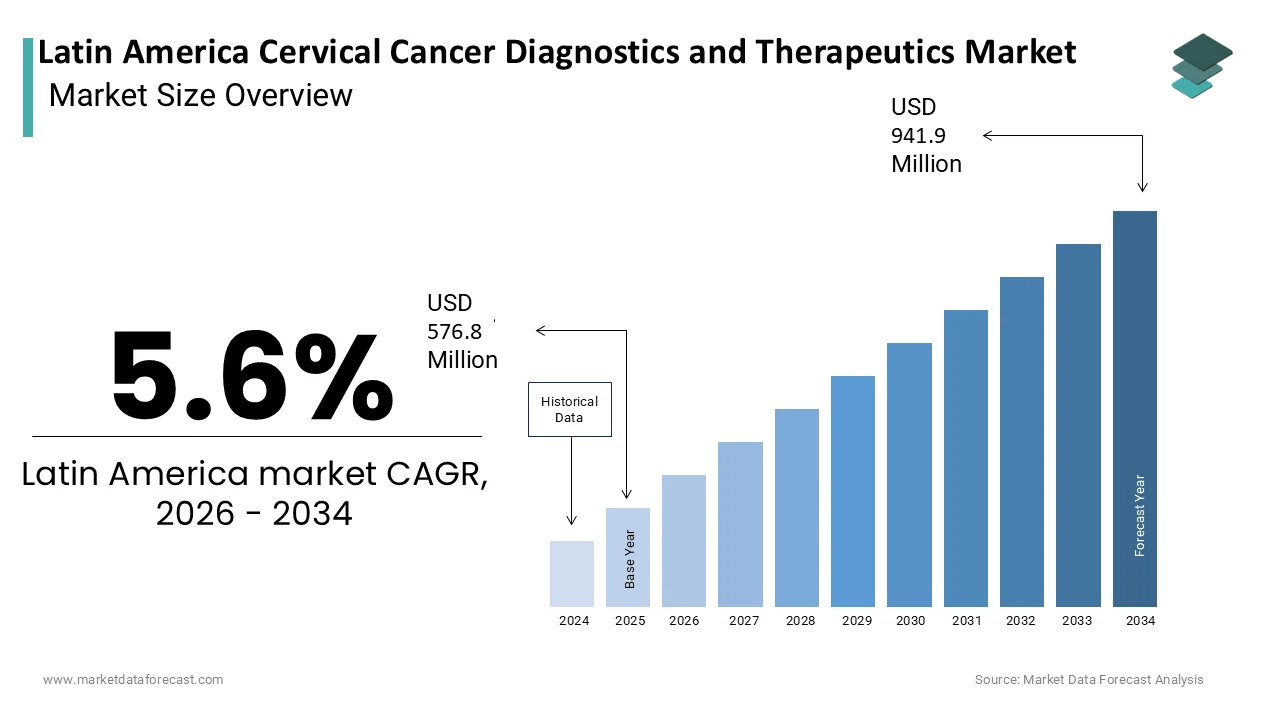
The Latin America cervical cancer diagnostics and therapeutics market size was valued at USD 576.8 million in 2025, is anticipated to reach USD 609.1 million in 2026, and is projected to scale up to USD 941.9 million by 2034, expanding at a compound annual growth rate (CAGR) of 5.60% during the forecast period from 2026 to 2034. Growth is heavily propelled by the rising prevalence of human papillomavirus (HPV) and cervical cancer, expanding awareness initiatives, and government-backed early screening campaigns across the region.
Key Executive Metrics (At-a-Glance)
- 2025 Base Valuation: USD 576.8 Million
- 2026 Current Valuation: USD 609.1 Million
- 2034 Forecast Valuation: USD 941.9 Million
- Compound Annual Growth Rate (CAGR): 5.60% (2026–2034)
- Dominant Diagnostic Segment: Pap Smear Tests and HPV Testing (vital for early-stage screening)
- Dominant Therapy Segment: Surgery and Radiation Therapy
- Dominant End-User Segment: Hospitals and Specialized Laboratories
- Dominant Regional Market: Mexico (holding the largest market share) alongside robust contributions from Brazil and Argentina
Core Market Drivers
- High Burden of Cervical Cancer: High incidence and mortality rates ranking second among women's cancers in Latin America, forcing healthcare authorities to prioritize diagnostics.
- Government & Institutional Campaigns: Public health awareness drives, community screening camps, and cytology-based programs promoting regular testing.
Primary Market Restraints & Challenges
- High Infrastructure & Kit Costs: Substantial expenses tied to advanced diagnostic kit development and specialized healthcare infrastructure.
- Social Stigma & Lack of Awareness: Cultural taboos and inadequate healthcare access in underdeveloped areas hindering timely diagnosis and treatment.
Latin America Cervical Cancer Diagnostics and Therapeutics Market Segmentation Breakdown
| Segment Category | Leading Sub-Segment | Secondary / Growth Sub-Segment |
|---|---|---|
| By Diagnostics Test | Pap Smear Test & HPV Testing | Colposcopy & Cervical Cancer Biopsy |
| By Methods | Cytopathological Method | Molecular Method & Physical Method |
| By Therapies | Surgery & Radiation Therapy | Chemotherapy & Others |
| By End-Users | Hospitals & Laboratories | Clinics & Independent Physicians |
| By Country | Mexico (market leader) | Brazil, Argentina, Chile, and Rest of Latin America |
Major Industry Players Profiled
Key corporations steering the Latin American market include Abbott Diagnostics, Beckman Coulter, Exact Sciences, Fujirebio, Quest Diagnostics, Siemens Healthcare, Epigenomics AG, Randox Laboratories, and Alere.
Latin America Cervical Cancer Diagnostics and Therapeutics Market Size
The Latin America Cervical Cancer Diagnostics and Therapeutics Market is projected to grow from USD 576.8 million in 2025 to USD 609.1 million in 2026 and reach USD 941.9 million by 2034, registering a CAGR of 5.6% during the forecast period from 2026 to 2034.
The cervical cancer diagnostics and therapeutics are an integrated ecosystem of screening technologies, molecular assays, surgical interventions, radiation therapies, and pharmacological treatments dedicated to preventing and managing human papillomavirus-induced malignancies across the region. According to the World Health Organization, cervical cancer remains the fourth most common cancer among women in Latin America, with approximately 36000 new cases diagnosed annually despite being largely preventable through established intervention protocols. Furthermore, many deaths occur yearly from this disease in Latin America, reflecting profound disparities in healthcare infrastructure between urban centers and rural communities.
MARKET DRIVERS
Government-Led Screening Modernization Initiatives Accelerating Diagnostic Adoption
National health ministries are actively transitioning from conventional Pap smear-based screening to high-sensitivity molecular testing by creating sustained demand for advanced diagnostic platforms. The government-led screening modernization initiatives are accelerating the growth of the Latin American cervical cancer diagnostics and therapeutics market. According to the study, the national cervical cancer control program incorporated HPV DNA testing as primary screening in 2024, covering 45 million women aged 25 to 64 years old across all federal states. This policy shift replaces low-sensitivity cytology methods that historically missed 30% of precancerous lesions, according to validation studies published by the National Cancer Institute of Brazil. Similarly, Mexico’s Federal Commission for Protection against Sanitary Risk approved 8 new molecular diagnostic devices in 2025 specifically for decentralized primary care settings, expanding testing capacity beyond tertiary hospitals. These government-driven modernization efforts transform cervical cancer diagnostics from opportunistic clinical encounters into systematic population-level interventions.
Rising Therapeutic Capacity Expansion Through Infrastructure Investment
The expansion of specialized oncology infrastructure with advanced therapeutic equipment and pharmaceuticals is an additional factor promoting the growth of the Latin America cervical cancer diagnostics and therapeutics market. As per the study, Latin America added 28 new external beam radiotherapy units and 15 brachytherapy afterloaders between 2023 and 2025 to address crucial treatment shortages identified in regional cancer control assessments. Brazil’s National Cancer Institute inaugurated 4 new comprehensive cancer centers in 2024 equipped with intensity-modulated radiation therapy systems capable of treating 2000 cervical cancer patients annually per facility. Chile’s Ministry of Health invested 85 million dollars in 2025 to upgrade radiotherapy services in 6 regional hospitals, reducing waiting times for curative treatment from 12 weeks to under 4 weeks according to official service metrics. These infrastructure and formulary expansions convert latent clinical need into realized therapeutic demand by removing physical and financial bottlenecks that historically constrained treatment utilization. Since cervical cancer requires multimodal management combining surgery, radiation, and systemic therapy, each infrastructure investment generates multiplicative demand across complementary product categories, creating sustained growth momentum independent of incidence rate changes.
MARKET RESTRAINTS
Workforce Shortages Limiting Service Delivery Capacity
The deficits in specialized oncology personnel severely constrain the effective utilization of available diagnostic and therapeutic technologies is restricting the growth of the Latin America cervical cancer diagnostics and therapeutics market. According to the Pan American Health Organization, Latin America has only 1.2 oncologists per 100000 population compared to the recommended minimum of 3.5, creating hurdles where installed equipment sits idle due to lack of qualified operators. Pathologist shortages are equally acute, with Mexico reporting only 800 certified cytopathologists serving a population of 130 million, resulting in diagnostic backlogs exceeding 8 weeks in public laboratories, according to the study. Nursing staff trained in brachytherapy procedures number fewer than 200 across Central America, limiting safe implementation of curative intracavitary treatments even when equipment exists. Training pipelines cannot close these gaps quickly since specialist certification requires 4 to 6 years post graduate education.
Geographic Disparities Creating Access Inequities
Extreme concentration of oncology services in metropolitan areas leaves vast rural and periurban populations without timely access to diagnostics or treatment is additionally hindering the growth of the Latin America cervical cancer diagnostics and therapeutics market. As per the research, 65% of radiotherapy facilities in Peru are located in Lima despite only 30% of the national population residing there, forcing patients from Amazonian regions to travel over 1000 kilometers for curative treatment. Bolivia’s Ministry of Health reports that 8 of 9 departments lack functional brachytherapy units entirely, requiring patients to seek cross-border care in Argentina or Chile at personal expense exceeding 3000 dollars per treatment course, according to patient advocacy organizations. Diagnostic deserts are equally problematic, with Guatemala having only 3 functional colposcopy units outside the capital city serving a rural female population of 4.2 million, according to the study. These geographic barriers effectively exclude millions of women from the formal diagnostics and therapeutics market regardless of nominal service availability in national statistics.
MARKET OPPORTUNITIES
Self-Sampling HPV Testing Enabling Decentralized Screening Scale-Up
Self-collected vaginal sampling for HPV testing to overcome cultural and logistical barriers limiting screening coverage in underserved communities is essential to create new opportunities for the growth of the Latin America cervical cancer diagnostics and therapeutics market. According to the World Health Organization, self-sampling demonstrates equivalent sensitivity to clinician-collected specimens when paired with validated molecular assays, enabling non-invasive specimen collection that respects privacy and reduces clinic visit requirements. Regulatory approvals for self-sampling indications expanded to 6 Latin American countries in 2025, creating commercial pathways for manufacturers to develop dedicated collection devices and companion diagnostics, according to the Pan American Regulatory Harmonization Initiative. This opportunity addresses the fundamental constraint of screening access by shifting specimen collection from clinical settings to homes and community spaces, potentially doubling the addressable population for HPV testing while reducing per-capita screening costs.
Artificial Intelligence Assisted Cytology Revitalizing Legacy Screening Programs
Digital pathology platforms incorporating artificial intelligence algorithms to enhance throughput and accuracy of existing cytology infrastructure without replacing established workflows, which also fuels the growth of the Latin America cervical cancer diagnostics and therapeutics market. As per the Brazilian National Cancer Institute, AI assisted triage systems reduced false negative rates in Pap smear interpretation during 2024. Regulatory clearance for AI triage tools was granted by ANVISA and COFEPRIS in early 2025 by creating reimbursement pathways for automated analysis services in public and private sectors. These technologies address workforce shortages by increasing pathologist productivity 3 fold, effectively multiplying diagnostic capacity without proportional staffing increases. Integration with digital slide scanners enables centralized expert review of flagged cases from peripheral sites, bridging geographic quality gaps while preserving local specimen processing. This hybrid human-machine approach revitalizes cytology programs facing obsolescence pressure from molecular testing by improving performance characteristics and operational efficiency, extending the useful life of installed base investments serving millions of women annually.
MARKET CHALLENGES
Fragmented Procurement Systems Undermining Supply Consistency
Disjointed purchasing mechanisms across multiple government entities create chronic supply instability for essential diagnostics and therapeutics and also degrade the growth of the Latin America cervical cancer diagnostics and therapeutics market. According to the Pan American Health Organization Strategic Fund, 14 Latin American countries experienced stockouts of HPV test reagents lasting 3 to 8 months during 2024 due to uncoordinated tender cycles and budget execution delays. Brazil’s municipal-level purchasing autonomy means neighboring cities may use incompatible testing platforms, hindering sample referral networks and creating redundant inventory holdings that expire unused, according to Tribunal de Contas da União findings. Pharmaceutical supply chains face similar fragmentation, with Colombia reporting 22 distinct procurement entities managing oncology drug purchases, complicating demand forecasting and supplier commitment negotiations. Until regional pooled procurement mechanisms or national centralized purchasing authorities are strengthened, supply volatility will persist, undermining clinical program continuity and eroding manufacturer confidence in predictable demand signals necessary for long term market development investments.
Treatment Abandonment Due to Socioeconomic Toxicity
Financial and social burdens associated with cancer care cause premature treatment discontinuation that negates clinical efficacy gains from advanced therapeutics and also hinders the growth of the Latin America cervical cancer diagnostics and therapeutics market. Indirect costs, including companion travel and temporary relocation for extended treatment periods, exceed direct medical expenses by 2.3 times, according to the study. Social support programs cover less than 20% of these nonmedical expenses as documented by regional social protection assessments, leaving patients to choose between treatment adherence and family economic survival. Insurance schemes often reimburse medical procedures but exclude ancillary support services like lodging vouchers or nutritional supplements that enable treatment completion. This socioeconomic toxicity creates a shadow attrition factor invisible in clinical trial data but devastating in real-world effectiveness, because even perfect therapeutic regimens fail when patients cannot sustain engagement through full treatment courses due to impoverishment risks exceeding perceived survival benefits.
REPORT COVERAGE
| REPORT METRIC | DETAILS |
| Market Size Available | 2025 to 2034 |
| Base Year | 2025 |
| Forecast Period | 2026 to 2034 |
| Segments Covered | By Test Type, Methods, Therapies, End-users, and Region. |
| Various Analyses Covered | Global, Regional, and Country-Level Analysis, Segment-Level Analysis, Drivers, Restraints, Opportunities, Challenges; PESTLE Analysis; Porter’s Five Forces Analysis, Competitive Landscape, Analyst Overview of Investment Opportunities |
| Countries Covered | Mexico, Brazil, Argentina, Chile, Rest of Latin America |
| Market Leaders Profiled | Abbott, Diagnostics, Alere, Beckman Coulter, Clinical Genomics, CompanionDx, EDP Biotech, Epigenomics AG, Exactt Sciences Corporation, Fujirebio, Genomic Tree, Metabiomics, OncoCyte (BioTime), , Quest Diagnostics, Randox Laboratories Ltd., Siemens Healthcare, VolitionRx Limited |
SEGMENTAL ANALYSIS
By Test Type Insights
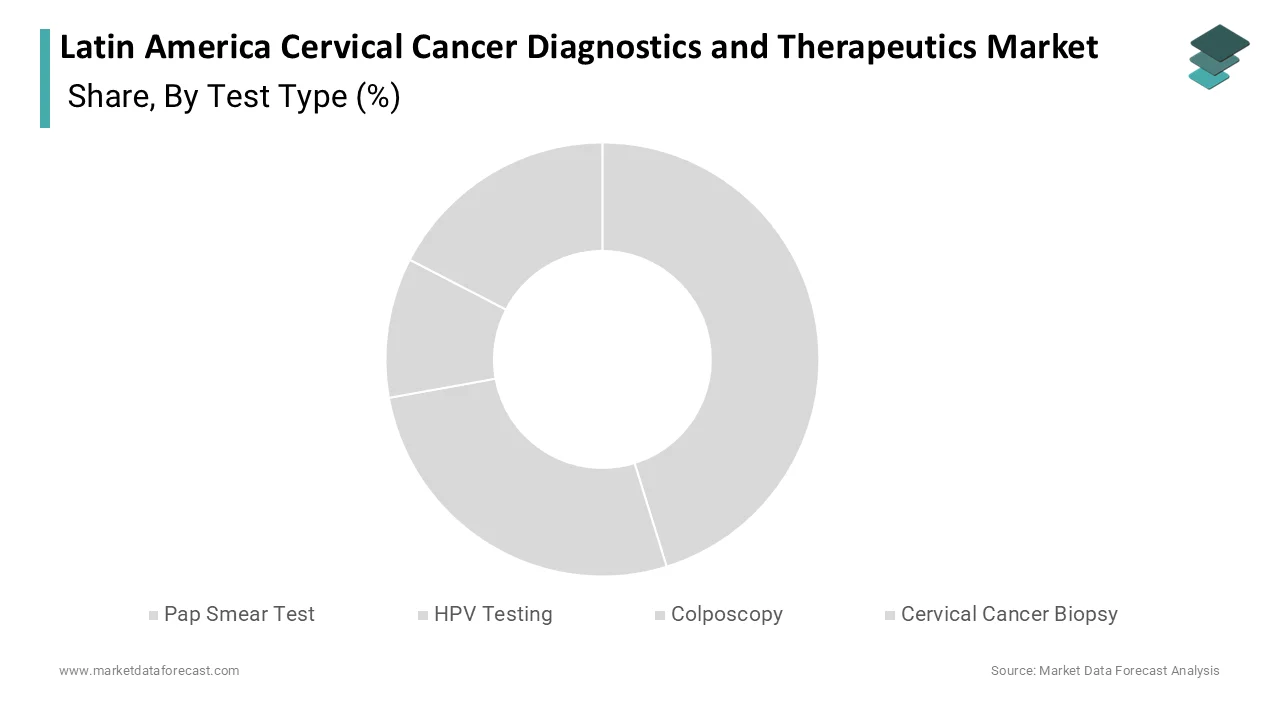
The HPV testing segment held a prominent share of the Latin America cervical cancer diagnostics market in 2025, with governments systematically replacing cytology with molecular methods in national screening programs. According to the Pan American Health Organization, 12 countries in the region have officially adopted HPV DNA testing as the primary screening modality for women aged 30 to 65 years as of 2025, reflecting consensus on superior sensitivity for detecting high-grade precancerous lesions. Mexico’s Norma Oficial Mexicana, updated in 2025, mandates HPV testing every 5 years instead of annual Pap smears, effectively multiplying per capita test consumption while reducing visit frequency, according to the study. Unlike private sectors, where multiple test types coexist based on patient preference, government protocols create winner-take-all dynamics where HPV testing captures entire population cohorts through standardized algorithms that exclude alternative modalities from reimbursed care pathways.
The self-sampling HPV testing segment is likely to grow at the fastest CAGR of 18.7% throughout the forecast period, with the innovative delivery models reaching previously inaccessible populations. According to the World Health Organization, self-collected vaginal specimens demonstrate non-inferior sensitivity to clinician-collected samples when processed with validated PCR assays, enabling safe delegation of specimen collection to patients themselves without compromising diagnostic accuracy. Peru validated mail return logistics for self-samples in 2024 with successful laboratory receipt from remote Andean regions, demonstrating feasibility of reaching geographically isolated populations without constructing new clinical infrastructure. Regulatory approvals expanded to 6 Latin American countries in 2025 by creating commercial pathways for dedicated collection devices and companion diagnostics. This growth reflects a fundamental reimagining of screening delivery rather than incremental technology improvement, addressing persistent coverage gaps by shifting specimen collection from clinical settings to homes and community spaces where barriers of stigma, time costs,s and geographic distance are minimized.
By Age Group Insights
The women above 35 years segment accounted for 46.3% of the Latin America cervical cancer diagnostics and therapeutics market share in 2025, with national screening protocols explicitly targeting this age group for intensive surveillance and intervention. According to the Pan American Health Organization regional guidelines updated in 2024, HPV primary screening is recommended starting at age 30 or 35 depending on the country, with testing intervals of 5 years continuing through age 65, concentrating the majority of screening episodes within this demographic cohort. Mexico’s 2025 screening norms specify HPV testing every 5 years for ages 35 to 64 versus triennial cytology for ages 25 to 34, effectively doubling per capita test consumption in the older segment according to federal regulations. Therapeutic demand similarly concentrates above 35 because cervical cancer incidence peaks between ages 45 and 55 across Latin America, as documented by GLOBOCAN 2025. Since screening eligibility and disease epidemiology both align to concentrate clinical encounters above age 35, this segment inherently commands majority market share through protocol design rather than behavioral preference or access differentials.
The 20 to 35 years age segment is esteemed to grow at the fastest CAGR of 12.4% throughout the forecast period, with the human papillomavirus vaccination cohorts entering screening eligibility, creating new surveillance paradigms. Brazil’s Ministry of Health issued specific guidance in 2025 for managing vaccinated women,n recommending continued HPV testing but with adjusted positivity thresholds to avoid overtreatment of transient infections less likely to progress in immunized populations. Private healthcare systems are proactively offering enhanced screening packages to vaccinated young women seeking reassurance about vaccine effectiveness by creating premium service tiers not present in older demographics. This generational transition creates structural growth as health systems adapt protocols, ls generate evidence,nce and respond to consumer demand for personalized risk assessment among the first protected generation entering reproductive adulthood.
COUNTRY LEVEL ANALYSIS
Brazil Cervical Cancer Diagnostics And Therapeutics Market Analysis
Brazil was the top performer in the Latin America cervical cancer diagnostics and therapeutics market by capturing 38.3% of the share in 2025 due to its universal health system scale and advanced molecular screening implementation. According to the study, the national cervical cancer control program screened 11.2 million women in 2025 through SUS facilities, representing the largest organized screening effort in the developing world and generating massive public procurement volumes for HPV tests and treatment services. The country operates 287 accredited oncology centers equipped with radiotherapy and brachytherapy capabilities, providing therapeutic infrastructure density unmatched elsewhere in the region, according to the study. Research institutions like Fundacao Oswaldo Cruz continuously generate local validation data supporting protocol adaptations to Brazilian epidemiological realities, reducing reliance on extrapolated international evidence. Combining universal access principles with technological modernization at aa continentalscale by creating benchmark effects that influence neighboring countries’ policy decisions and supplier strategies throughout Latin America.
Mexico Cervical Cancer Diagnostics And Therapeutics Market Analysis
Mexico cervical cancer diagnostics and therapeutics market growth was ranked second, holding 19.6% of the share in 2025, with health system governance and strong private sector participation. Recent updates to Norma Oficial Mexicana in 2025 mandating HPV primary screening every 5 years for women aged 35 to 64 generated immediate demand surges for molecular diagnostics across both public and private channels,s according to federal procurement records. Private laboratory chains expanded HPV testing menus in 2024 with direct-to-consumer marketing campaigns targeting educated urban women by accelerating adoption outside government program timelines. Pharmaceutical access improved significantly when COFEPRIS approved pembrolizumab for recurrent cervical cancer in late 2024, though reimbursement remains inconsistent across insurance schemes.
Argentina Cervical Cancer Diagnostics And Therapeutics Market Analysis
Argentina cervical cancer diagnostics and therapeutics market growth is likely to grow with the decentralized provincial health systems and recent economic volatility affecting import-dependent supply chains. According to the study, the country reported 4200 new cervical cancer cases in 2025, with incidence rates varying 3-fold between Buenos Aires province and northern provinces like Formosa, reflecting profound subnational inequities in preventive service access. Bank exchange rate data. Brachytherapy availability remains critically limited,d with only 12 functional units serving 46 million people, forcing many patients to travel hundreds of kilometers for curative treatment or accept suboptimal external beam monotherapy. Recent regulatory harmonization efforts with Brazil through MERCOSUR agreements facilitated faster approval of HPV assays manufactured regionally, partially mitigating import dependency vulnerabilities.
Chile Cervical Cancer Diagnostics And Therapeutics Market Analysis
Chile cervical cancer diagnostics and therapeutics market growth is likely to be driven by the advanced technology adoption and comprehensive outcome tracking. As per the study, the country achieved 82% screening coverage in 2025 among eligible women aged 25 to 64, the highest rate in Latin America, enabled by integrated electronic health records and proactive invitation systems absent elsewhere in the region. Fonasa national health insurance began reimbursing self-sampling HPV kits in January 2025 at parity with clinician-collected tests, pioneering decentralized screening models now being replicated across neighboring countries, according to the study. Chile operates 18 radiotherapy centers with brachytherapy capability serving 19 million people, achieving better equipment-to-population ratios than regional peers, as per the study. Private ISAPRE insurers cover next-generation sequencing for recurrent cervical cancer patients, creating early adoption pathways for precision oncology technologies before public sector inclusion.
COMPETITIVE LANDSCAPE
Competition in the Latin American cervical cancer diagnostics and therapeutics market features intense rivalry among multinational corporations, regional specialists,s and generic manufacturers vying for position across fragmented national jurisdictions with divergent regulatory frameworks, reimbursement policies, and epidemiological priorities. Multinational diagnostics firms leverage advanced molecular platforms and global research capabilities to dominate HPV testing segments, while regional laboratories compete through superior local distribution networks,s customized service offerings, gs and faster turnaround times tailored to public sector tender requirements. Therapeutic competition intensifies as biosimilar entrants challenge originator biologics following patent expirations, forcing price compression and differentiation through patient support programs, clinical education, and real-world evidence generation demonstrating comparable outcomes in Latin American populations. Innovation races focus increasingly on self-sampling technologies, artificial intelligence-assisted cytology, and fertility-preserving interventions, as elimination targets drive demand for solutions addressing access barriers rather than incremental performance improvements. Consolidation activity accelerates as companies seek portfolio complementarities, geographic diversification, and scale advantages to serve integrated customers demanding comprehensive solutions spanning prevention,n diagnosis, treatment,t and survivorship care.
KEY MARKET PLAYERS
Some of the companies that are playing a dominating role in the Latin America Cervical Cancer Diagnostics and Therapeutics Market include:
- Abbott Diagnostics
- Alere
- Beckman Coulter
- Clinical Genomics
- Companion Dx
- EDP Biotech
- Epigenomics AG
- Exact Sciences Corporation
- Fujirebio
- Genomic Tree
- Metabiomics
- OncoCyte (BioTime)
- Quest Diagnostics
- Randox Laboratories Ltd.
- Siemens Healthcare
- VolitionRx Limited
TOP LEADING PLAYERS IN THE MARKET
- Roche Diagnostics maintains significant involvement in the Latin American cervical cancer diagnostics market through comprehensive HPV testing platforms integrated into national screening programs across Brazil, Mexico, and Chile. The company recently launched cobas HPV assays with self-sampling validation specifically for Latin American populations in 2024, enabling decentralized screening expansion aligned with Pan American Health Organization elimination targets. Their digital pathology solutions integrate with regional electronic health records, facilitating longitudinal patient tracking and quality monitoring essential for program evaluation. These strategic initiatives reinforce commitment to addressing unique epidemiological and operational challenges while supporting sustainable cervical cancer control efforts across diverse healthcare systems without relying solely on product sales but embedding within broader public health ecosystem development initiatives throughout the region.
- Hologic Inc contributes substantially to the Latin American cervical cancer diagnostics market through ThinPrep liquid-based cytology and Aptima HPV assay technologies widely adopted in private laboratories and reference centers. The company recently expanded manufacturing capacity in Mexico during 2025 to reduce supply chain vulnerabilities affecting reagent availability amid import disruptions common across the region. Hologic collaborated with Argentine universities to validate Genotype Plus assays under local HPV prevalence conditions, ns generating regionally relevant clinical evidence supporting regulatory approvals and formulary inclusion decisions. Educational partnerships with nursing associations trained 800clinicians in colposcopy-guided biopsy techniques, improving diagnostic accuracy in underserved areas, where specialist shortages limit service quality. These actions demonstrate a long-term market development focus through localized production knowledge transfer and clinical validation rather than transactional relationships, ensuring sustained engagement with healthcare providers.
- Merck Sharp Dohme plays a vital role in the Latin American cervical cancer therapeutics market through pembrolizumab immunotherapy indicated for recurrent or metastatic disease following chemotherapy failure. The company recently secured reimbursement approval from Colombia's National Institute of Health Technology Assessment in late 2024, making targeted therapy accessible to insured patients previously excluded due to cost barriers exceeding annual household income. Merck established patient assistance programs in Brazil and Mexico covering treatment costs for uninsured women meeting clinical eligibility criteria, reducing financial toxicity that drives abandonment rates, according to regional oncology studies. Clinical trial sites were expanded to Peru and Chile in 2025, generating local efficacy data supporting regulatory submissions and physician confidence in immunotherapy protocols adapted to Latin American patient populations. These efforts strengthen therapeutic access through affordability mechanisms and evidence generation addressing socioeconomic and clinical barriers simultaneously, while positioning the company as a partner in comprehensive cancer care beyond pharmaceutical supply alone.
TOP STRATEGIES USED BY KEY MARKET PARTICIPANTS
Key players in the Latin America cervical cancer diagnostics and therapeutics market prioritize localization strategies over global standardization to address unique epidemiological profiles, regulatory environments, nd health system structures across diverse national contexts. Companies invest in regional manufacturing facilities and technology transfer agreements to reduce currency exposure, mitigate importvolatilityt,y, and ensure supply continuity amid logistical disruptions affecting cross-border procurement reliability. Strategic partnerships with ministries of health, academic institutions,s and professional societies generate locally validated clinical evidence supporting regulatory approvals, formulary inclusion, and protocol integration that global trial data cannot provide for specific population characteristics. Technical service expansion targets workforce capacity gaps through training programs for laboratory technicians,,s nurses, and physicians,s building sustainable human capital necessary for safe, effective technology utilization beyond initial equipment installation. Portfolio adaptation included developing self-sampling-compatibleays, fertility-sparing surgical devices, and affordable generic therapeutics tailored to resource-constrained settings where premium products face adoption barriers. Public-private collaboration models enable companies to participate in national elimination plans, aligning commercial objectives with public health goals,s creating shared value propositions that transcend traditional vendor-purchaser relationships.
MARKET SEGMENTATION
This research report on the Latin America cervical cancer diagnostics and therapeutics market has been segmented and sub-segmented into the following categories.
By Test Type
- Pap Smear Test
- HPV Testing
- Colposcopy
- Cervical Cancer Biopsy
By Methods
- Molecular Method
- Cytopathological Method
- Physical Method
By Therapies
- Surgery
- Radiation Therapy
- Chemotherapy
- Others
By End-users
- Hospitals
- Laboratories
- Independent Physicians
- Clinics
- Others
By Country
- Mexico
- Brazil
- Argentina
- Chile
- Rest of Latin America