- Product Description Description
- Table of Contents TOC
- List of Table & Figure LOT
- Get Free Sample PDF Sample PDF
Market Size, 2025
$287.65 MnMarket Estimate, 2026
$310.09 MnMarket Forecast, 2034
$565.51 MnCAGR, 2026–2034
7.80%Executive Summary: Latin America Guarana Market
- Market Scope: Comprehensive regional market analysis of the Latin American guarana sector covering product forms, application areas, and country-level dynamics across the functional beverage, food, and supplement industries.
- Market Valuation: Valued at USD 287.65 million in 2025, estimated at USD 310.09 million in 2026, and projected to reach USD 565.51 million by 2034, registering a robust CAGR of 7.80% from 2026 to 2034.
- Primary Growth Drivers: Rising consumer awareness of health benefits (stimulant properties, antioxidant/disease management potential); high demand for guarana-infused energy drinks and functional health beverages; and increased usage in weight-management and performance-enhancing dietary supplements. Key market restraints include intense competition from other global "superfoods."
Key Market Segment Metrics (2026–2034)
| Category | Leading Segment / Position | Fastest-Growing Segment |
|---|---|---|
| By Form | Liquid Form (holds the largest market share due to high solubility and ease of integration in beverages) | Powdered Form |
| By Application | Beverages / Energy Drinks (dominates the market share due to consumer demand for health and performance drinks) | Dietary Supplements & Cosmetics |
| By Country | Brazil (native production hub with massive regional market share) | Argentina, Chile, & Peru (rapidly expanding consumption centers) |
Major Market Players & Market Structure
Market Structure: A dynamic regional landscape led by major extract producers and beverage conglomerates focusing on product innovation, functional ingredient blending, and strategic supply chains centered around the Amazon basin.
Key Companies: Herboflora, Iris Trade Inc., Duas Rodas Industrial, The Green Labs LLC, AR De Sousa Ribeiro, Natural Amazon Herbs Producao De Extratos Ltd, Nutra Green Biotechnology Co., Ltd., Vitaspice, Ambev, and Prover Brasil.
 Download Free Sample Report
Latin America Guarana Market Size
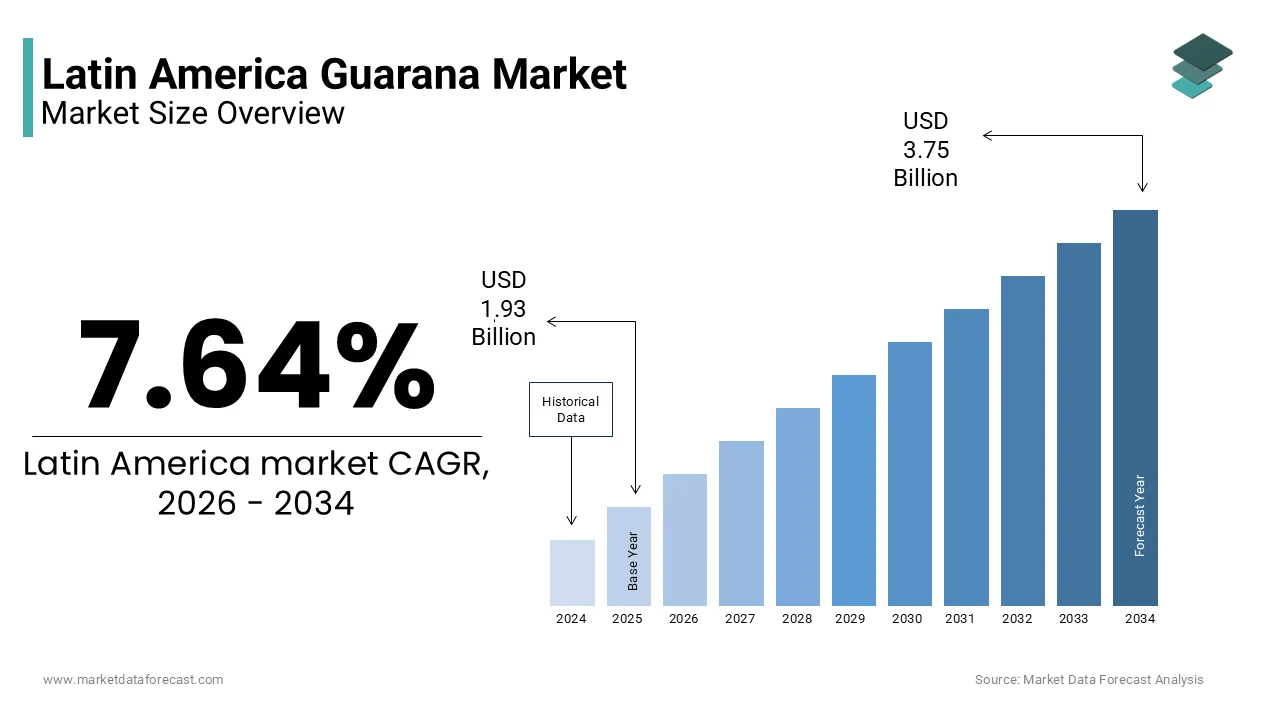
The Latin America guarana market size was valued at USD 287.65 million in 2025 and is expected to reach USD 565.51 million by 2034 from USD 310.09 million in 2026. The market is projected to grow at a CAGR of 7.80%.
Guarana (Paullinia cupana) is a Brazilian climbing plant native to the Amazon Basin that is famous for its seeds, which act as a highly potent natural stimulant. This market covers guarana powder, extracts, syrups and seeds utilised primarily for their high caffeine content and antioxidant properties. According to the Brazilian Institute of Geography and Statistics (IBGE) and the Food and Agriculture Organisation (FAO), Brazil is the world's largest producer and virtually sole commercial supplier of guarana, producing several thousand tonnes of dried seeds annually. According to the Pan American Health Organisation / World Health Organisation, 67.5% of adults in the Americas are overweight or obese, with regional adult obesity rates tracked across member states rather than documented as driving guarana consumption. These facts highlight the dual role of guarana as both a cultural staple and a functional health solution. The market is characterised by strong domestic consumption in Brazil alongside growing export demand for natural energy ingredients. Supply chains are deeply rooted in traditional harvesting practices in the state of Amazonas. Regulatory bodies enforce strict quality standards for caffeine labelling in beverages. Consumer education regarding the sustained energy release of guarana compared to synthetic caffeine is increasing. The sector balances traditional medicinal use and modern industrial applications. Economic factors influence pricing, but cultural affinity ensures steady baseline demand. Innovation focuses on standardised extracts for consistent potency. Distribution networks expand through both local markets and international trade channels.
MARKET DRIVERS
Cultural Heritage and Traditional Consumption Patterns
Cultural heritage and traditional consumption patterns fundamentally drive the growth of the Latin American guarana market. According to the Brazilian Institute of Geography and Statistics (IBGE) National Food Consumption Surveys, fruit and botanical consumption metrics are systematically tracked via individual 24-hour dietary recalls across national macroregions. This deep-seated cultural integration ensures that guarana remains a daily staple rather than a fleeting trend. As per sources, the traditional agricultural and domestic knowledge of the Sateré-Mawé people in the Maués region, who domesticated the plant, has achieved formal legal recognition, while the broader state-level intangible cultural heritage designations protect traditional knowledge and indigenous cosmologies. Consumers view guarana as a symbol of regional identity and pride, which fosters brand loyalty and consistent purchasing behaviour. Traditional remedies using guarana for fatigue and headaches are passed down through generations, maintaining relevance in modern healthcare practices. Local festivals and community events often feature guarana-based products, strengthening social bonds around the crop. Retailers in rural and urban areas stock guarana prominently due to its ubiquitous appeal. Marketing campaigns leverage historical narratives to connect with emotionally engaged consumers. This cultural lock-in effect protects the market from substitution by imported energy sources. The social ritual of sharing guarana drinks enhances its perceived value. Manufacturers align their branding with indigenous traditions to authenticate their products. This cultural foundation provides a resilient base for market stability.
Rising Demand for Natural Energy Alternatives
Rising demand for natural energy alternatives significantly fuels the expansion of the Latin American guarana market. According to studies, regional wellness metrics track changes in consumer habits away from synthetic additives toward natural alternatives to mitigate negative metabolic impacts. Guarana offers a natural source of caffeine with additional antioxidants and tannins, which appeal to health-conscious individuals. As per reports, younger demographics are actively exploring functional alternative botanicals and natural adaptogens to align with wellness preferences. Guarana’s slower release of caffeine provides sustained energy without the sudden crash, making it attractive to students and professionals. Fitness enthusiasts prefer guarana supplements for pre-workout energy due to its thermogenic properties. Retailers expand their natural energy sections to include guarana capsules, powders, and bars. Marketing efforts emphasize the clean label aspect of guarana compared to artificial energy drinks. Product innovation focuses on combining guarana with other adaptogens for enhanced effects. This health driven demand creates new revenue streams beyond traditional soda applications. The perception of guarana as a wholesome energiser supports premium pricing strategies. Educational campaigns highlight the scientific benefits of natural stimulation. This trend aligns with broader wellness movements in the region.
MARKET RESTRAINTS
High Caffeine Content Raises Regulatory and Health Concerns
High caffeine content in guarana raises regulatory and health concerns that restrict expansion in certain segments of the Latin America guarana market. According to research, there are no regulatory caffeine-specific labelling guidelines or mandatory quantitative caffeine disclosures established for conventional foods and beverages by the National Health Surveillance Agency (ANVISA) in Brazil. As per studies, excessive caffeine consumption is documented to cause adverse toxicity symptoms, including tachycardia, arrhythmias, anxiety, agitation, and restlessness. The health scrutiny limits the inclusion of guarana in products targeted at children or pregnant women. Regulatory bodies in neighbouring countries are adopting similar restrictions, creating fragmentation in regional trade standards. Consumers increasingly scrutinise ingredient lists for total caffeine content from all sources, which may deter usage of multiple guarana products. Medical associations advise moderation in stimulant consumption, affecting marketing claims. Retailers face pressure to limit shelf space for high caffeine items in school zones. Manufacturers must invest in precise dosing technologies to ensure safety and compliance. Negative media coverage regarding energy drink health risks sometimes conflates with natural guarana products. This association creates reputational challenges for the entire category. Reformulation to lower caffeine levels may compromise efficacy and consumer satisfaction. The balance between potency and safety remains a delicate operational challenge. Legal uncertainties in different jurisdictions hinder cross-border product launches.
Climate Vulnerability Threatens Supply Stability
Climate vulnerability threatens the supply stability of guarana due to its specific ecological requirements in the Amazon, which slows down the growth of the Latin American market. As per sources, rising temperatures, land-use degradation, and altered rainfall patterns create severe vulnerabilities for agricultural systems and biome stability across the Amazon basin. Guarana vines are sensitive to drought and extreme heat, which affect fruit set and quality. According to the Brazilian Agricultural Research Corporation (Embrapa), guarana is socioeconomically vital as a typical family farming activity heavily cultivated on small properties in the state of Amazonas, where management challenges dictate production potential. The climatic instability leads to significant annual fluctuations in raw material availability and prices. Severe weather events such as floods disrupt harvesting schedules and damage processing facilities. Higher production costs are passed on to manufacturers, affecting final product pricing. Farmers face financial risks that discourage investment in improved agricultural practices. Supply chain disruptions delay deliveries to processors and exporters. Quality consistency suffers when crops are stressed by environmental factors. Manufacturers struggle to secure reliable long-term contracts due to unpredictability. This volatility hinders strategic planning and inventory management. Resilience building becomes a critical challenge for sector sustainability. Investment in climate-adaptive farming techniques is slow due to high costs.
MARKET OPPORTUNITIES
Expansion into Functional Foods and Beverages
Expansion into functional foods and beverages creates significant opportunities for the Latin American guarana market. This strategic shift extends the ingredient's utility well beyond traditional soda applications. According to the Speciality Food Association, the global functional food market is growing rapidly as consumers seek health benefits from everyday items. Manufacturers are incorporating guarana extracts into energy bars, snacks, juices and plant-based meats to provide natural stimulation. As per the Institute of Food Technologists, consumer demand for clean-label energy formulations utilising natural plant-derived sources like green tea extract, yerba maté, and guarana has driven strong corporate innovation and market interest. This trend allows guarana to reach consumers who avoid traditional supplements or sodas. Retailers allocate shelf space to innovative guarana-infused products in mainstream aisles. Marketing campaigns highlight the dual benefit of taste and functional energy. Product innovation focuses on improving solubility and flavour compatibility with other ingredients. Partnerships with food startups accelerate the development of novel applications. Export opportunities increase for unique functional food formulations. Consumer education campaigns highlight the versatility of guarana in cooking. This trend transforms guarana from a niche ingredient to a mainstream functional additive. Innovation sustains relevance in a market increasingly focused on convenience. Brands that lead in food integration gain competitive advantage. The diversification reduces dependence on the beverage sector alone.
Growth of Organic and Sustainable Certification
Growth of organic and sustainable certification drives premiumization and attracts ethically conscious consumers in the Latin American guarana market. According to the Organic Trade Association, market demand for certified organic botanicals has driven massive expansion under compliance programs like the Strengthening Organic Enforcement (SOE) rule to protect purity and prevent fraud. Certified organic guarana commands higher price margins and differentiates brands in a crowded marketplace. As per reports, the Rainforest Alliance and similar certifications build trust among discerning buyers concerned about Amazon conservation. Retailers allocate premium shelf space to certified organic variants to capture high-value sales. Manufacturers invest in transparent supply chains to verify organic claims and ensure fair trade practices. Marketing efforts emphasise the eco-friendly nature of wild-harvested guarana compared to intensive agriculture. Consumer education campaigns highlight the sustainability benefits of supporting indigenous communities. Export opportunities to Europe and North America increase for high-quality Latin American organic guarana. Packaging designs reflect premium positioning through minimalist and recyclable materials. This trend transforms guarana from a commodity to a lifestyle choice. Innovation in sustainable packaging aligns with environmental values. Brands that lead in ethical sourcing gain consumer loyalty. The focus on sustainability supports long-term profitability despite higher costs.
MARKET CHALLENGES
Lack of Standardisation in Extract Potency
Lack of standardisation in extract potency creates quality inconsistency and consumer confusion in the Latin America guarana market. According to the United States Pharmacopoeia (USP), pure dried seeds of Paullinia cupana are standardised as containing up to 6% native caffeine content, while commercial Guarana Seed Dry Extract is standardised to contain a maximum threshold of not more than 12% caffeine. Manufacturers struggle to maintain consistent dosage levels in supplements and beverages without advanced standardisation techniques. As per research, accurate disclosure of active components on product labelling is widely recognised as essential to safeguard consumer safety and transparency. Variability in potency affects clinical study results and medical recommendations. Retailers face difficulties in comparing products from different suppliers due to a lack of uniform metrics. Consumer trust erodes when products fail to deliver expected energy benefits. Small producers lack resources to invest in high-precision extraction and testing equipment. Quality control costs increase for brands attempting to self-regulate standards. Regulatory bodies may impose stricter testing requirements, raising entry barriers. The absence of industry-wide standards hinders professional adoption in pharmaceutical applications. Marketing claims become difficult to substantiate without consistent data. This technical challenge limits the expansion into high-value medical sectors. Investment in standardised reference materials is needed for industry alignment.
Competition from Synthetic Caffeine and Other Stimulants
Competition from synthetic caffeine and other stimulants holds back the expansion of the Latin American guarana market. This challenges the market share of natural guarana in the energy sector. According to research, synthetic caffeine is highly cost-effective and provides predictable, consistent dosing parameters compared to natural plant-derived extracts. Large beverage manufacturers often prefer synthetic options to reduce costs and simplify supply chains. Guarana faces pressure to justify its premium price through superior health benefits, which requires extensive consumer education. Marketing budgets for natural ingredients are often smaller than those for established synthetic brands. Retailers prioritise high turnover items, which may favour cheaper alternatives. Product developers must demonstrate clear advantages of guarana over synthetic options to secure formulation slots. The perception of synthetic caffeine as effective and safe persists among many consumers. Price sensitivity in economic downturns shifts preference toward lower-cost stimulants. Innovation in natural blends must compete with aggressive pricing of synthetic rivals. This economic disparity limits the penetration of guarana in budget segments. Strategic partnerships are needed to highlight the unique value proposition of natural sources.
 REPORT COVERAGE
| REPORT METRIC | DETAILS |
| Market Size Available | 2025 to 2034 |
| Base Year | 2025 |
| Forecast Period | 2026 to 2034 |
| CAGR | 7.64% |
| Segments Covered | By Form, Application, and Region |
| Various Analyses Covered | Global, Regional, & Country Level Analysis; Segment-Level Analysis; DROC; PESTLE Analysis; Porter’s Five Forces Analysis; Competitive Landscape; Analyst Overview of Investment Opportunities |
| Regions Covered | Latin America include Brazil, Argentina, Mexico, and the Rest of Latin America |
| Market Leaders Profiled | Herboflora, Iris Trade Inc., Coca-Cola, Duas Rodas Industrial, The Green Labs LLC, AR De Sousa Ribeiro, Beraca GmbH, Natural Amazon Herbs Producao De Extratos Ltd, Nutra Green Biotechnology Co., Ltd., Vitaspice, Ambev, and Prover Brasil |
SEGMENTAL ANALYSIS
By Form Insights
The liquid form segment dominated the Latin America guarana market and accounted for a substantial share in 2025. This dominance was driven by its deep integration into the regional beverage culture and immediate consumer convenience. Moreover, this segment encompasses guarana syrups, soft drinks, energy shots and liquid extracts that are ready for consumption without preparation. The popularity of guarana soda in Brazil serves as the primary anchor for this dominance, creating a massive baseline demand. Consumers prefer liquid formats for their ease of use and rapid absorption of caffeine, which provides quick energy relief. The established bottling infrastructure in major economies supports efficient distribution and widespread availability. Retailers prioritise liquid products because they drive high-volume sales and frequent repeat purchases. The cultural habit of consuming cold beverages in tropical climates further reinforces this preference. Marketing campaigns heavily feature refreshing liquid guarana drinks appealing to all age groups. Industrial manufacturers favour liquid forms for blending with other functional ingredients in energy drinks. The segment benefits from strong brand loyalty built over decades of market presence. Innovation focuses on flavour diversification and sugar reduction to meet health trends. Liquid guarana remains the most recognisable and accessible form for the general public. Its dominance is sustained by habitual consumption patterns and social acceptance.
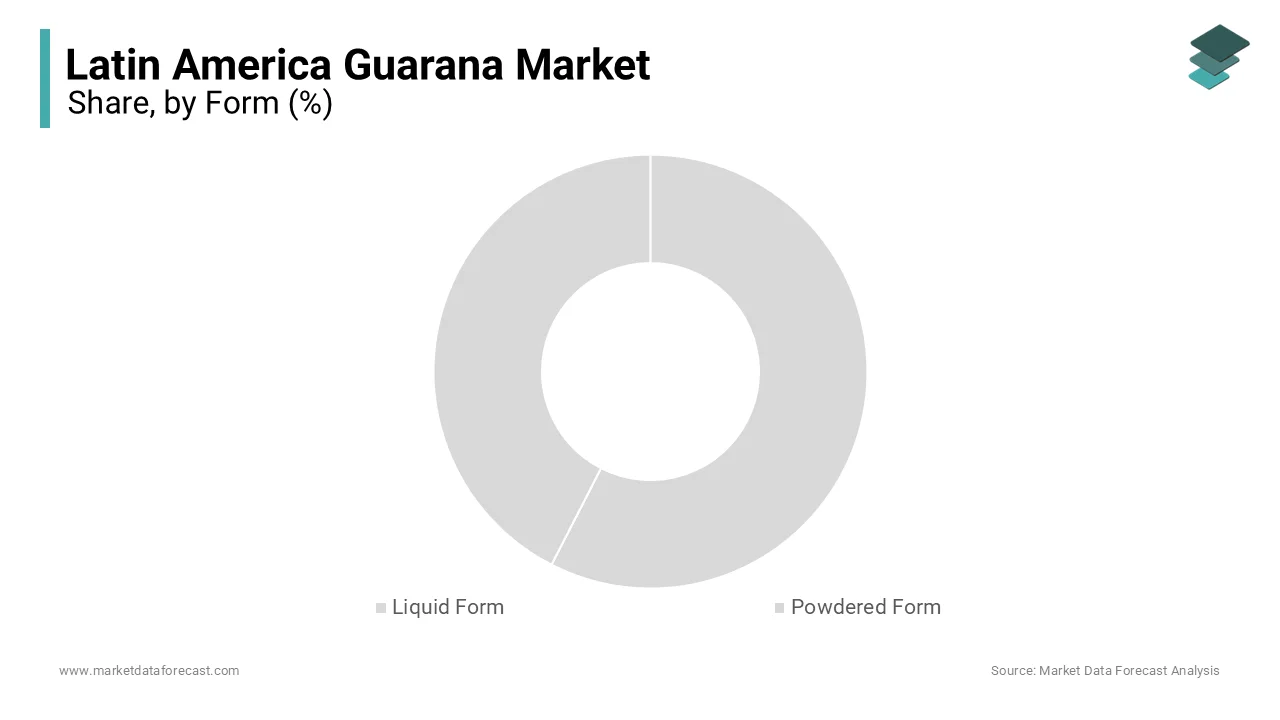
Cultural preference for ready-to-drink beverages fundamentally drives the domination of the liquid form segment in the Latin America Guarana Market. As per sources, the average per capita consumption of soft drinks in Brazil is estimated between 80 and 95 litres annually. This high consumption rate reflects a deeply ingrained social habit of drinking cold sweetened beverages during meals and social gatherings. According to the Pan American Health Organisation, sugary drink consumption remains high in the region despite health warnings, indicating the strength of traditional preferences. Guarana syrup mixed with water or soda is a staple in households across the Amazon and urban centres alike. Consumers value the convenience of opening a bottle rather than preparing powders or supplements. Street vendors and restaurants universally offer liquid guarana options, ensuring constant visibility. The sensory experience of carbonated or sweetened liquid guarana is associated with refreshment and joy. Marketing leverages these emotional connections to maintain market leadership. New entrants struggle to displace established liquid brands due to this cultural lock in. The format aligns perfectly with the hot climate and active lifestyle of the population. This behavioural pattern ensures stable and predictable demand for liquid forms.
The powdered form segment is estimated to register the fastest CAGR of 7.5% from 2026 to 2034 due to the rising popularity of dietary supplements and functional foods among health-conscious consumers. Powdered guarana offers versatility for mixing into smoothies, juices, and baked goods, appealing to fitness enthusiasts. The trend toward clean label and natural ingredients favours pure powder formats over processed liquids. Consumers appreciate the ability to control dosage and avoid added sugars found in traditional sodas. E-commerce platforms facilitate the sale of powdered supplements, reaching niche audiences effectively. The segment benefits from higher profit margins compared to commoditised beverage products. Marketing emphasises the potency and purity of powdered guarana for athletic performance. Innovation in microencapsulation improves solubility and taste masking. This growth trajectory reflects a shift toward personalised nutrition and wellness. The segment outpaces liquid forms due to its alignment with modern health lifestyles.
Rising fitness culture and supplement adoption significantly fuel the growth of powdered guarana in Latin America. According to the Health & Fitness Association (formerly IHRSA), global gym memberships climbed by 6% in 2024 as regional markets show high active consumer intent for physical well-being. Athletes and fitness enthusiasts prefer powdered guarana for pre-workout routines due to its customizable dosage and rapid mixing capabilities. As per the Global Wellness Institute, the sports nutrition market in the region is expanding rapidly as consumers invest in physical well-being. Powdered form allows for easy integration into protein shakes and energy blends without extra calories. Social media influencers promote powdered guarana as a natural alternative to synthetic pre-workout powders. Retailers expand their sports nutrition sections to include pure botanical powders. Consumer education highlights the sustained energy release of guarana powder compared to caffeine pills. This demographic shift creates a dedicated customer base willing to pay for quality. The convenience of carrying powder packets supports active lifestyles. Product innovation focuses on flavoured powders to enhance palatability. The segment captures value from the booming fitness industry.
By Application Insights
The carbonated drinks segment led the Latin America guarana market and captured a significant share in 2025. This segment is dominated by major beverage brands that have marketed guarana soda as a national symbol for decades. The sweet, fizzy taste appeals to a broad demographic ranging from children to adults. Retailers dedicate significant shelf space to guarana sodas, ensuring high visibility and accessibility. The segment benefits from massive production volumes and established distribution networks. Consumer loyalty to traditional brands drives consistent sales regardless of economic fluctuations. Marketing campaigns leverage nostalgia and cultural pride to maintain relevance. The affordability of carbonated drinks makes them accessible to all income levels. Innovation focuses on sugar-free and low-calorie variants to address health concerns. The segment serves as the primary entry point for new consumers to experience guarana. Its dominance is reinforced by heavy advertising and sponsorship of local events. Carbonated guarana remains the default choice for casual refreshment.
Deep-rooted brand loyalty and tradition fundamentally sustain the dominance of carbonated drinks in the guarana market. According to research, guarana-flavoured sodas comprise at least one-quarter (25%) of Brazil's total carbonated soft drink market share. Generations of consumers have grown up drinking guarana soda, creating strong emotional connections to specific brands. As per studies, guarana soda functions as a major national icon in Brazil, reflecting deep-rooted patriotic marketing and historical Amazonian identity. Consumers often reject substitutes due to attachment to familiar tastes and branding. Retailers prioritise stocking major guarana soda brands to meet expected demand. Marketing efforts emphasise heritage and authenticity to strengthen brand equity. Family gatherings and celebrations frequently feature guarana soda as a standard beverage. This cultural ritual ensures steady consumption across different occasions. New competitors struggle to break through this barrier of loyalty. The segment benefits from word-of-mouth recommendations within communities. Tradition acts as a powerful moat protecting market share.
The dietary supplements segment is anticipated to witness the fastest CAGR of 8.2% during the forecast period, owing to increasing health consciousness and the demand for natural energy solutions. Consumers seek guarana capsules, tablets, and powders for cognitive enhancement and weight management. The rise of e-commerce facilitates access to specialised supplement brands. Regulatory support for natural health products encourages market entry. Marketing emphasises scientific benefits such as improved focus and metabolism. The segment attracts older demographics concerned with mental agility. Innovation in delivery formats like gummies expands appeal. Retailers expand wellness sections to include guarana supplements. This trend reflects a shift from recreational consumption to therapeutic use. The segment outpaces beverages due to higher value per unit.
Increasing health consciousness and wellness trends significantly drive the growth of guarana dietary supplements. According to the Pan American Health Organisation, chronic disease prevention is a top priority for consumers, leading to higher spending on preventive health products. Guarana supplements are marketed as natural alternatives to synthetic stimulants, appealing to health-aware individuals. As per the Global Wellness Institute, the mental wellness landscape is expanding rapidly as people seek cognitive support. Consumers prefer supplements that offer controlled dosage without added sugars or calories. Pharmacies and health stores dedicate shelf space to guarana capsules and extracts. Medical professionals occasionally recommend guarana for fatigue management. Social media campaigns educate users on the benefits of standardised extracts. This informed consumer base drives demand for high-quality supplements. The segment benefits from the credibility of clinical research. Product innovation focuses on combining guarana with other nootropics. The trend toward holistic health supports long-term growth.
REGIONAL ANALYSIS
Brazil Market Analysis
Brazil was the top performer in the Latin America guarana market and occupied a commanding share in 2025. The nation secures this dominant position by serving as the primary producer and consumer of the crop. According to the Brazilian Institute of Geography and Statistics (IBGE), Brazil produces virtually the entire global commercial supply of guarana, with the state of Bahia leading national production volume (over 60%–70%) and the state of Amazonas holding the largest cultivated area and historical origin. As per the Brazilian Institute of Geography and Statistics (IBGE), domestic consumption of guarana products remains robust, driven by cultural traditions. Major beverage companies dominate the market with iconic guarana soda brands. Government initiatives support sustainable harvesting practices to protect Amazon biodiversity. The market status is mature, with high brand recognition and saturation. Export activities are growing as international demand for natural caffeine rises. Local farmers benefit from fair trade certifications and cooperative models. Urban consumers increasingly seek organic and premium guarana variants. The regulatory environment ensures strict quality control for caffeine content. Innovation focuses on health-oriented products like sugar-free sodas and supplements. The market benefits from strong infrastructure and distribution networks. Economic stability supports consistent purchasing power. Brazil sets the global standard for guarana quality and pricing. Cultural pride sustains domestic demand despite health trends.
Mexico Market Analysis
Mexico maintains a significant position in the Latin American guarana market due to its large population and growing interest in functional beverages. The country imports substantial quantities of guarana extract for use in energy drinks and supplements. According to the National Institute of Public Health (INSP) and the National Institute of Statistics and Geography (INEGI), energy intake from sweetened and energy-containing beverages has increased significantly across Mexican adolescents and adults. Local manufacturers blend guarana with other botanicals to create unique product offerings. The market status is emerging, with potential for local cultivation trials. Consumer awareness of guarana benefits is rising through marketing campaigns. Retail expansion in urban centres improves product accessibility. Health regulations mandate clear labelling of caffeine sources. The competitive landscape features both international and local brands. Economic factors influence pricing, but demand remains resilient. Innovation focuses on natural and organic positioning. Distribution channels include supermarkets, pharmacies and online platforms. Mexico serves as a gateway for guarana products entering North America. Strategic partnerships enhance supply chain efficiency. The market demonstrates steady growth potential.
COMPETITIVE LANDSCAPE
The competition in the Latin America Guarana Market is characterized by a mix of multinational beverage giants and strong regional players vying for consumer attention. Multinational corporations leverage their global resources and distribution networks to dominate the carbonated soft drink segment. Regional brands compete effectively by offering unique flavors and leveraging deep cultural connections with local consumers. The market sees intense rivalry in pricing strategies as economic volatility influences purchasing power. Brand loyalty remains a key differentiator with established players investing heavily in nostalgia driven marketing. New entrants face significant barriers due to high capital requirements for production and distribution infrastructure. Competitive dynamics are shaped by the growing demand for healthy and natural alternatives to traditional sodas. Companies differentiate themselves through sustainability credentials and ethical sourcing practices. The rise of private label brands in retail chains adds pressure on branded manufacturers to maintain value propositions. Strategic alliances with agricultural cooperatives ensure raw material security. This competitive landscape drives continuous improvement in product quality and operational efficiency across the sector. Innovation in functional beverages creates new battlegrounds for market share.
KEY MARKET PLAYERS
Some of the notable companies in the Latin America guarana market are
- Herboflora
- Iris Trade Inc.
- Coca Cola
- Duas Rodas Industrial
- The Green Labs LLC
- AR De Sousa Ribeiro
- Beraca GmbH
- Natural Amazon Herbs Producao De Extratos Ltd
- Nutra Green Biotechnology Co., Ltd.
- Vitaspice
- Ambev
- Prover Brasil
Top Players in the Market
- The Coca Cola Company maintains a dominant presence in the Latin America Guarana Market through its iconic Guaraná Antarctica brand in Brazil. The company leverages its extensive distribution network to ensure widespread availability of guarana soda across urban and rural areas. Recent actions include launching sugar free variants to address health concerns while maintaining traditional flavor profiles. Coca Cola invests heavily in marketing campaigns that emphasize cultural heritage and refreshment. The brand collaborates with local suppliers to secure sustainable guarana seeds from the Amazon region. Product innovation focuses on packaging sustainability and reduced environmental impact. Strategic partnerships with retailers enhance shelf visibility and promotional opportunities. The company utilizes digital platforms to engage younger consumers with interactive content. These efforts solidify its position as the market leader in carbonated guarana beverages. Coca Cola continues to expand its portfolio with functional guarana drinks.
- Ambev plays a significant role in the Latin America Guarana Market with its popular Guaraná Jesus brand in northern Brazil. The company capitalizes on strong regional loyalty and cultural identity to drive sales volume. Recent initiatives include expanding distribution channels to reach new geographic markets within the country. Ambev invests in modernizing production facilities to improve efficiency and product quality. The brand emphasizes its unique pink color and distinct flavor as key differentiators. Marketing strategies focus on community engagement and local pride. Ambev introduces limited edition flavors to stimulate consumer interest and trial. The company supports local guarana farmers through fair trade practices. Strategic alliances with event sponsors increase brand visibility among target demographics. These actions strengthen its competitive position against global rivals. Ambev continues to innovate in beverage formats to meet evolving preferences.
- Beraca GmbH contributes to the Latin America Guarana Market as a leading supplier of high quality guarana extracts and powders. The company sources raw materials directly from sustainable farms in the Amazon basin ensuring ethical procurement. Recent actions include expanding its product line to include organic and standardized guarana extracts for international clients. Beraca invests in research and development to enhance extraction technologies and potency consistency. The brand partners with dietary supplement manufacturers to provide premium ingredients. Marketing efforts highlight the purity and efficacy of their guarana products. Beraca participates in industry trade shows to showcase innovation and build B2B relationships. The company adheres to strict quality control standards to meet global regulatory requirements. Strategic collaborations with health food brands expand market reach. These strategies establish Beraca as a trusted ingredient provider. Beraca focuses on long term sustainability and farmer support.
Top Strategies Used by Key Market Participants
Key players in the Latin America Guarana Market employ several strategic initiatives to maintain competitiveness and drive growth. Product diversification remains a primary focus as companies develop sugar free organic and functional guarana variants to address health concerns. Manufacturers invest in sustainable sourcing practices to ensure supply chain resilience and support Amazon conservation efforts. Brand positioning strategies emphasize cultural heritage and natural energy benefits to differentiate from synthetic competitors. Digital transformation enables better consumer engagement through targeted marketing and e commerce platforms. Companies expand their distribution networks to reach underserved rural areas and increase market penetration. Strategic partnerships with local farmers ensure consistent raw material quality and community support. Regulatory compliance ensures adherence to strict food safety and labeling standards across different countries. Innovation in packaging solutions reduces environmental impact and appeals to eco conscious consumers. These combined strategies help participants navigate market dynamics and sustain long term profitability in the region.
MARKET SEGMENTATION
This research report on the Latin America guarana market has been segmented and sub-segmented into the following categories.
By Form
- Liquid Form
- Powdered Form
By Application
- Carbonated drinks
- Confectionary Products
- Cosmetics
- Dietary Supplements
- Energy Drinks
- Non-Carbonated drinks
- Fruit-juice based Drinks
By Country
- Brazil
- Argentina
- Mexico
- Rest of Latin America