- Product Description Description
- Table of Contents TOC
- List of Table & Figure LOT
- Get Free Sample PDF Sample PDF
Market Size, 2025
$0.34 BnMarket Estimate, 2026
$0.36 BnMarket Forecast, 2034
$0.6 BnCAGR, 2026–2034
6.41%Latin America Haemostatic Agents Market Size
The Latin America Haemostatic Agents Market is projected to grow from USD 0.34 billion in 2025 to USD 0.36 billion in 2026 and reach USD 0.60 billion by 2034, registering a CAGR of 6.41% during the forecast period from 2026 to 2034.

Haemostatic agents are substances that accelerate the body's natural blood-clotting process to rapidly stop or slow bleeding. These products include mechanical hemostats, active biological agents,s and flowable sealants that facilitate rapid clot formation and wound closure. The region faces a significant burden of traumatic injuries and cardiovascular diseases, es necessitating advanced hemostatic solutions in clinical settings. The Pan American Health Organization reveals that road traffic crashes cause approximately 130,000 deaths annually in the Americas, representing a major public health priority. The aging population across countries like Brazil and Argentina contributes to an increased incidence of elective surgeries such as orthopedic and cardiac procedures, where bleeding control is critical. The World Bank indicates that total healthcare expenditure in Latin America and the Caribbean accounts for approximately 8% of the region’s gross domestic product. United Nations inter-agency estimates hosted by the World Bank Group track a regional maternal mortality ratio of approximately 62 to 88 deaths per 100,000 live births across Latin America and the Caribbean, emphasizing persistent inequities in healthcare access. The integration of modern surgical techniques in private hospitals accelerates the adoption of premium hemostatic products while public sector procurement focuses on cost-effective alternatives. Regulatory frameworks are evolving to ensure product safety and efficacy, aligning with international standards to protect patient outcomes in this vital medical segment.
MARKET DRIVERS
Rising Prevalence Of Traumatic Injuries And Emergency Surgeries
The high incidence of traumatic injuries is a key driver of the Latin American haemostatic agents market. This is due to the urgent need for bleeding control in emergency settings. Road traffic acciden,, ts viol,ence and occupational hazards contribute significantly to the trauma burden requiring immediate surgical intervention. According to the World Health Organization, Latin America records one of the highest rates of interpersonal violence globally,y with homicide rates exceeding 20 per 100000 population in several countries. This statistic underscores the constant demand for trauma care facilities equipped with advanced hemostatic solutions to manage severe hemorrhage. Studies from the Inter-American Development Bank emphasize the importance of upgrading municipal hospital networks and trauma response infrastructure to manage the high economic and social burden of physical injuries. Military and civilian disaster response teams also rely heavily on portable hemostatic agents for field applications, enhancing survival rates in critical situations. The expansion of trauma centers in Mexico and Colombia, supported by government funding, ng improves access to life-saving treatments. These factors collectively sustain steady demand for hemostatic products, ensuring that healthcare providers can effectively manage acute bleeding episodes and improve patient survival outcomes in high-pressure environments.
Expansion Of Cardiovascular And Orthopedic Surgical Procedures
The growing volume of cardiovascular and orthopedic surgeries fuels substantial demand for specialized haemostatic agents in the region, which propels the expansion of the Latin American market. This is because these procedures involve significant bleeding risks. Aging demographics and rising prevalence of chronic diseases such as diabetes and hypertension increase the need for joint replacements and cardiac interventions. According to the Pan American Health Organization, cardiovascular diseases stand as the leading cause of mortality in the Americas, accounting for nearly 30% of all deaths in the region. Clinical education programs and scientific updates from regional orthopedic associations focus on standardizing surgical techniques, managing patient recovery pathways, and optimizing intraoperative outcomes for joint reconstruction procedures. Advanced hemostatic sealants and patches are essential in minimally invasive surgeries to reduce operative time and postoperative complications. The adoption of robotic-assisted surgical systems further necessitates precise hemostatic tools compatible with complex procedural requirements. Also, the Brazilian Society of Cardiology tracks surgical outcomes and therapeutic strategies for coronary artery disease to reduce complications and improve patient survival rates. Insurance coverage expansions in countries like Mexico enable more patients to accesshigh-qualityy surgical care, boosting utilization of premium hemostatic products. Manufacturers focus on developing bioabsorbable agents that minimize foreign body reactions,s aligning with enhanced recovery protocols. This trend supports market growth as healthcare providers prioritize patient safety and efficient surgical workflows through the use of innovative hemostatic technologies.
MARKET RESTRAINTS
High Cost of Advanced Hemostatic Products
The elevated cost of advanced haemostatic agents is a significant restraint to the Latin American haemostatic agents market. This limits their widespread adoption, particularly in public healthcare systems across the region. Premium biological and synthetic hemostats often carry price tags that exceed budget allocations for many state-run hospitals and clinics. According to the World Bank, out-of-pocket healthcare expenditure in Latin America averages 35 percent of total health spending, ng forcing many institutions to prioritize essential, low-cost supplies over specialized items. Public procurement processes frequently favor generic or traditional methods such as sutures and electrocautery due to financial constraints. The lack of reimbursement policies for specific hemostatic products discourages physicians from prescribing them even when clinically beneficial. Private insurance coverage remains limited for lower-income populations, restricting access to advanced surgical care where these agents are most useful. Price sensitivity among hospital administrators leads to substitution with cheaper alternatives that may offer inferior performance. This economic barrier slows market penetration, especially in rural areas where resource allocation is already strained. Manufacturers face challenges in justifying premium pricing without demonstrating clear cost savings through reduced hospital stays or complication rates, which requires extensive clinical evidence not always available in regional contexts.
Limited Healthcare Infrastructure In Rural Areas
Inadequate healthcare infrastructure in rural and remote regions restricts the availability and utilization of these agents across much of the region, which hinders the expansion of the LatinAmericana haemostatic agents market. Many rural clinics lack the necessary storage conditions, ns sterile environments,nts and trained personnel to handle advanced hemostatic products effectively. The Pan American Health Organization indicates that approximately 30% of the population in the Americas faces geographic or structural barriers to accessing comprehensive health services. Transportation barriers prevent timely delivery of temperature-sensitive biological hemostats to distant facilities, leading to spoilage and waste. Studies indicate that geographical barriers and rural distribution logistics present persistent challenges for the uniform delivery of specialized medical commodities across remote territories. The shortage of skilled surgeons in rural hospitals means that complex procedures requiring sophisticated hemostasis are often referred to urban centers, delaying treatment. Government initiatives to improve rural health coverage progress slowly due to funding gaps and administrative hurdles. Lack of electricity and refrigeration in some areas further complicates the storage of certain hemostatic agents requiring cold chain maintenance. These infrastructural deficits limit market expansion to urban hubs,s leaving a large segment of the population underserved. Addressing these gaps requires substantial investment in rural health infrastructure and supply chain optimization, which remains a long-term challenge for stakeholders in the region.
MARKET OPPORTUNITIES
Integration Of Bioactive And Smart Hemostatic Technologies
The development of bioactive and smart haemostatic technologies provides significant opportunities for the growth of the Latin American haemostatic agents market. This offers superior clinical outcomes and enhanced functionality. Innovations such as hemostats infused with antimicrobial agents or growth factors promote faster wound healing and reduce infection risks. The National Institutes of Health demonstrate that specialized bioactive and antimicrobial hemostatic agents can minimize the risk of localized surgical site contamination. Smart hemostatic dressings equipped with sensors can monitor bleeding status and pH levels, providing real-time data to clinicians for better decision-making. As per recent publications in biomedical engineering journals, the global interest in intelligent wound care solutions is rising, with Latin American researchers collaborating on pilot projects to test these technologies locally. Regulatory bodies in countries like Brazil are streamlining approval processes for innovative medical devices,s encouraging multinational companies to introduce new products. The increasing adoption of telemedicine allows remote monitoring of patients using smart hemostatic devices, es expanding their utility beyond hospital settings. Partnerships between technology firms and healthcare providers facilitate the integration of these advanced solutions into standard care protocols. Patient preference for minimally invasive options drives demand for hemostats that support outpatient procedures, res reducing hospital stay durations. These technological advancements create differentiation opportunities for manufacturers willing to invest in research and development, catering to the evolving needs of modern surgical practices in the region.
Growth Of Medical Tourism And Private Healthcare Sector
The expansion of medical tourism and the private healthcare sector creates lucrative opportunities for the adoption of premium haemostatic agents, which is expected to boost the expansion of the Latin American market. Countries such as Mexico, Costa Rica, and Brazil attract international patients seekinghigh-quality,y affordable surgical procedures, including cosmetic, orthopedic, ic and bariatric surgeries. The International Medical Travel Journal highlights Latin American countries as leading global destinations for international patients seeking high-quality, cost-competitive surgical procedures. These facilities compete on quality and safety standards, ds necessitating the use of advanced hemostatic products to ensure optimal patient outcomes and minimize complications. Private insurers and self-paying patients are less price sensitive, allowing hospitals to procurtop-tierer hemostatic brands. Studies indicate steady expansion in private sector healthcare infrastructure to accommodate rising demands for complex specialized surgeries. Accreditation by international bodies such as Joint Commission International requires adherence to strict clinical protocols, including effective bleeding management. This drives the adoption of evidence-based hemostatic solutions that meet global benchmarks. Marketing strategies highlighting the use of cutting-edge technology attract affluent domestic and international patients. Collaborations with global medical device distributors ensure a consistent supply of innovative products. The reputation of Latin American clinics for combining quality care with cost efficiency sustains this growth trajectory, encouraging further investment in advanced surgical supplies, including next-generation hemostatic agents.
MARKET CHALLENGES
Regulatory Heterogeneity Across Countries
Navigating the diverse regulatory landscapes across the countries in the region is a major challenge for manufacturers seeking market entry and expansion within the Latin American haemostatic agents market. Each nation has distinct approval processes,s documentation requirements,s and timeline expectations for medical device registration. According to the Pan American Health Organization, harmonization efforts remain incomplete, with significant variations in technical standards and clinical evaluation criteria among member states. For instance, Brazil requires rigorous testing by ANVISA, while other countries may accept certifications from reference agencies like the US Food and Drug Administration. This fragmentation increases compliance costs and delays product launches, es affecting competitiveness. Language barriers and local representation requirements add complexity to the submission process. Changes in regulatory policies occur frequently,tly requiring constant monitoring and adaptation by regulatory affairs teams. Small and medium enterprises struggle to manage these bureaucratic hurdles, limiting market diversity. Lack of mutual recognition agreements means duplicate submissions for similar products across borders. These regulatory inconsistencies hinder efficient distribution and increase operational burdens for companies aiming to serve the entire region uniformly, necessitating localized strategies and resources.
Supply Chain Vulnerabilities And Import Dependence
Supply chain disruptions and currency fluctuations are obstructing the expansion of the LatiAmericanca haemostatic agents market. This is largely because the region depends heavily on imported raw materials and finished products. Most advanced hemostatic agents are manufactured in North America, Europe, rope or Asia, requiring lengthy logistics chains vulnerable to geopolitical tensions and transport delays. According to the Economic Commission for Latin America and the Caribbean,n import reliance for high-tech medical devices exceeds 70 percent in many countries, making local availability susceptible to global shocks. Currency depreciation against the US dollar increases procurement costs for hospitals and distributors, squeezing margins. Port congestion and customs clearance delays further exacerbate inventory shortages,s particularly during peak demand periods. Local manufacturing capacity for complex biological hemostats is limited due to high capital requirements and technical expertise gaps. Trade tariffs and non-tariff barriers add to the final cost of products, reducing accessibility. Efforts to localize production face challenges related to intellectual property protection and skilled labor availability. These supply chain vulnerabilities necessitate strategic stockpiling and diversified sourcing strategies, which increase working capital requirements for distributors. Ensuring consistent availability remains a critical operational challenge for stakeholders in the region.
REPORT COVERAGE
| REPORT METRIC | DETAILS |
| Market Size Available | 2025 to 2034 |
| Base Year | 2025 |
| Forecast Period | 2026 to 2034 |
| Segments Covered | By Type, Treatment, End User, and Region |
| Various Analyses Covered | Global, Regional and Country-Level Analysis, Segment-Level Analysis, Drivers, Restraints, Opportunities, Challenges; PESTLE Analysis; Porter’s Five Forces Analysis, Competitive Landscape, Analyst Overview of Investment Opportunities |
| Countries Covered | Brazil Argentina Chile Mexico Rest of Latin America |
| Market Leaders Profiled | Ethicon, Inc. (Johnson & Johnson), Pfizer Inc., Baxter International Inc., C. R. Bard, Inc. (BD), The Medicines Company, Anika Therapeutics, Inc., Advanced Medical Solutions Group plc, Integra LifeSciences Holdings Corporation, B. Braun Melsungen AG, Gelita Medical GmbH, Equimedical B.V., Vascular Solutions, Inc. (Teleflex Incorporated), Marine Polymer Technologies, Inc., Z-Medica, LLC. |
SEGMENTAL ANALYSIS
By Type Insights
The thrombin-based haemostats segment was the largest in the Latin America Haemostatic Agents Market and occupied a 35.9% share in 2025. This supremacy of the segment was supported by its ability to rapidly convert fibrinogen to fibrin, facilitating immediate clot formation. The dominance is also driven by the widespread use of thrombin in complex surgeries such as cardiac and orthopedic procedures,s where precise bleeding control is critical. Thrombin products are favored for their ease of application and compatibility with various surgical techniques, es including minimally invasive approaches. Hospital capacity indicators across Latin America show steady development in private sector surgical services to accommodate rising demands for complex, specialized medical procedures. The availability of recombinant human thrombin reduces the risk of viral transmission associated with bovine sources, thus enhancing patient safety profiles. Regulatory approvals for advanced thrombin formulations have accelerated in recent years, allowing broader access in regional markets. Surgeons prefer these agents for their predictable performance and minimal tissue reaction, ensuring better postoperative outcomes. The integration of thrombin into combination products further boosts its utility, making it a staple in operating rooms throughout Latin America.
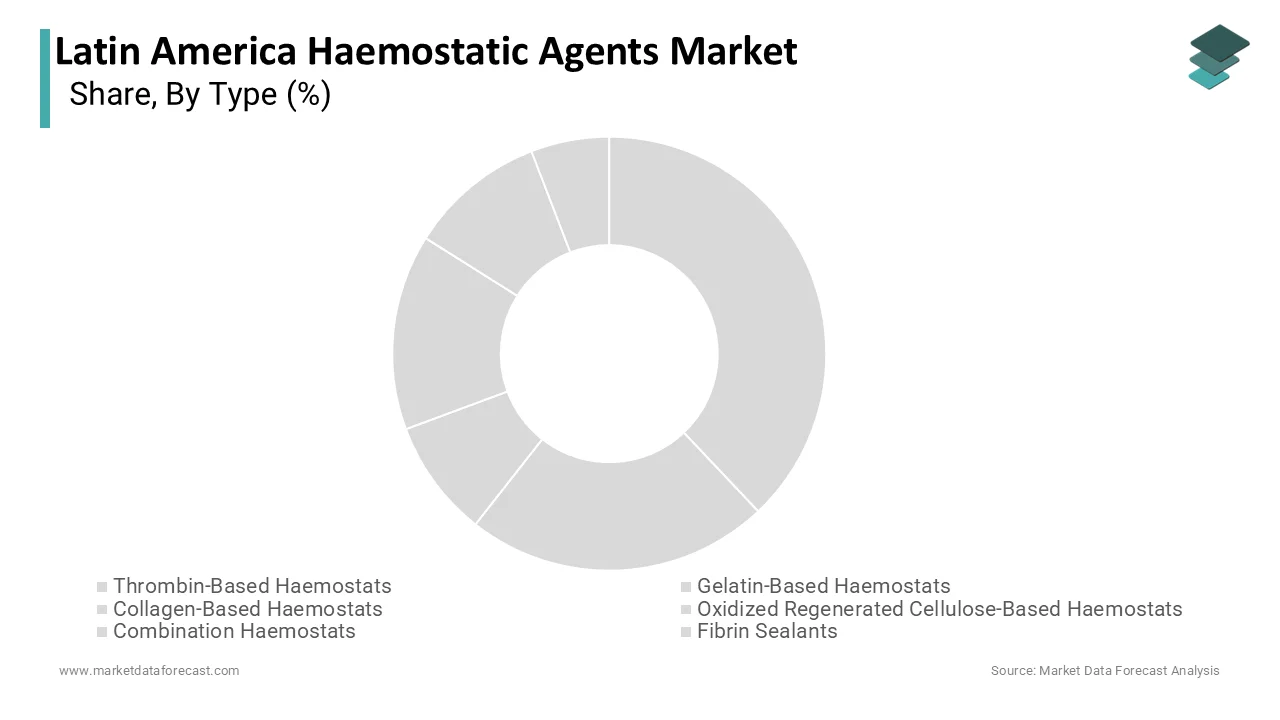
On the other hand, the fibrin sealants segment is estimated to register the fastest CAGR of 8.2% from 2026 to 2034. This rapid expansion of the segment is fueled by the superior ability of fibrin sealants to mimic the final stage of the coagulation cascade, providing both hemostasis and tissue sealing properties. The World Health Organization emphasizes that rapid population aging increases the prevalence of complex, chronic co-morbidities that require advanced clinical management. Fibrin sealants are particularly valuable in neurosurgery and cardiovascular procedures where air or fluid leaks must be prevented alongside bleeding control. Technological advancements have improved the handling characteristics and shelf life of fibrin products, making them more accessible to regional healthcare providers. Government initiatives in Chile and Colombia promote the use of evidence-based medical devices, encouraging hospitals to upgrade to premium sealants. The growing medical tourism sector demands international standard care protocols, which include the use of advanced fibrin sealants for optimal patient recovery. Research collaborations between local universities and global manufacturers facilitate the introduction of next-generation fibrin products tailored to regional clinical needs.
By Treatment Insights
In 2025, the cardiovascular segment held a 30.8% majority share of the Latin America Haemostatic Agents Market because of the high incidence of cardiovascular diseases and the corresponding volume of surgical interventions such as coronary artery bypass grafts and valve replacements. The Pan American Health Organization confirms that cardiovascular diseases represent the leading cause of mortality in the Americas, accounting for nearly 30% of all regional deaths. Complex cardiac surgeries involve significant bleeding risks requiring reliable agents like thrombin and fibrin sealants to ensure patient stability. The adoption of minimally invasive cardiac techniques further increases the need for precise hemostatic solutions that can be applied in confined spaces. Insurance coverage expansions in countries like Mexico enable greater access to life-saving cardiac care, boosting utilization of premium hemostatic products. Training programs for cardiac surgeons emphasize the importance of effective bleeding management,t reinforcing the critical role of hemostatic agents in successful outcomes. Continuous innovation in product formulations addresses specific challenges in cardiac surgery,ry such as anticoagulant reversal, sal supporting market dominance in this therapeutic area.
However, the neurosurgery segment is anticipated to witness the fastest CAGR of 9.1% during the forecast period due to the rising incidence of brain tumors,mors traumatic brain injuries,uries and vascular malformations requiring delicate surgical intervention. Hemostatic agents are crucial in neurosurgery to prevent hematoma formation and protect sensitive neural tissues from pressure damage. Clinical research in neurosurgery demonstrates that using biological fibrin sealants alongside standard suturing techniques helps achieve watertight dural closure and reduces the risk of post-operative cerebrospinal fluid leaks. The aging population contributes to higher rates of stroke and degenerative brain conditions, driving demand for surgical solutions. Government investments in neuroscience centers in Argentina and Chile enhance the capacity for complex brain surgeries. Awareness campaigns about early detection of brain disorders lead to earlier interventions requiring effective hemostatic management. Technological advancements in microsurgical techniques necessitate hemostats with superior adhesion and flexibility, supporting the rapid adoption of premium products in this specialized field.
By End User Insights
The hospitals segment dominated the Latin America Haemostatic Agents Market and accounted for a substantial share in 2025. This dominance of the segment was driven by the concentration of complex surgical procedures, emergency trauma care, re and specialized medical departments within hospital settings. Healthcare delivery frameworks designate high-complexity tertiary hospitals as the primary operational settings for advanced surgical procedures requiring specialized critical care infrastructure. Public and private hospitals invest heavily in surgical infrastructure,ure attracting skilled surgeons who prefer reliable premium hemostatic products. Group purchasing organizations enable hospitals to negotiate favorable pricing for bulk purchases of essential surgical supplies. Accreditation standards require hospitals to maintain adequate stocks of approved hemostatic agents, ents ensuring patient safety and regulatory compliance. The integration of multidisciplinary teams in hospitals facilitates the adoption of new hemostatic technologies through peer review and clinical trials. Emergency departments in urban hospitals serve as primary points of care for trauma victims, sustaining steady demand for rapid-acting hemostats. These factors collectively reinforce the central role of hospitals in driving market volume and value across the region.
But the surgery centres segment is likely to experience the fastest CAGR of 7.5% between 2026 and 2034 owing to the increasing preference for ambulatory surgical centres that offer cost-effective, efficient care for elective procedures. These facilities focus on minimally invasive surgeries such as orthopedic and general surgical procedures that require reliable, easy-to-use hemostatic agents. Cost containment pressures encourage insurers and patients to choose surgery centres where overhead costs are lower than those of traditional hospitals. Surgery centres prioritize products that enhance workflow efficiency and reduce recovery times, aligning with their operational model. Partnerships with medical device distributors ensure timely supply of hemostats tailored to specific procedural needs. The expansion of private insurance coverage supports patient access to these facilities,s driving consistent growth in hemostatic agent utilization. Regulatory support for ambulatory care standards further legitimizes surgery centres as key contributors to the regional healthcare ecosystem.
COUNTRY LEVEL ANALYSIS
Brazil Haemostatic Agents Market Analysis
Brazil led the Latin American Haemostatic Agents Market and captured a 34.9% share in 2025. This leading position of the Brazilian market was attributed to a large population base and a well-developed healthcare system comprising both public and private sectors. The Brazilian Society of Clinical Oncology focuses on expanding patient access to specialized multi-disciplinary surgical care and standardizing public health treatments for complex solid tumors. Public hospitals under the Unified Health System provide free access to essential surgical supplies while private institutions cater to affluent patients seeking premium products. As per the National Agency for Sanitary Vigilance, regulatory approvals for new hemostatic devices have been streamlined in recent years, facilitating faster market entry for international manufacturers. Local production capabilities for basic medical supplies complement imports of specialized hemostats,s ensuring stable availability. Government initiatives to improve trauma care networks enhance the distribution of hemostatic agents to remote areas. The presence of major multinational medical device companies in São Paulo and Rio de Janeiro strengthens supply chain efficiency. Research collaborations between Brazilian universities and industry players foster innovation in hemostatic technologies. Economic stability and increasing healthcare expenditure support sustained market growth, positioning Brazil as the primary hub for hemostatic agent consumption in the region.
Mexico Haemostatic Agents Market Analysis
Mexico was positioned second in the Latin America Haemostatic Agents Market and occupied a 20.1% share in 2025. Factors such as medical tourism and strategic trade relationships have contributed to the growth of the country’s market. Proximity to the United States facilitates efficient import logistics and technology transfer,r enabling Mexican hospitals to adopt the latest hemostatic innovations. According to the Ministry of Health, Mexico attracted over 1 million medical tourists in 2024, many seeking surgical procedures that require high-quality hemostatic agents. Private hospitals in border cities and major urban centers invest in advanced surgical equipment to meet international standards. INEGI reveals that the healthcare sector accounts for over 5% of Mexico’s gross domestic product, representing a significant economic driver and employer within the national economy. Free trade agreements reduce tariffs on imported medical devices, lowering costs for healthcare providers. Local manufacturing of generic hemostats complements premium imports,s offering diverse options for different market segments. Government programs to upgrade public hospital infrastructure increase access to essential surgical supplies in underserved regions. The growing middle class drives demand for elective surgeries, es boosting consumption of hemostatic products. These factors create a favorable environment for market expansion and investment in the Mexican healthcare sector.
Argentina Haemostatic Agents Market Analysis
Argentina is also a key player in the Latin American Haemostatic Agents Market by leveraging its strong tradition of medical excellence and specialized surgical care. Buenos Aires serves as a regional hub for complex surgeries, attracting patients from neighboring countries seeking affordable, high-quality treatment. The Argentine Society of Surgery aims to advance specialized intraoperative skills and improve quality assurance protocols within domestic surgical departments. Local physicians are highly trained in advanced surgical techniques requiring reliable bleeding control methods. As per data from the National Administration of Dr, ugs Food and Medical Technology, logy regulatory processes for medical devices are rigorous,orous ensuring high safety standards for imported products. Economic challenges occasionally impact purchasing power, but private insurance coverage remains robust for surgical care. Pharmaceutical and medical device distributors maintain strong relationships with key opinion leaders, facilitating product adoption. Research institutions collaborate with global firms to conduct clinical trials on new hemostatic technologies. The emphasis on quality over quantity allows Argentina to sustain demand for high-value hemostatic products despite economic fluctuations. This strategic focus ensures steady market presence and influence on regional clinical practices.
Chile Haemostatic Agents Market Analysis
Chile occupies a noteworthy position in the Latin American Haemostatic Agents Market by focusing on the rapid adoption of advanced medical technologies and innovative products. Favorable regulatory frameworks and political stability attract multinational medical device companies to establish regional headquarters in Santiago. The Chilean Ministry of Health and the Institute of Public Health (ISP) have implemented updated regulatory decrees to strengthen quality control, performance, and international safety standard compliance for medical devices. High healthcare expenditure per capita enables public and private hospitals to procure premium hemostatic agents for complex procedures. Free trade agreements with multiple countries facilitated duty-free imports of medical supplies, reducing costs for healthcare providers. The aging population drives demand for orthopedic and cardiovascular surgeries requiring effective bleeding management. Public health programs prioritize evidence-based medicine, promoting the use of clinically proven hemostatic products. Investment in digital health infrastructure supports efficient inventory management and supply chain tracking. These factors position Chile as a leader in technological adoption and quality standards within the regional hemostatic agents market.
COMPETITIVE LANDSCAPE
The competition in the Latin America Haemostatic Agents Market is intense,e with multinational corporations and regional players vying for dominance through innovation and strategic positioning. Global leaders leverage their brand reputation and extensive product portfolios to capture premium segments in private hospitals and specialized surgical centers. Local manufacturers compete on price and accessibility, targeting public healthcare systems and rural markets where cost sensitivity is high. Differentiation occurs through technological advancements such as smart hemostats and bioactive formulations that improve clinical outcomes. Regulatory hurdles create barriers to entry,y favoring established companies with resources to navigate approval processes efficiently. Distribution networks play a critical role as companies strive to ensure product availability in remote areas with limited infrastructure. Collaborative efforts with medical societies enhance credibility and drive adoption among surgeons. Price wars occasionally emerge in generic segments, but quality and reliability remain primary decision factors for healthcare providers. Continuous investment in research and development allows key players to maintain competitive edges by introducing novel solutions that address unmet clinical needs in the region.
KEY MARKET PLAYERS
Some of the companies that are playing a dominant role in the Latin American Hemostatic Agents Market include
- Ethicon, Inc. (Johnson & Johnson)
- Pfizer Inc.
- Baxter International Inc.
- C. R. Bard, Inc. (BD)
- The Medicines Company
- Anika Therapeutics, Inc.
- Advanced Medical Solutions Group plc
- Integra LifeSciences Holdings Corporation
- B. Braun Melsungen AG
- Gelita Medical GmbH
- Equimedical B.V.
- Vascular Solutions, Inc. (Teleflex Incorporated)
- Marine Polymer Technologies, Inc.
- Z-Medica, LLC
TOP LEADING PLAYERS IN THE MARKET
- Johnson and Johnson maintains a robust presence in the Latin American Haemostatic Agents Market through its Ethicon subsidiary, which offers a comprehensive portfolio of surgical hemostats. The company focuses on delivering innovative solutions such as fibrin sealants and collagen-based agents that support complex surgical procedures across the region. Recent actions include expanding distribution networks in Brazil and Mexico to ensure wider availability of advanced hemostatic products in both public and private hospitals. They actively engage in surgeon training programs to promote best practices in bleeding management,t enhancing clinical adoption. Strategic partnerships with local healthcare providers facilitate the introduction ofnext-generationn hemostatic technologies tailored to regional needs. Their commitment to quality and safety reinforces trust among medical professionals, driving consistent demand for their premium product lines throughout Latin American healthcare facilities.
- Baxter International Inc plays a significant role in the Latin American Hemostatic Agents Market by providing specialized hemostatic solutions, including thrombin and fibrin sealants. The company leverages its extensive global supply chain to ensure reliable delivery of critical surgical supplies to hospitals across the region. Recent initiatives involve investing in local regulatory compliance teams to accelerate product approvals in countries like Argentina and Chile. Baxter collaborates with medical associations to conduct clinical studies demonstrating the efficacy of their hemostatic agents in diverse surgical settings. They also focus on educational workshops for healthcare professionals, emphasizing the benefits of advanced hemostasis in reducing operative time. These efforts strengthen their market position by building strong relationships with key opinion leaders and ensuring high visibility of their products in major surgical centers.
- B Braun Melsungen AG contributes significantly to the Latin America Haemostatic Agents Market through its broad range ofcost-effective and high-quality hemostatic products. The company emphasizes sustainable manufacturing practices and affordable pricing strategies that appeal to both public and private healthcare sectors. Recent actions include establishing new logistics hubs in Colombia and Peru to improve supply chain efficiency and reduce delivery times. B Braun invests in digital health platforms that provide real-time inventory tracking for hospitals, ensuring uninterrupted access to essential hemostatic agents. They also participate in government tenders,s offering competitive bids for bulk procurement contracts. Their focus on operational excellence and customer support enhances their reputation as a reliable partner for healthcare institutions seeking dependable hemostatic solutions across Latin America.
TOP STRATEGIES USED BY KEY MARKET PARTICIPANTS
Key players in the Latin America Haemostatic Agents Market employ strategic partnerships with local distributors to navigate complex regulatory environments and enhance market penetration. Companies invest heavily in clinical education and surgeon training programs to demonstrate the efficacy and safety of advanced hemostatic products. Product innovation remains a core strategy with firms developing bioabsorbable and combination hemostats that offer superior performance in minimally invasive surgeries. Pricing strategies are tailored to address the diverse economic conditions across the region,n balancing affordability for public hospitals with premium offerings for private clinics. Regulatory compliance teams work diligently to secure approvals from national health agencies,s ensuring timely market entry for new products. Supply chain optimization initiatives focus on reducing lead times and improving inventory management to meet urgent surgical demands. Digital marketing and telemedicine collaborations help reach remote healthcare providers, thus expanding the customer base beyond major urban centers.
MARKET SEGMENTATION
This research report on the LatiAmericanca haemostatic agents market has been segmented and sub-segmented into the following categories:
By Type
- Thrombin-Based Haemostats
- Gelatin-Based Haemostats
- Collagen-Based Haemostats
- Oxidized Regenerated Cellulose-Based Haemostats
- Combination Haemostats
- Fibrin Sealants
- Others
By Treatment
- Cardiovascular
- General Surgery
- Digestive Surgery
- Neurosurgery
- Others
By End User
- Hospitals
- Surgery Centres
- Nursing Homes
- Others
By Country
- Brazil
- Argentina
- Chile
- Mexico
- Rest of Latin America