- Product Description Description
- Table of Contents TOC
- List of Table & Figure LOT
- Get Free Sample PDF Sample PDF
Market Size, 2025
$0.09 BnMarket Estimate, 2026
$0.10 BnMarket Forecast, 2034
$0.17 BnCAGR, 2026–2034
6.56%Latin America Milk Permeate Powder Market Size, Growth, Trends & Forecast (2026–2034)
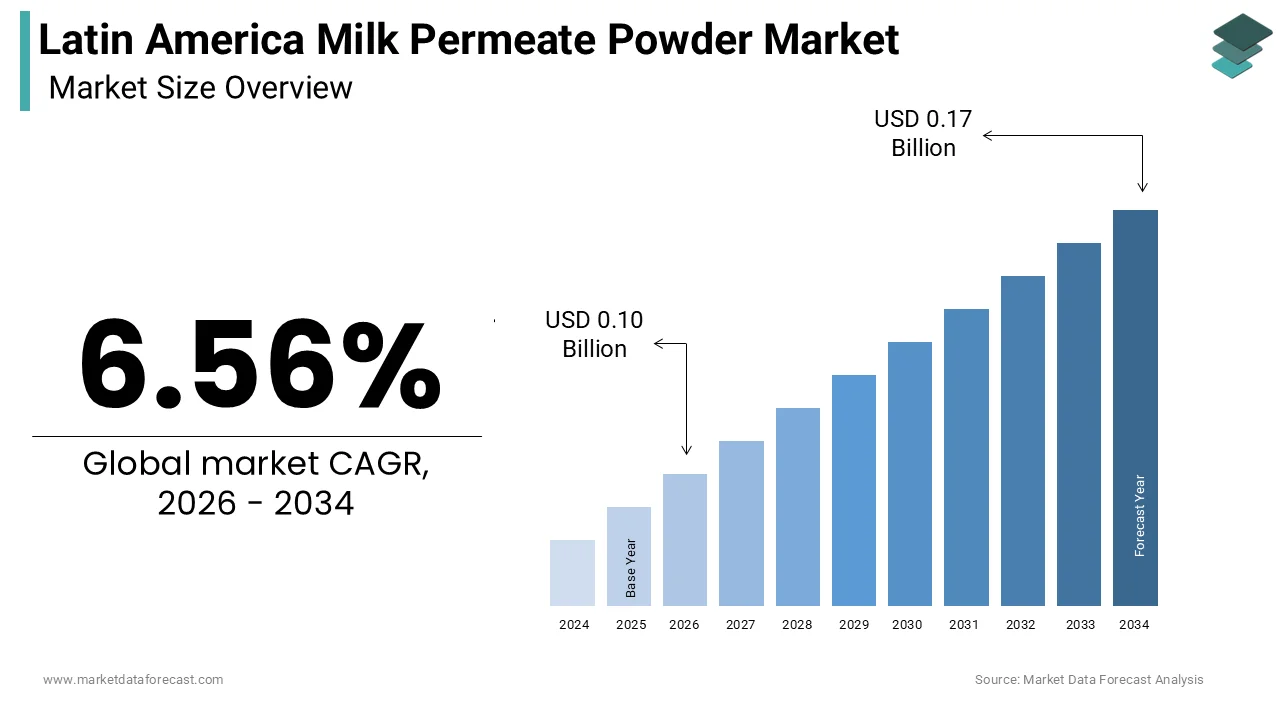
The Latin America milk permeate powder market was calculated at USD 0.09 billion in 2025, is anticipated to be worth USD 0.10 billion in 2026, and is projected to reach USD 0.17 billion by 2034, registering a compound annual growth rate (CAGR) of 6.56% during the forecast period from 2026 to 2034. Driven by sustainable dairy processing initiatives, rising demand for cost-effective natural sweeteners, and the expansion of advanced membrane filtration technologies, the market continues to grow steadily across the region.
Key Executive Metrics (At-a-Glance)
- 2025 Base Valuation: USD 0.09 Billion
- 2026 Current Valuation: USD 0.10 Billion
- 2034 Forecast Valuation: USD 0.17 Billion
- Compound Annual Growth Rate (CAGR): 6.56% (2026–2034)
- Dominant Application Segment: Baked Goods (highest share in 2025, driven by functional roles in browning, texture, and moisture retention)
- Fastest-Growing Application Segment: Beverages (projected to exhibit a robust CAGR of 13.4%, fueled by clean-label functional drinks and protein shakes)
- Dominant Region: Brazil (held 38.3% of the Latin American market share in 2025)
Core Market Drivers
- Cost-Effective Natural Sweeteners: Rising sugar prices and government-backed sugar taxes compel food manufacturers to adopt milk permeate powder as a cheaper, natural alternative.
- Dairy Infrastructure Modernization: Increasing investments in membrane filtration and ultrafiltration technologies to transform cheese whey into high-grade permeate powder.
- Clean Label and Health Trends: Surging popularity of natural ingredients, functional foods, and sports nutrition products among the urban population.
Primary Market Restraints & Challenges
- Raw Milk Seasonality & Volatility: Climatic variations cause milk production fluctuations of up to 25%, creating bottlenecks in whey generation.
- Stringent Regulatory Standards: Complex export requirements, high compliance costs, and non-tariff barriers limit smaller producers from entering international markets.
Latin America Milk Permeate Powder Market Segmentation Breakdown
| Segment Category | Leading Sub-Segment (2025 Base) | Fastest-Growing Sub-Segment (2026–2034) |
|---|---|---|
| By Application | Baked Goods (led the market via high integration in breads, cakes, and pastries) | Beverages (expanding at a 13.4% CAGR due to clean-label fitness and protein drinks) |
| By Region | Brazil (held 38.3% of the regional market share in 2025) | Mexico (leveraging USMCA trade partnerships and processing technology adoption) |
Major Industry Players Profiled
Key enterprises shaping the competitive Latin American milk permeate powder market include Arla Foods Ingredients Group P/S, Idaho Milk Products, Interfood Holding b.v, Van Lee Melkprodukten Barneveld BV, Hoogwegt, Batory Foods, and LACTALIS Ingredients.
Latin America Milk Permeate Powder Market Size
The Latin America Milk Permeate Powder Market Size was calculated at USD 0.09 billion in 2025 and is anticipated to be worth USD 0.17 billion by 2034 from USD 0.10 billion in 2026, growing at a CAGR of 6.56% during the forecast period.
The Latin American milk permeate powder market has seen a significant shift toward sustainable dairy processing, where manufacturers aim to minimize waste and maximize resource efficiency. According to the Food and Agriculture Organization of the United Nations, Latin America accounts for approximately 8% of global milk production, with Brazil and Argentina being the primary contributors. As per the Inter-American Institute for Cooperation on Agriculture, the adoption of advanced membrane filtration technologies in regional dairy plants has increased by 15% over the last five years, which is enabling higher yields of high-quality permeate. According to the Brazilian Dairy Industry Association, over 60% of whey generated in the region is now processed into value-added products rather than being discarded or used solely for animal feed. This transition is driven by stringent environmental regulations and the economic incentive to capture revenue from previously wasted streams. The growing awareness of clean label ingredients among consumers further propels the demand for natural sweeteners and texturizers like milk permeate powder. Regulatory bodies such as the National Health Surveillance Agency in Brazil have established clear standards for dairy derivatives, ensuring safety and quality, which fosters consumer trust and market stability.
MARKET DRIVERS
Rising Demand for Cost-Effective Natural Sweeteners in Food Processing
The escalating cost of refined sugar and the consumer shift toward natural ingredients have positioned milk permeate powder as a preferred alternative in the Latin American food industry, which is a key factor propelling the Latin American milk permeate powder market growth. According to the World Health Organization, obesity rates in the region have reached high levels, with a significant portion of the adult population classified as overweight, prompting governments to implement sugar taxes in countries like Mexico and Chile. These fiscal measures have compelled food manufacturers to seek cheaper and healthier sweetening options that do not incur additional levies. Milk permeate powder offers a natural sweetness profile due to its high lactose content while providing essential nutrients such as calcium and protein. According to the Mexican Food Industry Association, 45% of bakery and confectionery producers have reformulated their products to include dairy-based sweeteners to reduce reliance on imported sucrose. The economic advantage is substantial, as permeate powder costs approximately 30% less than pure lactose isolates while delivering similar functional properties. Furthermore, the clean label trend drives demand for recognizable ingredients, and milk permeate fits this criterion perfectly. Manufacturers in Brazil and Argentina are increasingly incorporating permeate into infant formulas, sports nutrition products, and ready-to-eat meals to enhance flavor and texture without adding artificial additives. This dual benefit of cost reduction and nutritional enhancement serves as a powerful catalyst for market expansion across the region.
Expansion of the Dairy Processing Infrastructure and Technology Adoption
The modernization of dairy processing facilities in Latin America has significantly boosted the availability and quality of milk permeates powder by improving extraction efficiencies, which is further boosting the regional market expansion. According to the International Dairy Federation, investments in membrane filtration technology in the region have grown by 20% annually as processors seek to optimize whey utilization. Traditional methods often resulted in low yields and inconsistent quality, but advanced ultrafiltration and nano-filtration systems now allow for precise separation of lactose and minerals. According to the Argentine Dairy Exporters Chamber, the capacity for whey processing in Argentina has doubled since 2018, enabling the production of high-grade permeate powder suitable for human consumption. This technological leap reduces environmental waste and transforms a disposal problem into a revenue stream. Large cooperatives in Uruguay and southern Brazil have integrated closed-loop systems that recover over 90% of solids from whey, minimizing effluent discharge. The government support for agro-industrial innovation through subsidies and tax incentives further accelerates this infrastructure development. As more small and medium-sized dairies adopt these technologies, the supply of consistent, high-quality permeates powder increases, meeting the stringent requirements of international buyers. This structural improvement ensures a steady supply chain and enhances the competitiveness of Latin American dairy products in the global market.
MARKET RESTRAINTS
Volatility in Raw Milk Supply and Seasonal Production Fluctuations
The inherent seasonality of milk production in Latin America poses a significant restraint to the expansion of the Latin American milk permeate powder market and is affecting pricing and availability. According to the Food and Agriculture Organization, milk production in the region can fluctuate by up to 25% between peak and off-peak seasons due to climatic variations and pasture conditions. In countries like Brazil and Colombia, rainfall patterns directly impact fodder availability, leading to reduced milk yields during dry periods. This variability creates bottlenecks in whey generation, which is the primary raw material for permeate production. According to the Colombian Federation of Dairy Farmers, during adverse weather events, milk collection can drop by 15%, forcing processors to operate below capacity and increasing per-unit production costs. The lack of standardized storage solutions for liquid whey means that excess production during peak seasons cannot always be preserved for later processing, leading to waste. Consequently, manufacturers face challenges in maintaining long-term contracts with international buyers who require consistent volume and quality. The dependency on weather-dependent agriculture makes the supply chain vulnerable to climate change impacts, which are becoming more frequent and severe in the region. Without significant investment in irrigation and feed storage infrastructure, the seasonal imbalance will continue to hinder market stability and growth potential.
Stringent Regulatory Standards and Compliance Costs for Export
Navigating the complex regulatory landscape for dairy exports presents a major barrier for Latin American milk permeate powder producers aiming to access high-value international markets. According to the World Trade Organization, non-tariff barriers such as sanitary and phytosanitary measures account for a large portion of trade restrictions faced by agricultural exporters from developing regions. Countries in the European Union and North America have rigorous standards for residue limits, microbial counts, and labeling requirements that many local producers struggle to meet consistently. According to the Brazilian Ministry of Agriculture, only 30% of small and medium-sized dairy processors possess the necessary certifications, such as Hazard Analysis and Critical Control Points, to export to premium markets. The cost of obtaining and maintaining these certifications is prohibitive for smaller entities, limiting their participation in the global value chain. Additionally, frequent changes in import regulations require continuous monitoring and adaptation, which strains limited administrative resources. Rejection of shipments due to non-compliance results in significant financial losses and reputational damage. The lack of harmonized regional standards within Latin America further complicates intra-regional trade, forcing companies to adhere to multiple conflicting frameworks. These regulatory hurdles restrict market access and limit the ability of local producers to scale up operations and compete effectively on the global stage.
MARKET OPPORTUNITIES
Growing Popularity of Sports Nutrition and Functional Beverages
The rising health consciousness and fitness trends in Latin America present a lucrative opportunity for milk permeate powder in the sports nutrition and functional beverage sectors. According to the Global Wellness Institute, the wellness economy in Latin America is growing at a rate of 10% annually, driven by increased gym memberships and demand for performance-enhancing supplements. Milk permeate powder is an ideal ingredient for protein bars, shakes, and electrolyte drinks due to its balanced ratio of carbohydrates and minerals, which aid in recovery and hydration. According to the Brazilian Association of Supplement Manufacturers, sales of sports nutrition products increased by 18% in 2022, with a significant portion utilizing dairy-derived ingredients for their clean label appeal. The natural electrolyte content of permeate, including potassium and sodium, makes it a superior alternative to synthetic additives in hydration formulas. Manufacturers are leveraging this benefit to create innovative products targeting active consumers who prefer natural sources of energy. Furthermore, the mild flavor profile of permeate allows for versatile formulation in fruit-flavored drinks and smoothies without overpowering other ingredients. As urbanization continues to rise in countries like Mexico and Peru, the demand for convenient, healthy snacks and beverages is expected to surge. This trend provides a robust platform for permeate producers to diversify their application base and capture higher-margin segments within the food and beverage industry.
Development of Infant Formula and Pediatric Nutrition Products
The expanding middle class and increasing focus on child health in Latin America present a significant opportunity for the Latin American milk permeate powder market. According to the United Nations Children's Fund, birth rates in the region remain stable, with millions of infants requiring nutritious feeding options annually. Milk permeate is a key component in infant formulas as it mimics the carbohydrate profile of breast milk and provides essential minerals for bone development. According to the Latin American Society for Pediatric Gastroenterology, Hepatology, and Nutrition, high-quality dairy ingredients are vital in preventing malnutrition and supporting early growth. Local manufacturers are increasingly sourcing domestic permeate to reduce dependency on imported lactose, thereby lowering production costs and ensuring supply security. The regulatory push for fortification of staple foods in countries like Venezuela and Honduras also opens avenues forpermeates incorporation in fortified cereals and complementary foods. Moreover, the perception of dairy as a premium and safe ingredient drives parental preference for formulas containing recognizable natural components. As awareness of the benefits of breast milk substitutes improves among healthcare providers, the demand for scientifically formulated products rises. This segment offers long-term growth potential due to the essential nature of infant nutrition and the willingness of parents to invest in high-quality products for their children.
MARKET CHALLENGES
Competition from Imported Substitutes and Price Sensitivity
The Latin American market faces intense competition from imported dairy ingredients, particularly from Europe and New Zealand, which often benefit from subsidies and economies of scale. According to the Inter-American Development Bank, imported milk powders and lactose products can be up to 20% cheaper than locally produced equivalents due to lower production costs and favorable exchange rates in exporting countries. This price disparity makes it difficult for local permeate producers to compete, especially in price-sensitive segments such as industrial baking and confectionery. According to the Chilean National Customs Service, imports of dairy derivatives increased by 12% in 2023 and are displacing local suppliers in several key applications. Local manufacturers often lack the scale to achieve similar cost efficiencies, resulting in higher operational expenses. Additionally, fluctuations in currency exchange rates can suddenly make imports even more attractive, undermining the competitiveness of domestic products. Consumers and industrial buyers frequently prioritize cost over origin, leading to brand switching and loyalty issues. The presence of large multinational corporations with established distribution networks further exacerbates the challenge for local players. Without protective tariffs or government support for local dairy industries, small and medium enterprises struggle to maintain market share. This competitive pressure forces continuous price reductions, which erode profit margins and limit investment in quality improvement and innovation.
Limited Awareness and Technical Expertise among Small-Scale Processors
A significant challenge hindering the growth of the milk permeate powder market in Latin America is the limited technical knowledge and awareness among small and medium-sized dairy processors in rural areas. According to the Rural Development Institute, many smallholder farmers and local cooperatives lack access to training on advanced whey processing techniques and the commercial value of permeate. According to the Peruvian Ministry of Agrarian Development, over 60% of whey generated by small dairies is still discharged into waterways or used for low-value animal feed due to a lack of processing infrastructure and know-how. This represents a massive loss of potential revenue and contributes to environmental pollution. The absence of extension services and technical assistance programs means that best practices in membrane filtration and powder drying are not widely disseminated. Furthermore, there is a lack of understanding regarding the functional properties of permeate and its applications in various food products, limiting local demand. Educational initiatives are scarce and often focused on primary production rather than value addition. Bridging this knowledge gap requires substantial investment in training programs and technology transfer initiatives. Until small-scale processors are empowered with the necessary skills and resources, the market will remain fragmented and unable to fully capitalize on the potential of milk permeate as a high-value commodity.
REPORT COVERAGE
| REPORT METRIC | DETAILS |
| Market Size Available | 2025 to 2034 |
| Base Year | 2025 |
| Forecast Period | 2026 to 2034 |
| CAGR | 6.56% |
| Segments Covered | By Application, and Region |
| Various Analyses Covered | Global, Regional & Country Level Analysis; Segment-Level Analysis; DROC, PESTLE Analysis; Porter’s Five Forces Analysis; Competitive Landscape; Analyst Overview of Investment Opportunities |
| Regions Covered | Brazil, Mexico, Argentina, Chile, and the rest of Latin America |
| Market Leaders Profiled | Arla Foods Ingredients Group P/S, Idaho Milk Products, Interfood Holding b.v, Van Lee Melkprodukten Barneveld BV, Hoogwegt, Batory Foods, and LACTALIS Ingredients |
SEGMENTAL ANALYSIS
By Application Insights
The baked goods segment led the market by capturing the highest share of the Latin American market in 2025 and is likely to maintain its dominant position by focusing on the integration of functional dairy ingredients to meet the growing demand for healthier and more durable bakery products. Baked goods constitute the leading application segment in the Latin America milk permeate powder market due to the extensive use of this ingredient as a functional additive in bread, cakes, cookies, and pastries. The primary driver is the ability of milk permeate to enhance browning, crust color, and texture through the Maillard reaction, which is highly valued in traditional Latin American bakery products. According to the Brazilian Association of Bakery and Confectionery Industries, the bakery sector accounts for over 35% of total food consumption expenditure in Brazil, creating a massive demand base for cost-effective ingredients. Milk permeate serves as an economical alternative to skim milk powder while providing similar functional benefits, such as water binding and dough conditioning. According to the Mexican National Chamber of the Bread Industry, 60% of industrial bakeries have incorporated dairy derivatives into their formulations to improve product shelf life and sensory attributes. The high lactose content in permeate contributes to moisture retention, which prevents staling and extends the freshness of baked items, a critical factor in regions with hot and humid climates. Furthermore, the natural sweetness of permeate allows manufacturers to reduce added sugar levels without compromising taste, aligning with health-conscious consumer trends. The widespread availability of local wheat flour, combined with imported or domestic dairy ingredients, creates a robust supply chain for bakery production. As urbanization increases, the consumption of processed and packaged bakery items rises, further solidifying the dominance of this segment. The versatility of permeate in both sweet and savory baked applications ensures its continued preference among formulators seeking multifunctional ingredients.
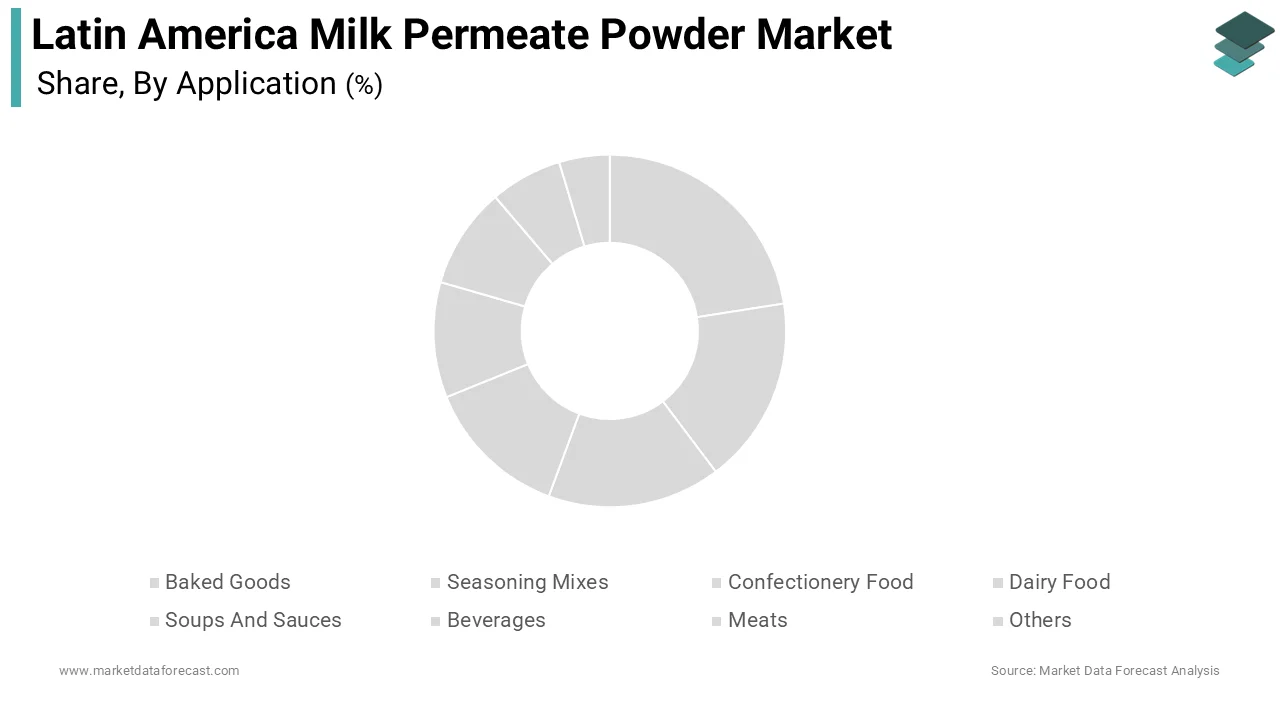
On the other side, the beverage segment is expected to see accelerated growth and is expected to exhibit a CAGR of 13.4% during the forecast period as manufacturers continue to innovate with clean-label, protein-enriched formulas to cater to the fitness-conscious urban population, the increasing popularity of ready-to-drink protein shakes and electrolyte replenishment solutions among the active population in countries like Mexico and Colombia. According to the Global Wellness Institute, the wellness economy in Latin America is expanding rapidly, with consumers prioritizing hydration and recovery after physical activity. Milk permeate provides a natural source of carbohydrates and minerals such as potassium and sodium, which are essential for effective rehydration. According to the Inter-American Beverage Association, sales of functional beverages increased by 18% in 2023, with many brands highlighting clean-label ingredients on their packaging. The mild flavor profile of permeate allows it to blend seamlessly with fruit flavors and other additives without altering the taste significantly. Additionally, the cost advantage of permeate compared to pure lactose or synthetic electrolytes makes it an attractive option for mass-market products. Manufacturers are leveraging the nutritional benefits of permeate to differentiate their products in a crowded market. The rise of e-commerce platforms has also facilitated the distribution of niche beverage brands that utilize premium dairy ingredients. As health awareness continues to grow, the integration of milk permeates into innovative beverage formulations is expected to accelerate, driving sustained growth in this dynamic segment.
REGIONAL ANALYSIS
Brazil Milk Permeate Powder Market Analysis
Brail had 38.3% of the Latin American market share in 2025 and is expected to strengthen its leadership role by further scaling up sustainable whey processing technologies and expanding its export capabilities to meet rising international demand. The country boasts a highly developed dairy industry with significant investment in whey processing infrastructure, particularly in the southern states of Rio Grande do Sul and Santa Catarina. According to the Brazilian Dairy Industry Association, the volume of whey processed into value-added products has increased by 25% over the last five years, driven by environmental regulations that discourage waste discharge. Major cooperatives such as Coopavel and Aurora have installed advanced ultrafiltration plants that produce high-quality permeate powder for both domestic use and export. The strong domestic demand from the bakery and confectionery sectors supports local consumption, while trade agreements with Mercosur partners facilitate regional exports. Government initiatives to modernize smallholder dairy farms have improved raw milk quality, ensuring a consistent supply of feedstock for permeate production. The presence of multinational food companies with manufacturing facilities in Brazil further drives the adoption of standardized dairy ingredients. Economic stability in the agricultural sector attracts foreign direct investment in processing technologies. However, challenges related to logistics and internal transportation costs remain. Despite these hurdles, Brazil remains the central hub for dairy innovation and production in Latin America, setting the benchmark for quality and efficiency in the permeate market.
Mexica Milk Permeate Powder Market Analysis
Over the next few years, the Mexican market is likely to undergo significant growth as it leverages its strategic trade partnerships and shifts towards higher-value, processed dairy formulations to serve its expanding domestic middle class. The country benefits from proximity to the United States, which facilitates technology transfer and access to advanced processing equipment. According to the Mexican Ministry of Agriculture and Rural Development, dairy production has grown steadily with a focus on improving yields per cow through genetic improvement and better feeding practices. The implementation of the United States-Mexico-Canada Agreement has reduced tariffs on dairy derivatives, encouraging cross-border trade and investment. Local manufacturers are increasingly adopting membrane filtration technologies to produce permeate powder for use in the large bakery and beverage sectors. According to the National Institute of Statistics and Geography, the consumption of processed foods containing dairy ingredients has risen by 10% annually, reflecting changing dietary habits. The government support for agro-industrial development through credit programs helps small and medium enterprises upgrade their facilities. However, competition from imported US dairy products remains intense due to lower production costs north of the border. Mexican producers are responding by focusing on niche markets and value-added products that leverage local brand loyalty. The growing middle class and urbanization trends continue to drive demand for convenient and nutritious food options, sustaining market growth.
Argentine Milk Permeate Powder Market Analysis
Over the next few years, the Argentine market is expected to maintain its competitive edge in the global dairy landscape by prioritizing efficiency and expanding its high-value permeate exports through continued investment in processing infrastructure. Argentina represents a significant player in the Latin American milk permeate powder market, leveraging its reputation for high-quality dairy production and strong export orientation. The Pampas region provides ideal conditions for cattle farming, resulting in high-volume milk production with excellent compositional quality. According to the Argentine Dairy Exporters Chamber, the country exports over 50% of its dairy production, including whey and permeate products, primarily to Asia and Africa. This export focus drives investments in state-of-the-art processing facilities that meet international standards for safety and quality. Local companies such as SanCor and Mastellone have expanded their capacity for whey valorization, converting what was once waste into profitable commodities. The devaluation of the local currency has made Argentine dairy products competitive in global markets, boosting export volumes. However, domestic economic instability and inflation pose challenges for local investment and operational planning. According to the National Institute of Agricultural Technology, technological adoption in dairy farms has improved efficiency but remains uneven across different regions. The government occasionally imposes export restrictions to ensure domestic supply, which can disrupt long-term contracts with international buyers. Despite these volatility issues, Argentina remains a key supplier of high-quality milk permeate powder due to its natural advantages in pasture-based dairy systems and an experienced processing industry.
COMPETITION OVERVIEW
The competitive landscape of the Latin America milk permeate powder market is characterized by a mix of global dairy giants and strong regional cooperatives competing on price, quality, and service reliability. Large multinational corporations leverage their economies of scale and advanced processing technologies to offer consistent products at competitive prices. Local cooperatives benefit from proximity to raw milk sources and a deep understanding of regional market dynamics, allowing them to respond quickly to customer needs. Competition is intense in the industrial segment where buyers prioritize cost efficiency and supply stability. Differentiation is increasingly based on technical support and application expertise rather than just product specifications. Companies invest in training sales teams to assist customers with formulation challenges, creating sticky relationships. Entry barriers are moderate due to the capital intensity of processing equipment, but established players benefit from long-term contracts and brand recognition. Price wars occasionally occur during periods of oversupply, but quality concerns often prevent switching to lower-tier suppliers. Regulatory compliance and sustainability credentials are becoming key differentiators as buyers seek responsible partners. The market remains fragmented in some countries, but consolidation is expected as larger entities acquire smaller processors to expand capacity and geographic reach.
KEY MARKET PLAYERS
Major Key Players in the Latin America Milk Permeate Powder Market include
- Arla Foods Ingredients Group P/S
- Idaho Milk Products
- Interfood Holding b.v
- Van Lee Melkprodukten Barneveld BV
- Hoogwegt
- Batory Foods
- LACTALIS Ingredients
Top Strategies Used by Key Market Participants
Key players in the Latin America milk permeate powder market primarily focus on vertical integration and technological advancement to secure raw material supply and improve product quality. Companies invest heavily in modern membrane filtration systems to maximize yield and ensure consistent composition of permeate powder. Strategic partnerships with local dairy cooperatives help stabilize milk procurement and reduce dependency on volatile spot markets. Expanding distribution networks through alliances with regional distributors enhances market reach and customer service capabilities. Product differentiation is achieved by developing specialized grades of permeate tailored for specific applications such as sports nutrition or infant formula. Educational initiatives targeting food technologists promote the functional benefits of permeate, encouraging wider adoption in formulation. Sustainability certifications are increasingly used as a competitive advantage to appeal to environmentally conscious buyers. Cost leadership remains critical due to price sensitivity in the region, prompting continuous efficiency improvements in production processes. These strategies collectively drive growth and resilience in a competitive landscape.
Leading Players in the Latin America Market
- Glanbia Ingredients maintains a strong presence in the Latin American milk permeate powder market through its extensive network of production facilities and distribution channels. The company focuses on delivering high-quality dairy ingredients that meet the specific needs of regional food and beverage manufacturers. Recent strategic actions include expanding its technical support services to help local customers optimize formulations using milk permeate in bakery and confectionery applications. Glanbia has also invested in sustainable sourcing practices, ensuring that its supply chain aligns with environmental standards valued by modern consumers. By collaborating with local distributors, the company enhances market accessibility and responsiveness to customer demands. Their commitment to innovation drives the development of customized solutions that address unique regional taste preferences and functional requirements. This approach strengthens their reputation as a reliable partner for industrial clients seeking consistent and premium dairy derivatives across Brazil, Mexico, and other key markets.
- Arla Foods Ingredients contributes significantly to the Latin America market by leveraging its expertise in whey processing and membrane filtration technologies. The company provides specialized milk permeate powders that serve as cost-effective alternatives to traditional sweeteners and fillers in various food products. Recent initiatives involve launching educational programs for local formulators to demonstrate the functional benefits of permeate in improving texture and shelf life. Arla has strengthened its logistics infrastructure to ensure timely delivery and maintain product quality during transit. Partnerships with regional research institutions help tailor products to local regulatory standards and consumer preferences. The company emphasizes transparency and traceability, which builds trust among industrial buyers concerned about ingredient safety. By focusing on value-added services and technical collaboration, Arla differentiates itself from commodity suppliers and establishes long-term relationships with key accounts in the processed food sector.
- Lactalis plays a pivotal role in the Latin America milk permeate powder market as one of the largest dairy processors globally, with substantial operations in the region. The company utilizes its integrated supply chain to produce consistent high-volume supplies of permeate powder from its whey processing plants in Argentina and Brazil. Recent actions include upgrading manufacturing facilities with advanced drying technologies to improve powder solubility and storage stability. Lactalis actively engages in trade promotions and industry exhibitions to showcase its diverse portfolio of dairy ingredients to potential clients. The company supports local farmers through sustainability programs, ensuring a steady flow of high-quality raw milk. By offering competitive pricing and reliable service, Lactalis captures significant demand from large-scale industrial bakeries and beverage manufacturers. Their global expertise, combined with local market knowledge, enables them to adapt quickly to changing regulatory and economic conditions in Latin America.
MARKET SEGMENTATION
This research report on the Latin America milk permeate powder market has been segmented and sub-segmented based on application and region.
By Application
- Baked Goods
- Seasoning Mixes
- Confectionery Food
- Dairy Food
- Soups And Sauces
- Beverages
- Meats
- Others
By Region
- Brazil
- Mexico
- Argentina
- Chile
- Rest of Latin America