- Product Description Description
- Table of Contents TOC
- List of Table & Figure LOT
- Get Free Sample PDF Sample PDF
Market Size, 2025
$80.98 BnMarket Estimate, 2026
$83.98 BnMarket Forecast, 2034
$112.40 BnCAGR, 2026–2034
3.71%Latin America Molluscicides Market Size, Growth, Trends & Forecast (2026–2034)
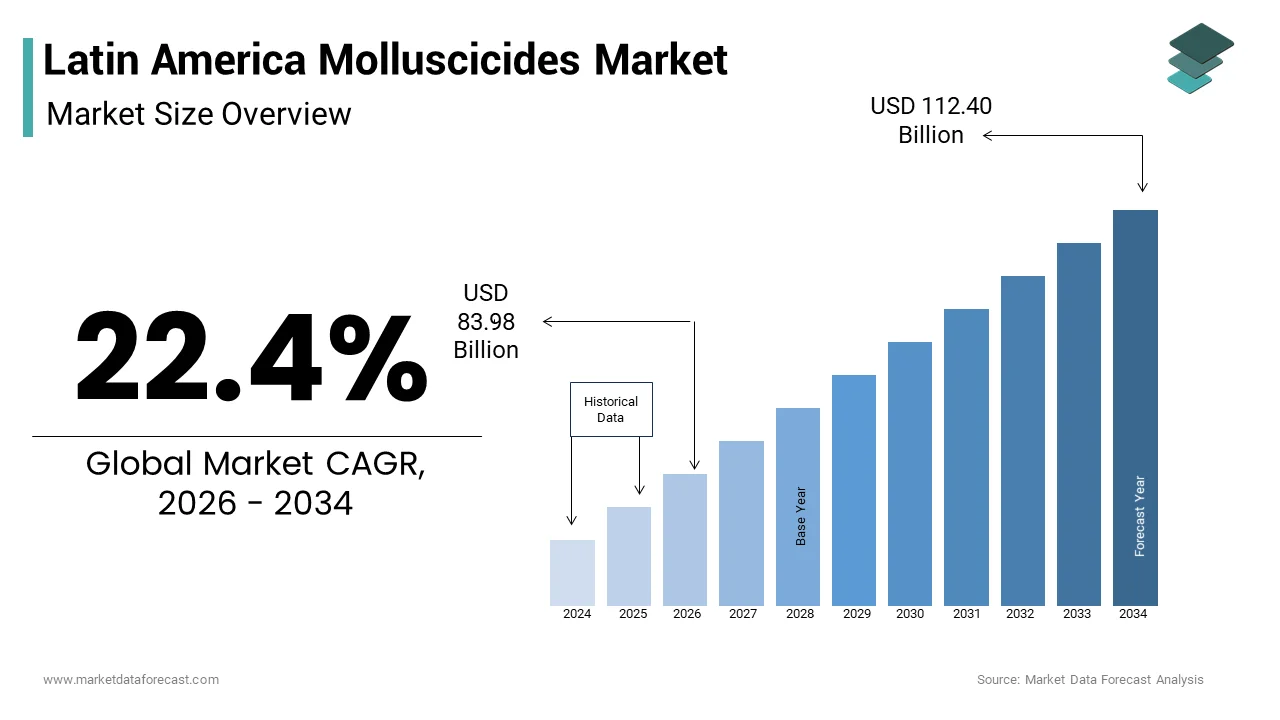
The Latin America Molluscicides Market size was valued at USD 80.98 billion in 2025, is anticipated to reach a valuation of USD 83.98 billion in 2026, and is projected to expand to USD 112.40 billion by 2034, registering a compound annual growth rate (CAGR) of 3.71% during the forecast period from 2026 to 2034. Growth is heavily supported by the rapid expansion of export-oriented horticulture, public health vector control initiatives, and a gradual structural transition toward advanced sustainable formulations.
Key Executive Metrics (At-a-Glance)
- 2025 Base Valuation: USD 80.98 Billion
- 2026 Current Valuation: USD 83.98 Billion
- 2034 Forecast Valuation: USD 112.40 Billion
- Compound Annual Growth Rate (CAGR): 3.71% (2026–2034)
- Dominant Source Segment: Chemical Molluscicides (dominating via immediate knockdown effects, cost-effectiveness, and established supply chains)
- Fastest-Growing Source Segment: Biological Molluscicides (projected at an impressive CAGR of 8.5% driven by organic export demands and strict regulations)
- Dominant Application Segment: Horticulture Crops (commanding major share due to high-value fresh produce vulnerability to cosmetic damage)
- Fastest-Growing Application Segment: Turf and Ornament (expanding at a 7.8% CAGR driven by rapid urbanization and green space development)
- Dominant Type Segment: Metaldehyde (holding majority share due to superior bait palatability and tropical rainfastness)
- Fastest-Growing Type Segment: Ferrous Sulphate / Iron-Based (projected at the highest CAGR of 9.2% due to excellent environmental safety profiles)
- Dominant Country Market: Brazil (accounting for a 45.7% share in 2025 due to massive agricultural output and tropical crop operations)
Core Market Drivers
- High-Value Horticulture Export Demand: Strict international phytosanitary standards in North America and Europe mandating unblemished fruit and vegetable shipments.
- Vector Control Initiatives: Regional public health actions targeting intermediate freshwater snail hosts of parasitic diseases like schistosomiasis.
Primary Market Restraints & Challenges
- Stringent Environmental Regulations: Increasing legislative scrutiny and safety standards against toxic synthetic active ingredients like metaldehyde and methiocarb.
- Pest Resistance & Climate Degradation: Rapid development of gastropod resistance alongside high tropical rainfall and UV degradation affecting bio-alternative efficacy.
Latin America Molluscicides Market Segmentation Breakdown
| Segment Category | Largest (Dominant) Sub-Segment | Fastest-Growing Sub-Segment |
|---|---|---|
| By Source | Chemical | Biological (8.5% CAGR) |
| By Application | Horticulture Crops | Turf and Ornament (7.8% CAGR) |
| By Type | Metaldehyde | Ferrous Sulphate (9.2% CAGR) |
| By Country | Brazil (45.7% share) | Mexico & Chile |
Major Industry Players Profiled
Key corporations steering the Latin America molluscicides market include BASF SE, Syngenta Group, UPL Limited, Adama Agricultural Solutions Ltd., Bayer CropScience AG, Lonza Group AG, De Sangosse SAS, Neudorff GmbH KG, American Vanguard Corporation, and Certis Europe B.V.
Latin America Molluscicides Market Size
The Latin America molluscicides market size was valued at USD 80.98 billion in 2025 and is anticipated to reach a valuation of USD 83.98 billion in 2026 and USD 112.40 billion by 2034, growing at a CAGR of 3.71% from 2026 to 2034.
Introduction to the Latin America Molluscicides Market
Molluscicides are a type of pesticide designed to kill and control molluscs, such as slugs and snails. These substances are critical for protecting high value agricultural crops and mitigating the spread of parasitic diseases in tropical and subtropical environments. The region relies heavily on agriculture as a cornerstone of its economic stability. According to the Food and Agriculture Organization (FAO), expanding maize and coarse grain yields from South American agricultural leaders push regional outputs well beyond 290 million tonnes annually, making climate-resilient crop protection vital to safeguarding global food systems. Gastropod infestations can devastate seedlings and reduce overall harvest yields significantly. Furthermore the public health dimension remains vital as certain freshwater snails act as intermediate hosts for trematode parasites. As per the World Health Organization (WHO), while schistosomiasis affects over 250 million individuals globally, its South American presence is limited to highly localized, endemic pockets (primarily Schistosoma mansoni in Brazil), where it is managed via targeted sanitation and preventative chemotherapy rather than widespread ecological intervention. The market is characterized by a transition from traditional synthetic chemicals to more environmentally benign alternatives like iron phosphate. Regulatory bodies across nations such as Brazil and Argentina are increasingly mandating the use of safer active ingredients to protect local biodiversity and water systems. This evolving landscape underscores the critical role of advanced molluscicides in sustaining both agricultural productivity and public health across the diverse ecological zones of the continent.
MARKET DRIVERS
Expansion of High Value Horticulture and Export Oriented Agriculture Drives Chemical Adoption
The rapid expansion of high value horticulture and export oriented agriculture across the region drives the increased consumption of specialized gastropod control agents, which boosts the growth of the Latin America molluscicides market. Crops such as coffee citrus fruits and leafy vegetables are highly susceptible to severe damage from snails and slugs which can destroy young seedlings and render mature produce unmarketable. The Inter-American Development Bank (IDB) indicates that Latin America's agricultural export engine remains a primary economic pillar, with high-value fruit and vegetable shipments driving global supply chains and intensifying regional crop protection standards. Even minor cosmetic damage caused by gastropod feeding can lead to the rejection of entire shipments by strict international buyers in North America and Europe. Consequently commercial growers are compelled to utilize highly effective molluscicides to ensure their produce meets rigorous phytosanitary standards. Research from the Brazilian Agricultural Research Corporation (EMBRAPA) notes that while protected horticulture and organic specialty crops are expanding due to premium domestic demand, pest management frameworks prioritize biological controls and integrated systems over intensive chemical inputs. The economic imperative to protect these lucrative harvests ensures that commercial farming operations continuously invest in advanced chemical and biological formulations to safeguard their yields against devastating mollusk infestations.
Escalating Public Health Initiatives Targeting Snail Borne Parasitic Diseases Necessitates Vector Control
The escalating public health initiatives targeting snail borne parasitic diseases further contribute to the expansion of the Latin America molluscicides market. This significantly propels the demand for specific molluscicides designed for environmental and water management applications. Freshwater snails act as mandatory intermediate hosts for trematode parasites that cause debilitating conditions such as schistosomiasis which remains a persistent health challenge in several tropical regions of South America. According to the Pan American Health Organization millions of individuals in rural and periurban communities across Brazil and Venezuela are at risk of contracting these water transmitted diseases due to inadequate sanitation and proximity to infested water bodies. To interrupt the transmission cycle government health ministries and international organizations deploy specialized chemical agents like niclosamide to eliminate the intermediate snail hosts in rivers and irrigation canals. The ongoing commitment of regional health authorities to eradicate these neglected tropical diseases guarantees a steady requirement for safe and effective aquatic molluscicides. This critical public health application provides a robust and continuous demand stream that operates independently of seasonal agricultural cycles.
MARKET RESTRAINTS
Stringent Environmental Regulations and Toxicity Concerns Regarding Synthetic Chemicals Restrict Usage
The implementation of stringent environmental regulations and growing toxicity concerns regarding traditional synthetic chemicals are significant restraints on the Latin American molluscicides market. These factors hamper the widespread application of conventional molluscicides. Active ingredients such as metaldehyde and methiocarb have faced intense scrutiny due to their severe toxicity to non target organisms including domestic pets wildlife and beneficial aquatic invertebrates. In Latin America environmental protection agencies in countries like Chile and Colombia are increasingly mirroring these global safety standards by mandating lower application rates and stricter buffer zones around sensitive ecosystems. These regulatory hurdles force manufacturers to reformulate products and invest heavily in safer alternatives which increases production costs and delays market entry. Hence, the shrinking availability of conventional synthetic options limits the overall volume of traditional molluscicides that can be legally distributed and applied across the region.
High Cost and Limited Efficacy of Biological Alternatives in Tropical Climates Impede Transition
The high cost and limited field efficacy of biological alternatives in harsh tropical climates also limit the expansion of the Latin America molluscicides market. This severely impedes the transition away from conventional synthetic molluscicides. While bio based products utilizing iron phosphate or botanical extracts offer superior environmental safety profiles they often degrade rapidly when exposed to the intense ultraviolet radiation and heavy rainfall characteristic of Latin American agricultural zones. Furthermore the manufacturing processes for these advanced biological formulations are significantly more complex and expensive than those for traditional synthetic chemicals. The combination of rapid environmental degradation and prohibitive pricing discourages widespread adoption among cost sensitive agricultural producers. The market penetration of biological agents will remain restricted to niche high-value crops and organic farming sectors. This limitation will persist until technological advancements improve their weatherability and reduce production costs.
MARKET OPPORTUNITIES
Development of Advanced Slow Release Formulations and Nanoencapsulation Technologies Enhances Product Viability
The development of advanced slow release formulations and nanoencapsulation technologies offers a massive opportunity for participants within the Latin America molluscicides market. This paves the way to overcome the environmental degradation challenges inherent in tropical climates. By encapsulating active ingredients within biodegradable polymer matrices manufacturers can significantly extend the residual activity of molluscicides reducing the frequency of field applications required. Under the coordination of the Ministry of Science, Technology, and Innovation (MCTI), Brazil actively funds nanotechnology hubs to develop slow-release delivery systems that minimize environmental runoff and improve the stability of active ingredients under tropical conditions. Nanoencapsulated molluscicides protect the active compounds from ultraviolet degradation and heavy rainfall ensuring consistent pest control even during the most severe wet seasons. The extended efficacy not only provides superior crop protection but also reduces the overall chemical load applied to the environment. Companies that successfully commercialize these next generation delivery systems can command premium pricing and capture significant market share from farmers seeking reliable and environmentally sustainable pest management solutions.
Integration of Precision Agriculture and Drone Application Systems Optimizes Field Distribution
The integration of precision agriculture and drone application systems unlocks the potential to optimize the distribution and efficiency of molluscicides across vast and difficult to navigate agricultural landscapes, which is anticipated to fuel the expansion of the Latin America molluscicides market. Traditional broadcasting of slug and snail baits often results in uneven coverage and excessive chemical usage in areas with low pest density. By utilizing unmanned aerial vehicles equipped with multispectral sensors farmers can identify precise gastropod hotspots and deploy targeted molluscicide applications only where necessary. Research by the Brazilian Agricultural Research Corporation (EMBRAPA) demonstrates that smart variable-rate technology and precision ground monitoring can optimize total input volumes by dropping agrochemicals only on active pest infestation hot spots. This technological synergy allows farmers to maximize their return on investment while minimizing environmental impact. Manufacturers that develop specialized pellet formulations optimized for aerial dispersal and partner with drone service providers will unlock substantial new revenue streams in the modernizing agricultural sector.
MARKET CHALLENGES
Rapid Development of Pest Resistance to Conventional Active Ingredients Undermines Efficacy
The rapid development of pest resistance to conventional active ingredients poses a severe and escalating challenge to the long term efficacy of molluscicides in the region, which obstructs the growth of the Latin America molluscicides market. Continuous and indiscriminate application of chemical agents such as metaldehyde has exerted immense evolutionary pressure on gastropod populations leading to the emergence of resistant strains of snails and slugs. When pests develop resistance the standard application rates fail to achieve adequate mortality forcing farmers to increase the dosage or frequency of treatments which exacerbates environmental contamination and drives up operational costs. The biological adaptation threatens to render existing chemical portfolios obsolete and necessitates continuous and costly research to discover novel modes of action. Overcoming this physiological challenge requires the implementation of strict resistance management strategies and the rotation of active ingredients which is difficult to enforce among decentralized farming communities.
Complex Supply Chain Logistics and Storage Instability in Remote Areas Disrupt Availability
The complex supply chain logistics and severe storage instability of chemical baits in remote agricultural areas create significant operational challenges for manufacturers and distributors within the Latin America molluscicides market. Many of the most vulnerable crops to gastropod damage are cultivated in isolated regions of the Amazon basin and the Andean highlands where infrastructure is severely lacking. The Inter-American Development Bank (IDB) highlight that infrastructure deficits in remote agricultural corridors inflate overall logistics costs and stretch input turnaround times for rural growers. Molluscicide baits are particularly sensitive to high ambient temperatures and humidity which can cause them to melt clump or lose their active potency during prolonged transit. The logistical bottleneck not only leads to substantial financial losses for distributors due to spoiled inventory but also leaves farmers unprotected during crucial growth stages. Establishing resilient and temperature controlled distribution networks in geographically challenging environments remains a formidable and costly hurdle for market expansion.
REPORT COVERAGE
| REPORT METRIC | DETAILS |
| Market Size Available | 2025 to 2034 |
| Base Year | 2025 |
| Forecast Period | 2026 to 2034 |
| CAGR | 3.71% |
| Segments Covered | By Source, Application, Type, Mode of Application, and Region. |
| Various Analyses Covered | Global, Regional, & Country Level Analysis; Segment-Level Analysis; DROC, PESTLE Analysis; Porter’s Five Forces Analysis; Competitive Landscape; Analyst Overview of Investment Opportunities |
| Regions Covered | Brazil, Mexico, Argentina, rest of Latin America |
| Market Leaders Profiled | Lonza Group AG, Doff Portland Ltd., Adama Agricultural Solutions Ltd., Bayer Cropscience AG, BASF SE, De Sangosse SAS, Marrone Bio Innovations, Inc., Neudorff GmbH Kg, American Vanguard Corporation, Certis Europe B.V. |
SEGMENTAL ANALYSIS
By Source Insights
Chemical
The chemical segment dominated the Latin America molluscicides market and accounted for a substantial share in 2025. This dominance of the segment was driven by the fact that they provide immediate and visible results, which is crucial for commercial farmers facing severe pest outbreaks. When snail or slug populations reach economic threshold levels farmers need a solution that works within hours to prevent catastrophic crop loss. The rapid knockdown effect ensures that vulnerable seedlings and high value export crops are protected almost instantly. The predictable performance of these chemicals under various field conditions gives agronomists and growers the confidence to rely on them as the primary line of defense. Furthermore the widespread availability of these products through established agrochemical distribution networks ensures that farmers can easily procure them whenever an infestation threatens their livelihood. This immediate efficacy and accessibility cements the chemical segment as the undisputed leader in the regional market.
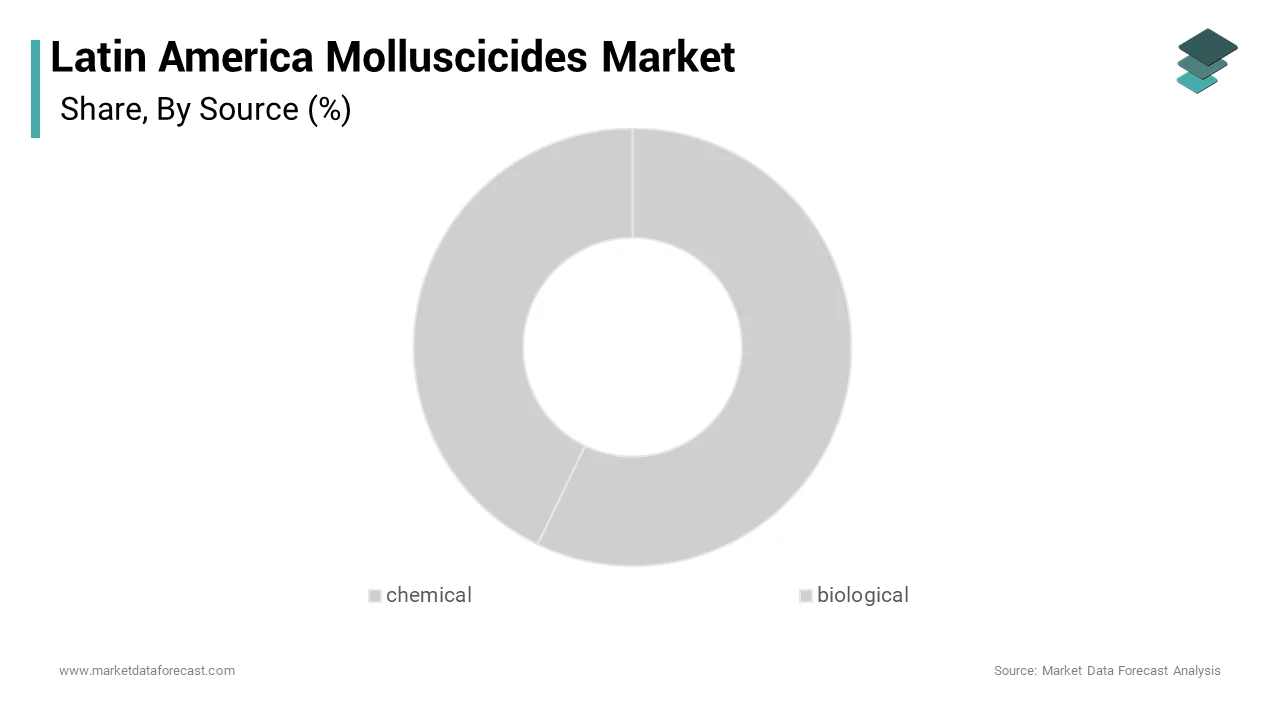
A further key factor driving the dominance of chemical molluscicides is their superior cost effectiveness and the highly established manufacturing infrastructure across the region. Synthetic active ingredients like metaldehyde and methiocarb have been produced for decades allowing manufacturers to achieve massive economies of scale that keep retail prices exceptionally low. The existing infrastructure for synthesizing and formulating these chemicals is deeply integrated into the broader agrochemical industry meaning no new capital investments are required to bring these products to market. This entrenched economic advantage ensures that chemical molluscicides remain the default choice for the vast majority of agricultural operations across Latin America thereby securing their leading market position and ensuring continuous high volume sales throughout the agricultural calendar.
Biological
The biological segment is expected to exhibit a noteworthy CAGR of 8.5% from 2026 to 2034 due to stringent environmental regulations and the ongoing phase out of highly toxic synthetic chemicals across the region. Governments in Latin America are increasingly aligning their agricultural policies with global sustainability goals which includes restricting the use of hazardous active ingredients that pose risks to non target wildlife and water systems. The regulatory shift forces commercial growers and public health authorities to transition toward biological solutions to maintain compliance and avoid heavy fines. The shrinking legal availability of conventional chemicals creates a massive and immediate vacuum that biological products are rapidly filling driving exceptional growth in this segment.
The rapid expansion of this segment is helped along by the surging consumer demand for organic produce and residue free agricultural exports in international markets. Latin American exporters are under immense pressure from premium buyers in Europe and North America to ensure their fruits vegetables and specialty crops are completely free from synthetic chemical residues. The Research Institute of Organic Agriculture (FiBL) demonstrate steady, long-term expansion in global consumer demand for organic products, encouraging regional farmers to expand certified organic farmland for premium international markets. The ability to apply these biological agents right up to the day of harvest without leaving toxic residues provides a massive competitive advantage for export oriented farms. This relentless market demand for clean and organic agricultural products guarantees that the biological molluscicides segment will continue to expand at an unprecedented pace.
By Application Insights
Horticulture Crops
The horticulture crops segment led the Latin America molluscicides market and captured a significant share in 2025. High-value produce such as leafy greens, strawberries, and tomatoes is exceptionally susceptible to severe damage from snails and slugs, which in turn fuels the leading position of this segment. These pests feed on the tender foliage and developing fruits creating unsightly holes and slime trails that render the produce completely unmarketable for fresh consumption. Commercial growers of these high value crops cannot afford to lose their investment to pest damage and are therefore willing to invest heavily in frequent and aggressive molluscicide applications. The sheer economic value at stake ensures that horticulture remains the primary and most lucrative application area for gastropod control products across the region and guarantees consistent and substantial revenue for molluscicide manufacturers.
Moving forward, a driving force backing this segment's lead is the intensive cultivation practices and the creation of favorable microclimates that promote rapid gastropod reproduction. Modern greenhouse operations and high density field plantations utilize frequent irrigation and dense canopy cover which create the dark humid environments that snails and slugs thrive in. Furthermore the sheltered environments of greenhouse production protect these pests from natural predators and harsh weather conditions allowing them to feed and reproduce year round. This combination of intensive farming methods and ideal pest habitats necessitates the continuous and heavy application of molluscicides solidifying the leading position of the horticulture segment.
Turf and Ornament
The turf and ornament segment is experiencing the fastest growth at a CAGR of 7.8% during the forecast period owing to rapid urbanization and the massive expansion of premium landscaping projects across major Latin American cities. As metropolitan areas like Sao Paulo Mexico City and Bogota expand there is a growing emphasis on creating green urban spaces public parks and manicured residential communities to improve the quality of life for residents. Municipalities and private landscaping companies are therefore increasingly investing in specialized molluscicides to protect their investments and maintain the visual appeal of public and private green spaces. This ongoing urban beautification trend guarantees robust and accelerating demand for gastropod control products in the turf and ornament sector.
The fast growth of this segment is boosted by the rising disposable incomes in the region and the subsequent growth of the golf course and sports turf industry. As the middle and upper classes expand in countries like Chile and Brazil there is increased investment in leisure facilities including private golf courses equestrian centers and premium sports clubs. The high maintenance budgets of these premium leisure facilities allow for the frequent application of specialized and often more expensive molluscicide formulations. This lucrative niche market ensures that the turf and ornament segment will continue to grow at the fastest rate in the coming years.
By Type Insights
Metaldehyde
In 2025, the metaldehyde segment held the majority share of the regional market mainly because of its unmatched palatability and strong attractant properties when formulated into pest control baits. For a molluscicide to be effective it must actively draw the target pests out of their hiding places and compel them to consume a lethal dose. The strong attractant capability is particularly crucial in no till farming systems and dense horticultural crops where pests are deeply hidden in the soil or plant debris. The proven ability of metaldehyde to effectively target and eliminate hidden gastropod populations ensures its continued dominance as the most widely used active ingredient in the regional market.
Also, one more force supporting this segment's top position is its exceptional rainfastness and durability in the challenging and often wet field conditions typical of Latin America. Gastropods are most active during and immediately after rainfall making it essential for molluscicides to remain effective even when exposed to heavy moisture. The durability ensures that the bait remains available for consumption by pests that emerge later in the week providing a prolonged window of protection for vulnerable crops. Farmers heavily favor metaldehyde because it reduces the need for frequent reapplications after weather events saving both time and labor costs. This superior performance in wet environments guarantees that metaldehyde will remain the cornerstone of gastropod management strategies across the region.
Fastest Ferrous Sulphate
The ferrous sulphate segment is predicted to witness the highest CAGR of 9.2% between 2026 and 2034. This quick surge of the segment is propelled by the fact that it offers exceptional environmental safety and is widely approved for use in organic farming systems. Unlike traditional synthetic chemicals ferrous sulphate breaks down naturally in the soil and actually acts as a micronutrient supplement providing beneficial iron to the plants without causing toxicity to non target organisms. Ferrous sulphate baits pose virtually no risk to birds dogs or beneficial insects making them highly attractive for use in residential areas and sensitive ecological zones. This perfect alignment with the global shift toward sustainable and organic agriculture guarantees that the ferrous sulphate segment will experience the most aggressive growth trajectory in the market.
The quick rise of this segment is pushed forward by the increasing regulatory restrictions on traditional synthetic alternatives like metaldehyde and methiocarb across the region. Environmental protection agencies in Latin America are progressively banning or severely limiting the use of highly toxic synthetic molluscicides due to their detrimental impacts on aquatic ecosystems and wildlife. The regulatory pressure forces the entire agricultural and vector control sectors to rapidly adopt iron based formulations to maintain operational legality. The shrinking availability of conventional synthetic options creates an immediate and massive market vacuum that ferrous sulphate is perfectly positioned to fill driving its rapid expansion.
REGIONAL ANALYSIS
Brazil Molluscicides Market Analysis
Brazil outperformed other countries in the Latin America molluscicides market and accounted for a 45.7% share in 2025. This supremacy of the country’s market was driven by its massive agricultural output and extensive tropical crop production. High-value horticultural crops dominate much of this country's market. Furthermore, large-scale soybean and corn operations rely heavily on intensive pest management strategies. According to the Brazilian Institute of Geography and Statistics (IBGE), direct agricultural production remains a primary macroeconomic catalyst, though its isolated share of nominal GDP fluctuates under 10%, heavily driving total output through record-breaking grain harvests. Research from the Brazilian Agricultural Research Corporation (EMBRAPA) emphasizes integrated pest management (IPM) to control tropical insects and fungal diseases, reserving chemical molluscicides for highly localized infestations rather than widespread multi-million hectare applications. Furthermore the country is a global leader in the production of organic fruits and vegetables which drives significant demand for advanced iron based biological alternatives. The combination of massive agricultural scale favorable pest ecology and a strong shift toward sustainable farming practices ensures that Brazil remains the most lucrative and dynamic market for molluscicides in Latin America.
Mexico Molluscicides Market Analysis
Mexico was positioned second in the regional market and captured a 25.1% share in 2025. Its massive export oriented horticulture sector and proximity to North American markets have contributed to the growth of this country’s market. The market status in this country is heavily influenced by the strict phytosanitary and cosmetic standards required by buyers in the United States and Canada which demand flawless and residue free produce. Also, the Mexican Ministry of Agriculture and Rural Development (SADER) indicates that Mexico exports over $18 billion in fresh produce globally, reinforcing its position as a primary international supplier of fresh fruits and vegetables. Furthermore the rapid expansion of greenhouse and shade net production in regions like Sinaloa and Baja California creates perfect microclimates for snails and slugs requiring aggressive chemical intervention. This relentless focus on export quality and intensive protected cultivation guarantees that Mexico will remain a critical and rapidly growing hub for gastropod control products.
Argentina Molluscicides Market Analysis
Argentina holds a noteworthy share of the regional market due to its extensive no till farming systems and large scale grain production. The market status in this country is uniquely shaped by the widespread adoption of conservation agriculture which leaves crop residues on the soil surface creating ideal habitats for gastropod pests. According to the Argentine Association of No-Till Farmers (AAPRESID), over 90% of the country’s agricultural surface operates under conservation tillage, prioritizing soil structure protection and moisture conservation while monitoring localized residue-dwelling pests. The economic necessity of protecting high value grain exports from devastating early season pest damage drives consistent and substantial demand for chemical control agents. This unique agricultural paradigm ensures that Argentina remains a vital and highly specialized market for molluscicides in the region.
Chile Molluscicides Market Analysis
Chile grew steadily in the regional market owing to its world class fruit export industry and stringent environmental regulations. The market status in this country is heavily characterized by the production of premium fresh fruits such as grapes cherries and blueberries which are highly susceptible to snail damage and destined for lucrative overseas markets. Frutas de Chile highlights that the country ships over $3 billion in fresh fruit annually, sustaining international market access through strict cosmetic standards and rigorous pest-free quality control systems. The dual pressure of maintaining flawless export quality while complying with rigorous ecological standards forces growers to adopt the most advanced and expensive gastropod control technologies available. This unique combination of premium export focus and strict environmental compliance ensures that Chile remains a highly innovative and profitable market for molluscicides.
COMPETITIVE LANDSCAPE
The competition in the Latin America Molluscicides Market is characterized by intense rivalry among multinational agrochemical giants and emerging regional manufacturers. Established players leverage their extensive research and development capabilities to introduce innovative formulations that offer superior efficacy and environmental safety. Local competitors often compete on price by offering generic versions of established active ingredients making them attractive to cost sensitive smallholder farmers. Product differentiation is achieved through enhanced palatability rainfastness and ease of application which are critical factors in tropical climates. Regulatory compliance serves as a significant barrier to entry prompting companies to invest heavily in obtaining necessary approvals and certifications. Strategic alliances with local distributors and agricultural cooperatives are essential for ensuring broad market coverage and timely product delivery. Intellectual property protection around proprietary bait technologies provides a competitive edge for innovators. Customer loyalty is driven by consistent product performance reliable supply chains and responsive technical support services. The market sees continuous efforts to educate farmers on integrated pest management practices to promote responsible usage. Collaborative ecosystems involving suppliers regulators and growers accelerate the adoption of sustainable pest control solutions.
KEY MARKET PLAYERS
Among various big companies in the Molluscicides market, the major ones are
- Lonza Group AG
- Doff Portland Ltd
- Syngenta Group
- UPL Limited
- Adama Agricultural Solutions Ltd.
- Bayer Cropscience AG
- BASF SE
- De Sangosse SAS
- Marrone Bio Innovations, Inc.
- Neudorff GmbH Kg
- American Vanguard Corporation
- Certis Europe B.V.
Top Players In The Market
- BASF SE operates as a significant global supplier of crop protection solutions with a strong presence in the Latin American molluscicides market. The company provides high quality metaldehyde and iron phosphate based formulations designed to protect high value horticultural crops from gastropod damage. Recent actions include expanding its technical support centers in Brazil and Argentina to assist local farmers with integrated pest management strategies. BASF actively invests in research to develop more rainfast and palatable bait formulations that withstand tropical weather conditions. By collaborating with regional agricultural cooperatives the company ensures widespread distribution and education on safe application practices. These strategic initiatives reinforce its position as a trusted partner for commercial growers seeking reliable and effective snail and slug control solutions across the diverse agricultural landscapes of Latin America.
- Syngenta Group is a major player in the Latin American agrochemical sector offering a comprehensive portfolio of molluscicides tailored for various crop types. The company focuses on delivering innovative biological and chemical solutions that align with evolving environmental regulations and sustainability goals. Recent actions involve launching new iron phosphate based products that are approved for organic farming systems catering to the growing demand for residue free exports. Syngenta partners with local distributors to enhance market reach in remote agricultural regions where gastropod infestations are prevalent. The company also conducts extensive field trials to demonstrate the efficacy of its products under specific regional climatic conditions. Through continuous innovation and strong customer engagement Syngenta strengthens its reputation as a leader in providing advanced pest management technologies that protect crop yields and ensure food security throughout Latin America.
- UPL Limited serves as a key provider of crop protection products in Latin America with a robust lineup of molluscicides for field and horticultural crops. The company leverages its global manufacturing capabilities to supply cost effective and high performance active ingredients such as metaldehyde to the regional market. Recent actions include acquiring local formulation facilities to reduce production costs and improve supply chain efficiency in countries like Mexico and Colombia. UPL focuses on developing customized bait formulations that offer superior palatability and durability in humid environments. The company actively engages with smallholder farmers through educational programs promoting best practices for gastropod control. UPL ensures its molluscicide products remain within reach of resource-constrained growers by prioritizing affordability and accessibility. Through these efforts, the company solidifies its market position and contributes to sustainable agricultural productivity across Latin America.
Top Strategies Used By Key Market Participants
Key players in the Latin America Molluscicides Market primarily focus on product innovation to develop safer and more effective formulations such as iron phosphate baits that meet stringent environmental regulations. Companies invest heavily in expanding their distribution networks to reach remote agricultural areas where gastropod infestations are most severe. Strategic partnerships with local agrochemical distributors and cooperatives enable manufacturers to penetrate deeper into rural markets and provide technical support to farmers. Market participants prioritize regulatory compliance by navigating complex approval processes in different countries to ensure uninterrupted product availability. Educational initiatives targeting growers help promote integrated pest management practices and proper application techniques to maximize efficacy. Pricing strategies balance affordability for smallholder farmers with premium positioning for advanced biological products. Sustainability commitments drive the development of eco friendly alternatives that minimize impact on non target organisms. These multifaceted approaches drive sustainable growth and strengthen competitive positions in the evolving regional market.
MARKET SEGMENTATION
This research report on the Latin america molluscicides market is segmented and sub-segmented into the following categories.
By Source
- chemical
- biological
By Application
- field crops
- industrial
- horticulture crops
- and turf & ornament
By Type
- methiocarb
- Metaldehyde
- ferrous sulphate
- others
By Mode of Application
- sprays
- pellets
- powder
By Country
- Brazil
- Argentina
- Mexico
- Chile
- Rest of Latin America