- Product Description Description
- Table of Contents TOC
- List of Table & Figure LOT
- Get Free Sample PDF Sample PDF
Market Size, 2025
$205.3 BnMarket Estimate, 2026
$218.6 BnMarket Forecast, 2034
$361.3 BnCAGR, 2026–2034
6.48%Latin America Non-Dairy Creamer Market Size, Share, Trends & Forecast (2026-2034)
- Market Scope: Comprehensive Latin American food and beverage market intelligence tracking non-dairy creamers across application categories, product types, distribution channels, and country frameworks.
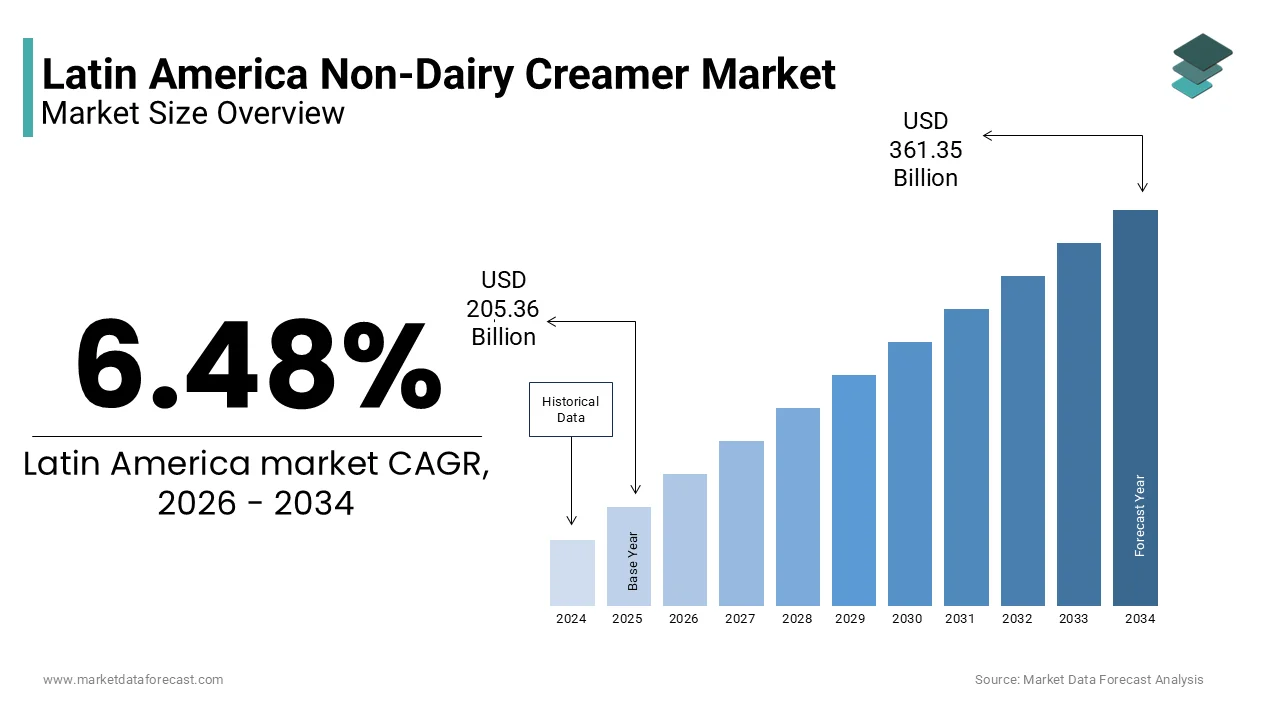
- Market Valuation: Valued at USD 205.36 billion in 2025, estimated at USD 218.67 billion in 2026, and projected to reach USD 361.35 billion by 2034, growing at a robust CAGR of 6.48% from 2026 to 2034.
- Primary Growth Drivers: Exponential expansion of coffee culture and urbanisation across major metropolitan areas, rising prevalence of lactose intolerance, and the growing adoption of flexitarian and plant-based diets.
Key Latin America Non-Dairy Creamer Segment Metrics (2026–2034)
| Category | Leading Segment (2025/2026 Position) | Fastest-Growing Segment |
|---|---|---|
| By Application | Beverages (dominating via deep-rooted regional coffee consumption and ready-to-drink format integration) | Food (expanding rapidly through bakery products, processed convenience snacks, and plant-based alternatives) |
| By Product Type | Soy (holding a major share due to regional soybean agricultural abundance and cost competitiveness) | Almond (growing fastest driven by premiumization trends, specialty coffee shops, and urban wellness choices) |
| By Distribution Channel | Hypermarkets & Supermarkets (leading via extensive retail networks and one-stop shopping convenience) | Online Sales (registering the fastest expansion propelled by digital wallet growth and e-commerce delivery platforms) |
Major Industry Players & Market Structure
Market Structure: Competitive regional landscape featuring multinational food conglomerates, dairy alternative specialists, and agricultural ingredient providers competing on clean-label formulations, functional enrichment, and price competitiveness.
Key Market Players: Nestle, The WhiteWave Foods Company, Cargill, Sugar Foods Corporation, Rich Products, Danone S.A., Pulmuone Foods, Organic Valley Crop Cooperative, Bigtree Group, Archer Daniels Midland Company, Wenhui Food, and Dean Foods.
Latin America Non-Dairy Creamer Market Size
The Latin America non-dairy creamer market size was valued at USD 205.36 billion in 2025 and is expected to reach USD 361.35 billion by 2034 from USD 218.67 billion in 2026. The market is growing at a CAGR of 6.48% during the forecast period.
A non-dairy creamer is a liquid or powder product used as a substitute for milk or cream in coffee, tea, and other hot drinks. It gives beverages a rich, milky taste and texture without using actual dairy milk. These products primarily utilise ingredients such as corn syrup solids, vegetable oils, and sodium caseinate, or, increasingly, plant proteins from soy, almonds and oats to provide creaminess without lactose. The sector serves critical industries including coffee shops, tea houses, bakeries and food service establishments where consistency, shelf stability and cost efficiency are paramount. According to the International Coffee Organisation, Brazil remains the world's largest producer and second largest consumer of coffee, driving extensive domestic retail consumption patterns. Regulatory frameworks vary across nations, with countries like Brazil and Argentina maintaining specific labelling standards for dairy alternatives, ensuring consumer transparency. The evolution of clean label trends has prompted manufacturers to reformulate products to remove hydrogenated oils and artificial additives. As per surveys, the expanding plant-based dairy category in Latin America is actively propelled by flexitarian consumers intentionally reducing their regular dairy intake rather than strict lifestyle vegans. This convergence of dietary necessity, cultural preference, and industrial utility defines the current landscape of the non-dairy creamer industry in Latin America.
MARKET DRIVERS
Surging Coffee Culture and Urbanisation Drive Demand
The exponential growth in coffee consumption and rapid urbanisation across the region accelerate the growth of the Latin America non-dairy creamer market. Coffee shops and quick service restaurants rely heavily on creamers to standardise flavour profiles and enhance customer experience. According to the International Coffee Organisation, total coffee production and regional export allocation across the South American territory experienced fluctuating output volumes due to changing meteorological conditions during the 2023 crop cycle. As per the USDA Foreign Agricultural Service, domestic coffee consumption inside Colombia maintains a stable trajectory supported by localised promotional campaigns targeting speciality premium beans and urban distribution channels. Urban consumers increasingly prefer the convenience of single-serve packets and liquid creamers, which offer longer shelf life than fresh milk. The expansion of café chains in cities like São Paulo, Buenos Aires, and Mexico City further amplifies this trend. Baristas and home users alike seek products that foam well and resist curdling in hot acidic beverages. This consistent daily consumption pattern ensures a stable and growing revenue stream for creamer manufacturers. The integration of creamers into ready-to-drink bottled beverages also expands the application scope beyond hot drinks. Rising middle-class populations in urban centres drive demand for premium coffee experiences where non-dairy creamers play a crucial role in texture enhancement. This structural shift in lifestyle ensures sustained demand for non-dairy creamers across major metropolitan areas in the region.
Rising Prevalence of Lactose Intolerance and Dietary Restrictions
The increasing awareness of lactose intolerance and the ethical shift toward veganism greatly contribute to the expansion of the Latin America non-dairy creamer market. According to National Institutes of Health clinical epidemiology metrics, adult-onset lactase non-persistence affects a major proportion of global populations, with physiological prevalence rates climbing progressively across specific ethnocultural regions. In countries like Peru and Bolivia, indigenous populations have even higher rates of lactose intolerance, creating a natural market for plant-based alternatives. As per surveys, regional market expansions for plant-based alternatives are actively driven by flexitarian dietary limiters seeking food variety rather than a sudden surge in strict vegan lifestyle demographics. Consumers actively seek products free from animal derivatives due to concerns about animal welfare and environmental sustainability. Major food service providers are reformulating menus to include oat, almond, and soy-based creamers to cater to these dietary restrictions. The availability of certified vegan and non-GMO labels influences purchasing decisions among health-conscious buyers. Social media campaigns and celebrity endorsements have normalized plant based diets, reducing stigma and encouraging trial. This demographic shift is not limited to niche groups but has entered the mainstream, compelling manufacturers to diversify their ingredient sources. The demand for allergen-free options further supports this driver as consumers avoid milk proteins for medical reasons, ensuring broad market appeal.
MARKET RESTRAINTS
Health Concerns Regarding Trans Fats and Artificial Additives
Stringent regulatory actions and growing consumer aversion to trans fats and artificial ingredients are major limitations on the traditional segment within the Latin America non-dairy creamer market. Many conventional creamers rely on partially hydrogenated vegetable oils, which are a primary source of industrial trans fats linked to cardiovascular diseases. According to the World Health Organisation, best-practice limits or mandatory bans on industrially produced trans fats have been adopted across multiple South American nations to systematically eliminate these compounds from regional food supplies. As per the National Health Surveillance Agency (Anvisa), Brazil implemented a comprehensive ban prohibiting the production, import, and commercial use of partially hydrogenated oils and fats in all food formulations. However, replacing these fats with healthier alternatives often increases production costs and alters the texture and stability of the creamer. Consumers are increasingly scrutinising ingredient lists, avoiding products with high sugar content, corn syrup solids and artificial flavours. According to research, one in five Brazilian grocery shoppers has explicitly expressed purchasing interest in plant-based, locally sourced, and clean-label snack items. This pressure forces companies to invest in expensive research and development to create clean-label versions that maintain performance. The higher price point of these healthier alternatives can deter price-sensitive consumers, particularly in developing markets. Negative publicity surrounding the health impacts of processed food ingredients continues to dampen enthusiasm for standard non-dairy creamers, limiting market growth.
Economic Volatility and Currency Fluctuations Impact Pricing
Fluctuations in local currencies and economic instability are also a significant restraint on the Latin America non-dairy creamer market. Many key ingredients such as vegetable oils and packaging materials are imported, making them susceptible to exchange rate volatility. As per the International Monetary Fund, consumer price inflation in Argentina experienced triple-digit accelerations, severely weakening local currency stability and domestic household purchasing activities. This economic pressure forces households to reduce spending on premium food items, including specialised non-dairy creamers. Supply chain disruptions caused by logistical bottlenecks and political unrest further exacerbate cost pressures. In Venezuela, hyperinflation has led to shortages of basic food ingredients affecting the availability of non-dairy creamers. Small and medium-sized enterprises lack the financial reserves to absorb sudden cost spikes, forcing them to reduce output or exit the market. The reliance on imported raw materials exposes manufacturers to global price fluctuations, which are often passed on to consumers. Price sensitivity remains high in many Latin American countries, limiting the adoption of premium organic or plant-based creamers. Manufacturers face the dual challenge of maintaining quality while managing erratic input costs, which restricts market expansion. This economic uncertainty creates an unpredictable business environment hindering long-term investment and innovation in the sector.
MARKET OPPORTUNITIES
Innovation in Plant-Based and Functional Ingredients
The development of advanced plant-based formulations and functional ingredients sets the stage for the expansion of the Latin America non-dairy creamer market. Manufacturers are leveraging ingredients such as oat, pea, and flaxseed proteins to create creamers that offer nutritional benefits beyond mere texture enhancement. Oat milk-based creamers have gained popularity due to their creamy texture and neutral flavour profile, appealing to a broad consumer base. According to research, major global alternative milk product variants maintain solid premium pricing layouts despite experiencing a visible stabilisation and volume deceleration in historical sales cycles. Companies are incorporating functional additives such as collagen, probiotics, and vitamins to position creamers as wellness products. These value-added features allow brands to command premium prices and differentiate themselves in a crowded marketplace. The rise of clean label trends encourages the use of simple, recognisable ingredients, which aligns with consumer preferences for transparency. Technological advancements in emulsification and spray drying enable the creation of stable plant-based powders that mimic the performance of dairy. Partnerships with agricultural startups facilitate the sourcing of sustainable and novel ingredients. This innovation trajectory opens new distribution channels in health food stores and online platforms. Consumers seek holistic health solutions. Functional non-dairy creamers offer a unique value proposition that bridges indulgence and nutrition, driving growth in the region.
Expansion of E-Commerce and Direct-to-Consumer Channels
The rapid growth of e-commerce platforms provides a key growth area for brands to reach niche audiences and expand their geographic footprint in the region, which is expected to propel the Latin America non-dairy creamer market. Online retail allows specialised brands to bypass traditional supermarket gatekeepers and connect directly with health-conscious and vegan consumers. As per sources, the digital marketplace for grocery shopping and general retail food continues to register consistent worldwide revenue shifts alongside expanding user adoption curves across developing consumer regions. Subscription models for coffee and tea accessories often include premium non-dairy creamers, fostering customer loyalty and recurring revenue. Digital marketing enables targeted advertising based on dietary preferences and lifestyle choices, increasing conversion rates. Direct-to-consumer channels facilitate immediate feedback, allowing companies to iterate products quickly based on consumer reviews. The convenience of home delivery appeals to busy professionals who prioritise efficiency. Emerging markets in Brazil and Mexico are seeing increased internet penetration, enabling broader access to international brands. Social commerce initiatives on platforms like Instagram and TikTok drive viral trends for specific creamer types such as matcha or turmeric-infused variants. This digital transformation reduces dependency on physical retail space and lowers entry barriers for new entrants. Brands can leverage data analytics to optimise inventory and personalise offerings, enhancing customer satisfaction and retention in the region.
MARKET CHALLENGES
Complex Regulatory Landscape and Labelling Standards
Navigating the complex web of international labelling regulations and food safety standards is a major hurdle for manufacturers in the Latin America non dairy creamer market. Different countries have varying definitions of what constitutes a non-dairy product, particularly regarding the use of sodium caseinate, a milk derivative. According to the Brazilian Chamber of Deputies legislative assembly votes, a major federal bill passed restricting the use of dairy-derived terminology on grocery labels for animal-origin items to establish clear food product definitions. As per The Good Food Institute Brazil policy updates, congressional legislative text has successfully advanced through lower house assemblies to prohibit traditional dairy naming conventions for plant-based alternative retail goods. According to the Chamber of Deputies of Argentina legislative filings, national policymakers introduced a dedicated Food Allergen Law to enforce visible front-of-package consumer hazard warning symbols for common manufacturing ingredients including milk derivatives. Compliance with these diverse regulations requires significant legal and operational resources, increasing overhead costs. Small exporters often struggle to meet the documentation requirements for multiple jurisdictions, limiting their global reach. Changes in regulatory frameworks can occur abruptly, forcing rapid reformulation and relabeling efforts. The lack of harmonisation across borders creates inefficiencies in supply chain management. Manufacturers must stay vigilant about evolving standards to avoid recalls and legal penalties. This regulatory uncertainty slows down product launches and increases time to market for innovative formulations, hindering market growth.
Intense Competition from Fresh Plant-Based Milks
The rising availability and affordability of fresh plant-based milks, such as almond, oat, and soy milk, is a significant competitive challenge to powdered and liquid creamers in the Latin America non-dairy creamer market. Consumers increasingly perceive fresh plant milks as healthier and more natural alternatives to processed creamers. As per the Plant Based Foods Association, total global consumer demand shifts continue to yield steady annual growth across the broader non-dairy milk alternative and plant-derived creamer product sectors. Fresh milks offer versatility for both drinking and cooking, reducing the need for specialised creamer products. The convenience of using a single product for cereal, coffee and baking appeals to minimalist consumers. Improved cold chain logistics have extended the shelf life of fresh plant milks, making them more accessible in remote areas of Brazil and Chile. Baristas and home users often prefer the taste and texture of fresh oat or almond milk over powdered alternatives. This substitution effect erodes the market share of traditional non-dairy creamers, particularly in developed urban markets where fresh options are widely available. Manufacturers of powdered creamers face the challenge of proving the superior stability and convenience of their products. The perception of processed powders as less healthy further complicates marketing efforts. Competing with the fresh appeal of plant milks requires significant investment in brand education and product differentiation to maintain relevance.
 REPORT COVERAGE
| REPORT METRIC | DETAILS |
| Market Size Available | 2025 to 2034 |
| Base Year | 2025 |
| Forecast Period | 2026 to 2034 |
| CAGR | 6.48% |
| Segments Covered | By Application, Product Type, Fat Content, Distribution Channel, and Region |
| Various Analyses Covered | Global, Regional, & Country Level Analysis; Segment-Level Analysis; DROC; PESTLE Analysis; Porter’s Five Forces Analysis; Competitive Landscape; Analyst Overview of Investment Opportunities |
| Regions Covered | Latin America include Brazil, Argentina, Mexico, and the Rest of Latin America |
| Market Leaders Profiled | Nestle, The WhiteWave Foods Company, Cargill, Sugar Foods Corporation, Rich Products, Danone S.A., Pulmuone Foods, Organic Valley Crop Cooperative, Bigtree Group, Archer Daniels Midland Company, Wenhui Food, and Dean Foods |
SEGMENTAL ANALYSIS
By Application Insights
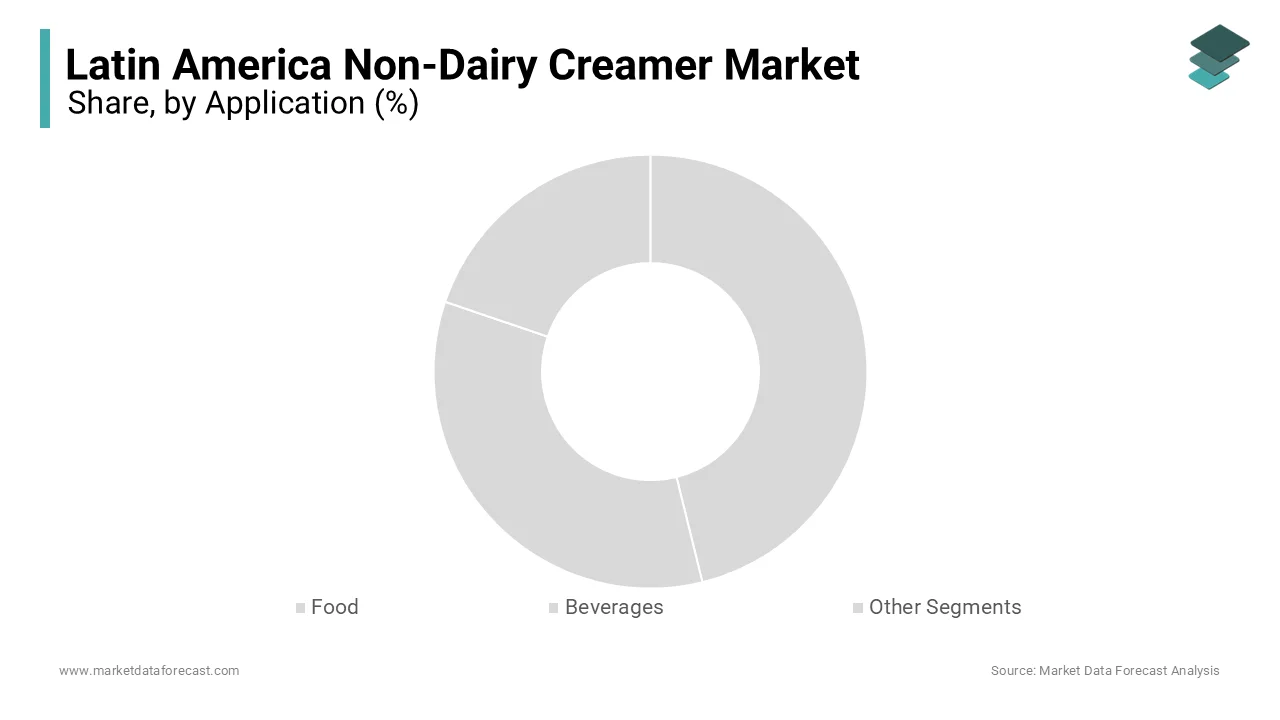
The Beverages segment dominated the Latin America non-dairy creamer market and accounted for a substantial share in 2025. This dominance of the segment was mainly driven by the region's deeply rooted coffee culture and exceptionally high consumption rates. Latin America is home to some of the world's largest coffee producers and consumers, creating a natural demand for beverage enhancers. According to the International Coffee Organisation, coffee production and retail shipments out of Costa Rica and Colombia face volatile structural shifts tied directly to regional weather shocks and changing agricultural yields. Non-dairy creamers are preferred in many households and cafes due to their longer shelf life compared to fresh milk, which is crucial in regions with inconsistent cold chain infrastructure. The rise of speciality coffee shops in urban centres has further normalised the use of alternative creamers to create diverse flavour profiles and textures. Consumers increasingly seek creamy, rich beverages without the heaviness or spoilage risk of dairy. This habitual consumption pattern ensures a steady and resilient demand base for non-dairy creamers. The versatility of these creamers in both hot and cold beverages such as iced coffees and teas expands their utility. As urbanisation continues, the frequency of out-of-home coffee consumption rises, driving institutional demand for bulk non-dairy creamer supplies in the food service sector.
The rapid expansion of the ready-to-drink (RTD and functional beverage sectors significantly contributes to the dominance of the Beverages segment. Manufacturers are increasingly incorporating non-dairy creamers into bottled coffees, teas, and nutritional shakes to enhance mouthfeel and stability without refrigeration. As per research, the international ready-to-drink coffee product segment is maintaining a steady growth rate, with North America securing the single largest regional market share. According to a study, out-of-home iced coffee consumption has accelerated by 5 percentage points over a twelve-month period as retail consumers increasingly adopt cold caffeine options. Non-dairy creamers provide the necessary emulsification properties to prevent separation in these shelf-stable products, ensuring consistent quality from production to consumption. The trend toward functional beverages fortified with vitamins, minerals and plant proteins also drives demand for clean-label non-dairy ingredients. Consumers perceive plant-based creamers as healthier additives that align with wellness goals. Major beverage companies are launching lactose-free and vegan-certified lines to capture this growing demographic. The ability of non-dairy creamers to withstand high-temperature processing makes them ideal for sterilised beverage applications. This industrial integration ensures large-volume off-take agreements, securing the leading position of the beverage application segment in the regional market.
The food segment is the fastest-growing application in the Latin American non-dairy creamer market due to the rising demand for processed foods and bakery products. Urbanisation and changing family structures have increased reliance on convenient packaged meals, snacks and baked goods, where non-dairy creamers serve as cost-effective fat and protein sources. As per regional nutritional monitoring from the Food and Agriculture Organisation, the average household cost of securing a healthy diet across Latin America and the Caribbean experienced a 5.3% spike, worsening regional food affordability metrics. In Argentina and Chile, bakery consumption remains high, with bread and pastries being dietary staples. Non-dairy creamers improve texture, moisture retention, and shelf life in cakes, cookies, and fillings, making them indispensable for industrial bakers. The cost advantage of non-dairy creamers over butter or fresh cream allows manufacturers to maintain competitive pricing in price-sensitive markets. Additionally, the rise of confectionery products such as chocolates and candies utilises non-dairy fats for smoothness and melt characteristics. The versatility of powdered creamers in dry mixes for puddings and desserts further expands their application scope. As middle-class populations expand, their spending on packaged convenience foods increases, driving volume growth for ingredient suppliers. This shift from homemade to industrially produced food items creates a robust growth trajectory for the food application segment.
Technological innovation in plant-based meat and dairy alternatives is propelling the growth of the Food segment at an accelerated pace. Manufacturers are developing hybrid and fully plant-based products that require specialised texturising agents to mimic the sensory experience of animal-derived foods. Non-dairy creamers, particularly those based on coconut or oat, are used to provide creaminess and fat content in plant-based cheeses, yoghurts, and sauces. According to sources, the plant-based dairy product segment across the Latin American territory is expanding via product diversification and localised grocery distribution networks. In Brazil, major food companies are launching vegan cheese spreads and creamy soups that rely on non-dairy creamer technology for stability and flavour release. These innovations appeal to flexitarian consumers who seek to reduce animal product consumption without compromising on taste. The functional properties of non-dairy creamers, such as water binding and emulsification, are critical for achieving the desired texture in these novel food formats. Regulatory support for clean-label ingredients encourages the use of recognisable plant-based components. As consumer awareness of sustainability grows, the demand for plant-based food options rises, creating new avenues for non-dairy creamer integration. This technological adaptation positions the food segment as a dynamic and rapidly expanding category.
By Product Type Insights
The soy segment led the Latin America non dairy creamer market and captured a significant share in 2025. This leading position of the segment was attributed to the region's established production infrastructure and cost competitiveness. Latin America, particularly Brazil and Argentina, are among the world's largest soybean producers, providing an abundant and affordable raw material base for soy-based creamers. According to the United States Department of Agriculture, Brazil's soybean production reached an estimated 159 million metric tons for the 2023/24 marketing year, expanding its dominant supply footprint across global agricultural trade routes. The proximity to raw materials reduces transportation costs and allows manufacturers to offer soy creamers at lower price points compared to almond or oat alternatives. Soy protein has long been accepted in Latin American diets as a nutritious and versatile ingredient, making it easier for consumers to adopt soy-based creamers. The neutral flavour profile of refined soy creamers allows them to blend seamlessly into coffee and tea without overpowering the beverage. Additionally, soy creamers offer a complete protein profile, which appeals to health-conscious consumers seeking nutritional benefits. The mature processing technology for soy isolation and spray drying ensures consistent quality and solubility. This combination of economic advantage, local availability, and consumer familiarity secures the dominant market share for soy-based non-dairy creamers in the region.
The high protein content and positive nutritional perception of soy drive its continued dominance in the non-dairy creamer market. Consumers in Latin America increasingly view soy as a healthy alternative to dairy due to its cholesterol-free nature and rich amino acid profile. As per the Pan American Health Organisation, the deployment of strict nutrient profiling models systematically targets critical dietary limits to curtail the regional proliferation of chronic non-communicable diseases. Soy creamers are often marketed as protein-enriched options appealing to fitness enthusiasts and individuals managing dietary restrictions. In Mexico and Colombia, soy milk and creamers are widely available in supermarkets and health food stores, reflecting strong consumer acceptance. The association of soy with traditional Asian diets and global wellness trends enhances its premium image despite its affordability. Manufacturers leverage this perception by fortifying soy creamers with vitamins and minerals, further enhancing their value proposition. Unlike some nut-based alternatives, soy does not pose significant allergen risks for the general population; although it is a common allergen itself, it is less niche than tree nuts. The widespread availability of soy-based products in various forms, from powder to liquid, ensures broad accessibility. This nutritional credibility and widespread availability sustain the leadership of the soy segment.
The almond segment is rapidly expanding in the Latin America non-dairy creamer market owing to premiumization trends and increasing health consciousness among urban consumers. Almonds are perceived as a premium, nutritious ingredient rich in vitamin E and healthy fats, appealing to affluent and health-oriented demographics. According to The Almond Board of California, specialised international ingredient shipping lanes continue to supply premium kernel volumes directly into Latin American bakery and confectionery production networks. In countries like Chile and Brazil, almond milk and creamers are gaining popularity in upscale cafes and retail outlets as symbols of a sophisticated lifestyle. Consumers are willing to pay a premium for almond creamers due to their perceived superior taste and nutritional benefits compared to soy or corn-based alternatives. The light and slightly sweet flavour profile of almond creamers complements coffee and tea well, enhancing the sensory experience. Social media influence and celebrity endorsements have further popularised almond-based diets, associating them with beauty and wellness. As disposable incomes rise in urban centres, more consumers can afford these premium options. Retailers are expanding their shelves to include a wider variety of almond-based products, catering to this niche but growing segment. This shift toward premium healthy choices fuels the rapid growth of almond creamers.
The expansion of speciality coffee shops and evolving culinary trends are accelerating the adoption of almond non-dairy creamers. Baristas and coffee enthusiasts prefer almond creamers for their ability to create microfoam and add a nutty depth to espresso-based drinks. According to Mercado Libre Argentina, speciality coffee establishments across major metropolitan sectors actively distribute premium imported plant-based formulations to meet modern consumer beverage expectations. As per the Speciality Coffee Association, coffee service operators balance a complex matrix of plant-based drink alternatives by mapping their specific texture, stability, and foam performance during espresso integration. Culinary trends emphasising natural and whole food ingredients favour almond creamers, which are often perceived as less processed than soy counterparts. Chefs and home cooks are using almond creamers in desserts, sauces, and savoury dishes to add richness without dairy. The versatility of almond creamers in both sweet and savoury applications broadens their usage beyond beverages. Marketing campaigns highlighting the sustainable and ethical sourcing of almonds resonate with environmentally conscious consumers. As the culture of coffee appreciation deepens in Latin America, the demand for high-quality complementary ingredients like almond creamers rises. This cultural and culinary shift positions almond as the fastest-growing product type in the market.
By Distribution Channel Insights
In 2025, the hypermarkets and supermarkets segment held the majority share in the Latin America non-dairy creamer market because of its extensive retail network and one-stop shopping convenience. Major chains such as Walmart, Carrefour, and Grupo Pão de Açúcar have a pervasive presence across urban and semi-urban areas, providing wide accessibility to consumers. According to studies, grocery retail trends across Latin American metropolitan hubs are shifting rapidly due to rising product price inflation, which has accelerated total fast-moving consumer goods spending by 9.3% while volume growth slowed to 2.4%. These large format stores offer a wide variety of non-dairy creamer brands and types, allowing consumers to compare prices and read labels easily. The ability to purchase non-dairy creamers alongside other grocery items encourages impulse buys and bulk purchases. Supermarkets often run promotions and discounts on dairy alternatives, attracting price-sensitive shoppers. The organised nature of these retailers ensures product authenticity and consistent stock levels, which is crucial for building consumer trust. Private label non-dairy creamers sold exclusively in these chains also drive volume due to their competitive pricing. The strategic placement of non-dairy creamers in the coffee or health food aisles increases visibility and trial. This combination of accessibility, variety, and promotional activity secures the dominant position of hypermarkets and supermarkets in the distribution landscape.
The dominance of hypermarkets and supermarkets is reinforced by strong supplier relationships and significant shelf space allocation for established brands. Large retail chains negotiate favourable terms with major non-dairy creamer manufacturers, ensuring priority placement and visibility. Exclusive partnerships and joint marketing initiatives further strengthen these ties, driving brand loyalty among shoppers. Supermarkets dedicate substantial shelf space to non-dairy alternatives, reflecting the growing category importance. As per sources, tracking individual meal and beverage usage occasions provides grocery manufacturing brands a clear operational method to establish direct connections between customer purchase frequency and take-home shopper behaviours. Retailers utilise planograms to optimise product placement, ensuring that popular non-dairy creamers are at eye level. The ability of supermarkets to manage complex inventory systems allows them to stock a diverse range of SKUs, including niche and premium varieties. This breadth of selection attracts a wider customer base from budget-conscious buyers to premium seekers. In-store sampling events and demonstrations introduce new products to consumers, effectively driving trial. The trusted environment of established supermarkets reduces perceived risk for first-time buyers of non-dairy products. These operational advantages and strategic merchandising practices maintain the leadership of the hypermarket and supermarket channel.
The Online segment is estimated to register the fastest CAGR during the forecast period. This swift expansion of the segment is fuelled by rapid digital adoption and the expansion of e-commerce platforms in Latin America. Internet penetration and smartphone usage have surged, enabling millions of consumers to shop online for groceries and speciality items. According to research, retail e-commerce networks throughout the Latin American marketplace are undergoing massive transaction volume transformations propelled by expanding digital wallet infrastructure and localised online payment preference shifts. Platforms and local grocery delivery services have made it easier for consumers to access a wide variety of non-dairy creamers, including imported and niche brands. The convenience of home delivery appeals to busy urban professionals and those living in areas with limited retail options. Online channels offer detailed product descriptions, reviews, and comparisons, helping consumers make informed decisions about new plant-based products. Subscription models for coffee and tea accessories often include non-dairy creamers, fostering recurring revenue and customer loyalty. The ability to reach remote areas where physical retail presence is weak expands the market reach for manufacturers. Digital marketing campaigns targeted at specific dietary preferences drive traffic to online stores. This digital transformation lowers entry barriers for smaller brands and accelerates the growth of the online distribution channel.
Personalised marketing and direct-to-consumer (DTC engagement strategies are propelling the growth of the online distribution channel. Brands leverage data analytics to understand consumer preferences and tailor recommendations for non-dairy creamers based on past purchases and browsing behaviour. Social media platforms such as Instagram and TikTok are used to showcase recipes and lifestyle content featuring non-dairy creamers, driving direct sales through shoppable posts. As per sources, data-driven customer personalisation frameworks act as a critical commercial engine, with 76% of retail shoppers indicating that receiving customised corporate communications prompts a higher initial consideration of a brand. DTC websites allow brands to build stronger relationships with customers, offering exclusive bundle discounts and educational content about the benefits of plant-based diets. Online channels facilitate immediate feedback, allowing companies to iterate products quickly based on consumer reviews. The rise of influencer marketing in Latin America has amplified brand visibility and trust for online native non-dairy creamer brands. Consumers appreciate the transparency and storytelling offered by DTC brands, which often highlight sustainability and ethical sourcing. This engaging and interactive shopping experience fosters brand loyalty and drives repeat purchases. The agility of online channels in responding to trends ensures their status as the fastest-growing distribution segment.
REGIONAL ANALYSIS
Brazil Market Analysis
Brazil outperformed other regions in the Latin America non-dairy creamer market and occupied a 35.4% share in 2025. The country's massive population and strong coffee culture create a substantial demand base for beverage enhancers. According to the Brazilian Coffee Industry Association, domestic coffee consumption reached 21.41 million bags in 2025 despite rising product prices impacting historical shopping behaviours. The rising prevalence of lactose intolerance and growing vegan population drive the shift toward plant-based alternatives. Major retail chains have expanded their non-dairy sections, reflecting consumer interest. Local manufacturers leverage abundant soybean production to offer cost-effective soy-based creamers. However, economic volatility and inflation impact purchasing power, limiting premium product adoption. The government's focus on health and nutrition promotes clean-label ingredients, encouraging innovation. E-commerce growth in Brazil facilitates access to diverse non-dairy brands. Urbanisation in cities like São Paulo and Rio de Janeiro accelerates the adoption of modern dietary trends. Despite challenges, Brazil remains the central pillar of the regional market due to its scale and consumption habits.
Mexico Market Analysis
Mexico was the next prominent country in the Latin America non-dairy creamer market and secured a share of 25.1% in 2025. This position reveals a vibrant coffee culture and increasing health awareness. The country is a major producer of Arabica coffee with domestic consumption rising steadily. As per the USDA Foreign Agricultural Service, roasted coffee consumption inside Mexico maintains a modest but sustained volume expansion, climbing to an estimated 1.3 million 60-kilogram bags. The proximity to the United States influences dietary trends with higher adoption of almond- and oat-based creamers. Retail giants like Walmart Mexico and Chedraui dominate distribution, ensuring wide availability. The young demographic profile supports experimentation with new flavours and plant-based options. Regulatory standards for labelling are strict, ensuring product quality and transparency. Economic stability in recent years has supported middle-class growth, boosting demand for premium non-dairy products. The food service sector, including cafes and restaurants, drives institutional demand. Innovation in local brands focuses on indigenous ingredients like agave-infused creamers. Mexico's strategic location facilitates imports and exports, strengthening its market position.
Argentina Market Analysis
Argentina continues to be a crucial player in the Latin America non-dairy creamer market owing to high dairy consumption traditions and a shift toward alternatives due to economic factors. The country has a strong cafe culture, particularly in Buenos Aires, where coffee and mate are social staples. According to Mercado Libre Argentina, imported commercial plant-based options and powdered whiteners are actively distributed via prominent domestic e-commerce systems. Economic instability and high inflation have made cost-effective non-dairy alternatives attractive compared to expensive fresh dairy. Soy-based creamers are popular due to local production and affordability. The vegan movement is gaining traction among younger urbanites, driving demand for diverse plant-based options. Import restrictions sometimes limit availability of international brands, fostering local innovation. Retailers focus on private label offerings to maintain margins. The resilience of the consumer base despite economic challenges sustains market activity. Government policies on food pricing influence product affordability. Argentina remains a significant player due to its cultural affinity for beverages and adaptive consumer behaviour.
Chile Market Analysis
Chile holds a significant position in the Latin America non dairy creamer market because of high health consciousness and advanced retail infrastructure. The country has one of the highest per capita consumptions of coffee and tea in South America. As per regional health evaluations published in SciELO, high prevalence rates of lactose intolerance represent the leading physical barrier driving consumers toward alternative plant-based dairy substitutes. Supermarkets offer extensive selections of premium non-dairy products. The stable economy supports consistent purchasing power for premium items. Consumers are well informed about nutritional labels, preferring clean and organic options. Almond and oat creamers are gaining popularity due to their perceived health benefits. The food service industry is sophisticated, with high demand for quality ingredients. Regulatory frameworks support transparent labelling, aiding consumer choice. Chile serves as a test market for new product launches due to its educated consumer base. The focus on wellness and quality distinguishes the Chilean market in the region.
COMPETITIVE LANDSCAPE
The competition in the Latin America non dairy creamer market is intense characterized by a mix of global multinational corporations and agile local manufacturers vying for market share. Established giants leverage their strong brand equity and extensive distribution networks to dominate urban retail channels while local players compete on price and regional relevance. Product differentiation through flavor innovation and health claims such as low sugar or high protein is a primary strategy to attract discerning consumers. Price sensitivity remains a critical factor due to economic fluctuations in countries like Argentina and Brazil prompting aggressive promotional activities. The rise of private label brands in major supermarket chains adds pressure on branded manufacturers to justify premium pricing. Regulatory variations across countries create complexity for multinational players requiring localized compliance strategies. The growing influence of e commerce platforms allows niche brands to bypass traditional retail barriers and reach specific consumer segments. Collaboration with coffee shops and food service providers is essential for building brand visibility and trial. This dynamic environment requires continuous adaptation to changing consumer preferences and economic conditions to maintain competitive advantage.
KEY MARKET PLAYERS
- Nestle
- The WhiteWave Foods Company
- Cargill
- Sugar Foods Corporation
- Rich Products
- Danone S.A.
- Pulmuone Foods
- Organic Valley Crop Cooperative
- Bigtree Group
- Archer Daniels Midland Company
- Wenhui Food
- Dean Foods
Top Players in the Market
- Nestlé S.A. maintains a dominant presence in the Latin America non dairy creamer market through its extensive portfolio of coffee and beverage enhancers. The company leverages its strong brand recognition and distribution network to reach consumers across Brazil Mexico and Argentina. Its initiative aligns with growing consumer demand for clean label and sustainable options. The company invests heavily in marketing campaigns that highlight the versatility of its creamers in traditional coffee preparations. Nestlé also partners with local coffee chains to promote its products in food service channels. These strategic actions reinforce its leadership position and drive brand loyalty in the region.
- Danone S.A. contributes significantly to the Latin America non dairy creamer market by focusing on health oriented and plant based innovations. The company utilizes its expertise in dairy alternatives to develop creamy and nutritious creamers from soy and coconut. It expansion enhances supply chain efficiency and meets rising regional demand. Danone emphasizes sustainability and ethical sourcing in its marketing efforts appealing to environmentally conscious consumers. The company collaborates with nutritionists to promote the health benefits of plant based diets. These efforts strengthen its reputation as a leader in healthy and sustainable food solutions in Latin America.
- Archer Daniels Midland Company plays a vital role in the Latin America non dairy creamer market as a key supplier of ingredients and finished products. The company leverages its vast agricultural network in the region to source high quality soy and other plant proteins. It innovation supports the development of customized beverage and food products by local brands. ADM focuses on providing technical support and formulation expertise to its clients. The company also invests in sustainable farming practices to ensure long term raw material availability. These actions solidify its position as a critical partner in the regional non dairy supply chain.
Top Strategies Used by Key Market Participants
Key players in the Latin America non dairy creamer market prioritize product innovation to meet the growing demand for plant based and clean label options. Companies invest in research and development to create formulations using local ingredients such as soy oats and coconut that appeal to regional tastes. Strategic partnerships with local distributors and retailers ensure extensive market penetration especially in fragmented rural areas. Expansion of production facilities within the region helps reduce costs and mitigate supply chain risks associated with imports. Digital marketing and e commerce initiatives are utilized to reach younger demographics and health conscious consumers directly. Sustainability initiatives including eco friendly packaging and ethical sourcing are central to corporate strategies to align with consumer values. Price competitiveness remains crucial due to economic volatility prompting companies to offer value sized packs and private label options.
MARKET SEGMENTATION
This research report on the Latin America non-dairy creamer market has been segmented and sub-segmented into the following categories.
By Application
- Food
- Beverages
- Other Segments
By Product Type
- Soy
- Almond
- Coconut Milk
- Creamers
By Fat Content
- Fat Content Low Fat
- Medium Fat
- High Fat
By Distribution Channel
- Hypermarkets or Supermarkets
- Convenience Stores
- Pharmacies or Drugstores
By Country
- Brazil
- Argentina
- Mexico
- Rest of Latin America