- Product Description Description
- Table of Contents TOC
- List of Table & Figure LOT
- Get Free Sample PDF Sample PDF
Market Size, 2025
$209.6 BnMarket Estimate, 2026
$213.5 BnMarket Forecast, 2034
$247.2 BnCAGR, 2026–2034
1.85%Executive Summary: Latin America Nuts and Seeds Market
- Market Scope: Comprehensive analysis of the Latin America nuts and seeds market covering product classifications (nuts and seeds), regional country dynamics, growth drivers, restraints, and competitive landscapes.
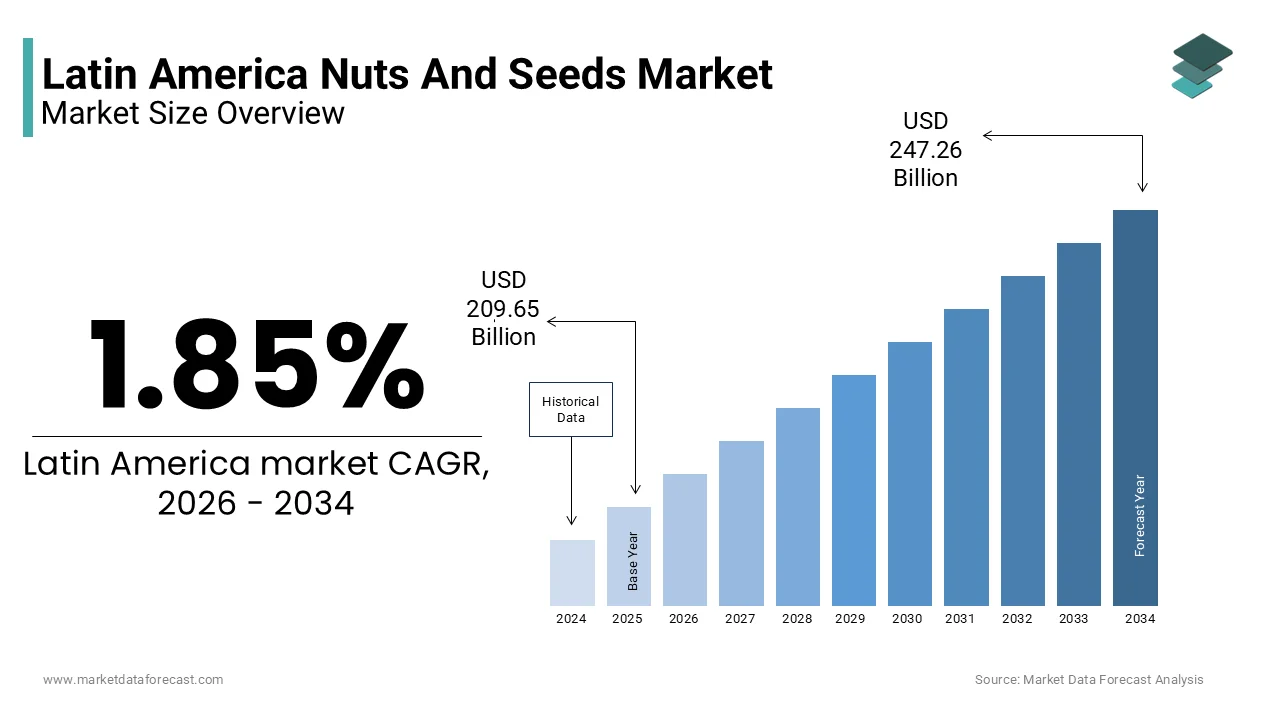
- Market Valuation: Valued at USD 209.65 billion (2025), estimated at USD 213.53 billion (2026), and projected to reach USD 247.26 billion by 2034, registering a steady CAGR of 1.85% during the forecast period (2026–2034).
- Primary Growth Drivers: Consumer dietary shifts toward nutrient-dense, health-conscious foods, advancements in genetically modified crop technologies enhancing resistance to spoilage and pests, rising disposable incomes, and increasing urbanization across Latin American countries.
Key Market Segment Metrics (2026–2034)
| Category | Leading Segment (2025 Position) | Fastest-Growing Segment |
|---|---|---|
| By Nuts | Cashew Nuts (hold the largest market share among all nut categories due to high regional production and culinary demand) | Almonds & Walnuts (driven by rising popularity in snacking and plant-based milk formulations) |
| By Seeds | Soybean, Corn, & Sunflower Seeds (dominant agricultural commodities used for oil extraction and food additives) | Chia Seeds & Sesame Seeds (propelled by superfood health trends and clean-label dietary preferences) |
| By Region / Country | Brazil (leads regional production and consumption, backed by vast agricultural capacity and exports) | Chile, Argentina, & Peru (expanding via specialized agricultural exports, fruit-nut farming, and rising domestic health consciousness) |
Major Market Players & Market Structure
Market Structure: Moderately consolidated agricultural and food-processing landscape featuring global agritech corporations, multinational seed companies, and specialized nut processors competing on supply chain integration, biotechnology, and quality grading.
Key Companies: Blue Diamond Growers Inc, Syngenta A.G., McCormick, Diamond Foods Incorporated, Bayer Crop Science A.G., Archer Daniels Midland, Richardson International, Cargill Incorporated, and Bunge Limited, and others.
 Download Free Sample Report
Latin America Nuts and Seeds Market Size
The Latin America nuts and seeds market size was valued at USD 209.65 billion in 2025 and is expected to reach USD 247.26 billion by 2034 from USD 213.53 billion in 2026. The market is projected to grow at a CAGR of 1.85%.
Nuts and seeds are nutrient-dense, hard-shelled plant kernels or reproductive structures packed with healthy fats, protein, and fibre. This includes prominent commodities such as Brazil nuts, cashews, macadamia nuts, chia seeds, and pumpkin seeds. The market is defined by its dual role in supplying domestic consumption needs and serving as a critical export hub for global health-conscious demographics. Unlike temperate regions, Latin American agriculture leverages tropical climates to produce high-yield oilseeds and tree nuts with distinct nutritional profiles rich in unsaturated fats and micronutrients. According to studies, Latin America is a key region for specific speciality nuts like Brazil nuts, where Brazil, Bolivia, and Peru dominate global production. This substantial output underscores the region’s structural importance in international trade flows. Furthermore, as per sources, non-traditional Latin American exports like quinoa and chia have experienced substantial global demand and production growth over the last decade due to shifting health and dietary trends. These figures illustrate how indigenous crops are transitioning from local staples to premium global commodities. The market is thus characterised by a convergence of traditional agroforestry practices and modern industrial processing aimed at maximising value addition for both regional economies and worldwide consumers seeking plant-based nutrition sources.
MARKET DRIVERS
Surge in Global Demand for Plant-Based Protein Alternatives
The expanding preference for plant-based diets is accelerating the Latin America nuts and seeds market growth. Consumers worldwide are increasingly replacing animal proteins with nutrient-dense alternatives derived from seeds and nuts due to ethical and health considerations. According to the Good Food Institute, U.S. retail sales of plant-based foods reached $5 billion and grew 11 per cent in 2019, though global retail sales for plant-based foods were evaluated at $6.6 billion in later tracking periods. This trend directly benefits Latin American producers who supply key ingredients like soybeans and almonds used in meat analogues. As per sources, a significant percentage of millennials adopt flexitarian eating habits and actively integrate diverse plant-based alternatives into their diets. This demographic shift creates sustained demand for exotic seeds such as hemp and flax, which thrive in Andean soils. Exporters capitalise on this by certifying their products as sustainable and non-GMO, appealing to Western markets. The alignment between regional agricultural strengths and global dietary pivots ensures steady order books for processors. Consequently, the structural transition toward vegetarianism amplifies the strategic value of Latin American harvests, making them indispensable to the international food security framework.
Government Initiatives Promoting Agro-Industrial Value Addition
State-led policies encouraging domestic processing rather than raw material export also fuel the expansion of the Latin American nuts and seeds market. Governments recognise that retaining value within borders boosts GDP and creates skilled employment opportunities. According to research, executing strategic tax incentives for localised agro-processing activities drives manufacturing and capital investments. This fiscal support enables local firms to invest in advanced roasting and packaging technologies, enhancing product shelf life and appeal. Furthermore, as per sources, the deployment of targeted subsidised credit lines for smallholder agricultural cooperatives enhances smallholder export volume by financing critical infrastructure and quality control standards. Such interventions empower farmers to meet rigorous international safety protocols required by EU and US importers. By fostering clusters of specialised processing units, nations reduce dependency on volatile commodity prices. This strategic pivot transforms simple agricultural outputs into branded consumer goods commanding higher margins. The resulting infrastructure development facilitates smoother logistics and consistent supply chains, attracting foreign direct investment. Thus, regulatory frameworks act as catalysts, converting raw potential into realised economic gains across the sector.
MARKET RESTRAINTS
Vulnerability to Climate Variability and El Niño Phenomena
Unpredictable weather patterns severely disrupt yield stability, which constrains the reliability and growth of the Latin American nuts and seeds market. Extreme droughts and floods damage crops during critical flowering stages, reducing overall harvest volumes. According to research, El Niño events cause severe disruptions to agricultural production, precipitation patterns, and crop yields across Central America. This volatility forces buyers to seek alternative suppliers, undermining long-term contract commitments. Moreover, as per sources, rising temperatures accelerate pest infestations in stored grains and increase post-harvest storage losses. Farmers lack resources for climate-resilient irrigation systems, leaving them exposed to seasonal shocks. Insurance coverage remains limited in rural areas, exacerbating financial instability after bad seasons. The inability to guarantee consistent supply erodes trust among international retailers who prioritise predictability. As climate change intensifies, these risks become more frequent. This frequency challenges the market’s capacity to scale operations sustainably without significant adaptive infrastructure investments.
Prevalence of Aflatoxin Contamination Issues
Strict international regulations regarding mycotoxin levels are a formidable barrier to entry for many exporters in the Latin American nuts and seeds market. High humidity conditions favour fungal growth, producing aflatoxins that render batches unsafe for human consumption. According to studies, importing nuts into the European Union requires strict compliance with contamination limits to avoid border rejection. This stringent enforcement compels producers to adopt costly testing and storage solutions often beyond small-scale farmers' capabilities. Furthermore, as per research, improper drying and post-harvest handling techniques are primary factors that accelerate toxin and mould formation in agricultural commodities prior to long-term storage. Lack of technical knowledge perpetuates this cycle, limiting access to premium markets. Compliance costs inflate final product prices, reducing competitiveness against Asian rivals with lower labour expenses. Many cooperatives struggle to maintain cold chain integrity during transport, leading to spoilage. The reputational damage from isolated incidents affects entire regions, deterring new investors. Until widespread adoption of hermetic storage and rapid detection technologies occurs, this biological constraint will continue to suppress market expansion and profit margins for vulnerable participants.
MARKET OPPORTUNITIES
Expansion of Organic and Fair Trade Certified Product Lines
Growing consumer willingness to pay premiums for ethically sourced items offers a lucrative avenue for differentiation in the Latin America nuts and seeds market. Brands focusing on transparency can capture niche segments demanding verified social and environmental impact. According to the Research Institute of Organic Agriculture, global retail sales of organic food and drink exceeded 120 billion euros in 2020, with Latin American origins driving recent expansion in the certified organic farming area. This trend supports certification schemes that assure no synthetic pesticides were used, enhancing soil health. Moreover, as per Fairtrade International, certified agricultural producer organisations benefit from price floors and extra premium payments to counter localised market volatility and support farmer livelihoods. Producers leveraging these narratives build loyal customer bases resistant to price fluctuations. Retailers in Europe and North America actively stock these SKUs to meet ESG goals. Investment in traceability blockchain technology further validates claims, building trust. By positioning themselves as stewards of biodiversity, companies unlock new revenue streams. This strategic focus transforms compliance burdens into marketing assets, driving sustainable growth and community empowerment simultaneously.
Development of Novel Oil Extraction Technologies for Industrial Uses
Advancements in solvent-free extraction methods open doors for using nut oils in cosmetics and biofuels, which diversifies income sources and ultimately drives the Latin American nuts and seeds market. Traditional pressing leaves residual cake usable for animal feed, but new techniques maximise lipid recovery. According to the American Oil Chemists' Society journal, supercritical carbon dioxide extraction can yield over 2 times more oil as specific mechanical screw pressing techniques while preserving lower peroxide values. This efficiency attracts pharmaceutical and beauty industries seeking high-purity ingredients. Besides, as per sources, expanding the production capacity of sustainable aviation fuels sourced from seed oils can displace conventional fossil fuel inputs within global commercial aviation infrastructure. Local refineries investing in these technologies reduce import dependence for lubricants. Waste valorisation becomes feasible, turning shells into biomass energy powering facilities. This circular economy model lowers operational costs while meeting green mandates. Collaboration between agronomists and engineers accelerates pilot projects proving viability. Such innovations extend the lifecycle of harvested crops, ensuring every part generates value, thereby stabilising farmgate prices and boosting sector resilience against commodity swings.
MARKET CHALLENGES
Fragmented Supply Chains and Logistics Bottlenecks
Poor infrastructure connectivity hinders the timely movement of perishable goods from remote farms to ports, which causes spoilage and inhibits the growth of the Latin American nuts and seeds market. Rural roads often lack paving, making transport slow and expensive, especially during rainy seasons. According to sources, logistics costs in Latin America and the Caribbean represent a disproportionately high barrier to trade and are significantly higher than the average cost baselines observed in developed OECD nations. This inefficiency erodes competitive margins against Asian exporters with better port facilities. Moreover, according to the World Bank, it ranks several major producing countries in the bottom quartile for customs clearance speed. Delays at borders result in missed shipping windows, forcing air freight usage, which doubles costs. Smallholders struggle to aggregate volumes necessary for full container loads, relying on intermediaries who take large cuts. The absence of cold storage hubs near fields leads to immediate quality degradation. Addressing these systemic gaps requires massive public-private partnership investments that remain politically contentious and financially challenging to secure quickly.
Intense Price Volatility Due to Speculative Trading
Fluctuating global commodity prices create uncertainty in the Latin American nuts and seeds market. Consequently, this volatility discourages long-term planting decisions by farmers. Speculators amplify minor supply disruptions, causing sharp spikes or crashes in futures markets. As per research, speculative activity and shifting positions in soft commodity futures markets can drive trading volumes and influence spot price volatility. This volatility makes budgeting difficult for cooperatives needing upfront capital for fertilisers. Moreover, as per reports, currency depreciation in exporting nations increases the localised cost of importing specialised industrial equipment and inputs, thereby raising overall production costs. Farmers face squeezed margins when input prices rise faster than crop sale values. Hedging instruments are rarely accessible to small entities, leaving them exposed. Buyers hesitate to sign fixed-price contracts, fearing loss if markets move unfavourably. This mistrust fragments the market, preventing consolidation and efficient resource allocation. Stabilising revenues demands robust policy frameworks and financial literacy programs, which are currently underdeveloped across most regions, impacting overall sector confidence and growth trajectory.
 REPORT COVERAGE
| REPORT METRIC | DETAILS |
| Market Size Available | 2025 to 2034 |
| Base Year | 2025 |
| Forecast Period | 2026 to 2034 |
| CAGR | 1.85% |
| Segments Covered | By Nuts, Seeds, and Region |
| Various Analyses Covered | Global, Regional, & Country Level Analysis; Segment-Level Analysis; DROC; PESTLE Analysis; Porter’s Five Forces Analysis; Competitive Landscape; Analyst Overview of Investment Opportunities |
| Regions Covered | Latin America include Brazil, Argentina, Mexico, and the Rest of Latin America |
| Market Leaders Profiled | Blue Diamond Growers Inc, Syngenta A.G., McCormick, Diamond Foods Incorporated, Bayer Crop Science A.G., Archer Daniels Midland, Richardson International, Cargill Incorporated, and Bunge Limited |
SEGMENTAL ANALYSIS
By Nuts Insights
The peanuts segment led the Latin American nuts and seeds market and captured a significant share in 2025. Its deep integration into local cuisines and extensive industrial applications are attributed to the leading position of this segment. This legume serves as a primary protein source for millions across Brazil and Argentina, where it is consumed daily in various forms. As per the United States Department of Agriculture Foreign Agricultural Service, Brazilian peanut production is projected to scale up to over 1 million metric tons, while global production totals over 50 million metric tons led by China and India. This massive output ensures a steady supply for domestic processing industries that manufacture peanut butter oil and confectionery items. Besides, as per sources, peanuts remain one of the most widely recognised and consumed nuts across Latin American markets. This high volume of internal demand reduces reliance on exports and stabilises market revenues against international price fluctuations. The versatility of peanuts allows them to be used in both savoury dishes and sweet snacks, broadening their consumer base. Local manufacturers leverage this ubiquity to introduce value-added products like roasted salted variants and flavoured coatings. The established agricultural infrastructure for peanut farming further lowers entry barriers for new processors. Consequently, the combination of cultural preference and industrial utility cements peanuts as the dominant segment driving consistent growth and revenue generation within the region.
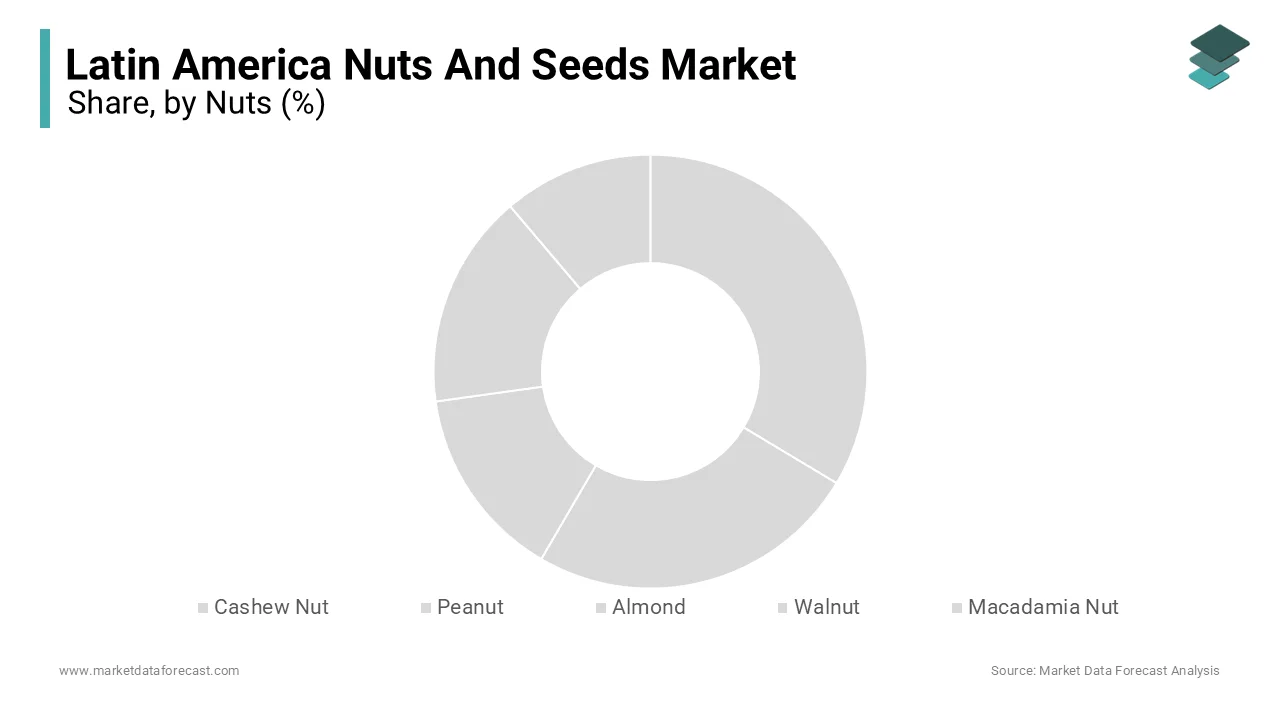
The macadamia nuts segment is expected to exhibit a noteworthy CAGR of 9.4% from 2026 to 2034. This rapid expansion is fueled by the crop's suitability to tropical climates and its premium positioning in health-conscious markets. As per studies, global macadamia orchard footprint and supply capacity are expanding outside traditional regions like Australia and Hawaii. This surge in production capacity meets rising global demand for nutrient-dense snacks rich in monounsaturated fats. Moreover, as per research, manufacturing demand for premium macadamia kernels is growing across consumer snacking and confectionery categories. Producers are investing in early-maturing varieties that reduce time to harvest, enhancing profitability for farmers. The nut’s creamy texture makes it an ideal substitute for dairy in vegan cheese alternatives, appealing to lactose-intolerant consumers. Strategic partnerships between growers and international distributors ensure consistent quality control, meeting strict export standards. As health trends continue to favour low-carb and keto-friendly diets, macadamias gain traction among fitness enthusiasts. This convergence of agronomic advantages and shifting dietary preferences positions macadamia nuts as the most dynamic component of the regional nut sector, offering substantial upside potential for investors and cultivators alike.
By Seeds Insights
The soybeans segment dominated the seed category in the Latin American nuts and seeds market and accounted for a substantial share in 2025. This dominance was driven by its critical role in animal feed and industrial oil production. The crop is extensively cultivated across Argentina and Brazil, forming the backbone of the region’s agricultural economy. According to the Buenos Aires Grain Exchange, South American soybean crush margins face downward pressure due to higher soybean values relative to meal values, resulting in tighter or break-even crush margins. This economic incentive encourages farmers to allocate more land to soy rather than competing crops, ensuring abundant raw material availability. Furthermore, as per the OECD-FAO Agricultural Outlook, international soybean exports are heavily dominated by the Americas, with Latin America leading global shipments at over 70% of worldwide exports, driven heavily by Brazil. The demand for soy-derived proteins in livestock feed drives consistent bulk purchases by multinational agribusiness firms. Processing facilities convert beans into meal and oil, serving diverse sectors including food manufacturing and biofuel production. Government policies supporting biotechnology adoption have enhanced yield stability, reducing vulnerability to pests. The scalability of soybean farming allows for mechanised harvesting, lowering labour costs significantly compared to other seeds. This efficiency translates into competitive pricing structures that attract global buyers. Consequently, the structural importance of soybeans in sustaining the regional food security apparatus and export earnings solidifies their status as the leading seed segment with enduring market strength and widespread industrial applicability.
The chia seeds segment is predicted to witness the highest CAGR of 11.2% during the forecast period. This acceleration is propelled by the rediscovery of ancient Andean superfoods and their alignment with modern wellness trends. As per sources, the cultural heritage and nutritional prominence of regional speciality crops are increasingly leveraged to boost marketing appeal. This cultural validation supports premium pricing strategies adopted by exporters targeting European and Asian markets. Moreover, research published in the Journal of Functional Foods demonstrates that regular chia consumption correlates with improved cardiovascular markers, influencing health professional recommendations. Such scientific backing drives institutional buying for hospitals and schools incorporating functional ingredients. Farmers in Bolivia and Peru are expanding acreage to meet surging international orders. The ease of cultivation in arid regions makes chia an attractive alternative for climate-vulnerable areas. Processors are innovating with chia milk and gel formulations catering to vegan demographics seeking egg replacements. Digital platforms facilitate direct trade connections, eliminating middlemen and increasing farmer incomes. The lightweight nature of seeds reduces logistics costs, enabling efficient global distribution. As consumers increasingly prioritise omega-3 fatty acids without fish sources, chia emerges as a versatile solution. This blend of heritage authenticity and contemporary nutritional science propels chia seeds to the forefront of high-growth opportunities within the regional seed landscape.
REGIONAL ANALYSIS
Brazil Market Analysis
Brazil was the largest player in the Latin American nuts and seeds market and occupied a commanding share in 2025. The country leverages its vast arable land and advanced agro-industrial capabilities. The country leads in soybean and peanut production while emerging as a key player in cashew processing. According to the Brazilian Institute of Geography and Statistics, agriculture contributed around 6.1% to Brazil's Gross Domestic Product in 2025, though the total sector expansion reached a historic 11.7% due to record corn and soybean crops. This robust foundation attracts significant foreign investment into processing technologies, enhancing value addition. Furthermore, as per studies, Brazilian cashew kernel processing and export channels rely on stringent regulatory quality baselines. These upgrades allow Brazilian firms to compete effectively with African suppliers in premium markets. Domestic consumption patterns also shift towards healthier snack options boosting demand for native seeds like pumpkin sunflower. Government initiatives promote sustainable farming practices, reducing environmental impact while maintaining high yields. Infrastructure developments in port facilities streamline export logistics, minimising delays. The integration of smallholder cooperatives with large processors ensures inclusive growth across rural communities. Innovation centres focus on developing drought-resistant varieties that adapt to changing climatic conditions. Consequently, Brazil’s multifaceted approach combining scale, technology, and policy support sustains its dominant position while fostering diversified growth opportunities throughout the regional market ecosystem.
Argentina Market Analysis
Argentina holds a vital position in the Latin American nuts and seeds market. This standing is primarily propelled by its dominance in soybean and sunseed production. The nation’s pampas region provides ideal conditions for high-yield oilseed cultivation, supporting a thriving export industry. According to sources, Argentina maintains a robust crushing and raw material processing capacity for vegetable oil crops. This infrastructural enhancement strengthens the country’s ability to process domestically before exporting finished goods, capturing higher margins. Besides, as per research, expanding certified organic grain and seed farming areas across the region caters to premium environmental standards in foreign export corridors. This trend supports premium branding strategies distinguishing Argentine products from conventional competitors. Political stability reforms have encouraged renewed investor confidence, leading to modernisation of farm equipment. Water management projects mitigate risks associated with periodic droughts, ensuring consistent harvests. Local universities collaborate with industry partners to optimise breeding programs for pest resistance. Export taxes occasionally fluctuate, but overall competitiveness remains strong due to cost efficiencies. The emphasis on traceability systems satisfies stringent international regulatory requirements, building trust with global clients. Thus, Argentina maintains its reputation as a reliable supplier of high-quality oilseeds, contributing significantly to regional trade balances and agricultural innovation landscapes.
Chile Market Analysis
Chile represents a mature landscape within the Latin American nuts and seeds market. The country strategically prioritises the production of high-value tree nuts and unique seed varieties. The country’s Mediterranean climate facilitates excellent growth conditions for walnuts, almonds and hazelnuts destined for premium export markets. According to the Chilean Fruit Exporters Association, Chilean walnut exports experienced varying volume shifts, with market promotion investments targeting regional diversification across Europe and Asia. This shift reduces dependency on traditional Western buyers, enhancing revenue resilience. In addition, as per research, regional reforestation and sustainable woodland management initiatives enhance native tree preservation and agricultural ecosystem protection. These ecological initiatives align with global carbon credit mechanisms, providing additional income streams for growers. Advanced irrigation technologies maximise water efficiency, addressing scarcity concerns common in semi-arid zones. Quality control laboratories enforce rigorous standards, ensuring compliance with phytosanitary regulations abroad. Strong bilateral trade agreements simplify customs procedures, accelerating time-to-market for perishable goods. Consumer education campaigns promote the health benefits of Chilean nuts domestically, boosting local consumption rates. Investment in cold chain logistics preserves freshness during transit, maintaining product integrity. Consequently, Chile’s niche strategy centred on quality, sustainability, and market access establishes it as a premier source of luxury nut products within the broader Latin American context.
Peru Market Analysis
Peru is an emerging player in the Latin American nuts and seeds market. The nation is widely renowned for its indigenous crops, such as quinoa and chia, alongside traditional staples. The Andean highlands provide unique terroir that enhances the nutritional profile of these ancient grains, attracting global attention. According to sources, Peru's annual quinoa production volumes increased dramatically from 22,267 metric tons to over 114,000 metric tons in peak expansion years, positioning Peru as the world's leading producer. This growth empowers rural communities through cooperative models that ensure fair profit distribution. Furthermore, as per studies, deploying integrated agroforestry systems with diverse tree structures improves soil fertility, enhances water retention, and builds asset values for smallholders. These sustainable practices appeal to environmentally conscious importers willing to pay premiums. Government agencies actively promote geographical indications, protecting brand identity against imitation. Export facilitation programs assist smallholders in navigating complex international compliance frameworks. Diversification into processed products such as quinoa flour and chia oil adds value beyond raw commodity sales. Climate adaptation research focuses on frost-resistant varieties, safeguarding yields against erratic weather patterns. Digital marketplaces connect farmers directly with buyers, reducing intermediary costs. Thus, Peru’s emphasis on heritage sustainability and innovation positions it as a leader in functional food ingredients, offering distinctive competitive advantages in the regional and global marketplace.
COMPETITIVE LANDSCAPE
The competitive environment of the Latin America Nuts And Seeds Market features a mix of multinational agribusiness giants and specialized regional processors vying for dominance. Large entities leverage economies of scale to offer cost effective bulk commodities whereas niche players focus on high value organic and heirloom varieties. Intensity rises due to increasing demand for traceable and sustainably sourced ingredients from global retailers. Companies compete aggressively on quality metrics including aflatoxin levels and moisture content adhering to strict international export standards. Innovation in packaging extends product longevity facilitating longer shipping distances without refrigeration. Price wars occur frequently during peak harvest seasons when surplus inventory pressures margins forcing consolidation among weaker operators. Regulatory compliance costs act as barriers to entry protecting established firms with robust legal frameworks. Brand equity plays a crucial role as consumers increasingly recognize specific origins associated with superior taste profiles. Strategic mergers and acquisitions reshape the landscape as larger players absorb local competitors to expand footprint and control supply chains. Technology adoption distinguishes leaders who utilize data analytics for predictive modeling of yields and market trends ensuring optimal resource allocation and minimized waste throughout the complex value chain network.
KEY MARKET PLAYERS
Some of the key players in the Latin America nuts and seeds market are
- Blue Diamond Growers Inc
- Syngenta A.G
- McCormic
- Diamond Foods Incorporated
- Bayer Crop Science A.G
- Archer Daniels Midland
- Richardson International
- Cargill Incorporated
- Bunge Limited
Top Players in the Market
- Cargill operates extensively across Latin America focusing on soybean crushing and seed processing infrastructure. The company integrates upstream farming support with downstream industrial applications ensuring supply chain resilience. Recent initiatives involve upgrading extraction facilities in Argentina to enhance oil recovery rates while reducing energy consumption. Cargill collaborates with local cooperatives to implement sustainable agricultural practices improving soil health and yield consistency. By investing in digital traceability platforms they provide transparency for international buyers demanding ethical sourcing. Their strategic expansion into specialty seed varieties caters to growing demand for functional ingredients in food and feed sectors. These efforts reinforce their operational efficiency and deepen ties with regional producers securing long term access to high quality raw materials amidst fluctuating global commodity markets.
- Archer Daniels Midland maintains a significant presence in the region through its comprehensive grain handling and processing networks. The company leverages advanced biotechnology to optimize seed genetics for drought resistance and nutrient density. ADM recently launched partnerships with Brazilian agribusinesses to co develop next generation soybean strains tailored for industrial use. They invest heavily in logistics infrastructure including river terminals and rail links to streamline export operations from inland farms to coastal ports. By offering financial services and risk management tools they empower farmers to stabilize incomes against market volatility. This holistic approach strengthens supplier loyalty and ensures consistent volume flows. ADM’s focus on value added products like lecithin and proteins diversifies revenue streams while meeting evolving consumer preferences for plant based nutrition solutions across diverse end markets globally.
- Bunge Limited is deeply embedded in South American agriculture particularly in Brazil and Argentina where it manages vast origination networks. The company prioritizes sustainability certifications for its seed and nut offerings aligning with global environmental standards. Bunge recently expanded its processing capacity in Paraguay to handle increased volumes of organic seeds destined for European markets. They utilize precision agriculture technologies to monitor crop health and optimize harvest timing enhancing overall productivity. Strategic acquisitions of smaller regional traders have consolidated their buying power allowing better price negotiation with growers. By integrating blockchain for supply chain visibility they assure customers of product authenticity and safety compliance. These actions fortify their competitive edge by combining scale efficiency with rigorous quality controls ensuring reliable delivery of premium nuts and seeds to discerning international clients worldwide.
Top Strategies Used by Key Market Participants
Key players in the Latin America Nuts and Seeds Market predominantly employ backward integration strategies to secure direct access to farmlands and reduce dependency on third party intermediaries. By establishing contractual farming agreements with smallholder cooperatives companies ensure consistent supply volumes while promoting standardized agricultural practices. Another critical tactic involves heavy investment in processing technology upgrades such as optical sorting and cold pressing which preserve nutritional integrity and extend shelf life. Firms also pursue geographic diversification by expanding into underpenetrated regions like Peru and Bolivia to tap into unique indigenous crops such as quinoa and chia. Sustainability certification programs serve as a major differentiator enabling brands to command premium prices in eco conscious Western markets. Digital transformation initiatives include deploying IoT sensors for real time moisture monitoring during storage preventing spoilage losses. Strategic alliances with research institutions facilitate the development of climate resilient seed varieties capable of withstanding extreme weather events prevalent in the tropics. Additionally vertical integration into retail channels allows manufacturers to capture higher margins by bypassing traditional wholesale distributors and engaging directly with consumers through branded product lines.
MARKET SEGMENTATION
This research report on the Latin America nuts and seeds market is segmented and sub segmented into following categories
By Nuts
- Cashew Nut
- Peanut
- Almond
- Walnut
- Macadamia Nut
By Seeds
- Sunflower Seeds
- Sesame Seeds
- Chia Seeds
- Corn
- Soybean
By Country
- Brazil
- Argentina
- Mexico
- Rest of Latin America