- Product Description Description
- Table of Contents TOC
- List of Table & Figure LOT
- Get Free Sample PDF Sample PDF
Market Size, 2025
$73.61 MnMarket Estimate, 2026
$82.88 MnMarket Forecast, 2034
$214.67 MnCAGR, 2026–2034
12.60%Latin America Smart Insulin Pen Market Size
The Latin America smart insulin pen market size was valued at USD 73.61 million in 2025 and is anticipated to reach USD 82.88 million in 2026 from USD 214.17 million by 2034, growing at a CAGR of 12.60%. during the forecast period from 2026 to 2034.
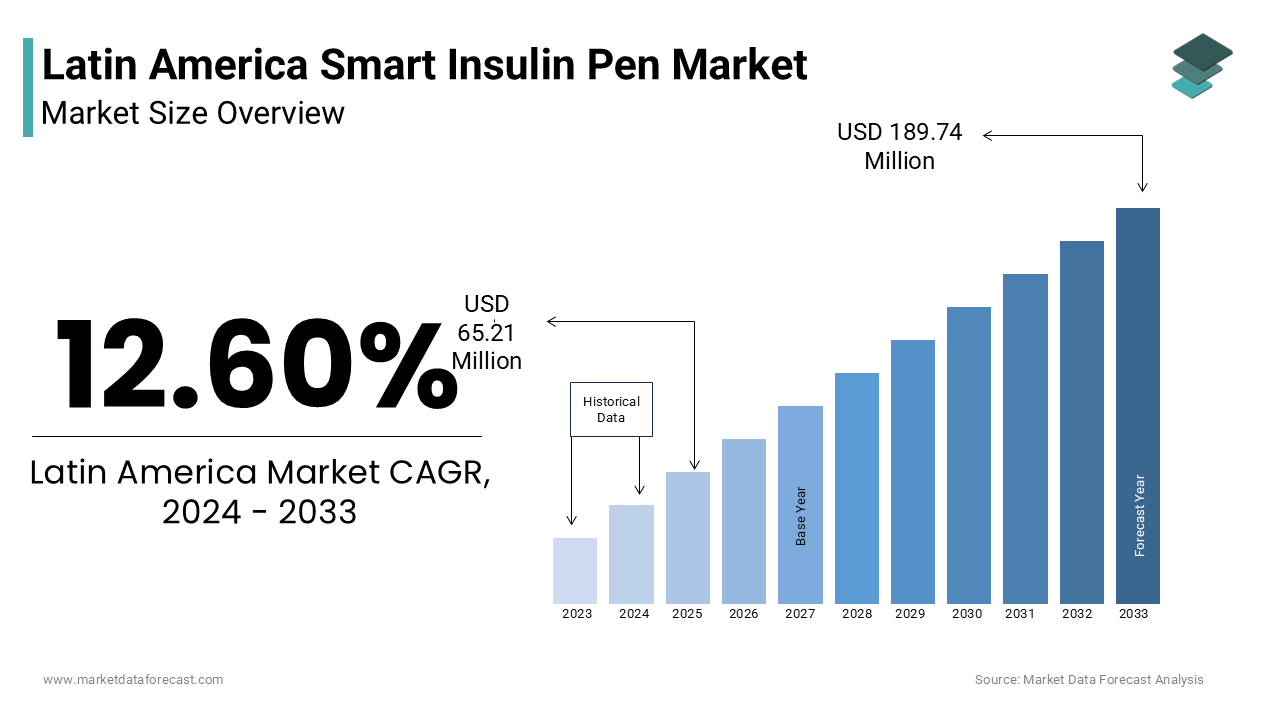
A smart insulin pen is a digitally enhanced injection device that connects to mobile applications via Bluetooth or NFC, allowing users to track dosage history, receive reminders, and monitor trends in real time. These devices offer significant advantages over traditional insulin pens by improving medication adherence, reducing dosing errors, and enabling remote monitoring by healthcare providers. According to the International Diabetes Federation (IDF), Latin America has one of the fastest-growing diabetes burdens globally, with over 30 million adults currently living with the condition. In Brazil alone, as per the Brazilian Society of Diabetes, diabetes affects more than 16 million people, making it a critical public health issue. As healthcare systems modernize and telemedicine expands, particularly post-pandemic, there is growing interest in connected medical devices like smart insulin pens. Countries such as Mexico and Argentina are also witnessing increased investment in digital health infrastructure, which supports the integration of smart diabetes care tools into clinical practice and self-management routines.
MARKET DRIVERS
Rising Prevalence of Diabetes Across Latin America
The escalating prevalence of diabetes, particularly type 1 and type 2 forms, across the region, is one of the primary drivers of the Latin America smart insulin pen market. According to the Pan American Health Organization (PAHO), diabetes is among the top five causes of death in most Latin American countries, with Brazil, Mexico, and Colombia experiencing the highest incidence rates. The disease burden is exacerbated by lifestyle changes, including poor diet, sedentary habits, and urbanization, leading to a surge in both diagnosed and undiagnosed cases. This growing patient pool necessitates advanced, user-friendly insulin delivery solutions that can improve treatment compliance and reduce complications. Smart insulin pens provide features such as dose tracking, error alerts, and connectivity to health apps, which support better glycemic control. Additionally, in Argentina, where diabetes affects nearly 5 million people, initiatives from the Ministry of Health promoting digital health tools have accelerated the acceptance of smart insulin pens among endocrinologists and patients.
Expansion of Digital Health Infrastructure
The rapid expansion of digital health infrastructure, including telemedicine platforms, electronic health records, and mobile health applications, is another key driver fueling the growth of the Latin America smart insulin pen market. Governments and private healthcare providers across the region are increasingly investing in digital transformation to enhance patient engagement and streamline chronic disease management. This shift toward digitized healthcare ecosystems creates a conducive environment for the adoption of smart insulin pens, which seamlessly sync with smartphones and cloud-based platforms to log dosage history and generate usage analytics. Furthermore, partnerships between technology firms and pharmaceutical companies are accelerating the availability of connected diabetes management solutions. In Colombia, for instance, collaborations between local startups and global insulin manufacturers have led to pilot programs introducing smart pens in urban clinics.
MARKET RESTRAINTS
High Cost of Smart Insulin Pens
The high cost associated with these advanced devices, limiting their accessibility to a broad patient base, is a major restraint affecting the Latin America smart insulin pen market. Unlike traditional insulin pens, which are often subsidized or available at low cost through public health programs, smart insulin pens incorporate electronic components, connectivity features, and proprietary software that significantly increase manufacturing and retail prices. In Brazil, where public healthcare provides basic diabetes supplies, access to smart insulin pens remains largely restricted to private hospitals and specialized clinics catering to higher-income individuals. Similarly, in Argentina, despite growing awareness of digital health solutions, affordability remains a barrier, especially amid ongoing economic instability and currency devaluation.
Limited Awareness and Training Among Healthcare Professionals
Limited awareness and insufficient training among healthcare professionals regarding the use and benefits of these digital devices is another significant challenge restraining the Latin America smart insulin pen market. While smart insulin pens offer enhanced functionality, including dose tracking, error prevention, and remote monitoring, their adoption requires adequate education for both physicians and patients. According to a 2023 survey conducted by the Latin American Diabetes Association (ALAD), less than 40% of endocrinologists in Colombia and Peru were familiar with the full range of features offered by smart insulin pens, resulting in underutilization within clinical practice. In Ecuador and Bolivia, where healthcare infrastructure is less developed, many practitioners continue to prescribe traditional insulin delivery methods due to a lack of exposure to newer digital alternatives. Moreover, in public health systems across the region, training programs for new medical technologies are often limited, leaving healthcare workers without the necessary skills to recommend or manage smart pen usage effectively. In response, some pharmaceutical companies have initiated localized training campaigns and workshops; however, these efforts remain fragmented and inconsistent.
MARKET OPPORTUNITIES
Integration with National Telehealth Programs
Integration of these devices with expanding national telehealth and remote patient monitoring programs is a significant opportunity for the Latin America smart insulin pen market. Governments across the region are increasingly recognizing the importance of digital health solutions in managing chronic diseases like diabetes, particularly in rural and underserved populations. In Brazil, the Ministry of Health has expanded its Telessaúde Brasil Redes initiative, which connects primary care providers with specialists via digital platforms, creating a favorable environment for incorporating smart insulin pens into virtual consultations. In Mexico, the Instituto Mexicano del Seguro Social (IMSS) has been piloting remote diabetes management projects that utilize connected devices, providing a model for future smart insulin pen deployment.
Growing Demand for Personalized Diabetes Management Solutions
The rising demand for personalized diabetes management solutions, driven by increasing patient engagement and self-monitoring trends, is another promising opportunity for the Latin America smart insulin pen market. Patients today seek greater control over their health, preferring digital tools that allow them to track medication adherence, analyze blood glucose patterns, and share insights with healthcare providers. According to a 2023 study by the Latin American Diabetes Association (ALAD), nearly 70% of diabetic patients in urban centers of Colombia and Chile expressed interest in using connected health devices, citing convenience and better disease understanding as key motivators. Smart insulin pens align with this trend by offering real-time dose logging, customizable reminders, and data synchronization with mobile health applications. In Brazil, startups and health tech firms are developing localized diabetes management apps that integrate with smart insulin pens, enhancing usability and patient engagement. Additionally, in Argentina, private clinics are adopting personalized care plans that include smart pen usage as part of structured diabetes education programs.
MARKET CHALLENGES
Regulatory Hurdles and Approval Delays
Complex and often lengthy regulatory approval process across different countries in the region is one of the foremost challenges facing the Latin America smart insulin pen market. Each nation has its regulatory framework for medical devices, requiring separate submissions, clinical evaluations, and compliance certifications, which can delay product launches and market entry. For example, in Brazil, the National Health Surveillance Agency (ANVISA) enforces stringent requirements for digital medical devices, including cybersecurity assessments and interoperability testing, which can extend approval timelines by several months. Similarly, in Mexico, the Federal Commission for the Protection against Sanitary Risk (COFEPRIS) mandates rigorous documentation and post-market surveillance, adding complexity for international manufacturers seeking distribution. Smaller companies lacking extensive regulatory expertise often struggle to navigate these requirements, limiting their ability to compete with larger multinational firms. Additionally, frequent policy updates and evolving standards for digital health products further complicate compliance efforts.
Uneven Access to Internet and Smartphone Connectivity
The uneven access to reliable internet and smartphone connectivity, particularly in rural and lower-income communities, is a critical challenge impeding the widespread adoption of smart insulin pens in Latin America. Smart insulin pens rely on wireless communication technologies such as Bluetooth or NFC to sync with mobile applications, making consistent digital infrastructure essential for their functionality. However, according to a 2023 report by the International Telecommunication Union (ITU), nearly 30% of the population in Central America and parts of South America still lacks regular access to high-speed internet, limiting the usability of connected health devices. In more developed markets such as Argentina and Chile, disparities persist between urban and rural regions, affecting the feasibility of deploying smart insulin pens nationwide. In response, some manufacturers have introduced offline-capable features, allowing data storage until connectivity is restored; however, these workarounds do not fully replace real-time feedback and remote monitoring capabilities.
SEGMENTAL ANALYSIS
By Connectivity Insights
The bluetooth connectivity segment holds the largest share in 2024 which was driven by its widespread adoption in smart insulin pens due to seamless integration with mobile applications and broader compatibility with modern smartphones. Bluetooth Low Energy (BLE) technology allows for continuous data synchronization between the pen and health management apps, enabling real-time dose tracking, error alerts, and remote monitoring capabilities. Moreover, in Mexico, major pharmaceutical companies have launched localized digital health platforms that rely on Bluetooth connectivity to provide personalized medication reminders and analytics.
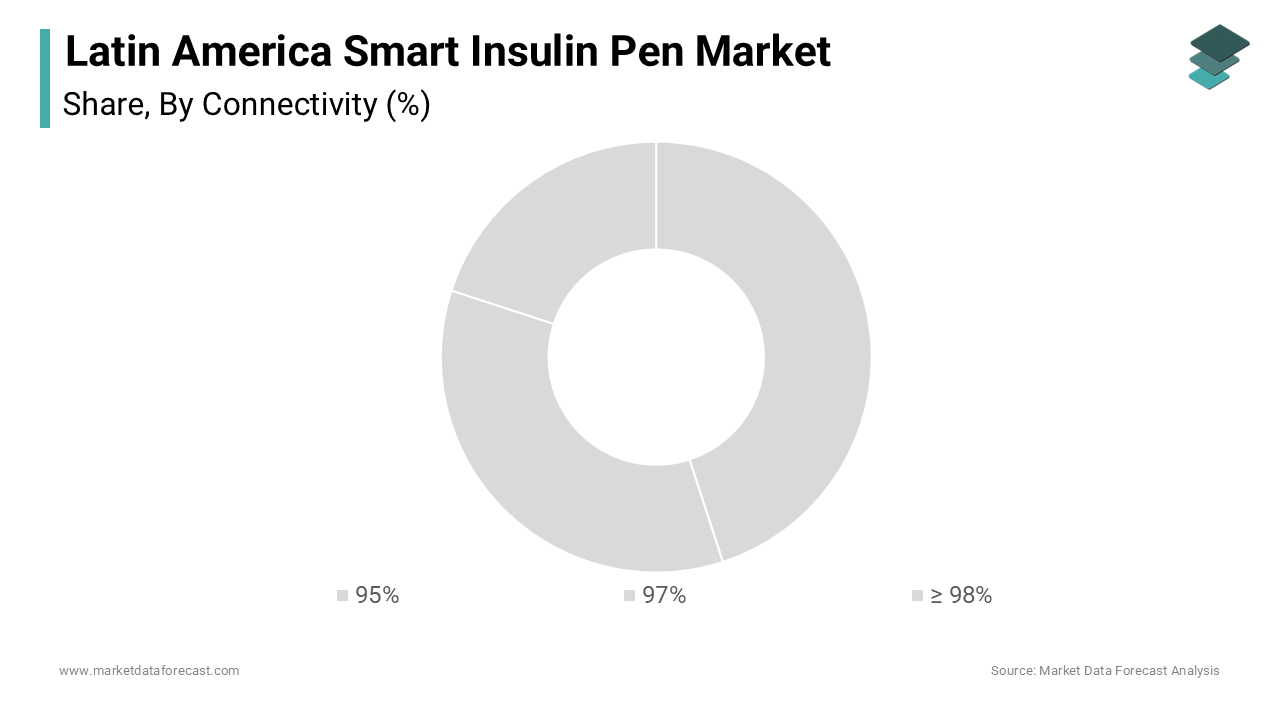
The Near Field Communication (NFC) segment is emerging as the fastest-growing in the Latin America smart insulin pen market and is projected to expand at a CAGR of 19.4% from 2025 to 2033. Increasing demand for contactless and instant data transfer capabilities, particularly in settings where Bluetooth may not be feasible due to power constraints or device limitations, is primarily fuelling the growth of Near Field Communication (NFC) segment. NFC-based smart insulin pens allow users to simply tap their smartphones against the device to upload dose history, making them highly user-friendly for elderly patients and those with limited digital literacy.
By Indication Insights
The Type 1 Diabetes segment dominated the Latin America smart insulin pen market by accounting for an estimated share of 65.2% in 2024. Individuals with Type 1 diabetes require multiple daily insulin injections, making smart insulin pens an essential tool for managing dosing accuracy, tracking injection times, and preventing errors is largely propelling the rise of Type 1 Diabetes segment. According to the International Diabetes Federation (IDF), over 1.2 million people in Latin America live with Type 1 diabetes, with Brazil alone accounting for nearly 400,000 cases, the highest number in the region. Additionally, government-led initiatives promoting digital diabetes care, particularly in urban centers, have further strengthened the adoption of these devices among Type 1 patients.
The Type 2 Diabetes segment is the fastest-growing in the Latin America smart insulin pen market, anticipated to expand at a CAGR of 17.8% during the forecast period. While traditionally managed through oral medications and lifestyle modifications, an increasing number of Type 2 diabetes patients are transitioning to insulin therapy due to disease progression and improved treatment guidelines. According to the Pan American Health Organization (PAHO), Type 2 diabetes accounts for more than 80% of all diabetes cases in Latin America, with Brazil, Mexico, and Colombia experiencing the highest prevalence rates. As per the Brazilian Society of Diabetes in 2023, over 14 million people in the country suffer from Type 2 diabetes, many of whom could benefit from smart insulin pens to improve medication adherence and glycemic control. In Mexico, the Ministry of Health has updated its national diabetes protocol to encourage earlier adoption of insulin in Type 2 patients, thereby increasing demand for digital insulin delivery tools.
By Distribution Channel Insights
The hospital pharmacies segment commanded the prominent share at 68.1% in 2024 which reflects the predominant role of institutional healthcare settings in distributing smart insulin pens across Latin America. These devices are often prescribed by endocrinologists and dispensed directly within hospital networks, ensuring proper patient education and clinical oversight.
The retail and online pharmacies segment is the fastest-growing in the Latin America smart insulin pen market and is projected to expand at a CAGR of 18.6% from 2025 to 2033. Increasing preference for direct-to-consumer healthcare purchasing, greater internet penetration, and expanding e-commerce infrastructure is primarily propelling the progress of retail and online pharmacies segment. Additionally, in Argentina, where economic volatility has led to fluctuating availability of subsidized medical supplies, private retail pharmacies have become critical access points for technologically advanced diabetes products.
REGIONAL ANALYSIS
Brazil Smart Insulin Pen Market Insights
Brazil led the Latin America smart insulin pen industry which is driven by its high diabetes prevalence, expanding digital health infrastructure, and increasing adoption of connected medical devices. The country’s public health system, Sistema Único de Saúde (SUS), has been gradually integrating digital health tools into diabetes management programs, particularly in urban centers like São Paulo and Brasília. Private healthcare providers and insurance companies have also played a crucial role in promoting smart insulin pens, especially among Type 1 diabetes patients who require precise dose tracking and error prevention features. In recent years, partnerships between global pharmaceutical firms and local distributors have facilitated broader access to these devices. Additionally, Brazil’s growing telemedicine sector has encouraged the use of smart pens that sync with mobile health applications, allowing remote monitoring by physicians.
Mexico Smart Insulin Pen Market Insights
Mexico holds a significant share of the Latin America smart insulin pen industry, propelled by rising diabetes rates, government support for digital health initiatives, and increasing private-sector investment in connected medical devices. The Instituto Mexicano del Seguro Social (IMSS) and other public institutions have begun piloting smart insulin pen programs to improve treatment adherence and reduce complications associated with poor glycemic control. In urban areas such as Mexico City and Monterrey, private clinics and specialty pharmacies have integrated smart pens into comprehensive diabetes care packages, catering to higher-income patients. Additionally, the country’s evolving regulatory environment, including updates by the Federal Commission for the Protection against Sanitary Risk (COFEPRIS), has facilitated faster approval of connected medical devices. As per a 2023 report by the Inter-American Development Bank, Mexico’s progress in digital health integration is noted, noting increased collaboration between tech startups and pharmaceutical companies to develop localized diabetes management platforms.
Argentina Smart Insulin Pen Market Insights
Argentina is another key player in the Latin America smart insulin pen market, supported by its well-established healthcare infrastructure and increasing focus on digital diabetes management. In Buenos Aires and other major cities, hospitals and private clinics have begun adopting smart insulin pens as part of structured diabetes care programs aimed at improving patient outcomes. Additionally, collaborations between international medical device manufacturers and local distributors have helped increase product availability despite economic fluctuations affecting healthcare spending.
Chile Smart Insulin Pen Market Insights
Chile holds a notable player in the Latin America smart insulin pen market, benefiting from its well-developed digital health ecosystem and proactive government support for connected medical technologies. The government-backed National Telehealth Program (Telesalud) has facilitated the adoption of smart insulin pens in both public and private healthcare facilities, particularly in Santiago and Valparaíso. As per a 2023 report by the Pan American Health Organization (PAHO), Chile ranks among the top Latin American countries in terms of digital health readiness, with over 75% of public hospitals equipped with electronic health record systems compatible with connected devices. Additionally, private insurers and diabetes care startups have introduced subscription-based models for smart insulin pens, enhancing accessibility for middle- and high-income patients. In partnership with international pharmaceutical firms, Chilean regulators have expedited approvals for innovative diabetes technologies, supporting faster market entry.
Rest of Latin America Smart Insulin Pen Market Insights
The Rest of Latin America, including Colombia, Peru, Ecuador, and Central American nations, collectively holds a decent share of the smart insulin pen industry, indicating substantial growth potential driven by increasing diabetes awareness and gradual digital health adoption. In Colombia, the Ministry of Health has launched initiatives to incorporate digital tools into diabetes care, particularly in Bogotá and Medellín, where telemedicine is expanding rapidly. According to the Colombian Diabetes Association, over 3 million people in the country suffer from diabetes, with rising demand for precision medicine and connected health solutions. However, affordability, regulatory hurdles, and uneven digital connectivity remain barriers in rural regions.
COMPETITIVE LANDSCAPE
The competition in the Latin America smart insulin pen market is characterized by a blend of multinational pharmaceutical giants and emerging regional players striving to capture a growing patient base suffering from diabetes. As awareness of digital health solutions increases, so does the intensity of competition, with companies differentiating themselves through technological innovation, pricing strategies, and localized service offerings. While global players like Sanofi, Novo Nordisk, and BD dominate due to their strong brand recognition and established distribution networks, smaller biotech and medtech firms are entering the space with cost-effective and user-friendly alternatives tailored to specific national markets. The competitive landscape is further shaped by evolving regulatory frameworks, reimbursement policies, and varying levels of digital infrastructure development across the region. Companies are also engaging in strategic collaborations with telehealth providers, insurance entities, and government bodies to accelerate adoption and ensure broader accessibility. As the demand for connected diabetes care grows, the market is expected to witness increased innovation, mergers, and localized product launches aimed at capturing a larger share in this rapidly transforming industry
KEY MARKET PLAYERS
Key players in the Latin America Smart Insulin Pen Market include
- Medtronic Plc
- Sanofi S.A.
- Novo Nordisk A/S
- Eli Lilly and Company
- Owen Mumford Ltd.
- BIOCORP
- Jiangsu Delfu Medical Device Co., Ltd.
- Berlin-Chemie AG
- F. Hoffmann-La Roche AG
Top Players in the Latin America Smart Insulin Pen Market
Sanofi is a global leader in diabetes care and has been actively expanding its presence in the Latin American smart insulin pen market. The company offers connected insulin delivery solutions that integrate with digital health platforms, supporting better patient engagement and remote monitoring. Sanofi has been working closely with regional governments and healthcare providers to introduce smart pens into public and private diabetes management programs, particularly in Brazil and Mexico.
Novo Nordisk, a pioneer in diabetes therapeutics, plays a significant role in advancing smart insulin pen adoption across Latin America. The company focuses on integrating digital technologies with traditional insulin delivery systems to enhance treatment adherence and improve patient outcomes. In countries like Argentina and Chile, Novo Nordisk has launched pilot initiatives that pair smart pens with mobile apps designed for real-time dose tracking and personalized feedback.
BD (Becton, Dickinson and Company) contributes to the Latin American market by offering innovative injection technologies and partnering with digital health startups to develop compatible smart insulin delivery systems. BD’s emphasis on user-centric design and interoperability with telemedicine services has positioned it as a key player in promoting connected diabetes care across urban centers in the region.
Top Strategies Used by Key Market Participants
One of the primary strategies employed by key players in the Latin America smart insulin pen market is strategic partnerships with local healthcare providers and technology firms. These collaborations allow companies to tailor their products to regional needs, improve distribution networks, and gain access to established patient databases and clinical settings.
Another major approach is investment in digital health integration, where manufacturers are enhancing their smart insulin pens with compatibility for mobile applications, cloud-based analytics, and telemedicine platforms. This enables seamless data sharing between patients and physicians, improving long-term disease management and increasing product adoption.
Lastly, companies are focusing on educational initiatives and training programs for healthcare professionals and end-users. By raising awareness about the benefits of smart insulin pens and providing hands-on training, firms aim to overcome resistance to adoption and build trust among medical practitioners and diabetic communities across Latin America.
RECENT MARKET DEVELOPMENTS
- In January 2023, Sanofi partnered with a leading Brazilian telehealth provider to integrate its smart insulin pen data into a national diabetes management platform, allowing real-time monitoring and personalized recommendations for patients across urban clinics.
- In May 2023, Novo Nordisk launched an educational campaign in Mexico targeting endocrinologists and diabetes educators, aiming to increase familiarity with smart insulin pen features and encourage wider prescription within both public and private healthcare systems.
- In September 2023, BD introduced a new line of interoperable smart insulin pens in Argentina, designed to work seamlessly with existing electronic health record systems used in public hospitals, enhancing usability and clinical integration.
- In February 2024, a European digital health startup expanded its operations into Colombia by forming a joint venture with a local pharmacy chain to distribute smart insulin pens along with subscription-based diabetes tracking services.
- In August 2024, a Chilean medtech firm acquired a local diabetes app developer to enhance its smart insulin pen ecosystem, enabling users to receive AI-driven dosage insights and improved connectivity with healthcare providers.]
MARKET SEGMENTATION
This research report on the Latin America Smart Insulin Pen Market is segmented and sub-segmented into the following categories.
By Connectivity
- Bluetooth Connectivity
- Near Field Communication (NFC)
By Indication
- Type 1 Diabetes
- Type 2 Diabetes
By Distribution Channel
- Hospital Pharmacies
- Retail & Online Pharmacies
By Country
- Mexico
- Brazil
- Argentina
- Chile
- Rest of Latin America