- Product Description Description
- Table of Contents TOC
- List of Table & Figure LOT
- Get Free Sample PDF Sample PDF
Market Size, 2025
$9.14 BnMarket Estimate, 2026
$9.72 BnMarket Forecast, 2034
$15.84 BnCAGR, 2026–2034
6.3%Executive Summary: Latin America Smart Locks Market
- Market Scope: Comprehensive regional analysis of the Latin American smart locks market covering end-user sectors, communication technologies, product variants, and country-level smart security adoption metrics.
- Market Valuation & Forecast: Valued at USD 9.14 billion in 2025, estimated at USD 9.72 billion in 2026, and projected to reach USD 15.84 billion by 2034, registering a steady CAGR of 6.3% (2026–2034).
- Primary Growth Drivers: Rapid penetration of smartphones and connected IoT devices, rising safety concerns coupled with urban crime rates, and heavy R&D investments by key players into portable, automated security solutions. Counterbalancing restraints include high device retail pricing and data privacy concerns.
Key Latin America Smart Locks Market Segment Metrics (2026–2034)
| Category | Leading Segment (2025 Position) | Fastest-Growing Segment |
|---|---|---|
| By End-Users | Residential (accounted for the largest share driven by home automation and personal security needs) | Commercial (expanding rapidly due to corporate office upgrades, hospitality, and rental management integrations) |
| By Technology | Wi-Fi (led the market due to seamless cloud connectivity, remote access, and voice assistant integration) | Bluetooth (growing significantly due to low power consumption and reliable close-range smartphone unlocking) |
| By Product Types | Deadbolts (held the primary market share owing to established physical robustness and retrofitting ease) | Lever Handles (experiencing high growth driven by architectural trends in commercial and modern residential spaces) |
| By Region / Country | Mexico & Brazil (dominated regional market share backed by high urbanization and rising smart home adoption) | Argentina & Chile (emerging as dynamic markets driven by rising middle-class disposable incomes and security awareness) |
Major Latin America Smart Locks Market Players & Competitive Landscape
Market Structure: Highly competitive regional landscape featuring prominent global hardware manufacturers, tech innovators, and security conglomerates competing intensely on advanced cryptographic protocols, IoT connectivity, app-less mobile access, and strategic corporate real estate partnerships.
Key Industry Companies: Candy House Inc., Cansec Systems Ltd., HavenLock Inc., Spectrum Brands Holdings, Inc., Kwikset Corp., Master Lock Co., MIWA Lock Co., Ltd., Onity Inc., August Smart Lock, SentriLock LLC, UniKey Technologies, and Schlage.
 Download Free Sample Report
Latin America Smart Locks Market Size
The size of the Latin America smart locks market was worth USD 9.14 billion in 2025 and is anticipated to grow at a CAGR of 6.3% from 2026 to 2034, reaching USD 15.84 billion by 2034 from USD 9.72 billion in 2026.
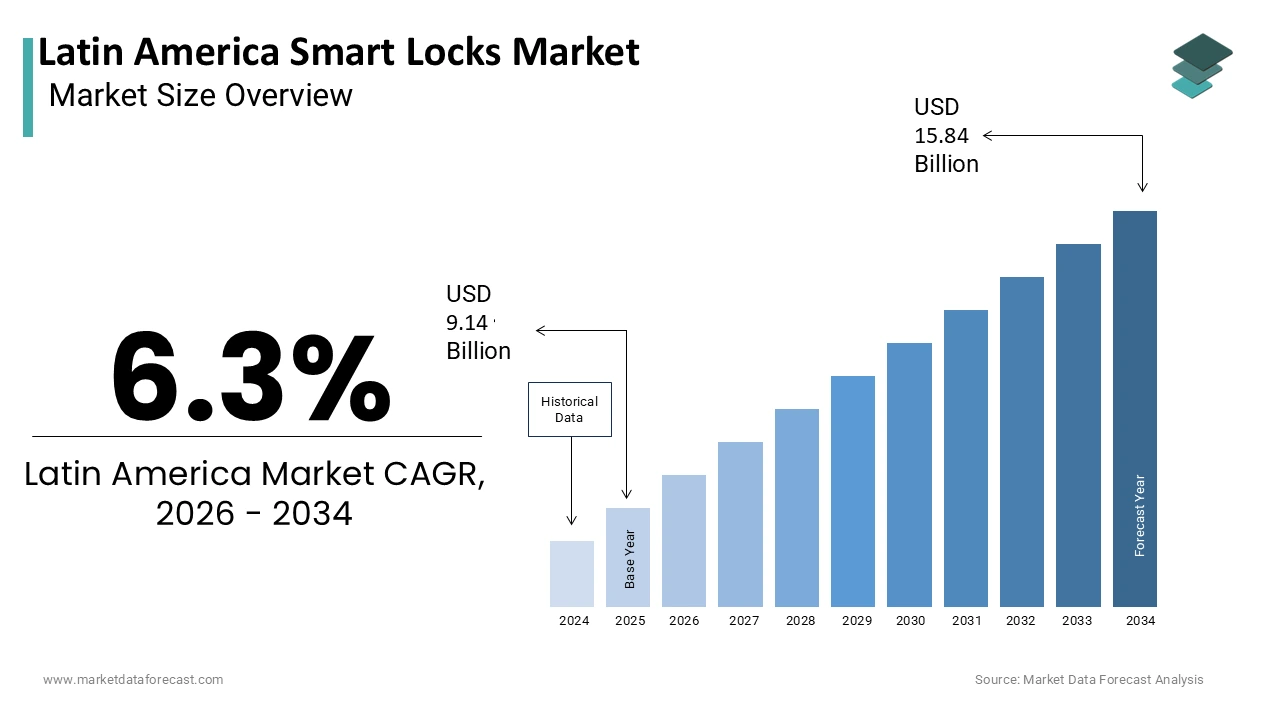
The smart locks are driven by urbanization and digital connectivity. As per the United Nations Department of Economic and Social Affairs, the urban population in Latin America reached 81% in recent years creating dense living environments where enhanced security measures are paramount. These statistics demonstrate the foundational readiness for smart home adoption as consumers seek convenience and peace of mind through integrated security solutions. Rising disposable incomes in middle class households further propel the demand for security features that integrate with existing smartphone ecosystems. Regulatory frameworks in countries like Brazil and Mexico are beginning to address data privacy concerns associated with connected devices ensuring consumer trust.
MARKET DRIVERS
Escalating Security Concerns Drive Adoption of Advanced Access Control
The rising crime rates and property theft is escalating the growth of the Latin America smart locks market. As per the United Nations Office on Drugs and Crime, homicide rates in certain Central American countries exceed 40 per 100000 inhabitants, creating a pervasive sense of insecurity among residents. This high threat level compels homeowners and businesses to invest in robust security systems that offer real time monitoring and alerts. Smart locks provide a real-time layer of protection by allowing users to track entry and exit logs remotely via mobile applications. Traditional mechanical locks are increasingly viewed as insufficient against sophisticated burglary techniques prompting upgrades to electronic alternatives. Insurance companies in Mexico and Chile offer premium discounts for properties equipped with certified smart security devices incentivizing adoption. Government initiatives promote safe city projects that integrate private security data with public surveillance networks enhancing overall community safety. Real estate developers incorporate smart locks as standard features in new constructions to attract security conscious buyers.
Growth of Short-Term Rentals: Security-Conscious Operational Efficiency
The booming short term rental sector by addressing logistical chashort-termshort-termr property man,agers is additionally propelling the growth of the Latin ,America smart locks marketAccording tohe Airbnb, Latin America is one of its fastest-growing regions, with over 1 million active listings requiring efficient check-in and check-out processes. Smart locks enable hosts to generate temporary access codes for guests eliminating the need for physical key exchanges and reducing operational friction. Property management companies utilize centralized platforms to manage multiple units simultaneously improving scalability and customer satisfaction. Automated entry systems reduce the risk of lost keys and unauthorized duplication lowering maintenance costs for owners. Guest experiences improve as self check in options allow for arrival at any hour, with check-in for host availability. Regulatory frameworks in cities like Buenos Aires and Medellin encourage formalization of rental markets which often mandates higher security standards for licensed properties. Integration with booking software ensures seamless synchronization of access permissions with reservation dates.
MARKET RESTRAINTS
High Initial Costs Limit Mass Market Penetration
The elevated upfront expenses are hindering the growth of the Latin America smart locks market. According to the Economic Commission for Latin America and the Caribbean, poverty rates remain above 30% in several countries restricting household spending on non-essential luxury items. Smart locks typically cost three to five times more than traditional mechanical locks making them inaccessible for low income families. Installation costs add further financial burden, particularly for retrofitting older doors that require structural modifications to accommodate electronic components. Maintenance expenses including battery replacements and software updates, create recurring costs that deter budget-conscious consumers. Limited financing options for budget-conscious investment projects prevent many potential buyers from spreading payments over time. Local manufacturers struggle to compete with imported premium brands due to higher production costs and limited economies of scale. Consumers often perceive smart locks as optional luxuries rather than essential security tools delaying purchase decisions until prices drop. These financial barriers restrict market growth to affluent urban enclaves leaving vast rural and suburban populations underserved.
Unreliable Internet Infrastructure Hinders Connectivity
The inconsistent internet connectivity is declining. As per the International Telecommunication Union, while urban broadband coverage is expanding,g rural areas still face significant gaps, with only 40% of households having stable high-speed internet access. Smart locks relying on Wi Fi or cloud-based services experience disruptions during outages rendering remote access features unusable. Power instability in regions like Northeast Brazil and parts of Colombia causes frequent disconnections requiring manual overrides that defeat the purpose of automation. Latency issues can delay command execution causing frustration for users expecting instant response from their security systems. Backup battery systems mitigate some risks but do not resolve connectivity dependencies for real time monitoring and alerts. Technical support is scarce in remote areas making troubleshooting difficult for non-technical users.
MARKET OPPORTUNITIES
Integration with Broader Smart Home Ecosystems Creates Value
The emergence of smart locks with comprehensive home automation platforms for manufacturers to offer bundled solutions is likely to create new opportunities for the growth of the Latin America smart locks market. Smart home device adoption in emerging countries grows when products interoperate seamlessly with existing ecosystems like voice assistants and lighting controls. Latin American consumers increasingly seek integrated experiences, where unlocking the door automatically adjusts lighting and temperature settings for comfort. Telecom operators in countries like Mexico and Chile bundle smart security packages with fiber optic internet subscriptions, driving cross-selling opportunities. Developers create open API standards allowing third-party applications to integrate with smart locks, enhancing functionality and customization. Energy efficiency features linked to access control appeal to environmentally conscious consumers seeking sustainable living options. Retail partnerships with electronics stores facilitate demonstration centers where customers can experience integrated workflows firsthand. Subscription models for cloud storage and advanced features generate recurring revenue streams for service providers.
Expansion into Commercial and Industrial Sectors Opens New Revenue Streams
The diversification into commercial applications for manufacturers beyond residential areas is additional factor to escalate the growth of the Latin America smart locks market. According to the International Labour Organization, the service sector employs over 60% of the workforce in major Latin American economies, creating demand for secure access control in offices and retail spaces. Businesses utilize smart locks to manage employee access rights dynamically, reducing administrative overhead associated with physical key management. Corporate campuses inSãoo Paulo and Bogotá adopt biometric-enabled smart locks to enhance security protocols and monitor attendance efficiently. The Pan American Health Organization emphasizes infection control measures in healthcare facilities, driving adoption of touchless entry systems to minimize surface contact. Logistics companies use smart padlocks for container tracking and security,y improving supply chain visibility and reducing theft risks. Educational institutions implement access control systems to regulate student movement and enhance campus safety during operating hours. Government buildings upgrade legacy systems to meet modern security standards,s complying with regulatory requirements for data protection.
MARKET CHALLENGES
Cybersecurity Vulnerabilities Erode Consumer Trust
The susceptibility to hacking and data breaches is a key challenge for the growth of the Latin America smart locks market. High profile incidents involving unauthorized access generate negative media coverage discouraging potential adopters concerned about privacy. The lack of unified cybersecurity regulations across the region leaves consumers vulnerable to exploitation by malicious actors. Manufacturers struggle to balance ease of use with robust encryption standards, often compromising security for user convenience. Lack of awareness among users regarding best practices such as regular password changes exacerbates vulnerability risks. Liability issues remain unclear when breaches occur, creating legal uncertainties for both providers and consumers. Insurance policies rarely cover digital theft damage, leaving victims without recourse for financial losses.
Lack of Standardized Installation Protocols Increases Complexity
The absence of uniform installation standards for seamless deployment is an additional factor that impedes the growth of the Latin American smart locks market. The varying door thicknesses and material compositions in older Latin American architecture complicate retrofitting processes for universal smart lock models. Professional installers are scarce in many regions, forcing consumers to attempt DIY installations that often result in malfunction or damage. The Construction Industry Institute reports that renovation projects frequently encounter unforeseen structural issues requiring custom modifications that increase costs and timelines. Compatibility issues between different smart lock brands and existing door hardware create fragmentation, confusing consumers during selection. Warranty claims rise due to improper installation, leading to disputes between manufacturers, retailers,s and customers. Training programs for local technicians are limited, ed leaving a skills gap in the service ecosystem. Building codes in some municipalities do not account for electronic locking mechanisms, sms creating regulatory ambiguities for compliance.
REPORT COVERAGE
| REPORT METRIC | DETAILS |
| Market Size Available | 2025 to 2034 |
| Base Year | 2025 |
| Forecast Period | 2026 to 2034 |
| Segments Covered | By End-Users, Technology, Product Types, and Region |
| Various Analyses Covered | Global, Regional, and Country-Level Analysis, Segment-Level Analysis, Drivers, Restraints, Opportunities, Challenges; PESTLE Analysis; Porter’s Five Forces Analysis, Competitive Landscape, Analyst Overview of Investment Opportunities |
| Countries Covered | Argentina, Chile, Peru, Mexico, Brazil, Rest of Latin America |
| Market Leaders Profiled | Candy House Inc. |
SEGMENTAL ANALYSIS
By End Users Insights
The residential segment was accounted in holding 54.2% of the Latin American market (Marforin, 2025), with rising homeownership rates and increasing consumer awareness of homeownership and personal safety. The United Nations Habitat program states that urban housing deficits in major Latin American cities have led to a surge in new construction projects where developers integrate smart security features as standard amenities. This trend is particularly evident in middle-class neighborhoods where residents seek affordable yet effective security solutions to protect their families and assets. Homeowners prefer retrofitting existing doors with smart locks rather than replacing entire entry systems due to lower costs and ease of installation. Social media influence plays a significant role as homeowners share experiences and recommendations online, creating viral demand for specific brands and models. Real estate agents highlight smart home capabilities as key selling points, ts accelerating adoption among buyers seeking modern living standards. Government subsidies for energy-efficient homes sometimes include smart security components, encouraging broader uptake.
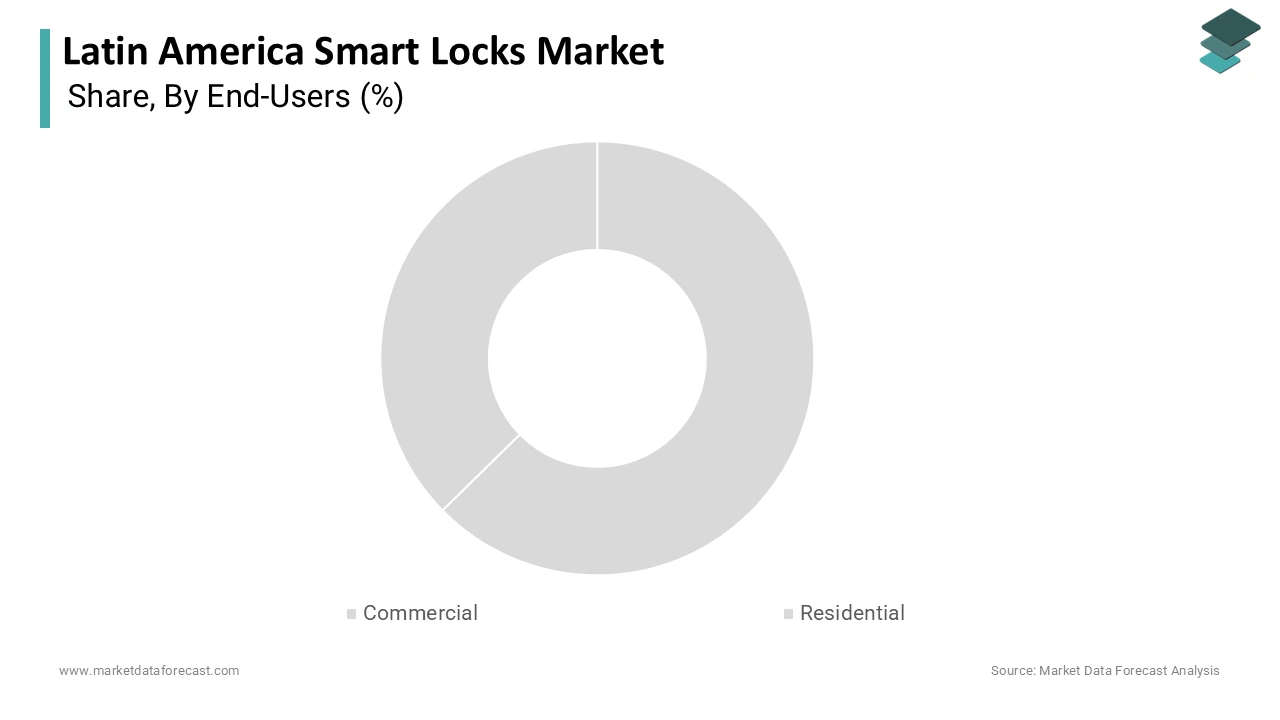
The commercial segment is likely to witness the fastest CAGR of 9.8% during the forecast period, driven by digital transformation in business operations. The number of small and medium enterprises requiring flexible access control solutions for employees and clients is increasing. Smart locks enable businesses to manage employee permissions dynamically, reducing administrative burdens associated with physical key distribution and retrieval. Corporate security protocols increasingly mandate audit trails for compliance and liability purposes, which smart locks provide through detailed digital logs. Retail stores utilize smart locks to monitor after-hours access,s preventing internal theft and ensuring inventory security. Hospitality industries adopt these systems to streamline guest check-in processes, enhancing operational efficiency and customer satisfaction. Integration with building management systems allows facility managers to coordinate security with lighting and HVAC systems, optimizing energy usage. Insurance providers offer reduced premiums for commercial properties equipped with certified smart security devices,s lowering overall operational costs.
By Technology Insights
The Bluetooth segment was the largest, accounting for a Bluetooth share of the Latin America Smart Locks Market in 2025, due to its low power consumption, ease of use, and wide smartphone compatibility. The smartphones sold in Latin America come equipped with Bluetooth Low Energy technology, ensuring broad device compatibility for smart lock applications. This ubiquity eliminates the need for additional hardware or hubs, making Bluetooth locks an attractiveentry-levell option for cost-conscious consumers. Users appreciate the simplicity of unlocking doors by simply approaching them with their phones without needing active internet connections which is crucial in areas with unstable Wi Fi. Battery life for Bluetooth locks typically extends to 12 months or more, reducing maintenance frequency and operational costs for users. Installation processes are straightforward often requiring only basic tools, appealing to do-it-yourself enthusiasts who wish to avoid professional installation fees. Security protocols such as encryption have improved significantly, addressing earlier concerns about signal interception and unauthorized access. Manufacturers focus on developing apps with intuitive interfaces, enhancing user experience and fostering brand loyalty.
The Wi Fi segment is likely to witness the fastest CAGR of 8.5% during the forecast period, driven by demand for remote access and integration with broader smart home ecosystems. Consumers increasingly value the ability to grant temporary access to guests or service providers from anywhere in the world,ld a feature exclusively supported by Wi-Fi connectivity. Smart home speaker adoption in the region is rising, allowing users to control locks via voice commands through integrated Wi Fi networks. Real-time notifications enhance security by alerting homeowners immediately when doors are unlocked, providing peace of mind during travel or work hours. Property managers leverage Wi Fi locks to monitor multiple units simultaneously without physical presence,e improving operational scalability. Cloud-based storage of access logs facilitates easier auditing and compliance for commercial applications. Although Wi Fi locks consume more power, advancements in battery technology and hardwired options mitigate this drawback effectively.
By Product Types Insights
The deadbolts segment accounted for 44.2% of the Latin America Smart Locks Market in 2025 due to their superior security reputation and compatibility with standard door frames. The new housing developments increasingly specify deadbolt-compatible entry points by aligning with builder preferences for standardized hardware. Consumers perceive deadbolts as more robust than lever handles, which are often viewed as vulnerable to forced entry techniques such as kicking or prying. Insurance companies frequently require deadbolt installation for policy validation by reinforcing their status as essential security components. Manufacturers offer a wide variety of smart deadbolt designs ranging from sleek modern aesthetics to traditional styles, catering to diverse architectural preferences. The mechanical reliability of deadbolts combined with electronic convenience creates a compelling value proposition for risk-averse buyers. Replacement parts and accessories are readily available in local hardware stores, ensuring long-term maintainability.
The lever handles segment is likely to witness a fastest CAGR of 7.2% from 2026 to 2034 with the accthessibility requirements and aesthetic tr,edriven byodern interior design. The importance of accessible design for aging populations and individuals with disabilities is promoting the use of lever handles, which require less grip strength than knobs. Latin American building codes in countries like Chile and Brazil are increasingly incorporating universal design principles, mandating lever-style mechanisms in public and multi-family residential buildings. Interior designers favor lever handles for their contemporary look and ergonomic benefits, driving demand in renovation projects and upscale apartments. Smart lever handles integrate seamlessly with these form factors,s offering the same connectivity features as deadbolts, while maintaining visual appeal.
COUNTRY LEVEL ANALYSIS
Mexico Smart Locks Market Analysis
Mexico was the largest contributor,y holding 38.2% of the Latin America Smart Locks Market share in 2025, with its proximity to the United States and strong manufacturing base. The Mexican Ministry of Economy states that the country is a leading exporter of electronic components,s facilitating local assembly of smart locks at competitive prices. High levels of cross-border trade introduce advanced technologies and brands to the domestic market, quickly influencing consumer preferences. Real estate developers in tourist destinations such as Cancun and Los Cabos integrate smart access systems into vacation rentals to cater to international visitors accustomed to such conveniences. Government initiatives promote digital inclusion, expanding internet access, ss which supports the functionality of Wi-Fi-enabled devices. Local distributors partner with global brands to provide warranty and support services, building consumer trust. The growing middle class exhibits higher disposable income, allowing for investment in premium home automation products.
Brazil Smart Locks Market Analysis
Brazil smart locks market was ranked second, holding 22.8% of the share in 2025 with a vast consumer base and increasing digital adoption. High property crime rates in urban centers like São Paulo and Rio de Janeiro create urgent demand for enhanced security measures beyond traditional methods. The Central Bank of Brazil reports that credit availability for home improvements has increased, enabling homeowners to finance smart security upgrades. Local tech startups develop innovative solutions tailored to Brazilian infrastructure challenges such as power fluctuations and intermittent internet connectivity. E-commerce platforms facilitate easy access to a wide range of international and domestic brands, reaching consumers in remote areas. Government regulations on data privacy encourage manufacturers to implement robust security protocols, fostering consumer confidence.
Argentina Smart Locks Market Analysis
Argentina smart locks market growth is anticipated to have significant growth opportunities in the coming years, with a technologically savvy population and strong educational infrastructure. Economic volatility leads consumers to prioritize durable and long-lasting security investments making smart locks an attractive option for asset protection. Local manufacturing capabilities reduce dependency on imports and lower costs. Universities collaborate with industry players to research and develop smart home technologies tailored to local needs. High inflation rates encourage consumers to seek value-added products that offer multiple benefits such as energy savings and security. Digital payment adoption facilitates online purchases of smart locks despite banking restrictions. Cultural openness to European design trends influences preference for sleek and minimalist smart lock aesthetics.
Chile Smart Locks Market Analysis
Chile Smart Locks market growth is likely to grow with the high income levels and robust infrastructure. The country has the highest broadband penetration rate in the region ensuring reliable connectivity for Wi Fi enabled sma, rt locks. Strict rule of law and pro-Wi-Fi-enabled policies encourage investment in home improvements, including security upgrades. The National Service for Consumer Protection enforces strict quality standards, ensuring that only safe and reliable products reach the market. High urbanization rates concentrate demand in Santiago,o where apartment living necessitates compact and efficient security solutions. Consumers exhibit high brand loyalty and willingness to pay for premium features such as biometric access and video integration. The construction industry adheres to stringent seismic codes, es which influence door and lock specifications favoring durable smart lock designs. Government incentives for energy-efficient buildings sometimes include smart security components.
Latin America Smart Locks Market Analysis
The Rest of Latin America smart locks market growth is driven by urbanization and security concerns. The infrastructure investments in major cities are improving connectivity by enabling broader adoption of smart home technologies. Rising middle classes in countries like Colombia and Peru are beginning to invest in home security as disposable incomes grow. Tourism sectors in coastal areas drive demand for smart locks in short-term rental properties to manage guest access efficiently. Non-governmental organizations promote community safety programs that include education on modern security tools. Limited local manufacturing means reliance on imports, creating opportunities for international brands to establish distribution networks. Mobile money solutions facilitate transactions in unbanked populations,s expanding the customer base. Cultural variations require localized marketing strategies to address specific security perceptions and preferences.
COMPETITIVE LANDSCAPE
The competition in the Latin America Smart Locks Market is characterized by a mix of global giants and emerging local brands vying for consumer attention in a fragmented landscape. Established multinational corporations leverage their brand reputation and extensive distribution networks to dominate premium segments in major urban centers. These companies invest heavily in research and development to introduce innovative features, such as biometric authentication and voice control integration. Local manufacturers compete primarily on price and customization, offering affordable alternatives that cater to budget-conscious consumers in smaller cities. The market witnesses increasing collaboration between hardware providers and software developers to create seamless smart home ecosystems that enhance user experience. Regulatory compliance regarding data privacy and security standards serves as a differentiator, influencing consumer trust and purchasing decisions. Intellectual property protection varies across countries, affecting the entry of counterfeit products and impacting brand integrity.
KEY MARKET PLAYERS
Some of the companies that are playing a dominating role in the Latin America Smart Lock Market include:
- Candy House Inc.
- Cansec Systems Ltd.
- HavenLock Inc.
- Spectrum Brands Holdings, Inc.
- Kwikset Corp.
- Master Lock Co.
- MIWA Lock Co., Ltd.
- Onity Inc.
- August Smart Lock
- Sentrilock LLC
- UniKey Technologies
- Schlage
TOP LEADING PLAYERS IN THE MARKET
- Assa Abloy maintains a strong presence through its Yale and August brands, which are widely recognized for reliability and innovation in the region. The company recently expanded its distribution network in Brazil to ensure consistent availability of smart deadbolts and lever handles for residential customers. Its commitment to security is evident in the launch of encrypted communication protocols that protect user data from cyber threats. Training programs for locksmiths and installers improve service quality and customer satisfaction across major urban centers. The company focuses on developing products compatible with popular smart home ecosystems increasing appeal to tech-savvy consumers.
- Allegion plc strengthens its tech-savvy presence through its Schlage brand, which offers robust smart locking mechanisms tailored for both residential and commercial use. The company recently introduced Wi-Fi enabled locks in Mexico, catering to growing demand for Wi-Fi-enabled remote access control among homeowners and property managers. Its acquisition of local distributors enhances supply chain efficiency and reduces delivery times to remote areas. Collaborations with hospitality chains facilitate the adoption of smart locks in hotels, improving guest experiences and operational efficiency. Allegion ensures compliance with regional security standards, building trust among regulatory bodies and consumers alike.
- Samsung Electronics contributes significantly by offering integrated smart home solutions that include advanced digital door locks with biometric features. The company recently launched updated models in Chile, featuring fingerprint recognition and mobile app connectivity, aligning with high consumer demand for premium security technologies. Samsung leverages its extensive retail presence to showcase smart locks alongside other home appliances, creating cohesive ecosystem experiences for shoppers. Its focus on sleek design and user-friendly interfaces appeals to modern urban residents seeking aesthetic and functional upgrades. The company partners with local construction firms to specify Samsung locks in high-end residential developments. Marketing initiatives emphasize the seamless integration of locks with Samsung SmartThings platforms, enhancing overall home automation capabilities. Regular software updates ensure continued security improvements and feature enhancements for existing users.
TOP STRATEGIES USED BY KEY MARKET PARTICIPANTS
Key players in the Latin America Smart Locks Market employ diverse strategies to navigate cultural nuances and infrastructure challenges while driving adoption. Product localization remains central as companies develop devices compatible with regional door standards and power conditions. Strategic partnerships with telecommunications providers facilitate bundled offerings that combine internet connectivity with security hardware, enhancing value propositions. Digital marketing campaigns target younger demographics through social media platforms, educating consumers about the benefits of keyless entry and remote monitoring. Distribution expansion into tier two and three cities ensures broader accessibility beyond major metropolitan areas where competition is intense. Installation services and technical support networks are strengthened to address consumer concerns about complexity and maintenance. Collaboration with real estate developers integrates smart locks into new constructions, creating habitual usage among new homeowners. Pricing strategies include flexible payment options to accommodate varying income levels and economic fluctuations.
MARKET SEGMENTATION
This research report on the Latin America Smart Locks Market has been segmented and sub-segmented based on the following categories.
By End-Users
- Commercial
- Residential
By Technology
- Bluetooth
- Wi-Fi
By Product Types
- Deadbolts
- Lever Handles
- Padlocks
- Others
By Country
- Brazil
- Mexico
- Argentina
- Chile
- Rest of LATAM