- Product Description Description
- Table of Contents TOC
- List of Table & Figure LOT
- Get Free Sample PDF Sample PDF
Market Size, 2025
$0.44 BnMarket Estimate, 2026
$0.46 BnMarket Forecast, 2034
$0.69 BnCAGR, 2026–2034
5.1%Latin America Surgical Sutures Market Size, Share & Growth Analysis (2026–2034)
The Latin American Surgical Sutures Market is valued at USD 0.44 billion in 2025, reaching USD 0.46 billion in 2026, and is projected to expand to USD 0.69 billion by 2034, registering a compound annual growth rate (CAGR) of 5.1% during the forecast period from 2026 to 2034.
- Market Scope: Regional analysis covering product types, clinical applications, end-user channels, and key country landscapes across Mexico, Brazil, Argentina, Chile, and the Rest of Latin America.
- Primary Growth Drivers: Escalating volume of surgical procedures, rising popularity of cosmetic surgeries, favorable healthcare reimbursement scenarios, and continuous product launches featuring advanced knot security and tensile strength.
Key Market Segment Metrics
| Category | Leading Segment | Fastest-Growing / Promising Segment |
|---|---|---|
| By Product | Sutures (Absorbable & Non-Absorbable configurations) | Absorbable synthetic/natural variants tailored for deep tissue approximation |
| By Application | General Surgeries (Anchored by high overall procedural frequency) | Cosmetic and Specialized Reconstructive Procedures |
| By End User | Hospitals (Primary volume consumers for inpatient and emergency surgeries) | Outpatient Facilities & Specialty Surgical Centers |
| By Country | Brazil (Commands a significant portion of regional volume due to robust healthcare demand) | Brazil & Argentina (Bolstered by rising disposable income and expanded public-private surgical initiatives) |
Major Market Players & Industry Landscape
Competitive Structure: The market features an intense competitive landscape defined by regulatory compliance, portfolio diversification into advanced wound care, and robust distributor networks spanning major urban healthcare hubs.
Leading Companies: Johnson & Johnson Inc., B. Braun Melsungen AG, Smith & Nephew PLC, Demetech Corporation, Conmed Corporation, W.L. Gore & Associates, Boston Scientific Corporation, 3M Healthcare, Medtronic Inc., and Sutures India Pvt Ltd.
 Download Free Sample Report
Latin America Surgical Sutures Market Size
The Latin American Surgical Sutures Market is projected to grow from USD 0.44 billion in 2025 to USD 0.46 billion in 2026 and reach USD 0.69 billion by 2034, registering a CAGR of 5.1% during the forecast period from 2026 to 2034.
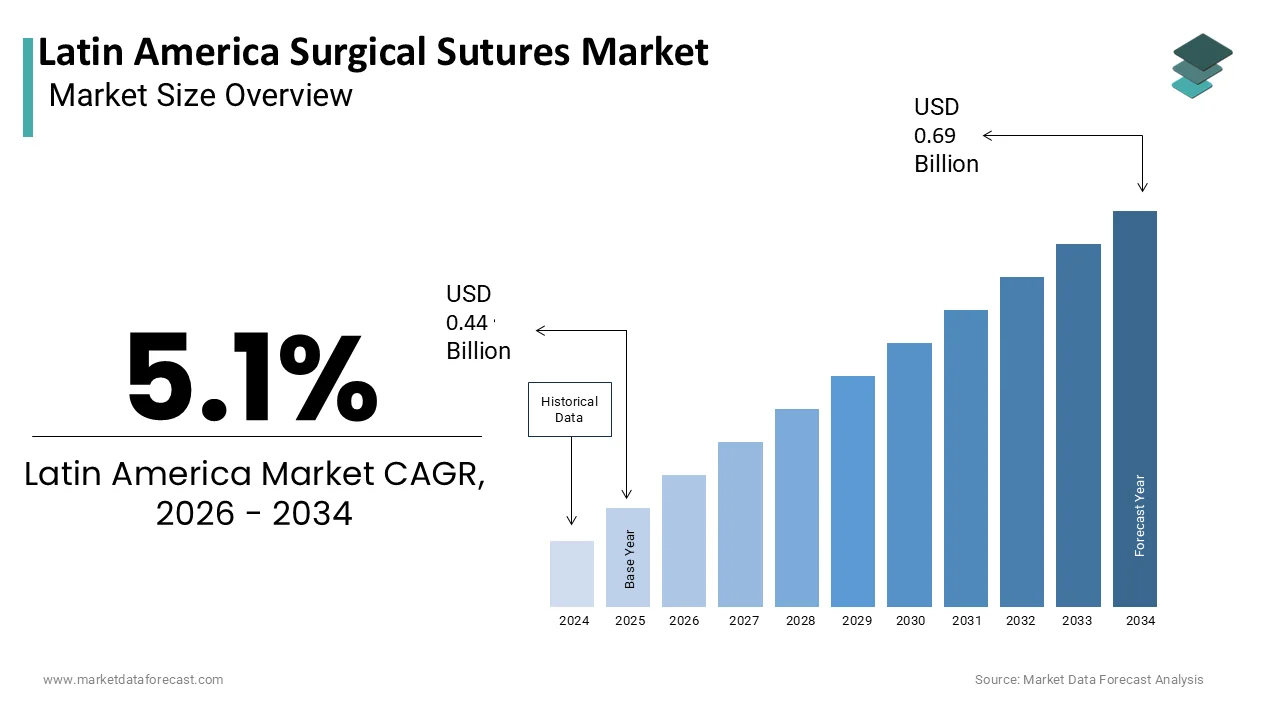
The Latin America surgical sutures market comprises a critical segment of medical consumables essential for wound closure and tissue approximation across diverse surgical procedures. This market includes absorbable and non-absorbable sutures made from natural and synthetic materials, serving hospitals, ambulatory surgical centers, and clinics. According to the Pan American Health Organization, the region performs millions of surgical interventions annually, with cesarean sections accounting for over 50% of all births in countries like Brazil and the Dominican Republic, creating a massive baseline demand for reliable closure devices. According to the World Health Organization, surgical site infections affect approximately 11% of patients undergoing surgery in low- and middle-income countries, underscoring the vital role of high-quality antimicrobial and monofilament sutures in preventing complications. These statistics highlight the indispensable nature of advanced suture technologies in improving patient outcomes and reducing healthcare burdens. The market dynamics are further influenced by the expansion of private healthcare infrastructure, increasing prevalence of chronic diseases requiring surgical intervention, and the gradual adoption of minimally invasive techniques that require specialized finer-gauge sutures. As healthcare systems strive to improve safety standards and efficiency, the demand for premium and specialized surgical sutures continues to rise across the region.
MARKET DRIVERS
Rising Surgical Volume Driven by Chronic Disease Prevalence
The escalating volume of surgical procedures driven by the high prevalence of chronic diseases directly fuels the demand for surgical sutures across Latin America, which mainly drives the Latin American surgical sutures market growth. According to the Pan American Health Organization, noncommunicable diseases account for nearly 80% of all deaths in the Americas, leading to a sustained increase in elective and emergency surgeries. This epidemiological reality ensures a consistent and growing need for both absorbable and non-absorbable sutures in hospital settings. According to the International Diabetes Federation, over 30 million adults in South and Central America live with diabetes, a condition that frequently leads to complications requiring surgical management such as amputations or vascular repairs. These complex procedures demand high tensile strength and reliable absorption profiles, driving the adoption of premium synthetic sutures. As healthcare access improves in urban centers, more patients are undergoing necessary surgeries that were previously deferred, further expanding the addressable market. The direct correlation between disease burden and surgical volume creates a robust foundation for market growth, ensuring that suture consumption remains high regardless of minor economic fluctuations.
Expansion of Private Healthcare Infrastructure and Medical Tourism
The rapid expansion of private healthcare infrastructure and the booming medical tourism sector significantly favor the Latin American surgical sutures market expansion. According to the Medical Tourism Association, Latin America captures a significant share of the global medical tourism market, with cosmetic and orthopedic surgeries being primary drivers. These procedures often require premium aesthetic sutures that minimize scarring and promote faster healing, driving demand for specialized products. According to the Inter-American Development Bank, private healthcare expenditure in the region has grown steadily, enabling hospitals to invest in advanced surgical supplies and imported brands. Private facilities compete on quality and patient satisfaction, leading them to prefer branded sutures with proven safety records over generic alternatives. The presence of Joint Commission International-accredited hospitals in the region further mandates the use of standardized, high-quality consumables to maintain certification. This focus on quality assurance and international standards elevates the market for premium sutures, encouraging manufacturers to introduce advanced products with enhanced handling and biocompatibility features to meet the expectations of discerning patients and providers.
MARKET RESTRAINTS
High Out-of-Pocket Costs and Limited Public Healthcare Funding
The substantial financial burden on patients and limited public funding for healthcare significantly restrain the Latin American market growth. According to the World Bank, out-of-pocket health expenditure in several Latin American countries exceeds 30% of total health spending, limiting the ability of lower-income patients to access advanced surgical care where premium sutures are used. This economic reality drives public institutions to procure low-cost generic sutures, which may lack the advanced features of branded products such as antimicrobial coatings or superior knot security. According to the Economic Commission for Latin America and the Caribbean, fiscal deficits in many nations have led to reduced healthcare budgets, resulting in shortages of essential supplies including high-quality sutures. Hospitals often face delays in procurement or are forced to switch to cheaper alternatives to stay within budget, impacting the market share of premium manufacturers. The price sensitivity of the public sector, which serves the majority of the population, creates a barrier for high-end products. Consequently, the market is skewed towards value-based options, limiting the penetration of innovative and expensive suture technologies despite their clinical benefits.
Proliferation of Counterfeit and Substandard Medical Products
The prevalence of counterfeit and substandard medical products in the region further hampers the Latin American surgical sutures market expansion. According to the World Health Organization, falsified medical products are a growing problem in low- and middle-income countries, with surgical consumables being among the affected categories. These counterfeit sutures often fail to meet sterility and tensile strength standards, leading to higher rates of wound dehiscence and surgical site infections. Such adverse events erode trust in medical supplies and complicate the efforts of reputable manufacturers to establish brand loyalty. According to the Pan American Health Organization, irregular distribution channels make it difficult to track the origin of medical devices, allowing substandard products to reach smaller clinics and rural hospitals. Healthcare providers may inadvertently purchase these cheaper alternatives due to lack of awareness or pressure to reduce costs. This competition from illegitimate sources undermines the market position of compliant manufacturers who invest heavily in quality control and regulatory compliance. The resulting price distortion and safety concerns hinder the overall development of a robust and reliable sutures market in the region.
MARKET OPPORTUNITIES
Increasing Adoption of Antimicrobial and Coated Sutures
The increasing adoption of antimicrobial and coated sutures presents a significant opportunity for market growth as healthcare providers seek to reduce surgical site infections. According to the Centers for Disease Control and Prevention, surgical site infections are among the most common healthcare-associated infections, leading to prolonged hospital stays and increased costs. In Latin America, where infection rates can be higher due to resource limitations, the value proposition of antimicrobial sutures is particularly strong. According to the Journal of Hospital Infection, the use of triclosan-coated sutures can reduce the risk of surgical site infections by up to 40% in certain procedures, providing compelling clinical evidence for their adoption. As hospitals strive to improve quality metrics and reduce readmission rates, the demand for these premium products is rising. Regulatory bodies are increasingly recognizing the benefits of antimicrobial technologies, facilitating their approval and reimbursement in some private insurance plans. Manufacturers can capitalize on this trend by educating surgeons on the long-term cost savings associated with reduced infection rates. This shift towards preventive care creates a lucrative niche for advanced suture products that offer tangible clinical advantages over traditional options.
Growth of Minimally Invasive and Robotic-Assisted Surgeries
The growing prevalence of minimally invasive and robotic-assisted surgeries offers a substantial opportunity for the introduction of specialized fine-gauge and barbed sutures. According to the Society of American Gastrointestinal and Endoscopic Surgeons, the adoption of laparoscopic and robotic procedures is increasing globally, including in emerging markets like Latin America, driven by benefits such as reduced recovery time and less pain. This trend drives demand for specialized sutures that are compatible with endoscopic instruments and robotic arms. Barbed sutures, which eliminate the need for knot-tying, are gaining popularity in laparoscopic procedures for their efficiency and ease of use. According to the Latin American Society of Endoscopic Surgery, training programs for minimally invasive techniques are expanding, creating a new generation of surgeons familiar with these advanced tools. As more hospitals invest in robotic platforms, the need for compatible consumables grows. Manufacturers can differentiate themselves by developing sutures specifically designed for these technologies, offering improved performance and workflow efficiency. This technological evolution opens new revenue streams and strengthens relationships with high-end surgical centers.
MARKET CHALLENGES
Fragmented and Complex Regional Regulatory Landscape
The fragmented and complex regulatory landscape across Latin American countries poses a significant challenge to the efficient distribution and market entry of surgical sutures. According to the Pan American Health Organization, regulatory harmonization efforts are ongoing, but progress is slow, meaning companies must navigate multiple independent systems to launch products regionally. For instance, Brazil’s ANVISA has stringent and time-consuming approval processes compared to other countries, delaying market access for innovations. This heterogeneity increases operational costs and extends time to market, discouraging smaller players from entering the region. Additionally, frequent changes in regulatory policies and import restrictions create uncertainty for suppliers. According to the World Trade Organization, non-tariff barriers, including complex documentation requirements, significantly impede the flow of medical goods in the region. These delays prevent patients from accessing the latest suture technologies and hinder the ability of manufacturers to respond quickly to market demands. Until greater regulatory alignment is achieved, companies will continue to face inefficiencies that limit their competitiveness and growth potential in the diverse Latin American market.
Persistent Supply Chain Disruptions and Inadequate Logistics Infrastructure
Persistent supply chain disruptions and inadequate logistics infrastructure challenge the consistent availability of surgical sutures in remote and rural areas of Latin America. According to the Inter-American Development Bank, logistics costs in Latin America are significantly higher than in developed regions, affecting the reliability of medical supply chains. Frequent port congestion, customs delays, and inadequate cold-chain facilities for sensitive materials lead to stockouts and expired inventory. These issues are exacerbated by global supply chain shocks, such as raw material shortages or shipping delays, which disproportionately affect import-dependent markets. According to the World Bank, infrastructure gaps in transportation and storage result in significant inefficiencies, increasing the risk of product damage and loss. Hospitals in rural areas often face chronic shortages of essential sutures, forcing them to rely on whatever is available rather than optimal choices. This inconsistency undermines trust in supply reliability and forces healthcare providers to maintain larger inventories, tying up capital. Until logistics infrastructure improves and supply chain resilience is strengthened, the market will remain vulnerable to disruptions that hinder equitable access to quality surgical care.
REPORT COVERAGE
| REPORT METRIC | DETAILS |
| Market Size Available | 2025 to 2034 |
| Base Year | 2025 |
| Forecast Period | 2026 to 2034 |
| Segments Covered | By Product, Application, End User, and Country. |
| Various Analyses Covered | Global, Regional,l and Country-Level Analysis, Segment-Level Analysis, Drivers, Restraints, Opportunities, Challenges; PESTLE Analysis; Porter’s Five Forces Analysis, Competitive Landscape, Analyst Overview of Investment Opportunities |
| Countries Covered | Brazil, Mexico, Argentina, Colombia, Chile, Peru, Others |
| Market Leaders Profiled | Johnson & Johnson Inc. |
SEGMENTAL ANALYSIS
By Product Insights
The sutures segment dominated the market by commanding 40.9% of the regional market share in 2025 due to its fundamental role as the primary consumable for wound closure across all surgical disciplines. According to the Pan American Health Organization, surgical volumes in the region have rebounded significantly post-pandemic, with millions of procedures performed annually that inherently require suture materials for closure. This broad applicability ensures that sutures remain the baseline standard of care regardless of technological advancements in other closure methods. According to the World Health Organization, safe surgical practices in resource-constrained settings rely heavily on versatile and cost-effective tools like sutures rather than expensive single-use devices. In public hospitals where budget limitations are acute, the affordability and multipurpose nature of sutures make them the default choice for surgeons. This entrenched reliance creates a stable and massive demand base that alternative technologies cannot displace, thereby sustaining the segment's market leadership through consistent high-volume consumption across diverse clinical scenarios.
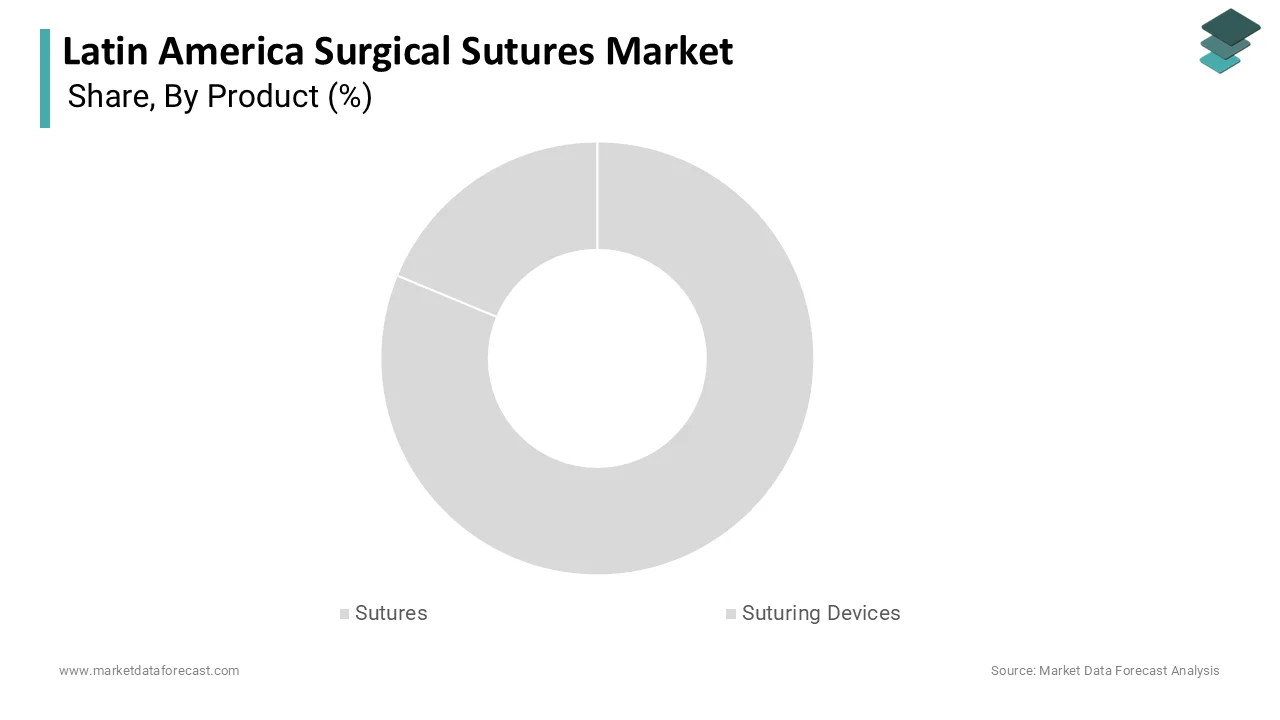
On the other end, the automated suturing devices segment is anticipated to register a CAGR of 8.5% over the forecast period in the Latin American market. According to the Society of American Gastrointestinal and Endoscopic Surgeons, minimally invasive approaches now account for over 40% of general surgeries in major urban centers like São Paulo and Mexico City, creating a direct demand for compatible automated devices. These tools reduce the learning curve for complex suturing tasks and improve consistency in wound closure during endoscopic operations. According to the Latin American Society of Endoscopic Surgery, training programs for laparoscopic skills have expanded significantly, producing a new generation of surgeons proficient in using automated suturing aids. As more hospitals invest in tower equipment and robotic platforms to attract patients, the ancillary demand for specialized suturing devices grows proportionally. The clinical benefits of reduced tissue trauma and faster recovery associated with minimally invasive surgery drive surgeons to adopt tools that enhance their technical capability, thereby propelling the rapid uptake of this segment.
By Application Insights
The general surgeries segment led the market with 50.8% of the Latin American market share in 2025. The dominance of the general surgeries segment in the Latin American market is mainly driven by the high volume and diversity of procedures encompassed within this category. According to the Pan American Health Organization, general surgical conditions account for approximately 15% of the total burden of disease in the Americas, necessitating millions of operative interventions each year. Each of these procedures typically requires multiple sutures for fascial closure, subcutaneous approximation, and skin closure, resulting in significant cumulative consumption. According to the World Health Organization, trauma and acute care surgeries, which fall under general surgery, remain prevalent due to road traffic accidents and violence in certain areas. Emergency departments rely heavily on versatile suture types that can be used across various tissue layers and contamination levels. The ubiquity of these procedures in every hospital, regardless of size or specialization, creates a massive and stable demand base. This foundational role of general surgery in healthcare delivery ensures it remains the primary consumer of surgical sutures in the region.
On the other end, the ophthalmic surgeries segment is anticipated to exhibit a CAGR of 10.4% over the forecast period in the Latin American market. According to the World Health Organization, cataracts are responsible for nearly 50% of blindness in Latin America, yet surgical coverage remains below optimal levels, indicating vast untapped potential. National blindness prevention programs in countries like Brazil and Colombia are actively working to reduce this backlog, driving up surgical volumes. According to the Pan American Association of Ophthalmology, refractive surgery rates are growing among younger populations seeking freedom from glasses, utilizing premium sutures for flap closure and wound integrity. Each ophthalmic procedure requires ultra-fine monofilament sutures (10-0 or smaller) that are technically demanding to manufacture and carry higher margins. Government initiatives to expand access to vision care are unlocking demand in previously underserved communities. This epidemiological and programmatic push creates a robust growth engine for specialized ophthalmic sutures that outpaces broader surgical categories.
COUNTRY LEVEL ANALYSIS
Brazil Surgical Sutures Market Analysis
Brazil held 40.6% of the Latin American market share in 2025 and is projected to experience steady expansion in healthcare infrastructure and continued high public sector surgical volume over the next few years. According to the Brazilian Ministry of Health, the Unified Health System performs over 2 million surgeries annually, creating massive baseline demand for affordable sutures. Additionally, the National Supplementary Health Agency oversees a large private insurance market that supports the adoption of premium closure devices in accredited hospitals. Local production of sutures by domestic companies reduces import dependency and keeps prices competitive, fostering high penetration in public tenders. The high rate of cesarean sections and bariatric surgeries in Brazil further amplifies suture consumption across obstetric and metabolic specialties. Medical device regulations by ANVISA ensure quality standards while facilitating market access for compliant manufacturers. The concentration of advanced medical centers in SSãoPaulo and Rio de Janeiro drives innovation adoption, while the public system sustains volume. This dual market structure makes Brazil the cornerstone of the regional sutures landscape, balancing mass-market accessibility with pockets of premium growth.
Mexico Surgical Sutures Market Analysis
Mexico is anticipated to experience robust commercial growth and expanding private hospital networks tailored to medical tourism over the next few years. Mexico represents the second-largest and most dynamic market in the region, characterized by strong medical tourism, proximity to the United States, and a growing private healthcare infrastructure. According to the Mexican Social Security Institute, public sector surgical volumes are steadily increasing as coverage expands, providing a stable foundation for suture consumption. Simultaneously, private hospital groups in border cities and tourist destinations invest in advanced surgical technologies to cater to foreign patients, boosting premium suture sales. The North American Free Trade Agreement facilitates trade and supply chain integration, ensuring reliable access to imported suture brands. High prevalence of obesity and diabetes drives significant volumes of bariatric and vascular surgeries, which are suture-intensive. Regulatory alignment with international standards accelerates the approval of innovative products. The growing middle class and increasing health insurance penetration further support market expansion. Mexico’s strategic position as a nearshoring hub for medical devices also strengthens its domestic supply ecosystem, making it a critical growth engine for the Latin American sutures market.
Argentina Surgical Sutures Market Analysis
Argentina is expected to maintain resilient surgical procedural volumes and adaptive local manufacturing strategies amidst ongoing economic volatility over the next few years. Argentina maintains a significant position in the Latin American Surgical Sutures Market, distinguished by its highly trained medical workforce and strong tradition of surgical excellence despite economic volatility. According to the Argentine Ministry of Health, surgical activity remains resilient even during economic downturns due to the essential nature of healthcare and strong unionized coverage for workers. Local manufacturers have adapted to currency fluctuations by focusing on cost-efficient production of essential sutures, ensuring supply continuity in the public sector. The private sector continues to import premium brands for complex surgeries, supported by prepaid medicine plans that cover a large portion of the population. High rates of aesthetic and reconstructive surgeries in Buenos Aires drive demand for specialized cosmetic sutures. Academic institutions produce skilled surgeons who advocate for quality closure materials, sustaining professional demand. Despite inflationary pressures, the entrenched culture of surgical care and adaptive local industry keep Argentina as a relevant and stable market player in the regional landscape.
Chile Surgical Sutures Market Analysis
Chile is projected to experience sustained high healthcare investments and enhanced efficiency through centralized public procurement over the next few years. Chile stands out in the Latin America Surgical Sutures Market for its stable regulatory environment, high healthcare spending per capita, and advanced private healthcare infrastructure. According to the Chilean Ministry of Health, the Explicit Health Guarantees program covers specific surgical conditions with guaranteed timelines and quality standards, driving consistent and predictable suture procurement. Private insurers and ISAPREs reimburse advanced surgical supplies, encouraging the use of premium absorbable and antimicrobial sutures in private clinics. The country’s open economy and free trade agreements facilitate easy access to global suture brands, ensuring availability of the latest innovations. High life expectancy and an aging population increase the volume of orthopedic and ophthalmic surgeries, which require specialized sutures. Strong infection control protocols in hospitals promote the adoption of coated and antibacterial sutures to reduce complications. The centralized public procurement system via CENABAST ensures efficient distribution and price negotiation for public hospitals. Chile’s combination of economic stability, regulatory clarity, and high clinical standards makes it a mature and attractive market for premium suture manufacturers seeking reliable returns.
COMPETITIVE LANDSCAPE
The competition in the Latin America Surgical Sutures Market is characterized by the presence of established global multinational corporations and emerging local manufacturers who compete on quality and cost efficiency. Multinational companies dominate the segment for premium and specialized sutures due to their extensive research capabilities and proven clinical track records. They differentiate themselves through superior product performance, advanced coatings, and integrated digital ecosystems that support surgical workflow. Local manufacturers focus on producing cost-effective generic sutures that cater to the large public healthcare sector and price-sensitive private clinics. Competitive dynamics are influenced by varying regulatory environments across the region, where tender processes in public hospitals drive significant volume sales. Companies compete aggressively on price in the public sector while focusing on innovation and service in the private sector. The race to secure long-term supply contracts with major hospital networks is a key competitive battleground. As healthcare systems prioritize cost containment without compromising safety, the competitive landscape is shifting towards value-based offerings that balance affordability with clinical efficacy. This evolution encourages continuous improvement in manufacturing processes and strategic agility among market participants to maintain relevance and capture growth in this fragmented yet expanding region.
KEY MARKET PLAYERS
Some of the companies that are playing a dominant role in the Latin America Surgical Sutures Market include:
- Johnson & Johnson Inc.
- B. Braun Melsungen AG
- Smith & Nephew PLC
- Demetech Corporation
- Conmed Corporation
- W. L. Gore & Associates
- Boston Scientific Corporation
- 3M Healthcare
- Medtronic Inc.
- Sutures India Pvt Ltd
TOP LEADING PLAYERS IN THE MARKET
- Ethicon Inc maintains a dominant presence in the Latin America Surgical Sutures Market through its extensive portfolio of absorbable and non-absorbable closure devices. The company focuses on delivering high-quality monofilament and braided sutures that meet rigorous international safety standards. Recent initiatives include expanding distribution partnerships in Brazil and Mexico to enhance supply chain reliability for public hospitals. Ethicon collaborates with regional surgical societies to provide advanced training on wound closure techniques and infection prevention. Their commitment to innovation drives the introduction of antimicrobial-coated sutures that reduce surgical site infections. By offering comprehensive educational resources and technical support, Ethicon ensures strong surgeon loyalty. These strategic efforts reinforce their reputation for clinical excellence and strengthen their competitive position in the evolving surgical consumables landscape across Latin America.
- Medtronic plc contributes significantly to the market by providing a wide range of surgical stapling and suture solutions designed for diverse procedural needs. The company emphasizes technological integration and ergonomic design to improve operative efficiency and patient outcomes. Medtronic has recently strengthened its market position by launching next-generation barbed sutures in key Latin American markets. These innovations address the growing demand for knotless closure techniques in minimally invasive surgeries. The company actively participates in regional medical conferences to demonstrate product efficacy and share best practices. Medtronic also invests in local manufacturing capabilities to reduce costs and improve accessibility for price-sensitive segments. Their focus on value-based care and surgeon engagement enhances brand trust. These actions drive sustained growth by addressing critical operational challenges in high-volume surgical centers throughout the region.
- Braun SE plays a pivotal role in the market by offering cost-effective and reliable surgical sutures tailored to the needs of both public and private healthcare systems. The company is dedicated to promoting safe surgery practices through high-quality consumables and continuous education. B. Braun has recently expanded its logistics network in Argentina and Chile to ensure timely delivery of essential supplies. This localization strategy minimizes stockouts and supports uninterrupted surgical services in remote areas. The company also introduces eco-friendly packaging solutions that align with global sustainability goals. B. Braun partners with local distributors to provide customized training programs for nursing staff and surgeons. Their commitment to affordability and quality makes them a preferred supplier for government tenders. These comprehensive efforts solidify B. Braun’s position as a key player driving accessibility and standardization in the Latin American sutures market.
TOP STRATEGIES USED BY KEY MARKET PARTICIPANTS
Key players in the Latin America Surgical Sutures Market employ several strategic approaches to strengthen their competitive standing and expand their reach. One primary strategy involves forming strategic partnerships with local distributors and healthcare providers to enhance supply chain efficiency and market penetration. These collaborations ensure that essential medical supplies reach remote and underserved areas effectively despite logistical challenges. Another critical strategy is the localization of manufacturing and assembly facilities to reduce costs and mitigate currency fluctuation risks. This approach makes advanced sutures more affordable and accessible to a broader patient population in price-sensitive markets. Companies also invest heavily in surgeon training and education programs to build clinical expertise and promote the adoption of new technologies. Additionally, firms leverage digital platforms to offer inventory management solutions and data analytics services. Regulatory engagement is another vital strategy where companies work closely with local authorities to streamline product approvals. By aligning with national health priorities and investing in community-based education, market participants build trust and establish long-term sustainability in the diverse Latin American region.
MARKET SEGMENTATION
This research report on the Latin America surgical sutures market has been segmented and sub-segmented into the following categories.
By Product
- Sutures
- Suturing Devices
By Application
- Surgeries
- General Surgeries
- Gynecological Surgeries
- Orthopedic Surgeries
- Ophthalmic Surgeries
- Other Applications
By End User
- Hospitals
- Other End-Users
By Region
- Mexico
- Brazil
- Argentina
- Chile
- Rest of Latin America