- Product Description Description
- Table of Contents TOC
- List of Table & Figure LOT
- Get Free Sample PDF Sample PDF
Market Size, 2025
$710.00 MnMarket Estimate, 2026
$771.20 MnMarket Forecast, 2034
$1,494.33 MnCAGR, 2026–2034
8.62%Executive Summary: Global Lecithin Market
- Market Scope: Comprehensive global market assessment of the lecithin sector covering types, source types, application segments, regional performance, and key industry players.
- Market Valuation: Valued at USD 710 million in 2025, estimated at USD 771.20 million in 2026, and projected to reach USD 1,494.33 million by 2034, expanding at a compound annual growth rate (CAGR) of 8.62% during the forecast period from 2026 to 2034.
- Primary Growth Drivers: Rising prevalence of lifestyle-based health conditions (cardiovascular issues, diabetes, obesity), shift toward preventive healthcare, rising demand for natural and non-GMO ingredients in bakery, confectionery, and dietary supplements, and robust expansion of the aquaculture and animal feed sectors in developing economies.
Key Market Segment Metrics (2026–2034)
| Category | Leading Segment Focus | Fastest-Growing / High-Impact Focus |
|---|---|---|
| By Type | Fluid Lecithin (dominates in both value and volume) | De-oiled and Modified Lecithin (driven by personal care and cosmetics) |
| By Source Type | Soy Lecithin (largest share due to adequate soybean availability and cost-effective extraction) | Sunflower and Non-GMO alternatives (due to soy allergy and GMO concerns) |
| By Application | Feed (largest segment) & Food Applications (bakery, dairy, chocolate/cocoa butter substitute) | Healthcare (pharmaceuticals for neurological and cardiovascular treatments) & Industrial |
| Regional Analysis | Europe (historically dominant regional market with high nutritional supplement consumption) | Asia-Pacific (fastest-growing region driven by India and China) & Central/South America |
Major Market Players & Market Structure
Market Structure: Highly competitive global landscape featuring prominent agribusiness and specialty ingredient corporations optimizing extraction technologies, expanding non-GMO product lines, and diversifying applications across feed, food, and pharmaceuticals.
Key Companies: Cargill Incorporated, Archer Daniels Midland Company, Lucas Meyer GmbH, Thew Arnott Group, NOW Foods, DuPont, Sodrugestvo Group of Companies, Swanson Health Products, American Lecithin Company, Bunge Limited, and Lipoid GmbH.
 Download Free Sample Report
Global Lecithin Market Size
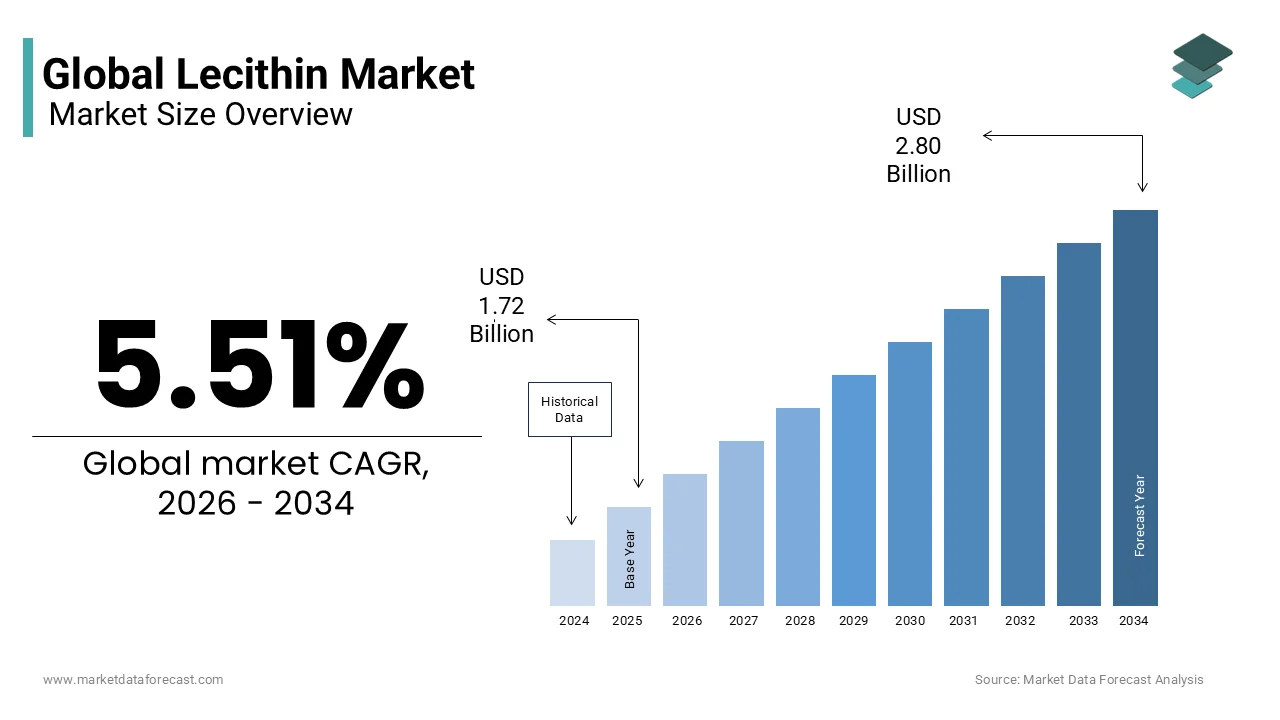
The global lecithin market was valued at USD 710 million in 2025 and is expected to reach USD 1,494.33 million by 2034 from USD 771.20 million in 2026, growing at a CAGR of 8.62%.
The lecithin is a pivotal component within the global food ingredient and pharmaceutical sectors, primarily valued for its emulsifying and stabilizing properties. Derived mainly from soybeans, sunflower seeds, and eggs, lecithin facilitates the blending of oil and water in diverse applications ranging from chocolate to dietary supplements. The agricultural abundance directly supports the manufacturing capacity required to meet industrial demand. The Non-GMO Project verifies thousands of products annually, indicating a strong consumer shift towards transparent labeling.
MARKET DRIVERS
Surging Demand For Clean Label Emulsifiers Drives Adoption
The increasing consumer preference for clean label ingredients, significantly boosting the growth of the lecithin market. Modern shoppers actively seek recognizable and natural additives, prompting manufacturers to replace synthetic emulsifiers like polysorbates with plant-based lecithin. The behavioral shift compels food producers to reformulate their products, thereby increasing the utilization of lecithin in bakery goods, confectionery, and dairy alternatives. The products containing simple ingredient lists receive higher trust scores from shoppers, reinforcing the preference for lecithin. Additionally, the rise in private label brands focusing on natural formulations has amplified this trend. Retailers are increasingly sourcing lecithin to differentiate their offerings in a competitive marketplace. The demand extends beyond traditional applications to emerging categories such as plant based meats where texture modification is crucial. Lecithin fits this requirement perfectly as it is derived from common agricultural sources and perceived as wholesome. The alignment of lecithin with clean label principles makes it an indispensable ingredient for brands aiming to capture health conscious demographics.
Expansion Of Plant Based And Vegan Food Products Boosts Usage
The rapid proliferation of plant based and vegan food products is additionally bolstering the growth of the lecithin Market. As consumers shift away from animal derived ingredients, food manufacturers require effective plant based emulsifiers to replicate texture and mouthfeel in dairy free and meat free products. Lecithin serves as an ideal solution for stabilizing plant based cheeses and creams, providing the necessary viscosity without using egg yolks or dairy fats. This financial influx supports the creation of new formulations where lecithin plays a structural role. Furthermore, the versatility of lecithin allows it to function effectively in high fat environments common in vegan desserts. The demand extends to beverage applications where lecithin prevents separation in plant milk drinks. Manufacturers are increasingly recognizing lecithin as a key enabler for achieving desirable sensory attributes in vegan products.
MARKET RESTRAINTS
Volatility In Raw Material Prices Restrains Market Stability
Fluctuations in the prices of raw materials such as soybeans and sunflower seeds is restraining the growth of the lecithin market. Lecithin production relies heavily on agricultural commodities, making the industry susceptible to seasonal variations and climate related disruptions. As per the United States Department of Agriculture, soybean prices can vary by up to 25% annually due to weather conditions and global trade dynamics. Such variability leads to inconsistent supply levels and unpredictable pricing structures for lecithin manufacturers. When raw material costs surge, producers face margin pressures that may force them to increase prices for end users. These cost increases can deter small and medium sized food manufacturers from adopting premium lecithin grades, limiting market penetration. Additionally, the dependency on specific geographic regions for raw materials creates supply chain vulnerabilities. Any disruption in major soybean producing areas directly affects the availability of lecithin precursors. Manufacturers must maintain significant inventory buffers to mitigate these risks, which ties up capital and increases operational costs. The lack of price stability makes long term planning difficult for both suppliers and buyers.
Allergen Concerns Associated With Soy Lecithin Limit Acceptance
The prevalence of allergen concerns associated with soy lecithin is another factor degrading the growth of the lecithin market. Although refined lecithin contains minimal protein, the perception of risk among consumers with soy allergies remains a barrier to widespread adoption. The soy is one of the top nine allergens affecting millions of individuals in North America. This concern prompts many consumers to avoid products containing soy lecithin, even if scientifically deemed safe. The fear of allergic reactions drives manufacturers to seek alternative sources such as sunflower or rapeseed lecithin, which often come at a higher cost. The Journal of Allergy and Clinical Immunology notes that cross contamination during processing can occur, further exacerbating consumer anxiety. Small scale food producers often find it challenging to source allergen free facilities, limiting the market reach of soy lecithin. Additionally, regulatory requirements for clear allergen labeling add complexity to product formulation and marketing. The need to maintain separate production lines for different lecithin types increases operational expenses. These factors collectively restrict the dominance of soy lecithin, which traditionally holds the largest share. The shift towards hypoallergenic alternatives fragments the market and increases competition.
MARKET OPPORTUNITIES
Innovation In Pharmaceutical And Nutraceutical Applications Presents Opportunities
The evolving sector in pharmaceutical and nutraceutical applications is to impact positively on the growth of the lecithin market. Consumers are increasingly seeking supplements that support brain health and liver function, driving demand for high purity phosphatidylcholine derived from lecithin. This trend encourages manufacturers to incorporate specialized lecithin fractions into capsules and soft gels. The ability of lecithin to enhance the bioavailability of active ingredients makes it attractive for drug delivery systems. The National Institutes of Health reports that choline, a component of lecithin, is essential for neurotransmitter synthesis, creating a large target audience for brain health supplements. Additionally, the rising interest in liver health solutions drives the inclusion of lecithin in detoxification formulas. Its emulsifying properties help break down fats, supporting metabolic wellness. These functional benefits position lecithin as a valuable ingredient in the health and wellness sector. Manufacturers can leverage these attributes to develop innovative products that cater to specific health needs.
Growth In Organic And Non GMO Segments Creates New Avenues
The expanding organic and non-genetically modified organisms food sectors is another attribute to leverage the growth of the lecithin market. Consumers are increasingly prioritizing environmentally friendly and ethically sourced ingredients, driving demand for certified organic lecithin. Lecithin derived from organic sunflower or soy sources aligns perfectly with these values, offering a natural and eco-friendly emulsifying solution. The sustainability aspect of lecithin production, which utilizes agricultural byproducts, resonates with brands aiming to reduce waste and promote circular economy principles. The Sustainable Agriculture Coalition highlights that upcycling food waste into valuable ingredients like lecithin reduces environmental impact and supports farmer incomes. This narrative appeals to conscious consumers who prefer brands with transparent and responsible supply chains. Moreover, the demand for non-genetically modified organisms ingredients continues to rise, further boosting the appeal of non GMO lecithin.
MARKET CHALLENGES
Supply Chain Disruptions Pose Persistent Challenges To Reliability
The ongoing supply chain disruptions is ascribed to hinder the growth of the lecithin market. Global logistical issues, port congestion, and transportation delays affect the timely delivery of raw materials and finished products. These delays can lead to stockouts and production halts for food manufacturers relying on just in time inventory systems. The unpredictability of supply chains makes it difficult for lecithin suppliers to guarantee consistent availability to their clients. Additionally, geopolitical tensions and trade policies can introduce tariffs and barriers that complicate international sourcing of raw materials. The World Trade Organization reports that trade restrictions have increased globally, affecting the flow of agricultural commodities. Such barriers can limit access to high quality soybeans from key producing regions, forcing manufacturers to seek alternative sources that may not meet quality standards. The reliance on imported raw materials exposes the market to currency fluctuations and international regulatory changes. These external factors create an environment of uncertainty that challenges strategic planning and operational efficiency. Companies must invest in diversified supply networks and risk mitigation strategies to navigate these complexities.
Regulatory Compliance And Labeling Requirements Increase Operational Burden
The stringent regulatory compliance and evolving labeling requirements is additionally to imhibit the growth of the lecithin market. Food safety authorities continuously update guidelines regarding ingredient specifications, purity standards, and allergen declarations. The rigorous testing and documentation for food additives, including lecithin, to ensure consumer safety. Compliance with these regulations requires substantial investment in quality control laboratories and personnel training. These costs can be particularly burdensome for smaller producers who lack the resources to maintain extensive compliance infrastructure. Additionally, changing labeling laws require manufacturers to constantly update packaging and marketing materials to reflect accurate ingredient information. Failure to comply can result in costly recalls and reputational damage. The complexity of navigating different regulatory frameworks across states and countries adds another layer of difficulty for exporters. Harmonizing standards remains a challenge, leading to inconsistencies in product approval processes. Manufacturers must stay abreast of legislative changes and adapt quickly to avoid penalties. This constant need for vigilance diverts resources from innovation and market expansion.
REPORT COVERAGE
| REPORT METRIC | DETAILS |
| Market Size Available | 2025 to 2034 |
| Base Year | 2025 |
| Forecast Period | 2026 to 2034 |
| CAGR | 5.51% |
| Segments Covered | By Type, Source Type, Application, And Region. |
| Various Analyses Covered | Global, Regional and Country Level Analysis; Segment-Level Analysis; DROC; PESTLE Analysis; Porter’s Five Forces Analysis; Competitive Landscape; Analyst Overview of Investment Opportunities |
| Regions Covered | North America, Europe, APAC, Latin America, Middle East & Africa |
| Market Leaders Profiled | Cargill Incorporated, Archer Daniels Midland Company, Lucas Meyer GmbH, Thew Arnott Group, NOW Foods, DuPont, Sodrugestvo Group of Companies, Swanson Health Products, American Lecithin Company, Bunge Limited, Lipoid GmbH; |
SEGMENTAL ANALYSIS
By Type Insights
The fluid lecithin segment was the largest by accounting for 44.2% of the global lecithin market share in 2025 due to its cost effective production process and ease of integration into industrial formulations. Food manufacturers prefer fluid lecithin for its ability to blend seamlessly with oils and fats without requiring additional solvents or complex mixing equipment. Fluid lecithin serves as an effective emulsifier in chocolate, margarine, and baked goods where viscosity control is essential. The established supply chain for fluid lecithin ensures consistent availability and competitive pricing. Small and medium sized enterprises find this form more accessible due to lower entry costs. The versatility of fluid lecithin in various pH levels and temperature conditions further enhances its appeal. Manufacturers value the reliability of fluid lecithin in maintaining product consistency across large batch productions.
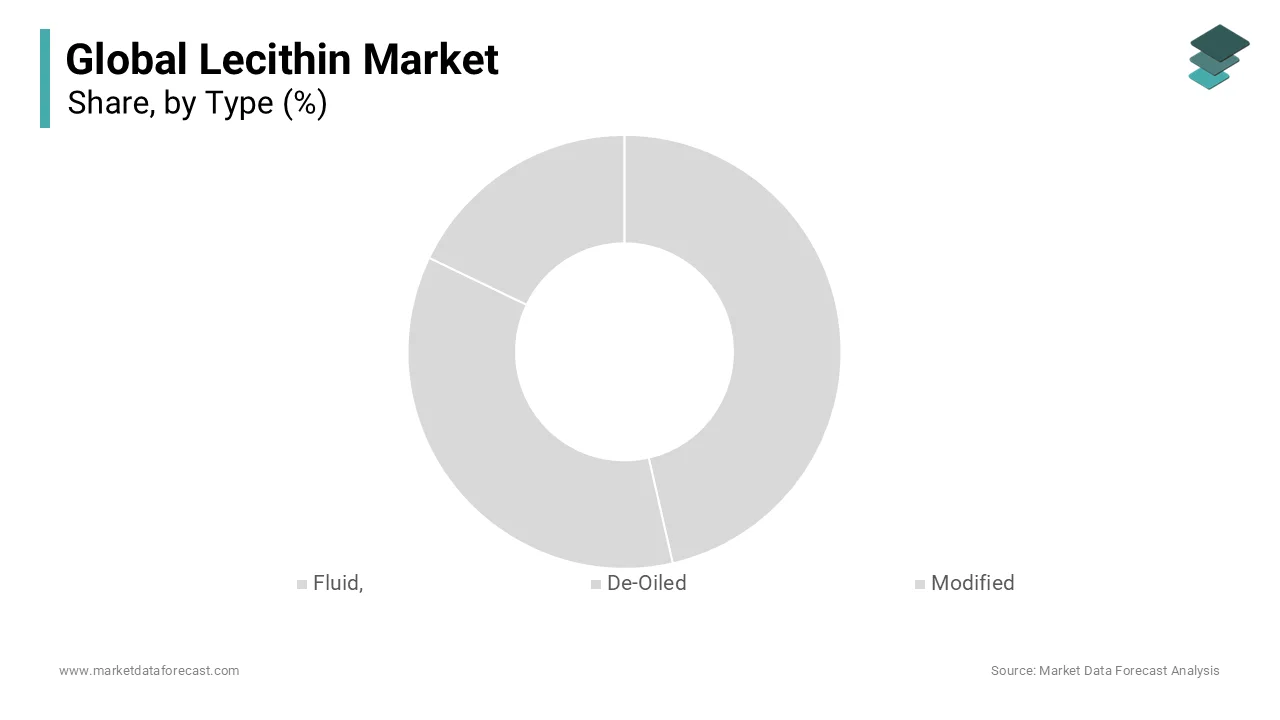
The modified lecithin segment is likely to witness a fastest CAGR of 7.8% from 2026 to 2034 due to its enhanced functional properties tailored for specific industrial needs. Chemical modification processes such as hydroxylation and acetylation improve the water dispersibility and emulsifying stability of lecithin. This performance advantage drives adoption in beverages, sauces, and instant food powders. Modified lecithin allows manufacturers to create clear and stable solutions without cloudiness or sedimentation. The pharmaceutical industry also utilizes modified lecithin for liposomal drug delivery systems due to its superior biocompatibility. These specialized applications command higher prices and offer better margins for producers. The ability to customize lecithin properties through modification opens new avenues in high value sectors.
By Source Type Insights
The soy lecithin segment was the largest by holding 56.2% of the lecithin market share in 2025 due to the vast availability of soybeans as a primary raw material. As per the United States Department of Agriculture, global soybean production exceeded 350 million tons in the recent season by ensuring a plentiful supply for lecithin extraction. This agricultural scale allows for economies of scale that keep soy lecithin prices competitive. The global lecithin production is derived from soybean oil refining byproducts. This integration with the existing oilseed crushing infrastructure minimizes additional processing costs. Manufacturers benefit from established logistics and trading networks for soy commodities. The familiarity of food regulators with soy lecithin simplifies approval processes in various countries. Most food safety standards have long standing provisions for soy derived ingredients. The widespread use of soy in animal feed also creates a synergistic market dynamic. Byproducts from feed production often feed into lecithin extraction facilities. This circular economy model enhances sustainability and cost efficiency. The dominance of soy lecithin is further reinforced by its proven track record in food applications.
The sunflower segment is expected to grow at a fastest CAGR of 9.5% from 2026 to 2034 with the rising consumer preference for non-genetically modified organisms and allergen free ingredients. The Non-GMO Project verifies thousands of products annually, with sunflower lecithin being a preferred alternative to soy. The European Union has strict regulations on genetically modified crops, driving manufacturers to switch to sunflower sources. Sunflowers are predominantly grown from non GMO seeds, making them a safe choice for clean label products. Additionally, sunflower lecithin is free from major allergens such as soy and eggs. This demographic shift creates a robust market for hypoallergenic alternatives. Sunflower lecithin offers similar functional properties to soy lecithin without the allergen risk.
By Application Insights
The food application segment was accounted in holding a prominent share of the lecithin market in 2025 due to the extensive use of lecithin as an emulsifier and stabilizer in processed foods. Lecithin is essential in chocolate production to reduce viscosity and improve flow characteristics. The International Confectionery Association reports that chocolate consumption has remained stable despite health trends, sustaining demand for lecithin. The commercial bakeries use lecithin to enhance product quality. Lecithin also functions as a release agent in cooking sprays and non-stick pans. The convenience food sector relies on lecithin for instant mixes and powdered beverages. The ability of lecithin to blend oil and water phases is crucial for salad dressings and sauces. The diversity of food applications ensures consistent demand across various categories. Manufacturers value the multifunctionality of lecithin in simplifying formulations. The entrenched position of lecithin in traditional recipes makes it difficult to replace.
The healthcare application segment is likely to register a fastest CAGR of 8.2% from 2026 to 2034 due to increasing awareness of the cognitive health benefits of phosphatidylcholine found in lecithin. As per the Alzheimer’s Association, over 6 million Americans live with Alzheimer’s disease, driving demand for brain health supplements. Lecithin is a rich source of choline, a precursor to acetylcholine, a neurotransmitter involved in memory and learning. The National Institutes of Health states that adequate choline intake is linked to improved cognitive function in older adults. This scientific backing encourages consumers to incorporate lecithin supplements into their daily routines. The dietary supplement industry is responding with high purity lecithin capsules and soft gels. The Council for Responsible Nutrition indicates that brain health supplements are among the top five growing categories. Physicians are also recommending lecithin for liver health and cholesterol management.
REGIONAL ANALYSIS
North America Lecithin Market Analysis
North America lecithin market was the top performer by holding 38.2% of the share in 2025 with its advanced food processing industry and high consumer awareness of health benefits. The United States Department of Agriculture reports that the United States is the world’s largest producer of soybeans, providing a robust raw material base for lecithin production. This domestic supply chain reduces dependency on imports and ensures cost competitiveness. The presence of major multinational food and pharmaceutical companies in the region drives demand for high quality lecithin. The Food and Drug Administration maintains stringent safety standards that foster consumer trust in lecithin containing products. The rising prevalence of lifestyle diseases has increased demand for dietary supplements containing phosphatidylcholine. The trend towards clean label and non GMO products is particularly strong in North America. Consumers actively seek sunflower lecithin as an alternative to soy.
Europe Lecithin Market Analysis
Europe lecithin market was positioned next by holding 18.2% of the share in 2025 with the strict regulatory frameworks and a strong preference for sustainable ingredients. The European Food Safety Authority enforces rigorous guidelines on food additives, ensuring high-quality standards for lecithin. The European Union’s promotion of non-genetically modified organisms agriculture drives the demand for sunflower and rapeseed lecithin. This local sourcing aligns with consumer preferences for regional and sustainable products. The aging population in Europe creates a substantial market for healthcare supplements containing lecithin. The pharmaceutical industry in Europe is a leader in liposomal drug delivery technologies. Companies invest heavily in research and development to innovate in this field. The emphasis on environmental sustainability influences purchasing decisions.
Asia Pacific Lecithin Market Analysis
Asia Pacific lecithin market growth is anticipated to have a significant growth opportunities in coming years with the rapid industrialization and rising disposable incomes. China and India are major producers of soybeans and sunflowers, supporting local lecithin manufacturing. This growth fuels the expansion of lecithin production capacities. The expanding middle class in Asia Pacific is driving demand for processed foods and convenience products. The demographic shift increases consumption of bakery, confectionery, and dairy products containing lecithin. The healthcare sector is also witnessing rapid growth due to increasing health awareness. Governments are promoting preventive healthcare measures to reduce the burden of chronic diseases. The pharmaceutical industry in countries like India is a global hub for generic drug production. Lecithin is widely used in these formulations.
Latin America Lecithin Market Analysis
Latin America lecithin market growth is driven by the strong agricultural sector and growing food industry. Brazil and Argentina are leading exporters of soybeans, providing ample raw materials for lecithin extraction. The Brazilian Agricultural Research Corporation reports that soybean exports have reached record highs in recent years. This agricultural strength supports the development of local processing industries. The food and beverage sector in Latin America is expanding due to urbanization and changing dietary habits. Urban consumers prefer convenient and processed food options. The demand for bakery and confectionery products is rising steadily. Local manufacturers are investing in modern production facilities to improve quality and efficiency. The pharmaceutical industry is also growing, driven by increased access to healthcare services. Governments are implementing policies to improve public health outcomes. Lecithin is used in various medical formulations and supplements.
Middle East and Africa Lecithin Market Analysis
The Middle East and Africa lecithin market growth is propelled with the population growth and economic diversification. The Gulf Cooperation Council countries are investing heavily in food security and local production capabilities. This initiative aims to reduce reliance on imports and ensure stable supply chains. The growing population in Africa creates a large base for basic food consumption. The United Nations Economic Commission for Africa states that the population will double by 2050. This demographic trend drives demand for staple foods and processed items containing lecithin. The pharmaceutical sector in the Middle East is expanding due to rising healthcare expenditure. Governments are prioritizing health infrastructure development. Lecithin is used in various medical and nutritional products. The region faces challenges related to infrastructure and regulatory harmonization.
COMPETITIVE LANDSCAPE
The competition in the lecithin market is characterized by the presence of established global agribusiness giants and specialized ingredient manufacturers. Major companies compete on the basis of product quality, supply chain reliability, and technical support, rather than price alone. The market exhibits a moderate level of consolidation, with key players holding significant influence through their extensive distribution networks and brand reputation. New entrants face high barriers to entry due to the capital-intensive nature of lecithin extraction and stringent regulatory requirements. However, niche players focusing on organic or sunflower lecithin segments find opportunities to differentiate themselves. Competitive dynamics are driven by the need to continuously innovate and adapt to changing consumer preferences for clean-label and non-allergenic ingredients. Companies invest in research and development to create unique value propositions and secure long-term contracts with major food manufacturers. Strategic acquisitions and partnerships are common tactics used to expand product portfolios and geographic reach. The emphasis on sustainability and ethical sourcing has become a key differentiator in the competitive landscape. Manufacturers who can demonstrate transparent supply chains and environmental responsibility gain a competitive advantage.
KEY PLAYERS MARKET
Some of the key market players in the global lecithin market are
- Cargill Incorporated
- Archer Daniels Midland Company
- Lucas Meyer GmbH
- Thew Arnott Group
- NOW Foods
- DuPont
- Sodrugestvo Group of Companies
- Swanson Health Products
- American Lecithin Company
- Bunge Limited
- Lipoid GmbH
Top Players in the Market
- Cargill Incorporated stands as a global leader in the lecithin market with a strong commitment to sustainability and innovation. The company leverages its extensive agricultural network to source high-quality soybeans and sunflower seeds for lecithin production. Cargill recently expanded its processing facilities in Europe to increase capacity for non-genetically modified organisms lecithin. This expansion aligns with growing consumer demand for clean-label ingredients. The firm invests heavily in research to develop specialized lecithin fractions for pharmaceutical applications. Their focus on traceability ensures transparency from farm to final product. Cargill collaborates with food manufacturers to create customized emulsification solutions. This customer-centric approach strengthens their position in the competitive landscape. The company also emphasizes reducing environmental impact through efficient water and energy use.
- Archer Daniels Midland Company plays a vital role in the lecithin market through its integrated supply chain and technical expertise. The company produces a wide range of lecithin products, including fluid, de-oiled, and modified variants. Archer Daniels Midland recently launched new organic-certified lecithin lines to cater to the premium food segment. These innovations help manufacturers meet strict organic standards, without compromising performance. The firm utilizes advanced extraction technologies to ensure high purity and consistency. Archer Daniels Midland actively engages with customers to provide application support and formulation advice. This collaborative model enables them to solve complex textural challenges in food production. The company also focuses on expanding its presence in emerging markets through strategic partnerships. Their investment in digital tools enhances supply chain visibility and efficiency.
- Bunge Limited contributes significantly to the lecithin market with its robust oilseed processing capabilities and global distribution network. The company offers high-quality lecithin derived from soy and sunflower sources for diverse industrial applications. Bunge recently upgraded its production lines in South America to improve yield and reduce waste. These upgrades enhance cost efficiency and environmental sustainability. The firm focuses on developing functional lecithin blends for bakery and confectionery sectors. Bunge emphasizes quality assurance and regulatory compliance to maintain consumer safety. Their technical teams work closely with clients to optimize ingredient performance in final products. The company also invests in sustainable agriculture programs to support farmer livelihoods. This holistic approach strengthens relationships across the value chain.
Top Strategies Used By Key Market Participants
Key players in the lecithin market employ several strategic initiatives to maintain their competitive edge and drive growth. Product innovation remains a primary strategy, as companies develop specialized lecithin grades for emerging applications, such as plant-based foods and pharmaceuticals. Manufacturers invest heavily in research and development to create formulations that meet specific functional requirements. Strategic partnerships and collaborations with food manufacturers enable suppliers to co-create solutions that address unique customer needs. These alliances foster long-term relationships and enhance market penetration. Expansion of production capacities is another critical strategy to ensure supply reliability and meet rising demand. Companies upgrade their facilities with advanced technology to improve efficiency and product quality. Sustainability initiatives are increasingly central to corporate strategies, as firms focus on responsible sourcing and waste reduction. Marketing efforts emphasize the natural and health-beneficial aspects of lecithin to appeal to conscious consumers. Digital transformation is also adopted to enhance supply chain visibility and customer engagement.
MARKET SEGMENTATION
This research report on the global lecithin market size has been segmented and sub-segmented based on type, source, application, and region.
By Type
- Fluid,
- De-Oiled
- Modified
By Source Type
- Soy
- Egg
- Sunflower
By Application
- Food
- Feed
- Industrial
- Healthcare
By Region
- North America
- Europe
- The Asia Pacific
- Latin America
- The Middle East and Africa