- Product Description Description
- Table of Contents TOC
- List of Table & Figure LOT
- Get Free Sample PDF Sample PDF
Market Size, 2025
$4.67 BnMarket Estimate, 2026
$5.29 BnMarket Forecast, 2034
$14.19 BnCAGR, 2026–2034
13.14%Global LED Grow Light Market Summary
The Global LED Grow Light Marketsize was valued at USD 4.13 billion in 2024 and is anticipated to reach USD 12.55 billion by 2033, growing at a CAGR of 13.14% from 2024 to 2033. The Market is gaining momentum due to the rising demand for remote cardiac care, the growing burden of cardiovascular diseases, and technological advancements in AI-powered diagnostics and wearable cardiac monitoring devices.
Key Market Trends & Insights
- Global dominated the global Market with a largest share in 2024.
- Global is projected to grow at the fastest rate between 2024 and 2033.
- Based on technology, the IT services segment is the fastest-growing with a projected CAGR of 13.14%.
- AI and wearable tech adoption are key trends driving innovation in the Market.
Market Size & Forecast
- 2024 Market Size: USD 4.13 Billion
- 2033 Projected Market Size: USD 12.55 Billion
- CAGR (2024–2033): 13.14%
- Global: Largest Market in 2024
- Global: Fastest-growing region
Global LED Grow Light Market Size
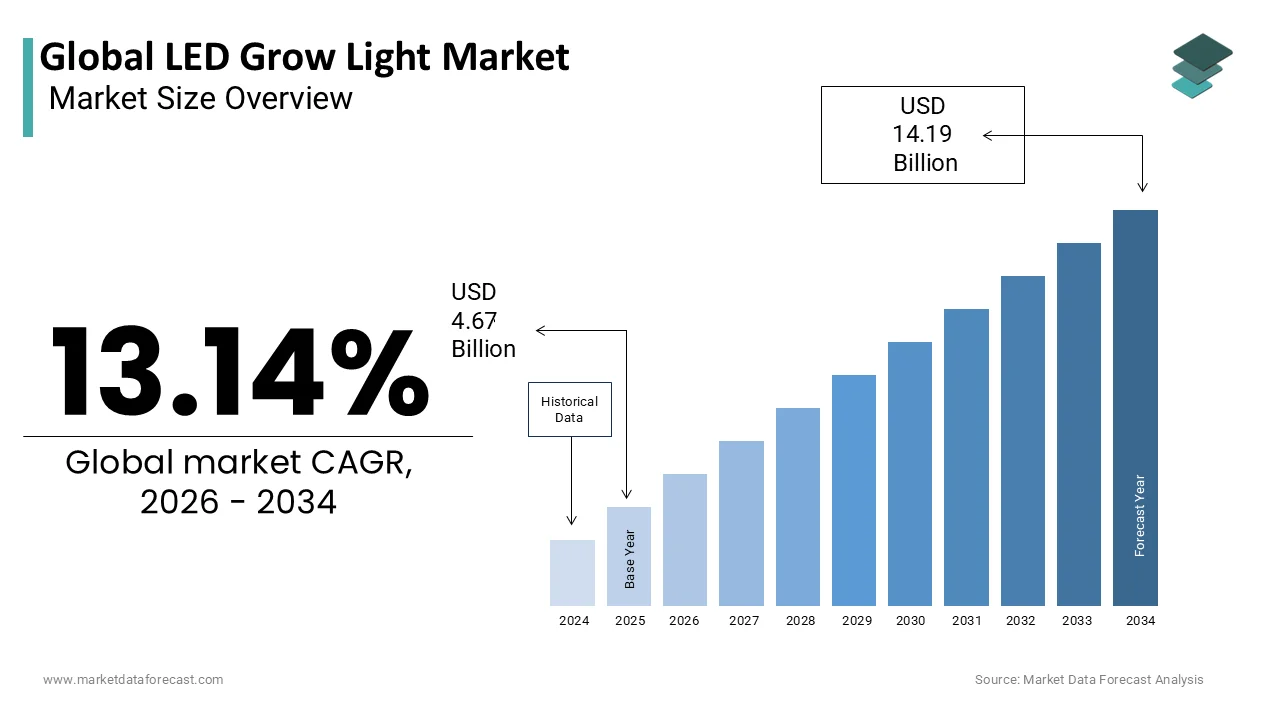
The Global LED Grow Light Market was valued at USD 4.67 billion in 2025, is estimated to reach USD 5.29 billion in 2026, and is projected to reach USD 14.19 billion by 2034, growing at a CAGR of 13.14% from 2026 to 2034.
LED Grow Light utilizes light-emitting diodes (LEDs) specifically designed to support plant growth by emitting an optimized spectrum of light for photosynthesis and photomorphogenesis. Unlike traditional lighting systems such as high-pressure sodium (HPS) or metal halide lamps, LED grow lights offer superior energy efficiency, longer operational life, and customizable spectral outputs tailored to different plant species and growth stages. These advantages have made them a preferred choice in controlled environment agriculture (CEA), including vertical farms, greenhouses, and indoor cultivation facilities.
The global shift toward sustainable farming practices, coupled with rising urbanization and land scarcity, has significantly boosted the demand for advanced agricultural technologies like LED grow lights. According to the Food and Agriculture Organization (FAO), over 820 million people globally suffer from hunger, prompting governments and private entities to explore innovative food production methods. As per the United Nations, nearly 68% of the world's population is projected to reside in urban areas by 2050, intensifying the need for space-efficient farming solutions. In this context, LED grow lights have emerged as a critical enabler of year-round crop production, independent of climatic conditions. Moreover, increasing investments in agritech startups and government subsidies for energy-efficient agricultural equipment further support market expansion.
MARKET DRIVERS
Rising Demand for Indoor Farming and Vertical Agriculture
The rapid adoption of indoor farming and vertical agriculture across urban centers is one of the most significant drivers fueling the LED Grow Light Market. With limited arable land and growing populations, cities are increasingly turning to controlled-environment agriculture (CEA) to ensure food security and reduce dependence on traditional farming. According to the World Bank, global urban populations are expected to increase by 2.5 billion by 2050, primarily in Asia and Africa. This demographic shift is driving the need for innovative farming techniques that can produce more food in smaller spaces.
Vertical farming, which involves stacking crops in vertically aligned layers within enclosed environments, relies heavily on artificial lighting systems such as LED grow lights. These lights provide precise control over light wavelengths, intensity, and duration, enabling optimal photosynthesis without the need for natural sunlight. As per a report by Agritecture, the number of commercial vertical farms worldwide grew by 37% between 2019 and 2022. Apart from these, companies like AeroFarms and Plenty have expanded their operations, investing heavily in LED-based lighting infrastructure.
Increasing Adoption of Hydroponics and Controlled Environment Agriculture (CEA)
The expanding use of hydroponic systems and controlled environment agriculture (CEA) is another key driver behind the surge in the LED Grow Light Market. Hydroponics, which involves growing plants in nutrient-rich water solutions without soil, has gained traction due to its ability to conserve water, reduce pesticide use, and accelerate plant growth. According to the U.S. Department of Agriculture (USDA), hydroponic systems can use up to 90% less water than traditional field farming, making them especially attractive in drought-prone regions.
In CEA setups, where environmental variables such as temperature, humidity, and light are tightly regulated, LED grow lights play a pivotal role in optimizing plant development. Their ability to deliver specific light spectra tailored to various growth phases—such as vegetative and flowering stages—enhances crop yield and quality. As per a study published by Frontiers in Plant Science, lettuce grown under optimized LED lighting showed a 25% increase in biomass compared to those under traditional lighting. This expansion directly correlates with increased demand for LED grow lights, particularly among greenhouse operators and commercial growers seeking to maximize productivity while minimizing resource consumption.
MARKET RESTRAINTS
High Initial Investment and Cost Barriers
The high initial investment required. Compared to conventional lighting systems such as high-pressure sodium (HPS) or metal halide lamps, LED grow lights often come with a significantly higher upfront cost is one of the primary restraints impeding widespread adoption.
This price disparity poses a challenge, especially for small-scale farmers and emerging agricultural enterprises operating on tight budgets. Although LED lights offer long-term savings through reduced energy consumption and lower maintenance costs, the return on investment (ROI) period can extend beyond two to three years, deterring immediate adoption. As per a survey conducted by the National Young Farmers Coalition, 68% of new farmers cited financial constraints as a major barrier to adopting advanced agricultural technologies. Besides, in developing economies where access to credit and financing options is limited, the affordability issue becomes even more pronounced.
Lack of Awareness and Technical Expertise Among Farmers
The lack of awareness and technical knowledge regarding the proper utilization of these lighting systems is another notable constraint affecting the LED Grow Light Market. Many traditional farmers remain unfamiliar with the nuances of light spectrum tuning, photoperiod management, and optimal light intensity levels necessary for maximizing plant growth.
This knowledge gap results in suboptimal usage of LED technology, leading to inefficiencies and discouraging potential adopters. In regions such as Southeast Asia and Sub-Saharan Africa, where agriculture remains largely conventional, extension services and training programs on modern horticultural lighting systems are limited. Moreover, the complexity involved in integrating LED lighting with other smart farming technologies, such as climate control systems and automated irrigation, further complicates adoption.
MARKET OPPORTUNITIES
Expansion of Cannabis Cultivation and Legalization Trends
The expanding legal cannabis industry, particularly in North America, Europe, and parts of Latin America is a substantial opportunity for growth in the LED Grow Light Market. As more jurisdictions legalize cannabis for medical and recreational use, indoor cultivation facilities are increasingly adopting LED grow lights to optimize yield, potency, and consistency.
Cannabis cultivation requires highly controlled environments to ensure product quality and regulatory compliance, making LED lighting a preferred choice due to its ability to fine-tune light spectrums for different growth phases. Unlike traditional high-intensity discharge (HID) lamps, LEDs generate less heat, reducing the need for additional cooling systems and lowering overall energy consumption. In the U.S., states like California, Colorado, and Michigan have witnessed a surge in licensed cultivation facilities transitioning to LED systems.
Integration with Smart Farming and IoT Technologies
The convergence of LED grow lights with smart farming and Internet of Things (IoT)-enabled agricultural systems presents a transformative opportunity for market growth. Modern LED lighting systems are now being integrated with sensors, automation software, and cloud-based analytics platforms to create intelligent horticultural ecosystems. Within this framework, LED grow lights serve as a crucial component, enabling real-time adjustments based on plant health, environmental conditions, and growth stage requirements.
These smart lighting systems allow growers to remotely monitor and adjust light intensity, color spectrum, and photoperiods via mobile applications or centralized dashboards. Companies like Heliospectra and LumiGrow have developed AI-driven LED solutions that adapt dynamically to plant needs, enhancing both efficiency and yield. A case study published by the University of Arizona’s Controlled Environment Agriculture Center demonstrated that integrating LED lighting with IoT-based climate controls resulted in a 30% improvement in tomato yield while reducing energy consumption by 22%.
MARKET CHALLENGES
Rapid Technological Advancements and Product Obsolescence
The pace of technological innovation, which can lead to frequent product obsolescence and difficulties in standardization is one of the foremost challenges facing the LED Grow Light Market. As manufacturers continuously introduce new models with enhanced spectral tunability, improved energy efficiency, and integrated smart features, existing products can quickly become outdated.
This rapid evolution creates uncertainty for growers, particularly medium- and large-scale operations that require long-term planning and capital budgeting. Early adopters risk investing in systems that may soon be surpassed by newer, more efficient alternatives. For example, the introduction of UV-A and far-red spectrum LEDs in recent years has changed how growers approach flowering and disease resistance, rendering older broad-spectrum models less desirable. Moreover, the absence of universal performance standards across the industry complicates purchasing decisions. As per a 2022 survey by Greenhouse Grower magazine, 58% of respondents considered inconsistent product performance and unclear efficacy metrics as barriers to LED adoption.
Regulatory and Policy Uncertainties Across Regions
Regulatory inconsistencies and policy fluctuations across different regions pose a significant challenge to the LED Grow Light Market. Governments worldwide have varying approaches to agricultural subsidies, energy efficiency incentives, and indoor farming regulations, which directly impact market dynamics. For instance, in the United States, the availability of tax credits and rebates for energy-efficient agricultural lighting varies by state, influencing adoption rates. According to the Database of State Incentives for Renewables & Efficiency (DSIRE), only 17 U.S. states offered specific incentives for LED grow lights in 2025, limiting nationwide scalability.
Similarly, in the European Union, regulatory frameworks governing indoor farming and horticultural lighting are still evolving. The EU’s Common Agricultural Policy (CAP) provides some funding for sustainable farming technologies, but it does not explicitly prioritize LED grow lights. In contrast, countries like Japan and South Korea have implemented robust policies supporting controlled environment agriculture, offering grants and R&D funding for LED-based farming innovations. However, in emerging markets such as India and Brazil, regulatory clarity regarding indoor farming licenses, electricity tariffs, and import duties on imported LED fixtures remains ambiguous. As per a 2025 report by McKinsey, inconsistent regulatory environments hinder foreign direct investment (FDI) in agritech sectors across several developing nations.
REPORT COVERAGE
| REPORT METRIC | DETAILS |
| Market Size Available | 2025 to 2034 |
| Base Year | 2025 |
| Forecast Period | 2026 to 2034 |
| Segments Covered | By Product, Application, Indication, End User, Technology, Wavelength, Component, and Region. |
| Various Analyses Covered | Global, Regional & Country Level Analysis, Segment-Level Analysis, DROC, PESTLE Analysis, Porter’s Five Forces Analysis, Competitive Landscape, Analyst Overview of Investment Opportunities |
| Regions Covered | North America, Europe, APAC, Latin America, Middle East & Africa |
| Market Leaders Profiled | Royal Philips (Netherlands), General Electric Company (U.S.), Osram Licht AG (Germany), Gavita Holland B.V. (Netherlands), LumiGrow, Inc. (U.S.), Heliospectra AB (Sweden). |
SEGMENTAL ANALYSIS
By Application Insights
The commercial greenhouse application segment led the market by capturing 36.3% of total revenue share in 2025. The integration of LED lighting into climate-controlled greenhouse environments is one of the key factors behind this segment’s dominance. Greenhouses represent one of the earliest and most established applications for LED grow lights, particularly in regions with limited natural sunlight or seasonal variability. Countries like the Netherlands, Canada, and Japan have heavily invested in greenhouse infrastructure to ensure year-round crop production, driving consistent demand for LED lighting. According to Wageningen University, over 70% of Dutch greenhouses have adopted LED lighting to replace outdated HPS systems, achieving energy savings of up to 45% while maintaining high yields. Additionally, the ability to manipulate light spectra for specific crops such as cucumbers, tomatoes, and strawberries has made LED lights indispensable in large-scale greenhouse operations. Governments in several European countries also provide subsidies for LED adoption in greenhouses, accelerating market penetration.
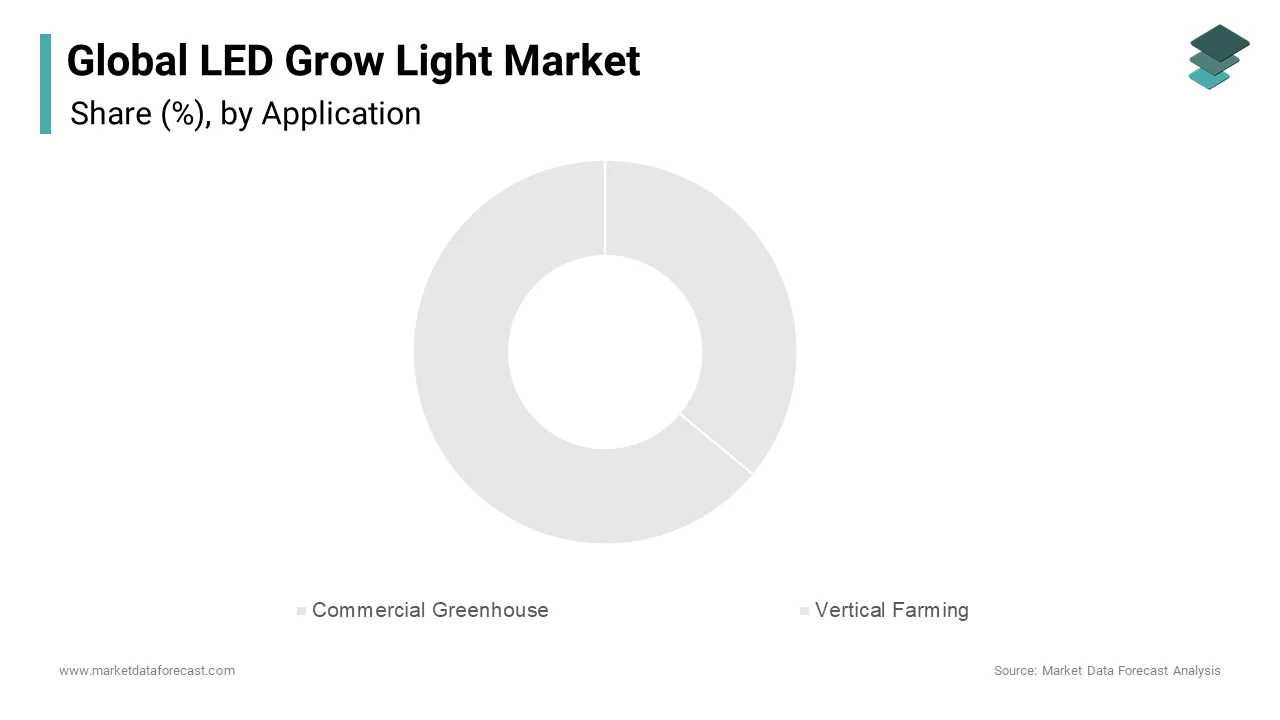
The vertical farming segment is growing at the highest rate and is projected to expand at a CAGR of 26.4% from 2026 to 2034 Vertical farming relies entirely on artificial lighting since it operates indoors without access to natural sunlight. This dependency makes LED grow lights a core component of every vertical farm setup, driving significant demand. Urbanization and food security concerns are major catalysts behind this growth. According to the UN, 68% of the global population will reside in urban areas by 2050 , necessitating localized food production solutions. Vertical farms located in city centers, such as those operated by AeroFarms in the U.S. and Infarm in Europe, rely on LED lighting to grow leafy greens and herbs efficiently. As per a 2025 report by McKinsey, vertical farming startups raised over USD 1.2 billion in venture capital in 2022, indicating strong investor confidence.
By Technology Insights
The LED segment dominated the grow light market by accounting for 64.6% of total revenue share in 2025. Superior energy efficiency and spectral customization capabilities offered by LED lighting systems compared to traditional technologies like HID and fluorescent lamps is primarily driving the dominance of LED segment. Additionally, LED lights have a significantly longer lifespan,reducing replacement frequency and maintenance costs. The ability to tailor light wavelengths for specific plant growth stages further enhances their appeal among commercial growers seeking optimized yields. For example, as per studies published in Frontiers in Plant Science, crops grown under customized LED spectrums demonstrate improved biomass accumulation and flowering rates. These advantages are fueling widespread adoption across controlled environment agriculture, especially in vertical farms and greenhouses, reinforcing LED’s position as the leading technology in the market.
While LED is already the largest segment, it also remains the fastest-growing and is expanding at a CAGR of 18.7% from 2025 to 2033. This rapid growth is attributed to increasing investments in indoor farming infrastructure and the legalization of cannabis cultivation in various regions is attributed to rapid growth of LED. Moreover, advancements in smart LED systems integrated with IoT platforms are enhancing operational efficiencies in agricultural settings. Companies such as Heliospectra and LumiGrow are introducing AI-driven lighting solutions that adapt dynamically to plant needs, improving yield and resource utilization.
By Installation Insights
The retrofit segment held the largest share of 54.3% in 2025. Growing trend of upgrading existing agricultural facilities, particularly older greenhouses and indoor farms, with energy-efficient LED lighting systems is fuelling the dominance of retrofit segment. Many operators prefer retrofitting because it allows them to integrate advanced lighting without dismantling current structures or investing in entirely new facilities. The availability of government incentives aimed at promoting energy-efficient agricultural upgrades is also a key driver. In the U.S., the USDA’s Rural Energy for America Program (REAP) offers grants and loan guarantees for farmers adopting renewable and energy-saving technologies, including LED retrofits. According to the National Renewable Energy Laboratory (NREL), retrofitting old HPS systems with LED lights can reduce energy consumption by up to 40% , significantly lowering operating costs. Further, companies like Philips GreenPower and Current by GE offer retrofit kits specifically designed for seamless integration into existing infrastructures. This ease of implementation, combined with strong ROI potential, makes retrofit installations a dominant force in the market.
The new installation segment is growing at the fastest pace and is projected to expand at a CAGR of 20.1% through 2033. Rapid expansion of purpose-built indoor farms, vertical farms, and commercial greenhouses, particularly in urban areas where land is scarce is largely fuelling the surge of new installation segment. Urbanization trends are pushing food producers toward vertically integrated systems that require full-scale LED lighting setups from the outset. For instance, as per the World Bank, urban populations are expected to rise by 2.5 billion by 2050 , with much of this growth occurring in Asia and Africa. In response, governments and private investors are funding new agricultural infrastructure projects that incorporate LED lighting from inception. Countries like Japan and South Korea have launched national programs supporting indoor farming startups, many of which deploy LED lighting exclusively. Furthermore, the entry of major agritech firms such as AeroFarms and Infarm into new markets has accelerated the demand for LED-based new installations.
By Spectrum Insights
The full spectrum segment commanded the market by representing 59.1% of the LED grow light market in 2025. The growing preference for multi-use lighting systems that eliminate the need for switching between different light types during growth cycles is one of the main reasons for this segment’s dominance. Full-spectrum LED lights mimic natural sunlight by emitting a balanced range of wavelengths across the visible spectrum, making them suitable for all stages of plant growth—from germination to flowering. Their versatility appeals to a broad base of growers, particularly those cultivating diverse crops in greenhouses and research environments. Apart from these, academic institutions and agricultural research centers widely adopt full-spectrum lighting for experimental consistency. These benefits contribute to the continued leadership of full-spectrum LED lights in the market.
The partial spectrum segment is the fastest-growing and is expanding at a CAGR of 21.3% from 2025 to 2033. Increasing demand for specialized lighting tailored to specific growth phases, particularly in commercial cannabis cultivation and hydroponic operations is primarily driving the growth of partial spectrum segment. Unlike full-spectrum lights, partial-spectrum LEDs allow growers to fine-tune light wavelengths, such as blue-rich light for vegetative growth or red/far-red for flowering, to optimize crop yield and quality. Moreover, the ability to customize light spectra for individual crops enables greater control over plant morphology and disease resistance. As per a 2025 study published in Plant Methods, tomatoes grown under optimized partial-spectrum lighting achieved a 27% increase in fruit size and faster maturation cycles .
By Device Type Insights
The top lights segment dominated the device type by holding a 42.5% of the share in 2025. Their compatibility with existing greenhouse infrastructure is one of the primary drivers behind the lead position of top lights segment. These overhead lighting fixtures are extensively used in greenhouses and large-scale indoor farms to provide uniform illumination across entire crop canopies. Their design allows for efficient light distribution, making them ideal for applications requiring high-intensity light exposure, such as lettuce and herb cultivation. Besides, their scalability supports large-scale deployments in vertical farms and research centers.
The inter-lights segment is experiencing the fastest growth and is expanding at a CAGR of 23.5% through 2033. These lights are designed to be placed between plant rows or within dense canopy layers, delivering direct light to lower leaves and inner parts of plants that would otherwise receive minimal illumination. This capability is especially valuable in high-density crops like tomatoes and peppers, where maximizing light penetration improves yield and reduces disease risk. Inter-lights are gaining popularity in combination with top-light systems to create layered lighting strategies that enhance photosynthetic efficiency. According to a 2025 report by Signify Holding, inter-lighting in Dutch tomato greenhouses increased fruit production by 20% and reduced energy consumption by 15% due to optimized light usage. Moreover, their modular design allows easy integration into vertical farming stacks, making them highly adaptable to modern agricultural practices.
REGIONAL ANALYSIS
North America held the largest regional market share by contributing 34.4% of global revenue in 2025. The United States is the dominant player, driven by robust government support, favorable regulatory policies, and a thriving cannabis industry. Besides, the presence of major agritech firms such as LumiGrow, Fluence Bioengineering, and General Electric has spurred innovation in smart LED lighting systems. Government incentives like the USDA’s REAP program encourage farmers to adopt energy-efficient technologies, further boosting market growth. The expansion of vertical farming networks in urban centers like Chicago, New York, and San Francisco also contributes to sustained demand for LED grow lights.
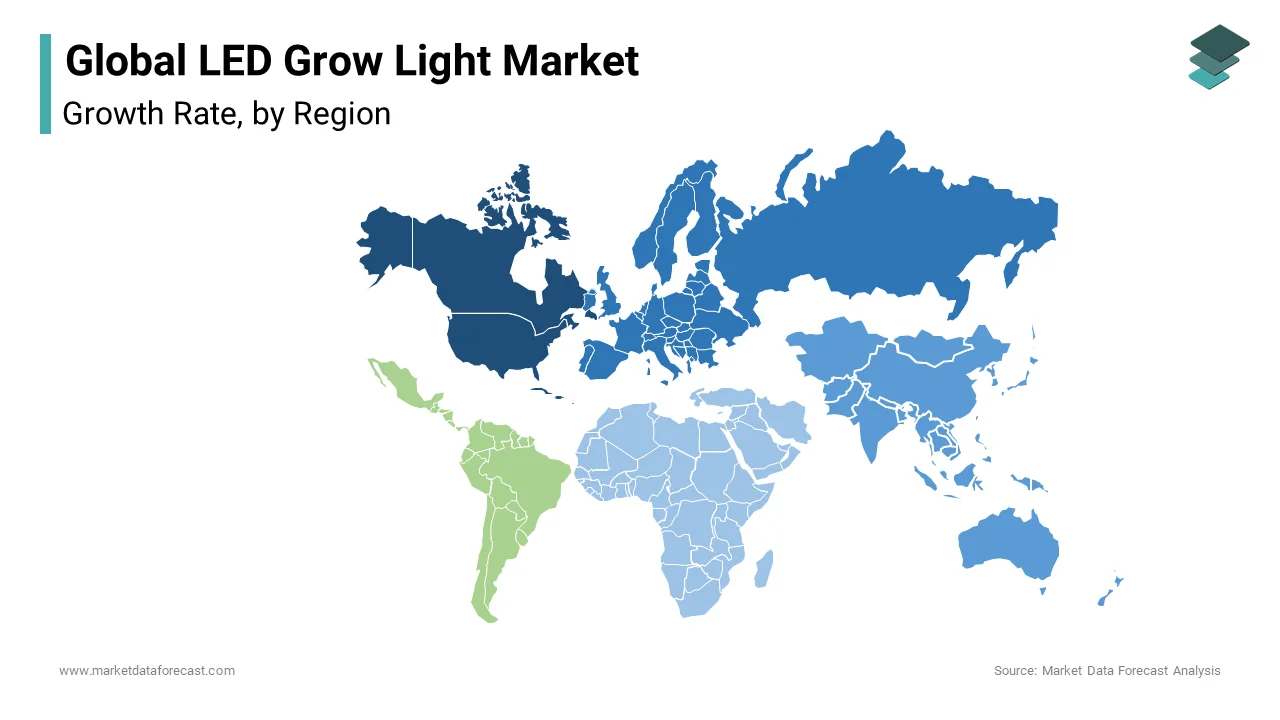
Europe commands a significant regional share. The Netherlands leads the region due to its world-renowned greenhouse horticulture sector. Government subsidies and sustainability mandates are key drivers. The EU’s Common Agricultural Policy (CAP) includes provisions for energy-efficient farming technologies, encouraging widespread LED adoption. Germany and the UK are also expanding their indoor farming sectors, with companies like Infarm and IGS deploying LED-based vertical farms in major cities.
Asia-Pacific is the fastest-growing regional market. China and Japan are leading the charge, with government-backed initiatives promoting smart agriculture. China’s Ministry of Agriculture and Rural Affairs has allocated over RMB 20 billion in funding for modern agricultural infrastructure, including LED lighting systems. Japan has been a pioneer in integrating LED grow lights into vertical farms, with companies like Spread Co. operating fully automated lettuce factories illuminated entirely by LEDs. South Korea is also investing heavily in agritech, with Seoul launching urban farming pilot programs.
Latin America represents a nascent but growing market, with Brazil and Mexico showing early signs of LED adoption. Brazil, in particular, is witnessing increased interest in greenhouse farming, supported by government-led rural electrification programs. Despite challenges such as inconsistent regulatory frameworks and limited financing options, there is growing awareness among large-scale agribusinesses about the benefits of LED lighting. Universities and research institutes in Chile and Colombia are conducting trials on LED-assisted crop cultivation, paving the way for future expansion.
The Middle East and Africa collectively account for a small but strategically important share. Countries like the UAE and Israel are leading the way, leveraging LED grow lights to combat extreme climatic conditions and water scarcity. The UAE’s Ministry of Climate Change and Environment has launched “Operation 1000 Farms” , aiming to establish 1,000 indoor farms equipped with LED lighting. In Israel, agritech startups such as Solabiol are developing LED-based systems tailored for desert agriculture. Meanwhile, in Africa, smallholder farmers are beginning to experiment with containerized LED farms for off-grid food production.
KEY MARKET PLAYERS AND COMPETITIVE LANDSCAPE
Companies playing a prominent role in the global LED grow light market include Royal Philips (Netherlands), General Electric Company (U.S.), Osram Licht AG (Germany), Gavita Holland B.V. (Netherlands), LumiGrow, Inc. (U.S.), Heliospectra AB (Sweden), Transcend Lighting Inc. (U.S.), Sunlight Supply Inc. (U.S.), Beacon Lighting India (India), Walters Garden, Inc. (U.S.), Green Sense Farms (U.S.), Borst Bloembollen B.V. (Netherlands) and Shenzhen Juson Technology Co., Ltd. (China).
The competition in the LED Grow Light Market is intense and highly dynamic, driven by rapid technological advancements and increasing demand for energy-efficient agricultural solutions. As more players enter the space, the market has become increasingly fragmented, with both global giants and niche startups vying for dominance. Established companies leverage their brand reputation, extensive R&D capabilities, and global distribution networks to maintain a competitive edge. At the same time, emerging firms focus on innovation, affordability, and specialized applications to capture market share. The race to develop smarter, more adaptable lighting systems has led to a surge in product differentiation based on spectral tuning, integration with IoT platforms, and compatibility with vertical farming infrastructures. Additionally, strategic moves such as mergers, acquisitions, and joint ventures are common tactics used to strengthen market positioning and expand into new geographies. As the industry evolves, competition is expected to intensify further, pushing manufacturers to continuously refine their offerings and business strategies.
Top Players in the Market
Signify N.V. (Philips Lighting)
Signify, formerly known as Philips Lighting, is a global leader in the LED grow light market, offering a wide range of horticultural lighting solutions under its Philips GreenPower brand. The company has been instrumental in developing innovative LED systems tailored for greenhouse horticulture and vertical farming. With a strong focus on research and development, Signify provides customized spectrum lighting that enhances plant growth, yield, and quality. Its collaborations with agricultural research institutions and large-scale growers have solidified its position as a pioneer in sustainable and efficient lighting technologies.
OSRAM Licht AG
OSRAM is a key player known for its advanced lighting technologies across various industries, including agriculture. The company’s LED grow lights are designed to support diverse applications such as hydroponics, greenhouses, and indoor farming. OSRAM emphasizes energy efficiency and spectral optimization to cater to the specific needs of different crops. Through strategic partnerships and continuous innovation, it has contributed significantly to the expansion of controlled environment agriculture. Its presence in both traditional and emerging markets ensures widespread adoption and technological leadership in the sector.
UPL Corporation Limited (formerly Ceratech)
UPL has established itself as a major participant in the LED grow light market through its subsidiary Ceratech, which specializes in horticultural LED lighting solutions. The company focuses on delivering high-performance, energy-efficient lighting systems that support sustainable farming practices. UPL integrates its LED technology with broader agri-tech offerings, enabling farmers to enhance productivity while reducing environmental impact. By aligning with global sustainability goals and investing in smart farming innovations, UPL plays a crucial role in shaping the future of modern agriculture through advanced lighting technologies.
RECENT HAPPENINGS IN THE MARKET
Product Innovation and Customization
Leading companies in the LED grow light market continuously invest in research and development to introduce advanced, spectrally tunable lighting solutions tailored to specific crop types and growth stages. This strategy allows them to meet the evolving demands of commercial growers who seek optimized yields and resource efficiency.
Strategic Partnerships and Collaborations
To expand their market reach and enhance technical capabilities, key players engage in strategic alliances with agritech firms, research institutions, and government bodies. These collaborations help accelerate product development, improve market penetration, and foster industry-wide standardization of LED grow light technologies.
Geographic Expansion and Localization
Major market participants are focusing on entering new markets, particularly in Asia-Pacific and Latin America, where demand for controlled environment agriculture is rising. Companies are establishing regional manufacturing units, local distribution networks, and customer support centers to better serve regional clients and adapt to local agricultural practices.
RECENT HAPPENINGS IN THE MARKET
In February 2025, Signify N.V. launched a new line of AI-integrated LED grow lights specifically designed for vertical farms, enhancing automation and light spectrum optimization for improved crop yield and resource efficiency.
In March 2025, OSRAM Licht AG announced a collaboration with a leading agritech startup to co-develop next-generation lighting systems tailored for cannabis cultivation, aiming to provide targeted light recipes for enhanced cannabinoid production.
In May 2025, UPL Corporation expanded its horticultural lighting division by setting up a dedicated LED manufacturing facility in Southeast Asia, supporting regional demand and strengthening supply chain resilience.
In June 2025, AeroFarms , a major vertical farming company, partnered with an LED manufacturer to deploy fully integrated lighting systems across its new urban farming hubs, reinforcing the importance of LED technology in scalable indoor agriculture.
In July 2025, Heliospectra AB introduced a modular LED lighting platform compatible with existing greenhouse infrastructure, allowing seamless retrofitting and improved energy efficiency for commercial growers transitioning from conventional lighting systems.
MARKET SEGMENTATION
This research report on the Global LED grow light market has been segmented and sub-segmented into the following categories.
By Application
- Commercial Greenhouse
- Vertical Farming
By Technology
- LED
By Installation
- Retrofit
- New Installation
By Spectrum
- Full Spectrum
- Partial Spectrum
By Device Type
- Top Lights
- Inter-Lights
By Region
- North America
- Europe
- Asia Pacific
- Latin America
- Middle East and Africa