- Product Description Description
- Table of Contents TOC
- List of Table & Figure LOT
- Get Free Sample PDF Sample PDF
Market Size, 2025
$0.19 BnMarket Estimate, 2026
$0.21 BnMarket Forecast, 2034
$0.38 BnCAGR, 2026–2034
7.94%Executive Summary: Middle East & Africa Bio-Organic Fertilizer Market Analysis & Forecast (2026–2034)
- Market Scope: Comprehensive regional agricultural sector report analyzing product classifications (nitrogen-fixing, phosphate-solubilizing, potash-mobilizing), application sectors (fruits & vegetables, cereals, pulses, and oilseeds), and country-level adoption dynamics across the Middle East and Africa (KSA, UAE, Egypt, South Africa, Kenya, etc.).
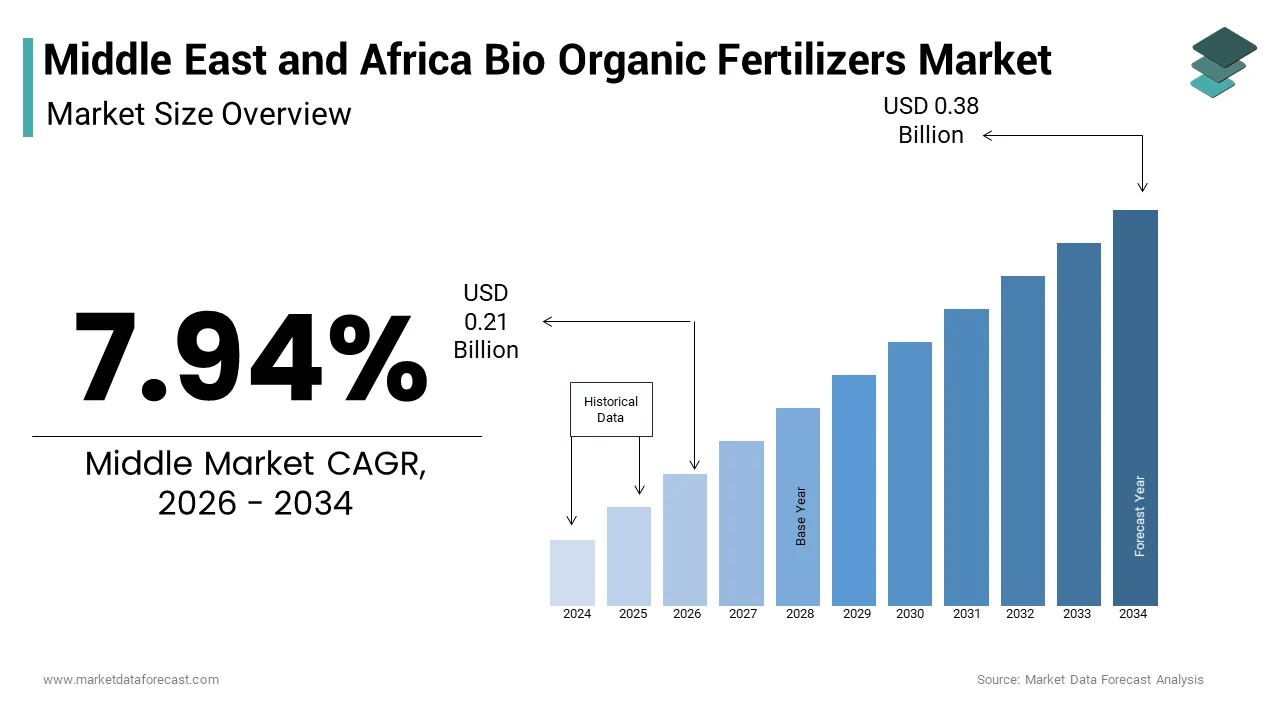
- Market Valuation: Valued at USD 0.19 billion (2025), estimated at USD 0.21 billion (2026), and projected to reach USD 0.38 billion by 2034, registering a compound annual growth rate (CAGR) of 7.94% from 2026 to 2034.
- Primary Growth Drivers: Increasing government support for sustainable agriculture and organic programs, widespread soil degradation and nutrient depletion in arid/semi-arid regions, and rising demand for organic produce in major export markets.
Key Market Segment Metrics (2026–2034)
| Category | Leading Segment (Position) | Fastest-Growing Segment |
|---|---|---|
| By Type | Nitrogen-Fixing Bio-Fertilizers (captured ~38% market share due to high legume/cereal demand) | Phosphate-Solubilizing Bio-Fertilizers (projected at a 9.7% CAGR for phosphorus-deficient arid soils) |
| By Application | Fruits and Vegetables (held 34% share via high-value horticultural exports and stringent EU standards) | Cereals, Pulses, and Oilseeds (projected at a 9.1% CAGR driven by regional food security staples) |
| By Country | Saudi Arabia (largest market holding 18.4% share via Vision 2030 sustainability initiatives) | Egypt and Kenya (strong growth backed by export-oriented organic farming and smallholder training) |
Major Market Players & Competitive Landscape
Market Structure: Fragmented landscape featuring domestic producers, international agri-input corporations, and agricultural cooperatives competing through farmer education, local strategic alliances, and localized bio-formulations.
Key Companies: Gujarat State Fertilizers & Chemicals (GSFC), National Fertilizers Limited (NFL), Krishak Bharati Cooperative Limited (KRIBHCO), Lallemand, Novozymes, Symborg, Biomax, Agri Life, Ajay Bio-Tech Ltd, and Antibiotice S.A.
 Download Free Sample Report
Middle East and Africa Bio Organic Fertilizer Market Size
The Middle East and Africa bioorganic fertilizers market was valued at USD 0.19 billion in 2025 and is anticipated to reach USD 0.21 billion in 2026 to reach USD 0.38 billion by 2034, growing at a CAGR of 7.94% during the forecast period from 2026 to 2034.
Bioorganic fertilizers refer to nutrient-rich substances derived from plant, animal, or microbial sources that enhance soil fertility and crop productivity without causing environmental degradation. These fertilizers include compost, vermicompost, manure, biochar, and microbial inoculants such as nitrogen-fixing bacteria and phosphate-solubilizing microorganisms. In the context of the Middle East and Africa (MEA), the bio-organic fertilizer market has gained increasing relevance due to the region’s growing agricultural demand, deteriorating soil health, and rising awareness about sustainable farming practices.
The MEA region faces significant agricultural challenges, including arid climatic conditions, water scarcity, and declining soil fertility, particularly in Sub-Saharan Africa and parts of the Arabian Peninsula.
Additionally, population growth and food security concerns have intensified the need for sustainable yield improvement strategies across the region.
Governments and international development agencies are increasingly promoting organic and biological inputs to reduce dependency on chemical fertilizers and mitigate their adverse environmental effects.
MARKET DRIVERS
Increasing Government Support for Sustainable Agriculture Practices
One of the key drivers fueling the growth of the Middle East and Africa Bio Organic Fertilizer Market is the increasing government support for sustainable agriculture practices. Across both North Africa and the Gulf region, national agricultural policies are being reoriented toward environmentally friendly input use, with a strong emphasis on reducing reliance on synthetic fertilizers and improving long-term soil health.
Similarly, Saudi Arabia's Ministry of Environment, Water, and Agriculture has introduced the National Program for Organic Agriculture, offering financial incentives to local producers who integrate bioorganic inputs into their farming systems. Kenya, under CAADP guidelines, has distributed subsidized bio-organic fertilizer kits to over 400,000 farmers since 2021, according to the Kenya Agricultural and Livestock Research Organization (KALRO). Such policy-driven interventions are playing a pivotal role in expanding the regional bio-organic fertilizer market.
Rising Soil Degradation and Nutrient Depletion in Arid and Semi-Arid Regions
Another major driver of the Middle East and Africa Bio Organic Fertilizer Market is the widespread degradation of soil quality and nutrient depletion, particularly in arid and semi-arid regions where conventional farming methods have led to long-term fertility loss. The Food and Agriculture Organization (FAO) estimates that nearly 65% of cultivated land in Sub-Saharan Africa suffers from moderate to severe soil degradation, significantly impacting crop yields and food production capacity.
In the Middle East, especially in countries like Iraq and Yemen, prolonged droughts, excessive irrigation, and salinization have further exacerbated soil deterioration. According to the International Center for Biosaline Agriculture (ICBA), soil salinity affects more than 20 million hectares of agricultural land across the GCC countries, diminishing the effectiveness of chemical fertilizers and prompting a shift toward organic alternatives.
Bio-organic fertilizers offer a viable solution by restoring microbial activity, enhancing water retention, and improving nutrient cycling in degraded soils.
Moreover, in Ethiopia, where soil erosion is a critical issue, the Ethiopian Institute of Agricultural Research (EIAR) has documented improved maize productivity through the use of locally produced compost and biofertilizers. With such tangible benefits, the adoption of bio-organic fertilizers is gaining momentum as a practical tool for reversing soil degradation and boosting agricultural resilience across the region.
MARKET RESTRAINTS
Limited Awareness and Technical Knowledge Among Farmers
A significant restraint affecting the Middle East and Africa Bio Organic Fertilizer Market is the limited awareness and technical knowledge among farmers regarding the benefits and proper application of bio organic fertilizers. Unlike chemical fertilizers, which provide immediate visible results, biorganic options require a deeper understanding of soil biology, nutrient release patterns, and application timing to achieve optimal effectiveness.
Also, a smaller number of smallholder farmers in Sub-Saharan Africa are familiar with the concept and advantages of bioorganic fertilizers. This lack of awareness is compounded by inadequate extension services and insufficient training programs at the grassroots level.
In many rural areas, traditional farming practices remain deeply ingrained, with farmers relying on generational knowledge rather than scientific advancements. Additionally, in the Middle East, where commercial agriculture is often mechanized, there remains a gap in knowledge transfer between researchers and end-users. Without targeted education campaigns and hands-on demonstrations, the slow uptake of bio-organic fertilizers will continue to hinder market expansion across the region.
High Cost and Limited Availability of Quality Inputs
Another major constraint impeding the growth of the Middle East and Africa Bio Organic Fertilizer Market is the high cost and limited availability of quality bio organic inputs. Compared to widely accessible chemical fertilizers, which are often subsidized by governments, biorganic alternatives tend to be more expensive and logistically challenging to procure, especially for smallholder farmers operating on tight budgets.
In many African countries, the production and distribution infrastructure for bioorganic fertilizers is still underdeveloped. According to the African Fertilizer and Agribusiness Partnership (AFAP), less than 15% of the fertilizer supply chain in Sub-Saharan Africa includes certified organic products, leading to inconsistent availability and higher prices.
The price differential discourages adoption, especially among resource-constrained farmers who prioritize short-term economic returns over long-term soil health benefits.
In the Middle East, import dependency further inflates the cost of organic fertilizers. Countries like Qatar and Oman rely heavily on imported organic inputs, adding to transportation and logistics expenses. These economic and logistical hurdles make it difficult for bio-organic fertilizers to gain traction in mainstream agriculture, slowing down market penetration across the MEA region.
MARKET OPPORTUNITY
Expansion of Organic Farming Certification Programs
A major opportunity driving the Middle East and Africa Bio Organic Fertilizer Market is the expansion of organic farming certification programs, which are creating structured pathways for farmers to transition to sustainable practices. Governments, regional bodies, and international organizations are increasingly investing in formal certification frameworks to boost exports of organic produce and improve domestic agricultural standards.
In Morocco, the National Agency for Organic Agriculture (ONAB) has been actively certifying organic farms and promoting the use of bio-organic fertilizers. This expansion has directly stimulated demand for approved organic inputs, including biofertilizers, as part of compliance requirements.
Similarly, in South Africa, the Perishable Products Export Control Board (PPECB) has streamlined certification processes for organic exporters, encouraging more farmers to adopt compliant production methods.
In the Middle East, the UAE has established the Emirates Authority for Standardization and Metrology (ESMA), which administers the UAE Organic Standard. Under this framework, farms seeking export access to Europe and Asia must use approved organic inputs, including biofertilizers, thus stimulating regional market growth.
Growing Demand for Organic Produce in Export Markets
Another emerging opportunity in the Middle East and Africa Bio Organic Fertilizer Market is the rising global demand for organic produce, which is incentivizing local farmers to adopt sustainable cultivation practices. European and North American markets have shown increasing preference for ethically sourced and organically grown agricultural commodities, providing an economic rationale for MEA producers to transition toward organic input usage.
According to the Research Institute of Organic Agriculture (FiBL), global organic food sales exceeded USD 140 billion in 2022, with the EU and the U.S. accounting for over 80% of this demand. Countries like Kenya, Egypt, and Morocco have capitalized on this trend by exporting certified organic fruits, vegetables, and spices, all of which require the use of bio-organic fertilizers under international organic standards.
To maintain certification, Kenyan exporters must adhere to strict organic input regulations, reinforcing the need for bio-organic fertilizers.
In the Middle East, the UAE and Saudi Arabia are positioning themselves as regional organic trade hubs. The Dubai Multi Commodities Centre (DMCC) reported a 14% year-over-year increase in organic product imports and re-exports in 2023, signaling growing regional participation in the global organic value chain.
This export-oriented shift is expected to drive sustained demand for bio-organic fertilizers across MEA, offering a lucrative avenue for market expansion.
MARKET CHALLENGES
Inadequate Supply Chain Infrastructure for Bio-Organic Fertilizers
A major challenge facing the Middle East and Africa Bio Organic Fertilizer Market is the inadequate supply chain infrastructure, which limits the efficient production, distribution, and accessibility of bio organic fertilizers to end-users. Unlike chemical fertilizers, which benefit from well-established logistics networks, biorganic alternatives often face bottlenecks in storage, transportation, and last-mile delivery, particularly in rural and remote areas.
In Sub-Saharan Africa, poor road networks and a lack of cold-chain storage facilities pose significant obstacles to the timely distribution of bioorganic fertilizers, which are often sensitive to temperature and moisture. According to the World Bank, only 34% of rural Africans live within 2 kilometers of an all-season road, severely restricting access to modern agricultural inputs.
In Nigeria, for example, the absence of dedicated organic fertilizer storage centers has resulted in frequent spoilage and reduced shelf life of microbial-based products.
In the Middle East, although infrastructure is generally better developed, logistical coordination between local manufacturers and small-scale distributors remains fragmented.
Seasonal Production Constraints and Raw Material Scarcity
Another critical challenge confronting the Middle East and Africa Bio Organic Fertilizer Market is the seasonal nature of raw material availability and production constraints, which limit consistent supply throughout the year. Unlike synthetic fertilizers, which can be manufactured continuously in industrial settings, many biotic fertilizers depend on organic waste streams, livestock manure, and microbial cultures that fluctuate seasonally.
In Sub-Saharan Africa, where livestock farming is highly dependent on rainfall patterns, manure availability varies significantly between wet and dry seasons. According to the International Livestock Research Institute (ILRI), manure collection rates drop by up to 40% during drought periods, directly impacting the production capacity of bioorganic fertilizer manufacturers.
Similarly, in Egypt and Sudan, agricultural residues such as rice husks and sugarcane bagasse—key feedstocks for composting—are only available in large quantities post-harvest, limiting off-season production capabilities.
In the Middle East, where arid conditions limit biomass availability, sourcing organic waste for bio fertilizer production presents another challenge. Also, in the UAE, municipal solid waste recycling initiatives have helped supplement raw material supplies, but these remain insufficient to meet growing demand, as noted by the Environment Agency – Abu Dhabi (EAD).
REPORT COVERAGE
| REPORT METRIC | DETAILS |
| Market Size Available | 2025 to 2034 |
| Base Year | 2025 |
| Forecast Period | 2026 to 2034 |
| CAGR | 7.94% |
| Segments Covered | By Type, Application, and Region. |
| Various Analyses Covered | Global, Regional, and Country-Level Analysis, Segment-Level Analysis, DROC, PESTLE Analysis, Porter’s Five Forces Analysis, Competitive Landscape, Analyst Overview of Investment Opportunities |
| Regions Covered | Brazil, Mexico, Chile, Argentina, a the Rest of Latin America |
| Market Leaders Profiled | Gujarat State Fertilizers & Chemicals (GSFC), Lallemand, Novozymes, Symborg, Biomax, Agri Life, Ajay Bio-Tech Ltd, and Antibiotice S.A. |
SEGMENTAL ANALYSIS
By Type Insights
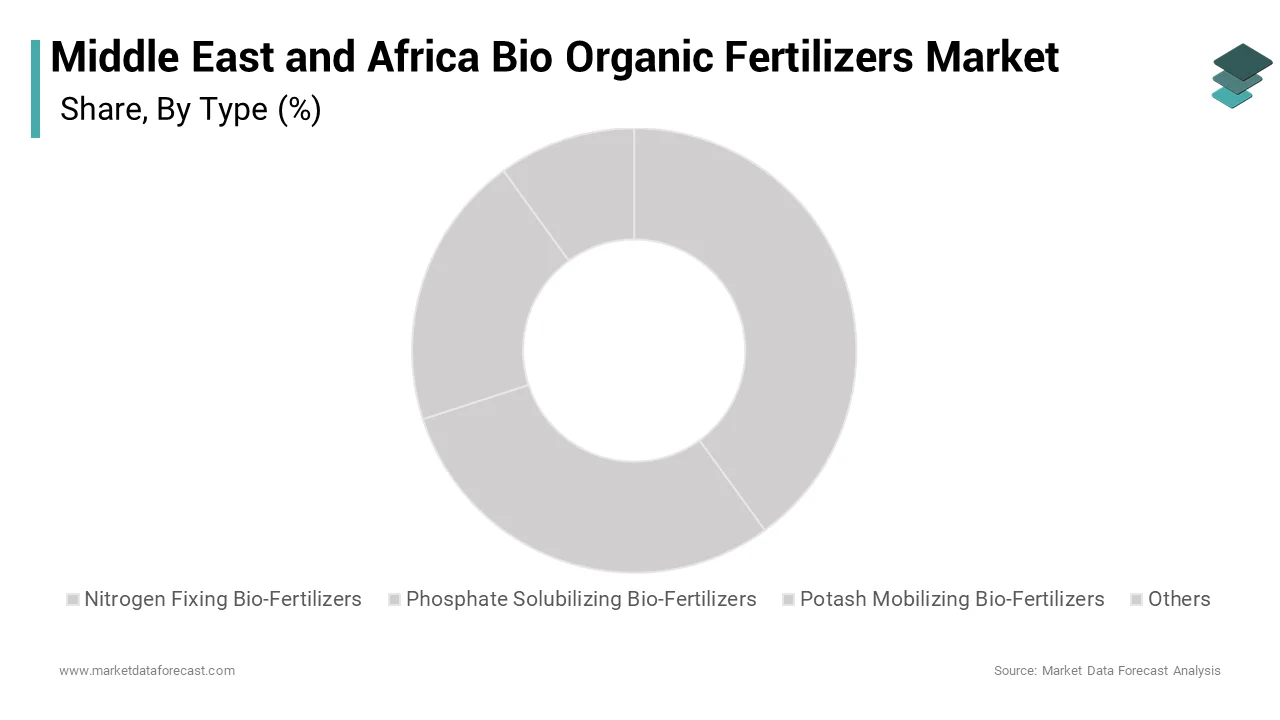
Nitrogen-fixing bio-fertilizers dominated the Middle East and Africa Bio Organic Fertilizer Market, capturing approximately 38% of the total market share in 2023. This segment's position is primarily attributed to its widespread application across staple crops such as legumes, cereals, and pulses that require nitrogen for optimal growth.
One key driver of this dominance is the high dependency on biological nitrogen fixation in regions with nutrient-deficient soils, particularly in Sub-Saharan Africa. According to the International Center for Tropical Agriculture (CIAT), over 60% of smallholder farms in countries like Ethiopia and Kenya rely on Rhizobium-based inoculants—common nitrogen-fixing bio-fertilizers—to enhance legume productivity without costly synthetic inputs.
In addition, government-backed initiatives promoting sustainable farming practices have significantly boosted adoption rates.
Moreover, nitrogen-fixing bio-fertilizers are cost-effective and environmentally benign compared to synthetic nitrogen fertilizers, which contribute to greenhouse gas emissions. The Food and Agriculture Organization (FAO) notes that replacing just 20% of chemical nitrogen fertilizers with bio-alternatives could reduce nitrous oxide emissions by up to 1.5 million metric tons annually in the MEA region. With strong agronomic benefits and policy support, nitrogen-fixing bio-fertilizers continue to lead the regional market.
Phosphate-solubilizing bio-fertilizers represent the fastest-growing segment in the Middle East and Africa Bio Organic Fertilizer Market, projected to expand at a CAGR of 9.7%. This rapid growth is driven by increasing awareness of phosphorus deficiency in arid and semi-arid soils and the need for sustainable alternatives to expensive phosphate fertilizers.
Phosphorus is an essential macronutrient for plant development, yet much of it remains locked in insoluble forms in MEA soils. Microbial strains such as Pseudomonas and Bacillus used in phosphate-solubilizing bio-fertilizers help convert these unavailable forms into plant-uptakeable nutrients. According to the African Plant Nutrition Institute (APNI), nearly 70% of cultivated land in West Africa suffers from phosphorus deficiency, making these bio-fertilizers critical for yield optimization.
In the Middle East, where irrigation-induced salinity further limits phosphorus availability, researchers at the International Center for Biosaline Agriculture (ICBA) have demonstrated that phosphate-solubilizing bacteria can increase wheat yields by up to 25% when applied alongside organic amendments.
Another contributing factor is the rising integration of these bio-fertilizers in organic certification frameworks. In South Africa, certified organic farms are required to use microbial-based phosphate enhancers instead of synthetic sources, aligning with EU export standards.
By Application Insights
The fruits and vegetables segment grabbed the largest share in the Middle East and Africa Bio Organic Fertilizer Market, accounting for 34% of total demand in 2024. This influence is largely due to the high-value nature of horticultural crops and the growing emphasis on quality, food safety, and sustainable production methods.
Fruit and vegetable cultivation is highly sensitive to soil degradation and chemical residue concerns, prompting producers to adopt biorganic fertilizers to maintain both yield and consumer trust.
In Kenya, for example, the horticulture sector contributes more than 30% of total agricultural exports, generating USD 1.2 billion in revenue in 2023. To meet stringent European Union organic certification requirements, Kenyan exporters increasingly rely on bio-organic fertilizers. With rising demand for pesticide-free produce and stricter export regulations, the fruits and vegetables segment continues to drive bio-organic fertilizer adoption across the MEA region.
The cereals, pulses, and oilseeds segment is emerging as the fastest-growing application area in the Middle East and Africa Bio Organic Fertilizer Market, registering a CAGR of 9.1%. This accelerated growth is driven by the strategic importance of staple food crops in regional food security programs and the increasing adoption of sustainable input use among smallholder farmers.
Cereals such as maize, wheat, and sorghum form the backbone of food consumption across MEA, especially in Sub-Saharan Africa, where nearly 200 million people face chronic hunger, according to the World Food Programme (WFP). To improve productivity without exacerbating soil degradation, governments and NGOs are promoting biorganic fertilizers as a viable alternative to chemical inputs.
In the Middle East, cereal production in countries like Iraq and Sudan faces challenges related to soil salinity and water scarcity. The International Center for Biosaline Agriculture (ICBA) has found that integrating bio-organic fertilizers with deficit irrigation techniques enhances resilience and grain yield stability. As regional food security strategies prioritize sustainable intensification, the cereals, pulses, and oilseeds segment is expected to remain a key growth engine for the MEA bio-organic fertilizer market.
COUNTRY ANALYSIS
Saudi Arabia Bio-organic Fertilizers Market Analysis
Saudi Arabia is one of the leading markets for bio-organic fertilizers in the Middle East, holding 18.4% of the regional market share in 2024. The country’s position is driven by ambitious agricultural sustainability initiatives under Vision 2030, which aim to enhance food security while reducing reliance on chemical inputs.
The Saudi Ministry of Environment, Water, and Agriculture has launched several programs promoting organic farming, including financial incentives for farmers who adopt bio-organic fertilizers.
Additionally, the Saudi Standards, Metrology and Quality Organization (SASO) has introduced strict regulations requiring certified organic farms to use only approved bio-organic inputs. With ongoing investments in agri-tech and sustainable resource management, Saudi Arabia is positioning itself as a regional leader in biorganic fertilizer adoption.
United Arab Emirates Bio-organic Fertilizers Market Analysis
The United Arab Emirates has emerged as a key market due to its focus on sustainable agriculture and advanced hydroponic and vertical farming systems.
The UAE Ministry of Climate Change and Environment (MOCCAE) has actively promoted organic farming through subsidies and regulatory reforms.
Moreover, the Environment Agency – Abu Dhabi (EAD) has partnered with private firms to develop locally produced bio-fertilizers derived from municipal waste, improving supply chain efficiency and reducing import dependency.
With continued government backing and technological innovation, the UAE is reinforcing its role as a model for sustainable nutrient management in arid environments.
Egypt Bio-organic Fertilizers Market Analysis
Egypt plays a crucial role in the Middle East and Africa Bio Organic Fertilizer Market. As one of the most agriculturally productive nations in the region, Egypt’s extensive farmlands and government-led sustainability programs are driving increased uptake of bioorganic fertilizers.
Furthermore, Egypt is a major exporter of organic fruits and vegetables, particularly to Europe. The Egyptian Export Council for Agricultural Products indicates that organic exports grew in 2023, necessitating greater use of certified organic inputs, including bio-fertilizers.
The Central Laboratory for Organic Agriculture (CLOA) has also strengthened regulatory oversight, ensuring that all exported organic products comply with international standards that mandate bio-organic nutrient sources. With a combination of policy support, export-driven agriculture, and domestic soil rehabilitation efforts, Egypt remains a pivotal player in the regional bioorganic fertilizer landscape.
South Africa Bio-organic Fertilizers Market Analysis
Regional Leader in Organic Certification and Commercial Farming
South Africa is another key player in the Middle East and Africa Bio Organic Fertilizer Market, making it the leading market in Sub-Saharan Africa. Its well-developed agricultural sector, structured organic certification framework, and growing demand for clean-label produce have positioned it as a key growth hub.
The Perishable Products Export Control Board (PPECB) has also streamlined organic export procedures, encouraging more farmers to transition to sustainable input use.
Additionally, it has supported pilot projects introducing bio-organic fertilizers to smallholder farmers, aiming to improve soil fertility and reduce dependence on synthetic inputs.
With a strong institutional foundation and increasing consumer awareness, South Africa continues to set the pace for biorganic fertilizer adoption in Sub-Saharan Africa.
Kenya Bio-organic Fertilizers Market Analysis
Rising Demand from Smallholder Farmers and Export Horticulture
Kenya is seeing rising demand in the market, driven by its vibrant horticulture industry and growing engagement of smallholder farmers in sustainable agriculture. The country is a major exporter of fresh produce to Europe and the Middle East, where compliance with organic certification standards mandates the use of biorganic inputs.
According to the Kenya Plant Health Inspectorate Service (KEPHIS), Kenya exported over USD 90 million worth of organic tea and horticultural products in 2023, with bio-organic fertilizers playing a crucial role in maintaining certification standards.
The Ministry of Agriculture has also initiated training programs through the Kenya Agricultural and Livestock Research Organization (KALRO) to educate smallholder farmers on the benefits of bioorganic fertilizers. Moreover, non-governmental organizations such as the African Biodiversity Network (ABN) have been actively promoting indigenous organic farming practices, further supporting market expansion. With strong export linkages and grassroots-level education, Kenya is emerging as a key growth center for bio-organic fertilizers in East Africa.
COMPETITIVE LANDSCAPE
The competition in the Middle East and Africa Bio Organic Fertilizer Market is shaped by a mix of domestic producers, multinational agri-input firms, and cooperative enterprises aiming to capitalize on the growing demand for sustainable agricultural solutions. While large-scale players bring technological expertise and established supply chains, smaller regional companies leverage localized knowledge and direct farmer relationships to gain traction. The market remains fragmented but is gradually consolidating as awareness increases and regulatory frameworks evolve. Companies are differentiating themselves through product innovation, agronomic support, and strategic branding aimed at positioning bio-organic fertilizers as essential tools for soil restoration and yield enhancement. Additionally, the rise of organic certification standards and export-oriented farming is influencing competitive dynamics, prompting suppliers to align with international quality benchmarks. As governments and development agencies continue to promote ecological farming practices, the intensity of competition is expected to grow, with an increasing number of stakeholders entering the space to meet evolving market needs.
KEY MARKET PLAYERS
These are the market players that are dominating the Middle East and Africa biorganic fertilizers market include are
- Gujarat State Fertilizers & Chemicals (GSFC)
- Lallemand
- National Fertilizers Limited (NFL)
- Krishak Bharati Cooperative Limited (KRIBHCO)
- Novozymes
- Symborg
- Biomax
- Agri Life
- Ajay Bio-Tech Ltd
- Antibiotice S.A
Top Players in the Market
- GSFC is a prominent player in the bio-organic fertilizer space, with a strong presence across South Asia and expanding operations into Africa. The company offers a diverse portfolio of microbial-based fertilizers, including nitrogen-fixing and phosphate-solubilizing bio-fertilizers. GSFC contributes to global sustainability goals by promoting chemical-free nutrient management solutions and supporting smallholder farmers through affordable product access and technical education.
- KRIBHCO plays a pivotal role in advancing sustainable agriculture through its line of bio-organic fertilizers tailored for diverse cropping systems. With a focus on farmer outreach and capacity building, KRIBHCO has been instrumental in introducing high-quality bio-fertilizers in MEA markets, particularly in regions transitioning from conventional farming practices. Its commitment to research and farmer training enhances its reputation as a reliable supplier of eco-friendly agricultural inputs.
- NFL is a leading Indian state-owned enterprise that actively supports the development and distribution of bio-organic fertilizers in emerging markets, including parts of Africa and the Middle East. Through strategic partnerships and international collaborations, the NFL promotes the adoption of bio-fertilizers to improve soil health and enhance farm productivity. Its emphasis on technology transfer and regional cooperation strengthens its contribution to the global push for sustainable agriculture.
Top Strategies Used by Key Market Participants
- One major strategy employed by key players in the Middle East and Africa Bio Organic Fertilizer Market is farmer education and field-level engagement, where companies conduct extensive training programs, demonstration farms, and extension services to build awareness about the benefits and application techniques of bio organic fertilizers.
- Another widely adopted approach is strategic alliances and local partnerships, wherein manufacturers collaborate with governments, NGOs, and agricultural cooperatives to facilitate market entry, streamline distribution, and align with national sustainability initiatives in target countries.
- Lastly, product localization and formulation customization have become crucial strategies, allowing companies to tailor their organic fertilizer offerings to suit regional soil conditions, crop types, and climatic challenges, thereby improving performance and fostering long-term farmer trust in these sustainable alternatives.
RECENT MARKET NEWS
- In March 2023, GSFC launched an educational campaign targeting smallholder farmers in Kenya and Tanzania, collaborating with local agricultural boards to demonstrate the effectiveness of bio-organic fertilizers in legume cultivation and improve adoption rates.
- In November 2023, KRIBHCO entered into a partnership with an Ethiopian agricultural cooperative to distribute customized bio fertilizer kits tailored for cereal and pulse crops, accompanied by hands-on training sessions for farmers across multiple districts.
- In February 2024, National Fertilizers Limited (NFL) initiated a pilot project in Egypt’s Nile Delta region, supplying subsidized bio-organic fertilizers to local cooperatives and conducting joint field trials with Egyptian agricultural research institutions to validate performance under arid conditions.
- In June 2024, UPL Limited expanded its bio-inputs division by setting up a regional warehouse in Dubai, enhancing logistics efficiency and enabling faster delivery of bio-organic fertilizers to Gulf and North African markets.
- In September 2024, BASF Agricultural Solutions partnered with a UAE-based agri-tech startup to develop smart-release bio fertilizer formulations suited for precision agriculture, aiming to strengthen its foothold in controlled-environment farming applications across the GCC.
MARKET SEGMENTATION
This research report on the Middle East and Africa bio-organic fertilizers market is segmented and sub-segmented into the following categories.
By Type
- Nitrogen Fixing Bio-Fertilizers
- Phosphate Solubilizing Bio-Fertilizers
- Potash Mobilizing Bio-Fertilizers
- Others
By Application
- Fruits and Vegetables
- Plantations
- Cereals
- Pulses and Oilseeds
- Others
By Country
- KSA
- UAE
- Israel
- The rest of the GCC countries
- South Africa
- Ethiopia
- Kenya
- Egypt
- Sudan
- Rest of MEA