- Product Description Description
- Table of Contents TOC
- List of Table & Figure LOT
- Get Free Sample PDF Sample PDF
Market Size, 2025
$4.46 BnMarket Estimate, 2026
$4.76 BnMarket Forecast, 2034
$7.96 BnCAGR, 2026–2034
6.64%Middle East and Africa Genetic Testing Market Size, Growth, Trends & Forecast (2026–2034)
The Middle East and Africa (MEA) genetic testing market size was valued at USD 4.46 billion in 2025, is estimated to reach USD 4.76 billion in 2026, and is projected to scale up to USD 7.96 billion by 2034, growing at a compound annual growth rate (CAGR) of 6.64% from 2026 to 2034. Propelled by expanding public-sector genomics programs like the UAE Genome Project, a high burden of hereditary and chronic conditions, and accelerated investments in precision medicine across Gulf Cooperation Council (GCC) nations and South Africa, the market continues to expand across clinical and diagnostic settings.
Key Executive Metrics (At-a-Glance)
- 2025 Base Valuation: USD 4.46 Billion
- 2026 Current Valuation: USD 4.76 Billion
- 2034 Forecast Valuation: USD 7.96 Billion
- Compound Annual Growth Rate (CAGR): 6.64% (2026–2034)
- Top Performing Country: Saudi Arabia (Anchored by Vision 2030, high newborn screening coverage exceeding 98%, and advanced government healthcare infrastructure).
Core Market Drivers
- Rising Prevalence of Genetic & Chronic Diseases: High regional incidence rates of hereditary disorders (e.g., sickle cell anemia, thalassemia) and lifestyle-related conditions driving demand for targeted screening.
- Government-Supported Genomics Programs: Large-scale population mapping efforts (such as the UAE Genome Project and national newborn screening mandates) accelerating clinical adoption.
Primary Market Restraints & Challenges
- Infrastructure & Affordability Constraints: Limited rural healthcare access and high out-of-pocket pricing for next-generation sequencing (NGS) panels.
- Ethical, Cultural & Awareness Barriers: Societal stigmas surrounding hereditary diseases and privacy apprehensions restricting broad-based participation.
Middle East and Africa Genetic Testing Market Segmentation Highlights
| Segment Category | Key Segments Covered |
|---|---|
| By Application | Cancer Testing, Pharmacogenomics Testing, Prenatal Testing, Predisposition Testing |
| By Test Type | Carrier Testing, Diagnostic Testing, Prenatal Testing, Neonatal Testing |
| By Country | Saudi Arabia (KSA), UAE, Israel, Rest of GCC Countries, South Africa, Ethiopia, Kenya, Egypt, Sudan, Rest of Middle East and Africa |
Major Industry Players Profiled
Key diagnostic industry leaders shaping the Middle East and Africa landscape include Abbott Laboratories, Roche Molecular Diagnostics Inc., Abbott Molecular Inc., AutoGenomics Inc., Celera Group, ELITech Group, Bio-Rad Laboratories, PerkinElmer Inc., Quest Diagnostics Inc., Transgenomic Inc., and Applied Biosystems Inc.
 Download Free Sample Report
Middle East and Africa Genetic Testing Market Size
The genetic testing market size in the Middle East & Africa was worth USD 4.46 billion in 2025 and is estimated to reach USD 7.96 billion by 2034 from USD 4.76 billion in 2026, growing at a CAGR of 6.64% during the forecast period.
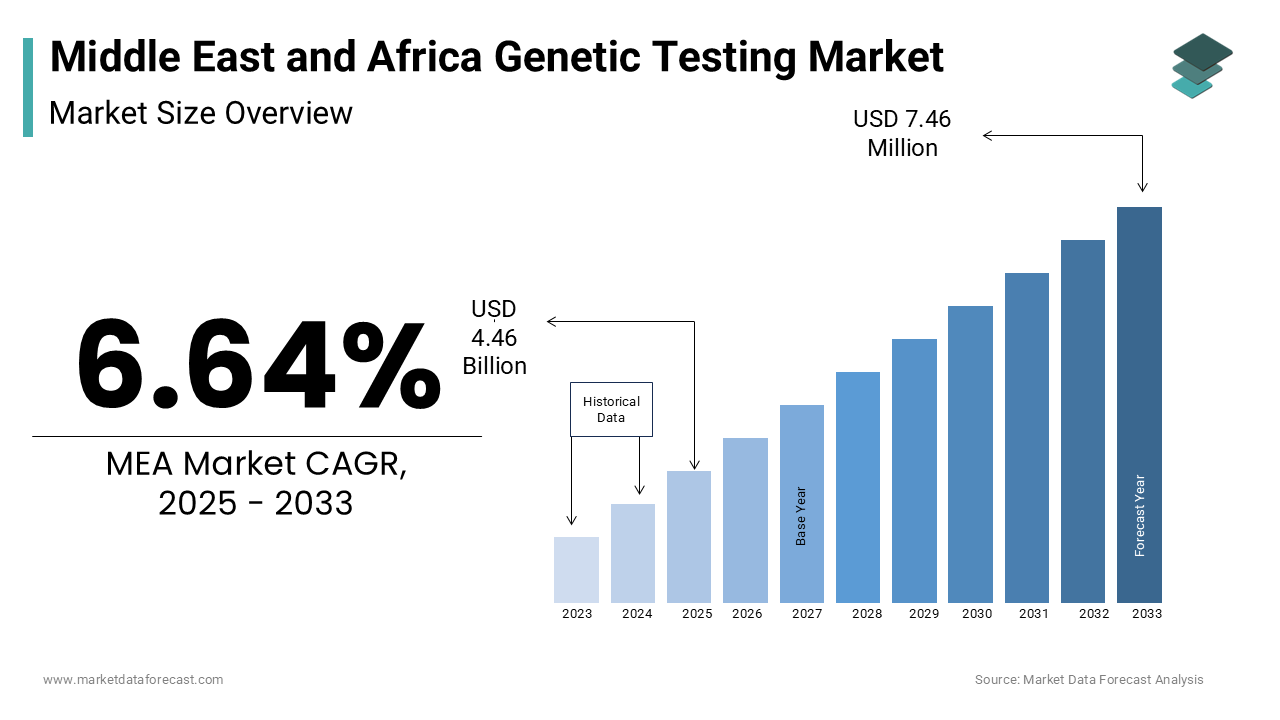
Genetic testing involves analyzing DNA, RNA, and chromosomes to identify genetic predispositions to diseases, hereditary conditions, and potential risks associated with specific medical treatments. In the Middle East and African genetic testing market, the United Arab Emirates, Saudi Arabia and South Africa are at the forefront of adopting genetic testing technologies. According to the World Health Organization, chronic diseases such as cancer and cardiovascular conditions account for 86% of deaths in the Middle East. Genetic testing offers a powerful tool for early detection and targeted intervention in these cases. Government initiatives, such as the Genome Program of the UAE, are designed to map the genetic makeup of populations to enhance precision medicine. Similarly, the National Health Laboratory Service of South Africa supports genetic testing for rare diseases, particularly in rural areas.
MARKET DRIVERS
Rising Prevalence of Genetic and Chronic Diseases in Middle East & Africa
The increasing prevalence of genetic and chronic diseases is a key driver of the genetic testing market in the Middle East and Africa. According to the World Health Organization, genetic disorders such as sickle cell anemia and thalassemia are highly prevalent in the region, particularly in countries like Saudi Arabia and the UAE. As per the African Union Commission, chronic diseases such as cancer account for 12% of all deaths in Africa and are fueling the demand for genetic screening. These tests enable early diagnosis and personalized treatment plans to improve patient outcomes and reduce healthcare costs.
Government-Supported Genomics Programs
The increasing number of government-supported genomics initiatives is accelerating the growth of the genetic testing market in the Middle East and Africa. Programs such as the UAE Genome Project aim to map the genetic structure of populations to advance precision medicine. The project targets sequencing the genomes of over 1 million UAE citizens to demonstrate a large-scale investment in genetic testing. In South Africa, the National Health Laboratory Service offers genetic testing for inherited conditions and plans to expand access in rural areas. As per the estimations of the World Bank, the healthcare budget in the Middle East and Africa is growing by 4% annually to support these types of initiatives that are expected to boost the adoption of genetic testing technologies in this region.
MARKET RESTRAINTS
Limited Healthcare Infrastructure in Rural Areas
The lack of adequate healthcare infrastructure in rural areas significantly restrains the growth of the genetic testing market in the Middle East and Africa. According to the World Bank, more than 60% of the population in the Middle East and Africa resides in rural areas where access to advanced medical facilities is limited. In Africa, only 3% of global healthcare workers serve 24% of the world’s disease burden. This imbalance restricts the availability of genetic testing services, particularly for rare diseases and hereditary disorders that are prevalent in these underserved regions.
High Costs of Genetic Testing
The high costs associated with genetic testing act as a major barrier to market growth in the Middle East and Africa. Genetic tests, particularly advanced sequencing methods like next-generation sequencing (NGS), are often expensive and inaccessible to a large portion of the population. According to the African Society for Human Genetics, the average cost of a genetic test ranges between $300 and $3,000, which is unaffordable for many in low-income countries. Furthermore, limited insurance coverage for genetic testing adds to out-of-pocket expenses, discouraging individuals from seeking these services. These financial barriers reduce the adoption rate, particularly in countries with limited healthcare funding.
MARKET OPPORTUNITIES
Growing Focus on Precision Medicine
The increasing adoption of precision medicine in the Middle East and Africa presents a significant opportunity for the genetic testing market in this region. Precision medicine tailors treatment based on individual genetic profiles to improve efficacy and reduce adverse effects. According to the UAE Ministry of Health and Prevention, precision medicine initiatives, such as the UAE Genome Project, aim to sequence the genomes of over 1 million Emiratis to enhance disease prevention and personalized healthcare. South Africa is also investing in genetic research for precision oncology to target cancers that disproportionately affect the population.
Expansion of Newborn Screening Programs
The expansion of newborn screening programs across the Middle East and Africa is driving demand for genetic testing. These programs aim to detect inherited metabolic disorders and genetic conditions early to improve long-term health outcomes. Saudi Arabia mandates newborn screening for more than 17 disorders and covers nearly 98% of births, as per the Saudi Ministry of Health. Similarly, South Africa has introduced pilot programs for newborn genetic testing in urban hospitals and has plans for national implementation. The World Health Organization (WHO) is focusing on the role of newborn screening in reducing childhood mortality rates to create opportunities for increased adoption of genetic testing technologies to support public health goals.
MARKET CHALLENGES
Low Awareness and Education About Genetic Testing
A significant challenge in the Middle East & African genetic testing market is the lack of awareness and education regarding its benefits and applications. Many individuals remain unaware of the potential of genetic testing for early disease detection and personalized treatments. According to the World Health Organization, less than 30% of individuals in the region are familiar with genetic testing, particularly in rural and underserved areas. This knowledge gap extends to healthcare providers, where limited training in genetic technologies reduces their ability to recommend testing to patients. The absence of widespread educational initiatives and awareness campaigns further hampers regional market growth.
Ethical and Cultural Barriers
Ethical and cultural barriers pose a significant challenge to the adoption of genetic testing in the Middle East and Africa. Concerns regarding privacy, genetic discrimination, and the implications of revealing hereditary diseases often deter individuals from undergoing testing. In certain cultures, discussing genetic disorders is stigmatized and this is limiting acceptance of these services. For instance, according to the African Society for Human Genetics, more than 40% of the population in the region expresses reservations about sharing genetic information due to fear of misuse or lack of confidentiality. These cultural and ethical considerations complicate efforts to integrate genetic testing into healthcare systems that require culturally sensitive approaches to overcome resistance.
REGIONAL ANALYSIS
Saudi Arabia led the genetic testing market in the Middle East & Africa in 2023 due to its robust healthcare infrastructure and proactive government initiatives. The Saudi Ministry of Health has implemented national programs for newborn screening and genetic testing to address the high prevalence of genetic disorders such as sickle cell anemia and thalassemia, which affect approximately 4.2% of the population. The Kingdom’s Vision 2030 plan emphasizes investments in biotechnology and genomics to advance precision medicine. With over 98% of newborns screened for genetic conditions, Saudi Arabia is setting benchmarks in integrating genetic testing into public healthcare, improving disease prevention and early diagnosis.
The UAE is a regional leader in genetic testing. The genetic testing market in the UAE is majorly driven by high-tech healthcare facilities and ambitious genomics initiatives. The UAE Genome Program aims to sequence the genetic data of over 1 million Emiratis and focus on precision medicine and population health. According to the UAE Ministry of Health and Prevention, the initiative is expected to reduce the prevalence of genetic disorders that currently account for 20% of infant mortality in the country. The strong public-private partnerships and advanced research centers of the UAE have positioned it as a hub for genetic innovation, making it a critical market in the Middle East.
South Africa is also a key market for genetic testing in Africa due to its well-developed healthcare system and leadership in genomic research. The National Health Laboratory Service supports genetic testing for rare diseases and cancer to address the growing non-communicable disease burden in South Africa. According to Statistics South Africa, cancer is among the leading causes of death and genetic testing plays a pivotal role in early detection and treatment planning. The academic and research institutions of South Africa such as the University of Cape Town are advancing genomic technologies and making South Africa a cornerstone for genetic testing development and accessibility in the African continent.
KEY MARKET PLAYERS
Companies that are playing a significant role in the Middle East and Africa genetic testing market include
- Abbott Laboratories
- Roche Molecular Diagnostics Inc.
- Abbott Molecular Inc.
- AutoGenomics Inc.
- Celera Group
- ELITech Group
- Bio-Rad Laboratories
- PerkinElmer Inc.
- Quest Diagnostics Inc.
- Transgenomic Inc.
- Applied Biosystems Inc.
MARKET SEGMENTATION
This research report on the genetic testing market in the Middle East and Africa has been segmented and sub-segmented into the following categories.
By Application
- Cancer Testing
- Pharmacogenomics Testing
- Prenatal Testing
- Predisposition Testing
By Test
- Carrier Testing
- Diagnostic Testing
- Prenatal Testing
- Neonatal Testing
By Country
- KSA
- UAE
- Israel
- Rest Of GCC Countries
- South Africa
- Ethiopia
- Kenya
- Egypt
- Sudan
- Rest Of Middle East and Africa