- Product Description Description
- Table of Contents TOC
- List of Table & Figure LOT
- Get Free Sample PDF Sample PDF
Market Size, 2025
$0.81 BnMarket Estimate, 2026
$0.86 BnMarket Forecast, 2034
$1.38 BnCAGR, 2026–2034
6.12%Middle East and Africa Hospital Lighting Market Size, Growth, Trends & Forecast (2026–2034)
The Middle East and Africa Hospital Lighting Market size was valued at USD 0.81 billion in 2025, is estimated to reach USD 0.86 billion in 2026, and is projected to expand to USD 1.38 billion by 2034, registering a compound annual growth rate (CAGR) of 6.12% during the forecast period from 2026 to 2034. Driven by rapid healthcare infrastructure expansion, aggressive sustainability initiatives, and the rapid adoption of smart, energy-efficient LED technologies, the market is witnessing steady modernization across emerging and established regional hubs.
Key Executive Metrics (At-a-Glance)
- 2025 Base Valuation: USD 0.81 Billion
- 2026 Current Valuation: USD 0.86 Billion
- 2034 Forecast Valuation: USD 1.38 Billion
- Compound Annual Growth Rate (CAGR): 6.12% (2026–2034)
- Leading Country Market: Saudi Arabia (holding 28.4% of total market revenue in 2025, propelled by Vision 2030)
- Key Growth Hubs: Saudi Arabia, United Arab Emirates, South Africa, and Egypt
Core Market Drivers
- Healthcare Infrastructure Expansion: Substantial government and private sector investments to modernize outdated facilities and build new medical centers.
- Energy-Efficient & Smart Systems: Transition toward LED and IoT-enabled lighting solutions driven by utility cost-savings, green building mandates, and sustainability goals.
- Technological Integration: Growing use of AI-driven and human-centric lighting to optimize clinical workflows, circadian rhythms, and patient recovery.
Primary Market Restraints & Challenges
- High Upfront Investment Costs: Prohibitive initial capital requirements for advanced LED and smart lighting systems in cost-sensitive markets.
- Power Supply Instability: Regular grid failures and power outages across parts of Sub-Saharan Africa and developing regions, necessitating expensive hybrid/solar backups.
- Regulatory Disparities & Technical Gaps: Inconsistent certification requirements across nations alongside limited technical expertise for maintenance in rural locations.
Market Segmentation: Largest and Fastest-Growing Segments
| Segment Category | Largest Segment | Fastest-Growing Segment |
|---|---|---|
| By Technology | LED Lighting (62.3% share in 2025) | Renewable Energy-Powered Lighting (12.4% CAGR) |
| By Application | Surgical Suites (45.1% demand in 2025) | Patient Wards & ICUs (9.8% CAGR) |
| By Product | Troffers (48.1% share) | Surgical Lamps (11.3% CAGR) |
| By Country | Saudi Arabia | Egypt & UAE (Driven by national health and smart city projects) |
Major Industry Players Profiled
Key market participants shaping the Middle East and Africa hospital lighting landscape include General Electric Company, Eaton Corporation PLC, Cree Inc., Zumtobel Group AG, KLS Martin GmbH + Co. KG, Koninklijke Philips N.V. (Signify), Herbert Waldmann GmbH & Co. KG, Trilux GmbH & Co. KG, Hill-Rom Holdings Inc., and Acuity Brands.
 Download Free Sample Report
Middle East and Africa Hospital Lighting Market Size
The Middle East and Africa hospital lighting market was worth USD 0.81 billion in 2025. The global market is predicted to reach USD 0.86 billion in 2026 and USD 1.38 billion by 2034, growing at a CAGR of 6.12% from 2026 to 2034.
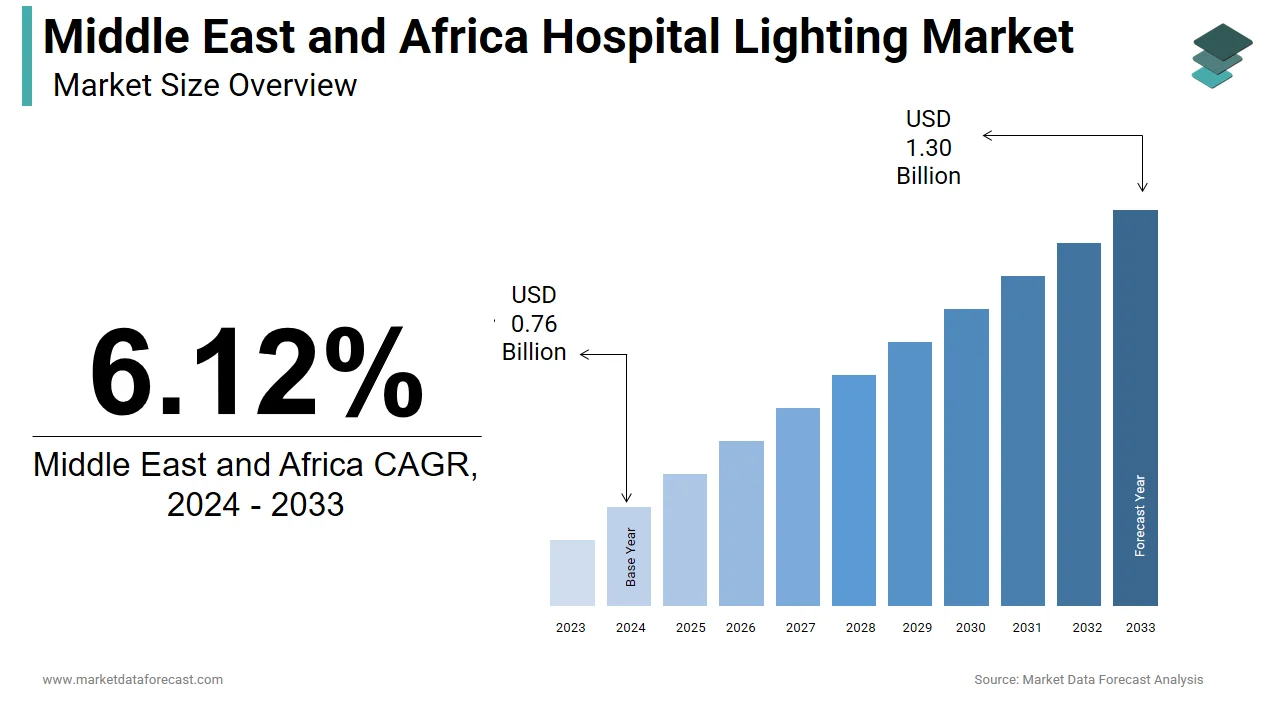
The Middle East and Africa hospital lighting market encompasses a range of specialized lighting solutions designed for clinical environments, including surgical operating rooms, emergency wards, intensive care units, and general patient areas. These lighting systems are engineered to provide high-intensity, shadow-free illumination while ensuring energy efficiency, durability, and compliance with international healthcare standards. The market includes LED-based lighting, portable surgical lights, ceiling-mounted luminaires, and smart lighting systems integrated with building automation technologies.
As healthcare infrastructure expands across the region, driven by government initiatives and private investments, the demand for advanced hospital lighting solutions has seen significant growth. Countries such as Saudi Arabia, the United Arab Emirates, South Africa, and Egypt are leading this transformation by upgrading existing hospitals and constructing new medical facilities equipped with modern infrastructure.
Besides, Gulf Cooperation Council (GCC) nations have mandated the use of energy-efficient lighting under their broader sustainability frameworks, further propelling market development. This evolving healthcare landscape, combined with growing awareness about infection control and patient safety, is reinforcing the importance of high-quality hospital lighting across the Middle East and Africa region.
MARKET DRIVERS
Expansion of Healthcare Infrastructure Across the Middle East and Africa
Rapid expansion of healthcare infrastructure, particularly in emerging economies across the Middle East and Africa, is one of the primary drivers fueling the Middle East and Africa hospital lighting market. Governments in these regions are making substantial investments to modernize outdated hospitals, establish new medical centers, and improve rural healthcare access, all of which require advanced lighting solutions that meet clinical standards.
As per the African Development Bank, healthcare spending in Africa has risen by more than 7% annually over the past five years, directly influencing the procurement of modern medical equipment, including hospital lighting.
Moreover, private sector participation in healthcare delivery has surged, especially in countries like Egypt, Nigeria, and the UAE, where private hospitals now account for nearly half of total healthcare services. These facilities often adopt premium lighting technologies to enhance operational efficiency and patient outcomes. This ongoing infrastructure boom continues to serve as a major catalyst for the Middle East and Africa Hospital Lighting Market.
Adoption of Energy-Efficient and Smart Lighting Systems
One more key driver boosting the Middle East and Africa hospital lighting market is the increasing adoption of energy-efficient and smart lighting systems, driven by sustainability goals, regulatory mandates, and cost-saving imperatives. Hospitals across the region are transitioning from conventional lighting to LED-based and intelligent lighting solutions that offer superior illumination, longer lifespan, and reduced energy consumption.
As per the International Energy Agency (IEA), LED lighting can reduce electricity usage by up to 80% compared to traditional halogen and fluorescent lighting, making it an attractive option for large-scale healthcare facilities seeking to lower utility costs and carbon footprints. In the UAE, the Ministry of Energy and Infrastructure has mandated the use of LED lighting in all new public buildings, including hospitals, aligning with the country’s Net Zero by 2050 strategic initiative.
Apart from these, smart lighting systems integrated with IoT-enabled controls are gaining traction in hospitals across the GCC. These systems allow remote monitoring, dimming, color temperature adjustments, and automated scheduling enhancing both patient comfort and staff efficiency.
In South Africa, Eskom’s energy conservation programs have encouraged healthcare institutions to retrofit older lighting systems with LED alternatives. These developments underscore the growing influence of energy efficiency and smart technology in shaping the Middle East and Africa Hospital Lighting Market.
MARKET RESTRAINTS
High Initial Investment Costs for Advanced Lighting Solutions
A major restraint affecting the Middle East and Africa Hospital Lighting Market is the high initial investment required for advanced lighting systems, particularly in low-income and developing economies. While LED and smart lighting solutions offer long-term benefits in terms of energy efficiency and maintenance savings, their upfront costs remain prohibitive for many public and private healthcare providers in the region.
In the Middle East, although wealthier Gulf nations can afford these upgrades, smaller healthcare facilities in Yemen, Sudan, and parts of North Africa continue to rely on outdated lighting due to funding limitations. According to PwC Middle East, a significant portion of surveyed hospitals in non-GCC countries postponed lighting upgrades in 2023 due to budgetary concerns.
Furthermore, limited access to financing options and a lack of government subsidies in certain regions hinder widespread adoption. Until financial barriers are addressed, the growth of the Middle East and Africa Hospital Lighting Market will remain constrained in cost-sensitive markets.
Limited Technical Expertise and Maintenance Support
Another significant challenge impeding the Middle East and Africa Hospital Lighting Market is the limited availability of technical expertise and after-sales support for advanced lighting systems, particularly in rural and underdeveloped areas. Unlike traditional lighting, modern LED and smart lighting solutions require skilled technicians for installation, calibration, and ongoing maintenance, an area where many Middle East and African countries face deficiencies.
As per a study published by the Journal of Energy in Southern Africa, nearly 35% of LED lighting installations in regional hospitals experienced performance issues within the first year due to improper setup or inadequate maintenance.
In the Middle East, while urban centers like Dubai and Riyadh have well-established service networks, remote locations in countries such as Iraq, Libya, and Ethiopia struggle with after-sales support.
Also, manufacturers and distributors face logistical challenges in reaching remote clinics and hospitals, delaying replacement part deliveries and technical assistance. Without improved technical capacity and localized service infrastructure, the full potential of advanced lighting solutions cannot be realized in the Middle East and Africa markets.
MARKET OPPORTUNITIES
Integration of Artificial Intelligence and IoT in Hospital Lighting
A potential opportunity in the Middle East and Africa Hospital Lighting Market lies in the integration of artificial intelligence (AI) and Internet of Things (IoT) technologies into lighting systems to enhance functionality, efficiency, and patient experience. AI-driven lighting solutions can adapt brightness levels based on occupancy, time of day, and specific medical procedures, thereby optimizing energy use and reducing operational costs.
In the UAE, leading hospitals such as Sheikh Khalifa Medical City have deployed intelligent lighting systems that automatically adjust illumination in operating theaters based on surgeon preferences and real-time environmental conditions.
In addition, AI-powered sensors can detect movement and daylight intensity to activate or dim lights accordingly, contributing to sustainability goals. Moreover, IoT-enabled lighting systems facilitate remote diagnostics and predictive maintenance, reducing downtime and repair costs. With rising digitalization in healthcare, AI and IoT-enabled lighting present a transformative opportunity for the Middle East and Africa Hospital Lighting Market.
Government Initiatives Promoting Sustainable Healthcare Infrastructure
Government-led initiatives aimed at promoting sustainable healthcare infrastructure represent a significant opportunity for the Middle East and Africa Hospital Lighting Market. Several countries in the region have introduced policies and incentives to encourage the adoption of energy-efficient technologies, including LED lighting, as part of broader green building and climate resilience strategies.
Similarly, South Africa’s Department of Health has partnered with Eskom’s Demand Side Management (DSM) program to incentivize public hospitals to retrofit aging lighting systems with LED alternatives. According to the Council for Scientific and Industrial Research (CSIR), participating hospitals have reported energy savings have improved significantly, along with improved lighting quality. These policy-driven interventions not only enhance healthcare infrastructure but also create a conducive environment for sustained growth in the Middle East and Africa Hospital Lighting Market.
MARKET CHALLENGES
Regulatory Disparities Across Middle East and African Countries
A major challenge confronting the Middle East and Africa Hospital Lighting Market is the inconsistency in regulatory standards and certification requirements across different countries in the region. Unlike Europe or North America, where harmonized lighting standards exist, Middle East and Africa nations exhibit varying levels of regulation, complicating product approvals and market entry for manufacturers.
According to the Gulf Standardization Organization (GSO), Gulf Cooperation Council (GCC) member states follow unified lighting efficiency standards, requiring compliance with IEC 60598 and EN 60598 certifications. However, in Sub-Saharan Africa, regulatory frameworks differ widely. For instance, South Africa enforces SABS (South African Bureau of Standards) certification, while Kenya adheres to KEBS guidelines, and Nigeria follows SONCAP regulations.
As per the International Electrotechnical Commission (IEC), navigating these diverse certification processes increases time-to-market and compliance costs for lighting suppliers.
Moreover, some governments impose import tariffs on foreign-made components without reciprocal trade agreements, further raising costs. According to the African Trade Policy Centre, lighting products imported into West Africa face an average duty rate of 20–25%, discouraging investment in local distribution networks. Until regulatory alignment improves, these disparities will continue to pose a structural barrier to the seamless expansion of the Middle East and Africa Hospital Lighting Market.
Power Supply Instability in Developing Markets
Power supply instability remains a persistent challenge in many parts of the Middle East and Africa region, particularly in Sub-Saharan Africa, where inconsistent electricity access hampers the effective deployment of hospital lighting systems. Despite advancements in LED and smart lighting technologies, continuous operation depends on a reliable power infrastructure, which remains a concern in numerous healthcare facilities.
According to the World Bank’s 2024 Energy Access Report, a significant percentage of health facilities in Sub-Saharan Africa experience regular power outages, with some hospitals reporting disruptions lasting several hours daily. In Nigeria, as per the Federal Ministry of Health, a large share of public hospitals rely on diesel generators due to unstable grid supply, increasing operational costs, and maintenance burdens.
Even in the Middle East, countries like Yemen and Sudan face intermittent power shortages that affect healthcare service delivery. As per the United Nations Office for the Coordination of Humanitarian Affairs (OCHA), power outages in conflict-affected areas have led to compromised lighting conditions in emergency and surgical units, posing risks to patient safety.
To solve this issue, some hospitals are adopting solar-powered and hybrid lighting systems. However, initial setup costs and maintenance complexities limit widespread adoption. Without improvements in energy infrastructure, the effectiveness and consistency of hospital lighting solutions in the Middle East and Africa will continue to be challenged, constraining market growth in affected regions.
REPORT COVERAGE
| REPORT METRIC | DETAILS |
| Market Size Available | 2025 to 2034 |
| Base Year | 2025 |
| Forecast Period | 2026 to 2034 |
| Segments Covered | By Technology, Application, Product, and Region. |
| Various Analyses Covered | Global, Regional, and Country-Level Analysis, Segment-Level Analysis, Drivers, Restraints, Opportunities, Challenges; PESTLE Analysis; Porter’s Five Forces Analysis, Competitive Landscape, Analyst Overview of Investment Opportunities |
| Countries Covered |
|
| Market Leaders Profiled | General Electric Company, Eaton Corporation PLC, Cree Inc., Zumtobel Group AG, KLS Martin GmbH + Co. KG, Koninklijke Philips N.V., Herbert Waldmann GmbH & Co. KG, Trilux GmbH & Co. Kg, Hill-Rom Holdings Inc. and Acuity Brands. |
SEGMENTAL ANALYSIS
By Technology Insights
The LED lighting segment commanded the Middle East and Africa hospital lighting market, capturing 62.3% of the total market share in 2025. This dominance is primarily driven by the superior energy efficiency, longer lifespan, and enhanced illumination capabilities of LED technology compared to traditional lighting sources.
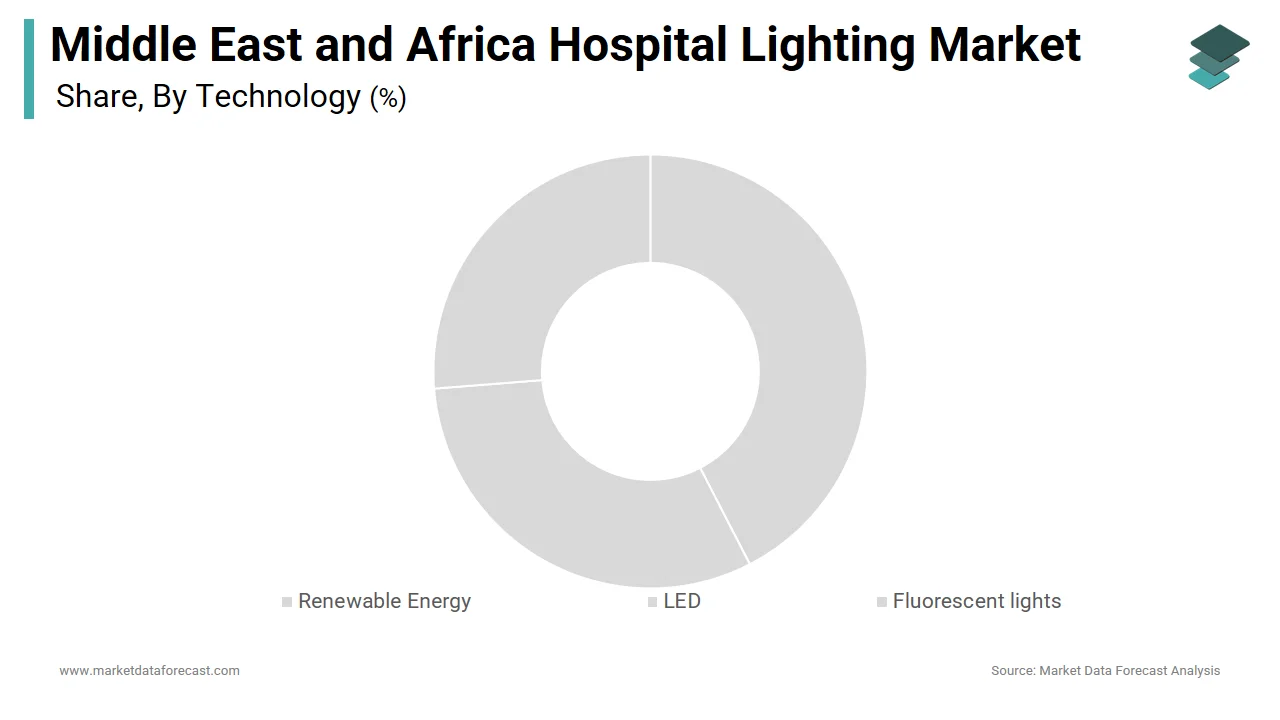
Like, according to the International Energy Agency (IEA), LED lighting consumes up to 80% less electricity than conventional fluorescent systems, making it a preferred choice for hospitals aiming to reduce energy costs and carbon emissions. In the Gulf Cooperation Council (GCC) countries, government mandates such as Saudi Arabia’s National Renewable Energy Program (NREP) require all new healthcare facilities to adopt LED lighting, reinforcing its widespread adoption.
Also, the growing emphasis on sustainable healthcare infrastructure has accelerated the transition from outdated fluorescent lighting to LED-based solutions. Moreover, advancements in smart LED lighting integrated with motion sensors, daylight harvesting, and IoT-enabled controls are further strengthening its position in the market. These factors collectively underline why LED remains the largest and most influential segment in the Middle East and Africa Hospital Lighting Market.
The renewable energy-powered lighting segment is the fastest-growing within the Middle East and Africa Hospital Lighting Market, projected to expand at a CAGR of 12.4%, outpacing other technologies due to increasing investments in off-grid and hybrid power solutions.
This growth is particularly pronounced in Sub-Saharan Africa, where unreliable grid electricity forces many rural and remote hospitals to rely on solar and hybrid lighting systems. According to the World Bank, nearly 60% of health facilities in this region experience regular power outages, prompting a shift toward solar-integrated lighting to ensure uninterrupted medical services.
In response, several governments and international development agencies have launched initiatives to support solar-powered hospital lighting. For instance, the United Nations Development Programme (UNDP) funded a 2023 project in Ethiopia that equipped over 100 rural clinics with solar-powered LED lighting, significantly improving nighttime emergency care.
Furthermore, manufacturers are increasingly offering modular solar lighting kits tailored for healthcare environments. With ongoing electrification challenges and rising environmental consciousness, renewable energy-powered lighting is emerging as a transformative force in the Middle East and Africa Hospital Lighting Market.
By Application Insights
Surgical suites represented the prominent application segment in the Middle East and Africa hospital lighting market, accounting for 45.1% of total demand in 2025. The critical need for high-intensity, shadow-free illumination in operating rooms drives the dominance of this segment, especially in newly built or upgraded hospitals across the region.
High-end LED surgical lamps with adjustable brightness, color temperature control, and sterility compliance are increasingly being installed in operating theaters to enhance surgeon visibility and patient outcomes.
In the UAE and Saudi Arabia, modern hospitals such as King Faisal Specialist Hospital and Sheikh Khalifa Medical City have adopted intelligent surgical lighting systems that integrate with building management platforms for real-time adjustments. Additionally, African nations like Egypt and South Africa have prioritized upgrading surgical infrastructure under national health programs. These developments underscore the central role of surgical suites in shaping the Middle East and Africa Hospital Lighting Market landscape.
Patient wards and intensive care units (ICUs) are the fastest-growing application segment in the Middle East and Africa Hospital Lighting Market, expanding at a CAGR of 9.8% in the coming years, driven by heightened focus on patient comfort, circadian rhythm optimization, and infection control.
As healthcare providers emphasize holistic healing environments, there is a growing preference for tunable LED lighting that mimics natural daylight cycles to improve patient recovery and sleep quality. According to studies, dynamic lighting in ICU settings can reduce patient stress levels and shorten hospital stays.
Moreover, the expansion of critical care capacity in response to recent global health crises has spurred investment in ICU-specific lighting solutions. Private healthcare providers in the UAE and Egypt have also embraced human-centric lighting concepts in patient wards, integrating smart controls that allow nurses to adjust lighting based on time of day and patient needs. These trends highlight the growing importance of patient-centric lighting in driving market expansion.
By Product Insights
Troffers was the prevailing product segment in the Middle East and Africa Hospital Lighting Market, capturing 48.1% of total market share in 2024. Widely used in general hospital areas such as corridors, waiting rooms, and administrative spaces, troffer lights offer efficient, uniform illumination while maintaining compatibility with standard ceiling grids.
Many healthcare facilities undergoing retrofitting projects prefer LED-based troffers for their energy-saving potential and long operational life.
Besides, the push for green building certifications such as LEED and Estidama in the GCC region has encouraged hospitals to replace older fluorescent troffers with LED alternatives. As per the Gulf Organisation for Research & Development (GORD), LED troffers can reduce lighting-related energy consumption by up to 70%, aligning with broader sustainability goals.
In Sub-Saharan Africa, where budget constraints often limit access to premium lighting products, troffers remain a popular choice due to their affordability and availability through regional distributors. These factors collectively reinforce troffers as the dominant product category in the Middle East and Africa Hospital Lighting Market.
Surgical lamps are the booming product segment in the Middle East and Africa Hospital Lighting Market, registering a CAGR of 11.3%, fueled by the expansion of surgical infrastructure, technological advancements, and increasing adoption of smart and mobile surgical lighting systems.
Modern surgical lamps now feature integrated cameras, wireless controls, and adjustable color rendering indices to enhance precision during complex operations. In the Middle East, leading hospitals such as King Abdullah Medical City in Saudi Arabia and Hamad Medical Corporation in Qatar have invested heavily in robotic-assisted surgery centers, which require advanced lighting systems capable of adapting to automated surgical workflows.
Moreover, African countries like Egypt and Ethiopia are witnessing rising procurement of mobile and ceiling-mounted surgical lamps as part of national healthcare modernization programs. These developments indicate strong momentum for surgical lamps as a key growth driver in the Middle East and Africa Hospital Lighting Market.
COUNTRY-LEVEL ANALYSIS
Saudi Arabia Hospital Lighting Market Insights
Saudi Arabia commanded the Middle East and Africa Hospital Lighting Market, contributing 28.4% of total market revenue in 2025. The country’s lead position is largely attributed to its aggressive healthcare modernization agenda under Vision 2030, which includes the construction of new hospitals, digital transformation of medical facilities, and mandatory adoption of energy-efficient lighting.
Also, the National Renewable Energy Program (NREP) mandates the use of energy-efficient lighting in all public buildings, including healthcare institutions, reinforcing market growth. The country has also embraced smart hospital initiatives, with cities like Riyadh and Jeddah piloting IoT-enabled lighting systems that optimize energy usage and improve patient care environments. With continued government investment and alignment with global sustainability goals, Saudi Arabia remains the strongest contributor to the Middle East and Africa Hospital Lighting Market.
United Arab Emirates Hospital Lighting Market Insights
The United Arab Emirates is positioning itself as a regional leader in smart and sustainable lighting adoption. The country’s well-developed healthcare infrastructure, coupled with stringent regulatory frameworks, has facilitated rapid uptake of advanced lighting technologies.
Moreover, nearly all new hospitals and clinics in Dubai and Abu Dhabi are required to comply with Estidama Pearl Rating System guidelines, mandating the use of energy-efficient lighting solutions. As a result, LED and smart lighting systems have become standard across both private and public healthcare facilities.
The UAE has also been at the forefront of adopting AI-integrated lighting systems that automatically adjust illumination based on occupancy and ambient conditions. As per the Dubai Electricity and Water Authority (DEWA), hospitals using these systems have reported major reductions in lighting-related energy costs.
Also, the government supports research and development in healthcare lighting through institutions like the Khalifa University of Science and Technology. These efforts ensure that the UAE continues to drive innovation and set benchmarks for hospital lighting standards across the Middle East and Africa region.
South Africa Hospital Lighting Market Insights
South Africa represents a key region the Middle East and Africa Hospital Lighting Market, serving as the primary hub for healthcare lighting solutions in Sub-Saharan Africa. Despite facing economic and energy supply challenges, the country maintains a robust healthcare infrastructure, with both public and private sectors investing in modernization initiatives.
Eskom’s Demand Side Management (DSM) program provided financial incentives for these transitions, helping hospitals achieve significant energy savings. In addition, the private healthcare sector, led by groups such as Netcare and Life Healthcare, has adopted intelligent lighting systems to enhance patient comfort and facility efficiency. Despite infrastructural hurdles, South Africa’s strategic location, developed distribution networks, and active participation in regional healthcare initiatives make it a vital player in the Middle East and Africa Hospital Lighting Market.
Egypt Hospital Lighting Market Insights
Egypt is expanding in the Middle East and Africa hospital lighting market, driven by large-scale public healthcare expansion projects aimed at improving service delivery across urban and rural regions. The government has prioritized hospital modernization under its national health strategy, resulting in increased procurement of LED and energy-efficient lighting systems. These upgrades have led to Middle East and Africasurable improvements in lighting quality and energy efficiency.
Also, the country’s participation in the African Union’s health infrastructure development fund has enabled cross-border collaboration with lighting suppliers from Europe and Asia, facilitating access to advanced technologies. With sustained government investment and growing awareness of energy conservation, Egypt is emerging as a key growth engine in the Middle East and Africa Hospital Lighting Market.
Israel Hospital Lighting Market Insights
Israel holds a smaller but technologically advanced position in the Middle East and Africa hospital lighting market. While not a major volume-driven market, Israel distinguishes itself through cutting-edge innovations in smart and biometric-responsive lighting solutions tailored for medical environments.
Institutions like Sheba Medical Center have pioneered the use of intelligent lighting in ICU settings to enhance recovery and minimize disruptions. Israeli tech firms such as Novo Lighting and Oraya Medical have also gained recognition for developing specialized lighting products that combine functionality with energy efficiency. While Israel's domestic market is relatively modest, its influence in lighting technology innovation positions it as a strategic player in the broader Middle East and Africa hospital lighting market.
COMPETITIVE LANDSCAPE
The Middle East and Africa Hospital Lighting Market is characterized by a mix of global lighting giants and emerging regional players competing to capture a share of an expanding and increasingly sophisticated healthcare infrastructure landscape. While established brands like Philips, OSRAM, and Acuity Brands dominate due to their technological expertise and extensive product portfolios, smaller regional suppliers are gaining traction by offering cost-effective alternatives tailored to local needs. The competition is not only centered around pricing but also on innovation, customization, and after-sales service capabilities.
In the Middle East, particularly in the Gulf Cooperation Council (GCC) nations, the market is highly influenced by government-led healthcare modernization programs that mandate the use of energy-efficient and smart lighting systems. Companies in this sub-region compete on the basis of integration with building automation systems and compliance with green certification standards. In contrast, the African segment presents a different competitive dynamic, where affordability, durability, and ease of installation take precedence over cutting-edge features.
Given the vast differences in economic conditions and healthcare priorities across the Middle East and Africa region, companies must adopt flexible business models to remain competitive. Strategic localization, technology adaptation, and strong distribution networks are essential for success in this diverse and evolving market.
KEY MARKET PLAYERS
The leading companies in the Middle East and Africa Hospital Lighting Market profiled in the report are
- General Electric Company
- Eaton Corporation PLC
- Cree Inc.
- Zumtobel Group AG
- KLS Martin GmbH + Co. KG
- Koninklijke Philips N.V.
- Herbert Waldmann GmbH & Co. KG
- Trilux GmbH & Co. KG
- Hill-Rom Holdings Inc.
- Acuity Brands
TOP LEADING PLAYERS IN THE MARKET
- Philips, now operating under Signify, is a global leader in lighting solutions and holds a strong presence in the Middle East and Africa Hospital Lighting Market. The company provides advanced LED and smart lighting systems tailored for healthcare environments, focusing on energy efficiency, patient comfort, and surgical precision. Its portfolio includes intelligent lighting controls, daylight-adaptive illumination, and infection-resistant fixtures that cater to both new and retrofit hospital projects across the region.
- OSRAM is a key participant in the Middle East and Africa Hospital Lighting Market, offering a comprehensive range of medical-grade lighting products designed for surgical, ICU, and general ward applications. The company emphasizes innovation through human-centric lighting concepts that support circadian rhythms and enhance recovery outcomes. OSRAM’s strategic partnerships with regional distributors and healthcare infrastructure developers have enabled it to establish a reliable supply chain across the Middle East and parts of Sub-Saharan Africa.
- Acuity Brands plays a significant role in shaping the Middle East and Africa Hospital Lighting Market by delivering high-performance, durable, and energy-efficient lighting solutions suited for critical healthcare settings. Known for its modular lighting designs and integration capabilities with building automation systems, Acuity has been instrumental in supporting hospital modernization efforts in the Gulf Cooperation Council (GCC) countries. Its focus on sustainability and digital lighting controls positions it as a preferred partner for smart hospital developments in the region.
TOP STRATEGIES USED BY KEY MARKET PARTICIPANTS
One of the primary strategies employed by leading players in the Middle East and Africa Hospital Lighting Market is technology-driven product development, where companies invest heavily in R&D to introduce smart, IoT-enabled, and energy-efficient lighting solutions tailored for healthcare settings. These innovations aim to improve patient outcomes, reduce energy consumption, and meet evolving regulatory standards.
Another key approach is strategic collaborations and local partnerships, wherein global lighting manufacturers team up with regional distributors, construction firms, and government agencies to ensure smooth market entry and localized service support. These alliances help navigate complex regulatory landscapes and distribution challenges across diverse Middle East and Africa markets.
Lastly, market expansion through targeted investments is widely pursued, with companies establishing regional offices, warehouses, and after-sales service centers to strengthen their presence in high-growth areas such as Saudi Arabia, the UAE, and Egypt. This ensures faster response times, better customer engagement, and improved after-sales support, reinforcing long-term competitiveness in the Middle East and Africa Hospital Lighting Market.
RECENT MARKET DEVELOPMENTS
- In January 2023, Philips (Signify) launched a dedicated healthcare lighting division focused on the Middle East and Africa region, aiming to provide customized lighting solutions for hospitals and clinics while enhancing collaboration with regional health authorities and infrastructure developers.
- In May 2023, OSRAM partnered with a leading Saudi Arabian construction firm to integrate its LED-based hospital lighting systems into newly built healthcare facilities, ensuring alignment with national energy efficiency mandates and smart hospital initiatives.
- In September 2023, Acuity Brands expanded its regional presence by opening a new logistics hub in Dubai, strengthening its supply chain capabilities and improving delivery timelines for hospital lighting equipment across the GCC and North Africa.
- In February 2024, Zumtobel Group entered into a joint venture with an Egyptian healthcare infrastructure provider to deploy energy-efficient lighting in public hospitals, aligning with the country's broader hospital modernization efforts supported by international funding agencies.
- In July 2024, Eaton Corporation introduced a line of hybrid solar-powered LED lighting systems specifically designed for off-grid healthcare facilities in rural Sub-Saharan Africa, addressing power instability issues and expanding access to reliable hospital lighting.
MARKET SEGMENTATION
This research report on the Middle East & Africa Hospital Lighting Market has been segmented and sub-segmented into the following categories
By Technology
- Renewable Energy
- LED
- Fluorescent lights
By Application
- Surgical Suites
- Patient wards & ICUs
- Examination Rooms
By Product
- Surface Lamps
- Troffers
- Surgical Lamps
By Country
- KSA
- UAE
- Israel
- rest of GCC countries
- South Africa
- Ethiopia
- Kenya
- Egypt
- Sudan
- Rest of Middle East and Africa