- Product Description Description
- Table of Contents TOC
- List of Table & Figure LOT
- Get Free Sample PDF Sample PDF
Market Size, 2025
$84 BnMarket Estimate, 2026
$87.11 BnMarket Forecast, 2034
$116.49 BnCAGR, 2026–2034
3.70%Middle East and Africa Rodenticides Market Size, Growth, Trends & Forecast (2026–2034)
The Middle East and Africa rodenticides market was valued at USD 84 billion in 2025, is anticipated to reach USD 87.11 billion in 2026, and is projected to expand up to USD 116.49 billion by 2034, registering a compound annual growth rate (CAGR) of 3.70% during the forecast period from 2026 to 2033. Growth is strongly propelled by escalating public health risks associated with rapid urbanization, rising demand from the agricultural sector to curb post-harvest grain losses, and government-led vector and disease control initiatives.
Key Executive Metrics (At-a-Glance)
- 2025 Base Valuation: USD 84.00 Billion
- 2026 Current Valuation: USD 87.11 Billion
- 2034 Forecast Valuation: USD 116.49 Billion
- Compound Annual Growth Rate (CAGR): 3.70% (2026–2033 forecast framework)
- Dominant Type Segment: Anticoagulant-Based Rodenticides (SGARs)
- Fastest-Growing Type Segment: Non-Anticoagulant Rodenticides (9.4% CAGR)
- Dominant Application Segment: Pellet-Based Rodenticides
- Fastest-Growing Application Segment: Spray-Based Rodenticides (10.3% CAGR)
- Dominant End-User Segment: Agricultural Fields (45.3% share in 2024)
- Fastest-Growing End-User Segment: Pest Control Companies (9.3% CAGR)
- Dominant Country Market: South Africa (20.1% share in 2024)
- Second-Largest Country Market: Saudi Arabia (18.3% share in 2024)
Core Market Drivers
- Urbanization & Public Health Concerns: Rapid urban expansion with inadequate sanitation in informal settlements leading to surges in zoonotic disease outbreaks like leptospirosis and hantavirus.
- Agricultural Loss Mitigation: High vulnerability of stored cereal crops to rodent destruction in Sub-Saharan Africa and the Middle East, motivating large-scale baiting programs by ministries of agriculture.
Primary Market Restraints & Challenges
- Regulatory Restrictions: Strict limitations on second-generation anticoagulant rodenticides (SGARs) due to environmental safety, non-target wildlife hazards, and water contamination risks.
- Rodent Resistance & Misuse: Genetic resistance (VKORC1/reduced susceptibility to active ingredients like bromadiolone) and accidental poisonings caused by improper handling in rural farming sectors.
Middle East and Africa Rodenticides Market Segmentation Breakdown
| Segment Category | Largest (Dominant) Sub-Segment | Fastest-Growing Sub-Segment |
|---|---|---|
| By Type | Anticoagulant-Based Rodenticides | Non-Anticoagulant Rodenticides (9.4% CAGR) |
| By Mode of Application | Pellet-Based Rodenticides | Spray-Based Rodenticides (10.3% CAGR) |
| By End User | Agricultural Fields (45.3%) | Pest Control Companies (9.3% CAGR) |
| By Country | South Africa (20.1%) | Saudi Arabia / Nigeria / UAE |
Major Industry Players Profiled
Key corporations steering the Middle East and Africa rodenticides market include BASF SE, Bayer Crop Science, Rentokil Initial plc (Rentokil Pest Control), Syngenta AG, Neogen Corp., Impex Europa S.L., J.T. Eaton & Co., Liphatech, Pelgar International, and UPL Limited.
Middle East and Africa Rodenticides Market Size
The Middle East and Africa rodenticides market was valued at USD 84 billion in 2025 and is anticipated to reach USD 87.11 billion in 2026 and USD 116.49 billion by 2034, growing at a CAGR of 3.70% during the forecast period from 2026 to 2033.
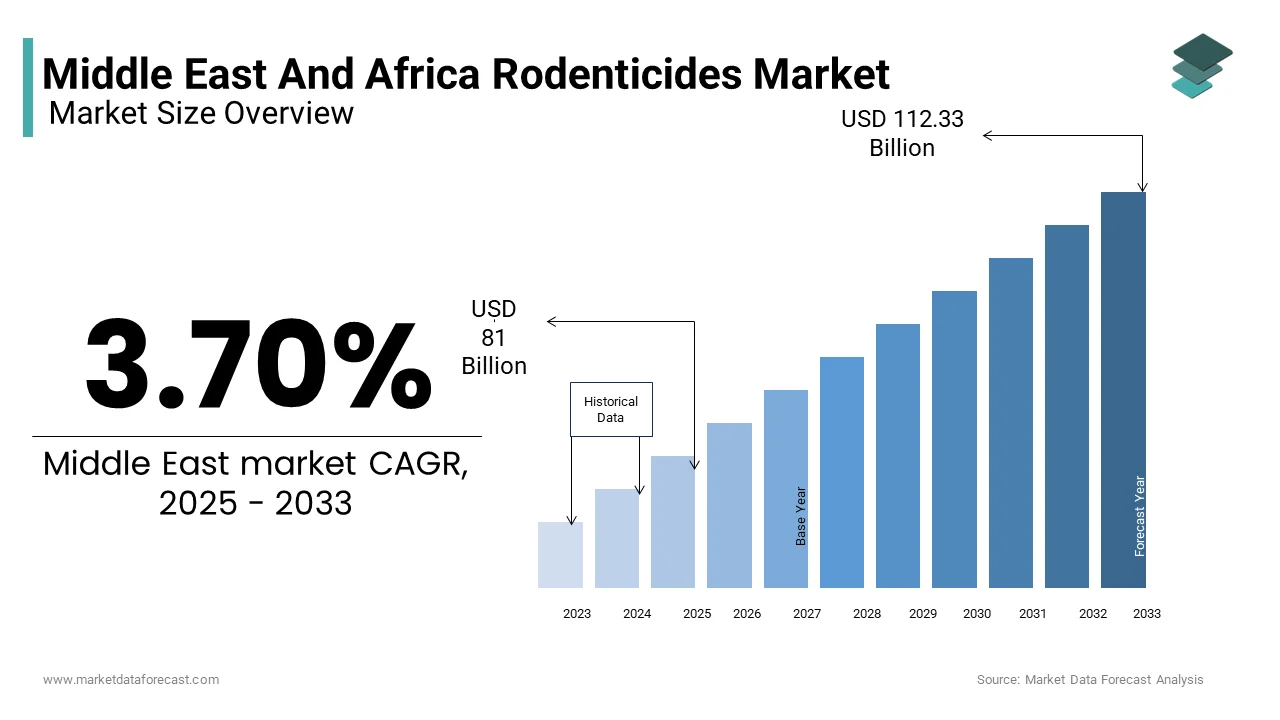
The rodenticides, chemical and biological agents, are designed for the control and elimination of rodents, including rats, mice, and other pest species. These products are utilized across residential, agricultural, industrial, and institutional settings to mitigate health risks, food contamination, and infrastructure damage caused by rodent infestations. According to the World Health Organization (WHO), rodents are known carriers of over 35 diseases that can be transmitted to humans through direct contact, contaminated food, or insect vectors such as fleas and ticks. Additionally, the region’s reliance on agriculture contributes to the demand for rodenticides. Urbanization is also playing a role in the growing need for rodent management solutions. The rapid expansion of cities with poor sanitation systems has created favorable conditions for rodent proliferation. Municipal authorities in countries like Nigeria and Yemen have launched targeted baiting campaigns using registered rodenticides to curb disease transmission.
MARKET DRIVERS
Urbanization and Public Health Concerns
The rapid pace of urbanization and the associated rise in public health risks linked to rodent infestation are driving the growth of the Middle East and Africa rodenticides market. According to the United Nations Economic Commission for Africa (ECA), the continent's urban population is projected to surpass 50% by 2030, with many new city dwellers residing in informal settlements characterized by inadequate waste disposal, poor sanitation, and overcrowded living conditions. In major metropolitan areas such as Cairo, Nairobi, and Lagos, local governments have reported a steady increase in rodent-related disease outbreaks. The World Health Organization (WHO) notes that leptospirosis cases have surged in several African countries, particularly following seasonal flooding events that expose residents to contaminated water sources. Moreover, rodent infestations in densely populated urban slums pose additional risks. Studies conducted by the Kenya Medical Research Institute (KEMRI) indicate that rodent densities in informal settlements are significantly higher than in formal urban neighborhoods.
Agricultural Demand and Post-Harvest Loss Reduction
The increasing demand from the agricultural sector for reducing post-harvest losses caused by rodent infestations is expected to fuel the growth of the Middle East and Africa rodenticides market. According to the Food and Agriculture Organization (FAO), rodents are responsible for destroying up to 20% of stored grains in parts of Sub-Saharan Africa, which is posing a serious threat to food security and economic stability. In countries like Ethiopia, Sudan, and Tanzania, smallholder farmers face significant challenges due to rodent damage in grain silos, warehouses, and open fields. Studies show that rodents consume and contaminate large quantities of harvested cereals, leading to financial losses and reduced availability of food supplies. For instance, in Egypt, the Ministry of Agriculture has partnered with agrochemical firms to provide anticoagulant baits to farmers in regions prone to rat infestations, especially along the Nile Delta. Additionally, international development organizations such as the International Crops Research Institute for the Semi-Arid Tropics (ICRISAT) have supported regional rodent control initiatives aimed at improving post-harvest handling practices.
MARKET RESTRAINTS
Regulatory Restrictions and Environmental Concerns
The tightening of regulatory frameworks surrounding the sale and application of certain active ingredients due to environmental and health concerns is likely to restrain the growth of the Middle East and Africa rodenticides market. Several national pesticide regulatory bodies have imposed restrictions on the use of second-generation anticoagulant rodenticides (SGARs), which is citing risks to non-target wildlife and potential contamination of water sources. In Saudi Arabia, the Ministry of Environment has introduced stricter guidelines limiting the distribution of SGARs, particularly in ecologically sensitive zones such as wadis and coastal wetlands. These regulatory changes have resulted in reduced product availability and increased compliance costs for manufacturers. According to the African Crop Protection Association (ACPA), more than 25% of existing rodenticide formulations had to be reformulated or withdrawn from the market following new regulations introduced in 2023. Environmental advocacy groups such as BirdLife Africa have also played an influential role in pushing for policy reforms.
Misuse and Improper Application of Rodenticides
Improper handling and misuse of rodenticides present a significant challenge in the Middle East and Africa rodenticides market. According to the World Health Organization (WHO), accidental poisonings due to rodenticide exposure have risen in several African and Middle Eastern countries, especially among children and livestock. In Nigeria, the National Poison Centre recorded over 3,000 rodenticide-related poisoning incidents in 2023. Additionally, misapplication leads to suboptimal rodent control. A study by the Kenya Medical Research Institute (KEMRI) revealed that improper bait placement and storage contributed to behavioral avoidance in rodent populations, which is reducing the efficacy of control measures. Efforts to address this issue have included farmer training programs and stricter licensing requirements for rodenticide sellers.
MARKET OPPORTUNITIES
Adoption of Smart and Precision Rodent Control Technologies
The growing adoption of smart and precision rodent control technologies is propelling the growth of the Middle East and Africa rodenticides market. As digital transformation permeates various sectors, pest control companies and agricultural enterprises are increasingly integrating advanced monitoring and data-driven management systems into their rodent control strategies. Additionally, companies such as Rentokil and Bell Laboratories have introduced tamper-resistant bait boxes equipped with remote monitoring capabilities, allowing for more targeted and accountable rodenticide deployment. In the Gulf Cooperation Council (GCC) countries, where labor shortages are driving automation trends, robotic pest detection and baiting systems are gaining traction in food processing facilities and logistics hubs.
Government-Led Rodent Control Initiatives and Disease Prevention Programs
The expansion of government-led rodent control initiatives is aimed at curbing disease outbreaks and protecting agricultural output. Public health departments and rural development agencies across the region are allocating dedicated funds for large-scale rodent management programs, particularly in areas prone to zoonotic diseases. Similarly, in Sudan, the Ministry of Agriculture has partnered with international aid organizations to conduct seasonal rodent control drives in flood-affected provinces. According to the Agricultural Research Corporation (ARC) of Sudan, these interventions have contributed to a noticeable reduction in post-harvest losses in participating regions.
Egypt has also intensified its efforts through state-sponsored baiting programs in rural municipalities where rodent populations surge after the annual Nile floods. These initiatives, often executed in collaboration with registered pest control firms, are expanding the scope and accessibility of rodenticide applications across the country.
MARKET CHALLENGES
Development of Resistance Among Rodent Populations
The emergence of resistance among rodent populations to commonly used anticoagulant compounds is posing a great challenge for the growth of the Middle East and Africa rodenticides market. Scientific studies conducted in multiple countries across the region indicate that house mice and rats are becoming increasingly tolerant to first- and second-generation anticoagulant rodenticides (FGARs and SGARs), which is rendering conventional treatments less effective. This resistance development not only increases treatment costs but also complicates pest management strategies for both farmers and urban pest control agencies. However, the process of developing and registering new rodenticide formulations is time-consuming and expensive.
Limited Awareness and Training in Rural Areas
The limited awareness and insufficient training regarding the safe and effective use of rodenticides in rural and smallholder farming communities are limiting the growth of the Middle East and Africa rodenticides market. According to a report by the World Health Organization (WHO), over 50% of surveyed farmers in Uganda, Malawi, and Yemen admitted to using rodenticides without consulting technical guidelines or protective equipment. This lack of formal instruction increases the risk of accidental poisoning among humans and livestock while also contributing to ineffective pest control. Furthermore, inadequate extension services and limited access to certified applicators hinder the dissemination of best practices.
REPORT COVERAGE
| REPORT METRIC | DETAILS |
| Market Size Available | 2025 to 2034 |
| Base Year | 2025 |
| Forecast Period | 2026 to 2034 |
| CAGR | 3.70% |
| Segments Covered | By Type, Mode of Application, End-User, For, and Region. |
| Various Analyses Covered | Global, Regional, and Country Level Analysis, Segment-Level Analysis, DROC, PESTLE Analysis, Porter’s Five Forces Analysis, Competitive Landscape, Analyst Overview of Investment Opportunities |
| Regions Covered | KSA, UAE, Israel, rest of GCC countries, South Africa, Ethiopia, Kenya, Egypt, Sudan, rest of MEA |
| Market Leaders Profiled | BASF SE, Bayer Crop Science, Neogen Corp., Impex Europa S.L., J.T. Eaton & Co., Liphatech, Pelgar International, Syngenta SA, and UPL Limited. |
SEGMENTAL ANALYSIS
By Type Insights
The anticoagulant-based rodenticides segment dominated the Middle East and Africa rodenticides market share in 2024. The entrenched reliance on second-generation anticoagulant rodenticides (SGARs) in large-scale farming operations is likely todriver up the growth of the segment. According to the Food and Agriculture Organization (FAO), rodents are responsible for destroying up to 20% of global cereal production annually, with Sub-Saharan African countries like Ethiopia and Kenya experiencing significant crop losses. SGARs offer a fast-acting and effective solution that helps mitigate these losses, making them a preferred choice among farmers and agribusinesses.
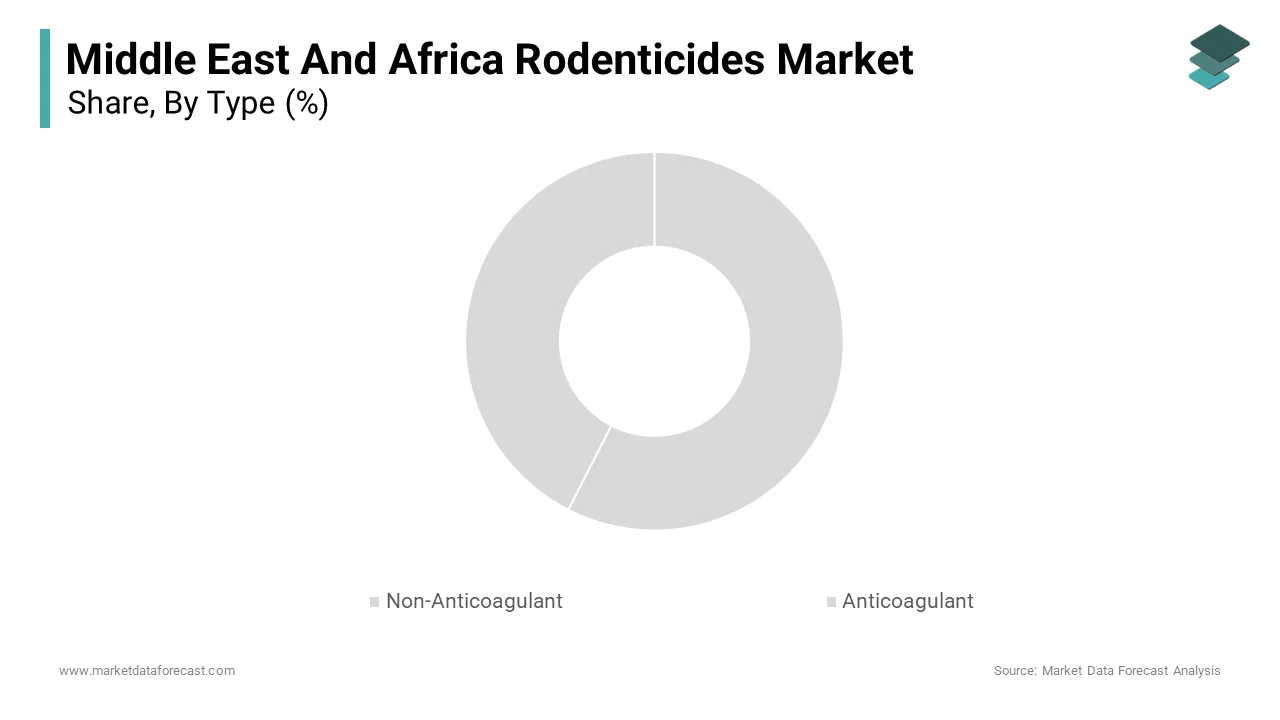
The non-anticoagulant rodenticides segment is swiftly emerging with a CAGR of 9.4% from 2025 to 2033 due to the development of genetic resistance in rodent species to commonly used anticoagulants. Research published by the Kenya Medical Research Institute (KEMRI) in 2023 found that over 40% of house mouse populations in agricultural zones of Kenya and Ethiopia showed reduced susceptibility to bromadiolone. This has prompted farmers and pest control professionals to adopt alternative active ingredients such as bromethalin and cholecalciferol, which fall under the non-anticoagulant category. Additionally, regulatory pressures against SGARs have accelerated the shift toward safer alternatives. As per the African Crop Protection Association (ACPA), over 30% of existing anticoagulant-based products were either reformulated or withdrawn following stricter pesticide regulations introduced in 2023.
By Mode Of Application Insights
The pellet-based rodenticides segment dominated the Middle East and Africa rodenticides market share in 2024, with its widespread use in agricultural and industrial settings. According to the Food and Agriculture Organization (FAO), post-harvest grain losses caused by rodents in Sub-Saharan Africa range between 10% and 20%. Pellet baits are particularly effective in farmlands and storage facilities due to their stability and reduced risk of spillage compared to powders or sprays. Moreover, pellets are favored by pest control professionals for bait station deployment. The African Crop Protection Association (ACPA) states that over 70% of professional pest management contracts in the region involve the use of tamper-resistant bait stations filled with pellet formulations.
The spray-based rodenticides segment is likely to grow with an expected CAGR of 10.3% in the coming years, with the expanding use of spray rodenticides in urban sanitation programs. Municipalities such as Cape Town and Riyadh have adopted fogging and residual spray techniques to treat public spaces, sewers, and alleyways where rodent activity is concentrated. According to the World Health Organization (WHO), rodent-related disease outbreaks in the Middle East and Africa increased by nearly 25% between 2020 and 2023, prompting local governments to invest in scalable spray solutions. Additionally, spray formulations are gaining traction in food processing and hospitality industries due to their ease of application in hard-to-reach areas. Furthermore, product innovations such as botanical extracts and enzyme-based sprays are attracting environmentally conscious consumers.
By End User Insights
The agricultural fields segment was the largest and held 45.3% of the Middle East and Africa rodenticides market share in 2024. The high prevalence of rodent-induced crop losses across major grain-producing nations is propelling the growth of the segment. According to the Food and Agriculture Organization (FAO), rodents destroy an estimated 10–15% of maize and sorghum harvests annually in countries like Sudan, Egypt, and South Africa. Additionally, government-backed rodent control initiatives have reinforced the demand for rodenticides in agricultural zones. In Nigeria, the Federal Ministry of Agriculture reported that nationwide baiting campaigns conducted in 2023 helped reduce post-harvest losses by 12% in participating provinces.
The pest control companies segment is likely to grow with a CAGR of 9.3% in the coming years due to the rising prevalence of rodent infestations in densely populated urban centers. According to the Egyptian Ministry of Health, pest control service requests related to rodent problems increased by 20% between 2020 and 2023. This uptick is attributed to aging infrastructure, warmer winters, and increased waste generation in cities like Jeddah, Addis Ababa, and Khartoum. Additionally, stringent regulations governing rodenticide use favor licensed professionals who can comply with national pesticide laws. As per the Department of Agriculture, Land Refo,rm and Rural Development in South Africa, only certified applicators are permitted to purchase and apply certain restricted-use rodenticides, limiting access for untrained individuals. This legal framework ensures that pest control companies remain the primary channel for rodenticide distribution. Moreover, the rise in franchise models and subscription-based pest control services has expanded market reach. Companies like Rentokil and FMC Corporation have reported double-digit revenue growth in recent years, which reflects higher consumer reliance on expert intervention for rodent issues.
COUNTRY-LEVEL ANALYSIS
South Africa Rodenticides Market Analysis
South Africa was the largest by holding 20.1% of the Middle East and Africa rodenticides market share in 2024, with the persistent issue of rodent infestations in both rural and urban environments. According to the National Institute for Communicable Diseases (NICD), leptospirosis and hantavirus cases have remained consistently high, with over 5,000 reported infections in 2023 alone. Additionally, the Agricultural Research Council (ARC) estimates that rodents cause approximately 8 million tons of grain loss annually, equivalent to feeding millions of people.
Saudi Arabia Rodenticides Market Analysis
Saudi Arabia was positioned second with 18.3% of the Middle East and Africa rodenticides market share in 2024 due to the high level of rodent-induced crop damage, particularly in wheat and barley production. According to the Ministry of Environment, Water, and Agriculture, rodents destroy up to 15% of stored grains annually, amounting to billions of riyals in losses. Additionally, the Ministry of Health has intensified efforts to combat leptospirosis and plague outbreaks linked to rodent infestations. Reports indicate that over 4,000 leptospirosis cases were recorded in 2023, primarily in regions near irrigation zones. Urban municipalities have responded by integrating rodenticides into regular sanitation drives. Egypt's rodenticides market growth is driven by the strong agricultural base and proactive rodent control policies, particularly in grain-exporting regions. Moreover, the Ministry of Agriculture enforces strict guidelines on pesticide use, especially in silo and storage facilities. As per ARC data, over 25% of food recalls in 2022 were linked to rodent contamination, reinforcing the necessity of controlled rodenticide application.
Nigeria Rodenticides Market Analysis
Nigeria's rodenticides market growth is driven by rapid urbanization and increasing awareness of pest-related health risks. Although smaller in size compared to South Africa and Saudi Arabia, Nigeria presents growing opportunities due to its developing infrastructure and rising government-backed rodent control initiatives. Additionally, the Ministry of Health has reported a steady rise in leptospirosis cases linked to rodent exposure, prompting increased investment in rodent control measures in both rural and urban areas. Local authorities have also collaborated with international agencies such as the WHO to implement integrated rodent management strategies.
United Arab Emirates
The United Arab Emirates rodenticides market is likely to grow with the stringent regulatory oversight and a strong emphasis on environmental sustainability. The country maintains a structured approach to rodent control, particularly in food export sectors and urban centers where rodent infestations pose risks to public health. Additionally, the UAE’s National Biodiversity Strategy emphasizes reducing the ecological footprint of pesticides, pushing the market toward more selective and monitored applications.
COMPETITIVE LANDSCAPE
The competition in the Middle East and Africa rodenticides market is shaped by a mix of multinational agrochemical companies and regional manufacturers striving to balance efficacy, safety, and regulatory compliance. Companies are focusing on innovation, strategic collaborations, and localized product development to maintain a strong foothold as demand for rodent control solutions rises due to increasing agricultural losses and public health concerns. The market is witnessing a shift toward sustainable and precision-based rodent management systems, driven by stricter pesticide regulations and growing consumer awareness. Additionally, advancements in baiting technologies, tamper-resistant delivery systems, and digital monitoring tools are redefining industry standards. Companies are also expanding their service offerings beyond traditional chemical products, integrating smart pest control solutions into their portfolios. This evolving landscape presents both opportunities and challenges as stakeholders navigate the complexities of regulatory frameworks, environmental concerns, and fluctuating consumer preferences across the diverse Middle East and Africa region.
KEY MARKET PLAYERS
Some key players operating in the market include
- BASF SE
- Bayer Crop Science
- Neogen Corp
- Impex Europa S.L.
- J.T. Eaton & Co.
- Liphatech
- Pelgar International
- Syngenta SA
- UPL Limited.
Top Players In The Market
- BASF SE is a global leader in chemical and agricultural solutions. The company offers a wide range of rodent control products tailored for use in agriculture, urban settings, and industrial environments. BASF’s strong research and development capabilities support continuous innovation of formulations that are effective, environmentally responsible, and compliant with evolving regulatory standards across the region.
- Another key player is Syngenta AG, a major force in crop protection with a significant presence in the Middle East and Africa. Syngenta provides advanced rodenticide products designed to meet the needs of large-scale agribusinesses as well as smallholder farmers. Its commitment to sustainable pest management and partnerships with regional agricultural agencies has strengthened its market position and enhanced adoption across the continent.
- Rentokil Initial plc, through its subsidiary Rentokil Pest Control, plays a vital role in the professional pest management sector. The company delivers comprehensive rodent control services in commercial, residential, and institutional sectors across the Middle East and Africa. Rentokil’s focus on integrated pest management, digital monitoring tools, and customer education programs enhances its competitive edge and supports sustained growth in the region.
Top Strategies Used By Key Market Participants
- A major strategy adopted by key players in the Middle East and Africa rodenticides market is product innovation and formulation diversification. Companies are investing heavily in R&D to develop next-generation rodenticides that offer faster action, reduced toxicity to non-target species, and resistance management. This includes exploring bio-based compounds and alternative active ingredients to align with changing regulatory expectations.
- Another crucial approach is expanding regional distribution networks and strengthening local partnerships. Leading firms are collaborating with national distributors, government bodies, and agricultural cooperatives to improve product accessibility and adoption rates across rural and urban areas. These alliances help tailor solutions to localized pest challenges and enhance market penetration.
- The customer education and awareness initiatives play a vital role in strengthening the market position. Companies are actively engaging with end users through training sessions, technical support, and responsible use campaigns to ensure safe and effective application of rodenticides.
RECENT MARKET NEWS
- In February 2024, BASF SE launched an integrated rodent control initiative in collaboration with the Ethiopian Ministry of Agriculture aimed at reducing post-harvest grain losses through targeted baiting programs and farmer training.
- In May 2024, Syngenta AG introduced a new line of non-anticoagulant rodenticides in Kenya designed specifically for use in organic farming, addressing the rising demand for environmentally friendly pest control solutions.
- In July 2024, Rentokil Initial plc expanded its pest control service network in North Africa by entering new markets in Morocco and Algeria to strengthen its presence in urban and commercial rodent management.
- In October 2024, a joint venture between a leading Egyptian biotech firm and a UAE-based agrochemical distributor was announced, which is focusing on developing genetically engineered rodent attractants to increase bait uptake and reduce resistance issues.
- In December 2024, an international rodenticide manufacturer partnered with a Nigerian logistics provider to streamline the supply chain for rodenticide distribution across West African countries by aiming to improve product availability and response time for pest control agencies.
MARKET SEGMENTATION
This research report on the Middle East and Africa rodenticides market is segmented and sub-segmented into the following categories.
By Type
- Chemical
- Anticoagulants
- Non-Anticoagulants
- Bromethalin
- Cholecalciferol (Vitamin D3)
- Zinc Phosphide
- Strychnine
- Other acute / single-dose toxicants
- Mechanical
- Snap Traps
- Glue Boards
- Live / Cage Traps
- Electronic Traps
- Multi-Catch Trapping Systems
- Others
- Biological
- Microbial-Based Rodenticides
- Plant-Based / Botanical Rodenticides
- Fertility Control Agents
- Ecological / Predator-Based Control
By Mode of Application
- Pellets
- Powders
- Sprays
- Others
By End User
- Agricultural Fields
- Urban Centres
- Warehouses
- Pest Control Companies
- Household Consumers
- Others
By Distribution Channel
- E-commerce
- DIY / Home Improvement
- Food Channel (Supermarkets & Hypermarkets)
- Garden Centers & Nurseries
- Agro Retailers
- Professional Pest Control Channel (B2B)
- Veterinary & Livestock Stores
- Others
By Country
- KSA
- UAE
- Israel
- The rest of the GCC countries
- South Africa
- Ethiopia
- Kenya
- Egypt
- Sudan
- Rest of MEA