- Product Description Description
- Table of Contents TOC
- List of Table & Figure LOT
- Get Free Sample PDF Sample PDF
Market Size, 2025
$190 MnMarket Estimate, 2026
$200 MnMarket Forecast, 2034
$260 MnCAGR, 2026–2034
3.53%Executive Summary: Middle East and Africa Surgical Lamps Market
- Market Scope: Regional analysis of the Middle East and Africa (MEA) surgical lamps market covering technology types, light configurations, lamp models, country-level insights, and healthcare infrastructure expansions.
- Market Valuation: Valued at USD 190 million in 2025, estimated at USD 200 million in 2026, and projected to reach USD 260 million by 2034, registering a steady CAGR of 3.53% from 2026 to 2034.
- Primary Growth Drivers: Rising volume of surgical procedures, increasing prevalence of chronic diseases, expanding healthcare economies, and technological advancements focusing on shadow control and cavity illumination.
Key Market Segment Metrics (2026–2034)
| Category | Leading Segment / Position | Segment Details / Breakdown |
|---|---|---|
| By Technology | LEDs, CFLs, and Halogen | Dominance of energy-efficient LED technologies offering superior illumination and minimal heat generation. |
| By Type of Lights | High CRI Light, Special Germicidal UV Ray Light, Vein Light, and Homogenous Light | High color rendering index (CRI) and homogenous lights preferred for precision clinical visualization. |
| By Type of Lamp | Ceiling Mount, Surgical Headlight, Dental, and Laser Light Lamps | Ceiling mount surgical lamps remain staple fixtures across operating theaters and intensive care units. |
| By Country / Region | Saudi Arabia (KSA) & UAE (Regional Leaders) | Propelled by growing multi-specialty clinics, expanded diagnostic centers, and strong healthcare investments. |
Major Market Players & Market Structure
Market Structure: Fragmented yet competitive landscape characterized by major international medical device manufacturers providing advanced surgical lighting solutions to emerging healthcare facilities across the MEA region.
Key Companies: Integra LifeSciences Corporation, Koninklijke Philips N.V., Welch Allyn, A-dec Inc., Steris Corporation, Skytron, DRE INC., Stryker Corporation, KLS Martin Group, and Herbert Waldmann GmbH & Co. KG.
 Download Free Sample Report
Middle East and Africa Surgical Lamps Market Size
The Middle East and Africa surgical lamps market was valued at USD 190 million in 2025, is estimated to reach USD 200 million in 2026, and is projected to reach USD 260 million by 2034, growing at a CAGR of 3.53% from 2026 to 2034.

According to the World Health Organization, the African region faces a deficit of approximately 4.5 million surgical procedures annually due to inadequate infrastructure, highlighting the urgent need for modernized operating rooms equipped with reliable lighting. According to the Saudi Ministry of Health, the Kingdom has invested over 10 billion dollars in healthcare infrastructure upgrades under Vision 2030, including the construction of new specialized hospitals requiring state-of-the-art surgical equipment. This substantial capital expenditure directly drives demand for high-performance surgical lamps that meet international safety and efficiency standards. The transition from traditional halogen to energy-efficient LED systems is accelerating as facilities seek to reduce operational costs and improve patient outcomes. Regulatory bodies in key markets are increasingly enforcing strict quality controls on medical devices, ensuring that only certified products enter the supply chain. Understanding these infrastructural and regulatory dynamics is essential for analysing the specific forces shaping the Middle East and Africa Surgical Lamps Market landscape.
MARKET DRIVERS
Expansion of Healthcare Infrastructure and Hospital Construction
The expansion of healthcare infrastructure and hospital construction significantly fuels the Middle East and Africa surgical lamps market growth by creating direct demand for new operating theatre equipment. Governments and private investors are heavily funding the development of modern medical facilities to address growing population needs and improve service quality. According to the African Development Bank, investment in health infrastructure across sub-Saharan Africa has increased by 15% annually over the past five years, facilitating the establishment of new surgical centers. In the Gulf region, initiatives such as Saudi Vision 2030 and UAE Health Strategy 2071 aim to transform healthcare into a global hub, leading to the construction of numerous specialty hospitals. Each new operating room requires multiple surgical lamps to ensure adequate illumination for complex procedures. According to the World Bank, public-private partnerships in countries like Egypt and Morocco are accelerating the delivery of healthcare projects, further boosting equipment procurement. These large-scale developments create a steady pipeline of opportunities for manufacturers supplying high-quality lighting solutions. The focus on achieving international accreditation standards drives the adoption of advanced LED surgical lamps that offer superior performance and longevity. This structural growth ensures sustained market expansion independent of short-term economic fluctuations.
Rising Prevalence of Chronic Diseases Requiring Surgical Intervention
The rising prevalence of chronic diseases requiring surgical intervention directly boosts the Middle East and Africa surgical lamps market by increasing the volume of procedures performed in existing facilities. Conditions such as cardiovascular disorders, diabetes, and cancer often necessitate surgical management, driving the utilization of operating rooms and associated equipment. According to the International Diabetes Federation, the Middle East and North Africa region has one of the highest prevalence rates of diabetes globally, with over 73 million adults affected, many of whom require surgical complication management. According to the World Health Organization, non-communicable diseases account for over 60% of deaths in the African region, leading to an increased burden on surgical services. As hospitals strive to handle higher patient volumes efficiently, they invest in upgrading outdated lighting systems to modern LED units that reduce eye strain for surgeons and improve procedural accuracy. The shift toward minimally invasive surgeries also demands high-precision lighting to visualize small anatomical structures clearly. This clinical necessity drives replacement cycles and new installations in both public and private sectors. The growing awareness of surgical safety standards further encourages facilities to prioritize high-quality illumination. This epidemiological trend underpins consistent demand for surgical lamps.
MARKET RESTRAINTS
High Cost of Advanced LED Surgical Lamps
The high cost of advanced LED surgical lamps is a major restraint to the Middle East and Africa surgical lamps market growth by limiting their adoption in resource-constrained public healthcare systems. While LED technology offers long-term savings through energy efficiency and durability, the initial capital expenditure is substantially higher than traditional halogen systems. According to the World Health Organization, out-of-pocket expenditure accounts for over 40% of total health spending in many African countries, and this forces hospitals to prioritize essential lifesaving equipment over premium lighting solutions. Public hospitals operating on tight budgets often delay upgrades or opt for lower-cost alternatives that may not meet optimal performance standards. The Gulf Cooperation Council countries have higher purchasing power, but still face pressure to control healthcare costs amidst economic diversification efforts. Import duties and taxes in some countries further inflate the final price of imported surgical lamps, making them less accessible. Limited reimbursement coverage for capital equipment upgrades discourages investment in state-of-the-art technology. Hospitals must balance the need for quality care with financial sustainability, leading to prolonged use of obsolete equipment. This economic barrier restricts the market potential for high-value innovative products. Manufacturers struggle to justify premium pricing in markets with limited ability to pay.
Lack of Technical Expertise and Maintenance Infrastructure
The lack of technical expertise and maintenance infrastructure restrains the Middle East and Africa surgical lamps market expansion by causing prolonged downtime and reduced lifespan of sophisticated lighting systems. Advanced LED surgical lamps require specialized knowledge for installation, calibration, and repair, which is often scarce in remote or underserved areas. According to the Lancet Commission on Global Surgery, there is a severe shortage of biomedical engineers and technical staff in sub-Saharan Africa, with less than 1 technician per 100000 people in many countries. This workforce gap means that minor technical issues can render expensive equipment unusable for extended periods, discouraging hospitals from investing in complex systems. According to the World Society of Emergency Surgery, inadequate maintenance leads to higher failure rates and increased total cost of ownership, deterring procurement of advanced technologies. Distributors find it difficult to provide timely after-sales support in regions with poor logistics and connectivity. The fear of obsolescence due to lack of spare parts and service contracts makes healthcare administrators cautious about adopting new brands. Training programs for local technicians are limited, leaving a critical skills gap. This operational challenge limits market penetration, especially for premium international brands. It creates a preference for simpler, more robust equipment.
MARKET OPPORTUNITIES
Growth of Medical Tourism in Gulf Countries
The growth of medical tourism in Gulf countries offers substantial opportunities for the Middle East and Africa Surgical Lamps Market by driving demand for premium and specialized lighting in high-end private facilities. Countries like the United Arab Emirates and Saudi Arabia are positioning themselves as global destinations for elective surgeries, attracting patients who expect world-class infrastructure. According to the Dubai Health Authority, medical tourism revenue in Dubai exceeded 1 billion dollars in recent years, with orthopedic and cosmetic surgeries being popular procedures requiring precise illumination. Private hospitals catering to this segment are willing to invest in top-tier LED surgical lamps to maintain their reputation and meet international accreditation standards. The competition among healthcare providers to attract medical tourists drives the adoption of the latest technological innovations in surgical lighting. Manufacturers can introduce high-margin products in this niche segment without facing the price pressures of the public sector. The influx of foreign currency provides financial stability for these institutions, enabling continuous upgrades. This trend creates a lucrative channel for specialized lamp suppliers offering features like camera integration and adjustable color temperature. The focus on patient experience and surgical excellence supports premium product adoption.
Adoption of Minimally Invasive Surgical Techniques
The adoption of minimally invasive surgical techniques presents a significant opportunity for the Middle East and Africa surgical lamps market as hospitals upgrade their capabilities to perform laparoscopic and robotic procedures. These advanced surgeries require specialized lighting that provides deep cavity illumination and high-definition visualization for surgeons. According to the International Journal of Surgery, the uptake of laparoscopic surgery in major Middle Eastern cities has grown by 20% annually as surgeons recognize the benefits of reduced recovery times. Training programs supported by device manufacturers are helping to bridge the skills gap, enabling more surgeons to adopt these techniques. According to the African College of Surgeons, the organization is actively promoting minimally invasive surgery through workshops, increasing the pool of qualified practitioners. As more facilities acquire laparoscopic towers, the demand for compatible high-intensity LED lamps will rise. These advanced lamps command higher prices and offer better clinical outcomes, creating value for both providers and patients. The shift toward outpatient surgery models further incentivizes the use of efficient lighting systems. This technological transition opens new avenues for product differentiation and growth. It aligns with global trends in surgical care.
MARKET CHALLENGES
Regulatory Heterogeneity Across Countries
Regulatory heterogeneity across countries challenges the Middle East and Africa surgical lamps market by creating complex and fragmented approval processes that delay market entry and increase compliance costs. Each country has its own regulatory authority with varying requirements for registration, clinical data, and quality assurance. According to the African Union Medicines Agency, harmonization of medical device regulations is still in its early stages, meaning manufacturers must navigate distinct systems in South Africa, Nigeria, Egypt, and other key markets. According to the Saudi Food and Drug Authority, the agency has stringent requirements aligned with international standards, while other nations may have less defined pathways, leading to uncertainty. This fragmentation forces companies to maintain separate dossiers and engage multiple local agents, increasing operational overhead. Delays in approval can last months or years, preventing timely access to innovations. Changes in regulatory policies can occur unexpectedly, requiring costly resubmissions. Small and medium-sized enterprises often lack the resources to manage this complexity effectively. The lack of mutual recognition agreements means that approval in one country does not facilitate entry into neighboring markets. This administrative burden slows down the introduction of advanced surgical technologies. It creates barriers to entry for new competitors.
Supply Chain Disruptions and Logistics Issues
Supply chain disruptions and logistics issues pose a significant challenge to the Middle East and Africa surgical lamps market by causing delays in delivery and increasing the cost of distribution. The region relies heavily on imports for high quality surgical lamps from manufacturers in Europe, Asia, and North America. According to the World Bank, logistical performance indices in many African countries remain low due to poor infrastructure, port congestion, and inefficient customs procedures. Geopolitical tensions in the Middle East can disrupt shipping routes, leading to unpredictable lead times. The hot climate in many parts of the region requires specialized storage and transportation conditions to protect sensitive electronic components. Failure to maintain proper logistics can result in product damage and financial losses. Customs clearance delays are common due to documentation errors or random inspections, holding up critical medical supplies. These disruptions force hospitals to hold higher inventory levels, tying up working capital. The risk of stockouts can halt surgical schedules, leading to patient dissatisfaction. Manufacturers struggle to maintain consistent service levels amidst volatile logistics conditions. This operational inefficiency increases the total cost of ownership.
REPORT COVERAGE
| REPORT METRIC | DETAILS |
| Market Size Available | 2025 to 2034 |
| Base Year | 2025 |
| Forecast Period | 2026 to 2034 |
| Segments Covered | By Technology, Type of Lights, Type of Lamp, and Region. |
| Various Analyses Covered | Global, Regional and Country-Level Analysis, Segment-Level Analysis, Drivers, Restraints, Opportunities, Challenges; PESTLE Analysis; Porter’s Five Forces Analysis, Competitive Landscape, Analyst Overview of Investment Opportunities |
| Countries Covered | KSA, UAE, Israel, rest of GCC countries, South Africa, Ethiopia, Kenya, Egypt, Sudan, rest of Middle East and Africa |
| Market Leaders Profiled | Integra LifeSciences Corporation, Koninklijke Philips N.V., Welch Allyn, A-dec, Inc., Steris Corporation, Getinge AB, Skytron, DRE INC., Dragerwerk AG & Co KGaA, Stryker Corporation, KLS Martin Group, and Herbert Waldmann GmbH & Co. KG, among others. |
SEGMENTAL ANALYSIS
By Technology Insights
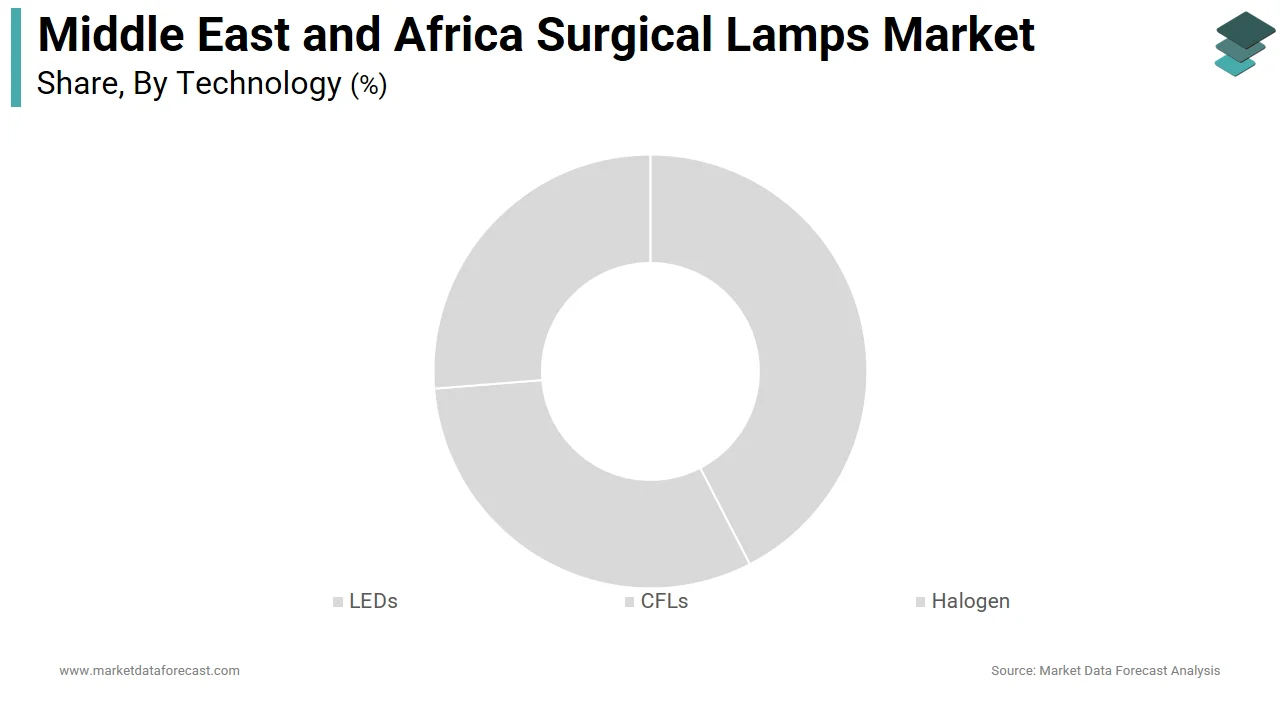
The LEDs segment led the market by accounting for the dominant share of the Middle East and Africa surgical lamps market in 2025 due to their exceptional energy efficiency and extended operational lifespan, which significantly reduce total cost of ownership for healthcare facilities. In regions where electricity costs are high or supply is inconsistent, the low power consumption of LED systems offers a critical economic advantage over halogen alternatives. According to the International Energy Agency, lighting accounts for approximately 15% of global electricity consumption, and switching to LED technology can reduce this usage by up to 75%, providing substantial savings for hospitals operating on tight budgets. According to the World Health Organization, reliable infrastructure is key to maintaining surgical services, and the durability of LED lamps, which last up to 50000 hours, minimizes the frequency of replacements and maintenance disruptions. This longevity is particularly valuable in remote areas where supply chains for spare parts are weak. Healthcare administrators prioritize these long term savings despite higher initial acquisition costs. The reduced heat emission of LEDs also lowers the burden on air conditioning systems, further contributing to energy conservation. This operational efficiency makes LEDs the preferred choice for both new installations and retrofitting projects across the region. The alignment with sustainability goals drives continued adoption.
By Type of Lights Insights
The High Cri Light segment led the market with the leading share of the Middle East and Africa surgical lamps market in 2025 because accurate color rendition is fundamental to successful surgical outcomes and patient safety. Surgeons rely on precise visual cues to identify nerves, blood vessels, and tissue boundaries, which requires lighting with a Color Rendering Index close to natural sunlight. According to the International Electrotechnical Commission, surgical lights must have a CRI of at least 90 to ensure safe and effective operation, a standard that high CRI lights consistently meet. According to the World Federation of Societies of Anaesthesiologists, poor lighting quality is a contributing factor in surgical errors, emphasizing the non-negotiable nature of high-fidelity illumination. In complex procedures such as neurosurgery and plastic surgery prevalent in advanced centers in the Gulf, the ability to distinguish subtle color differences is paramount. Hospitals investing in modern operating theaters prioritize High Cri lights to attract top talent and achieve international accreditation. The demand for these lights is driven by clinical necessity rather than optional preference. This functional requirement ensures steady demand across all tiers of healthcare facilities. Manufacturers focus on optimizing LED arrays to maximize CRI values. This clinical imperative secures the segment's leadership.
On the other end, the special germicidal UV ray light segment is the fastest-growing segment and is estimated to register a CAGR of 13.4% over the forecast period owing to the increasing focus on preventing hospital-acquired infections, which are a major concern in the region. Healthcare-associated infections impose a significant burden on patients and healthcare systems, leading to longer stays and higher costs. According to the World Health Organization, the rate of hospital acquired infections in some African countries is up to 20 times higher than in developed nations, prompting urgent action to improve sterilization protocols. UV ray lights integrated into surgical lamps or used as standalone units provide continuous disinfection of the operating room environment, reducing bacterial load. According to the Saudi Center for Disease Control and Prevention, the center has issued guidelines recommending enhanced environmental cleaning and disinfection measures, including UV technology in high risk areas. This regulatory endorsement drives adoption in new and renovated facilities. Hospitals view UV lighting as a proactive measure to improve patient safety metrics. The technology is particularly valued in immunocompromised patient care units. The growing awareness of infection control drives investment. It represents a critical adjunct to surgical lighting.
By Type of Lamp Insights
The ceiling-mounted surgical lamps segment occupied the largest share of the Middle East and Africa surgical lamps market in 2025 because they are the standard configuration for general operating rooms, providing stable and adjustable illumination for a wide range of procedures. Their fixed installation ensures optimal positioning and freedom of movement for the surgical team without cluttering the floor space. According to the World Health Organization, general surgery constitutes the largest share of surgical procedures in the African region, requiring versatile lighting solutions that can accommodate various patient positions and surgical approaches. According to the Saudi Ministry of Health, over 80% of new operating theaters built in the Kingdom are equipped with ceiling-mounted LED systems, reflecting their status as the default choice for modern facilities. These lamps offer superior shadow management through multi-head designs, which is critical for deep cavity surgeries. The robustness of ceiling mounts suits the high-volume usage in public hospitals. Their long service life and low maintenance needs align with budget constraints. This universal applicability ensures consistent demand. They are the backbone of surgical infrastructure.
However, the surgical headlight lamps segment is estimated to record a notable CAGR of 10.5% over the forecast period owing to the rise of minimally invasive procedures and microsurgery, which require hands-free illumination. These procedures often involve working in deep, narrow cavities where overhead lights cannot reach effectively. According to the International Society for Minimally Invasive Surgery, the adoption of laparoscopic and endoscopic techniques in the Middle East has grown by 15% annually as surgeons seek to reduce patient recovery times. Headlights provide coaxial lighting that eliminates shadows cast by the surgeon’s head and hands, enhancing visibility in complex anatomical structures. According to the South African Surgical Society, the society notes an increase in specialized training programs for microsurgery, creating a new cohort of surgeons demanding high-quality headlight systems. These lamps are lightweight and ergonomic, reducing neck strain during long procedures. The portability of headlights allows their use in diverse settings, including field hospitals. This versatility drives adoption beyond traditional operating rooms. The focus on precision fuels growth.
COUNTRY-LEVEL ANALYSIS
Saudi Arabia Surgical Lamps Market Analysis
Saudi Arabia is likely to experience robust expansion and maintain its dominant position in the Middle East and Africa surgical lamps market over the next few years due to the massive healthcare transformation under Vision 2030 and high national purchasing power. The Kingdom is investing billions in privatizing healthcare and building mega hospitals that require comprehensive surgical equipment, including advanced LED lamps. According to the Saudi Ministry of Health, the number of licensed hospitals increased by 18% between 2020 and 2024, directly expanding procurement channels for medical devices. Strict regulatory oversight by the Saudi Food and Drug Authority ensures only high-quality CE- or FDA-marked lamps enter the market, favoring established international brands. Medical city projects in Riyadh and Jeddah serve as centers of excellence, attracting complex cases from neighboring countries. Universal health coverage expansion brings more citizens into formal care pathways, increasing surgical volumes. The combination of demographic need, infrastructure investment, and regulatory maturity makes KSA the undisputed market leader. Future growth will be tied to privatization pace and local manufacturing development. The focus on quality drives demand for premium products.
United Arab Emirates Surgical Lamps Market Analysis
The United Arab Emirates is projected to achieve steady growth and hold a premier position in the regional market over the next few years, characterized by world-class private healthcare infrastructure and a thriving medical tourism ecosystem. Dubai and Abu Dhabi host numerous Joint Commission International-accredited hospitals that utilize premium surgical lamps for both routine and complex repairs. According to the Dubai Health Authority, medical tourism revenue surpassed 1 billion dollars recently, with general surgery being a top specialty attracting patients from Europe and Asia. The expatriate-dominated population ensures robust private insurance coverage, facilitating access to advanced lighting technologies without out-of-pocket burdens. High prevalence of lifestyle diseases, including diabetes, drives consistent surgical volumes. The UAE serves as the regional headquarters for most multinational medical device companies, enabling rapid product launches and technical support. Regulatory harmonization with international standards accelerates market entry for innovative devices. Free zone policies encourage trade and distribution efficiency. The focus on quality over cost distinguishes the UAE market from regional averages. Growth is sustained by continuous facility upgrades.
Israel Surgical Lamps Market Analysis
Israel is anticipated to exhibit steady and advanced market performance over the next few years, maintained by strong domestic innovation and high per capita surgical rates. The country hosts several indigenous medical device companies developing next-generation surgical lighting and imaging integration technologies. According to the Israeli Ministry of Health, national health insurance covers surgical care universally, ensuring broad access to modern lamp-based techniques across all socioeconomic groups. High defense spending and trauma experience have fostered expertise in complex surgical interventions, benefiting civilian care. The aging population drives demand for advanced procedures requiring precise illumination. Clinical research infrastructure supports rapid validation of new technologies, creating early adoption cycles. Export-oriented manufacturers leverage domestic success to penetrate regional markets. Reimbursement policies incentivize outpatient surgery, promoting efficient lighting use. The integration of digital health records enables outcome tracking and quality improvement. Despite geopolitical challenges, the healthcare system remains resilient and well-funded. Israel serves as an innovation hub influencing regional standards.
COMPETITIVE LANDSCAPE
The competitive landscape of the Middle East and Africa Surgical Lamps Market is characterized by a mix of global multinational corporations and regional manufacturers vying for dominance through price competitiveness and localized service. International players leverage brand reputation and advanced technology to capture the premium segment dominated by private hospitals and medical tourism clinics in Gulf countries. These companies benefit from established global supply chains and rigorous quality control standards that appeal to accredited healthcare facilities. Regional manufacturers focus on cost-effective solutions for public health institutions and small private practices where budget constraints are significant. They offer flexible payment terms and customized products that address specific local needs and regulatory requirements. The market exhibits fragmentation due to varying economic conditions and regulatory frameworks across different countries. Price sensitivity remains a key factor influencing purchasing decisions, particularly in the public sector. Collaboration with local distributors is essential for navigating logistical challenges and ensuring timely delivery. Intellectual property protection varies by country, affecting innovation incentives for smaller firms. After-sales service quality often differentiates competitors, as reliable maintenance is critical for continuous operations. The interplay of these factors creates a dynamic environment where adaptability and local presence determine long-term success in this diverse regional market.
KEY MARKET PLAYERS
The leading companies operating in the Middle East and Africa surgical lamps market include:
- Integra LifeSciences Corporation
- Koninklijke Philips N.V.
- Welch Allyn
- A-dec, Inc.
- Steris Corporation
- Getinge AB
- Skytron
- DRE Inc.
- Drägerwerk AG & Co. KGaA
- Stryker Corporation
- KLS Martin Group
- Herbert Waldmann GmbH & Co. KG
TOP PLAYERS IN THE MARKET
- Steris Corporation serves as a pivotal provider of surgical illumination solutions with a strong focus on integrated operating room systems. The company leverages its engineering expertise to design LED surgical lamps that offer superior color rendering and shadow reduction for enhanced procedural visibility. Recent initiatives include expanding distribution networks in Saudi Arabia and South Africa to improve accessibility and after sales support for local clients. Steris actively collaborates with regional distributors to customize products according to specific regulatory requirements and cultural preferences in the region. Their investment in durable materials ensures longevity in varied environmental conditions common in the Middle East and Africa. The company prioritizes training programs for biomedical technicians to maintain high service standards. By offering modular designs that adapt to diverse clinical settings, Steris strengthens its reputation for reliability. This strategic focus on localized support and robust product design positions it as a trusted partner for modernizing medical infrastructure.
- Getinge AB contributes significantly to the market through its premium surgical lighting systems that set benchmarks for quality and innovation in operating theaters. The company emphasizes advanced technology integration such as camera connectivity and ergonomic controls which appeal to high end private clinics and medical tourism centers. Getinge has recently strengthened its presence by establishing dedicated service hubs in key cities like Dubai and Cairo to ensure rapid response times. Their development of eco-friendly manufacturing processes aligns with growing sustainability demands from environmentally conscious healthcare providers. The company partners with local medical associations to promote best practices in equipment maintenance and hygiene. Getinge focuses on delivering comprehensive solutions that include ceiling mounts and mobile stands, enhancing overall procedural efficiency. Their commitment to user-centered design drives adoption among specialists seeking superior performance. These efforts reinforce their position as a leader in premium surgical lighting solutions for demanding clinical applications across the region.
- Dragerwerk AG & Co KGaA plays a crucial role in the market by providing specialized surgical lamps that meet stringent infection control and safety standards. The company excels in designing versatile units suitable for general and specialized surgeries, which are expanding rapidly in emerging markets. Drager has recently intensified its focus on integrated room solutions that combine lighting with anesthesia and ventilation technologies to streamline clinical workflows. Their acquisition of regional distributors has enhanced supply chain efficiency and market penetration in countries like Kenya and Egypt. The company develops lamps with antimicrobial surfaces to reduce hospital-acquired infections, addressing a critical concern for healthcare administrators. Drager invests in educational initiatives to train medical staff on proper equipment usage and maintenance. By offering scalable solutions for both public and private sectors, Drager supports healthcare modernization efforts. Their holistic approach to safety and operational efficiency makes them a preferred choice for advanced medical facilities in the region.
TOP STRATEGIES USED BY KEY MARKET PARTICIPANTS
Key players in the Middle East and Africa Surgical Lamps Market employ several strategic approaches to maintain competitive advantage and drive growth. Product localization remains central as companies adapt designs to meet specific regulatory standards and cultural preferences in different countries. Strategic partnerships with local distributors enable suppliers to navigate complex logistics and provide timely after-sales support. Expansion of service networks in major urban centers ensures rapid maintenance and reduces downtime for healthcare providers. Investment in durable and easy-to-clean materials addresses hygiene concerns and extends product lifespan in challenging environments. Companies also pursue government tenders to secure large-volume contracts for public health infrastructure projects. Sustainability initiatives drive efforts to use recyclable materials and energy-efficient manufacturing processes. Digital integration strategies incorporate smart features for better workflow management and data tracking. These multifaceted strategies collectively strengthen market positions by addressing operational, regulatory, and economic challenges facing the healthcare sector in the region today.
MARKET SEGMENTATION
This research report on the Middle East and Africa Surgical Lamps Market has been segmented and sub-segmented into the following categories:
By Technology:
- LEDs
- CFLs
- Halogen
By Type of Lights:
- High CRI Light
- Special Germicidal UV Ray Light
- Vein Light
- Homogenous Light
By Type of Lamp:
- Ceiling-mounted Surgical Lamp
- Surgical Headlight Lamps
- Dental Light Lamps
- Laser Light Lamps
By Country:
- KSA
- UAE
- Israel
- Rest of GCC countries
- South Africa
- Ethiopia
- Kenya
- Egypt
- Sudan
- Rest of Middle East and Africa