- Product Description Description
- Table of Contents TOC
- List of Table & Figure LOT
- Get Free Sample PDF Sample PDF
Market Size, 2025
$18.54 BnMarket Estimate, 2026
$19.49 BnMarket Forecast, 2034
$29.04 BnCAGR, 2026–2034
5.11%Global Meat Extract Market Size, Growth, Trends & Forecast (2026–2034)
The global meat extract market size was calculated to be USD 18.54 billion in 2025, is anticipated to be worth USD 19.49 billion in 2026, and is projected to scale up to USD 29.04 billion by 2034, registering a compound annual growth rate (CAGR) of 5.11% during the forecast period from 2026 to 2034. Driven by the surging global demand for convenience foods, growing preferences for natural umami flavor enhancers, the expansion of ready-to-eat meals, and ongoing innovations in hybrid plant-based formulations, the global meat extract industry continues to experience steady, strategic market expansion.
Key Executive Metrics (At-a-Glance)
- 2025 Base Valuation: USD 18.54 Billion
- 2026 Current Valuation: USD 19.49 Billion
- 2034 Forecast Valuation: USD 29.04 Billion
- Compound Annual Growth Rate (CAGR): 5.11% (2026–2034)
- Dominant Type Segment: Beef Extract (accounted for 54.2% share in 2025 due to its robust umami profile and broad application in traditional culinary preparations)
- Fastest-Growing Type Segment: Chicken Extract (projected to grow at a CAGR of 5.8% driven by lighter, healthier dietary profiles and leaner protein trends)
- Dominant Application Segment: Soups & Broths (held 51.2% market share in 2026 as foundational flavor carriers in liquid preparations)
- Fastest-Growing Application Segment: Ready-To-Cook & Ready-To-Eat Meals (anticipated to register a 6.2% CAGR throughout the forecast period due to urban lifestyles and convenience demands)
- Dominant Region / Country: North America (market leader holding 34.5% share in 2025 backed by high processing adoption and established convenience food sectors)
- Key Regional Followers: Europe (second position with 22.1% share focused on clean-label premium ingredients) and Asia Pacific (fastest-growing regional market propelled by urbanization and expanding middle-class populations)
Core Market Drivers
- Rise of Convenience Foods: Busy modern schedules and dual-income households driving demand for quick-preparation, ready-to-eat meals enriched with instant savory notes.
- Clean-Label & Natural Flavor Preference: Consumer aversion to synthetic additives and monosodium glutamate (MSG), shifting demand toward authentic, wholesome extracts derived from real meat tissues.
- Expanding Food Processing Sector: Proliferating industrial food manufacturing, instant noodle production, and food service applications requiring reliable, standardized flavor profiles.
Primary Market Restraints & Challenges
- Stringent Regulatory Compliance: Complex international food safety standards, traceability mandates (such as the EU General Food Law), and rigorous documentation increasing operational costs.
- Raw Material Volatility: Price instability and supply chain disruptions for beef, chicken, and pork driven by feed costs, climate change, and livestock disease outbreaks.
- Ethical & Animal Welfare Scrutiny: Growing public focus on livestock farming conditions and intense competition from synthetic or yeast-based umami alternatives.
Global Meat Extract Market Segmentation Breakdown
| Segment Category | Key Segments Covered | Leading / Fastest-Growing Segment |
|---|---|---|
| By Type | Beef, Chicken, Pork, Lamb | Beef (Dominant Share) / Chicken (5.8% CAGR) |
| By Application | Ready-to-cook & Ready-to-eat Meals, Seasonings & Coatings, Soups & Broths, Sauces & Spreads, Savory Snacks, Infant Foods, Others | Soups & Broths (Dominant Share) / Ready-To-Cook & Ready-To-Eat Meals (6.2% CAGR) |
| By Region | North America, Europe, Asia Pacific, Latin America, Middle East & Africa | North America (Dominant Share) / Asia Pacific (Fastest Growth) |
Major Industry Players Profiled
Key enterprises shaping the global meat extract market include Kerry Group plc, Givaudan SA, Symrise AG, Essentia Protein Solutions, BRF S.A., Carnad Natural Taste, Foodex Ingredients, Ariake Japan Co., Ltd., JBS S.A., Nikken Foods Co., Ltd., Ajinomoto Co., Inc., and Vina Aroma Food Co., Ltd.
Global Meat Extract Market Size
As per our analysis report, the global meat extract market was calculated to be USD 18.54 billion in 2025 and is anticipated to be worth USD 29.04 billion by 2034, from USD 19.49 billion in 2026, growing at a CAGR of 5.11% during the forecast period.
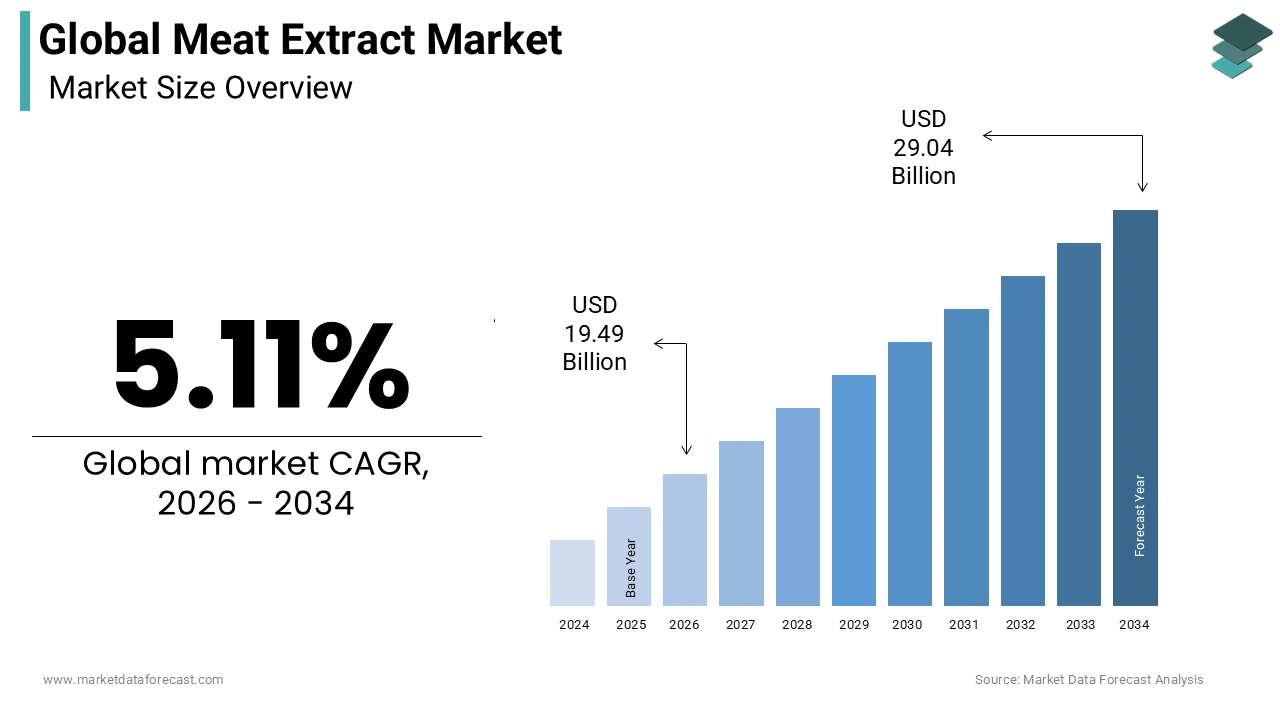
The meat extract is concentrated savory products derived from the thermal processing of meat tissues primarily beef, chicken, and pork. These extracts are rich in umami flavors amino acids and peptides serving, as essential flavor enhancers in soups sauces ready to eat meals and culinary preparations. The demand for natural flavoring agents has surged as consumers seek clean label ingredients that enhance taste without artificial additives. The Food and Agriculture Organization of the United Nations states that global meat consumption reached approximately 340 million tons in 2023 reflecting a sustained preference for meat based flavors even in processed formats. Furthermore, the household expenditure on food and non-alcoholic beverages in the European Union accounted for 12.8% of total consumption in 2023, indicating a significant economic focus on quality food ingredients. The shift towards convenient, yet flavorful home cooking solutions has further propelled the relevance of meat extracts. Manufacturers are increasingly focusing on sustainable sourcing and transparent labeling to align with consumer expectations.
Market Drivers
Rising Demand for Convenience Foods and Ready to Eat Meals
The escalating consumer preference for convenience foods and ready to eat meals is elevating the growth of the meat extract market. Modern lifestyles characterized by busy schedules and dual income households have reduced the time available for traditional cooking methods that require long simmering processes to develop rich flavors. Meat extracts offer an efficient solution by providing instant depth and savory notes to quick preparations. As per the European Commission, the ready to eat meal sector in the European Union has experienced an annual growth rate of 5% over the past five years driven by urbanization and changing dietary habits. Consumers seek products that deliver restaurant quality taste with minimal effort leading manufacturers to incorporate meat extracts into instant noodles soups and frozen dinners. Additionally, the proliferation of single person households has increased the demand for portion controlled and easy to prepare meals where meat extracts enhance palatability without requiring large quantities of fresh meat. The ability of meat extracts to stabilize flavor profiles during industrial processing ensures consistent quality across batches. This reliability makes them indispensable for food manufacturers aiming to meet the high expectations of convenience-oriented consumers.
Increasing Consumer Preference for Natural Flavor Enhancers
The growing consumer inclination towards natural and clean label ingredients, as alternatives to artificial flavorings and monosodium glutamate is propelling the growth of the meat extract market. Health-conscious shoppers are increasingly scrutinizing ingredient lists and avoiding synthetic additives due to perceived health risks. As per the European Food Information Council, 70% of European consumers prefer products with recognizable and natural ingredients prompting food manufacturers to reformulate their offerings. Meat extracts derived from real meat through physical processes such as heating and concentration are perceived as wholesome and authentic flavor sources. The transparency of supply chains is becoming a key purchasing factor with consumers willing to pay a premium for natural products. Meat extracts provide the desired umami taste without the negative connotations associated with chemical flavor enhancers. This shift is particularly evident in the premium segment of the food industry where brands emphasize artisanal and traditional preparation methods. Furthermore, regulatory bodies in Europe are imposing stricter guidelines on the use of artificial additives encouraging manufacturers to adopt natural alternatives. Meat extracts fit seamlessly into this narrative offering a robust flavor profile that aligns with the clean label movement.
Market Restraints
Stringent Regulatory Compliance and Labeling Requirements
The complex web of regulatory frameworks governing food safety labeling and ingredient sourcing is hindering the growth of the meat extract market. Manufacturers must adhere to strict standards regarding the definition of meat extracts permissible additives and nutritional claims, which vary across regions. Any product labeled as meat extract must meet specific criteria regarding protein content and origin to prevent consumer misleading. Compliance with these regulations requires rigorous testing documentation and quality control measures increasing operational costs for producers. The General Food Law Regulation in the European Union mandates traceability of all food ingredients meaning companies must maintain detailed records of their supply chains. This requirement is particularly challenging for small and medium sized enterprises that lack the resources for comprehensive compliance management. Furthermore, restrictions on the use of certain preservatives and flavor enhancers limit formulation flexibility. The World Health Organization emphasizes the need for clear labeling of allergens and potential contaminants which adds another layer of complexity to product development. Non-compliance can result in hefty fines product recalls and reputational damage deterring new entrants from the market. The varying interpretations of regulations across different countries also hinder international trade forcing companies to customize products for each market.
Volatility in Raw Material Prices and Supply Chain Disruptions
The instability in raw material prices for beef chicken and pork to the profitability and consistency is hampering the growth of the meat extract market. Meat prices are subject to fluctuations driven by factors such as feed costs disease outbreaks climate change and geopolitical tensions. These fluctuations directly impact the cost of goods sold for meat extract manufacturers who operate on thin margins. Supply chain disruptions caused by logistical bottlenecks or trade restrictions can lead to shortages of key raw materials affecting production schedules. Manufacturers often struggle to pass these increased costs onto consumers due to price sensitivity in the competitive food ingredient sector. Additionally, the seasonal nature of livestock production can lead to inconsistent supply quality affecting the standardization of final products. The reliance on specific cuts of meat for high quality extracts means that any disruption in the slaughterhouse industry reverberates through the supply chain. Companies must invest in hedging strategies and diversified sourcing to mitigate these risks which requires significant capital and expertise.
Market Opportunities
Expansion into Plant Based and Hybrid Product Formulations
The rising popularity of plant-based diets to innovate through hybrid and fortified formulations is creating new opportunities for the growth of the meat extract market. While pure plant based alternatives gain traction, many consumers still crave the savory depth associated with meat flavors. Meat extracts can be used in small quantities to enhance the taste profile of plant based proteins making them more appealing to flexitarians. Manufacturers can develop specialized meat extracts that complement legume or grain based proteins creating a synergistic flavor experience. This approach allows companies to tap into the growing vegetarian and vegan segments without abandoning their core competency in meat processing. By positioning meat extracts as flavor boosters rather than primary ingredients, companies can extend their reach to health conscious and environmentally aware demographics. Furthermore, the development of low sodium and reduced fat meat extracts aligns with the nutritional goals of plant based diets. This strategic pivot enables manufacturers to diversify their product portfolios and mitigate risks associated with declining traditional meat consumption.
Growth in Emerging Markets with Changing Dietary Patterns
The rapid urbanization and rising disposable incomes in emerging countries, such as Asia Pacific and Latin America is additionally to set up the growth of the meat extract market. As middle class populations expand, there is a shifting preference towards convenient and flavorful food products that mimic Western culinary trends. As per the World Bank, the middle class in Asia Pacific is expected to reach 3.5 billion people by 2030 driving demand for processed and semi prepared foods. Meat extracts are well suited to these markets as they provide an affordable way to enhance the flavor of staple dishes such as rice noodles and soups. The increasing penetration of modern retail channels and e commerce platforms facilitates the distribution of branded meat extract products to wider audiences. The Food and Agriculture Organization of the United Nations highlights that meat consumption in developing countries is growing faster than in developed nations indicating a strong underlying demand for meat derived flavors. Local manufacturers can leverage traditional recipes and combine them with modern extraction technologies to create products that resonate with local tastes. Furthermore, the growing awareness of food safety and quality in these regions favors established brands that offer consistent and hygienic products. Government initiatives to improve food infrastructure and cold chain logistics also support market expansion.
MARKET CHALLENGES
Ethical Concerns and Animal Welfare Advocacy
The increasing scrutiny of animal welfare practices and ethical sourcing is to impede the growth of the meat extract market. Consumers are becoming more aware of the conditions under which livestock are raised and slaughtered leading to a decline in trust towards conventional meat products. As per the European Commission, a survey indicated that 82% of EU citizens believe that farm animals should be better protected influencing their purchasing decisions. This sentiment drives a segment of the population to avoid meat-based ingredients altogether, including extracts. Activist groups and non-governmental organizations frequently campaign against industrial farming practices highlighting issues such as overcrowding and inhumane treatment. These campaigns can damage brand reputation and lead to boycotts of products containing meat derivatives. The rise of certified humane and free range labels creates pressure on manufacturers to source from higher cost suppliers which may not be feasible for all players. The Humane Society International reports that transparency in supply chains is now a critical factor for consumer loyalty. Companies failing to demonstrate ethical sourcing practices risk losing market share to competitors who prioritize animal welfare. Furthermore, the association of meat production with environmental degradation exacerbates these ethical concerns.
Competition from Synthetic and Yeast Based Flavor Alternatives
The intense competition from synthetic flavorings and yeast based alternatives, which offer similar umami profiles at lower costs and with greater stability is also to impede the growth of the meat extract market. Monosodium glutamate hydrolyzed vegetable protein and yeast extracts are widely used in the food industry as cost effective substitutes for meat extracts. These alternatives are often cheaper to produce and have a longer shelf life making them attractive to cost conscious manufacturers. Synthetic flavors can be engineered to mimic specific meat notes with high precision allowing for consistent product quality regardless of raw material variations. The European Federation of Food Additives and Food Enzyme Industries notes that advancements in biotechnology have improved the sensory properties of non meat flavor enhancers. This technological progress reduces the competitive advantage of traditional meat extracts. Furthermore yeast based products are perceived as suitable for vegetarian and vegan applications expanding their market reach. Meat extract manufacturers must invest in research and development to differentiate their products through superior flavor complexity and natural positioning. However, the price sensitivity of the industrial food sector often favors cheaper alternatives.
REPORT COVERAGE
| REPORT METRIC | DETAILS |
| Market Size Available | 2025 to 2034 |
| Base Year | 2025 |
| Forecast Period | 2026 to 2034 |
| CAGR | 5.11% |
| Segments Covered | By Type, Application, & Region |
| Various Analyses Covered | Global, Regional & Country Level Analysis, Segment-Level Analysis, DROC, PESTLE Analysis, Porter’s Five Forces Analysis, Competitive Landscape, Analyst Overview on Investment Opportunities |
| Regions Covered | North America, Europe, APAC, Latin America, Middle East & Africa |
| Market Leaders Profiled | Essentia Protein Solutions (U.S.), BRF S.A. (Brazil), Carnad Natural Taste (Denmark), Foodex Ingredients (Indonesia), Ariake Japan Co., Ltd. (Japan), Symrise AG (Germany), JBS S.A. (Brazil), Nikken Foods Co., Ltd. (Japan), Ajinomoto Co., Inc. (Japan), and Vina Aroma Food Co., Ltd. (Vietnam) |
SEGMENTAL ANALYSIS
By Type Insights
The beef extract segment was accounted in holding 54.2% of the meat extract market share in 2025 due to its robust umami profile and widespread acceptance in global culinary traditions, particularly in Europe and North America. The deep savory flavor of beef extract makes it an indispensable ingredient in premium soups stocks and gravies where richness is paramount. The European Commission notes that beef-based products account for a significant portion of the meat processing industry in countries like France and Germany, where traditional cooking methods rely heavily on bone broths and concentrated meat essences. The high protein content and natural glutamate levels in beef extract provide a superior taste enhancement compared to other meat types which drives its preference among industrial food manufacturers. Furthermore, the perception of beef as a premium ingredient allows manufacturers to command higher price points in the retail sector. The Food and Agriculture Organization of the United Nations states that the demand for beef derived flavors is sustained by the growing popularity of Western cuisine in emerging countries.
The chicken extract segment is swiftly emerging at a fastest CAGR of 5.8% from 2026 to 2034 owing to the increasing consumer preference for lighter and healthier flavor profiles that align with modern dietary trends. The global chicken consumption has surpassed beef in many regions due to its lower fat content and perceived health benefits. Chicken extract offers a milder and more versatile flavor that complements a wide range of dishes including Asian soups salads and light sauces without overpowering other ingredients. The shift towards leaner protein sources is a key strategy in combating obesity and cardiovascular diseases driving demand for chicken based products. In Asia Pacific the cultural significance of chicken broth in traditional medicine and daily meals fuels the adoption of chicken extracts in both household and industrial applications. This high volume translates into substantial availability of by products for extract production. Additionally, chicken extract is often perceived as more acceptable in religiously diverse markets where pork and beef may face restrictions. The ability of chicken extract to blend seamlessly with vegetable and herb flavors makes it ideal for clean label formulations.
By Application Insights
The soups and broths segment was accounted in holding 51.2% of the meat extract market share in 2026 due to the fundamental role of meat extracts in creating the base flavor for these liquid preparations. Meat extracts provide the essential depth and body that define high quality soups and stocks making them irreplaceable in both commercial and home cooking. As per the National Soup Institute, soup consumption remains a staple in many diets with over 2.5 billion servings consumed annually in the United States alone. The convenience of using concentrated meat extracts allows manufacturers to produce consistent and flavorful ready to eat soups efficiently. The European Commission states that the ready to eat meal sector which heavily relies on soup bases is growing steadily driven by urbanization and busy lifestyles. Meat extracts enable the reduction of cooking time while maintaining the sensory qualities of slow simmered broths. The Food and Agriculture Organization of the United Nations notes that the global demand for convenient nutrition solutions is rising particularly among aging populations who prefer easy to digest and flavorful meals. Furthermore, the use of meat extracts in instant noodle seasoning packets represents a massive volume driver in Asia Pacific where instant noodles are a dietary staple. The ability of meat extracts to enhance the mouthfeel and aroma of soups ensures their continued dominance in this application.
The Ready-To-Cook and Ready-To-Eat meals segment is expected to witness a fastest CAGR of 6.2% throughout the forecast period owing to the relentless pace of urban life and the increasing demand for convenient yet tasty meal solutions that require minimal preparation time. Meat extracts are critical in these products as they impart immediate savory flavors to sauces marinades and pre cooked components without the need for lengthy reduction processes. The urbanization rates are climbing globally leading to smaller household sizes and less time for traditional cooking. This demographic shift drives the adoption of single serve and easy to prepare meals where flavor intensity is crucial for consumer satisfaction. Meat extracts allow manufacturers to create complex flavor profiles in frozen and chilled meals that mimic home cooked tastes. Furthermore, the rise of meal kit services, which provide pre portioned ingredients and sauces relies heavily on concentrated flavorings like meat extracts to ensure consistent results for home cooks.
REGIONAL ANALYSIS
North America Meat Extract Market Analysis
North America meat extract market was the largest contributor by holding 34.5% of the share in 2025 due to its large population and established culture of consuming processed and ready to eat meals. The region benefits from advanced manufacturing technologies and stringent food safety standards that ensure high quality products. Canada also contributes to the market with a growing demand for natural and clean label ingredients. The prevalence of dual income households and the popularity of quick service restaurants that utilize meat extracts for consistent flavoring. The Society for the Advancement of Food Service Research notes that the demand for flavorful and convenient dining options is reshaping the food landscape. Additionally, the trend towards health conscious eating has led to the development of low sodium and organic meat extracts catering to niche segments. The presence of major food conglomerates in the region facilitates innovation and widespread distribution. The integration of meat extracts into plant based hybrid products is also gaining traction as consumers seek balanced dietary options.
Europe Meat Extract Market Analysis
Europe meat extract market growth was ranked second by holding a 22.1% of share in 2025. The European Union is home to some of the world's most renowned meat processing companies and gourmet food brands that rely on high quality meat extracts. As per the European Commission, the EU meat sector produces over 40 million tons of meat annually providing ample raw materials for extract manufacturing. Germany, France, and the United Kingdom, are the largest contributors within the region due to their sophisticated food industries and consumer preference for premium ingredients. The European Food Safety Authority plays a role in setting standards for food additives and flavorings ensuring that meat extracts meet strict safety and quality criteria. The region is characterized by a growing demand for clean label and organic products, which drives the adoption of natural meat extracts over synthetic alternatives. The European Consumer Organisation reports that transparency in sourcing and production is a key factor influencing purchasing decisions. Furthermore the popularity of traditional soups stews and sauces in European cuisine sustains the demand for beef and pork extracts. The European Green Deal initiatives encourage sustainable farming practices which impact the sourcing strategies of meat extract manufacturers. The focus on reducing food waste also leads to the utilization of meat by products for extract production aligning with circular economy principles.
Asia Pacific Meat Extract Market Analysis
Asia Pacific meat extract market growth is likely to grow at a fastest CAGR from 2026 to 2034 with the rapid urbanization rising disposable incomes and changing dietary habits. As per the Food and Agriculture Organization of the United Nations, meat consumption in Asia Pacific is expected to grow by 2% annually driven by the expanding middle class. The region has a strong cultural tradition of using bone broths and meat essences in daily cooking particularly in Chinese and Japanese cuisines. The increasing penetration of modern retail channels and e commerce platforms facilitates the distribution of branded meat extract products to a wider audience. In India, the demand for chicken and lamb extracts is rising due to religious dietary preferences and the growing popularity of Western style convenience foods. Local manufacturers are innovating with region specific flavors to cater to diverse palates. The growing awareness of food safety and quality is driving consumers towards established brands that offer consistent and hygienic products.
Latin America Meat Extract Market Analysis
Latin America meat extract market is likely to grow with the expansion of the food processing industry and increasing urbanization. Brazil and Mexico are the largest contributors in the region due to their significant meat production capabilities and large populations. As per the Brazilian Ministry of Agriculture, Brazil is one of the world's largest exporters of beef and chicken providing a cost competitive advantage for meat extract producers. Economic volatility can impact consumer purchasing power but the demand for affordable flavor solutions remains resilient. Meat extracts offer a cost-effective way to enhance the taste of staple foods, such as rice and beans. The rising influence of Western fast-sfood chains in Latin America also drives the adoption of standardized flavorings like meat extracts. Local manufacturers are increasingly focusing on product innovation and branding to compete with international players.
Middle East and Africa Meat Extract Market Analysis
The Middle East and Africa meat extract market growth is propelled with the population growth and the increasing adoption of processed foods. The Gulf Cooperation Council countries particularly the United Arab Emirates and Saudi Arabia are key contributor due to high disposable incomes and a diverse population with varied culinary preferences. The regulatory framework for food safety is becoming more stringent encouraging the use of high quality and certified ingredients. The region has a strong tradition of meat-based cuisine with lamb and chicken being predominant. South Africa and Egypt are leading countries in the continent with established food processing industries. The harsh climate in many parts of the region necessitates the use of preserved and processed foods which often contain meat extracts for flavor. The growing tourism industry in the Middle East drives demand for high quality food ingredients in the hospitality sector. International food companies are expanding their presence in the region through partnerships with local distributors.
COMPETITION OVERVIEW
The competition in the Meat Extract Market is characterized by a mix of large multinational corporations and specialized regional manufacturers striving for dominance through innovation and quality. Major players leverage their extensive distribution networks and research capabilities to offer diverse and customized flavor solutions. The market sees intense rivalry in the development of clean label and natural extracts as consumers increasingly reject artificial additives. Price sensitivity remains a factor particularly in cost sensitive segments where synthetic alternatives pose a threat. Companies differentiate themselves through sustainable sourcing practices and transparency in supply chains which are becoming critical purchasing criteria. Strategic collaborations with food manufacturers enable co creation of unique products that meet specific dietary trends. Intellectual property protection for proprietary extraction methods is crucial for maintaining technological leadership. The rise of plant based and hybrid diets prompts competitors to adapt their offerings to include versatile flavor enhancers. Regulatory compliance and food safety standards act as barriers to entry for smaller firms. The continuous push for healthier and more convenient food options drives ongoing innovation and competitive dynamics in this sector.
KEY MARKET PLAYERS
Major Key Players in the Global Meat Extract Market include
- Essentia Protein Solutions
- BRF S.A.
- Carnad Natural Taste
- Foodex Ingredients
- Ariake Japan Co., Ltd.
- Symrise AG
- JBS S.A.
- Nikken Foods Co., Ltd.
- Ajinomoto Co., Inc.
- Vina Aroma Food Co., Ltd.
Top Strategies Used by Key Market Participants
Key players in the Meat Extract Market primarily focus on product innovation and sustainability to maintain competitive advantage. Companies invest heavily in research and development to create clean label and natural extracts that appeal to health conscious consumers. Strategic acquisitions of smaller specialty firms allow larger entities to expand their flavor portfolios and geographic reach. Partnerships with raw material suppliers ensure consistent quality and secure supply chains amidst volatile market conditions. Expanding production capacities in emerging markets helps companies cater to growing demand in Asia Pacific and Latin America. Developing customized solutions for specific applications such as ready meals and snacks enhances customer loyalty. Emphasizing transparency in sourcing and production processes builds trust with regulators and consumers. Investing in advanced extraction technologies improves yield and reduces environmental impact. These strategies collectively drive growth and establish long term resilience in the dynamic meat extract industry landscape.
Leading Players in the Global Meat Extract Market
- Kerry Group plc is a global leader in taste and nutrition solutions with a significant presence in the meat extract market through its extensive portfolio of savory ingredients. The company leverages advanced extraction technologies to produce high quality beef chicken and pork extracts that enhance flavor profiles for food manufacturers. Kerry recently expanded its production capabilities in Europe to meet the growing demand for clean label and natural meat based flavors. The company focuses on sustainable sourcing and transparent supply chains to align with consumer preferences for ethical ingredients. Kerry also invests heavily in research and development to create innovative flavor systems that reduce sodium content while maintaining taste intensity. Their strategic partnerships with major food brands enable them to integrate meat extracts into a wide range of applications including soups sauces and ready meals.
- Givaudan SA is a prominent player in the flavor and fragrance industry offering specialized meat extract solutions that cater to diverse culinary traditions worldwide. The company utilizes proprietary fermentation and extraction processes to develop authentic and robust meat flavors for industrial and retail clients. Givaudan recently launched a new line of natural meat extracts derived from upcycled by products supporting circular economy initiatives. This move enhances their sustainability credentials and appeals to environmentally conscious consumers. The company also focuses on digital tools that help customers visualize flavor impacts and optimize formulations efficiently. Givaudan’s global network of application centers allows for rapid customization of meat extracts to suit regional tastes and regulatory requirements. Their emphasis on naturalness and authenticity drives adoption among manufacturers seeking to replace artificial flavorings.
- Symrise AG is a leading supplier of flavors and fragrances with a strong foothold in the meat extract segment through its comprehensive range of savory solutions. The company offers high purity meat extracts that provide consistent umami notes for various food applications including snacks and convenience meals. Symrise recently invested in expanding its manufacturing facilities in Asia Pacific to capitalize on the rising demand for meat based flavors in emerging markets. The company prioritizes quality control and food safety ensuring compliance with stringent international standards. Symrise also develops customized flavor profiles that address specific dietary trends such as low sodium and clean label requirements. Their collaborative approach with clients enables the creation of unique product concepts that differentiate brands in crowded marketplaces. Symrise’s focus on innovation and customer centricity ensures they remain a trusted partner for food producers seeking reliable and high performance meat extract ingredients globally.
MARKET SEGMENTATION
This research report on the global meat extract market has been segmented and sub-segmented based on type, application, and region.
By Type
- Beef
- Chicken
- Pork
- Lamb
By Application
- Ready-to-cook & Ready-to-eat Meals
- Seasonings & Coatings
- Soups & Broths
- Sauces & Spreads
- Savory Snacks
- Infant Foods
- Others
By Region
- North America
- Europe
- Asia Pacific
- Latin America
- Middle East & Africa