- Product Description Description
- Table of Contents TOC
- List of Table & Figure LOT
- Get Free Sample PDF Sample PDF
Market Size, 2025
$5299.25 MnMarket Estimate, 2026
$5894.36 MnMarket Forecast, 2034
$12416.23 MnCAGR, 2026–2034
11.23%Global Medical Laser Market Report Summary
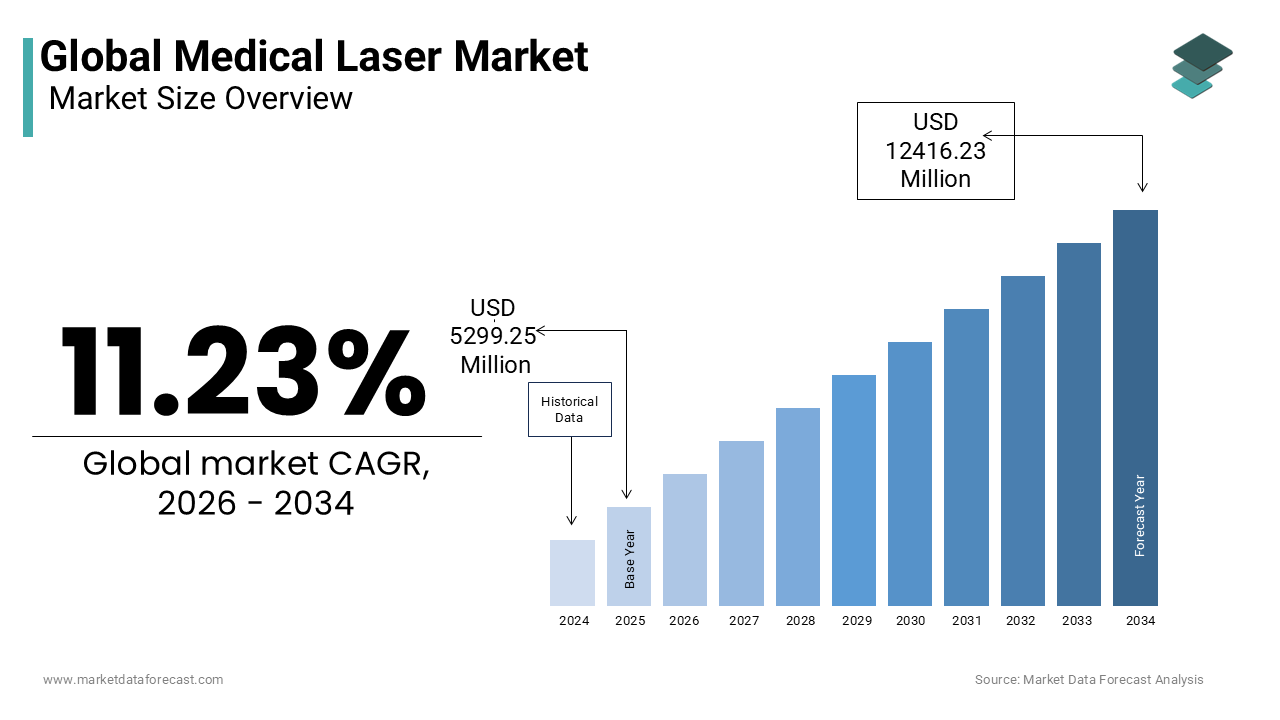
The global medical laser market was valued at USD 5,299.25 million in 2025 and is anticipated to reach USD 5,894.36 million in 2026 from USD 12,416.23 million by 2034, growing at a CAGR of 11.23% during the forecast period from 2026 to 2034. The growth of the global medical laser market is driven by the increasing prevalence of chronic diseases, rising demand for minimally invasive surgical procedures, and expanding adoption of laser-based technologies across multiple medical specialties. Growing investments in advanced healthcare infrastructure, increasing demand for aesthetic procedures, and continuous technological advancements in laser systems are further accelerating market growth. Moreover, the development of portable and handheld laser devices, expanding applications in ophthalmology, dermatology, dentistry, and urology, and increasing regulatory approvals for new laser-based therapies are supporting the expansion of the global medical laser market.
Key Market Trends
-
Rising adoption of minimally invasive laser-based surgical procedures across multiple medical specialties.
-
Increasing demand for aesthetic laser treatments including skin rejuvenation, hair removal, and tattoo removal.
-
Growing development of portable and handheld laser devices for point-of-care and home healthcare applications.
-
Rising technological advancements in femtosecond, diode, and semiconductor laser systems.
-
Increasing integration of laser technologies into precision medicine and image-guided surgical procedures.
Segmental Insights
- Based on product, the solid-state laser systems segment dominated the global medical laser market in 2025. The dominance of the segment is attributed to its superior precision, high power output, excellent beam control, broad clinical applicability across ophthalmology, urology, gastroenterology, and oncology, along with proven reliability, durability, and extensive regulatory approvals.
- The semiconductor laser systems segment is projected to witness the fastest growth during the forecast period owing to increasing miniaturization, lower manufacturing costs, expanding applications in dermatology and dentistry, improved wavelength stability, growing portability, and increasing adoption among ambulatory surgical centers and private clinics.
- Based on application, the dermatology and aesthetics segment dominated the global medical laser market in 2025. The growth of the segment is driven by increasing consumer demand for non-invasive cosmetic procedures, rising disposable incomes, expanding medical spa facilities, growing popularity of skin resurfacing, hair removal, tattoo removal, wrinkle reduction procedures, and continuous technological innovations in fractional laser systems.
- The ophthalmology segment is anticipated to register the fastest growth during the forecast period due to the increasing prevalence of cataracts, glaucoma, diabetic retinopathy, and refractive disorders, growing adoption of femtosecond laser-assisted cataract surgery, expanding LASIK procedures, increasing aging population, and rising investments in advanced ophthalmic care infrastructure.
Regional Insights
- North America dominated the global medical laser market in 2025 owing to its advanced healthcare infrastructure, high healthcare expenditure, strong presence of leading medical laser manufacturers, increasing adoption of minimally invasive procedures, expanding aesthetic medicine industry, and favorable reimbursement policies for medically necessary laser treatments.
- Europe held a significant share of the global medical laser market owing to its aging population, robust healthcare systems, increasing demand for ophthalmic and dermatological procedures, strong regulatory framework, expanding medical tourism, and continuous investments in advanced laser technologies.
- Asia Pacific is projected to witness the fastest growth during the forecast period due to rapid healthcare infrastructure development, increasing medical tourism, expanding middle-class population, rising disposable incomes, growing demand for cosmetic procedures, and increasing investments in hospital modernization across China, India, Japan, South Korea, and Southeast Asia.
- Latin America continues to maintain steady market growth owing to increasing access to private healthcare services, strong demand for cosmetic laser procedures, expanding medical tourism, rising awareness of minimally invasive treatments, and growing adoption of advanced laser technologies across Brazil, Mexico, Colombia, and Costa Rica.
- The Middle East & Africa is expected to experience notable growth during the forecast period due to increasing healthcare modernization initiatives, expanding specialty hospitals, rising prevalence of diabetes-related ophthalmic disorders, growing medical tourism in Gulf countries, and increasing investments in advanced laser-based healthcare infrastructure.
Competitive Landscape
The global medical laser market is highly competitive and characterized by the presence of established multinational manufacturers competing through continuous technological innovation, diversified product portfolios, strategic acquisitions, and expanding global distribution networks. Leading companies are focusing on developing advanced laser platforms with improved precision, enhanced safety features, digital integration, and portable system designs while strengthening partnerships with hospitals, research institutions, and specialty clinics. Continuous investments in research and development, physician training programs, regulatory approvals, and expansion into emerging markets continue to strengthen competitive positioning across the global medical laser market. The prominent players operating in the global medical laser market include Alcon Laboratories, Inc., AngioDynamics Corp., American Medical Systems, Inc., Biolase Inc., Bausch & Lomb Holdings, Cardiogenesis Corporation, Lumenis Ltd., IRIDEX Corp., Novadaq Technologies, Inc., Photomedex, Inc., Spectranetics Corporation, and Syneron-Candela.
Global Medical Laser Market Size
The global medical laser market was worth USD 5299.25 million in 2025 and is estimated to grow at a CAGR of 11.23% from 2026 to 2034 and value USD 12416.23 million by 2033 from USD 5894.36 million in 2026.
A medical laser is a device that emits a focused, high-intensity beam of light at specific wavelengths to diagnose, treat, or remove biological tissues. These instruments leverage concentrated light energy to perform precise interventions with minimal invasiveness, significantly reducing patient recovery times and improving procedural outcomes. The technology spans multiple wavelengths including carbon dioxide, neodymium doped yttrium aluminum garnet, and diode lasers, each tailored for specific therapeutic applications ranging from ophthalmology to dermatology. According to the World Health Organization (WHO), noncommunicable diseases account for 74% of all deaths globally, underscoring an urgent international developmental imperative to strengthen primary healthcare tracking, lifestyle risk reduction, and universal health coverage. The aging global population further amplifies this demand, as older individuals are more prone to conditions such as cataracts, benign prostatic hyperplasia, and skin lesions that frequently require laser based treatments. As projected by the United Nations Department of Economic and Social Affairs (UN DESA), the global population aged 65 years or older will double from 727 million in 2020 to over 1.5 billion by 2050, requiring nations to urgently redesign public pension frameworks and sustainable social protection systems. Furthermore, the rising prevalence of chronic diseases necessitates efficient and less traumatic treatment options, positioning medical lasers as essential tools in modern healthcare infrastructure. Regulatory bodies worldwide continue to approve new laser applications, expanding their utility in oncology, cardiology, and dentistry. This convergence of demographic shifts, technological advancements, and clinical efficacy establishes a robust foundation for the continued expansion and integration of laser technologies in global medical practice.
MARKET DRIVERS
Increasing Prevalence of Chronic Diseases Drives Surgical Demand
The escalating global burden of chronic diseases fuels the growth of the medical laser market. This surges the adoption of medical lasers in surgical and therapeutic procedures. Conditions such as cardiovascular diseases, cancer, and diabetes often require precise interventions where traditional surgery poses higher risks of complications and prolonged recovery. According to the Centers for Disease Control and Prevention (CDC), six in ten adults in the United States have a chronic disease, and four in ten have two or more, making these conditions the leading drivers of national healthcare costs and long-term disability. Medical lasers offer superior precision in removing tumors, clearing arterial blockages, and treating diabetic retinopathy, making them indispensable in managing these complex conditions. As per the International Agency for Research on Cancer (IARC), there were an estimated 19.3 million new cancer cases globally in 2020, with female breast cancer surpassing lung cancer as the most commonly diagnosed malignancy worldwide. The minimally invasive nature of laser procedures reduces blood loss, infection risk, and hospital stays, which is critical for patients with compromised health due to chronic illnesses. Healthcare providers are increasingly prioritizing these benefits to improve patient outcomes and optimize resource utilization. Additionally, the growing awareness among patients about the advantages of laser surgery over conventional methods accelerates adoption. Hospitals and ambulatory surgical centers are investing in advanced laser systems to meet this rising demand, ensuring they can provide state of the art care for chronic disease management. This trend underscores the critical role of medical lasers in addressing the global health crisis posed by chronic conditions.
Rising Demand for Minimally Invasive Aesthetic Procedures
The surging popularity of minimally invasive aesthetic procedures significantly propels the expansion of the medical laser market. This trend is particularly visible in dermatology and cosmetic surgery. Consumers are increasingly seeking non surgical solutions for skin rejuvenation, hair removal, tattoo removal, and body contouring due to their convenience, lower cost, and reduced downtime compared to traditional surgery. According to the American Society of Plastic Surgeons (ASPS), over 18 million minimally invasive cosmetic procedures were recorded in the United States, driven heavily by patient preferences for treatments featuring brief downtime and lower surgical risks. The social influence of digital media and the desire for youthful appearance drive individuals to pursue regular aesthetic maintenance, creating a recurring revenue stream for clinics using laser technologies. As per the International Society of Aesthetic Plastic Surgery (ISAPS), the global volume of aesthetic surgical and non-surgical procedures continues to experience year-on-year growth, led globally by high volumes of botulinum toxin and hyaluronic acid treatments. Lasers such as fractional CO2 and intense pulsed light systems offer customizable treatments for various skin types and concerns, enhancing their appeal. The development of safer and more effective laser devices has also broadened the demographic reach, attracting younger patients for preventive care and older patients for restorative treatments. Clinics are expanding their service offerings to include advanced laser therapies, investing in high quality equipment to remain competitive. This sustained consumer interest in aesthetic improvement ensures steady demand for medical lasers, fostering innovation and market expansion in the cosmetic sector.
MARKET RESTRAINTS
High Cost of Advanced Laser Systems Limits Accessibility
The substantial capital investment required for acquiring and maintaining advanced medical laser systems is a significant barrier to the penetration of the medical laser market. This is particularly true for resource constrained settings. High end laser devices often cost hundreds of thousands of dollars, placing them out of reach for smaller clinics, rural hospitals, and healthcare facilities in developing regions. According to World Bank developmental statistics, low- and middle-income countries frequently allocate less than 5% of their gross domestic product to healthcare expenditures, emphasizing severe challenges in achieving universal primary health coverage. The total cost of ownership includes not only the initial purchase price but also ongoing expenses for maintenance, repairs, and specialized training for medical staff. As per the Healthcare Financial Management Association (HFMA), hospitals manage medical equipment depreciation cycles using an average useful lifespan of 5 to 7 years to structure long-term financial replacement strategies. Budgetary constraints force many healthcare providers to prioritize essential life saving equipment over elective or specialized laser systems. This financial burden restricts the availability of laser treatments to affluent urban centers, exacerbating healthcare disparities. Additionally, reimbursement policies in many countries do not fully cover laser procedures, shifting the financial burden to patients who may be unable to afford out of pocket costs. Consequently, the high economic threshold for entry slows the widespread adoption of medical lasers, confining their use to well funded institutions and limiting market growth in emerging economies where the need for advanced care is often greatest.
Stringent Regulatory Approval Processes Delay Market Entry
The regulatory approval processes for medical laser devices are rigorous and time-consuming, which hampers the expansion of the medical laser market. These hurdles significantly hinder rapid market entry and innovation. Manufacturers must navigate complex compliance requirements set by agencies such as the Food and Drug Administration in the United States and the European Medicines Agency in Europe, which demand extensive clinical trials and safety data. According to the U.S. Food and Drug Administration (FDA), medical device review timelines vary by risk classification, with high-risk Class III devices requiring Premarket Approval (PMA) to establish rigorous scientific evidence of safety and effectiveness. This prolonged timeline delays the availability of new technologies to patients and increases development costs for manufacturers, who must sustain operations without revenue from the new product during the review period. As per the European Commission, the implementation of the Medical Device Regulation (MDR) establishes robust requirements for clinical data, traceability, and post-market surveillance to optimize patient safety standards across the European Union. Small and medium sized enterprises often lack the resources to manage these regulatory burdens, leading to consolidation in the industry or abandonment of promising innovations. The uncertainty surrounding approval outcomes discourages investment in novel laser applications, stifling competition and slowing technological progress. Additionally, varying regulatory standards across different countries complicate global expansion strategies, requiring manufacturers to tailor submissions for each jurisdiction. These regulatory hurdles create a bottleneck in the supply of advanced laser systems, limiting patient access to cutting edge treatments and restraining the overall growth potential of the medical laser market.
MARKET OPPORTUNITIES
Expansion into Emerging Markets Offers Untapped Potential
The rapid economic development and improving healthcare infrastructure in emerging markets create a pathway for the medical laser market. Countries in Asia Pacific, Latin America, and the Middle East are experiencing rising disposable incomes and increasing healthcare expenditure, enabling greater access to advanced medical technologies. Governments in nations such as India, China, and Brazil are implementing universal health coverage schemes that include coverage for certain laser based treatments, expanding the patient base. As per the World Health Organization (WHO), improving healthcare infrastructure in low- and middle-income nations requires strengthening primary care clinics and expanding basic laboratory networks to ensure foundational service delivery. Local manufacturing partnerships and joint ventures allow international laser companies to reduce costs and tailor products to regional needs, enhancing affordability. The growing medical tourism industry in these regions also drives demand for high quality aesthetic and surgical laser services, attracting patients from abroad. Additionally, the rising prevalence of lifestyle related diseases in emerging economies increases the need for laser interventions in ophthalmology and dermatology. By establishing a strong presence in these high growth markets, manufacturers can diversify their revenue streams and mitigate saturation in developed regions. This strategic expansion aligns with global health equity goals while capturing significant commercial value in underserved populations.
Technological Advancements in Portable and Handheld Lasers
The development of portable and handheld laser devices opens new avenues for application in point of care settings, home healthcare, and remote medical missions, which is anticipated to drive the expansion of the medical laser market. Miniaturization of laser components has enabled the creation of compact, battery operated devices that maintain clinical efficacy while offering enhanced mobility and ease of use. According to research published by the Institute of Electrical and Electronics Engineers (IEEE), advancements in semiconductor laser technology focus on improving beam quality and electro-optical efficiency in high-power laser diodes. These devices allow physicians to perform procedures in outpatient clinics, emergency rooms, and even patient homes, reducing the need for hospital admissions and lowering healthcare costs. Studies in the Journal of Medical Devices detail the mechanical design, regulatory prototyping, and technical design validations required to bring novel surgical instrumentation from concepts to functional prototypes. The rise of telemedicine and remote monitoring further supports the adoption of portable lasers, enabling specialists to guide less experienced practitioners in rural areas. Home use lasers for hair removal and skin care are also gaining popularity, driven by consumer demand for convenient self care solutions. Manufacturers are focusing on user friendly interfaces and safety features to ensure these devices can be operated safely by non specialists. This trend toward decentralization of laser therapy expands the market beyond traditional hospital settings, creating new revenue opportunities and improving patient access to care.
MARKET CHALLENGES
Shortage of Skilled Professionals Impedes Effective Utilization
The effective operation of medical laser systems requires specialized training and expertise, yet there is a global shortage of qualified professionals capable of handling these advanced technologies, which slows down the growth of the medical laser market. Physicians, nurses, and technicians must undergo rigorous certification programs to understand laser physics, safety protocols, and clinical applications, which can be time consuming and costly. According to data from the Association of American Medical Colleges (AAMC), the United States faces a projected shortage of up to 124,000 physicians by 2034, driven by an aging population and a high rate of retiring medical professionals. In many regions, particularly in developing countries, training infrastructure is inadequate, leading to improper use of laser devices and increased risk of adverse events. As per the World Health Organization (WHO), the acute global health worker deficit disproportionately impacts vulnerable regions, threatening the delivery of essential primary care and universal health coverage. This lack of skilled personnel limits the adoption of lasers, as healthcare facilities hesitate to invest in equipment they cannot operate safely. Additionally, high staff turnover rates result in continuous retraining needs, adding to operational burdens. The complexity of newer laser systems with multiple settings and modes further intensifies the training requirement. Without a robust pipeline of trained professionals, the potential benefits of medical lasers remain unrealized, hindering market growth and patient access. Addressing this challenge requires collaborative efforts between manufacturers, educational institutions, and healthcare providers to develop comprehensive training programs.
Safety Concerns and Risk of Adverse Events
These lasers pose inherent safety risks such as burns, eye damage, and unintended tissue injury if not handled correctly, which holds back the expansion of the medical laser market. Despite their precision, these dangers create a significant challenge for market acceptance. Accidental exposure to laser beams can cause permanent vision loss for both patients and healthcare providers, necessitating strict adherence to safety guidelines and protective equipment. According to the Occupational Safety and Health Administration (OSHA), employers must implement strict control measures and engineering safeguards in environments where Class 3B or Class 4 lasers are operated to protect personnel from radiation hazards. As per the American National Standards Institute (ANSI) Z136.3 standard, healthcare facilities utilizing lasers must designate a Laser Safety Officer (LSO) to oversee hazard evaluations and establish formal safety control measures. Patient anxiety regarding potential side effects such as scarring, pigmentation changes, or pain also dampens demand for laser procedures, particularly in aesthetic applications. Negative publicity from high profile adverse events can erode public trust and slow adoption rates. Manufacturers face the challenge of designing safer devices with built in fail safes and real time feedback mechanisms, which increases development costs. Regulatory bodies continually update safety requirements, forcing companies to adapt quickly. Managing these risks requires a culture of safety within healthcare facilities, ongoing education, and transparent communication with patients. The threat of adverse events remains a persistent challenge that manufacturers and providers must actively manage to sustain market growth. This threat will persist until safety perceptions are fully addressed.
REPORT COVERAGE
| REPORT METRIC | DETAILS |
| Market Size Available | 2025 to 2034 |
| Base Year | 2025 |
| Forecast Period | 2026 to 2034 |
| Segments Covered | By Product, Application & Region |
| Various Analyses Covered | Global, Regional & Country Level Analysis, Segment-Level Analysis, Drivers, Restraints, Opportunities, Challenges, PESTLE Analysis, Porter’s Five Forces Analysis, Competitive Landscape, Analyst Overview on Investment Opportunities |
| Regions Covered | North America, Europe, Asia Pacific, Latin America, Middle East & Africa |
| Market Leader Profiled | Alcon Laboratories, Inc., AngioDynamics Corp., American Medical Systems, Inc., Biolase Inc., Bausch & Lomb Holdings, Cardiogenesis Corporation, Lumenis Ltd., IRIDEX Corp., Novadaq Technologies, Inc., Photomedex, Inc., Spectranetics Corporation and Syneron-Candela. |
SEGMENTAL ANALYSIS
By Product Insights
The solid state laser systems segment dominated the medical laser market and accounted for a substantial share in 2025. This dominance of the segment was driven by its versatility, reliability, and broad applicability across various surgical and therapeutic procedures. These lasers utilize a solid gain medium such as crystals or glasses doped with rare earth ions, offering high power output and precise beam control essential for complex surgeries. According to clinical guidelines from the American Academy of Ophthalmology (AAO), Nd:YAG lasers are standard therapeutic tools used to perform posterior capsulotomy for secondary cataracts and peripheral iridotomy for angle-closure glaucoma. The durability of solid state components reduces maintenance frequency and operational costs, making them a preferred choice for high volume healthcare facilities. Research published in the Journal of Clinical Medicine indicates that solid-state lasers provide high surgical precision by minimizing collateral thermal damage during soft and hard tissue ablation. Their compatibility with fiber optic delivery systems allows for minimally invasive endoscopic applications in urology and gastroenterology, further expanding their utility. The continuous advancement in diode pumped solid state technology has improved efficiency and reduced device size, enabling integration into portable and handheld units. This technological evolution supports their dominance by meeting the growing demand for outpatient and ambulatory surgical center procedures. The established clinical track record and extensive regulatory approvals for solid state lasers reinforce their position as the backbone of modern laser surgery, ensuring sustained demand from hospitals and specialized clinics globally.
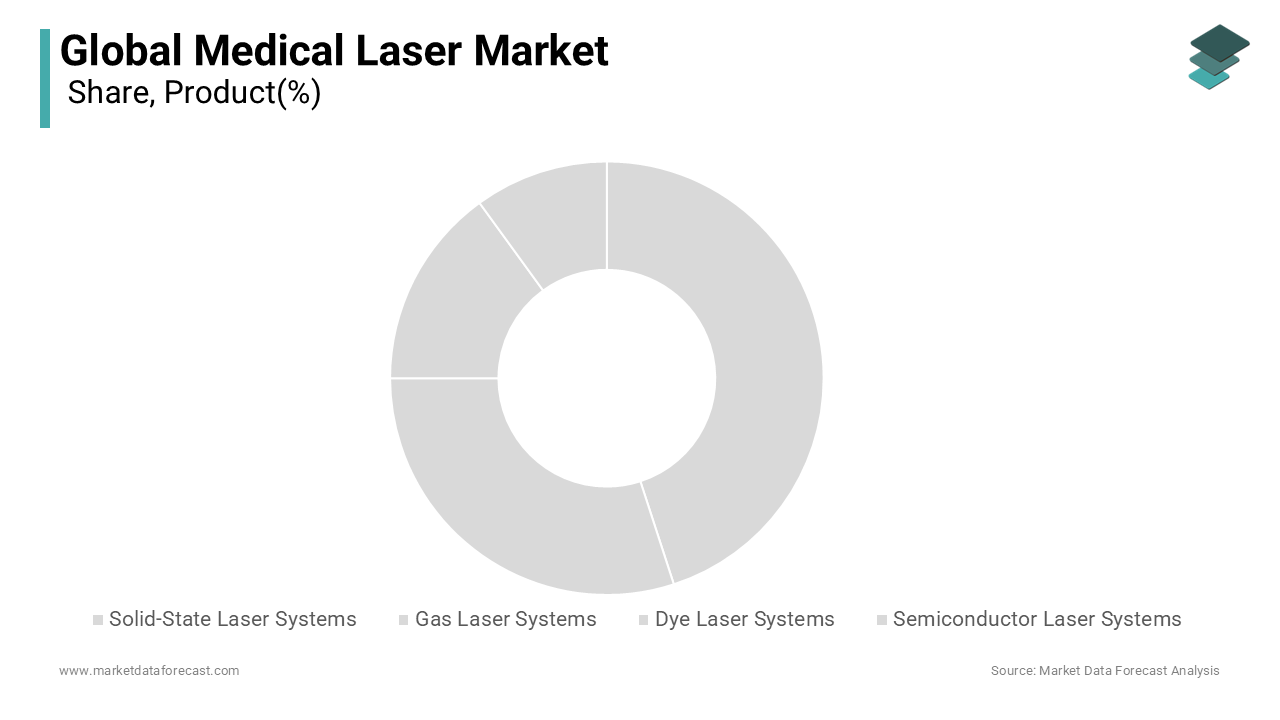
The semiconductor laser segment is experiencing the fastest growth in the medical laser market, due to advancements in miniaturization, cost efficiency, and expanding applications in dermatology and dentistry. Also known as diode lasers, these systems utilize semiconductor materials to generate light, offering compact designs, low power consumption, and long operational lifespans. According to the International Society for Laser Dentistry (ISLD), diode lasers are widely utilized in modern dental practices due to their excellent hemostatic properties during soft tissue surgical procedures. The affordability of semiconductor lasers compared to solid state or gas systems makes them accessible to smaller clinics and private practitioners, particularly in emerging markets. As outlined by the American Society for Dermatologic Surgery (ASDS), diode lasers offer targeted wavelengths that effectively destroy hair follicles and treat specific vascular conditions through selective photothermolysis. The ease of use and portability of these devices allow for point of care treatments and home use aesthetics, broadening the customer base beyond traditional hospital settings. Technological improvements have enhanced the power output and wavelength stability of semiconductor lasers, enabling their use in more demanding surgical applications. Furthermore, the integration of semiconductor lasers with robotic surgical systems is opening new avenues in precision medicine. The combination of lower manufacturing costs, versatile applications, and user friendly designs positions semiconductor lasers as the fastest growing product segment, capturing significant market share from legacy technologies.
By Application Insights
The dermatology and aesthetics segment led the medical laser market and captured a significant share in 2025. This leading position of the segment was attributed to the rising global demand for non invasive cosmetic procedures and skin rejuvenation treatments. The societal emphasis on youthfulness and appearance, amplified by social media influence, has normalized laser based aesthetic interventions such as hair removal, tattoo removal, and skin resurfacing. The convenience, minimal downtime, and predictable outcomes of laser therapies make them highly attractive to consumers seeking aesthetic enhancements without surgical risks. In addition, the development of fractional laser technologies has significantly improved safety profiles for diverse skin types, expanding the eligible patient population. Clinics and medispas are heavily investing in advanced laser platforms to meet this surging demand, creating a competitive landscape that fosters innovation. The recurring nature of aesthetic treatments ensures a steady revenue stream for providers, encouraging widespread adoption of laser equipment. Additionally, the increasing disposable income in developing regions is making these procedures more accessible, further propelling the dominance of the dermatology and aesthetics segment in the global medical laser market.
The ophthalmology segment is expected to exhibit a noteworthy CAGR from 2026 to 2034 owing to the escalating prevalence of vision impairing conditions and the aging global population. Conditions such as cataracts, glaucoma, and diabetic retinopathy require precise laser interventions to prevent blindness and restore vision, making lasers indispensable in eye care. The rising incidence of diabetes worldwide exacerbates the need for laser treatments for diabetic retinopathy, a leading cause of blindness in working age adults. Advancements in femtosecond laser technology have revolutionized cataract surgery, offering greater precision and faster recovery times compared to traditional methods. The increasing availability of laser vision correction procedures such as LASIK and PRK for refractive errors also contributes to market growth, driven by consumer desire to reduce dependence on glasses and contact lenses. Government initiatives to combat preventable blindness and improve eye care infrastructure in developing nations further accelerate the adoption of ophthalmic lasers. These factors collectively establish ophthalmology as the fastest growing application segment, reflecting the critical role of lasers in preserving vision and enhancing quality of life.
REGIONAL ANALYSIS
North America Medical Laser Market Analysis
North America outperformed other regions in the global medical laser market and held a commanding share in 2025. This supremacy of the North American market was supported by advanced healthcare infrastructure, high healthcare expenditure, and early adoption of innovative technologies. The United States serves as the primary hub, hosting major medical laser manufacturers and research institutions that drive technological advancements. According to the Centers for Medicare and Medicaid Services (CMS), national health expenditure in the United States surpassed $4.3 trillion, driven primarily by elevated consumer utilization of healthcare services, hospital care, and clinical prescription drugs. The presence of stringent regulatory frameworks ensures high safety and efficacy standards, fostering trust among healthcare providers and patients. In addition, the International Society of Aesthetic Plastic Surgery (ISAPS), the United States is among the leading global markets for surgical and non-surgical cosmetic interventions, reflecting high per capita consumer spend on aesthetic enhancements. The region benefits from a well established reimbursement landscape for medically necessary laser procedures, encouraging hospitals and clinics to invest in high end equipment. Additionally, the high prevalence of chronic diseases such as cancer and cardiovascular conditions drives the uptake of laser assisted surgical solutions. The concentration of key market players facilitates rapid commercialization of new products, while robust distribution networks ensure wide availability. Consumer awareness regarding the benefits of minimally invasive procedures further supports market growth. North America’s leadership is reinforced by continuous investment in research and development, positioning it at the forefront of medical laser innovation and adoption globally.
Europe Medical Laser Market Analysis
Europe was the next prominent region in the medical laser market in 2025 because of a strong focus on healthcare quality, aging demographics, and supportive regulatory environments. Countries such as Germany, France, and the United Kingdom are key contributors, boasting advanced medical facilities and high standards of patient care. According to Eurostat, the share of the population aged 65 and over in the European Union is projected to increase toward 30% by 2050, putting immense pressure on labor market forces, public pensions, and formal long-term care systems. The implementation of the European Union Medical Device Regulation has standardized safety and performance requirements, enhancing market confidence and facilitating cross border trade. As per the European Society of Cataract and Refractive Surgeons (ESCRS), European ophthalmic practices focus closely on analyzing long-term visual outcomes, patient satisfaction, and treatment standardizations for laser-assisted and cataract procedures. The region’s strong emphasis on aesthetic medicine, particularly in Western Europe, sustains demand for dermatological laser systems. Government funded healthcare systems in many European countries provide coverage for essential laser procedures, ensuring accessibility for a broad patient base. Additionally, the presence of renowned medical tourism destinations attracts international patients seeking high quality laser treatments. Collaborative research initiatives among European universities and industry partners foster innovation in laser technologies. These factors combine to maintain Europe’s strong position in the global medical laser market, with steady growth supported by demographic trends and technological excellence.
Asia Pacific Medical Laser Market Analysis
The Asia-Pacific expanded swiftly in the medical laser market due to rapid economic development, expanding healthcare infrastructure, and rising medical tourism. China, India, Japan, and South Korea are leading this growth, with increasing investments in hospital modernization and specialized clinics. According to the Asian Development Bank (ADB), healthcare spending priorities in developing Asia must focus on expanding universal health coverage, strengthening pandemic preparedness, and improving the efficiency of public health governance. The large population base and increasing prevalence of lifestyle related diseases create a vast demand for laser assisted treatments in ophthalmology, dermatology, and surgery. As per the Japan Ophthalmological Society, Japan’s aging demographics have accelerated scientific clinical research into the long-term management of age-related macular degeneration, glaucoma, and complex cataracts. Medical tourism hubs in Thailand, Singapore, and India attract patients from around the world seeking affordable and high quality laser procedures, boosting equipment sales. Local manufacturing capabilities are improving, reducing costs and increasing accessibility of laser systems. Government policies promoting domestic medical device production further support market expansion. The growing middle class is increasingly willing to spend on elective aesthetic procedures, driving demand for hair removal and skin rejuvenation lasers. These dynamic factors position Asia-Pacific as a critical growth engine for the global medical laser industry, with substantial potential for future expansion.
Latin America Medical Laser Market Analysis
Latin America is expected to showcase a promising CAGR in the medical laser market owing to growing healthcare access and a strong cultural emphasis on aesthetic beauty. Brazil and Mexico are the largest markets in the region, with Brazil being one of the top countries globally for cosmetic procedures. According to the International Society of Aesthetic Plastic Surgery (ISAPS) Global Survey, Brazil ranks among the top global nations for cosmetic interventions, led by exceptionally high volumes of surgical procedures like liposuction and breast augmentations. The increasing availability of private healthcare insurance and out of pocket spending enables more patients to access laser treatments for both medical and cosmetic purposes. As outlined by the Pan American Health Organization (PAHO), upgrading primary health services across Latin America is critical for the prevention, screening, and treatment of noncommunicable diseases like diabetes and hypertension at the community level. The rise of medical tourism in countries like Colombia and Costa Rica attracts international patients seeking affordable laser treatments, stimulating local market growth. Economic challenges and currency fluctuations can impact purchasing power, but the resilience of the aesthetic sector helps sustain demand. Local distributors are partnering with global manufacturers to introduce advanced laser technologies to the region. Increasing awareness of laser benefits among both physicians and patients is accelerating adoption. While infrastructure gaps remain in rural areas, urban centers are witnessing rapid expansion of laser equipped clinics, indicating positive momentum for the medical laser market in Latin America.
The Middle East and Africa Medical Laser Market Analysis
The Middle East and Africa region shows steady growth in the medical laser market due to healthcare modernization initiatives and rising disposable incomes in Gulf Cooperation Council countries. The United Arab Emirates, Saudi Arabia, and South Africa are key markets, investing heavily in state of the art medical facilities and specialized centers. According to the World Bank, healthcare system development in the Middle East and North Africa requires deeper public-private partnerships to manage fiscal constraints and address the rising prevalence of metabolic chronic illnesses. The high prevalence of diabetes in the region drives demand for laser treatments for diabetic retinopathy and other complications, creating a specific niche for ophthalmic lasers. The aesthetic landscape is also expanding, particularly in urban areas where cultural norms are evolving to embrace cosmetic enhancements. Medical tourism is gaining traction in countries like Dubai and Abu Dhabi, attracting patients seeking high quality laser procedures. Challenges such as uneven distribution of healthcare resources and limited skilled professionals persist, particularly in sub Saharan Africa. However, international partnerships and training programs are helping to bridge these gaps. The region’s potential is underscored by ongoing infrastructure projects and increasing awareness of advanced medical treatments, laying the foundation for future growth in the medical laser sector.
COMPETITIVE LANDSCAPE
The competition in the medical laser market is intense and characterized by the presence of established multinational corporations alongside innovative niche players. Large companies leverage their extensive resources, global distribution networks, and broad product portfolios to dominate multiple therapeutic segments such as ophthalmology, dermatology, and urology. These giants compete on technological superiority, brand reputation, and comprehensive service support. Smaller specialized firms often focus on specific applications or novel laser technologies, offering differentiated solutions that address unmet clinical needs. The market sees frequent mergers and acquisitions as larger entities seek to absorb innovative startups and expand their technological capabilities. Price competition is moderate in high end surgical segments but more pronounced in aesthetic and dental applications where numerous suppliers exist. Regulatory barriers create high entry thresholds, protecting incumbent players but also slowing the introduction of new competitors. Intellectual property rights play a crucial role, with companies vigorously defending patents related to laser sources and delivery systems. Customer loyalty is driven by clinical efficacy, reliability, and after sales service quality. As technology evolves toward miniaturization and digital integration, competitors must continuously innovate to stay relevant. The shift toward value based healthcare encourages manufacturers to demonstrate cost effectiveness and improved patient outcomes, adding another layer to the competitive landscape.
KEY MARKET PLAYERS
Some of the companies that are playing a dominating role in the global medical laser market include
- Alcon Laboratories, Inc.
- AngioDynamics Corp.
- American Medical Systems, Inc.
- Biolase Inc.
- Bausch & Lomb Holdings
- Cardiogenesis Corporation
- Lumenis Ltd.
- IRIDEX Corp.
- Novadaq Technologies, Inc.
- Photomedex, Inc.
- Spectranetics Corporation
- Syneron-Candela
Top Players in the Global Medical Laser Market
Coherent Corp
Coherent Corp stands as a global leader in laser technology with a comprehensive portfolio of medical laser systems for ophthalmology, dermatology, and surgery. The company leverages its expertise in photonics to develop high precision devices that enhance clinical outcomes and patient safety. Recently Coherent expanded its product line by introducing advanced femtosecond lasers for cataract surgery, addressing the growing demand for minimally invasive eye care solutions. They have also strengthened their distribution network in Asia Pacific to capture emerging market opportunities. By investing in research and development Coherent continues to innovate in wavelength technologies and beam delivery systems. Their commitment to quality and regulatory compliance ensures trust among healthcare providers worldwide. Strategic partnerships with leading hospitals facilitate clinical trials and feedback loops for continuous improvement. This focused approach solidifies their reputation as a key innovator in the medical laser industry.
Bausch + Lomb Incorporated
Bausch + Lomb Incorporated is a prominent player in the medical laser market, particularly renowned for its leadership in ophthalmic surgical technologies. The company offers a wide range of laser systems for refractive surgery, glaucoma treatment, and posterior segment procedures. Bausch + Lomb recently launched next generation excimer lasers that provide faster treatment times and enhanced precision for vision correction. They have also invested in digital integration features that allow surgeons to customize treatment profiles based on patient specific data. The company actively engages in educational programs to train ophthalmologists on the latest laser techniques and safety protocols. By focusing on clinical evidence and user friendly designs Bausch + Lomb maintains strong relationships with eye care professionals globally. Their strategic acquisitions of complementary technologies further expand their capabilities in retinal and anterior segment surgeries. This dedication to innovation and education reinforces their position as a trusted partner in eye health.
Boston Scientific Corporation
Boston Scientific Corporation contributes significantly to the medical laser market through its diverse portfolio of urological and gastrointestinal laser solutions. The company specializes in holmium and thulium laser systems used for kidney stone lithotripsy and soft tissue ablation. Boston Scientific recently introduced high power laser generators that improve efficiency and reduce procedure times for complex urological cases. They have also developed disposable fiber optics that enhance safety and ease of use for clinicians. The corporation focuses on providing integrated solutions that combine lasers with imaging and navigation technologies for better procedural accuracy. By collaborating with key opinion leaders Boston Scientific drives adoption of laser therapies in minimally invasive surgeries. Their global manufacturing footprint ensures consistent supply and rapid response to market demands. Continuous investment in clinical studies validates the efficacy of their products, strengthening their credibility and competitive edge in the therapeutic laser sector.
Top Strategies Used by Key Market Participants
Key players in the medical laser market primarily focus on continuous innovation and product differentiation to maintain competitive advantage. Companies invest heavily in research and development to create advanced laser systems with improved precision, safety, and versatility for various medical applications. Strategic partnerships with healthcare providers and academic institutions facilitate clinical validation and accelerate the adoption of new technologies. Expansion into emerging markets through local manufacturing and distribution networks helps companies tap into growing demand in developing regions. Mergers and acquisitions are frequently employed to acquire specialized technologies, broaden product portfolios, and enter new therapeutic areas. Regulatory compliance and obtaining approvals from major health authorities remain critical strategies to ensure market access and build trust. Additionally, manufacturers emphasize training and education programs for medical professionals to enhance proper usage and maximize clinical outcomes. These combined strategies enable companies to address evolving healthcare needs, drive technological progress, and secure long term growth in the dynamic medical laser industry.
RECENT MARKET HAPPENINGS
- OmniGuide Holdings, Inc. announced a new OTO-U CO2 laser system fiber in 2021. This fiber is employed in ENT and otology procedures because it allows surgeons to reach restricted locations with greater precision, resulting in better procedure outcomes.
-
IRIDEX Corporation, an ophthalmic laser-based medical device maker, announced an updated version of its laser MicroPulse P3 device to treat glaucoma in February 2020. It is predicted to significantly reduce intraocular pressure without incisions, making it acceptable for glaucoma patients.
- Lumenis Ltd. teamed up with Harrods Wellness Clinic in May 2021 to equip its aesthetic clinic with the Stellar M22.
MARKET SEGMENTATION
This research report on the global medical laser market has been segmented and sub-segmented based on product, application & region.
By Product
- Solid-State Laser Systems
- Gas Laser Systems
- Dye Laser Systems
- Semiconductor Laser Systems
By Application
- Ophthalmology
- Dermatology/Aesthetics
- Gynecology
- Dentistry
- Urology
- Cardiovascular
- Other Applications
By Region
- North America
- Europe
- Asia-Pacific
- Latin America
- Middle East and Africa