- Product Description Description
- Table of Contents TOC
- List of Table & Figure LOT
- Get Free Sample PDF Sample PDF
Market Size, 2025
$2.17 BnMarket Estimate, 2026
$2.21 BnMarket Forecast, 2034
$2.58 BnCAGR, 2026–2034
1.94%Executive Summary: Middle East and Africa Absinthe Market
- Market Scope: Comprehensive regional analysis of the Middle East and Africa absinthe market covering applications (food and beverage, cosmetics and medical), product types (absinthe verte, premium absinthe), and country-level developments across the UAE, South Africa, Israel, Egypt, and Morocco.
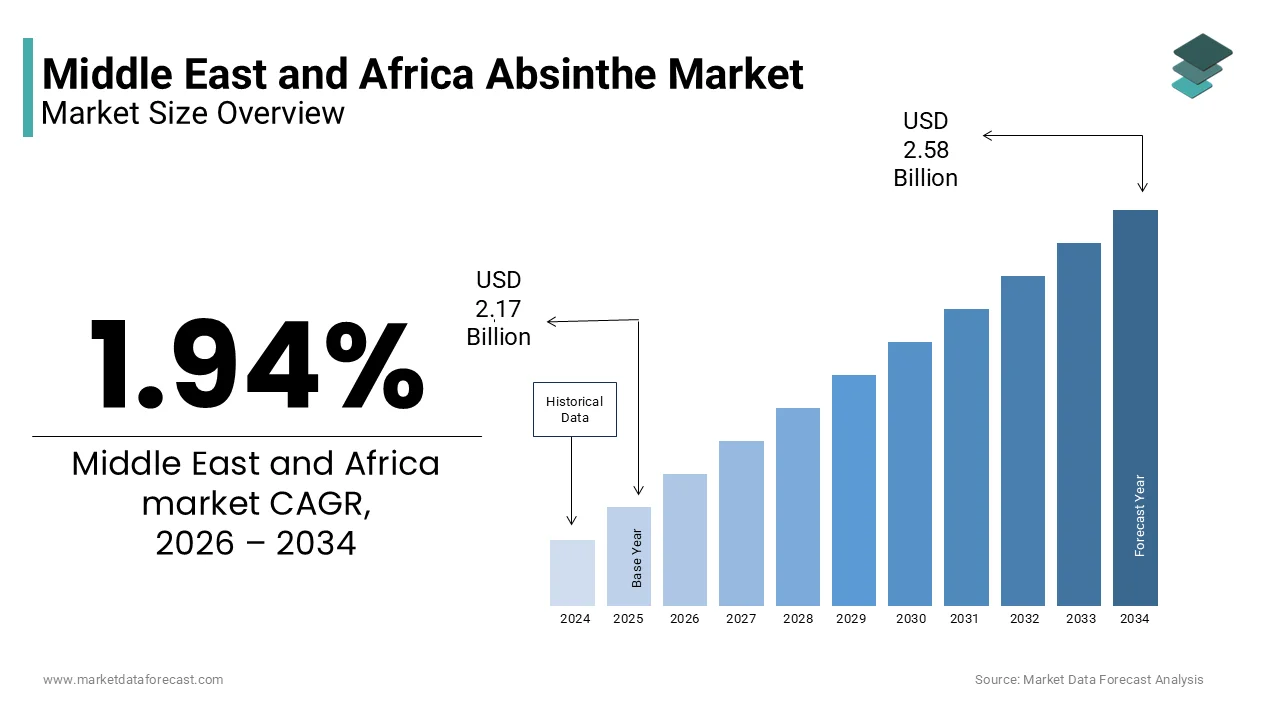
- Market Valuation: Valued at USD 2.17 billion in 2025, reaching USD 2.21 billion in 2026, and projected to hit USD 2.58 billion by 2034, registering a CAGR of 1.94% from 2026 to 2034.
- Primary Growth Drivers: Growing premiumization trends in alcoholic beverages across affluent urban areas, alongside increasing international tourism and lifestyle changes among younger demographics. Key restraints include cultural/religious opposition to alcohol and regulatory hurdles regarding thujone limits.
Key Market Segment Metrics (2026–2034)
| Category | Leading Segment (2025 Position) | Fastest-Growing Segment |
|---|---|---|
| By Application | Food and Beverage (dominant share driven by premium spirits and specialty cocktail interest in upscale venues) | Cosmetics and Medical (projected at a 9.7% CAGR propelled by research into wormwood's therapeutic properties and natural wellness uses) |
| By Type | Absinthe Verte (captured a 31.5% share thanks to its iconic green color and rich historical heritage) | Premium Absinthe (fastest CAGR of 12.4% driven by rising disposable incomes and demand for artisanal, high-end spirits) |
| By Country / Region | United Arab Emirates (led with a 28.1% share supported by its cosmopolitan tourism sector and duty-free hubs) | South Africa (craft distilling movement) and Israel (progressive regulatory framework and vibrant nightlife) |
Major Market Participants & Market Structure
Market Structure: Niche and subdued competitive landscape shaped by rigorous regulatory frameworks, heavy import tariffs, and cultural constraints. Global brands leverage heritage pricing, while local micro-distillers experiment with regional botanicals.
Key Companies: Doubs Mystique, Duplais Verte, La Maison Du Whisky, Pacific Distillery, Alandia GmbH & Co. KG, Butterfly Absinthe, Jade Liqueurs LLC, Lucid Absinthe Supérieure, Killarney Gins, Kübler Absinthe Supérieure, La Clandestine, Hill's Liquere North America, Philadelphia Distilling Company, Alba Botanica Distillery, and Teichenne, S.A.
Middle East and Africa Absinthe Market Size
The Middle East and Africa absinthe market size was valued at USD 2.17 billion in 2025 and is projected to reach USD 2.58 billion by 2034 from USD 2.21 billion in 2026, growing at a CAGR of 1.94%.
Absinthe is a strong, anise-flavored alcoholic drink made from grand wormwood, green anise, and sweet fennel. Once banned in many parts of the world due to misconceptions about its psychoactive properties, modern regulations have allowed for controlled production and sale of thujone-compliant absinthe, reviving interest globally. In the MEA region, the market remains niche but is gradually gaining traction among premium liquor consumers, particularly in urban centers with growing exposure to international spirits culture.
According to the South African Revenue Service, registered importers and local manufacturers of distilled liquor products must acquire a formal tariff determination ruling to standardize the collection of national excise duties. The beverage has also found a place in high-end hospitality venues across the United Arab Emirates and Israel, where it is marketed as a luxury or novelty product. As per the National Treasury of South Africa, statutory guidelines establish the specific target excise tax incidence for spirits at a fixed level of 36 percent of the beverage category's weighted average retail selling price.
MAJOR DRIVER
Growing Premiumization Trend in Alcoholic Beverages
The rising trend of premiumization within the alcoholic beverages sector is one of the primary drivers fueling the Middle East and Africa Absinthe Market. Consumers, particularly in affluent urban areas, are increasingly opting for unique, high-quality spirits that offer both heritage value and sensory experience. This shift is especially noticeable in the UAE, South Africa, and Israel, where upscale bars and lounges are incorporating artisanal and imported absinthe varieties into their curated drink menus.
According to the South African Revenue Service, licensed national commercial manufacturers of distilled spirit products must fully comply with unified structural excise duty rules to standardize retail marketplace supply operations. As per the Dubai Department of Economy and Tourism, commercial establishments within the local hospitality sector are strictly required to verify authorized structural permits prior to serving any category of distilled liquor beverages. Similarly, in Cape Town, local distillers have started experimenting with regional botanicals to craft locally inspired absinthe variants, aligning with global craft spirits movements.
Furthermore, the expansion of duty-free retail channels at major airports such as Dubai International Airport and OR Tambo International has contributed to increased visibility and accessibility of premium absinthe brands. According to Dubai Duty Free, annual retail sales turnover across airport concourses reached an all-time high of $2.16 billion driven by surging international traveler traffic.
 Increasing Tourism and Lifestyle Changes Among Younger Demographics
Tourism and evolving lifestyle preferences among younger consumers are significantly contributing to the growth of the Middle East and Africa Absinthe Market. With the expansion of international tourism, particularly in Gulf Cooperation Council (GCC) countries and Southern Africa, there is greater exposure to European drinking cultures where absinthe enjoys historical and social significance. This exposure, combined with the influence of digital media and global pop culture, is shaping new drinking habits among the youth demographic.
According to the UN Tourism World Tourism Barometer, international tourist arrivals in the Middle East registered a notable 22% increase above pre-pandemic benchmarks to lead global destination recovery trends. In response to this influx, hospitality operators have expanded their offerings to include exotic and vintage-style beverages, thereby boosting demand.
Additionally, lifestyle changes driven by urbanization and digital connectivity have led to a more adventurous palate among young professionals and students in cities like Cairo, Nairobi, and Jeddah. As per the South African Liquor Products Act, statutory regulations mandate strict compliance benchmarks for any local spirit produced, distributed, or labeled as an authentic botanical distilled product. This behavioral shift, though still emerging, presents a viable growth pathway for niche spirits like absinthe in the MEA region.
MAJOR RESTRAINT
Cultural and Religious Opposition to Alcohol Consumption
The strong cultural and religious opposition to alcohol consumption in many countries across the region is a significant restraint on the Middle East and Africa Absinthe Market. Several nations in the Middle East enforce strict alcohol regulations or outright bans based on Islamic principles, limiting both legal availability and social acceptance of alcoholic beverages. Even in countries where alcohol is permitted, consumption is often restricted to specific licensed premises and certain demographic groups.
According to the World Health Organization, the Eastern Mediterranean region maintains the lowest per capita alcohol consumption globally, with strict legal prohibitions fully restricting sales to over 60% of its regional population. Countries like Saudi Arabia, Iran, and Libya maintain total prohibitions, while others such as Kuwait and Sudan impose heavy taxation and licensing controls. These policies make it difficult for absinthe producers and distributors to establish a consistent supply chain or marketing presence.
In North and West Africa, similar dynamics apply. For example, in Algeria and Mauritania, alcohol advertising and public consumption face legal limitations, which hinder brand awareness and consumer engagement. Even in relatively liberal markets like Morocco and Tunisia, societal perceptions often stigmatize alcohol use, particularly among younger generations and women. As per the World Health Organization, total alcohol consumption per capita across the African region remains lower than European averages, with traditional local beverages accounting for a significant share of recorded volumes.
Regulatory Hurdles and Lack of Standardized Thujone Limits
The lack of standardized regulatory frameworks governing the production, import, and sale of absinthe is also impeding the growth of the Middle East and Africa Absinthe Market. This trend is particularly concerning regarding thujone content. Thujone, a compound derived from wormwood, was historically linked to hallucinogenic effects, leading to past bans and continued scrutiny. While most Western countries have set permissible limits, MEA nations vary widely in their approach, creating uncertainty for manufacturers and importers.
The inconsistency complicates compliance efforts for international brands seeking market entry. For instance, according to the Egyptian Ministry of Health and Population, all imported alcoholic beverages and spirits must undergo rigorous chemical analysis and licensing procedures prior to clearance by customs authorities.
Moreover, customs and excise departments in several African countries lack the technical capacity to accurately assess thujone content, resulting in arbitrary rejections or prolonged clearance times for legitimate products. Without harmonized legal parameters, the market remains fragmented and difficult to scale, deterring investment and limiting consumer access.
MAJOR OPPORTUNITY
Expansion of Duty-Free and Airport Retail Channels
The expansion of duty-free and airport retail channels is a promising opportunity for the Middle East and Africa Absinthe Market. This is particularly visible in major transit hubs such as Dubai International Airport, Doha Hamad International Airport, and OR Tambo International Airport in Johannesburg. These locations serve millions of international travelers annually, many of whom seek unique and collectible spirits to purchase during layovers or departures.
According to the Tax Free World Association, international duty-free wine and spirits sales recovered robustly post-pandemic, driven by high-spending premium passengers and expanded retail spaces across global airport hubs. Absinthe, often positioned as a rare and intriguing product, benefits from this trend as travelers look for distinctive souvenirs or gifts.
Furthermore, airlines operating in the region, such as Emirates and Qatar Airways, have introduced curated onboard shopping experiences featuring exclusive absinthe editions, enhancing visibility and accessibility. As air travel continues to recover post-pandemic, leveraging these high-traffic retail environments presents a strategic avenue for market expansion.
Growth of Craft Distilling and Local Production Initiatives
The emergence of craft distilling and local production initiatives provides a compelling prospect for the Middle East and Africa Absinthe Market. While absinthe remains largely imported, a small but growing number of independent distilleries are experimenting with localized versions using indigenous botanicals, catering to niche markets and discerning consumers seeking authenticity.
According to the South African Liquor Brandowners Association, domestic spirit producers increased investment in local craft and artisanal products to satisfy evolving consumer taste preferences. These ventures not only reduce reliance on imports but also allow for tailored branding and flavor profiles that resonate with regional tastes. For instance, as per the South African Geographical Indications Inter-Ministerial Committee, producers utilize indigenous fynbos botanicals to establish distinctive regional profiles for distilled gin products.
Additionally, government-backed entrepreneurship programs in the UAE and Egypt have encouraged investments in boutique distilleries, offering tax incentives and business support to foster innovation. With increasing interest in artisanal and experiential products, local absinthe production could carve a sustainable niche in the broader MEA spirits landscape.
MAJOR CHALLENGE
Misconceptions and Historical Stigma Associated with Absinthe
The lingering misconception and historical stigma associated with the drink are one of the most persistent challenges to the Middle East and Africa Absinthe Market. Despite scientific debunking, absinthe continues to be inaccurately portrayed as a dangerous or hallucinogenic substance, primarily due to its association with the so-called "Green Fairy" myth and infamous bans in the early 20th century. This perception negatively influences regulatory attitudes and consumer behavior, particularly in regions already skeptical of alcohol consumption.
The misinformation is further perpetuated by popular media and online forums, making it difficult for marketers to position absinthe as a conventional, regulated spirit.
In conservative societies, this fear factor reinforces existing resistance to alcohol consumption, discouraging both legal approvals and public acceptance. According to the World Health Organization, strict regional legislative frameworks and public health interventions continue to dictate the regulatory landscape for alcoholic beverage distribution and importation across the Eastern Mediterranean region. Until these myths are effectively addressed through education and advocacy, they will remain a substantial barrier to market growth.
Limited Distribution Infrastructure and High Import Costs
Limited distribution infrastructure and high import costs hold back the expansion of the Middle East and Africa Absinthe Market. These factors hinder widespread availability and affordability. Unlike mainstream spirits that benefit from well-established supply chains, absinthe remains a niche product with constrained logistics networks, particularly in sub-Saharan Africa and parts of the Middle East.
Many international brands struggle with navigating fragmented customs protocols, inadequate cold-chain storage, and limited wholesale partnerships, making large-scale distribution inefficient and costly.
Additionally, import duties and excise taxes on premium spirits can exceed 100% of the product’s base price in some MEA countries. According to the United Arab Emirates Federal Tax Authority, standard excise tax rates apply strictly to designated categories like tobacco, sweetened beverages, and energy drinks to advance public health and government revenues. Without streamlined logistics and cost-reduction strategies, these infrastructural and financial constraints will continue to impede market penetration and restrict growth potential.
REPORT COVERAGE
| REPORT METRIC | DETAILS |
| Market Size Available | 2025 to 2034 |
| Base Year | 2025 |
| Forecast Period | 2026 to 2034 |
| CAGR | 1.94% |
| Segments Covered | By Application, Type, and Region |
| Various Analyses Covered | Global, Regional, & Country Level Analysis; Segment-Level Analysis; DROC; PESTLE Analysis; Porter’s Five Forces Analysis; Competitive Landscape; Analyst Overview of Investment Opportunities |
| Regions Covered | KSA, UAE, Israel, South Africa, And Ethiopia, Kenya, Egypt, Sudan, Rest of GCC Countries, and Rest of MEA |
| Market Leaders Profiled | Doubs Mystique, Duplais Verte, La Maison Du Whisky, Pacific Distillery, Alandia GmbH & Co. KG, Butterfly Absinthe, Jade Liqueurs LLC, Lucid Absinthe Supérieure, Killarney Gins, Kübler Absinthe Supérieure, La Clandestine, Hill's Liquere North America, Philadelphia Distilling Company, Alba Botanica Distillery, and Teichenne, S.A. |
SEGMENTAL ANALYSIS
By Application Insights
The food and beverage segment dominated the Middle East and Africa Absinthe Market and accounted for a substantial share in 2025. This dominance of the segment was mainly driven by the growing interest in premium spirits and specialty cocktails, particularly among upscale consumers and hospitality venues across urban centers in the region.
According to sources, premium spirit consumption across major metropolitan markets has entered a sustained growth phase within licensed hospitality establishments, driven primarily by changing consumer lifestyle preferences. The beverage's association with historical European drinking culture and its use in high-end mixology have contributed significantly to its appeal among affluent consumers seeking unique experiences. Moreover, the rise in international tourism and the expansion of duty-free retail at major airports like Dubai International and OR Tambo have further boosted sales. These factors collectively reinforce the dominance of the food and beverage application segment in the MEA Absinthe Market.
The cosmetics and medical applications segment is on the rise and is expected to be the fastest growing segment in the market by witnessing a CAGR of 9.7% over the forecast period. While still a niche area, this growth is propelled by increasing research into the potential therapeutic properties of wormwood, the key ingredient in absinthe, and its integration into natural wellness products.
According to the World Health Organization, regional healthcare networks across the African continent utilize indigenous medicinal plant species to provide accessible primary healthcare alternatives to local populations. In Israel, where alternative medicine is more widely accepted, researchers at Tel Aviv University conducted studies on wormwood’s anti-inflammatory effects, leading to pilot formulations in topical ointments and aromatherapy oils.
Furthermore, the beauty industry in the UAE and Saudi Arabia has shown interest in incorporating wormwood oil into organic skincare products due to its purported antimicrobial and antioxidant benefits.
By Type Insights
The absinthe verte segment led the Middle East and Africa Absinthe Market and captured a 31.5% share in 2025. Known for its iconic green color derived from chlorophyll-rich herbs like petite wormwood and nettle, Absinthe Verte remains the most historically recognized and visually appealing variant, contributing to its popularity among collectors and cocktail enthusiasts.
According to studies, Verte absinthe held the largest share of the global absinthe market at 42.1% in recent years, driven by a resurgence in premium spirits, a revival of heritage brands, and its distinct ritualistic and cultural significance. The product’s association with the Belle Époque era and famous artists like Van Gogh and Picasso enhances its allure in high-end bars and lounges across the region.
Consumers view it as a conversation piece and a symbol of sophistication, making it a preferred choice for gifting and novelty consumption.
Local producers in Morocco and Israel have also begun crafting their own versions of Absinthe Verte using native herbs, adding regional authenticity and boosting market penetration. These combined factors solidify its position as the dominant type in the MEA Absinthe Market.
The premium absinthe segment is expected to exhibit a noteworthy CAGR of 12.4% from 2026 to 2034, due to rising disposable incomes, increased exposure to global spirits culture, and a growing preference for high-quality, artisanal beverages among affluent consumers. According to the World Spirits Alliance, international consumer demand for ultra-premium and premium spirits grew considerably, leading luxury hospitality brands and exclusive venues to broaden their curated beverage selections. High-net-worth individuals in cities like Riyadh, Jeddah, and Cape Town are increasingly investing in rare and limited-edition absinthe bottles, often displayed as collector’s items rather than consumed regularly.
Additionally, as per the South African Liquor Brandowners Association, domestic craft distillers have increased production capacity for artisanal spirits using specialized local botanicals to address evolving consumer preference trends. These products command higher price points and cater to connoisseurs seeking authenticity and craftsmanship.
With growing appreciation for heritage spirits and experiential consumption, the premium absinthe segment is poised for sustained growth across the MEA region.
REGIONAL ANALYSIS
United Arab Emirates Market Analysis
The UAE was the top performer in the Middle East and Africa Absinthe Market and occupied a 28.1% share in 2025. This prominence of the UAE market was driven by its cosmopolitan population, robust tourism industry, and liberal alcohol regulations in designated areas. Dubai, in particular, serves as a regional hub for premium spirits, with numerous five-star hotels, rooftop lounges, and duty-free retailers offering a wide selection of imported and specialty absinthe brands.
According to the Dubai Department of Economy and Tourism, commercial entities operating within the emirate's hospitality sector must secure specialized liquor permits to legally distribute and serve alcoholic beverages to consumers. Additionally, as per Dubai Duty Free, annual retail sales turnover across airport concourses reached an all-time high of $2.16 billion driven by surging international traveler traffic. With government initiatives supporting lifestyle diversification and entertainment sectors, the UAE remains a key driver of market growth in the MEA region.
South Africa Market Analysis
South Africa followed closely behind in the Middle East and Africa Absinthe Market and captured a 19.4% share in 2025. The country’s relatively mature alcohol market, coupled with a growing craft distilling movement, has created a conducive environment for niche spirits like absinthe to gain traction. As per the South African Liquor Products Act, statutory regulations mandate strict compliance benchmarks for any local spirit produced, distributed, or labeled as an authentic botanical distilled product.
According to the South African Liquor Brand Owners Association, localized supply chain disruptions and shifting excise tax structures directly impact the overall commercial volume performance of national spirits distribution. Moreover, Cape Town’s vibrant cocktail culture and presence in global spirits competitions have enhanced the drink’s appeal among urban professionals and tourists alike. As regulatory clarity improves and consumer curiosity expands, South Africa continues to be a strong market for absinthe innovation and distribution.
Israel Market Analysis
Israel is also a key player in the Middle East and Africa Absinthe Market due to a progressive regulatory framework, a thriving nightlife culture, and a well-established wine and spirits industry. Tel Aviv, in particular, has become a hotspot for specialty drinks, with numerous bars and lounges featuring curated absinthe menus and themed tasting events.
According to the Israel Ministry of Health, national regulatory frameworks mandate strict laboratory testing for methanol and denatured alcohol in all imported spirit shipments to guarantee public product safety. Local importers have capitalized on this demand by introducing European classics and collaborating with micro-distillers to produce regionally inspired variants. Furthermore, academic institutions have explored the medicinal uses of wormwood, potentially opening new avenues for absinthe-related applications beyond recreational consumption.
The combination of cultural openness, legal accessibility, and a growing expatriate community positions Israel as a key player in the MEA absinthe landscape, with steady growth anticipated in the coming years.
Egypt Market Analysis
Egypt contributes notably to the Middle East and Africa Absinthe Market, despite stringent social and religious norms surrounding alcohol consumption. The market here is primarily confined to upscale hotels, foreign embassies, and diplomatic enclaves catering to expatriates and international visitors. Cairo and Sharm El Sheikh remain the primary hubs for absinthe availability, with select five-star establishments incorporating the spirit into signature cocktails.
According to the Egyptian Customs Authority, statutory guidelines restrict the commercial importation and legal quota clearance of foreign alcoholic beverages exclusively to certified diplomatic passport holders. Although regulatory restrictions limit widespread retail access, duty-free shops at Cairo International Airport have played a crucial role in maintaining visibility and occasional consumer engagement.
Additionally, the rise of underground speakeasies and private liquor clubs in affluent neighborhoods indicates a latent but growing interest among younger, urban elites. Despite challenges, Egypt’s evolving youth-driven nightlife and selective tourism channels provide a foundation for slow yet consistent market development.
Morocco Market Analysis
Morocco expanded gradually in the Middle East and Africa Absinthe Market. It is benefiting from a relatively open regulatory stance on alcohol compared to other North African nations. While Islamic traditions influence public consumption habits, the country permits licensed sale of spirits in tourist-centric locations such as Marrakech, Casablanca, and Tangier.
According to the Administration des Douanes et Impôts Indirects of Morocco, domestic commercial distribution operations for imported spirits must fully comply with standardized national customs clearance protocols and explicit beverage fiscal labeling rules. The beverage’s historical connection to French colonial rule adds a nostalgic dimension, attracting both locals and visitors interested in vintage liqueurs.
Additionally, local distillers have experimented with blending traditional Moroccan herbs—such as mint and saffron—with classic absinthe recipes, creating unique regional adaptations. The Moroccan government’s focus on expanding cultural tourism and easing licensing for boutique bars further supports market growth. Though consumption remains limited to specific demographics, Morocco’s strategic positioning makes it a promising contributor to the broader MEA absinthe market.
COMPETITIVE LANDSCAPE
The competition in the Middle East and Africa Absinthe Market remains relatively subdued due to the niche nature of the product and prevailing regulatory and cultural constraints. However, within this specialized segment, both global and emerging regional players are vying for visibility and consumer engagement through differentiated approaches. International premium brands focus on leveraging their heritage and craftsmanship to appeal to affluent urbanites and expatriate communities, often relying on prestige pricing and exclusive placements in luxury venues. Meanwhile, local producers aim to carve out a distinct identity by infusing regional botanicals into their formulations, appealing to national pride and curiosity-driven consumption.
Market dynamics are further shaped by evolving perceptions around alcohol, increasing tourism, and the expansion of duty-free retail, which collectively create opportunities for new entrants. Despite these openings, challenges such as misinformation, high import tariffs, and inconsistent regulations continue to limit widespread adoption. As a result, competition remains concentrated among a few well-positioned players who rely heavily on brand differentiation, strategic partnerships, and experiential marketing to establish and sustain their foothold in this emerging yet complex market.
KEY MARKET PLAYERS
- Doubs Mystique
- Duplais Verte
- La Maison Du Whisky
- Pacific Distillery
- Alandia GmbH & Co. KG
- Butterfly absinthe
- Jade Liqueurs LLC
- Lucid Absinthe Supérieure
- Killarney Gins
- Kübler Absinthe Superieure
- La Clandestine
- Hill's Liquere North America
- Philadelphia Distilling Company
- Alba Botanica Distillery
- Teichenne, S.A.
Top Players in the Market
- La Maison Du Whisky, although a European company, plays a significant role in shaping the Middle East and Africa Absinthe Market through its curated distribution of premium absinthe brands across luxury retail and hospitality channels. Known for its expertise in rare spirits, the company has been instrumental in introducing high-end, artisanal absinthe to upscale consumers and duty-free outlets in the UAE and South Africa. Its partnerships with boutique distilleries ensure that exclusive and limited editions reach niche markets in the region.
- Killarney Gins is a key regional player contributing to the growth of the MEA Absinthe Market by producing locally inspired, thujone-compliant absinthe variants. The brand blends traditional European distilling methods with indigenous botanicals, creating a unique offering that appeals to both domestic and export markets. By participating in international spirits competitions and establishing strong ties with specialty liquor retailers, Killarney Gins enhances awareness and acceptance of absinthe within African markets.
- Alba Botanica Distillery has emerged as a prominent name in the Israeli and broader MEA spirits market by crafting small-batch absinthe that aligns with global quality standards while incorporating local herbal influences. The distillery actively engages in educational initiatives and tastings to dispel myths surrounding absinthe and promote it as a refined spirit. Through strategic collaborations with upscale bars and importers, Alba Botanica strengthens consumer engagement and contributes to the gradual mainstreaming of absinthe in the region.
Top Strategies Used by Key Market Participants
One of the primary strategies employed by key players in the Middle East and Africa Absinthe Market is strategic branding and storytelling , where companies emphasize the historical legacy and cultural significance of absinthe to attract affluent and curious consumers. By positioning the product as a sophisticated and collectible spirit rather than a mere alcoholic beverage, they enhance its appeal among connoisseurs and luxury lifestyle enthusiasts.
Another crucial approach is targeted distribution through premium hospitality and travel retail , ensuring visibility in high-footfall, upscale environments such as five-star hotels, rooftop lounges, and airport duty-free shops. This selective placement allows brands to maintain exclusivity while reaching an audience more receptive to niche spirits.
Lastly, companies are investing in consumer education and myth-dispelling campaigns , particularly in regions where misconceptions about absinthe’s effects persist. Through tastings, social media content, and collaborations with bartenders and mixologists, they foster informed appreciation and encourage responsible consumption, ultimately strengthening market presence.
MARKET SEGMENTATION
This research report on the Middle East and Africa absinthe market has been segmented and sub-segmented into the following categories.
By Applications
- Food and Beverage
- Cosmetics
- Medical
By Type
- Absinthe Blanche
- Absinthe Amber
- Absinthe Verte
- Absinthe Ordinaire
- Absinthe Reve Pastis
- Absinth Bohemian
- Absinthe Liqueur
- Premium Absinthe
By Country
- KSA
- UAE
- Israel
- rest of GCC countries
- South Africa
- Ethiopia
- Kenya
- Egypt
- Sudan
- rest of MEA