- Product Description Description
- Table of Contents TOC
- List of Table & Figure LOT
- Get Free Sample PDF Sample PDF
Market Size, 2025
$214.52 MnMarket Estimate, 2026
$225.93 MnMarket Forecast, 2034
$342.03 MnCAGR, 2026–2034
5.323%Executive Summary: Middle East and Africa Animal Feed Micronutrients Market
- Market Scope: Comprehensive regional analysis of the Middle East and Africa animal feed micronutrients market covering micronutrient types (zinc, copper), livestock categories (poultry, aquatic animals), and country-level developments across the GCC, North Africa, and Sub-Saharan territories.
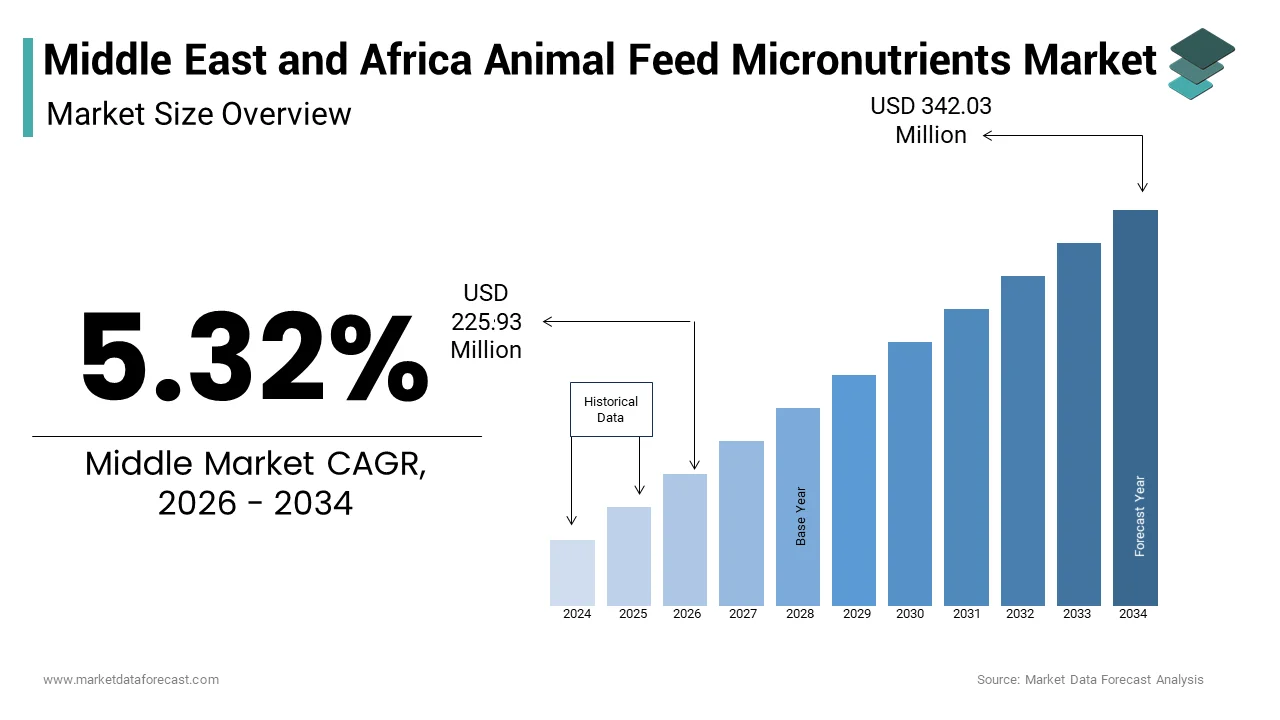
- Market Valuation: Valued at USD 214.52 million in 2025, reaching USD 225.93 million in 2026, and projected to hit USD 342.03 million by 2034, registering a CAGR of 5.32% from 2026 to 2034.
- Primary Growth Drivers: Intensification of poultry production amid protein security mandates, and endemic soil mineral depletion requiring corrective trace mineral supplementation. Restraints include foreign exchange volatility, heavy import dependency, and regulatory fragmentation.
Key Market Segment Metrics (2026–2034)
| Category | Leading Segment (2025 Position) | Fastest-Growing Segment |
|---|---|---|
| By Type | Zinc (led market share due to widespread geological soil depletion and essential biological requirements across livestock) | Copper (projected at a 9.4% CAGR driven by organic chelated forms and dairy/small ruminant hoof health) |
| By Livestock | Poultry (commanding share due to highly industrialized production systems and strict feed precision needs) | Aquatic Animals (fastest CAGR of 11.2% powered by state aquaculture investments and coastal food security goals) |
| By Country / Region | Saudi Arabia (dominates market share supported by Vision 2030 food security and intensive livestock subsidies) | Egypt (aquaculture expansion & population-driven demand) and South Africa (advanced commercial livestock sector) |
Major Market Participants & Market Structure
Market Structure: Highly competitive animal nutrition landscape featuring global agricultural conglomerates and specialized feed additive producers competing on formulation bioavailability, thermal stability, and regional blending infrastructure.
Key Companies: Archer Daniels Midland Company (ADM), Balchem Corp., Lallemand Inc., Alltech Inc., Cargill Inc., Novus International Inc., Kemin Industries Inc., Zinpro Corporation, Nutreco N.V., and Qualitech Inc.
 Download Free Sample Report
Middle East and Africa Animal Feed Micronutrients Market Size
The Middle East and Africa animal feed micronutrients market size was valued at USD 214.52 million in 2025 and is anticipated to reach USD 225.93 million in 2026 to reach USD 342.03 million by 2034, growing at a CAGR of 5.323 % from 2026 to 2034.
Animal feed micronutrients are essential trace minerals and vitamins added to livestock diets in very small amounts. They support vital metabolic functions, disease resistance, growth, and reproduction, even though animals need them in much smaller quantities than macronutrients like protein or carbohydrates. This market is defined not merely by commercial transactions but by critical nutritional interventions necessary to counteract endemic soil deficiencies and heat stress that characterize regional animal husbandry. According to the Food and Agriculture Organization of the United Nations, smallholder livestock production in Sub-Saharan Africa faces persistent challenges from natural forage limitations and mineral imbalances in rangeland soils, driving localized initiatives for trace element supplementation. As per the World Bank, escalating climate variability disrupts traditional agro-silvo-pastoral systems and reduces broad vegetation density across the Sahel region, accelerating the adoption of fortified ruminant feeds. Apart from these, according to the African Development Bank, high import dependencies for specialized livestock inputs expose regional poultry and livestock value chains to global trade disruptions and foreign exchange volatility. This sector operates within a complex matrix of food security mandates, varying regulatory maturity across Gulf Cooperation Council states versus developing African nations, and the urgent need to optimize feed conversion ratios in resource-constrained environments where water and land are increasingly scarce.
MARKET DRIVERS
Intensification of Poultry Production Amidst Protein Security Mandates
Government Food Security Strategies Accelerate Industrial Supplementation
National food security programs across the Gulf Cooperation Council and North Africa are aggressively expanding intensive poultry production, which propels the Middle East and Africa animal feed micronutrients market. This creates non-discretionary demand for precision micronutrient formulations that extensive systems do not require. According to the Saudi Ministry of Environment, Water and Agriculture, official long-term strategies target an expanded broiler production self-sufficiency rate to secure domestic protein needs, driving massive commercial investments in intensive poultry farming operations. Unlike traditional pastoralism where animals derive nutrients from diverse foraging, industrial broiler operations depend entirely on compounded feeds where micronutrient balance determines survival and profitability in high-density environments. As per the Food and Agriculture Organization, rapid urbanization and income growth across the Middle East and North Africa accelerate poultry meat production as the fastest-growing livestock sector. This intensification creates biological pressure where even marginal deficiencies in selenium or vitamin E result in measurable economic losses from mortality and poor feed conversion. Consequently, micronutrients have transitioned from optional additives to mandatory operational inputs, with producers adopting automated dosing systems and customized premixes to maintain viability in state-mandated production models that prioritize output stability over cost minimization.
Endemic Soil Mineral Depletion Necessitating Corrective Supplementation
Geological Deficiencies Create Structural Demand for Trace Minerals
Widespread geochemical depletion of agricultural soils across Eastern and Southern Africa fuels the growth of the Middle East and Africa animal feed micronutrients market. This depletion generates consistent baseline demand for corrective micronutrient supplementation that cannot be resolved through agronomic management alone. According to the International Livestock Research Institute, pervasive micronutrient deficiencies in East African soils deplete the baseline nutritional profile of native grasses, requiring targeted feed fortification strategies. As per the Alliance of Bioversity International and CIAT, smallholder livestock systems increasingly depend on low-quality crop residues during extended dry seasons, expanding the use of dense compound feed supplements to sustain dairy yields. The geological reality transforms micronutrients from performance enhancers into physiological necessities for maintaining herd health and reproductive function. According to the Food and Agriculture Organization, uncorrected trace element deficiencies suppress systemic livestock immune function and reproductive performance, raising total yearly economic losses for regional livestock smallholders. Climate change further degrades soil organic matter and accelerates nutrient leaching, which widens the gap between indigenous feed quality and animal requirements. This widening gap ensures sustained structural demand for trace mineral supplements, independent of commercial farming trends or export market fluctuations.
MARKET RESTRAINTS
Foreign Exchange Volatility and Import Dependency
Currency Instability Disrupts Supply Continuity and Affordability
The acute vulnerability to currency depreciation and foreign exchange shortages in key African economies due to their heavy reliance on imported micronutrient raw materials hampers the growth of the Middle East and Africa animal feed micronutrients market. As a result, both supply continuity and end-user affordability suffer severe disruptions. According to the International Monetary Fund, macroeconomic instability and severe currency depreciations across emerging sub-Saharan African economies inflate the domestic pricing structures of imported raw materials and specialized agricultural inputs. As per the Central Bank of Egypt, foreign exchange liquidity shortages challenge local agricultural value chains, altering procurement patterns for vital poultry inputs and finished feed components. This macroeconomic fragility creates unpredictable demand patterns where volume collapses occur despite underlying biological need. Suppliers face difficulties in repatriating profits or securing letters of credit, leading to supply chain disruptions that prioritize stable markets over volatile ones. Monetary instability will remain a binding constraint on consistent product availability and market penetration. This will continue until regional manufacturing capacity expands or currency stabilization measures succeed.
Regulatory Fragmentation and Quality Assurance Gaps
Divergent Standards Create Compliance Complexity and Adulteration Risks
The absence of harmonized regulatory frameworks across the region creates significant barriers to legitimate trade, while enabling the proliferation of substandard products that hinder the expansion of the Middle East and Africa animal feed micronutrients market. This undermines market confidence and animal safety. According to the African Union Inter-African Bureau for Animal Resources, fragmented regulatory frameworks across member states hinder the harmonization of regional animal feed quality metrics and safety protocols. This fragmentation forces multinational suppliers to navigate dozens of distinct registration processes with varying data requirements and timelines ranging from 6 months to 3 years, significantly increasing market entry costs and delaying product launches. Conversely, weak enforcement in unregulated markets allows adulterated or counterfeit products to proliferate. As per the Southern African Grain Laboratory, analytical testing of nutrient retention rates in fortified agricultural products highlights local quality assurance gaps within regional commercial markets. Such quality failures undermine trust in legitimate micronutrients and create adverse selection where reputable brands struggle to compete against cheaper substandard alternatives. The lack of mutual recognition agreements means approval in one jurisdiction confers no advantage in neighboring countries, preventing economies of scale in regulatory affairs and discouraging investment in market development for smaller territories with uncertain returns.
MARKET OPPORTUNITIES
Expansion of Regional Premix Blending Infrastructure
Localization Strategies Reduce Import Exposure and Capture Value
Government-led industrialization initiatives and private sector investments in local blending infrastructure unlock potential for the growth of the Middle East and Africa animal feed micronutrients market. These efforts help reduce import dependency and capture value addition within the region through technology transfer partnerships. According to the United Nations Industrial Development Organization, emerging agribusiness clusters across sub-Saharan Africa scale domestic agricultural manufacturing and feed processing capabilities through regional specialized economic zone initiatives. As per the Federal Ministry of Agriculture and Food Security of Nigeria, national livestock development frameworks prioritize local manufacturing supply chains to reduce import vulnerabilities and enhance domestic input access. According to the Ministry of Agriculture, Maritime Fisheries, Rural Development and Water and Forests of Morocco, the Green Generation strategy drives structural modernizations across the livestock breeding and animal nutrition industries to achieve sustainable food security goals. These developments shift the business model from pure trading to technical service provision, mitigating currency risk and aligning with political priorities for job creation and food sovereignty. Companies that successfully establish regional manufacturing footprints gain preferential access to government tenders and build defensible competitive positions against pure importers exposed to logistical and forex volatility, transforming structural vulnerabilities into localized value propositions.
Alternative Feedstuff Valorization Through Enzymatic and Mineral Enhancement
Circular Economy Approaches Unlock Indigenous Resource Potential
Rising conventional feedstuff prices and sustainability mandates create fertile ground for specialized micronutrient and enzyme technologies, which is expected to drive the growth of the Middle East and Africa animal feed micronutrients market. These technologies unlock nutritional value from agricultural byproducts and non-traditional protein sources abundant in the region. As per the Alliance of Bioversity International and CIAT, circular agricultural models advocate for the extensive valorization of crop residues to enhance sustainable regional livestock nutrition. According to the International Institute of Tropical Agriculture, the commercial bio-processing of local agro-industrial waste materials like cassava peels lowers total ration costs for smallholder farming operations. As per the Ministry of Climate Change and Environment of the UAE, regional circular economy frameworks maximize the recycling of organic date palm biomass into sustainable alternative animal feeds. This opportunity aligns economic incentives with circular economy principles, appealing to both cost-conscious farmers and ESG-focused investors. As climate pressures intensify and grain markets remain volatile, technologies enabling the safe and efficient use of indigenous resources will see accelerating adoption. This trend will create niche, high-growth segments for specialized additive providers that offer tailored solutions instead of generic commodities.
MARKET CHALLENGES
Thermal Degradation and Cold Chain Infrastructure Deficits
Heat Exposure Compromises Vitamin Potency Before End Use
Inadequate temperature-controlled logistics and storage infrastructure across much of the region leads to significant potency loss of thermolabile micronutrients before they reach end users, which challenges the growth of the Middle East and Africa animal feed micronutrients market. This critical issue undermines product efficacy and erodes customer trust in premium brands. According to the Global Cold Chain Alliance, infrastructural limitations and low refrigerated warehousing capacity across developing African subregions increase temperature fluctuations, accelerating the loss of structural potency in temperature-sensitive biological and nutritional commodities. As per the Rockefeller Foundation, extensive investment in regional agricultural value chains scales modern preservation equipment to reduce post-harvest physical losses during bulk transit and warehousing. According to the United Nations Office for the Coordination of Humanitarian Affairs, severe operational constraints and unstable power grids across conflict-affected Middle Eastern regions disrupt climate-controlled storage, exposing specialized provisions to excessive seasonal ambient heat. This infrastructural deficit forces suppliers to either invest heavily in proprietary cold chain networks, accept shrinkage losses, or limit product portfolios to only the most stable formulations, thereby restricting innovation diffusion. Farmers receiving degraded products experience poor performance outcomes and incorrectly attribute failure to the micronutrient category itself rather than handling issues, creating negative feedback loops that suppress repeat purchases and justify skepticism toward premium pricing.
Technical Knowledge Gaps Among Smallholder Producers
Extension Service Weakness Limits Appropriate Technology Adoption
Widespread deficits in animal nutrition literacy and extension support prevent optimal utilization of feed micronutrients among millions of Sub-Saharan African smallholders, which impedes the expansion of the Middle East and Africa animal feed micronutrients market. Because these smallholders constitute the majority of livestock keepers, their lack of access limits market depth despite a clear biological need. As per the Ministry of Agriculture of Malawi, wide imbalances in regional agricultural adviser-to-farmer ratios limit the distribution of localized animal husbandry practices and optimal nutritional management strategies. According to the Center for International Forestry Research and World Agroforestry Centre, smallholder farming communities rely on comprehensive agroforestry educational models to identify appropriate livestock dietary supplements and maximize animal performance. Without proper guidance, farmers often mix incompatible micronutrients or apply them to animals with parasitic burdens that negate nutritional benefits, reinforcing skepticism about return on investment. This human capital constraint means superior products fail commercially not because of technical inferiority but because users lack knowledge to deploy them effectively. Bridging this gap requires sustained investment in training programs, demonstration farms, and digital advisory services that add cost and time-to-market for suppliers accustomed to selling to technically proficient industrial integrators in developed markets.
REPORT COVERAGE
| REPORT METRIC | DETAILS |
| Market Size Available | 2025 to 2034 |
| Base Year | 2025 |
| Forecast Period | 2026 to 2034 |
| CAGR | 5.32% |
| Segments Covered | By Type of Micronutrients, Livestock, Region. |
| Various Analyses Covered | Global, Regional & Country Level Analysis, Segment-Level Analysis, DROC, PESTLE Analysis, Porter’s Five Forces Analysis, Competitive Landscape, Analyst Overview on Investment Opportunities |
| Regions Covered | KSA, UAE, Israel, South Africa, Ethiopia, Kenya, Egypt, Sudan, Rest of GCC Countries, and Rest of MEA |
| Market Leaders Profiled | Archer Daniels Midland Company (ADM), Balchem Corp., Lallemand Inc., Alltech Inc., Cargill Inc., Novus International Inc., Kemin Industries Inc., Zinpro Corporation, Nutreco N.V., and Qualitech Inc. |
SEGMENTAL ANALYSIS
By Type Insights
Zinc
The zinc segment led the Middle East and Africa animal feed micronutrients market and held a significant share in 2025. This leading position of the segment was attributed to the fact that widespread geological depletion across the region creates a universal biological requirement that transcends livestock species and production systems. According to the International Livestock Research Institute, severe mineral imbalances and micronutrient deficiencies in regional croplands alter the nutritional content of locally produced animal feeds, driving the adoption of targeted dietary trace mineral supplements. As per the Food and Agriculture Organization, seasonal forage availability limitations and climate-induced vegetation changes disrupt traditional livestock grazing systems, increasing the use of commercial compound feed fortifications. Unlike iron or manganese whose deficiencies are often localized or conditional, zinc insufficiency is systemic across diverse agroecological zones from Sahelian savannas to Gulf coastal plains, ensuring volume stability independent of market cycles. According to the Animal Health Research Institute of Egypt, intensive poultry farming enterprises rely on highly optimized mineral inclusion profiles within commercial feed formulas to ensure high layer flock performance and egg production stability. The foundational role as a limiting nutrient for reproduction, immunity, and growth ensures zinc maintains revenue leadership through structural agronomic constraints rather than transient performance enhancement trends.
Zinc’s critical role in immune system modulation and epithelial integrity makes it the primary micronutrient for disease prevention in regions where veterinary healthcare access remains limited and biosecurity challenges are pervasive. As per the World Organisation for Animal Health, persistent infectious animal diseases reduce annual livestock output across developing subregions, reinforcing the baseline demand for functional nutritional additives that bolster general health status. According to the Ministry of Climate Change and Environment of the UAE, regional commercial broiler production facilities scale intensive environmental control systems and adjust vitamin-mineral blending specifications to mitigate heavy seasonal heat stress. Unlike copper or manganese whose toxicity risks limit overdosing flexibility, zinc possesses a wide safety margin enabling prophylactic use without adverse effects. As antibiotic growth promoters face regulatory restrictions and vaccine cold chains remain unreliable in remote areas, zinc’s dual function as nutrient and immunomodulator ensures sustained dominance through alignment with regional health management realities.
Copper
The copper segment is on the rise, and it is expected to be the fastest-growing segment in the market by witnessing a CAGR of 9.4% over the forecast period due to the adoption of organic chelated forms and an intensified focus on hoof health and connective tissue integrity in the dairy and beef sectors. As per the South African Poultry Association, commercial dairy and livestock operators choose premium organic trace minerals to preserve structural hoof integrity and enhance herd yield metrics. According to the Department of Agriculture, Land Reform and Rural Development of South Africa, complex mineral interactions and elemental antagonisms within local pastures reduce the biological assimilation efficiency of standard inorganic chemical commodities. Unlike zinc where generic inorganic forms satisfy baseline needs, copper’s complex interactions with other minerals create technical differentiation opportunities for specialized suppliers offering protected forms. As per the Ministry of Agriculture and Livestock Development of Kenya, intensive dairy production expansion drives high commercial demand for advanced bioavailable mineral feed additives to counter lameness and premature culling losses. The shift toward precision nutrition ensures copper segment expansion continues as producers recognize that effective copper status requires form-specific investment rather than mere inclusion rate increases.
Emerging commercialization of sheep and goat value chains across East Africa and the Arabian Peninsula creates concentrated demand for copper supplementation targeting reproductive efficiency and fiber quality in small ruminants previously managed extensively. According to the International Center for Agricultural Research in the Dry Areas, dryland small ruminant value chains undergo structural shifts toward market-oriented operations, expanding the regional usage of commercial feed concentrates. As per the Ethiopian Institute of Agricultural Research, strategic mineral supplementation via commercial licking blocks improves the metabolic balance and general reproductive efficiency of small ruminants in semi-arid environments. According to the Ministry of Environment, Water and Agriculture of Saudi Arabia, state-supported livestock breeding programs utilize intensive nutritional regimens and advanced animal husbandry technologies to maximize neonatal viability. Unlike industrial poultry or dairy sectors where copper demand is mature, small ruminant commercialization represents an emerging frontier where nutritional awareness is rapidly increasing from near-zero baselines. As export markets for live animals and meat expand and government breeding programs scale, copper segment benefits from low penetration rates and high marginal returns on supplementation ensuring exceptional growth trajectories distinct from saturated monogastric segments.
By Livestock Insights
Poultry
The poultry segment remained the largest in 2025 and occupied a commanding share of the Middle East and Africa animal feed micronutrients market. This supremacy of the segment was credited to its status as the most industrialized livestock sector, where precise micronutrient inputs directly determine economic viability and production volume at a massive scale. According to the Food and Agriculture Organization of the United Nations, expanding urban populations and shifting dietary preferences across the Middle East and North Africa drive poultry meat production as a core regional protein source, accelerating total compound feed utilization. As per the Ministry of Environment, Water and Agriculture of Saudi Arabia, national food security programs expand domestic broiler production infrastructures and encourage the adoption of advanced feeding management practices to optimize commercial flock weights. Unlike ruminants that can utilize diverse forage sources with variable nutrient profiles, modern broiler operations depend entirely on compounded feeds where micronutrient balance must be exact to avoid catastrophic flock-level consequences from even minor deficiencies. A single integrated poultry complex may consume more premix monthly than an entire national sheep flock consumes annually, creating structural demand concentration. Furthermore, the short six-week production cycle means micronutrient efficacy is immediately measurable in financial returns, encouraging continuous adoption and dosage optimization. This biological and economic alignment ensures poultry maintains revenue leadership regardless of broader agricultural volatility affecting extensive grazing systems.
High-density poultry farming in the region faces intense disease pressure that necessitates prophylactic micronutrient strategies as alternatives to restricted antibiotics and vaccines with variable efficacy under field conditions. According to the World Organisation for Animal Health, persistent highly pathogenic avian influenza outbreaks disrupt poultry supply chains across key African subregions, reinforcing the baseline necessity for strict farm biosecurity and enhanced flock health management. As per the Egyptian Poultry Farmers Association, commercial broiler operations adjust specialized vitamin and mineral feed additive concentrations during seasonal heat stress periods to stabilize flock health parameters. According to the Executive Office of the Gulf Cooperation Council, regional regulatory mandates restricting standard veterinary antimicrobial usage accelerate commercial demand for functional micro-ingredients and natural feed additives. Unlike ruminant or aquaculture sectors where biosecurity challenges are often localized or seasonal, poultry’s confinement model creates perpetual pathogen exposure requiring constant nutritional intervention. This preventive paradigm transforms micronutrients from optional productivity boosters into essential risk management tools, ensuring sustained volume demand even when commodity prices compress margins and producers seek cost-efficient health maintenance strategies.
Aquatic Animals
The aquatic animal feed micronutrients segment is likely to experience the fastest CAGR of 11.2 % from 2026 to 2034 owing to strategic government investments in aquaculture as a pillar of food security and export diversification across coastal nations. As per the General Fisheries Commission for the Mediterranean, coastal aquaculture ventures expand marine finfish and shellfish production across Middle Eastern territories to reduce national reliance on wild capture fisheries. According to the Ministry of Environment, Water and Agriculture of Saudi Arabia, state-directed strategic targets scale domestic aquaculture infrastructure output to meet long-term marine protein self-sufficiency goals. Unlike mature poultry markets where growth tracks population increases, aquaculture expansion is policy-driven and capital-intensive, enabling rapid technology adoption unconstrained by traditional farming practices. As wild fish stocks decline and consumer preferences shift toward sustainable protein, this segment benefits from dual tailwinds of state subsidy and market demand, ensuring exceptional growth trajectories continue as infrastructure matures and technical expertise develops across the region.
Aquatic species possess distinct physiological needs that command higher unit prices for micronutrients compared to terrestrial livestock, amplifying revenue growth beyond volume metrics alone through technical differentiation. As per the Global Seafood Alliance, advanced aquatic feed manufacturers specify precise mineral and pigmentation inclusion parameters to accommodate the biological requirements of high-value marine species. According to the Ministry of Agriculture, Fisheries and Water Resources of Oman, commercial crustacean and shrimp operations utilize modern high-density farming methods and specialized starter feeds to maximize harvest yields. Unlike commoditized poultry vitamins where price competition is fierce, aquatic micronutrients remain technically differentiated with fewer generic alternatives, preserving margin structures for specialized suppliers. Coldwater species introduction in Moroccan and Turkish highland aquaculture creates new demand niches for temperature-specific metabolic enhancers unavailable in standard portfolios. As R&D investment targets regionally relevant species like tilapia, sea bream, and pearl spot mullet rather than generic global formulations, value capture intensifies through customization. This premium positioning combined with volume acceleration ensures aquatic segment revenue growth substantially exceeds its share of total tonnage, distinguishing it as the most dynamic growth vector in the regional feed micronutrients landscape.
COUNTRY LEVEL ANALYSIS
Saudi Arabia Animal Feed Micronutrients Market Analysis
Saudi Arabia dominated the Middle East and Africa animal feed micronutrients market and accounted for a substantial share in 2025. This dominance of the Saudi market was driven by its status as the region’s largest single national market, fueled by Vision 2030 food security mandates that subsidize intensive livestock production and mandate advanced nutritional standards. According to the Agricultural Development Fund of Saudi Arabia, extensive public financing models expand local food security measures and scale commercial livestock feed processing infrastructure. As per the Saudi Food and Drug Authority, strict biosecurity regulations and rigorous compliance protocols mandate enhanced manufacturing controls across animal feed processing plants to mitigate contamination risks. Halal certification rigor extends to feed additive sourcing verification, creating specialized compliance demands that favor established suppliers with documented supply chain transparency. According to the Ministry of Environment, Water and Agriculture of Saudi Arabia, targeted industrial consolidation and intensive commercial farming practices increase the utilization efficiency of localized specialized animal feed additives.
Egypt Animal Feed Micronutrients Market Analysis
Egypt followed closely behind in the Middle East and Africa animal feed micronutrients market and secured a 19.6% share in 2025. This position of the European market was supported by massive population-driven basal demand and Africa’s largest aquaculture sector creating unique dual-demand dynamics absent in Gulf-focused markets. As per the Central Agency for Public Mobilization and Statistics, demographic growth across urban regions drives a continuous increase in aggregate demand for commercial poultry products and agricultural raw inputs. According to the General Authority for Fish Resources Development of Egypt, state-backed mega aquaculture projects establish the country as the leading farmed fish producer in Africa, generating high demand for specialized aquatic nutrition inputs. As per the Ministry of Agriculture and Land Reclamation of Egypt, domestic poultry operations exhibit high input demand inelasticity for essential feed micro-ingredients despite macroeconomic shocks and local currency fluctuations. Government wheat bran allocation programs for poultry feed indirectly drive enzyme and mineral demand as producers optimize low-quality grain utilization. According to the Ministry of Agriculture and Land Reclamation of Egypt, regional commercial blending facilities operate under hybrid supply dynamics to fulfill domestic market quotas for specialized livestock feed premixes. This combination of demographic scale, aquaculture specialization, and partial localization ensures Egypt remains indispensable to regional market structure despite macroeconomic headwinds.
South Africa Animal Feed Micronutrients Market Analysis
South Africa occupies a significant share in the Middle East and Africa animal feed micronutrients market because of the continent’s most technically advanced livestock sector and significant export-oriented production requiring compliance with stringent international micronutrient standards. According to the South African Poultry Association, commercial poultry operations adopt specialized compound feeds and precision health additives to optimize regional animal output and maximize production efficiencies. As per the Department of Agriculture, Land Reform and Rural Development of South Africa, national regulatory frameworks govern animal feed registrations and input safety metrics to fulfill baseline agricultural quality standards. According to the Department of Agriculture, Land Reform and Rural Development of South Africa, private agricultural advisory networks and public technical resources guide commercial farmers on appropriate feed utilization to improve animal performance metrics. Rand volatility creates import cost pressures similar to other African nations, but sophisticated local manufacturers offset this through regional production hubs serving neighboring SADC countries. This technical maturity and regulatory alignment position South Africa as Africa’s innovation gateway where new micronutrient categories achieve proof-of-concept before continental diffusion, ensuring disproportionate influence relative to market share.
United Arab Emirates Animal Feed Micronutrients Market Analysis
The United Arab Emirates continues to be a noteworthy player in the Middle East and Africa animal feed micronutrients market. It is known for premium consumer demand, advanced aquaculture development, and strategic re-export logistics that amplify commercial significance beyond domestic production scale. As per the Ministry of Climate Change and Environment of the UAE, long-term aquaculture development strategies scale local fish farming capacity and modern seafood production to bolster national food security goals. According to the Ministry of Economy of the UAE, growing consumer demand for high-quality sustainable products drives retail market expansion for specialized premium organic food options. As per the Dubai Free Zones Council, specialized maritime free zones act as regional distribution hubs to facilitate the rapid transit of commercial chemical commodities across international shipping networks. Unlike production-focused markets, UAE demand derives from quality differentiation and logistics intermediation rather than volume intensity. According to the Abu Dhabi Department of Economic Development, vertically integrated agricultural enterprises adopt advanced agro-processing infrastructures to fulfill domestic food logistics contracts. This multifunctional role ensures UAE maintains strategic importance as market maker and premium segment incubator despite modest absolute tonnage.
COMPETITIVE LANDSCAPE
Competition in the Middle East and Africa animal feed micronutrients market intensifies as multinational incumbents face pressure from Chinese generic suppliers offering lower-priced vitamins and minerals while regional manufacturers leverage government support and proximity advantages to capture value-added segments. Established players differentiate through technical service application expertise and regulatory navigation capabilities rather than price alone recognizing that inappropriate product use undermines efficacy and erodes brand equity faster than premium pricing deters adoption. Fragmented regulatory landscapes across fifty-five African nations create asymmetric competitive dynamics where companies with country-specific registrations gain first-mover advantages in underserved territories while pan-regional strategies fail due to compliance complexity. Currency volatility and foreign exchange scarcity favor suppliers with local production or barter arrangements over pure importers exposed to monetary instability creating structural shifts toward regional manufacturing partnerships. Emerging natural and botanical micronutrient niches attract specialized entrants challenging synthetic dominance in export-oriented and premium domestic segments where consumer preferences and certification requirements override cost considerations. Distribution channel fragmentation between formal integrators informal agro-dealers and direct government procurement programs necessitates multi-tiered commercial approaches preventing single-channel dominance. Ultimately success requires balancing global scale efficiencies with hyper-local adaptation navigating heterogeneous demand drivers regulatory environments and supply chain constraints that define this uniquely complex and strategically vital market landscape.
KEY MARKET PLAYERS
Major companies operating in the Middle East and Africa market include
- Archer Daniels Midland Company (ADM)
- Balchem Corp.
- Lallemand Inc.
- Adisseo SAS
- DSM-Firmenich AG
- Alltech Inc.
- Cargill Inc.
- Novus International Inc.
- Kemin Industries Inc.
- Zinpro Corporation
- Nutreco N.V.
- Qualitech Inc.
Top Players In The Market
- DSM-Firmenich AG maintains significant influence across the Middle East and Africa through comprehensive nutritional premix portfolios addressing regional micronutrient deficiencies and heat stress challenges specific to arid livestock production systems. The company recently expanded its blending facility in Dubai South to serve Gulf Cooperation Council markets with localized vitamin and mineral formulations reducing import lead times by forty percent. Technical service teams embedded in Ethiopia and Nigeria provide on-farm application training bridging extension gaps that limit micronutrient adoption among smallholders. These initiatives reinforce market leadership through localization rather than pure export models ensuring sustained relevance as governments prioritize domestic production capacity and supply chain resilience over imported finished goods dependency.
- Kemin Industries Inc contributes substantially to the Middle East and Africa animal feed micronutrients landscape through specialized functional ingredient portfolios targeting gut health antioxidant protection and mycotoxin mitigation critical for tropical and arid production environments. Training programs for integrators and smallholder cooperatives address knowledge gaps limiting appropriate technology adoption. These actions position Kemin as technical partner rather than commodity supplier strengthening relationships through applied science and contextualized solutions that global competitors lacking ground-level presence cannot replicate effectively.
- Adisseo SAS plays pivotal role in the Middle East and Africa animal feed micronutrients market through sulfur amino acid and enzyme technologies essential for poultry nutrition optimization across intensive production systems dominating regional protein supply chains. Adisseo partnered with Egyptian Ministry of Agriculture to conduct nationwide phytase efficacy trials demonstrating phosphorus release from local wheat bran varieties informing national feed formulation guidelines and reducing dicalcium phosphate import dependency. Collaborative projects with Moroccan aquaculture sector introduce specialized aquatic enzyme packages supporting Blue Economy diversification initiatives. These strategic moves balance global scale advantages with regional adaptation ensuring Adisseo maintains relevance as both commodity supplier and innovation enabler across diverse MEA production contexts from industrial poultry to emerging aquaculture ventures.
Top Strategies Used By Key Market Participants
Key players prioritize local manufacturing and blending infrastructure investments to mitigate currency volatility reduce import dependencies and align with government industrialization incentives across Gulf and African markets. Companies establish technical service teams and research partnerships within target countries generating region-specific validation data that supports regulatory approvals and builds customer trust beyond global product claims. Strategic joint ventures with domestic distributors or state-owned enterprises facilitate market access navigate complex bureaucratic requirements and demonstrate commitment to national food security agendas. Product portfolio localization adapts formulations to indigenous feed ingredients climate stressors and disease pressures rather than offering standardized global solutions ill-suited to regional realities. Digital advisory platforms extend technical support reach overcoming extension worker shortages that limit appropriate micronutrient utilization among smallholders and mid-scale producers. Supply chain diversification through multiple sourcing hubs and regional warehousing reduces disruption risks from geopolitical instability port congestion and foreign exchange shortages. Talent development initiatives train local nutritionists veterinarians and sales staff building human capital ecosystems that sustain long-term market development independent of expatriate expertise availability.
MARKET SEGMENTATION
This research report on the Middle East and Africa animal feed micronutrients market is segmented and sub-segmented into the following categories.
By Types of Micronutrients
- Zinc
- Iron
- Manganese
- Copper
By Livestock
- Ruminant
- Poultry
- Aqua
- Swine
- Equine
By Country
- KSA
- UAE
- IsraelThe
- rest of the GCC countries
- South Africa
- Ethiopia
- Kenya
- Egypt
- Sudan
- rest of MEA