Middle East And Africa Antinuclear Antibody Test Market Research Report - Segmented By Disease (SLE, Rheumatoid Arthritis), Technique, Product, End User & By Country (KSA, UAE, Israel, rest of GCC countries, South Africa, Ethiopia, Kenya, Egypt, Sudan, rest of MEA) - Industry Analysis From 2026 to 2034
Middle East and Africa Antinuclear Antibody Test Market Report Summary
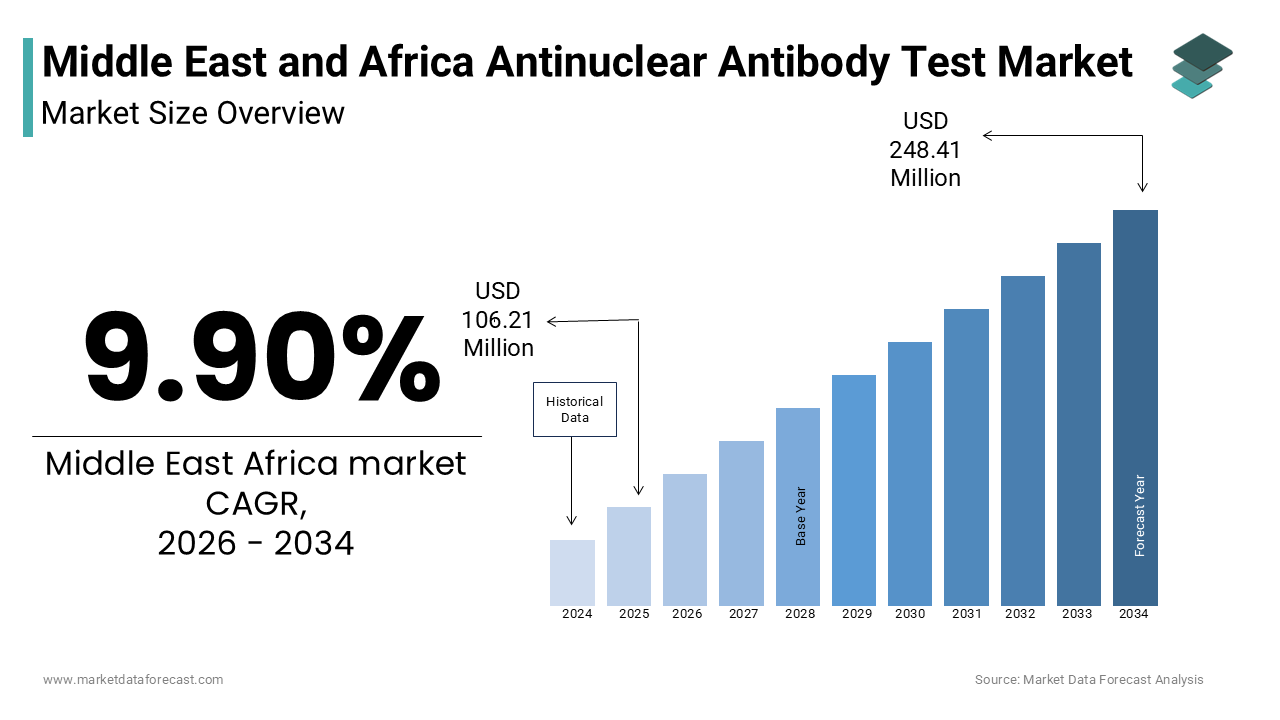
The Middle East and Africa antinuclear antibody test market was valued at USD 106.21 million in 2025 and is anticipated to reach USD 116.73 million in 2026 from USD 248.41 million by 2034, growing at a CAGR of 9.90% during the forecast period from 2026 to 2034. The growth of the Middle East and Africa antinuclear antibody test market is driven by the rising prevalence of systemic autoimmune diseases, increasing awareness regarding early diagnosis of rheumatic disorders, and expanding healthcare infrastructure across the region. Growing investments in specialized diagnostic laboratories, increasing adoption of automated testing technologies, and rising demand for accurate autoimmune disease diagnosis are further accelerating market growth. Moreover, advancements in multiplex diagnostic platforms, integration of telemedicine-supported diagnostic services, and increasing government focus on noncommunicable disease management are supporting the expansion of the Middle East and Africa antinuclear antibody test market.
Key Market Trends
-
Rising adoption of automated antinuclear antibody testing platforms for improved efficiency and accuracy.
-
Increasing utilization of multiplex technologies for comprehensive autoimmune disease profiling.
-
Growing expansion of specialized rheumatology and immunology diagnostic centers.
-
Rising integration of telemedicine and remote diagnostic consultation services.
-
Increasing government initiatives supporting early diagnosis and management of autoimmune disorders.
Segmental Insights
- Based on disease, the systemic lupus erythematosus (SLE) segment dominated the Middle East and Africa antinuclear antibody test market in 2025. The dominance of the segment is attributed to the high prevalence of SLE across several Middle Eastern populations, increasing awareness regarding early diagnosis, and the critical role of antinuclear antibody testing as a primary screening tool for disease detection and monitoring. The chronic nature of the disease and requirement for repeated testing continue to support segment growth.
- The rheumatoid arthritis segment is anticipated to witness the fastest CAGR of 7.8% during the forecast period owing to the increasing prevalence of inflammatory joint disorders, growing rheumatology consultations, rising physician awareness regarding autoimmune disease differentiation, and expanding utilization of comprehensive serological testing panels.
- Based on technique, the immunofluorescence segment accounted for 55.4% of the Middle East and Africa antinuclear antibody test market share in 2025. The growth of the segment is driven by its status as the gold-standard testing method, ability to identify specific staining patterns, strong clinical acceptance, and widespread recommendation by rheumatology associations. Increasing adoption of automated immunofluorescence readers is further strengthening segment demand.
- The multiplex technology segment is projected to register the fastest CAGR of 9.5% during the forecast period due to increasing demand for high-throughput testing, growing adoption of personalized medicine approaches, rising need for comprehensive autoantibody profiling, and expanding deployment of advanced laboratory information systems across healthcare facilities.
- Based on product, the reagents and assay kits segment dominated the Middle East and Africa antinuclear antibody test market and held 53.4% of the market share in 2025. The dominance of the segment is attributed to recurring demand for testing consumables, increasing diagnostic volumes, expanding laboratory networks, and growing utilization of automated immunoassay systems requiring proprietary reagents and assay kits.
- The services segment is expected to witness the fastest CAGR of 8.2% during the forecast period owing to increasing outsourcing of autoimmune diagnostic testing, growing demand for laboratory support services, rising need for technical training and equipment maintenance, and expanding public-private partnerships supporting laboratory modernization initiatives.
Regional Insights
- Saudi Arabia dominated the Middle East and Africa antinuclear antibody test market in 2025 and accounted for 25.3% of the regional market share. The country's leadership is driven by advanced healthcare infrastructure, increasing prevalence of autoimmune diseases, strong government healthcare investments, and growing adoption of advanced diagnostic technologies. The presence of major international diagnostic laboratories and supportive regulatory frameworks further strengthens market growth.
- The United Arab Emirates held 18.2% of the Middle East and Africa antinuclear antibody test market share in 2025 owing to its world-class healthcare system, expanding medical tourism industry, increasing adoption of precision diagnostics, and strong investments in digital healthcare transformation. The implementation of mandatory health insurance has also enhanced access to diagnostic services across the country.
- Israel continues to maintain a significant position in the regional market due to its advanced research capabilities, highly integrated healthcare system, strong biotechnology ecosystem, and increasing adoption of next-generation autoimmune diagnostic technologies. Continuous innovation in biomarker discovery and multiplex testing solutions further supports market expansion.
- South Africa is witnessing steady growth supported by expanding private healthcare infrastructure, increasing awareness regarding autoimmune disorders, rising adoption of automated laboratory systems, and growing investments in diagnostic capacity enhancement.
- Egypt is expected to experience notable growth during the forecast period due to increasing healthcare expenditure, expanding rheumatology services, growing government support for laboratory modernization, and rising demand for autoimmune disease diagnostics across both public and private healthcare sectors.
Competitive Landscape
The Middle East and Africa antinuclear antibody test market is highly competitive and characterized by the presence of global diagnostic manufacturers, specialized autoimmune testing companies, and regional distributors competing through product innovation, service quality, technical support, and regulatory compliance. Leading companies are focusing on expanding automated testing platforms, improving assay sensitivity and specificity, strengthening regional distribution networks, and enhancing laboratory training programs. Strategic partnerships with healthcare providers, investments in cold-chain logistics infrastructure, and alignment with national healthcare
Middle East and Africa Antinuclear Antibody Test Market Size
The Middle East and Africa Antinuclear antibody test market size was valued at USD 106.21 million in 2025 and is anticipated to reach USD 116.73 million in 2026 from USD 248.41 million by 2034, growing at a CAGR of 9.90% during the forecast period from 2026 to 2034.
The antinuclear antibody test is in vitro diagnostics focused on the detection of autoantibodies that target cellular components within the nucleus. These tests are for the diagnosis and monitoring of systemic autoimmune rheumatic diseases such as systemic lupus erythematosus scleroderma and Sjogren syndrome. The access to specialized diagnostic tools remains uneven with urban centers in countries like South Africa and Saudi Arabia having better infrastructure compared to rural areas. The market is characterized by a transition from traditional indirect immunofluorescence methods to more automated enzyme linked immunosorbent assays and multiplex bead arrays, which offer higher throughput and standardization. The early diagnosis is pivotal in preventing irreversible organ damage, yet many patients in the region experience significant delays due to diagnostic gaps.
MARKET DRIVERS
Rising Prevalence Of Systemic Autoimmune Diseases
The increasing prevalence of systemic autoimmune diseases is levelling up the growth of the Middle East and Africa antinuclear antibody test market. Genetic factors ethnic diversity and environmental triggers, such as ultraviolet radiation exposure in sunny climates contribute to a higher incidence of conditions like systemic lupus erythematosus, particularly among women of childbearing age. According to studies published in the Journal of Clinical Rheumatology, the prevalence of systemic lupus erythematosus in certain Middle Eastern populations is estimated to be higher than in Western countries with rates reaching up to 40 cases per 100000 individuals. This elevated disease burden creates a sustained demand for reliable diagnostic tools to identify patients early and initiate appropriate treatment protocols. Furthermore, the growing awareness among healthcare providers about the importance of serological markers in diagnosing complex rheumatic conditions has led to increased testing volumes. As healthcare systems in countries like the United Arab Emirates and Qatar invest in specialized care centers, the requirement for high quality antinuclear antibody tests continues to rise.
Expansion Of Healthcare Infrastructure And Diagnostic Laboratories
The significant investments in healthcare infrastructure and the expansion of diagnostic laboratory networks are bolstering the growth of the Middle East and Africa antinuclear antibody tests market. Governments in the Gulf Cooperation Council countries are prioritizing the development of world class medical facilities, as part of their national vision plans to reduce reliance on medical tourism and enhance local care quality. In South Africa, the private healthcare sector continues to expand its footprint with new pathology groups establishing state of the art facilities equipped with automated immunoassay platforms. The initiatives to strengthen laboratory systems through public private partnerships have improved the availability of essential diagnostic tests in urban and semi urban areas. Furthermore, the adoption of digital health records and laboratory information systems facilitates efficient test ordering and result tracking encouraging physicians to utilize comprehensive autoimmune panels.
MARKET RESTRAINTS
High Cost Of Advanced Diagnostic Equipment And Reagents
The prohibitive cost of advanced diagnostic equipment and specialized reagents with the widespread adoption of antinuclear antibody testing is hindering the growth of the Middle East and Africa antinuclear antibody test market. Automated platforms, such as chemiluminescent immunoassay analyzers and multiplex bead based systems require substantial capital investment, which is often beyond the budget of public hospitals and smaller private clinics. For healthcare facilities operating in low income countries or those with limited reimbursement structures, these costs are unsustainable leading to a reliance on older less efficient manual techniques. Furthermore, the import duties and taxes imposed on medical devices in several African nations further inflate the prices making them less affordable. This financial constraint forces many laboratories to outsource testing to reference labs, which increases turnaround time and reduces accessibility for rural patients. Consequently, the high cost of ownership restricts the deployment of modern antinuclear antibody testing solutions to only well funded tertiary care centers leaving a significant gap in diagnostic coverage.
Lack Of Skilled Personnel And Technical Expertise
A shortage of skilled laboratory professionals and technical expertise is additionally restricting the growth of the Middle East and Africa antinuclear antibody testing technologies market. The interpretation of antinuclear antibody results, particularly when using indirect immunofluorescence requires experienced pathologists and technologists, who can distinguish between specific staining patterns and artifacts. There is a severe deficit of trained biomedical scientists in the region with some countries having fewer than one laboratory professional per 10000 population. This skills gap leads to inconsistent test performance misinterpretation of results and delayed diagnoses, which compromise patient care. In many rural health facilities, staff may lack training in quality control procedures and instrument maintenance resulting in frequent equipment downtime and unreliable data. The brain drain further exacerbates the issue as qualified professionals migrate to developed nations for better opportunities. Furthermore, the rapid evolution of diagnostic technologies requires continuous education and training which is often unavailable due to limited resources. As per surveys conducted by regional medical associations, many laboratories struggle to retain staff with specialized immunology knowledge.
MARKET OPPORTUNITIES
Integration Of Telemedicine And Remote Diagnostic Services
The integration of telemedicine and remote diagnostic services is likely to create new opportunities for the growth of the Middle East and Africa antinuclear antibody test market. With the increasing penetration of mobile internet and digital health platforms patients in rural areas can consult with rheumatologists in urban centers who can order necessary tests and interpret results remotely. Telepathology platforms allow images of immunofluorescence slides to be transmitted to experts for review ensuring accurate diagnosis even in locations lacking specialized personnel. Data from the Saudi Digital Health Authority shows that telemedicine consultations for chronic diseases including autoimmune disorders have increased by 30% annually facilitating earlier detection and management. Furthermore, cloud based laboratory information systems enable seamless sharing of test results among healthcare providers improving coordination of care. The adoption of point of care testing devices connected to digital networks can further decentralize diagnostics allowing for rapid screening in primary care settings. This technological convergence not only improves patient access but also optimizes resource utilization by reducing unnecessary referrals.
Government Initiatives For Noncommunicable Disease Control
The government initiatives aimed at controlling noncommunicable diseases are prioritizing early diagnosis and management of chronic conditions, which is also likely to foster the growth of the Middle East and Africa antinuclear antibody test market. Many countries in the Middle East and Africa are developing national strategies to address the rising burden of autoimmune and rheumatic diseases as part of their broader public health agendas. Several nations have included rheumatic diseases in their national noncommunicable disease action plans recognizing the need for improved diagnostic capacity. For instance, the United Arab Emirates has launched initiatives to screen for autoimmune conditions in high risk groups promoting the use of standardized testing protocols. Data from the Egyptian Ministry of Health indicates increased funding for rheumatology departments in public hospitals enabling the procurement of modern diagnostic equipment. Furthermore, partnerships with international organizations, such as the Global Fund and local NGOs support training programs and equipment donations for laboratory strengthening. The commitment to achieving universal health coverage includes expanding access to essential diagnostic services. Manufacturers who align their strategies with these national priorities can secure long term contracts and contribute to improving healthcare outcomes across the region.
MARKET CHALLENGES
Regulatory Heterogeneity And Complex Approval Processes
Navigating the fragmented regulations, as each country maintains distinct approval requirements and compliance standards is solely to pose as a major challenge for the growth of the Middle East and Africa antinuclear antibody test market. The region comprises diverse regulatory bodies with varying levels of stringency and procedural complexity. In countries like Nigeria and Kenya, the regulatory agencies face backlogs leading to prolonged approval times that can delay product launches by 12 to 18 months. The regulatory uncertainty accounts for a significant portion of operational costs for diagnostic companies operating in the region. Furthermore, frequent changes in import regulations and documentation requirements create additional hurdles for supply chain management. In some nations, the lack of clear guidelines for in vitro diagnostic devices leads to inconsistent enforcement and market entry barriers. while progress is being made toward continental harmonization full implementation remains distant. This regulatory fragmentation increases the time and financial burden for manufacturers limiting their ability to introduce innovative testing solutions rapidly.
Supply Chain Disruptions And Logistics Constraints
The supply chain vulnerabilities and logistics is additionally to impede the growth of the Middle East and Africa antinuclear antibody test market. The region relies heavily on imports for diagnostic reagents and equipment making it susceptible to global supply chain disruptions and local logistical bottlenecks. The freight costs and delivery times to landlocked African countries can be significantly higher and slower than to coastal regions. Temperature sensitive reagents require cold chain logistics which are often inadequate in remote areas leading to product spoilage and waste. The customs clearance delays at major ports in the region can extend by several weeks affecting inventory levels for laboratories. Furthermore, geopolitical instability and currency fluctuations in certain countries disrupt procurement processes and affect pricing stability. The lack of local manufacturing capabilities for specialized immunology reagents further exacerbates dependency on external suppliers.
REPORT COVERAGE
| REPORT METRIC | DETAILS |
| Market Size Available | 2025 to 2034 |
| Base Year | 2025 |
| Forecast Period | 2026 to 2034 |
| CAGR | 9.90% |
| Segments Covered | By Disease, Technique, Product, End User and Region |
| Various Analyses Covered | Global, Regional & Country Level Analysis; Segment-Level Analysis; DROC, PESTLE Analysis; Porter’s Five Forces Analysis; Competitive Landscape; Analyst Overview of Investment Opportunities |
| Regions Covered | Saudi Arabia (KSA), the United Arab Emirates (UAE), Israel, the Rest of GCC Countries, South Africa, Ethiopia, Kenya, Egypt, Sudan, and the Rest of the Middle East and Africa (MEA). |
| Market Leaders Profiled | Zeus Scientific, Inc., Inova Diagnostics, Inc., Immuno Concepts, Inc., Euroimmun AG, Antibodies Incorporated, Thermo Fisher Scientific Inc., Trinity Biotech plc, ERBA Diagnostics, Inc., Bio-Rad Laboratories, Inc., and Alere Inc. among others. |
SEGMENTAL ANALYSIS
By Disease Insights
The systemic lupus erythematosus segment held a significant share of the Middle East and Africa antinuclear antibody test market in 2025 due to its high prevalence and the role of antinuclear antibody testing as the primary screening tool for diagnosis. The disease disproportionately affects women of childbearing age and certain ethnic groups prevalent in the region making it a major public health concern. This elevated incidence drives consistent demand for diagnostic testing as early detection is vital to prevent severe organ damage. Furthermore, the complexity of the disease requires repeated testing to monitor disease activity and response to treatment ensuring recurring revenue for diagnostic providers.
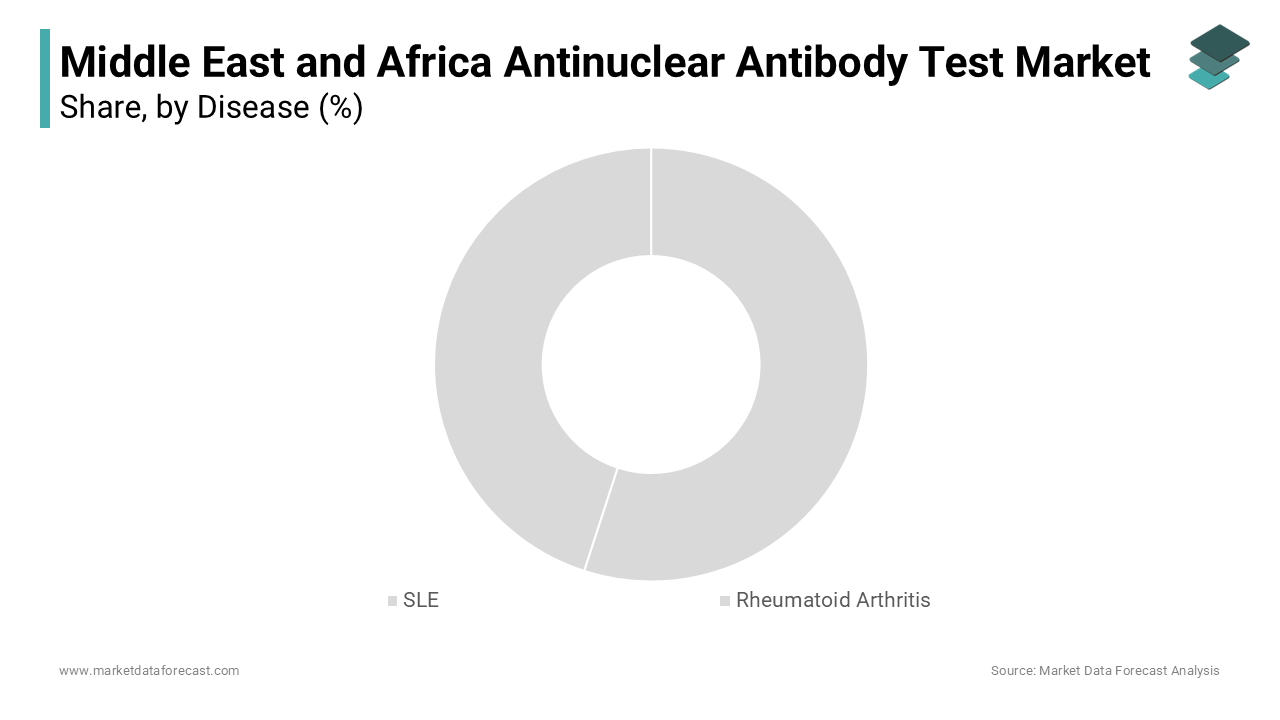
The Rheumatoid arthritis segment is anticipated to witness a fastest CAGR of 7.8% during the forecast period. While rheumatoid factor and anti-cyclic citrullinated, peptide antibodies are more specific markers antinuclear antibody testing is frequently performed to differentiate rheumatoid arthritis from other connective tissue diseases, such as systemic lupus erythematosus or Sjogren syndrome which may present with similar joint symptoms. This rise in case identification drives the volume of differential diagnostic tests including antinuclear antibody assays. Furthermore, increasing awareness among primary care physicians about the importance of comprehensive serological profiling for joint pain leads to higher testing rates. The number of rheumatology consultations has grown steadily resulting in more frequent ordering of autoimmune panels.
By Technique Insights
The immunofluorescence segment was the largest by holding 55.4% of the Middle East and Africa antinuclear antibody test market share in 2025. This technique allows for the visualization of specific staining patterns, which provide valuable clinical information about the type of autoantibodies present aiding in the differentiation of various autoimmune diseases. The immunofluorescence remains the recommended first line test by major rheumatology societies globally, including those in the Middle East. Furthermore, the availability of skilled technicians who can interpret fluorescence patterns in major urban centers supports its continued dominance. As per equipment procurement records many hospitals in South Africa and Egypt have invested in automated immunofluorescence readers to reduce subjectivity and improve throughput. The entrenched position of immunofluorescence in clinical guidelines and its proven track record in diagnosing systemic autoimmune diseases ensure that it remains the preferred technique for most healthcare providers in the region.
The multiplex technology segment is deemed to register a fastest CAGR of 9.5% from 2026 to 2034 owing to the demand for high throughput and comprehensive autoantibody profiling. This technique allows for the simultaneous detection of multiple specific antinuclear antibodies from a single sample providing detailed information that aids in precise diagnosis and prognosis. According to data from diagnostic manufacturers, the adoption of multiplex bead based assays is increasing in large reference laboratories in countries like Saudi Arabia and the United Arab Emirates where patient volumes are high. The ability to generate rapid results with high specificity reduces the need for follow up testing thereby lowering overall diagnostic costs and turnaround times. Furthermore, the integration of multiplex platforms with laboratory information systems facilitates efficient data management and reporting, which is crucial for modern healthcare facilities. The introduction of affordable multiplex kits tailored for the regional market has made this technology more accessible to mid-sized hospitals. The growing emphasis on personalized medicine and accurate disease classification drives clinicians to prefer multiplex assays for complex cases. Additionally, the reduction in manual labor and reagent waste associated with multiplex systems appeals to laboratory managers seeking operational efficiency.
By Product Insights
The reagents and assay kits segment was accounted in holding 53.4% of the Middle East and Africa antinuclear antibody test market share in 2025 due to their recurring nature and essential role in every diagnostic procedure. The high volume of tests performed in both public and private laboratories is accelerating the growth of the segment. Data from hospital procurement departments in Egypt and Kenya shows that annual spending on diagnostic consumables exceeds capital expenditure on equipment by a factor of three. Furthermore, the shelf life and storage requirements of these reagents ensure steady demand as laboratories maintain inventory levels to avoid stockouts. The shift towards automated platforms has increased the consumption of proprietary reagent kits, which are designed for specific instruments creating locked in customer relationships. The need for quality control materials and calibration standards further boosts the volume of reagent sales.
The services segment is estimated to register a fastest CAGR of 8.2% during the forecast period with the increasing outsourcing of diagnostic testing and the need for technical support. Many smaller hospitals and clinics lack the infrastructure and expertise to perform complex antinuclear antibody tests in house leading them to rely on third party reference laboratories. These services include sample collection transportation analysis and interpretation of results providing a comprehensive solution for healthcare providers. Furthermore, the demand for maintenance contracts training programs and quality assurance services for diagnostic equipment is rising as laboratories seek to optimize performance and comply with regulatory standards. Major diagnostic companies are expanding their service offerings to include remote monitoring and troubleshooting, which enhances customer retention. The complexity of interpreting immunofluorescence patterns also drives the need for expert consultation services. Additionally, government initiatives to strengthen laboratory networks through public private partnerships often involve service agreements for equipment management.
COUNTRY ANALYSIS
Saudi Arabia Antinuclear Antibody Test Market Analysis
Saudi Arabia was the top performer in the Middle East and Africa antinuclear antibody test market by holding 25.3% of the share in 2025 with the advanced healthcare infrastructure and high prevalence of autoimmune diseases. Data from the Saudi Society for Rheumatology indicates that the incidence of systemic lupus erythematosus is notably high in the population driving consistent demand for antinuclear antibody testing. Furthermore, the universal health coverage provided by the government ensures that a large portion of the population has access to diagnostic services. As per industry reports the presence of major international diagnostic laboratories in cities like Riyadh and Jeddah facilitates the adoption of advanced testing techniques such as multiplex assays. The strong regulatory framework enforced by the Saudi Food and Drug Authority ensures high quality standards for diagnostic products.
United Arab Emirates Antinuclear Antibody Test Market Analysis
The United Arab Emirates antinuclear antibody test market held second position by holding 18.2% of the share in 2025 driven by its world class healthcare system and medical tourism industry. The market status in the UAE is defined by a high concentration of private hospitals and diagnostic centers that offer premium services, including advanced autoimmune profiling. The emirate has invested heavily in digital health and precision medicine initiatives, which promote the use of sophisticated diagnostic tools. Furthermore, the UAE serves as a regional hub for medical conferences and training fostering knowledge exchange and adoption of best practices in rheumatology. The introduction of mandatory health insurance has increased access to diagnostic services for residents boosting test volumes.
Israel Antinuclear Antibody Test Market Analysis
Israel antinuclear antibody test market growth is likely to grow with the robust research and development capabilities. The high integrated healthcare system, where primary care physicians have direct access to advanced diagnostic laboratories. Data from academic medical centers indicates extensive use of novel diagnostic biomarkers and multiplex technologies in clinical practice. Furthermore, Israel is a hub for biotechnology innovation with several startups developing next generation diagnostic solutions for autoimmune conditions. Collaborations between universities and hospitals drive continuous improvement in testing protocols and interpretation algorithms.
COMPETITIVE LANDSCAPE
The competition in the Middle East and Africa Antinuclear Antibody Test Market is characterized by the dominance of established global diagnostic manufacturers alongside emerging regional distributors who adapt international technologies to local needs. Major multinational corporations leverage their extensive product portfolios and brand reputation to secure contracts in well-funded Gulf Cooperation Council healthcare systems while competing intensely on service quality and technical support. In contrast, smaller players and local distributors focus on affordability and accessibility to penetrate price sensitive areas in North and Sub-Saharan Africa. The competitive landscape is further shaped by the need for regulatory compliance across fragmented jurisdictions prompting companies to invest in registration and certification processes. Differentiation increasingly relies on integrated solutions combining instruments reagents software and training rather than standalone products.
KEY MARKET PLAYERS
The leading companies leading in the Middle East and Africa Antinuclear Antibody Test Market include
- Zeus Scientific, Inc.
- Inova Diagnostics, Inc.
- Immuno Concepts, Inc.
- Euroimmun AG
- Antibodies Incorporated
- Thermo Fisher Scientific Inc.
- Trinity Biotech plc
- ERBA Diagnostics, Inc.
- Bio-Rad Laboratories, Inc.
- Alere Inc.
Top Players In The MEA Market
Euroimmun Medizinische Labordiagnostika AG
Euroimmun Medizinische Labordiagnostika AG maintains a significant presence in the Middle East and Africa antinuclear antibody test market through its specialized autoimmune diagnostics portfolio. The company provides indirect immunofluorescence assays and automated EUROPattern systems that are widely adopted as reference standards in regional laboratories. Euroimmun actively conducts training workshops for laboratory personnel across Gulf Cooperation Council countries to enhance technical proficiency in pattern interpretation. Recently, the company expanded its distribution network in North Africa to improve reagent accessibility and reduce supply chain delays.
Thermo Fisher Scientific
Thermo Fisher Scientific contributes extensively to the Middle East and Africa antinuclear antibody test market by offering comprehensive immunoassay platforms and EliA specific test kits. The company supports clinical laboratories with advanced Phadia instruments that enable precise autoantibody quantification and standardized reporting. Thermo Fisher has recently strengthened its regional service infrastructure by establishing new technical support centers in Saudi Arabia and South Africa to minimize equipment downtime. Furthermore, the company collaborates with academic institutions to validate assay performance in local populations ensuring clinical relevance. These strategic actions enhance operational reliability and foster trust among healthcare providers seeking accurate diagnostic tools for complex rheumatic conditions across varying resource settings in the region.
Werfen
Werfen plays a pivotal role in the Middle East and Africa antinuclear antibody test market through its AUTOBIOGRAPHY line of immunodiagnostics and QUANTA Flash chemiluminescence technology. The company focuses on delivering automated solutions that streamline workflows and improve turnaround times for high volume laboratories. Werfen has recently launched localized educational programs and digital resources tailored to regional regulatory requirements and clinical practices. Additionally, the firm has enhanced its cold chain logistics capabilities to ensure reagent stability during transport to remote areas. These efforts address crucial infrastructure challenges, while promoting the adoption of advanced testing methodologies.
Major Strategies Used By Key Players
Key players in the Middle East And Africa Antinuclear Antibody Test Market primarily focus on strategic partnerships and localized service expansion to navigate complex regulatory environments and infrastructure limitations. Companies invest heavily in training programs and technical support to address the shortage of skilled laboratory professionals, which remains as a barrier to adoption. Manufacturers also prioritize supply chain resilience by establishing regional distribution hubs and improving cold chain logistics to prevent reagent spoilage. Furthermore, firms align their product portfolios with national health initiatives and insurance schemes to secure public sector contracts.
MARKET SEGMENTATION
This research report on the Middle East and Africa Antinuclear Antibody Test Market has been segmented and sub-segmented into the following categories
By Disease
- SLE
- Rheumatoid Arthritis
By Technique
- Immunofluorescence
- Multiplex
- ELISA
By Product
- Software
- Systems
- Services
- Reagents
- Assay Kits
By End User
- Hospitals
- Clinical Labs
By Country
- KSA
- UAE
- Israel
- rest of GCC countries
- South Africa
- Ethiopia
- Kenya
- Egypt
- Sudan
- rest of MEA
Related Reports
Access the study in MULTIPLE FORMATS
Purchase options starting from
$ 1600
Didn’t find what you’re looking for?
TALK TO OUR ANALYST TEAM
Need something within your budget?
NO WORRIES! WE GOT YOU COVERED!
Call us on: +1 888 702 9696 (U.S Toll Free)
Write to us: sales@marketdataforecast.com