- Product Description Description
- Table of Contents TOC
- List of Table & Figure LOT
- Get Free Sample PDF Sample PDF
Market Size, 2025
$0.67 BnMarket Estimate, 2026
$0.70 BnMarket Forecast, 2034
$0.97 BnCAGR, 2026–2034
4.25%Middle East and Africa Apiculture Market Size, Share, Trends & Forecast (2026–2034)
- Market Scope: Comprehensive regional evaluation of the Middle East and Africa (MEA) beekeeping and apiculture industry encompassing product types (honey, beeswax, live bees, royal jelly), cross-sector applications (food and beverages, medical, cosmetics, agriculture), and country frameworks (Ethiopia, Saudi Arabia, Kenya, South Africa, Egypt).
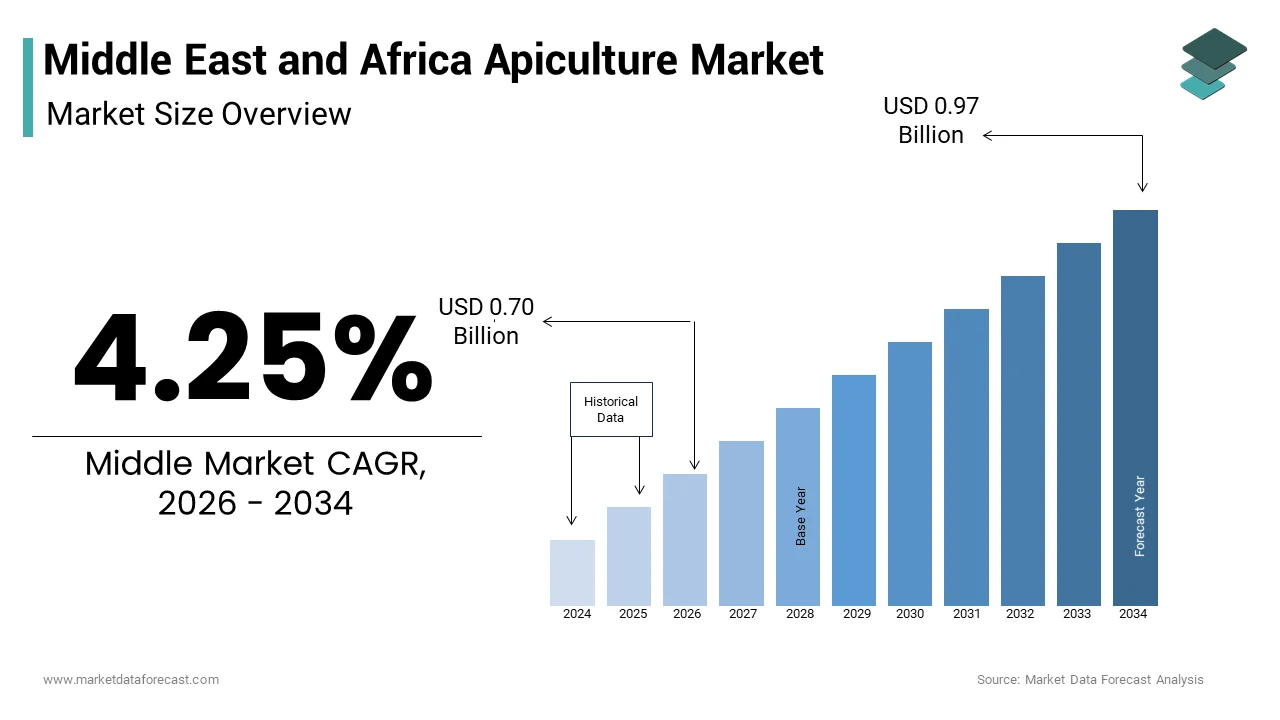
- Market Valuation: Valued at USD 0.67 billion in 2025, estimated at USD 0.70 billion in 2026, and projected to reach USD 0.97 billion by 2034, expanding at a steady CAGR of 4.25% (2026–2034).
- Primary Growth Enablers: Escalating consumer demand for natural and organic health foods, rising adoption of apiculture for agricultural crop pollination and climate-resilient farming, and government-backed modernization programs across East Africa and the GCC.
Key MEA Apiculture Segment Metrics (2026–2034)
| Category | Leading Segment | Fastest-Growing / Key Segment Highlights |
|---|---|---|
| By Products | Honey (held dominant market share driven by widespread domestic consumption, retail culinary use, and export demand) | Beeswax (predicted to register a robust 9.7% CAGR due to expansion in cosmetics, pharmaceuticals, and manufacturing) |
| By Application | Food and Beverages (held 40.4% market share as the foundational pillar for traditional sweets, culinary staples, and sweeteners) | Medical Applications (estimated to grow at an 11.2% CAGR driven by antimicrobial and wound-healing uses of medical-grade honey) |
| By Country / Region | Ethiopia (top performer holding 22.4% share backed by vast biodiversity, traditional hives, and high output) | Saudi Arabia (14.6% share led by premium Sidr honey demand), Kenya, South Africa, and Egypt (modernizing commercial apiculture) |
Major Market Players, Structure & Strategic Landscape
Market Structure: Fragmented and dynamic market comprising traditional smallholder beekeepers, emerging commercial enterprises, and specialized regional operators focusing on product modernization, branding, and export compliance.
Key Companies: Al-Saudia Honey Company, Ethiopian Agricultural Transformation Agency (ATA), Beevital, Betterbee Inc., Miller’s Honey Company, Dabur India Limited, Shandong Bokang Apiculture Co. Ltd., and Beehive Botanicals Inc.
Middle East and Africa Apiculture Market Size
The Middle East and Africa apiculture market size was valued at USD 0.67 billion in 2025 and is anticipated to reach USD 0.70 billion in 2026 to USD 0.97 billion by 2034, growing at a CAGR of 4.25% during the forecast period from 2026 to 2034.
Apiculture is the cultivation and management of bee colonies for the production of honey, beeswax, royal jelly, propolis, and other hive-related products. In the Middle East and Africa, apiculture has evolved from traditional practices into a more structured market driven by growing awareness of natural food sources and pollination benefits in agriculture. The region's diverse flora, especially in countries like Ethiopia, Kenya, Saudi Arabia, and South Africa, provides favorable conditions for beekeeping activities. As per the Food and Agriculture Organization (FAO), Africa contributes approximately 10% of the global honey production, with Ethiopia being one of the largest honey producers on the continent. The Middle East, though smaller in volume, has seen increased investment in modern beekeeping techniques, particularly in the Gulf Cooperation Council (GCC) nations. According to the International Centre of Insect Physiology and Ecology (ICIPE), apiculture supports the livelihoods of over 2 million households across Sub-Saharan Africa alone.
MARKET DRIVERS
Growing Demand for Natural and Organic Products
The growing customer preference for natural and organic food items is one of the main factors propelling the Middle East and Africa apiculture market's growth. In metropolitan areas like Cairo, Nairobi, Johannesburg, and Dubai, customers are becoming more health aware and moving away from processed sweeteners in favour of raw honey, which is seen to be healthier. Additionally, local demand is complemented by export opportunities, particularly to Europe and Asia, where African honey, known for its purity and unique floral profile, is gaining traction. For instance, according to the Ethiopian Agricultural Transformation Agency, Ethiopia exported more than 1,200 metric tonnes of honey in 2022, mostly to China, India, and Germany. This growing international interest encourages domestic producers to scale up operations and adopt better harvesting and processing methods. Moreover, governments in the region have recognized the economic potential of apiculture and are promoting beekeeping through training programs and financial support. As per the International Fund for Agricultural Development (IFAD), over 40,000 smallholder farmers in East Africa received technical assistance in apiculture between 2020 and 2023, which contributes significantly to increased production and quality standards.
Increasing Awareness of Pollination Benefits in Agriculture
The growing awareness of bees' vital function in agricultural pollination is further fuelling the growth of other Middle East and African apiculture markets. Effective pollinators are crucial as agricultural output increases throughout the region to satisfy rising population demands. Bees contribute significantly to crop yields, especially for fruits, vegetables, and oilseeds, enhancing both quantity and quality of harvests. According to the Food and Agriculture Organization (FAO), nearly 75% of globally important food crops depend on animal pollination, with bees being the most effective agents. In countries like Egypt and Morocco, where almond and citrus farming are prominent, beekeepers are now contracted specifically for their pollination services, which generates additional income streams beyond honey production. In sub-Saharan Africa, where subsistence farming dominates, organizations like the International Centre of Insect Physiology and Ecology (ICIPE) have launched initiatives to educate farmers about the value of beekeeping for improved crop productivity. As per ICIPE, farms using managed beehives experienced an average 20% boost in yield for crops such as tomatoes, beans, and sunflowers. Apiculture is not only economically feasible but also strategically essential for the development of sustainable agriculture in the area due to the dual benefits of pollination services and hive product creation.
MARKET RESTRAINTS
Environmental Degradation and Loss of Biodiversity
Environmental deterioration, especially the loss of biodiversity and natural habitats that are essential to bee survival, is limiting the apiculture market growth in the Middle East and Africa. Deforestation, land conversion for agriculture, pesticide misuse, and climate change have collectively reduced the availability of flowering plants essential for bees' nutrition and colony sustainability. According to the United Nations Environment Programme (UNEP), the African continent has lost over 4 million hectares of forest annually between 2010 and 2020, which directly impacts nectar and pollen sources. Desertification has further reduced floral diversity in places like Sudan and Somalia, which has led beekeepers to move around frequently in search of suitable forage sites. Furthermore, according to a 2022 research that was published in the journal Apidologie, over the previous ten years, pesticide exposure in South Africa's and Kenya's agricultural zones has resulted in a 25% decrease in the strength of bee colonies. Climate variability has also played a significant role in disrupting flowering cycles. In Ethiopia, erratic rainfall patterns have caused mismatches between peak blooming seasons and bee activity, which reduces honey yields.
Lack of Access to Modern Technology and Infrastructure
Limited access to modern beekeeping technology and infrastructure among smallholder producers is another major barrier in the Middle East and African apiculture markets. Even though apiculture is becoming more popular, many beekeepers still use outdated equipment and conventional hives, which decrease productivity, lower honey yields, and degrade the quality of their products. According to the International Fund for Agricultural Development (IFAD), less than 15% of beekeepers in East Africa use modern Langstroth hives, while the majority still utilize log or basket hives that make honey extraction difficult and often result in damage to bee colonies. Similarly, in the Middle East, particularly in Yemen and parts of Sudan, outdated practices dominate due to insufficient extension services and a lack of training. Furthermore, poor transportation networks and storage facilities hinder market access for remote producers. Financial limitations also come into play since many beekeepers cannot afford centrifugal extractors, smokers, or safety equipment. According to a 2023 Food and Agriculture Organisation (FAO) poll, 68% of West African beekeepers said that the high cost of equipment prevented them from expanding their businesses.
MARKET OPPORTUNITIES
Expansion of Value-Added Honey and Bee-Based Products
The increasing production and commercialisation of value-added bee-based products, including royal jelly, propolis, beeswax, and bee pollen,n is creating new opportunities for the growth of the Middle East and Africa apiculture market. These products are gaining traction both domestically and internationally due to their application in pharmaceuticals, cosmetics, and dietary supplements. For instance, according to the Ethiopian Commodity Exchange, Ethiopia has started exporting beeswax to markets in Europe and Asia, with yearly shipments exceeding 2,000 metric tonnes. Similarly, in Morocco, beeswax is used extensively in traditional skincare and haircare products, which creates new business opportunities for local entrepreneurs. Governments and NGOs are increasingly supporting the development of processing units and branding initiatives. As per the International Trade Centre (ITC), several cooperatives in Kenya and Uganda have successfully introduced packaged bee pollen and propolis capsules into regional supermarkets and online platforms.
Integration of Apiculture into Climate-Smart Agriculture Initiatives
The integration of apiculture into climate-smart agriculture (CSA) initiatives is additionally to fuel the growth of the Middle East and Africa apiculture market. Beekeeping provides a robust, low-input agricultural business that supports sustainable development objectives, especially considering the region's susceptibility to climate change. As per the Food and Agriculture Organization (FAO), apiculture contributes to carbon sequestration by promoting afforestation and maintaining floral biodiversity, which helps mitigate climate impacts. Beekeeping has been incorporated into Kenya's national CSA policy by the Ministry of Agriculture, which encourages farmers to grow bee-friendly plants with staple crops to increase revenue and resilience. In Tunisia and Egypt, beekeeping is being promoted as part of drought adaptation strategies, given that bees require minimal water compared to livestock. According to the International Center for Advanced Mediterranean Agronomic Studies (CIHEAM), beekeeping generates 30% more income per hectare than conventional rain-fed crops in arid zones. Moreover, digital innovations are emerging to support beekeepers. In South Africa, mobile apps developed by Stellenbosch University provide real-time data on flowering patterns and weather forecasts, which helps beekeepers optimize hive placement and harvesting times.
MARKET CHALLENGES
Pest and Disease Outbreaks Impacting Colony Health
The increasing prevalence of pests and diseases that threaten bee colony health is negatively impacting the growth of the Middle East and Africa apiculture market. Multiple countries have recorded infestations of varroa mites, foulbrood, and wax moths, which have resulted in colony collapse and notable decreases in honey output. According to the International Bee Research Association (IBRA), Varroa destructor, a parasitic mite known to weaken bee populations and spread viruses, has been detected in apiaries across Egypt, Kenya, and South Africa. According to 2023 research by the University of Pretoria, Varroa infection was detected in more than 40% of southern African hives that were tested, with certain areas losing up to 30% of their colonies per year. In addition to pests, bacterial diseases such as American foulbrood (AFB) have been identified in apiaries in Saudi Arabia and Morocco. Limited access to veterinary medicines and diagnostic tools exacerbates the problem. Many smallholder beekeepers in rural areas lack knowledge of disease prevention and treatment options. As per the Food and Agriculture Organization (FAO), less than 20% of beekeepers in West Africa receive regular extension services related to bee health management.
Inadequate Policy Support and Regulatory Frameworks
Lack of comprehensive policy support and regulatory frameworks is also hindering the growth of the Middle East and Africa apiculture market. Many governments have not yet developed unified national strategies that include beekeeping in more comprehensive agricultural policies. According to the African Union, only 12 out of 55 African countries have dedicated apiculture development policies as of 2023. In nations like Tanzania and Nigeria, apiculture is still governed by general agricultural planning, which leads to uneven funding distribution and execution. As per the Food and Agriculture Organization (FAO), less than 1% of agricultural budgets in most African nations are allocated to apiculture, despite its high return on investment. In the Middle East, regulatory inconsistencies further hinder growth. For instance, in Yemen and Libya, the absence of standardized honey grading and labeling requirements complicates export certification processes and reduces market competitiveness.
REPORT COVERAGE
| REPORT METRIC | DETAILS |
| Market Size Available | 2025 to 2034 |
| Base Year | 2025 |
| Forecast Period | 2026 to 2034 |
| CAGR | 4.25% |
| Segments Covered | By Product, Application, and Region. |
| Various Analyses Covered | Global, Regional, Country-Level Analysis, Segment-Level Analysis, DROC, PESTLE Analysis, Porter’s Five Forces Analysis, Competitive Landscape, Analyst Overview of Investment Opportunities |
| Regions Covered | KSA, UAE, Israel, the rest of GCC countries, South Africa, Ethiopia, Kenya, Egypt, Sudan, the rest of MEA |
| Market Leaders Profiled | Betterbee Inc. (U.S.), Miller’s Honey Company (U.S.), Dabur India Limited (India), Shangdong Bokang Apiculture Co. Ltd. (China), Beehive Botanicals Inc. (U.S.). |
SEGMENTAL ANALYSIS
By Product Insights
The honey segment held the dominant share of the Middle East and Africa apiculture market in 2025 due to its widespread consumption across both domestic and commercial sectors, particularly in the food and beverage industries. According to the Food and Agriculture Organization (FAO), Ethiopia alone produced approximately 48,000 metric tons of honey in 2022, which makes it the largest producer in Africa. Every year, more than 1.2 kg of honey is consumed per person in Saudi Arabia and the United Arab Emirates, which is far more than the global average. Additionally, growing export demand has further strengthened honey’s position. As per the International Trade Centre (ITC), Kenya exported over 3,500 metric tons of honey between 2020 and 2023, with increasing interest from European and Asian markets seeking organic and unprocessed varieties. The rising popularity of raw and medicinal honey in traditional healthcare systems, especially in Egypt and Morocco, also supports sustained demand.
The beeswax segment is predicted to witness a CAGR of 9.7% during the forecast period. Due to its expanding applications in cosmetics, pharmaceuticals, and industrial manufacturing. According to the Ethiopian Agricultural Transformation Agency, Ethiopia has become a major exporter, sending more than 2,000 metric tonnes of beeswax a year, mostly to China, India, and Germany. The beauty and personal care industry in the Middle East is a major growth driver. In Saudi Arabia and the UAE, natural skincare formulations are increasingly preferred by consumers, which leads to higher incorporation of beeswax in creams, lip balms, and lotions. Moreover, beeswax is being used in candle-making, furniture polish, and even 3D printing materials, broadening its market footprint.
By Application Insights
The food and beverages application segment led the market by occupying a share of 40.4% in 2024 due to factors such as long-standing nutritional and culinary use of honey and other bee products in local cuisines. In North Africa and the Middle East, honey has long been a staple ingredient in traditional desserts such as baklava, halva, and various sweets, particularly in Egypt, Morocco, and the UAE. According to Euromonitor International, per capita honey consumption in the UAE reached 1.4 kg in 2023, which shows strong household and restaurant-level demand. Furthermore, the rise of health-conscious consumer trends has boosted the use of raw and organic honey as a natural sweetener in beverages, smoothies, and functional foods. In South Africa, major supermarket chains such as Pick n Pay and Woolworths have expanded their range of honey-infused snacks and drinks.
The medical application segment is estimated to register a CAGR of 11.2% from 2025 to 2033, owing to factors such as increasing recognition of honey and propolis for their antimicrobial, anti-inflammatory, and wound-healing properties in both traditional and modern medicine. According to the World Health Organization (WHO), honey-based wound dressings have gained prominence in sub-Saharan Africa due to their efficacy in treating burns and ulcers, particularly in rural healthcare settings where access to antibiotics is limited. According to 2023 research in The Lancet Global Health, hospitals in Ethiopia and Sudan reported a 20–30% decrease in post-surgical infection rates with the use of medical-grade honey in therapy protocols. In the Middle East, particularly in Saudi Arabia and Israel, research institutions have been exploring the pharmacological potential of bee-derived compounds. Clinical trials carried out by the King Abdullah University of Science and Technology (KAUST) demonstrated that Sidr honey, which is made from the blossoms of Ziziphus spina-christi, has strong antibacterial action against infections that were resistant to drugs, including MRSA. Additionally, the inclusion of apiculture-based products in national healthcare programs is accelerating adoption.
COUNTRY-LEVEL ANALYSIS
Ethiopia Apiculture Market Analysis
Ethiopia was the top performer in the MEA Apiculture market and accounted for 22.4% of the share in 2024, owing to its vast biodiversity, favorable climate, and deep-rooted beekeeping traditions. According to the Ethiopian Institute of Agricultural Research (EIAR), some 10 million beehives are found there, more than in any other African country. Ethiopia is increasing its export capacity while maintaining a high level of domestic consumption. As per the Ethiopian Agricultural Transformation Agency, the country exported over 1,200 metric tons of honey and 2,000 metric tons of beeswax in 2022, with Germany, India, and China as primary buyers. Government initiatives, such as the National Beekeeping Development Strategy, have supported improved hive management and quality control. Additionally, partnerships with international organizations like the United Nations Development Programme (UNDP) have facilitated training and market linkages for smallholder beekeepers.
Saudi Arabia Apiculture Market Analysis
Saudi Arabia held 14.6% of the MEA apiculture market share in 2024, with the strong domestic demand, the religious significance of honey, and government-backed initiatives. The Islamic tradition of consuming Sidr honey, sourced from the Ziziphus tree, plays a crucial role in sustaining demand. According to the Saudi Ministry of Environment, Water and Agriculture, the production of Sidr honey alone contributes over 35% of the country’s total honey output, with premium pricing in both local and international markets. In recent years, the government has launched several programs under Vision 2030 to modernize beekeeping practices. Additionally, the establishment of the National Center for Agricultural Excellence (NCAE) has led to improved disease monitoring and quality certification, which enhances Saudi honey’s competitiveness in global trade.
Kenya's apiculture market is likely to grow with a significant CAGR in the coming years. This country benefits from a wide range of agro-ecological zones that sustain a variety of flora necessary for the production of distinctive honey varieties. As per the Kenya Agricultural and Livestock Research Organization (KALRO), the country produced approximately 40,000 metric tons of honey in 2023, with over 3,000 metric tons exported to Europe and Asia. The Kenyan government, in collaboration with NGOs like the International Centre of Insect Physiology and Ecology (ICIPE), has implemented community-based apiculture projects that have trained over 50,000 farmers since 2020.
South Africa Apiculture Market Analysis
South African market is gaining huge traction during the forecast period with its advanced beekeeping technology, scientific research, and diversified product portfolio. The country is known for producing high-quality citrus and fynbos honey, which are highly sought after in export markets. The country also leads in the development of value-added bee products such as royal jelly, propolis extracts, and beeswax-based cosmetics. Research institutions like Stellenbosch University and the Agricultural Research Council (ARC) play an important role in advancing pollination science and disease management strategies. According to a 2023 ARC survey, more than 40% of commercial farms now use beekeepers to provide pollination services, increasing crop yields for commodities including sunflowers and apples. South Africa is establishing standards for contemporary apiculture methods in the area with its growing digital transformation, including smartphone applications for weather forecasting and hive tracking.
Egypt Apiculture Market Analysis
Egypt is adopting modern technologies to increase productivity and scale while utilising its ancient history of beekeeping around the Nile Delta. According to data from 2023 from the Central Agency for Public Mobilisation and Statistics (CAPMAS), the nation produces about 20,000 metric tonnes of honey a year, with domestic consumption controlling the market. Beekeeping in Egypt is deeply embedded in culture, with ancient hieroglyphics depicting beekeeping activities dating back thousands of years. The Ministry of Agriculture and Land Reclamation is revitalizing the sector through subsidies on Langstroth hives and training programs for youth employment in rural areas. Additionally, Egypt has seen a surge in the use of honey in traditional medicine and nutraceuticals. According to Cairo University’s Faculty of Pharmacy, clinical studies have validated the efficacy of Egyptian clover honey in treating gastrointestinal disorders, which has drawn further interest from pharmaceutical corporations.
COMPETITIVE LANDSCAPE
The competition in the Middle East and Africa apiculture market is characterized by a mix of traditional beekeepers, emerging commercial enterprises, and a few dominant regional players. Larger companies are increasingly using modernisation, branding, and export capabilities to gain an advantage, even while small-scale manufacturers still dominate in terms of volume, particularly in nations like Ethiopia and Kenya. The market remains highly fragmented, with significant untapped potential in underdeveloped regions that are gradually adopting better technologies and practices. In the Gulf, competition is more structured, with established brands focusing on premium positioning and medical-grade applications. Meanwhile, in Sub-Saharan Africa, competition revolves around affordability, accessibility, and rural outreach programs. Growing awareness about the economic and ecological benefits of apiculture, new entrants are entering the space, intensifying rivalry and prompting existing players to innovate and scale up operations to maintain relevance and competitiveness.
KEY MARKET PLAYERS
These are the market players that are dominating the Middle East and Africa apiculture market.
- Betterbee Inc. (U.S.)
- Miller’s Honey Company (U.S.)
- Al-Saudia Honey Company (Saudi Arabia)
- Ethiopia’s Agricultural Transformation Agency (ATA) – Apiculture Division
- Beevital (South Africa)
- Dabur India Limited (India)
- Shangdong Bokang Apiculture, Co. Ltd. (China),
- Beehive Botanicals Inc. (U.S.)
Top Players In The Market
- Al-Saudia Honey is one of the most recognized names in the Middle East apiculture sector. The company is known for producing high-quality Sidr honey, which holds religious and medicinal significance across the region. Al-Saudia plays a crucial role in exporting premium honey to global markets and has contributed significantly to positioning Saudi Arabia as a leader in organic and therapeutic honey production.
- The ATA, an organisation supported by the government, has played a significant role in modernising beekeeping methods in Ethiopia. It supports smallholder farmers with training, improved hive technology, and market linkages. Its initiatives have enhanced the quality and export potential of Ethiopian honey and beeswax, which boosts regional trade growth and rural development.
- Beevital specializes in natural bee products such as royal jelly, propolis, and pollen extracts. This company is a major participant in the African apiculture market since it concentrates on research-driven applications in health and wellness. Beevital’s commitment to sustainable beekeeping and product innovation has positioned it as a supplier of choice for international nutraceutical and cosmetic brands.
Top Strategies Used By Key Market Participants
One major strategy employed by key players in the Middle East and Africa apiculture market is product diversification, where companies expand beyond raw honey into value-added products like beeswax cosmetics, propolis supplements, and royal jelly. This allows them to capture niche markets and increase profitability.
Another key approach is capacity building through training and partnerships, where leading firms collaborate with governments and NGOs to train beekeepers in modern techniques. These initiatives boost the supply chain as a whole by increasing yield, quality, and sustainability.
Market expansion through branding and export promotion is widely adopted. Companies are investing in packaging, certification, and digital marketing to enhance their presence in international markets and meet growing global demand for natural bee products.
RECENT MARKET NEWS
- In March 2024, Al-Saudia Honey launched a new line of certified organic Sidr honey, which targets both domestic consumers and international buyers looking for premium, traceable bee products. This initiative aimed at reinforcing its brand reputation and expanding its global presence.
- In June 2023, the Ethiopian Agricultural Transformation Agency partnered with ICIPE to introduce climate-resilient beehive models across major honey-producing regions, which helps regional beekeepers in adjusting to changing climatic conditions and increasing yield.
- In September 2023, Beevital expanded its distribution network into North Africa and collaborated with local distributors in Egypt and Morocco to supply its range of health-focused bee-based supplements and wellness products.
- In November 2024, a consortium of UAE-based food and agriculture investors funded the establishment of a regional honey processing and packaging facility in Djibouti to streamline exports from the Horn of Africa to markets in the Middle East and Europe.
- In February 2024, Al-Saudia Honey partnered with the Ministry of Environment, Water, and Agriculture to provide a comprehensive training program for beekeepers throughout Saudi Arabia. The program seeks to improve hive management standards and beekeeping methods.
MARKET SEGMENTATION
This research report on the Middle East and Africa apiculture market is segmented and sub-segmented into the following categories.
By Products
- Beeswax
- Honey
- Live Bees
- Others
By Application
- Agriculture
- Food And Beverages
- Medical
- Chemical
- And Paints
- Cosmetics
By Country
- KSA
- UAE
- Israel
- Rest Of The GCC Countries
- South Africa
- Ethiopia
- Kenya
- Egypt
- Sudan
- Rest Of MEA