- Product Description Description
- Table of Contents TOC
- List of Table & Figure LOT
- Get Free Sample PDF Sample PDF
Market Size, 2025
$0.32 BnMarket Estimate, 2026
$0.37 BnMarket Forecast, 2034
$1.14 BnCAGR, 2026–2034
15.18%Middle East and Africa Autoinjectors Market Size
The autoinjectors market size in the Middle East and Africa was valued at USD 0.32 billion in 2025. The market size in this region is predicted to further accelerate at a CAGR of 15.18% from 2026 to 2034 and be worth USD 1.14 billion by 2034, up from USD 0.37 billion in 2026.
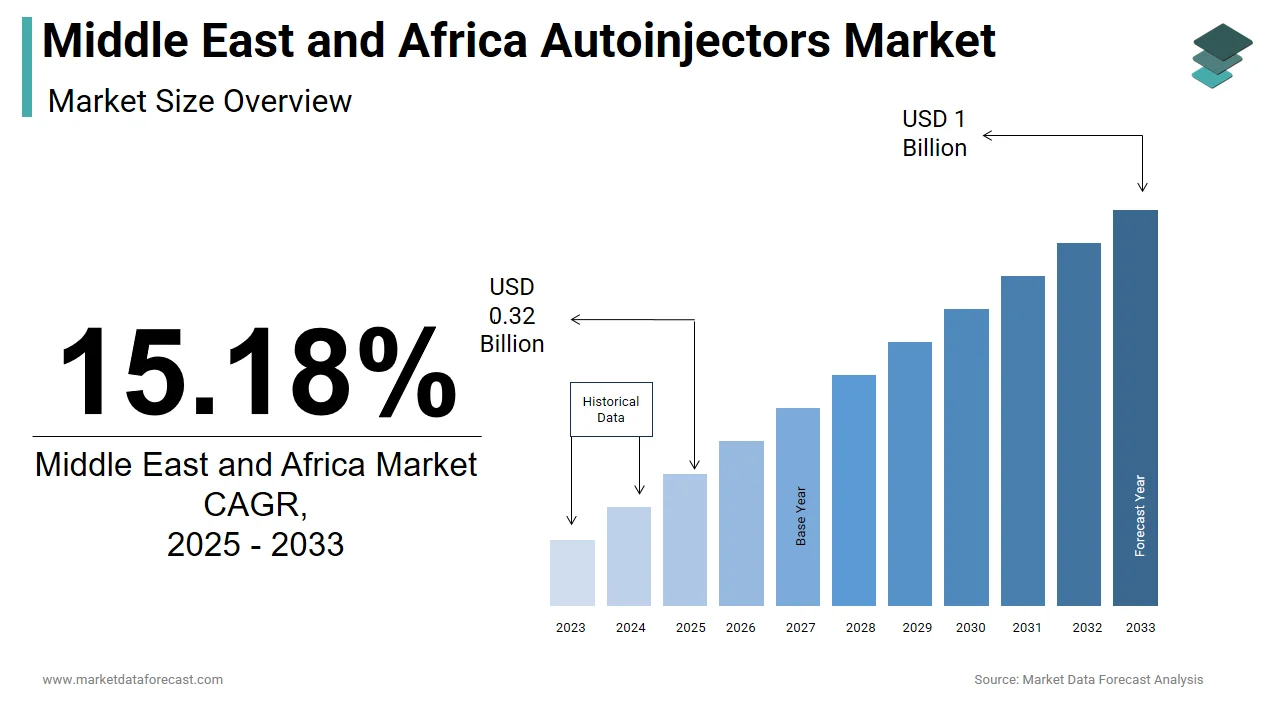
The Middle East and Africa Autoinjectors Market refers to the growing demand for self-injectable drug delivery devices designed for rapid, safe, and user-friendly administration of critical medications in emergency or chronic care settings. Autoinjectors are widely used for delivering epinephrine in cases of severe allergic reactions, as well as for administering biologics and specialty drugs in conditions such as multiple sclerosis, rheumatoid arthritis, and diabetes. The market is being driven by increasing prevalence of chronic diseases, rising awareness of emergency medical preparedness, and expanding healthcare infrastructure across key countries in the region.
According to the World Health Organization (WHO), non-communicable diseases (NCDs) account for a significant portion of mortality in the Middle East and Africa region, with an upward trend observed in urban populations. Additionally, governments and health agencies in the region are also promoting home-based treatment options and patient-centric care models, which have contributed to increased adoption of autoinjector devices.
MARKET DRIVERS
Rising Prevalence of Chronic and Allergic Conditions
A primary driver of the Middle East and Africa Autoinjectors Market is the increasing incidence of chronic diseases and allergic disorders that necessitate immediate, on-demand medication delivery. Autoinjectors play a crucial role in managing conditions such as severe food allergies, asthma, and autoimmune diseases, where timely intervention can be life-saving.
Also, the rise in autoimmune disease prevalence, including multiple sclerosis and lupus, has led to greater prescriptions of injectable biologic therapies that are often administered via autoinjectors. Also, pharmaceutical companies and device manufacturers are expanding their presence in the Middle East and Africa region, offering training programs and awareness campaigns to support patient adoption. This growing medical necessity, combined with enhanced diagnosis rates and public education initiatives, is significantly boosting the uptake of autoinjector devices across the Middle East and Africa market.
Expansion of Healthcare Infrastructure and Regulatory Support
Another key driver fueling the growth of the Middle East and Africa Autoinjectors Market is the expansion of healthcare infrastructure and supportive regulatory frameworks in several regional economies. Governments across the Middle East and parts of North Africa have been investing heavily in modernizing healthcare systems, improving access to medicines, and promoting self-administered treatment options. For instance, the Kingdom of Saudi Arabia’s Vision 2030 initiative includes comprehensive healthcare reforms aimed at enhancing patient autonomy and digital health integration, both of which align with the adoption of autoinjector technology. According to the World Bank, public healthcare expenditure in the GCC countries has more than doubled since 2015, reaching over $40 billion annually, facilitating the introduction of advanced medical devices into mainstream care. Similarly, in South Africa, the Department of Health has introduced national strategies to decentralize chronic disease management, encouraging the use of portable, easy-to-use injection devices. Furthermore, regulatory bodies such as the Saudi Food and Drug Authority (SFDA) and the South African Health Products Regulatory Authority (SAHPRA) have streamlined approval processes for innovative drug delivery technologies, enabling faster market entry for global autoinjector manufacturers. These developments collectively contribute to a favorable environment for the expansion of the Middle East and Africa Autoinjectors Market.
MARKET RESTRAINTS
High Cost of Autoinjector Devices and Limited Affordability
A major restraint affecting the Middle East and Africa Autoinjectors Market is the high cost of autoinjector devices, which limits accessibility for a large portion of the population, especially in lower-income regions. Autoinjectors, particularly those containing life-saving medications like epinephrine, are priced significantly higher compared to conventional syringes and manual injection methods.
According to Médecins du Monde, out-of-pocket healthcare expenses remain high in many African and Middle Eastern countries, where insurance coverage for emergency medications is either limited or unavailable. Additionally, pricing disparities between imported branded devices and locally produced alternatives create inconsistencies in affordability across the region. While some governments have initiated subsidy programs, the overall economic constraints and lack of reimbursement policies continue to impede widespread adoption. Until cost barriers are addressed through price regulation or expanded insurance coverage, the Middle East and Africa Autoinjectors Market will face limitations in achieving broader penetration.
Lack of Awareness and Training Among Patients and Healthcare Providers
Another significant challenge in the Middle East and Africa Autoinjectors Market is the insufficient awareness and inadequate training among patients and healthcare professionals regarding the proper use of autoinjector devices. Effective utilization of these devices requires clear instructions, hands-on demonstrations, and regular refresher sessions, yet many patients receive minimal guidance before being prescribed an autoinjector.
Inadequate dissemination of training materials, language barriers, and limited healthcare provider engagement contribute to this issue. Public health campaigns and school-based education programs are still in early stages in most Middle East and Africa countries, leaving many individuals unprepared for emergency scenarios. Without structured educational initiatives and improved patient-provider communication, the effective deployment of autoinjectors remains constrained, limiting market growth despite rising medical needs.
MARKET OPPORTUNITIES
Increasing Demand for Self-Administration Therapies in Chronic Disease Management
A significant opportunity for the Middle East and Africa Autoinjectors Market lies in the growing shift toward self-administration therapies for managing chronic diseases. Autoinjectors offer a convenient and reliable method for patients to administer injectable medications such as monoclonal antibodies, insulin analogs, and disease-modifying treatments for autoimmune disorders.
Also, the number of people living with chronic conditions in the Middle East and Africa region is expected to rise sharply over the next decade, particularly in urban areas where lifestyle changes have led to higher incidences of diabetes, rheumatoid arthritis, and multiple sclerosis. In response, healthcare providers and payers are increasingly advocating for home-based treatment solutions that reduce hospital visits and ease the burden on healthcare facilities.
According to the International Society for Pharmacoeconomics and Outcomes Research (ISPOR), patient adherence improves significantly when self-injection devices are integrated into treatment plans.
Besides, pharmaceutical companies are launching co-packaged drug-autoinjector combinations tailored for the Middle East and Africa market, ensuring ease of use and compliance. As digital health platforms gain traction, remote monitoring and telemedicine consultations are further supporting the adoption of self-administered therapies, creating substantial growth potential for autoinjector manufacturers operating in the region.
Government and Private Sector Initiatives to Improve Access to Emergency Medications
Another promising opportunity for the Middle East and Africa Autoinjectors Market is the increasing involvement of government and private sector stakeholders in expanding access to emergency medications through policy reforms and strategic partnerships. Several national health ministries and NGOs are recognizing the importance of equipping schools, workplaces, and public spaces with epinephrine autoinjectors to address life-threatening allergic reactions.
Apart from these, collaborations between pharmaceutical firms and local distributors have enabled price reductions and wider product availability in markets such as Egypt, South Africa, and Morocco. As public-private partnerships continue to evolve and awareness campaigns expand, the Middle East and Africa Autoinjectors Market stands to benefit from sustained demand growth and broader adoption across diverse settings.
MARKET CHALLENGES
Regulatory Heterogeneity Across Middle East and Africa Countries
One of the primary challenges facing the Middle East and Africa Autoinjectors Market is the lack of harmonized regulatory frameworks across the region, which complicates product approvals and market entry for manufacturers. Unlike the European Union or the United States, where centralized regulatory authorities streamline the clearance process, the Middle East and Africa region consists of multiple jurisdictions with varying requirements for medical device registration, clinical validation, and post-market surveillance.
For instance, while Saudi Arabia’s SFDA follows relatively stringent guidelines akin to the U.S. FDA, other countries rely on older, less defined regulatory structures that require extensive documentation and prolonged review periods. This fragmentation increases compliance costs and discourages smaller manufacturers from entering the market.
Besides, the absence of standardized labeling and language requirements creates additional hurdles for multinational companies aiming to scale operations across multiple Middle East and Africa markets.
Supply Chain Constraints and Distribution Limitations
Supply chain inefficiencies and distribution limitations pose a considerable challenge to the Middle East and Africa Autoinjectors Market, particularly in rural and underserved areas. Autoinjectors require stable storage conditions, cold-chain logistics, and efficient last-mile delivery mechanisms to ensure product integrity and timely availability. However, in many parts of the Middle East and Africa region, weak transportation networks, customs delays, and inadequate warehousing infrastructure hinder seamless distribution.
According to the United Nations Conference on Trade and Development (UNCTAD), nearly 60% of healthcare supply chains in Sub-Saharan Africa experience disruptions due to logistical bottlenecks and poor infrastructure. In countries like Ethiopia and Sudan, unreliable electricity and limited refrigeration capabilities compromise the viability of temperature-sensitive autoinjector products. Moreover, import restrictions and fluctuating currency exchange rates impact procurement costs, making it difficult for local distributors to maintain consistent stock levels. As per the African Development Bank (AfDB), inefficient supply chain management contributes to frequent drug shortages, including essential emergency medications. To overcome these barriers, industry players must invest in localized manufacturing, partner with regional logistics providers, and adopt digital inventory tracking systems. Until systemic improvements are made, the full potential of the Middle East and Africa Autoinjectors Market will remain constrained by persistent distribution challenges.
REPORT COVERAGE
| REPORT METRIC | DETAILS |
| Market Size Available | 2025 to 2034 |
| Base Year | 2025 |
| Forecast Period | 2026 to 2034 |
| Segments Covered | By Product, Usability, Manufacturing Design, Technology, Application, and country. |
| Various Analyses Covered | Global, Regional and Country-Level Analysis, Segment-Level Analysis, Drivers, Restraints, Opportunities, Challenges; PESTLE Analysis; Porter’s Five Forces Analysis, Competitive Landscape, Analyst Overview of Investment Opportunities |
| Countries Covered | KSA, UAE, Israel, rest of GCC countries, South Africa, Ethiopia, Kenya, Egypt, Sudan, rest of Middle East and Africa |
| Market Leaders Profiled | Mylan N.V., Pfizer, Inc., Bayer AG, Becton, Dickinson and Company, Novartis AG, Biogen Idec, Inc., Janssen North America Services, LLC, Sanofi, Unilife Corporation, and Eli Lilly. |
SEGMENTAL ANALYSIS
By Product Insights
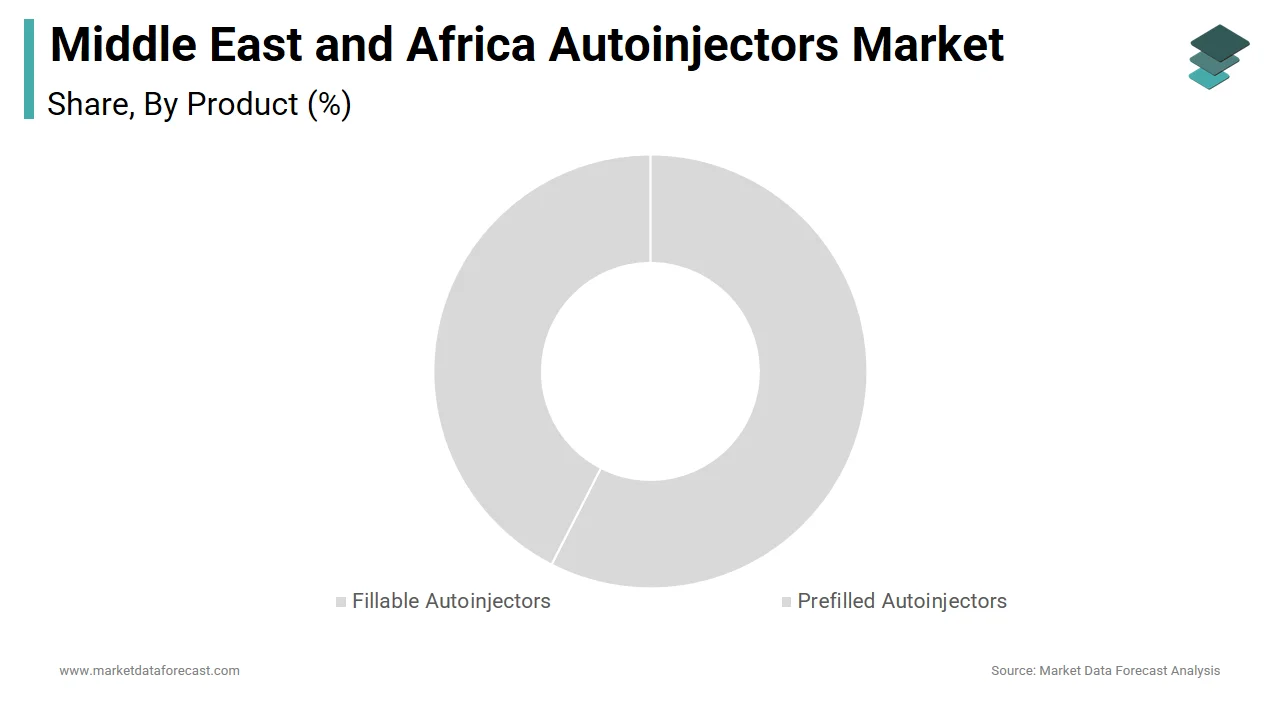
The prefilled autoinjectors segment commanded the Middle East and Africa Autoinjectors Market, accounting for 68.6% of total market revenue in 2025. This dominance is primarily attributed to the growing demand for ready-to-use injectable medications that eliminate the need for manual drug preparation, reducing the risk of dosing errors and enhancing patient safety. Prefilled devices are extensively used for emergency treatments such as epinephrine delivery during anaphylaxis and biologic therapies for chronic conditions like multiple sclerosis and rheumatoid arthritis.
Also, regulatory bodies such as the Saudi Food and Drug Authority (SFDA) have encouraged the adoption of prefilled systems due to their ease of use and reduced training requirements. As healthcare systems in the Middle East and Africa region continue to prioritize efficiency and safety, the preference for prefilled autoinjectors remains strong.
The fillable autoinjectors segment is projected to grow at the fastest CAGR of 9.4%. This rapid growth is driven by increasing flexibility in drug administration, particularly in institutional settings where customized dosing is required for patients with varying medical needs. Fillable autoinjectors allow healthcare providers to load specific medications tailored to individual treatment plans, making them ideal for hospitals, clinics, and specialized care centers. In countries like South Africa and Egypt, where cost containment is a priority, fillable systems offer economic advantages by enabling reuse of device components while replacing only the medication cartridge.
Moreover, pharmaceutical companies are exploring partnerships with local manufacturers to develop refillable platforms that support high-cost biologics, further expanding market penetration. With rising investments in hospital-based care and increasing emphasis on flexible treatment options, the fillable autoinjector segment is poised for accelerated expansion across the Middle East and Africa region.
By Usability Insights
The disposable autoinjectors segment dominates the Middle East and Africa Autoinjectors Market, capturing 62.8% of total market volume in 2025. This dominance is largely driven by the widespread preference for single-use injectors among patients and healthcare professionals due to their convenience, sterility assurance, and minimal risk of cross-contamination. Disposable units are commonly used in emergency settings such as schools, workplaces, and public institutions, where quick and reliable administration of life-saving drugs like epinephrine is critical.
Also, governments in the UAE and Saudi Arabia have mandated the availability of disposable epinephrine autoinjectors in all educational institutions, significantly boosting demand. Given the high incidence of allergic reactions and the growing emphasis on emergency preparedness, disposable autoinjectors remain the most widely adopted usability type across the Middle East and Africa region.
The reusable autoinjectors segment is anticipated to expand at the highest CAGR of 8.9%. This growth is fueled by rising concerns over cost efficiency and environmental sustainability, particularly in public healthcare facilities and chronic disease management programs. Reusable devices consist of durable outer shells that can accommodate multiple drug cartridges, reducing overall waste and long-term expenses.
Additionally, organizations such as Médecins du Monde have advocated for reusable injectors in humanitarian aid programs, highlighting their potential to serve low-income populations effectively. As awareness of sustainable healthcare practices grows and cost-conscious buyers seek alternatives, the reusable autoinjectors segment is expected to gain significant traction across the Middle East and Africa market.
By Manufacturing Design Insights
The standardized autoinjectors segment held the largest share of the Middle East and Africa Autoinjectors Market, representing 74.5% of total market value in 2025. This is primarily driven by the widespread use of off-the-shelf injection devices that are compatible with commonly prescribed medications such as epinephrine, interferon beta, and tumor necrosis factor inhibitors. Standardized designs ensure seamless integration with existing pharmaceutical supply chains, allowing for mass production, easier distribution, and lower costs—factors that are particularly important in regions with limited healthcare budgets.
According to the World Health Organization (WHO), standardized injectors account for over 80% of emergency allergy kits distributed in GCC countries, facilitating rapid deployment in public health initiatives. In addition, major pharmaceutical companies such as Pfizer and Sanofi have aligned their injectable formulations with standard autoinjector platforms, promoting broad adoption. Given the emphasis on affordability, scalability, and compatibility, standardized autoinjectors remain the dominant manufacturing design in the Middle East and Africa market.
The customized autoinjectors segment is projected to grow at the highest CAGR of 10.2% during the forecast period. This rapid growth is driven by increasing demand for personalized drug delivery solutions tailored to specific therapeutic areas such as oncology, neurology, and rare diseases. Customized injectors are designed to accommodate unique drug formulations, dosage volumes, and user-specific ergonomics, making them ideal for niche applications in specialty pharmaceuticals. In Israel, which leads in biopharmaceutical innovation, customized injectors are being developed for novel immunotherapies and gene-editing treatments, as reported by the Israel Innovation Authority.
Additionally, collaborations between regional biotech firms and device manufacturers have led to the introduction of smart injectors equipped with digital tracking features, enhancing adherence and remote monitoring capabilities. As precision medicine gains momentum and regulatory pathways for customized injectors become more streamlined, this segment is expected to experience sustained growth across the Middle East and Africa market.
By Application Insights
The anaphylaxis application segment dominated the Middle East and Africa Autoinjectors Market, contributing to 55.8% of total market revenue in 2025. This is credited to the rising prevalence of severe allergic reactions, particularly among children and adolescents, which necessitate immediate intervention using epinephrine autoinjectors.
According to the African Society of Immunology and Allergy (ASIA), urbanization and dietary changes in North and East Africa are contributing to higher rates of food-induced anaphylaxis, reinforcing the need for accessible emergency injectors. Given the life-threatening nature of anaphylactic episodes and the growing emphasis on emergency preparedness, the anaphylaxis application segment continues to lead the Middle East and Africa Autoinjectors Market.
The Multiple Sclerosis (MS) application segment is projected to grow at the highest CAGR of 11.5%. This rapid expansion is driven by the increasing diagnosis of MS in urban centers across the Middle East and North Africa, coupled with the rising adoption of self-administered disease-modifying therapies (DMTs). Autoinjectors play a crucial role in delivering interferon beta and glatiramer acetate, two widely prescribed medications for relapsing-remitting MS.
According to the Multiple Sclerosis International Federation (MSIF), the number of diagnosed MS cases in the Gulf region has doubled since 2015, with Saudi Arabia and the UAE reporting the highest prevalence rates in the Arab world.
Also, pharmaceutical companies such as Novartis and Roche have launched co-packaged DMT-autoinjector combinations in the Middle East and Africa market, improving patient adherence and treatment continuity. With greater awareness, expanded insurance coverage, and ongoing research into subcutaneous treatments, the MS application segment is expected to maintain its robust growth trajectory within the Middle East and Africa Autoinjectors Market.
COUNTRY LEVEL ANALYSIS
Saudi Arabia Autoinjectors Market Insights
Saudi Arabia led the Middle East and Africa Autoinjectors Market, holding 24.5% of total regional demand in 2025. Positioned as a key healthcare innovator in the Gulf, the country has been actively integrating advanced drug delivery technologies into its national health strategy under Vision 2030. The SFDA has streamlined approval processes for autoinjector devices, ensuring quicker market access for global manufacturers.
The country’s expanding private healthcare sector and rising incidence of autoimmune disorders such as multiple sclerosis and rheumatoid arthritis are further fueling demand. With continued investment in digital health infrastructure and regulatory modernization, Saudi Arabia remains a pivotal growth driver in the Middle East and Africa Autoinjectors Market.
United Arab Emirates Autoinjectors Market Insights
The United Arab Emirates is positioned as a leader in healthcare technology adoption, has integrated autoinjector devices into its national strategies for chronic disease management and emergency preparedness. Besides, the UAE’s well-developed private healthcare sector supports the uptake of premium-priced autoinjectors through insurance-covered prescriptions. The country's participation in global health innovation forums and strategic collaborations with multinational pharmaceutical companies further enhance its market position. As telemedicine and home-based care models expand, the UAE is expected to maintain strong growth in autoinjector adoption.
Israel Autoinjectors Market Insights
Israel holds a prominent position in the Middle East and Africa Autoinjectors Market. Positioned as a global leader in biotechnology and medical device innovation, Israel plays a crucial role in developing next-generation autoinjector technologies tailored for precision medicine applications. The country’s strong R&D ecosystem, supported by institutions like the Israel Innovation Authority, has led to the creation of smart, connected injectors that integrate with digital health platforms.
Besides, Israel’s universal healthcare system ensures broad access to biologic therapies, many of which require self-administration via autoinjectors. The country’s regulatory framework encourages rapid approval of innovative injectable solutions, attracting global pharmaceutical companies to collaborate with local startups. As Israel continues to drive advancements in injectable drug delivery, its influence on the broader Middle East and Africa market is expected to grow.
South Africa Autoinjectors Market Insights
South Africa is positioned as a key healthcare hub in Sub-Saharan Africa, the country has been expanding its chronic disease management programs, leading to increased demand for autoinjector-based therapies. Public hospitals and clinics are adopting reusable and disposable injectors for managing conditions such as rheumatoid arthritis, multiple sclerosis, and diabetes, where subcutaneous injections are preferred.
In addition, initiatives by organizations such as Médecins du Monde and the Clinton Health Access Initiative (CHAI) are promoting cost-effective injectable therapies in underserved communities. With growing awareness of autoimmune diseases and increasing investments in hospital-based injectable services, South Africa remains a key growth engine for the Middle East and Africa Autoinjectors Market.
Egypt Autoinjectors Market Insights
Egypt is a major healthcare market in North Africa, Egypt has seen gradual but steady growth in autoinjector adoption, driven by government-led efforts to improve access to chronic disease treatments. Additionally, collaborations between local distributors and international pharmaceutical firms have facilitated the availability of cost-effective injectable therapies. Despite economic constraints, Egypt’s expanding middle-class population and increasing focus on home-based care are expected to support sustained growth in the autoinjector market over the coming decade.
COMPETITIVE LANDSCAPE
The competition in the Middle East and Africa Autoinjectors Market is shaped by a mix of global pharmaceutical giants, specialized medical device manufacturers, and emerging regional players striving to capture market share. While multinational corporations leverage their established brand presence and technological expertise, local firms are gaining traction by offering cost-competitive solutions tailored to regional healthcare dynamics. The market landscape reflects a balance between innovation-driven leadership and agile, customer-focused strategies. As demand for self-administered therapies grows, companies are differentiating themselves through product customization, digital integration, and localized service offerings. Additionally, regulatory developments, pricing pressures, and evolving treatment protocols further influence competitive positioning. Collaboration between industry leaders and public health entities is becoming essential to navigate regulatory complexities and drive widespread adoption. With increasing emphasis on accessibility, affordability, and ease of use, the Middle East and Africa Autoinjectors Market continues to evolve rapidly, requiring continuous adaptation from all market participants.
KEY MARKET PLAYERS
A few of the Middle East and Africa Autoinjectors market players covered in this report are Mylan N.V., Pfizer, Inc., Bayer AG, Becton, Dickinson and Company, Novartis AG, Biogen Idec, Inc., Janssen North America Services, LLC, Sanofi, Unilife Corporation, and Eli Lilly.
TOP LEADING PLAYERS IN THE MARKET
- Mylan, now integrated into Viatris, has been a leading player in the global autoinjectors market and plays a significant role in the Middle East and Africa region. Known for its widely recognized EpiPen, Mylan has contributed to increasing awareness and accessibility of emergency allergy treatments across Middle Eastern and African countries. The company’s focus on affordability, patient education, and partnerships with local governments has helped expand the reach of life-saving injectable medications. In the Middle East and Africa region, Mylan has worked closely with healthcare institutions to ensure that epinephrine autoinjectors are available in schools, hospitals, and public health centers.
- Sanofi is a major contributor to the Middle East and Africa Autoinjectors Market through its portfolio of self-injection devices used in chronic disease management, particularly for conditions like multiple sclerosis and diabetes. The company’s innovative approach to drug-device combination products has enhanced patient adherence and treatment outcomes in the region. Sanofi has actively engaged in expanding access to biologic therapies by collaborating with local distributors and healthcare providers. Its commitment to improving healthcare delivery in emerging markets has led to strategic initiatives aimed at integrating autoinjector-based therapies into national treatment guidelines across several Middle East and Africa countries.
- BD is a globally recognized leader in medical device innovation and plays a pivotal role in advancing autoinjector technology in the Middle East and Africa region. The company provides advanced injection systems designed for both emergency and chronic care applications, supporting pharmaceutical partners in delivering safe and effective self-administered therapies. BD's contributions include developing customized injection platforms tailored for specific therapeutic areas and enhancing supply chain efficiency in Middle East and Africa markets. Through research collaborations and localized training programs, BD supports healthcare professionals in adopting modern injection technologies, thereby strengthening the regional ecosystem for autoinjector use.
RECENT MARKET DEVELOPMENTS
- In March 2024, Sanofi announced a partnership with a leading Egyptian pharmaceutical distributor to expand the availability of its autoinjector-based multiple sclerosis treatments across North Africa, aiming to improve patient access in underserved regions.
- In June 2024, BD launched an educational initiative in collaboration with Saudi Arabian medical associations to train healthcare professionals on the correct use of autoinjectors, focusing on emergency allergy response and chronic disease management.
- In October 2024, Mylan (Viatris) introduced a subsidized program in South Africa to provide affordable epinephrine autoinjectors to schools and public institutions, reinforcing its commitment to increasing emergency medication access.
- In January 2025, Novartis expanded its collaboration with Israeli biotech startups to develop next-generation smart autoinjectors capable of integrating with mobile health platforms, enhancing remote monitoring capabilities for chronic disease patients.
- In April 2025, AbbVie formed a strategic alliance with a Dubai-based healthcare logistics provider to streamline the distribution of its Humira autoinjector products across the Gulf Cooperation Council (GCC) countries, ensuring faster and more reliable supply chain operations.
MARKET SEGMENTATION
This research report on the Middle East and Africa autoinjectors market is segmented and sub-segmented into the following categories.
By Product
- Fillable Autoinjectors
- Prefilled Autoinjectors
By Usability
- Disposable Autoinjectors
- Reusable Autoinjectors
By Manufacturing Design
- Standardized Autoinjectors
- Customized Autoinjectors
By Technology
- Automated Autoinjectors
- Manual Autoinjectors
By Application
- Anaphylaxis
- Multiple Sclerosis
- Rheumatoid Arthritis
By Country
- KSA
- UAE
- Israel
- rest of GCC countries
- South Africa
- Ethiopia
- Kenya
- Egypt
- Sudan
- Rest of Middle East and Africa