- Product Description Description
- Table of Contents TOC
- List of Table & Figure LOT
- Get Free Sample PDF Sample PDF
Market Size, 2025
$2.92 BnMarket Estimate, 2026
$3.32 BnMarket Forecast, 2034
$9.23 BnCAGR, 2026–2034
13.64%Middle East and Africa Butter and Ghee Market Report Summary
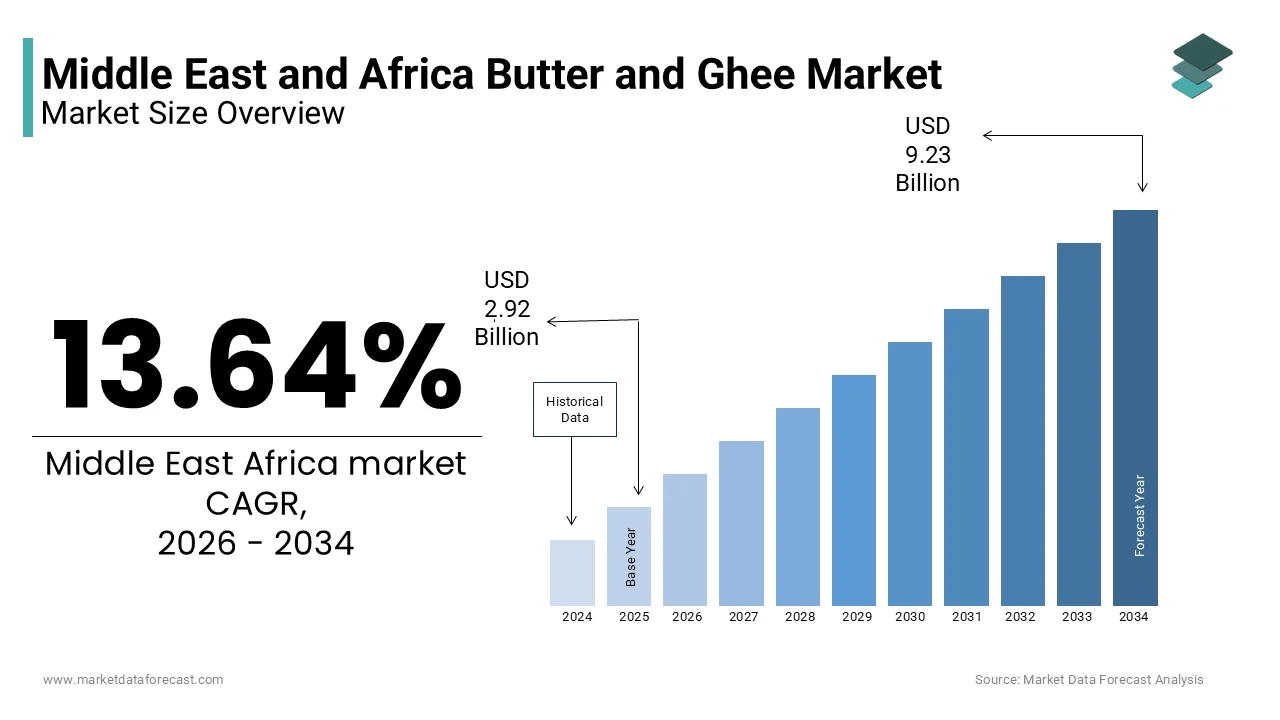
The Middle East and Africa butter and ghee market was valued at USD 2.92 billion in 2025, is estimated to reach USD 3.32 billion in 2026, and is projected to reach USD 9.23 billion by 2034, growing at a CAGR of 13.64% during the forecast period. Market growth is driven by rising consumption of dairy based products, increasing demand for traditional cooking ingredients, and expanding foodservice and hospitality sectors. Butter and ghee are widely used in household cooking, bakery applications, and ethnic cuisines across the region. The growing preference for premium dairy products and rising disposable incomes are further supporting strong market expansion.
Key Market Trends
- Rising demand for dairy based cooking ingredients is driving market growth.
- Increasing consumption of traditional and ethnic food products is boosting demand.
- Growing expansion of supermarkets and organized retail channels is supporting market expansion.
- Expansion of foodservice and hospitality industries is enhancing product usage.
- Innovation in packaging and premium dairy formulations is influencing consumer preferences.
Segmental Insights
- Based on volume, the imports segment held a substantial share of the Middle East and Africa butter and ghee market in 2025. This dominance is attributed to strong regional dependence on imported dairy products to meet growing demand.
- Based on distribution channel, the supermarkets and hypermarkets segment accounted for 42.6% of the Middle East and Africa butter and ghee market share in 2025, supported by broad product availability and organized retail growth.
Regional Insights
- The Middle East and Africa butter and ghee market is experiencing strong growth across key countries, supported by rising dairy consumption and expanding retail infrastructure.
- The United Arab Emirates accounted for 14.2% of the Middle East and Africa butter and ghee market share in 2025, driven by high consumer spending, strong foodservice demand, and large scale imports of premium dairy products.
Competitive Landscape
The Middle East and Africa butter and ghee market is moderately competitive, with key players focusing on product quality, import expansion, and distribution network development to strengthen their market position. Companies are investing in premium dairy offerings, packaging innovation, and regional supply chain enhancement. Prominent players in the Middle East and Africa butter and ghee market include Terra Food LLC, Avn Products, SEWRI Trading Company, Worldlink Entt, Mousa Al Mazim General Trading, Umang Dairies Limited, Prime Lac Supplies, and Export Company MARSHO.
Middle East and Africa Butter and Ghee Market Size
The Middle East and Africa butter and ghee market size was valued at USD 2.92 billion in 2025 and is projected to reach USD 9.23 billion by 2034 from USD 3.32 billion in 2026, growing at a CAGR of 13.64%.
Butter and ghee are both dairy products derived from milk fat, commonly used for cooking and as spreads. Ghee holds a prestigious position in South Asian and Middle Eastern cuisines due to its high smoke point and rich flavor profile while butter remains a staple in North African and urban European influenced diets. The region is characterized by a significant reliance on imports for raw milk solids and finished dairy products due to arid climatic conditions that limit local fodder production. As per the Food and Agriculture Organization (FAO), agriculture in the Middle East and North Africa has historically contributed approximately 13% to the regional Gross Domestic Product (GDP) (though this varies by country), while the livestock sector itself often accounts for a much higher share, typically 30 to 50%, of the agricultural GDP. The region faces persistent challenges in meeting domestic dairy demand due to water scarcity and feed deficits. Consumer preferences are shifting towards premium and organic variants driven by rising health consciousness among the expanding middle class in countries such as Saudi Arabia and the United Arab Emirates. The cultural significance of ghee in religious festivals and traditional ceremonies ensures a consistent baseline demand throughout the year. According to the World Bank data the population in Sub Saharan Africa is projected to reach 2.5 billion by 2050 which will substantially increase the aggregate demand for basic food staples including dairy fats. Urbanization rates in the Gulf Cooperation Council (GCC) countries exceed 80% according to data from the United Nations Department of Economic and Social Affairs (UN DESA). Market analysts observe that this high urbanization is driving increased consumption of processed and convenience foods, which frequently utilize dairy fats like butter and ghee.
MARKET DRIVERS
Rising Disposable Incomes and Rapid Urbanization Catalyze Premium Dairy Shift
The economic diversification efforts in Gulf nations have led to a substantial increase in household spending power which directly influences dietary choices, and thereby contributes to the growth of the Middle East and Africa butter and ghee market. As per the International Monetary Fund and World Bank data, the gross domestic product per capita in Qatar was $80,196 in 2023 reflecting the high purchasing power of consumers in the region. This financial capability allows households to prefer high quality clarified butter and organic butter over conventional alternatives. Urban centers such as Dubai Riyadh and Cairo are witnessing a surge in the availability of international gourmet food products which includes artisanal butter and flavored ghee variants. The growing expatriate population in the Middle East further amplifies this trend as these communities maintain their traditional culinary habits that require specific types of dairy fats. According to the United Nations Department of Economic and Social Affairs, the urban population in Africa and Asia is growing rapidly, with rates of increase in the proportion urban at 1.1% and 1.3% respectively (2015-2020). The region is highly urbanized, with the percentage of the population in urban areas in the Middle East & North Africa reaching approximately 77.6% in 2024. This demographic shift necessitates efficient supply chains for perishable goods and drives the demand for packaged and branded butter and ghee products that offer longer shelf life and consistent quality. The proliferation of modern retail formats such as hypermarkets and online grocery platforms facilitates easier access to these premium products thereby reinforcing the growth trajectory of the market in urbanized areas.
Cultural and Religious Traditions Sustain Robust Baseline Demand
Ghee is not merely a cooking ingredient but a cultural symbol in many regional communities, particularly those with South Asian influences, which in turn propels the expansion of the Middle East and Africa butter and ghee market. It is extensively used in religious ceremonies weddings and festive celebrations which creates a seasonal spike in demand that is resilient to economic fluctuations. In countries like Saudi Arabia and the United Arab Emirates where a significant portion of the population originates from South Asia the consumption of ghee is deeply embedded in daily culinary practices. The preparation of traditional dishes such as biryani halwa and various curries requires substantial quantities of ghee ensuring a steady consumption rate. Furthermore the perception of ghee as a health promoting substance in traditional medicine systems such as Ayurveda and Unani adds to its appeal among health conscious consumers who seek natural and unprocessed food options. According to the World Health Organization, traditional medicine (primarily herbal) is used by a large segment of the population in African countries (often cited as up to 80%) for primary health care. This deep rooted cultural affinity ensures that despite the introduction of alternative cooking oils ghee retains its indispensable status in the regional diet.
MARKET RESTRAINTS
Volatility in Global Feed Prices Constrains Local Production Capabilities
Producing sufficient raw milk continues to be a major challenge to the Middle East and Africa butter and ghee market. This is due to the high cost of animal feed, which is largely imported. Arid climatic conditions limit the availability of arable land for growing fodder crops such as alfalfa and corn which are essential for dairy cattle. As per the Food and Agriculture Organization of the United Nations the price index for cereals which are key components of animal feed experienced significant fluctuations in recent years impacting the profitability of local dairy farms. This dependency on imported feed exposes local producers to global market volatility and currency exchange risks which often result in higher production costs. Consequently local dairy processors struggle to compete with imported butter and ghee products that may benefit from economies of scale in major exporting countries. The high cost of production also limits the ability of local farmers to invest in advanced dairy technologies that could improve yield and efficiency. According to the World Bank data inflation rates in several African countries have remained elevated which further exacerbates the cost pressures on local dairy producers. This economic environment discourages new investments in the local dairy sector and perpetuates the reliance on imports for meeting the growing demand for butter and ghee. The lack of self sufficiency in raw milk production thus remains a critical bottleneck for the development of a robust domestic butter and ghee industry in the region.
Stringent Regulatory Standards and Import Tariffs Impede Market Accessibility
The regulatory landscape for dairy products in the region is complex and varies significantly across countries, which poses barriers for international suppliers within the Middle East and Africa butter and ghee market. Many countries in the region have implemented strict halal certification requirements and labeling standards that must be met before products can enter the market. As per the Gulf Standardization Organization the technical regulations for food products in the Gulf Cooperation Council countries are rigorous and require extensive documentation and testing which can delay market entry. Additionally import tariffs and non tariff barriers are often used to protect local dairy industries which increases the final retail price of imported butter and ghee. For instance, some African countries impose high duties on dairy imports to support local farmers which makes imported products less competitive. According to the WTO’s 2023-2024 monitoring, many countries in the MEA region have periodically implemented export bans on essential commodities to ensure domestic food security. Furthermore, exporters cite high technical barriers to trade (TBT) and sanitary and phytosanitary (SPS) measures as the primary hurdles for expansion into these specific regions. The lack of harmonization in regulatory standards across the region further complicates the supply chain management for multinational companies. These regulatory hurdles not only increase the cost of compliance but also create uncertainty for investors and suppliers. The complexity of navigating these diverse regulatory frameworks acts as a significant restraint on the seamless flow of butter and ghee products across borders thereby limiting market growth and consumer choice.
MARKET OPPORTUNITIES
Expansion of E Commerce Platforms Offers New Distribution Channels
The rapid growth of digital connectivity in the region is transforming the retail landscape and providing new opportunities for the Middle East and Africa butter and ghee market. E commerce platforms are increasingly becoming a preferred channel for purchasing grocery items including perishable dairy products due to their convenience and wider product selection. As per the United Nations Conference on Trade and Development the value of e commerce transactions in developing countries has grown significantly with the Middle East and Africa showing promising potential. Online grocery services are expanding their cold chain logistics capabilities which enables the safe delivery of temperature sensitive products such as butter and ghee to consumers doorstep. This development is particularly beneficial for niche and premium brands that may not have extensive presence in physical retail stores. The ability to reach a broader customer base through digital platforms allows manufacturers to introduce innovative products such as flavored ghee and organic butter to health conscious consumers. The integration of advanced logistics solutions such as real time tracking and temperature controlled delivery ensures product quality and enhances consumer trust. This digital transformation provides a strategic avenue for market players to bypass traditional distribution bottlenecks and engage directly with consumers thereby fostering brand loyalty and driving sales growth.
Growing Demand for Organic and Clean Label Products Creates Niche Opportunities
Consumers in the region are becoming increasingly aware of the health implications of their dietary choices which is driving the demand for organic and clean label dairy products in the Middle East and Africa butter and ghee market. There is a growing preference for butter and ghee that are free from artificial additives preservatives and hormones as consumers seek more natural and wholesome food options. Local and international brands are responding to this demand by introducing organic certified butter and ghee products that cater to health conscious segments. The rise of wellness tourism and the influence of global health trends are further accelerating this shift in consumer preferences. This health awareness creates a favorable environment for premium dairy products that are perceived as healthier alternatives to refined vegetable oils. Manufacturers who invest in organic certification and transparent sourcing practices can differentiate themselves in the market and command higher price points. The opportunity to capture this growing segment of health conscious consumers represents a significant growth avenue for the butter and ghee market in the region.
MARKET CHALLENGES
Supply Chain Disruptions Pose Significant Operational Challenges
Geopolitical tensions and logistical bottlenecks create significant threats to the Middle East and Africa butter and ghee market. As a result, this market is highly susceptible to supply chain disruptions. The region relies heavily on imports for both raw materials and finished products which makes it vulnerable to global supply chain shocks. As per the United Nations Conference on Trade and Development (UNCTAD), disruptions in shipping routes and port congestions lead to delays and increased transportation costs which primarily impact global food prices and the security of staple commodities, particularly grains. Political instability in certain parts of the region further exacerbates these challenges by disrupting trade flows and creating uncertainty for businesses. The lack of robust cold chain infrastructure in many African countries also poses a challenge for the distribution of perishable dairy products. According to the World Bank inadequate infrastructure results in significant post harvest losses and reduces the efficiency of the supply chain. These logistical challenges not only increase operational costs but also affect the quality and freshness of the products reaching the consumers. Manufacturers and distributors must invest in resilient supply chain strategies and alternative sourcing options to mitigate these risks. The inability to ensure consistent supply can lead to stockouts and loss of consumer trust which negatively impacts market growth. Addressing these supply chain vulnerabilities is crucial for the sustainable development of the butter and ghee market in the region.
Counterfeit and Adulterated Products Undermine Consumer Trust
The prevalence of counterfeit and adulterated dairy products is a significant challenge that affects the integrity of the Middle East and Africa butter and ghee market. Unregulated informal markets often sell substandard products that are mixed with cheaper oils or artificial flavors which misleads consumers and poses health risks. As per the World Trade Organization (WTO) and FAO, food fraud is a global concern that undermines consumer confidence and harms legitimate businesses. In regions with weak regulatory enforcement counterfeit products can easily enter the supply chain and compete with genuine brands on price. This practice not only damages the reputation of established brands but also discourages consumers from purchasing premium products. The lack of awareness among consumers about how to identify authentic products further exacerbates the problem. According to the Global Food Safety Initiative improving food safety standards and traceability systems is essential to combat food fraud. Manufacturers must invest in advanced packaging technologies and certification marks to help consumers distinguish genuine products from counterfeits. Regulatory bodies need to strengthen enforcement mechanisms and conduct regular inspections to curb the sale of adulterated products. Addressing this challenge is critical to maintaining consumer trust and ensuring the long term sustainability of the butter and ghee market in the region.
REPORT COVERAGE
| REPORT METRIC | DETAILS |
| Market Size Available | 2025 to 2034 |
| Base Year | 2025 |
| Forecast Period | 2026 to 2034 |
| CAGR | 13.64% |
| Segments Covered | By Volume, Distribution Channel, and Region |
| Various Analyses Covered | Global, Regional and Country Level Analysis; Segment-Level Analysis; DROC; PESTLE Analysis; Porter’s Five Forces Analysis; Competitive Landscape; Analyst Overview of Investment Opportunities |
| Regions Covered | UAE, Israel, KSA, North Africa, Egypt, Ethiopia, Kenya, Saudi Arabia |
| Market Leaders Profiled | Terra Food LLC, Avn Products, SEWRI Trading Company, Worldlink Entt, Mousa Al Mazim General Trading, Umang Dairies Limited, Prime Lac Supplies, Export Company MARSHO. |
SEGMENTAL ANALYSIS
By Volume Insights
The imports segment was the largest segment in the Middle East and Africa butter and ghee market and occupied a substantial share in 2025. This prominence of the segment is supported to the region's inherent inability to produce sufficient raw milk locally. The arid climate across most of the Middle East and North Africa restricts the cultivation of fodder crops necessary for dairy cattle leading to a structural deficit in domestic milk production. Countries such as New Zealand India and European nations serve as primary sources for imported butter and ghee products which are preferred for their consistent quality and competitive pricing. The logistical infrastructure in major ports like Jebel Ali in Dubai and Jeddah in Saudi Arabia facilitates the efficient handling of large volumes of dairy imports ensuring steady supply chains. The preference for imported brands is also driven by the perception of higher safety standards and better packaging which appeals to the health conscious urban consumer. This dependency on imports is further reinforced by trade agreements that lower tariffs on essential food items making imported butter and ghee more accessible to the average household. The main driver for the dominance of the import segment is the structural deficit in local dairy production caused by environmental and resource constraints. The Middle East and Africa region faces severe water scarcity which limits the ability to sustain large scale dairy farming operations. This inefficiency makes local milk production economically unviable compared to importing finished dairy products from countries with abundant natural resources. Furthermore the high cost of energy required for cooling and processing dairy products in hot climates adds to the production costs making local products less competitive. The gap between domestic production and consumption continues to widen as population growth outpaces the expansion of local dairy capabilities. This persistent supply gap ensures that imports remain the backbone of the butter and ghee market providing the necessary volume to satisfy regional demand. The reliance on imports is thus a strategic necessity rather than a choice driven by economic and environmental realities.
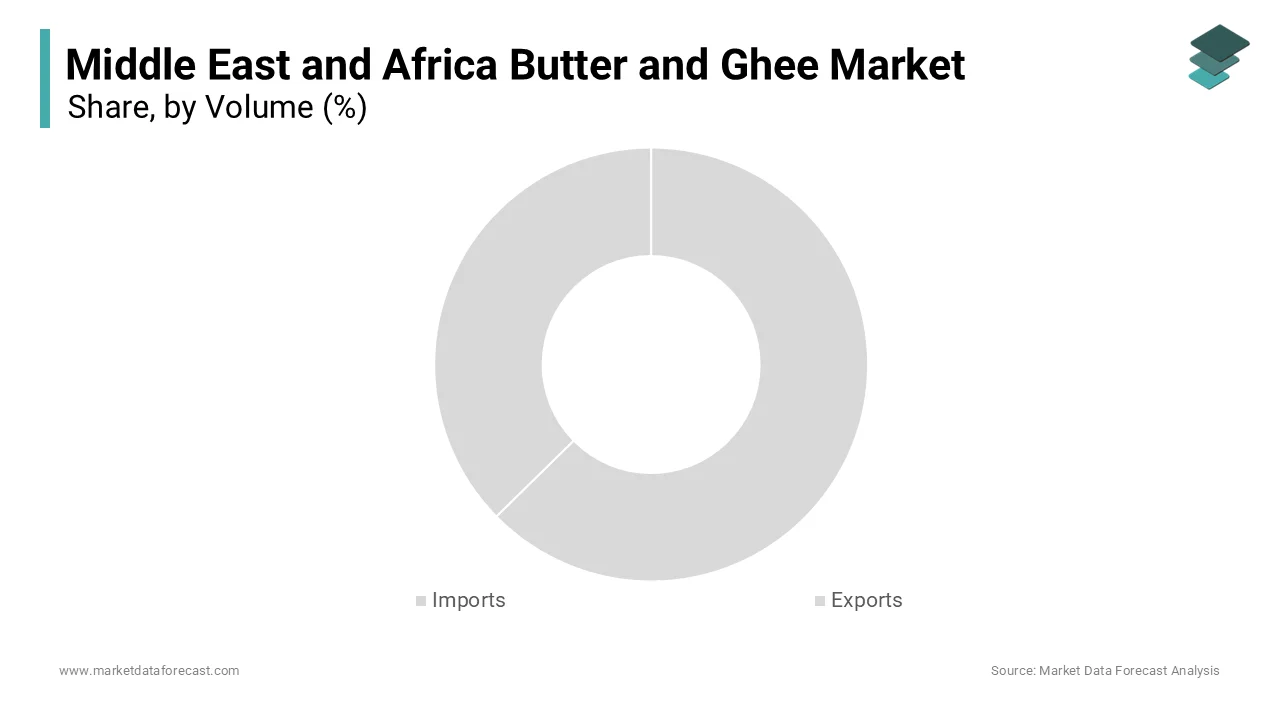
On the other hand, the export segment is anticipated to witness the fastest CAGR of 4.5% during the forecast period. This rapid growth of the segment is primarily fuelled by the increasing re export activities from hub countries such as the United Arab Emirates which serve as a gateway for dairy products entering African and Asian markets. The strategic location of the UAE allows for efficient distribution of butter and ghee to neighboring regions leveraging advanced logistics and free trade zones. Additionally there is a emerging trend of specialized ghee exports from countries like India to the Middle East catering to the specific tastes of the expatriate community. The demand for premium and organic ghee in international markets is also boosting export volumes as producers seek to capitalize on higher margin opportunities. This shift towards value added exports indicates a maturing market where quality and branding play a crucial role in driving growth. The expansion of export channels provides new revenue streams for manufacturers and strengthens the regional position in the global dairy trade. Besides these, the rapid growth of the export segment is fueled by the establishment of key countries as re export hubs for the wider region. The United Arab Emirates in particular has developed a robust infrastructure for storing and redistributing perishable goods including butter and ghee. The presence of world class cold storage facilities and efficient port operations enables traders to maintain product quality during transit which is essential for dairy products. This logistical advantage attracts international suppliers who use the UAE as a base for distributing their products to smaller markets in the Middle East and Africa that lack direct import capabilities. The ability to consolidate shipments and offer flexible delivery options makes the re export model highly attractive for businesses looking to expand their reach. Furthermore trade agreements and free zones provide tax incentives that lower the cost of doing business encouraging more companies to engage in export activities. This strategic positioning not only boosts the volume of exports but also enhances the overall resilience of the supply chain by diversifying sourcing and distribution channels.
By Distribution Channel Insights
In 2025, the supermarkets and hypermarkets segment held the majority share of 42.6% of the Middle East and Africa butter and ghee market. This supremacy of the segment is credited to its ability to offer a wide variety of products under one roof. These modern retail formats provide consumers with the convenience of comparing different brands and types of dairy products ranging from conventional to organic variants. The controlled environment of supermarkets ensures that perishable items like butter are stored at optimal temperatures maintaining product quality and safety which is a key concern for consumers. Additionally these retailers often run promotional campaigns and discounts that attract price sensitive shoppers thereby driving volume sales. The presence of international supermarket chains such as Carrefour and Lulu Hypermarket has standardized the availability of branded butter and ghee products ensuring consistent supply. This reliability builds consumer trust and loyalty making supermarkets and hypermarkets the preferred choice for regular household purchases. The ability to offer private label products alongside established brands also allows these retailers to cater to diverse income segments further solidifying their market dominance. Furthermore, the dominance of supermarkets and hypermarkets is driven by the high level of consumer trust in the quality and safety standards maintained by these outlets. In a region where food safety is a paramount concern shoppers prefer to buy dairy products from regulated environments where temperature control and hygiene are strictly monitored. Consumers are willing to pay a premium for the assurance that the butter and ghee they purchase are genuine and free from contaminants. This trust is further reinforced by the transparent labeling practices adopted by modern retailers which provide detailed information about ingredients origin and nutritional value. The ability of supermarkets to source directly from reputable manufacturers also ensures a consistent supply of high quality products. This focus on quality and safety aligns with the growing health consciousness among consumers who are increasingly scrutinizing the sources of their food. The reputation of established supermarket chains thus acts as a powerful driver for their continued dominance in the butter and ghee market.
However, the E retailers segment is likely to experience the fastest CAGR of 12.8% from 2026 to 2034. This rapid expansion of the segment is propelled by the increasing penetration of smartphones and internet connectivity which has made online shopping more accessible to a broader demographic. Online grocery platforms offer the convenience of home delivery which is particularly appealing to busy urban professionals and families. The ability to browse a wider selection of niche and premium products that may not be available in local stores also attracts consumers to online channels. In addition, the integration of advanced logistics and cold chain solutions has addressed previous concerns about the delivery of perishable items making online purchase of butter and ghee more viable. Promotional offers and personalized recommendations further enhance the shopping experience encouraging repeat purchases. This digital shift is transforming the retail landscape and providing new opportunities for brands to engage directly with consumers. Moreover, the accelerated growth of e retailers is primarily attributed to the widespread adoption of digital technologies and the demand for convenience. The proliferation of mobile devices and affordable data plans has enabled millions of consumers in the Middle East and Africa to access online shopping platforms easily. This digital infrastructure supports the seamless operation of e commerce apps that offer user friendly interfaces and secure payment options. The convenience of having groceries delivered to the doorstep saves time and effort which is highly valued in fast paced urban environments. During periods of restricted movement such as pandemics consumers rapidly adopted online shopping for essential items including dairy products creating a lasting habit. E retailers leverage data analytics to understand consumer preferences and offer targeted promotions which enhances customer retention. The ability to reach remote areas where physical retail presence is limited also expands the market reach for butter and ghee brands. This combination of technological enablement and consumer behavior shift drives the exceptional growth of the e retail segment.
REGIONAL ANALYSIS
United Arab Emirates Butter and Ghee Market Analysis
The United Arab Emirates is a significant player in the Middle East and Africa butter and ghee market and captured a 14.2% share in 2025. It serves as a major consumption and re export hub. The country's affluent population and diverse culinary landscape drive high demand for both premium and standard dairy products. As per the Dubai Department of Economy and Tourism (DET), the food and beverage sector is a vital pillar of the tourism and non-oil economy. The Ministry of Economy and MOCCAE emphasize the sector's broader role in national food security and trade resilience. The presence of a large expatriate community from South Asia and Europe creates a sustained demand for specific types of ghee and butter used in traditional cuisines. The government's focus on food security through strategic stockpiling and diversified sourcing ensures a stable supply of dairy products. According to the Ministry of Climate Change and Environment, the UAE prioritizes vertical farming to increase self-sufficiency in fresh produce (fruits and vegetables). The country has already achieved high self-sufficiency in fresh milk through advanced dairy farms, though it continues to import processed dairy products. The sophisticated retail infrastructure including numerous supermarkets and online platforms facilitates easy access to a wide range of butter and ghee products. The country's strategic location and advanced logistics capabilities also enable it to serve as a distribution center for the wider region. This dual role as a consumer and distributor strengthens its market status and influences regional trends. The emphasis on quality and innovation in the UAE market sets benchmarks for other countries in the region.
Saudi Arabia Butter and Ghee Market Analysis
Saudi Arabia led the Middle East and Africa butter and ghee market and occupied a 31.7% share in 2025. This position of the country’s market is driven by its substantial population and cultural significance of dairy products. The Vision 2030 initiative has spurred economic diversification and improved living standards which has increased consumer spending on high quality food items. As per the General Authority for Statistics (GASTAT), the population of Saudi Arabia reached approximately 32.2 million (2022 census). Industry analysis indicates this population growth expands the consumer base for dairy products. The traditional use of ghee in Saudi cuisine for preparing dishes such as kabsa and maqluba ensures a consistent and high volume demand. The government's support for local dairy production through subsidies and investments has enhanced self sufficiency but imports still play a crucial role in meeting variety and volume needs. According to the Saudi Food and Drug Authority strict regulations on food safety and labeling ensure that only high quality products reach the market. The expansion of modern retail chains and e commerce platforms has improved distribution efficiency and product availability across the kingdom. The growing health consciousness among Saudis is also driving demand for organic and low fat butter variants. This dynamic market environment characterized by strong cultural ties and economic growth positions Saudi Arabia as a key driver of regional market trends.
Egypt Butter and Ghee Market Analysis
Egypt occupies a noteworthy share in the North African butter and ghee market due to its large population and traditional dietary habits. The consumption of clarified butter known locally as samna is deeply rooted in Egyptian cooking practices particularly during religious festivals and special occasions. As per the Central Agency for Public Mobilization and Statistics the population of Egypt exceeds 100 million people creating a massive potential market for basic food staples including dairy fats. While local production of buffalo milk based ghee is prevalent it often fails to meet the total demand leading to reliance on imports and substitutes. The economic challenges and currency fluctuations impact the affordability of imported butter and ghee making local alternatives more popular among lower income segments. According to the Food and Agriculture Organization of the United Nations Egypt is one of the largest consumers of dairy products in Africa highlighting the importance of this sector. The government's efforts to stabilize the dairy supply chain through support for local farmers aim to reduce dependency on imports. The informal market plays a significant role in the distribution of traditional ghee although modern retail is gaining traction in urban areas. This mix of traditional and modern consumption patterns defines the unique market status of Egypt in the region.
Ethiopia Butter and Ghee Market Analysis
Ethiopia witnessed a consistent growth in the East African butter and ghee market owing to its large livestock population and cultural reliance on dairy products. The country has one of the largest cattle populations in Africa which provides a substantial base for local butter and ghee production. As per the Central Statistical Agency of Ethiopia agriculture accounts for a significant portion of the gross domestic product and employment underscoring the importance of dairy farming. Traditional clarified butter known as niter kibbeh is a staple in Ethiopian cuisine and is used extensively in daily cooking and cultural ceremonies. However the market is largely fragmented with a significant portion of production occurring at the household or small scale level limiting commercialization. According to the International Livestock Research Institute improvements in dairy processing technologies and supply chain infrastructure are needed to enhance market efficiency and product quality. The growing urban population is increasing demand for packaged and branded butter and ghee products which offers opportunities for formal market expansion. Challenges such as limited access to credit and technology for smallholder farmers hinder productivity and consistency. Despite these challenges the deep cultural integration of dairy products ensures a resilient and steady demand in the Ethiopian market.
Kenya Butter and Ghee Market Analysis
Kenya is predicted to expand considerably during the forecast period for the Middle East and Africa butter and ghee market due to a growing middle class and expanding retail sector. The country has a well developed dairy industry supported by favorable climatic conditions in the highlands which facilitate milk production. As per the Kenya National Bureau of Statistics the dairy sector contributes significantly to the agricultural gross domestic product and supports millions of smallholder farmers. The consumption of butter and ghee is rising among urban households due to changing dietary preferences and increased exposure to international cuisines. The presence of established dairy cooperatives and private processors ensures a steady supply of fresh and processed dairy products to the market. According to the Dairy Board of Kenya the regulation and promotion of the dairy industry have helped improve quality standards and market access for producers. The expansion of supermarkets and convenience stores in cities like Nairobi and Mombasa has improved the availability of branded butter and ghee. However price sensitivity remains a challenge for many consumers who often opt for cheaper alternatives or unbranded local products. The government's focus on value addition in the dairy sector aims to boost exports and enhance local consumption. This evolving market landscape presents opportunities for growth and innovation in the butter and ghee segment.
COMPETITIVE LANDSCAPE
The competition in the Middle East and Africa butter and ghee market is characterized by a mix of multinational corporations and strong local producers vying for consumer attention. Multinational entities leverage their global scale and brand recognition to dominate premium segments while local players compete on price and cultural relevance. The market exhibits moderate fragmentation with no single entity holding absolute dominance across all countries due to varying regulatory landscapes and consumer preferences. Intense rivalry exists in urban centers where modern retail formats facilitate direct comparison between brands. Companies differentiate themselves through quality certifications such as halal and organic labels which are crucial for gaining consumer trust. Price volatility in raw materials adds pressure on margins forcing competitors to optimize supply chains and operational efficiency. The entry of private label products from large supermarket chains further intensifies competition by offering lower priced alternatives. Innovation in packaging and product formulation remains a key battleground as firms seek to attract younger demographics. Strategic alliances and distribution agreements are common as companies attempt to expand their geographic reach without heavy capital investment. This dynamic environment requires continuous adaptation and strategic foresight to maintain market relevance and profitability.
KEY MARKET PLAYERS
Some of the key players in Middle East and Africa butter and ghee market
- Terra Food LLC
- Avn Products
- SEWRI Trading Company
- Worldlink Entt
- Mousa Al Mazim General Trading
- Umang Dairies Limited
- Prime Lac Supplies
- Export Company MARSHO
Top Players in the Market
- Almarai stands as a dominant force in the Middle East dairy sector with extensive operations across the Gulf Cooperation Council countries. The company leverages its integrated supply chain to produce high quality butter and ghee products that meet stringent safety standards. Recent initiatives include expanding its production facilities in Saudi Arabia to enhance capacity for value added dairy items. Almarai focuses on innovation by introducing fortified and organic variants to cater to health conscious consumers. Its robust distribution network ensures widespread availability in supermarkets and retail outlets throughout the region. The company invests heavily in research and development to improve product shelf life and nutritional profile. Almarai continues to strengthen its leadership position in the regional butter and ghee market segment. It achieves this by maintaining strict quality control and leveraging brand trust.
- Arla Foods operates as a significant international player with a strong presence in the Middle East and Africa through strategic partnerships and exports. The cooperative utilizes its global sourcing capabilities to supply premium butter and specialized ghee products to key markets such as the United Arab Emirates and Egypt. Arla focuses on sustainability and ethical sourcing which resonates with increasingly conscious consumers in the region. The company has recently enhanced its logistics infrastructure to ensure efficient cold chain management for perishable dairy goods. Arla collaborates with local distributors to tailor its product offerings to regional taste preferences and cultural requirements. Its commitment to quality and transparency helps build consumer loyalty in competitive urban centers. Arla adapts global best practices to local contexts. By doing so, they maintain an influential role in shaping market standards and consumer expectations for dairy fats.
- Fonterra serves as a major supplier of dairy ingredients and consumer products in the Middle East and Africa region. The New Zealand based cooperative exports substantial volumes of butter and ghee to meet the structural deficit in local production. Fonterra emphasizes reliability and consistency in supply which is critical for industrial buyers and retail partners. The company has strengthened its market position by investing in customer service teams located within key hubs like Dubai. Recent actions include launching tailored packaging solutions that address the specific storage and usage needs of Middle Eastern households. Fonterra also engages in educational campaigns to promote the benefits of high quality dairy fats. Its strategic focus on building long term relationships with distributors and retailers ensures stable market access. Fonterra has a strong reputation for purity and quality. This allows them to remain a preferred partner for many businesses in the region.
Top Strategies Used by Key Market Participants
Key players in the Middle East and Africa butter and ghee market primarily employ product differentiation strategies to capture consumer interest. Companies increasingly launch organic and grass fed variants to appeal to health conscious segments willing to pay premium prices. Strategic partnerships with local distributors enable international brands to navigate complex regulatory environments and reach remote areas effectively. Investment in cold chain infrastructure is another critical strategy ensuring product quality during transportation in hot climates. Marketing campaigns emphasizing traditional culinary uses and health benefits help reinforce brand loyalty among diverse cultural groups. Expansion into e commerce platforms allows manufacturers to bypass traditional retail bottlenecks and engage directly with digital savvy consumers. Some firms pursue vertical integration by securing local milk sources to reduce dependency on volatile global feed markets. These combined approaches help companies maintain competitiveness and adapt to evolving consumer preferences in the dynamic regional landscape.
MARKET SEGMENTATION
This Research Report on the Middle East and Africa butter and ghee market is segmented and sub segmented into following categories.
By Volume
- Imports
- Exports
By Distribution Channel
- Retail Stores
- Supermarkets
- Hypermarkets
- E-retailers
By Country
- UAE
- Israel
- KSA
- North Africa
- Egypt
- Ethiopia
- Kenya
- Saudi Arabia