- Product Description Description
- Table of Contents TOC
- List of Table & Figure LOT
- Get Free Sample PDF Sample PDF
MEA Cancer Biomarkers Market Size
The MEA Cancer Biomarkers Market Size was valued at USD 1.28 billion in 2024. The MEA Cancer Biomarkers Market Size is expected to have 11.6 % CAGR from 2025 to 2033 and be worth USD 3.44 billion by 2033 from USD 1.43 billion in 2025.

The MEA (Middle East and Africa) cancer biomarkers market includes a range of diagnostic tools and biological indicators used to detect, monitor, and manage various types of cancers. These biomarkers play a crucial role in early diagnosis, treatment selection, and prognosis by identifying genetic, proteomic, or cellular changes associated with malignancies. In recent years, the region has witnessed growing emphasis on oncology research and diagnostics due to rising cancer incidence, increasing healthcare investments, and evolving regulatory frameworks.
As per the International Agency for Research on Cancer, mortality rates remain high in this region due to late-stage detection and limited access to advanced diagnostic infrastructure. This shows the urgent need for biomarker-based screening and precision medicine strategies tailored to local populations.
Besides, governments across the Gulf Cooperation Council (GCC) countries and South Africa are investing in healthcare modernization initiatives aimed at strengthening cancer care systems. As noted by the Saudi Ministry of Health, national health transformation programs now include genomic profiling and personalized medicine as key pillars.
Moreover, academic institutions such as the University of Cape Town and King Abdullah University of Science and Technology are actively engaged in biomarker discovery projects. These developments reflect a broader shift toward integrating biomarker technologies into clinical practice across the MEA region, laying the groundwork for future market growth.
MARKET DRIVERS
Rising Incidence of Cancer Across MEA
Escalating burden of cancer across the region is one of the main drivers fueling the MEA Cancer Biomarkers Market. The most prevalent cancers include breast, cervical, colorectal, lung, and prostate malignancies, many of which are detected at advanced stages due to inadequate screening programs.
As noted by the World Health Organization, late diagnosis remains a major contributor to high mortality rates, prompting increased reliance on biomarker-based diagnostics for early intervention.
Moreover, lifestyle transitions, urbanization, and environmental risk factors have led to a surge in non-communicable diseases, including cancer. The Eastern Mediterranean Public Health Network reports that cancer-related deaths have increased by nearly 40% over the past decade in the Middle East. In response, public health authorities in countries like Egypt, Saudi Arabia, and South Africa are prioritizing biomarker-driven diagnostics to improve patient outcomes.
In addition, the African Cancer Registry Network highlights that sub-Saharan Africa faces significant challenges in cancer surveillance, making biomarkers essential for epidemiological tracking and targeted treatment planning. With growing awareness and expanding healthcare budgets, the demand for cancer biomarkers is poised to rise significantly across the MEA region.
Expansion of Precision Medicine Initiatives
A further key factor propelling the MEA Cancer Biomarkers Market is the increasing adoption of precision medicine, particularly in the Gulf Cooperation Council (GCC) nations and South Africa. Precision medicine relies heavily on biomarker identification to tailor treatments based on individual genetic profiles, enhancing therapeutic efficacy and reducing adverse effects.
Furthermore, the United Arab Emirates has launched the National Genome Program, aiming to sequence the genomes of thousands of Emiratis to identify population-specific biomarkers for cancer and other chronic diseases. This initiative is accelerating the integration of biomarker testing into routine oncology care.
Similarly, South Africa’s Department of Science and Innovation has partnered with international biotech firms to develop localized biomarker panels for common cancers affecting African populations. So, these efforts are improving the accuracy of cancer diagnostics and enabling more effective treatment planning.
MARKET RESTRAINTS
Limited Healthcare Infrastructure and Access
Lack of robust healthcare infrastructure, particularly in sub-Saharan Africa and parts of the Middle East, is a major constraint impeding the growth of the MEA Cancer Biomarkers Market. Many countries in the region face shortages of specialized laboratories, trained personnel, and standardized diagnostic protocols, limiting the widespread application of biomarker testing.
According to the World Bank, several African nations allocate less than 5% of their national budget to healthcare, resulting in underfunded diagnostic facilities and uneven service distribution.
Apart from these, the availability of advanced molecular testing equipment such as next-generation sequencing platforms is highly concentrated in urban centers, leaving rural populations underserved. As reported by the African Society of Laboratory Medicine, only 20% of African hospitals have access to basic pathology services, let alone sophisticated biomarker analysis capabilities.
This disparity is further exacerbated by logistical challenges in sample transportation and data management. As per a white paper issued by the African Cancer Foundation, delays in diagnostic reporting often lead to treatment deferrals, reducing the effectiveness of biomarker-guided interventions.
High Cost and Limited Reimbursement Policies
The high cost of cancer biomarker testing and limited reimbursement policies represent another critical barrier to market expansion in the MEA region. Advanced diagnostic tests, including liquid biopsies and genomic profiling, require expensive reagents, skilled technicians, and specialized equipment, making them inaccessible to a large portion of the population.
Moreover, insurance coverage and government-funded reimbursement schemes for biomarker-based diagnostics are either minimal or non-existent in many MEA countries. As noted by the Egyptian Ministry of Health, out-of-pocket payments account for a significant share of healthcare expenses, discouraging patients from opting for advanced cancer testing.
Even in wealthier GCC nations, reimbursement mechanisms are inconsistent, often covering only select indications. As per the Saudi Food and Drug Authority, there is no unified policy for reimbursing novel biomarker tests, creating uncertainty for both providers and patients.
MARKET OPPORTUNITIES
Increasing Government Investments in Oncology Research
A potential opportunity for the MEA Cancer Biomarkers Market lies in the growing government investments in oncology research and infrastructure development, particularly in the Gulf Cooperation Council (GCC) nations and South Africa. Governments in the region are increasingly recognizing the importance of early cancer detection and personalized treatment strategies, leading to substantial funding allocations for genomic research and diagnostic innovation.
According to the UAE Ministry of Health, the country has allocated over USD 1 billion towards its National Genomics Strategy, aiming to enhance cancer screening and precision medicine capabilities.
Similarly, Saudi Arabia's Vision 2030 initiative includes strategic investments in biomedical research and digital health, with a focus on cancer biomarker discovery. As brought to light by the King Abdullah Biomedical Research Center, the kingdom is partnering with global pharmaceutical companies to develop localized biomarker databases tailored to regional cancer profiles.
These government-backed efforts are expected to drive long-term growth in the MEA Cancer Biomarkers Market.
Growing Adoption of Liquid Biopsy Technologies
The increasing adoption of liquid biopsy technologies presents a promising avenue for market expansion in the MEA Cancer Biomarkers sector. Unlike traditional tissue biopsies, liquid biopsies offer a minimally invasive method to detect circulating tumor DNA (ctDNA), exosomes, and other biomarkers in blood samples. This approach enables real-time monitoring of cancer progression, treatment response, and recurrence which is making it an attractive alternative in resource-constrained settings.
According to a report by the Dubai Health Authority, several private clinics and university hospitals in the UAE have begun incorporating liquid biopsy assays into oncology practices, supported by partnerships with international diagnostics firms.
Moreover, the rapid advancement of PCR-based and NGS-based liquid biopsy platforms is reducing costs and increasing test availability. These innovations are facilitating earlier cancer detection and more efficient patient stratification.
MARKET CHALLENGES
Regulatory Fragmentation Across MEA Countries
A serious challenge affecting the MEA Cancer Biomarkers Market is the lack of harmonized regulatory frameworks governing biomarker testing and diagnostics. Each country in the region follows its own set of guidelines for approval, commercialization, and clinical use of biomarker-based assays, creating complexities for manufacturers and healthcare providers.
According to the Saudi Food and Drug Authority, the regulatory process for novel biomarker tests can take up to 18 months, compared to 6–9 months in Europe and North America.
In addition, many African nations do not have well-established regulatory bodies for overseeing diagnostic technologies, leading to inconsistencies in product quality and market access. As reported by the African Medicines Regulatory Forum, only 12 out of 54 African countries have fully functional medical device regulatory agencies, contributing to fragmented adoption patterns.
This regulatory divergence complicates the deployment of standardized cancer biomarker solutions across the region. Inconsistent approval processes delay the introduction of innovative biomarker tests, hindering timely patient access.
Low Awareness and Limited Patient Education
Low awareness and limited patient education regarding cancer biomarkers pose a considerable challenge to market development in the MEA region. Despite rising cancer prevalence, many patients and even some healthcare professionals remain unfamiliar with the concept and benefits of biomarker-driven diagnostics.
According to the World Cancer Research Fund, cancer literacy levels in sub-Saharan Africa are among the lowest globally, with many individuals unaware of early detection options.
Cultural stigma surrounding cancer also contributes to delayed diagnosis and reluctance to undergo advanced testing. As per observations by the Jordan Cancer Foundation, misconceptions about cancer being incurable discourage patients from seeking timely medical intervention. This mindset limits the utilization of biomarker-based screening and precision medicine approaches.
Furthermore, educational gaps extend to healthcare practitioners, particularly in rural and low-resource settings. Bridging this knowledge gap through targeted training and public health campaigns is crucial for advancing cancer biomarker adoption across the MEA region.
REPORT COVERAGE
| REPORT METRIC | DETAILS |
| Market Size Available | 2024 to 2033 |
| Base Year | 2024 |
| Forecast Period | 2025 to 2033 |
| CAGR | 11.6 % |
| Segments Covered | By Product,Application ,End-User and Country. |
| Various Analyses Covered | Global, Regional, & Country Level Analysis; Segment-Level Analysis, DROC, PESTLE Analysis, Porter’s Five Forces Analysis, Competitive Landscape, Analyst Overview of Investment Opportunities |
| Country Covered | Mexico, Brazil, Argentina, Chile, Peru and Rest of Latin America. |
| Market Leaders Profiled | KARL STORZ, Olympus, Richard Wolf, Stryker, Hologic, Medtronic, Ethicon, B. Braun |
SEGMENTAL ANALYSIS
By Disease Insights
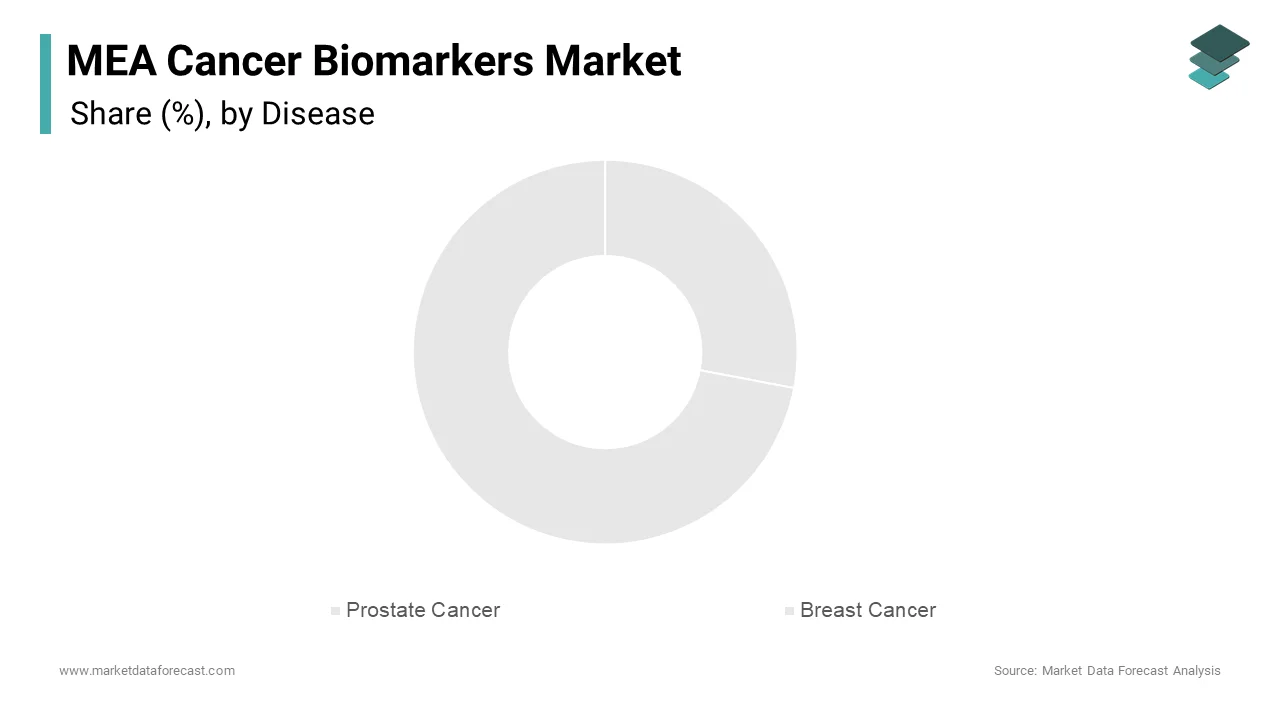
Breast cancer remained the most prevalent category in the MEA Cancer Biomarkers Market, capturing 28.2% of total revenue in 2024. This dominance is primarily attributed to the high prevalence of breast cancer across the region, particularly in North Africa and the Gulf Cooperation Council (GCC) countries.
A main driver behind this segment’s leadership is the increasing awareness campaigns and government-led screening initiatives aimed at early detection. According to the World Health Organization, breast cancer remains the most commonly diagnosed cancer among women in the Middle East and parts of sub-Saharan Africa.
Additionally, rising investments in precision oncology have led to increased adoption of HER2, ER, PR, and BRCA1/BRCA2 biomarker testing in clinical settings. These factors together contribute to the continued expansion of breast cancer biomarker testing as a central component of the MEA market landscape.
Prostate cancer is projected to exhibit the highest CAGR of approximately 14.6% between 2025 and 2033. This rapid expansion is primarily driven by growing awareness of male-specific cancers and an aging population in key MEA markets.
A major contributing factor is the rising incidence of prostate cancer, particularly in urban centers across Saudi Arabia, South Africa, and the United Arab Emirates. According to the International Agency for Research on Cancer, prostate cancer ranks as one of the top three most diagnosed malignancies in these regions, with mortality rates significantly higher than global averages due to late-stage diagnosis.
Furthermore, advancements in biomarker-based diagnostics—such as PSA testing, PCA3 assays, and genomic profiling—are gaining traction. These tools enable more accurate risk stratification and treatment planning. Besides, public health programs in the GCC nations are increasingly promoting early screening, further accelerating market growth.
By Services Insights
Testing services held the largest share of the MEA Cancer Biomarkers Market, accounting for 35.1% of total revenue in 2024. This segment's strong position is rooted in the essential role of biomarker testing in diagnosing, monitoring, and guiding cancer treatments across various disease types.
One of the primary drivers is the increasing demand for personalized medicine and targeted therapies that rely heavily on biomarker-driven diagnostics. Also, the number of molecular diagnostic labs offering cancer-related testing has grown significantly since 2021, particularly in South Africa, Kenya, and the UAE.
Moreover, regulatory authorities in the Gulf Cooperation Council (GCC) countries are mandating biomarker testing for specific cancer indications before initiating therapy. Reimbursement policies for EGFR and BRCA testing have expanded, making these services more accessible. In addition, academic research institutions and private laboratories are collaborating to offer comprehensive testing panels tailored to regional cancer profiles. These developments reinforce the dominant position of testing services in the MEA Cancer Biomarkers Market.
Biomarkers validation is anticipated to grow at the fastest CAGR of approximately 16.3% during the forecast period. This accelerated development is primarily fueled by the increasing need to confirm the clinical utility and reliability of newly identified biomarkers before they can be applied in routine diagnostics or drug development.
A key factor driving this segment is the surge in oncology research initiatives across the MEA region, particularly in countries like Saudi Arabia, the UAE, and South Africa.
Moreover, regulatory bodies such as the South African Health Products Regulatory Authority (SAHPRA) and the Saudi Food and Drug Authority (SFDA) are emphasizing rigorous validation processes before approving biomarker-based tests for clinical use. Validation studies are critical for ensuring test accuracy and reproducibility, especially when dealing with ethnically diverse populations. With growing investments in translational research and companion diagnostics, biomarker validation is emerging as one of the most dynamic service segments in the MEA Cancer Biomarkers Market.
By Application Insights
Disease diagnosis commanded application segment in the MEA Cancer Biomarkers Market, accounting for 32.5% of total revenue in 2024. This superiority is because of the critical role biomarkers play in confirming cancer presence, determining stage, and guiding therapeutic interventions.
One major contributing factor is the rising emphasis on early cancer detection, particularly in regions where late-stage diagnosis is common. According to the World Health Organization, over 70% of cancer patients in sub-Saharan Africa present with advanced disease, leading to poor survival outcomes. Biomarker-based diagnostics offer a viable solution by enabling earlier and more accurate identification of malignancies.
Apart from these, governments in the Gulf Cooperation Council (GCC) nations are integrating biomarker testing into national cancer control programs. As per the Dubai Health Authority, liquid biopsy and circulating tumor DNA (ctDNA) assessments are being piloted in several public hospitals to enhance diagnostic capabilities. Moreover, academic medical centers such as the National Cancer Institute in Egypt are actively developing localized biomarker panels for prevalent cancers. These efforts strengthen disease diagnosis as the cornerstone application area for cancer biomarkers in the MEA region.
Drug discovery & development is projected to register the highest CAGR of approximately 15.8% over the next decade. This rapid expansion is primarily driven by the integration of biomarkers in pharmaceutical R&D pipelines to accelerate targeted therapy development and improve clinical trial efficiency.
A significant driver is the increasing collaboration between regional research institutions and global biopharmaceutical companies seeking to develop novel oncology treatments tailored to MEA populations. Like, Saudi Arabia has launched multiple joint ventures with international pharma firms to identify predictive biomarkers for immunotherapy response.
Besides, the expansion of contract research organizations (CROs) specializing in biomarker-guided clinical trials is supporting this growth. Furthermore These developments highlight the growing importance of biomarkers in shaping the future of cancer therapeutics in the MEA market.
COUNTRY LEVEL ANALYSIS
Saudi Arabia commanded the largest share of the MEA Cancer Biomarkers Market, accounting for 22.5% of regional revenue in 2024. The country’s lead position is driven by its strategic investments in precision oncology, genomics, and digital health as part of Vision 2030.

A key factor behind this growth is the establishment of world-class research institutions such as the King Abdullah Biomedical Research Center and the Saudi Human Genome Project.
Also, the implementation of the National Transformation Program has prioritized early cancer detection through biomarker-based screening initiatives. With strong government backing and growing healthcare expenditure, Saudi Arabia remains the most advanced market for cancer biomarkers in the Middle East.
The United Arab Emirates is rapidly expanding in the MEA Cancer Biomarkers Market which is driven by aggressive investments in biomedical innovation and digital health infrastructure. Dubai and Abu Dhabi have emerged as regional hubs for advanced diagnostics and personalized medicine.
A major growth driver is the UAE’s National Genomics Strategy, which aims to sequence the genomes of 1 million residents to support early disease detection and targeted therapies.
Besides, the country has established specialized cancer centers such as the Sheikh Khalifa Medical City and the Abu Dhabi Stem Cell Center, which incorporate biomarker testing into standard oncology care. These initiatives make the UAE a key player in advancing cancer biomarker adoption across the MEA region.
South Africa holds a notable share of the MEA Cancer Biomarkers Market and that is making it the dominant force in sub-Saharan Africa. The country benefits from a well-established healthcare system, academic research institutions, and growing investments in molecular diagnostics.
One major contributor to its market position is the presence of leading research entities such as the University of Cape Town, Stellenbosch University, and the South African Medical Research Council.
Apart from these, the National Health Laboratory Service (NHLS) has expanded access to biomarker testing in both public and private sectors. With increasing awareness and government support, South Africa continues to lead cancer biomarker adoption in sub-Saharan Africa.
Egypt is an emerging player in the MEA Cancer Biomarkers Market , driven by rising cancer incidence and expanding healthcare modernization efforts. The country faces a growing burden of breast, liver, and colorectal cancers, prompting increased reliance on biomarker-based diagnostics.
A key growth factor is the Egyptian government’s focus on strengthening oncology infrastructure. Additionally, academic collaborations with international institutions are facilitating technology transfer and capacity building. These developments position Egypt as a growing hub for cancer biomarker applications in North Africa.
Israel accounts for descent share of the MEA Cancer Biomarkers Market , despite not being part of the broader African continent. Its strong presence is attributed to a highly developed biotechnology sector, robust R&D ecosystem, and early adoption of advanced diagnostic technologies.
A key strength lies in Israel’s leadership in liquid biopsy and AI-driven biomarker discovery. Companies such as Nucleix and Exosome Diagnostics have pioneered non-invasive cancer detection methods based on blood-derived biomarkers.
Additionally, the Israeli Ministry of Health have guidelines for the use of biomarker testing for certain cancer treatments, ensuring widespread clinical integration. With its technological prowess and supportive regulatory environment, Israel plays a crucial role in shaping the MEA Cancer Biomarkers Market.
KEY MARKET PLAYERS AND COMPETITIVE LANDSCAPE
Some of the prominent companies operating in the Middle East & Africa cancer biomarkers market profiled in this report are Abbott Laboratories, Agendia Bv, Biocurex Inc, Biomerieux S.A, Biomoda Inc., Astellas Pharma Us Inc., Correlogic Systems Inc., Beckman Coulter Inc., Becton, Dickinson and Company, Clarient Inc., Diadexus Inc., Ambrilia Biopharma, Affymetrix Inc and Aureon Laboratories Inc.
The competition in the MEA Cancer Biomarkers Market is shaped by a mix of global diagnostic leaders and emerging regional players striving to expand their footprint in a rapidly evolving landscape. Multinational corporations dominate due to their extensive product portfolios, strong R&D capabilities, and established distribution networks. These firms leverage their expertise in genomics, proteomics, and molecular diagnostics to offer comprehensive biomarker solutions tailored to the unique epidemiological profiles of the region. However, increasing participation from regional biotech startups and academic research centers is introducing more localized innovation and cost-effective alternatives.
Market dynamics are further influenced by government policies, funding initiatives, and public-private partnerships that aim to strengthen cancer diagnostics and treatment infrastructure. While large players maintain an edge in technology and scale, smaller firms are gaining traction by focusing on niche applications, affordable testing models, and partnerships with local health systems. The growing emphasis on early cancer detection and personalized medicine is intensifying competition, prompting companies to differentiate themselves through service expansion, digital integration, and patient-centric outreach. As awareness and investment continue to rise, the MEA Cancer Biomarkers Market is becoming increasingly competitive, with both global and regional stakeholders playing crucial roles in shaping its future trajectory.
Top Players in the Market
Thermo Fisher Scientific Inc.
Thermo Fisher Scientific plays a pivotal role in the MEA Cancer Biomarkers Market by offering a comprehensive portfolio of biomarker detection tools, including assays, reagents, and sequencing platforms. The company collaborates with regional research institutions and diagnostic centers to support cancer profiling and precision medicine initiatives. Its contributions extend to enabling access to cutting-edge technologies such as next-generation sequencing and real-time PCR for early cancer detection and treatment monitoring across the Middle East and Africa.
Qiagen N.V.
Qiagen is a key player known for its sample preparation solutions, molecular diagnostic kits, and bioinformatics tools tailored for cancer biomarker discovery and validation. In the MEA region, the company supports clinical laboratories and academic researchers by providing reliable assays for detecting mutations and gene expressions linked to various cancers. Qiagen’s strategic partnerships with local healthcare providers help bridge the gap between advanced diagnostics and resource-limited settings, fostering broader adoption of biomarker-based testing.
Roche Diagnostics
Roche Diagnostics is a global leader in personalized healthcare and contributes significantly to the MEA Cancer Biomarkers Market through its companion diagnostic tests and targeted therapy selection tools. The company's focus on integrating biomarker testing into oncology care pathways has enhanced treatment outcomes in the region. Roche works closely with regulatory bodies and hospital networks to ensure biomarker-driven diagnostics are accessible and aligned with international standards, strengthening the overall cancer care ecosystem in MEA.
Top Strategies Used by Key Market Participants
One of the primary strategies employed by leading players in the MEA Cancer Biomarkers Market is strategic collaboration and partnership development . Companies are actively engaging with academic institutions, government agencies, and private healthcare providers to enhance biomarker research and improve access to diagnostic services. These collaborations facilitate technology transfer, localized product development, and better integration into national cancer control programs.
Another crucial approach is expanding regional presence through localized infrastructure and distribution networks . Major firms are establishing regional offices, service centers, and logistics hubs across the Middle East and Africa to streamline product availability and customer support. This includes training healthcare professionals, supporting laboratory development, and ensuring timely delivery of diagnostic kits and consumables.
Lastly, investment in education and awareness initiatives plays a vital role in market growth. Key players sponsor training workshops, publish clinical guidelines, and support advocacy campaigns aimed at improving understanding of biomarker testing among physicians and patients. By addressing knowledge gaps and promoting early diagnosis, companies strengthen their long-term positioning in the MEA market.
RECENT HAPPENINGS IN THE MARKET
In March 2024, Thermo Fisher Scientific partnered with King Abdullah University of Science and Technology (KAUST) to launch a joint research initiative focused on identifying novel biomarkers for prevalent cancers in the Middle East, enhancing the region’s precision oncology capabilities.
In July 2024, Qiagen expanded its technical support team in South Africa to provide on-site assistance for laboratories implementing molecular biomarker testing, aiming to improve diagnostic accuracy and turnaround times in public health facilities.
In October 2024, Roche Diagnostics launched a regional training program in Cairo in collaboration with the National Cancer Institute of Egypt, designed to educate oncologists and pathologists on the clinical application of biomarker-guided therapies.
In December 2024, a major European diagnostics firm entered the Saudi Arabian market through a strategic alliance with a local healthcare provider, enabling the deployment of advanced liquid biopsy platforms for early cancer detection.
In January 2025, a leading biotech company announced the establishment of a centralized biomarker testing facility in Dubai Healthcare City, aimed at serving hospitals across the Gulf region with rapid, high-quality diagnostic services.
MARKET SEGMENTATION
This research report on the MEA Cancer Biomarkers Market segmented and sub-segmented into the following categories
By Disease
- Prostate Cancer
- Breast Cancer
By Services
- Biomarkers Validation
- Testing
By Application
- Disease Diagnosis
- Drug Discovery & Development
By Type
- Protein Biomarkers
- Genetic Biomarkers
- Other Biomarkers
By Country
- KSA
- UAE
- Israel
- rest of GCC countries
- South Africa
- Ethiopia
- Kenya
- Egypt
- Sudan
- rest of MEA