- Product Description Description
- Table of Contents TOC
- List of Table & Figure LOT
- Get Free Sample PDF Sample PDF
Middle East and Africa Canned Cheese Sauce Market Report Summary
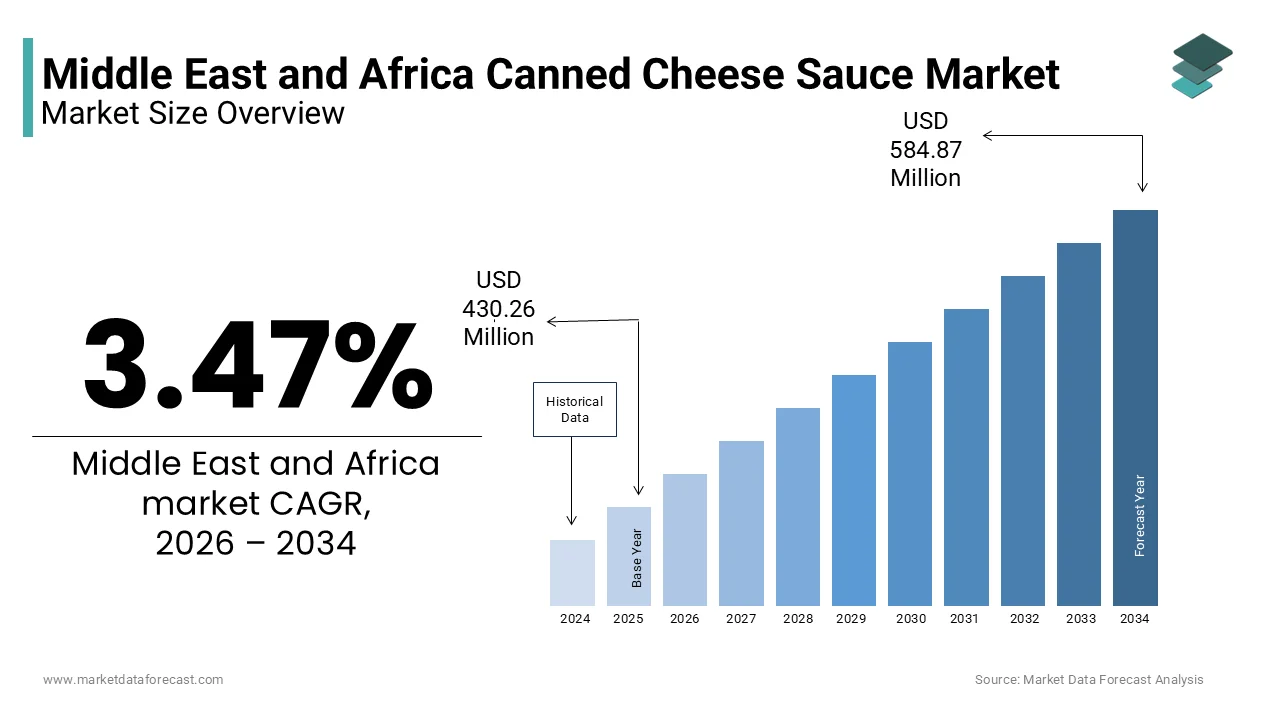
The Middle East and Africa canned cheese sauce market was valued at USD 430.26 million in 2025, is estimated to reach USD 445.19 million in 2026, and is projected to reach USD 584.87 million by 2034, growing at a CAGR of 3.47% during the forecast period from 2026 to 2034. The growth of the Middle East and Africa canned cheese sauce market is driven by increasing demand for convenience foods, rising consumption of fast food and ready-to-eat meals, and the expansion of quick-service restaurants (QSRs). Growing urbanization, changing consumer lifestyles, and increasing preference for western-style cuisines are further supporting market growth. Additionally, expanding retail networks, product innovation, and rising foodservice demand are contributing to the steady expansion of the market across the region.
Key Market Trends
-
Rising consumption of convenience and ready-to-use food products is driving demand for canned cheese sauces across the region.
-
Growing expansion of quick-service restaurants, cafés, and fast-food chains is boosting the use of cheese sauces in foodservice applications.
-
Increasing consumer preference for western-style snacks, nachos, burgers, and sandwiches is supporting market growth.
-
Product innovations featuring new flavors, clean-label formulations, and premium ingredients are attracting a broader consumer base.
-
Expansion of supermarkets, hypermarkets, and online retail channels is improving product accessibility across the Middle East and Africa.
Segmental Insights
-
Based on type, the nacho cheese sauce segment dominated the Middle East and Africa canned cheese sauce market by accounting for 34.2% of the market share in 2025. The segment's leadership is attributed to its widespread use in fast-food outlets, cinemas, restaurants, and home snack preparations.
-
Based on distribution channel, the supermarkets and hypermarkets segment held the largest share of the Middle East and Africa canned cheese sauce market in 2025. The segment's dominance is driven by extensive product availability, attractive promotional offers, and growing consumer preference for organized retail shopping.
-
Based on application, the foodservice segment accounted for 53.2% of the Middle East and Africa canned cheese sauce market share in 2025. The segment's growth is supported by increasing demand from restaurants, hotels, catering services, and quick-service restaurant chains serving cheese-based menu items.
Regional Insights
-
The Middle East and Africa canned cheese sauce market is witnessing steady growth due to increasing urbanization, rising disposable incomes, and expanding demand for convenience food products.
-
Saudi Arabia dominated the Middle East and Africa canned cheese sauce market in 2025. The country's leadership is supported by its large consumer base, high disposable income, growing quick-service restaurant industry, and increasing popularity of western-style food products.
-
United Arab Emirates remains a significant market due to its thriving hospitality sector, diverse expatriate population, and strong demand for premium convenience foods.
Competitive Landscape
The Middle East and Africa canned cheese sauce market is moderately competitive, with manufacturers focusing on product innovation, flavor diversification, and expansion of retail and foodservice distribution networks to strengthen their market presence. Companies are investing in premium formulations, convenient packaging solutions, and strategic partnerships to meet the growing demand for ready-to-use cheese sauces across households and commercial foodservice establishments. Key players operating in the Middle East and Africa canned cheese sauce market include Ricos, Gehl Foods, Almarai Company, Berner, Bay Valley Foods, Tiger Brands Limited, Conagra Foodservice, Newman's Own, Frito-Lay, Kraft Foods, and Glanbia plc.
Middle East and Africa Canned Cheese Sauce Market Size
The Middle East and Africa canned cheese sauce market size was valued at USD 430.26 million in 2025 and is projected to reach USD 584.87 million by 2034 from USD 445.19 million in 2026, growing at a CAGR of 3.47%.
The canned cheese sauce is convenience and consistency for both household consumption and food service applications, serving as versatile ingredients for snacks, main courses, and dipping sauces. The region exhibits a strong cultural affinity for dairy products, with per capita milk consumption in countries like Saudi Arabia and the United Arab Emirates, exceeding global averages according to data from the Food and Agriculture Organization of the United Nations. Rapid urbanization has altered dietary habits, leading to increased demand for ready to eat and easy to prepare meals among the growing working population. As per the World Bank, the urban population in the Middle East and North Africa is projected to reach 65% by 2030, driving the adoption of packaged food solutions. The hospitality sector, particularly in Gulf Cooperation Council nations, relies heavily on standardized ingredients to maintain quality across diverse restaurant chains. Additionally, the rise of western style fast food outlets has normalized the use of cheese sauces in local diets.
MARKET DRIVERS
Rapid Expansion of the Quick Service Restaurant Sector
The rapid expansion of the quick service restaurant sector is propelling the growth of the Middle East and Africa canned cheese sauce market. The region has witnessed a surge in the number of international and local fast food chains, which utilize canned cheese sauce as a standard ingredient for burgers, nachos, and loaded fries. The food service industry in the Middle East and Africa is expected to grow at a steady pace, driven by increasing disposable incomes and changing lifestyle patterns. In countries, such as the United Arab Emirates and Qatar, the density of fast food outlets per capita is among the highest globally by creating a consistent and high volume demand for standardized condiments. Canned cheese sauce offers restaurants the advantage of uniform taste, ease of storage, and minimal preparation time, which are crucial for maintaining operational efficiency. As per data from the Saudi Food and Drug Authority, the regulatory framework supports the import and local production of processed dairy products that meet strict safety standards, facilitating the supply chain for these establishments. The proliferation of food delivery platforms has further amplified this trend, as consumers order comfort foods that frequently feature cheese toppings.
Growing Preference for Convenience Foods Among Urban Consumers
The growing preference for convenience foods among urban consumers is additionally boosting the growth of the Middle East and Africa canned cheese sauce market. As more individuals enter the workforce and adopt faster paced lifestyles, the time available for meal preparation has decreased, leading to a higher reliance on ready to use ingredients. The labor force participation rates in several Middle Eastern countries have risen, particularly among women, altering household cooking dynamics. Canned cheese sauce provides a quick and easy way to enhance the flavor of simple dishes such as pasta, vegetables, and breads without the need for complex recipe execution. In African nations like South Africa and Kenya, the middle class is expanding, and with it, the demand for premium yet convenient food products. The middle class in Africa has doubled in size over the past two decades, increasing purchasing power for packaged goods. The product’s long shelf life is particularly appealing in regions where frequent grocery shopping may not be feasible due to logistical or climatic constraints. Furthermore, the influence of social media and global culinary trends has introduced younger demographics to cheese-based dishes by fostering a culture of experimentation in the kitchen.
MARKET RESTRAINTS
High Sensitivity to Price and Economic Volatility
The high sensitivity to price and economic volatility is hindering the growth of the Middle East and Africa canned cheese sauce market. A substantial portion of the population in many African and some Middle Eastern countries lives on limited budgets, making them highly responsive to fluctuations in food prices. The inflation rates in several African nations have remained elevated, eroding consumer purchasing power and forcing households to prioritize essential staples over premium processed items. Canned cheese sauce is often perceived as a discretionary purchase rather than a necessity, leading to reduced consumption during periods of economic uncertainty. In countries facing currency devaluation, the cost of imported dairy ingredients and packaging materials increases, forcing manufacturers to raise retail prices. The exchange rate instability in regions like Egypt and Nigeria has directly impacted the affordability of imported consumer goods. Additionally, the competitive landscape includes low cost local substitutes that do not require the same level of processing or packaging investment.
Stringent Halal Certification and Regulatory Compliance
The stringent halal certification and regulatory compliance requirements is impeding the growth of the Middle East and Africa canned cheese sauce market. The majority of the population in the Middle East and large parts of Africa are Muslim, requiring all food products to adhere to strict Islamic dietary laws. According to the study, obtaining halal certification involves rigorous auditing of ingredients, processing methods, and supply chains to ensure no contamination with non halal substances. For canned cheese sauces, this means verifying that all emulsifiers, enzymes, and flavorings are derived from halal sources, which can limit the pool of acceptable raw material suppliers. The complexity and cost of maintaining multiple certifications for different countries within the region create barriers to entry for smaller manufacturers. The inconsistencies in halal standards across different jurisdictions can lead to delays in product approval and access. Non-compliance can result in severe penalties, product recalls, and reputational damage, deterring some international players from entering certain markets. Furthermore, regular inspections and updates to regulatory frameworks require continuous monitoring and adaptation by companies.
MARKET OPPORTUNITIES
Expansion into Untapped Rural and Semi Urban Markets
The expansion into untapped rural and semi urban areas is likely to set up new opportunities for the growth of the Middle East and Africa canned cheese sauce market. While urban centers are saturated with competing brands, rural areas remain underserved due to logistical challenges and lower awareness. According to the study, many population in Africa still resides in rural areas, representing a vast potential customer base. Improvements in infrastructure, such as better road networks and cold chain logistics, are gradually making these regions more accessible to distributors. Manufacturers can capitalize on this by developing smaller, affordable pack sizes that cater to the purchasing power of rural consumers. Initiatives to boost rural electrification and internet connectivity are enhancing market information flow and distribution efficiency. Introducing educational campaigns about the versatility and convenience of canned cheese sauce can stimulate demand in these communities. Additionally, partnering with local retailers and cooperatives can help establish a strong presence in remote areas. This strategic focus on geographic diversification offers a pathway for sustained growth beyond the confines of major metropolitan areas.
Innovation in Health Conscious and Plant Based Variants
The innovation in health conscious and plant-based variants is another factor to boost the growth of the Middle East and Africa canned cheese sauce market. There is a growing awareness of health and wellness among consumers by leading to increased demand for products with lower sodium, reduced fat, and natural ingredients. The non-communicable diseases, such as obesity and diabetes are rising in the region by prompting consumers to seek healthier food options. Manufacturers can respond by formulating canned cheese sauces using organic milk, reduced salt content, and clean label ingredients. Furthermore, the rise of veganism and lactose intolerance awareness has created a niche for plant-based cheese alternatives made from nuts, soy, or oats. The plant based food market is gaining traction globally, including in the Middle East, driven by younger demographics and ethical considerations. Developing halal certified plant-based cheese sauces can attract both vegan consumers and those seeking dairy free options for religious or health reasons. Collaborating with local agricultural producers for raw materials such as dates or nuts can also enhance product appeal and support sustainability goals.
MARKET CHALLENGES
Supply Chain Disruptions and Raw Material Dependency
The supply chain disruptions and raw material dependency is to pose as a major challenge for the growth of the Middle East and Africa canned cheese sauce market. The region relies heavily on imports for key ingredients, such as milk powder, cheese bases, and packaging materials, making it vulnerable to global supply chain shocks. The global logistics hurdles and geopolitical tensions have led to increased freight costs and delayed shipments. Any disruption in the supply of dairy commodities from major exporting regions like Europe or Oceania can severely impact local production capabilities. Fluctuations in global milk prices directly affect the cost structure of processed dairy products in importing countries. Additionally, the perishable nature of some intermediate ingredients requires efficient cold chain management, which is often lacking in parts of Africa. Power outages and infrastructure deficits can compromise product quality and increase spoilage rates. These vulnerabilities force manufacturers to maintain higher inventory levels, tying up capital and increasing storage costs. The inability to source locally due to limited domestic dairy production in many Middle Eastern and African countries exacerbates this dependency.
Intense Competition from Local Artisanal and Fresh Alternatives
The intense competition from local artisanal and fresh alternatives is also to limit the growth of the Middle East and Africa canned cheese sauce market. Many consumers in the region prefer fresh, locally produced cheese products due to perceptions of better taste and higher quality. According to local market surveys, traditional cheeses such as Halloumi, Akkawi, and Nabulsi are deeply ingrained in the culinary culture and are often preferred over processed sauces. Artisanal producers offer customized and fresh options that appeal to consumers seeking authenticity and natural ingredients. As per data from regional agricultural ministries, small scale dairy farms and local cooperatives are increasingly marketing their products directly to consumers through farmers markets and specialty stores. This direct to consumer model allows them to compete effectively on price and freshness, bypassing the need for extensive processing and packaging. Furthermore, the ability to adjust flavors and textures in real time gives artisanal producers an edge in meeting specific consumer preferences. Canned cheese sauces, being mass produced and standardized, may struggle to match the perceived quality and cultural resonance of these traditional products. This competitive pressure forces established brands to invest heavily in marketing and product differentiation to justify their premium positioning. The enduring popularity of fresh dairy alternatives thus limits the widespread adoption of canned cheese sauces, particularly in traditional household settings.
REPORT COVERAGE
| REPORT METRIC | DETAILS |
| Market Size Available | 2025 to 2034 |
| Base Year | 2025 |
| Forecast Period | 2026 to 2034 |
| CAGR | 3.47% |
| Segments Covered | By Type, Distribution Channel, Application, and Region |
| Various Analyses Covered | Global, Regional, & Country Level Analysis; Segment-Level Analysis; DROC; PESTLE Analysis; Porter’s Five Forces Analysis; Competitive Landscape; Analyst Overview of Investment Opportunities |
| Regions Covered | KSA, UAE, Israel, rest of GCC countries, South Africa, Ethiopia, Kenya, Egypt, Sudan and Rest of MEA |
| Market Leaders Profiled | Ricos, Gehl Foods, Almarai Company, Berner, Bay Valley Foods, Tiger Brands Limited, Conagra Foodservice, Newman’s Own, Frito-Lay, Kraft Foods, and Glanbia plc |
SEGMENTAL ANALYSIS
By Type Insights
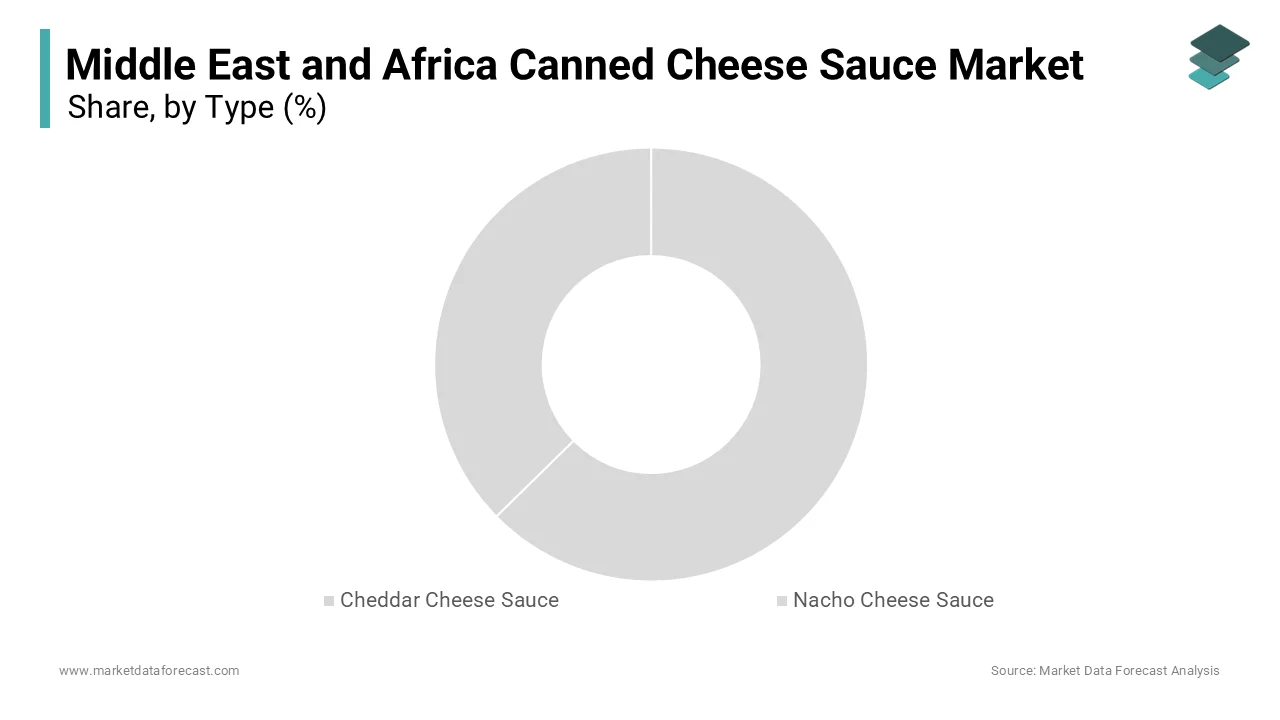
The nacho cheese sauce segment was accounted in holding 34.2% of the Middle East and Africa canned cheese sauce market share in 2025 due to its widespread acceptance as a versatile condiment for snacks and casual dining. The immense popularity of Mexican and American style fast food across the region, particularly among younger demographics. According to the study, the quick service restaurant sector in the Gulf Cooperation Council countries has expanded significantly, with nachos and loaded fries becoming staple menu items. The mild flavor profile of nacho cheese appeals to a broad consumer base that may find stronger cheeses too intense by making it an ideal entry point for processed cheese consumption. Additionally, the product’s excellent melting properties and stability at room temperature make it highly suitable for the hot climate of the Middle East and Africa. The versatility of the sauce allows it to be used not only as a dip but also as a topping for burgers, sandwiches, and baked potatoes, increasing its utility in both household and commercial kitchens.
The Jalapeno cheese sauce segment is likely to register a fastest CAGR of 7.5% during the forecast period with the increasing consumer preference for spicy and bold flavors, influenced by global culinary trends and the rising popularity of international cuisines. The integration of jalapeno cheese sauce into local dishes, such as shawarma wraps and grilled meats, has further boosted its adoption. In countries like South Africa and Kenya, where spicy food is culturally ingrained, jalapeno cheese offers a convenient way to add heat and creaminess to meals. As per reports, the introduction of fusion menus in restaurants has created a new demand channel for this variant. The younger population, which constitutes a significant portion of the demographic in Africa and the Middle East, is more adventurous in their food choices and willing to experiment with new flavors.
By Distribution Channel Insights
The supermarkets and hypermarkets segment held a dominant share of the Middle East and Africa canned cheese sauce market in 2025 due to their extensive reach and ability to offer a wide variety of brands under one roof. These large format stores are the preferred shopping destination for middle and upper income households, who prioritize convenience and product availability. The controlled environment of supermarkets ensures proper storage conditions, which is critical for maintaining the quality of canned goods in hot climates. As per data, promotional activities and bulk buying options in hypermarkets drive higher volume sales of canned cheese sauces. The presence of dedicated aisles for international and specialty foods allows consumers to easily discover and compare different brands. Furthermore, the trust associated with established supermarket chains encourages consumers to purchase branded products by reducing the hesitation often found in smaller independent stores.
The online retailers segment is lucratively to exhibit a fastest CAGR of 9.2% during the forecast period owing to the rapid digitalization of commerce and the increasing penetration of smartphones and internet access across the region. The e-commerce sales in the Middle East and Africa are expected to double by 2025, driven by a young and tech savvy population. The convenience of home delivery appeals to busy urban professionals and families who prefer to avoid crowded physical stores. In countries like Saudi Arabia and Egypt, online grocery platforms have invested heavily in logistics infrastructure by ensuring timely and reliable delivery of perishable and non-perishable goods. As per reports from regional e-commerce giants, the availability of discounts and loyalty programs on online platforms incentivizes consumers to shift their purchasing habits. The ability to read reviews and compare prices easily also enhances the shopping experience, building confidence in buying packaged food items online. Additionally, the rise of social media marketing has directed consumers to online stores for exclusive product launches and limited edition flavors.
By Application Insights
The food service segment was accounted in holding 53.2% of the Middle East and Africa canned cheese sauce market share in 2025 with the robust growth of the hospitality and quick service restaurant industries. Restaurants, cafes, and hotels rely on canned cheese sauce for its consistency, ease of use, and long shelf life, which are essential for high volume operations. According to the study, the travel and tourism sector in the Middle East contributes significantly to the regional economy, supporting a vast network of dining establishments. The standardization of menus in international fast food chains requires uniform ingredients by making canned cheese sauce the preferred choice for items like burgers, nachos, and breakfast sandwiches. As per data, the number of food service outlets has increased by 8% annually, directly boosting the demand for commercial sized cans of cheese sauce. The cost effectiveness of using pre prepared sauces reduces labor costs and preparation time in kitchens by enhancing operational efficiency. Furthermore, the rise of cloud kitchens and food delivery services has amplified the need for reliable and scalable ingredients that maintain quality during transport.
The retail segment is likely to register a fastest CAGR of 6.8% during the forecast period owing to the changing lifestyle of consumers, who are increasingly cooking at home but seeking convenient solutions to enhance meal preparation. According to the study, the increase in dual income households has reduced the time available for cooking, which is driving demand for ready to use ingredients. Canned cheese sauce allows consumers to quickly prepare flavorful dishes such as macaroni and cheese, cheesy dips, and topped vegetables without the hassle of making sauce from scratch. As per study, there is a growing trend of home entertaining and snacking, where canned cheese sauce serves as an easy and impressive option for guests. The expansion of modern retail outlets and online grocery platforms has improved accessibility by making these products more visible and available to a wider audience.
COUNTRY LEVEL ANALYSIS
Saudi Arabia was the largest contributor Middle East and Africa canned cheese sauce market, driven by its large population and high disposable income. The country is a major hub for international fast-food chains, which significantly boosts the demand for standardized condiments. According to the study, the food and beverage sector in Saudi Arabia has seen consistent growth, supported by government initiatives to diversify the economy and promote tourism. The young demographic profile of the population, with over 60% under the age of 30, favors western style snacks and dining experiences where cheese sauce is a staple. As per data from the Ministry of Investment, foreign direct investment in the food service industry has increased, which is leading to the establishment of more restaurants and cafes. The expansion of modern retail infrastructure, including large hypermarkets and malls, provides ample shelf space for canned cheese products. Additionally, the government’s vision to enhance the quality of life includes promoting a vibrant food culture, which supports the consumption of diverse and convenient food items.
The United Arab Emirates canned cheese sauce market growth is steadily growing with its cosmopolitan population and thriving tourism industry. According to the Dubai Department of Economy and Tourism, the number of tourists visiting the UAE continues to rise, driving demand in the hospitality and food service sectors. The diverse expatriate community brings varied culinary preferences, increasing the consumption of international dishes that feature cheese sauce. As per reports, the UAE has one of the highest per capita expenditures on food and beverages in the region. The advanced logistics and distribution networks in Dubai and Abu Dhabi ensure efficient supply chain management for perishable and semi perishable goods. The presence of numerous international hotel chains and fine dining establishments further amplifies the demand for high quality canned cheese sauces. Government support for the food security strategy encourages local production and importation of essential food items by ensuring steady availability.
Israel canned cheese sauce market growth is steadily growing at a fastest CAGR during the forecast period with its advanced food technology sector and high consumer awareness. The well-developed dairy industry and a strong culture of consuming processed food products. According to the research, the Israeli food industry is highly innovative with a focus on health and convenience. Consumers in Israel are increasingly looking for clean label and organic options, prompting manufacturers to introduce premium canned cheese sauces with natural ingredients. As per data, the export of Israeli food products is significant by influencing local production standards and quality. The high density of supermarkets and convenience stores ensures wide distribution of canned cheese products. The influence of global culinary trends is strong with a growing interest in fusion cuisine that incorporates cheese sauces. Additionally, the military and institutional catering sectors contribute to steady demand for bulk canned cheese products.
South Africa canned cheese sauce market growth is likely to grow with the developed retail infrastructure and diverse culinary landscape. The country has a strong tradition of consuming dairy products, and canned cheese sauce is a popular item in both urban and rural households. According to study, the formal retail sector accounts for a significant portion of food sales, with major chains dominating the market. The influence of western culture and the presence of international fast-food brands have normalized the use of cheese sauces in local diets. The food processing industry in South Africa is well established, supporting the production and distribution of canned goods. The middle class is expanding, increasing the demand for convenient and affordable food options. Canned cheese sauce is often used in school feeding schemes and community programs due to its nutritional value and ease of preparation.
Ethiopia canned cheese sauce market growth is driven by the large population and growing urbanization. While traditional dairy consumption is high, the adoption of processed cheese products is increasing among the urban middle class. According to the study, the urban population is growing rapidly by leading to changes in dietary habits and increased demand for convenience foods. The expansion of modern supermarkets in Addis Ababa and other major cities has improved access to imported and locally produced canned goods. The government is encouraging local food processing to reduce reliance on imports by creating opportunities for domestic manufacturers of cheese sauces. The young demographic profile of the country suggests a future increase in demand for western style snacks and fast food. However, price sensitivity remains a challenge, requiring manufacturers to offer affordable options. The gradual improvement in infrastructure and logistics is facilitating better distribution of packaged foods.
COMPETITIVE LANDSCAPE
The competition in the Middle East and Africa canned cheese sauce market is characterized by a mix of regional dairy giants and global food conglomerates vying for dominance through brand strength and distribution reach. Local manufacturers leverage their deep understanding of cultural preferences and halal requirements to offer products that resonate with consumers. These companies often compete on price and accessibility, utilizing established networks to penetrate both urban and rural areas. International players counter with premium positioning and innovative product formulations that appeal to affluent and cosmopolitan segments. Regulatory compliance regarding food safety and labeling serves as a significant barrier to entry favoring established entities with robust quality control systems. Competitive dynamics are further influenced by the rising demand for healthy and natural ingredients prompting firms to reformulate products.
KEY MARKET PLAYERS
Some of the notable companies in the Middle East and Africa canned cheese sauce market are
- Ricos
- Gehl Foods
- Almarai Company
- Berner
- Bay Valley Foods
- Tiger Brands Limited
- Conagra Foodservice
- Newman's Own
- Frito-Lay
- Kraft Foods
- Glanbia plc
Top Players in the Market
- Almarai Company maintains a dominant presence in the Middle East canned cheese sauce market through its extensive dairy processing capabilities and robust distribution network. The company focuses on producing high quality halal certified products that cater to local tastes and dietary requirements. Almarai recently expanded its product portfolio to include specialized cheese sauces for the food service sector, which is targeting the growing quick service restaurant industry in Saudi Arabia and neighboring Gulf states. They have invested in advanced manufacturing technologies to ensure consistent texture and flavor stability in high temperature conditions. The company also engages in aggressive marketing campaigns to promote the versatility of its cheese sauces in home cooking.
- Tiger Brands Limited contributes significantly to the South African and broader African canned cheese sauce market with its well-known brands, such as All Gold. The company leverages its strong brand equity and widespread retail presence to drive consumer loyalty and repeat purchases. Tiger Brands recently launched innovative packaging formats designed for convenience and portion control, appealing to urban consumers with busy lifestyles. They have enhanced their supply chain efficiency to ensure product availability across diverse geographic regions including remote rural areas. The company actively collaborates with local retailers to optimize shelf placement and promotional activities. Their commitment to sustainable sourcing and community development initiatives further enhances their reputation.
- Glanbia plc plays a pivotal role in the Middle East and Africa canned cheese sauce market by supplying premium ingredients and finished products to both retail and food service channels. The company utilizes its global expertise in dairy nutrition to develop tailored solutions that meet specific regional preferences. Glanbia recently introduced new functional cheese sauces enriched with proteins and vitamins to address the growing health consciousness among consumers. They have strengthened their partnerships with international fast-food chains operating in the region to provide customized bulk solutions. The company invests heavily in research and development to create clean label products with natural ingredients.
Top Strategies Used by Key Market Participants
Key players in the Middle East and Africa canned cheese sauce market primarily employ product localization and strategic partnerships to maintain competitive advantage. Companies invest in developing halal certified formulations that align with local cultural and religious dietary laws. This includes creating flavors that complement regional cuisines such as spicy variants for African markets and mild options for Gulf consumers. Strategic collaborations with international fast food chains and local hospitality groups ensure steady demand and brand visibility. Manufacturers also focus on expanding distribution networks into underserved rural areas through partnerships with local distributors and cooperatives. Marketing initiatives emphasize convenience and versatility to educate consumers on multiple usage occasions. Additionally, firms pursue cost optimization strategies by sourcing raw materials locally where possible to mitigate import dependencies.
MARKET SEGMENTATION
This research report on the Middle East and Africa canned cheese sauce market has been segmented and sub-segmented into the following categories.
By Type
- Cheddar Cheese Sauce
- Nacho Cheese Sauce
By Distribution Channel
- Supermarkets
- Hypermarkets
- Online Retailers
By Application
- Supermarkets
- Hypermarkets
- Independent Retailers
- Convenience Stores
- Online Retailers
By Country
- KSA
- UAE
- Israel
- rest of GCC countries
- South Africa
- Ethiopia
- Kenya
- Egypt
- Sudan
- rest of MEA