- Product Description Description
- Table of Contents TOC
- List of Table & Figure LOT
- Get Free Sample PDF Sample PDF
Middle East & Africa Catheter Stabilization Devices Market Report Summary
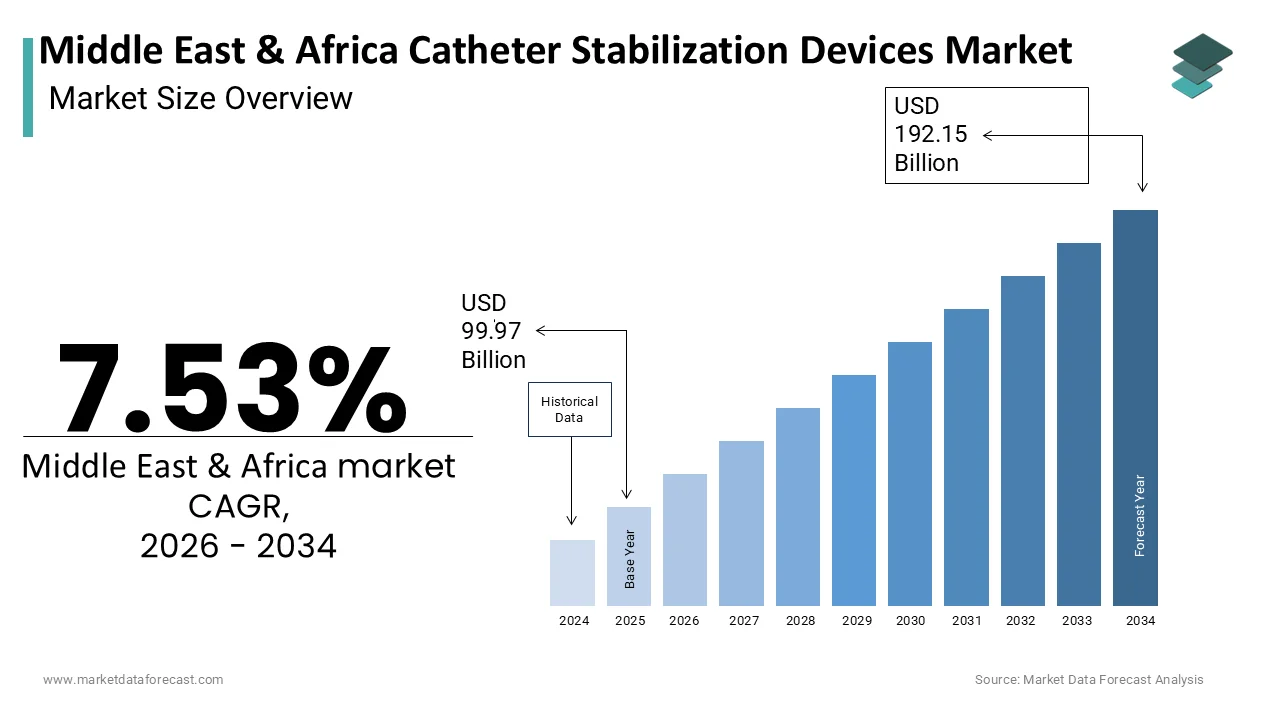
The Middle East & Africa Catheter Stabilization Devices Market was valued at USD 99.97 million in 2025 and is projected to reach USD 192.15 million by 2034, growing from USD 107.50 million in 2026 at a CAGR of 7.53% during the forecast period. Growth is driven by rising chronic disease prevalence requiring long-term vascular access, stringent infection control protocols across GCC hospitals, and expanding medical tourism. Growth in home healthcare and decentralized care models is further supporting market expansion.
Key Market Trends
- Rising adoption of sutureless securement systems over traditional sutures and tape
- Expansion of home healthcare services for chronic disease management
- Growing medical tourism driving demand for premium stabilization products in GCC countries
- Increasing focus on infection control and international patient safety accreditation
- Emerging local manufacturing to reduce import dependency and supply chain risk
Segmental Insights
- Based on application, the cardiovascular segment dominated the market in 2025, driven by high cardiac intervention volumes and cardiovascular disease prevalence in the region.
- Based on product, the Central Venous Catheter Securement Devices segment led the market in 2025, supported by high utilization in dialysis, chemotherapy, and long-term antibiotic therapy.
- Based on end user, the hospitals segment held the largest share in 2025, driven by high catheter insertion volumes and centralized procurement in acute care settings.
Regional Insights
- Saudi Arabia led the market in 2025 by holding 30.5% of the regional market share, supported by Vision 2030 healthcare investment and strong medical tourism.
- United Arab Emirates holds a significant share at 20.3%, driven by world-class hospital infrastructure and fast-track medical technology approvals.
- South Africa is a prominent market supported by a well-funded private healthcare sector alongside high infectious disease burden in the public sector.
- Egypt contributes notably due to its Universal Health Insurance rollout and growing private healthcare sector in Cairo.
- Kenya and Ethiopia are expected to witness considerable growth during the forecast period, driven by rising dialysis center expansion and healthcare infrastructure development.
Competitive Landscape
The market is highly competitive, with manufacturers focusing on sutureless technologies, clinical training programs, and local distribution partnerships. Companies are investing in regulatory compliance and product customization for hot-climate durability to meet regional healthcare demands.
Prominent players in the market include Medtronic plc, 3M Company, Baxter International Inc., Merit Medical Systems Inc., ConvaTec Group plc, Centurion Medical Products Corporation, Smiths Group plc, C. R. Bard Inc. (BD), B. Braun Melsungen AG, and M.C. Johnson Company Inc.
 Download Free Sample Report
Middle East & Africa Catheter Stabilization Devices Market Size
The Middle East & Africa Catheter Stabilization Devices Market is projected to grow from USD 99.97 million in 2025 to USD 107.50 million in 2026 and reach USD 192.15 million by 2034, registering a CAGR of 7.53% from 2026 to 2034.
Catheter Stabilization Devices are specialized medical accessories designed to secure intravenous, central, and urinary catheters to the patient's skin, thereby preventing accidental dislodgement, migration, and associated complications. These devices include adhesive securement platforms, sutureless stabilization systemss, and integrated dressing combinations that enhance patient comfort and reduce the risk of catheter-related bloodstream infections. The adoption of these technologies is critical in regions with high burdens of chronic diseases that require long-term vascular access. According to the World Health Organization, healthcare-associated infections impact hundreds of millions of patients worldwide each year, highlighting a critical global need to strengthen hospital infection prevention and control protocols. Furthermore, the International Diabetes Federation indicates that the Middle East and North Africa region records the highest adult diabetes prevalence worldwide at 16.2%, driving international demands for expanded public healthcare infrastructure and preventative screening. Estimates from the World Health Organization Regional Office for Africa indicate that non-communicable diseases are projected to overtake infectious diseases as the leading cause of mortality in Africa by 2030, necessitating a strategic shift toward long-term management of chronic illnesses. Hospitals in Gulf Cooperation Council countries are increasingly aligning with international patient safety goals, which emphasize the reduction of device-related injuries. This regulatory push, combined with the rising volume of surgical procedures and intensive care admissions, creates a fundamental demand for advanced stabilization solutions that protect vulnerable vascular access points and improve clinical outcomes across diverse healthcare settings.
MARKET DRIVERS
Rising Prevalence Of Chronic Diseases Requiring Long-Term Vascular Access
The escalating burden of chronic conditions such as diabetes, renal failure, and cancer drives the growth of the Middle East and Africa catheter stabilization devices market. These diseases often require prolonged intravenous therapy, hemodialysis, or chemotherapy, py necessitating reliable and secure vascular access points. According to the International Diabetes Federation, approximately 73 million adults in the Middle East and North Africa region live with diabetes, a crisis requiring extensive public health screening and accessible basic treatment strategies. This demographic reality drives a high volume of dialysis treatments and insulin administrations where catheter dislodgement can lead to severe complications including hemorrhage and infection. In Sub-Saharan Africa,the incidence of end-stage renal disease is increasing due to hypertension and diabetes, prompting a surge in dialysis centers that utilize central venous catheters. The World Health Organization reports that cardiovascular diseases account for 31% of all global deaths, highlighting a severe need for preventative medicine and equitable access to essential public healthcare technologies. Patients undergoing long-term treatment are at higher risk of accidental catheter removal, particularly in crowded hospital wards or home care settings. Stabilization devices mitigate these risks by providing robust anchoring mechanisms that withstand patient movement and daily activities. Thus, healthcare providers are prioritizing the use of sutureless securement systems to enhance patient safety and reduce the nursing workload associated with reinsertion procedures.
Implementation Of Strict Infection Control Protocols And Patient Safety Standards
The rigorous implementation of infection control protocols and international patient safety standards is greatly propelling the demand for advanced devices in the Middle East and Africa catheter stabilization devices market. Healthcare-associated infections, particularly catheter-related bloodstream infections, pose a severe threat to patient outcomes and increase hospital costs. The Centers for Disease Control and Prevention reveals that central line-associated bloodstream infections significantly extend hospital stays and impose severe financial strains on global institutional healthcare budgets. In response,e governments in the Gulf Cooperation Council countries such as Saudi Arabia and the United Arab Emirates have adopted stringent accreditation standards from bodies like the Joint Commission International, al which mandate best practices for vascular access management. These guidelines strongly recommend the use of securement devices over traditional sutures to minimize skin trauma and bacterial entry points. As hospitals in South Africa and Egypt seek international accreditation to attract medical tourism,rism they are upgrading their clinical protocols to include premium stabilization products. This regulatory-quality-driven shift ensures that healthcare facilities invest in high-quality adhesive and sutureless devices to maintain compliance and protect patient health, thereby driving consistent market growth.
MARKET RESTRAINTS
High Cost Of Advanced Sutureless Stabilization Systems
The elevated cost of advanced sutureless catheter stabilization devices is a major barrier to widespread adoption in many parts of the region, and in turn, hampers the growth of the Middle East and Africa market. While these devices offer superior security and reduced infection risks compared to traditional tape or sutures,s their price point remains prohibitive for public healthcare systems operating under tight budget constraints. World Bank economic assessments indicate that low public healthcare spending across several Sub-Saharan African nations continues to restrict the baseline development of essential medical infrastructure and universal health coverage. In contrast, st traditional methods such as surgical sutures and adhesive tape are inexpensive and widely available, making them the default choice in resource-limited settings. The economic disparity between Gulf nations and lower-income African states creates a fragmented market where advanced stabilization technologies are confined to private hospitals and elite medical centers. Additionally, import duties and taxes on medical devices in countries like Egypt and Nigeria further inflate the final price for end users. The lack of local manufacturing capabilities means that mosthigh-qualityy stabilization devices must be imported,exposing buyers to currency exchange fluctuations and supply chain disruptions. Hence, many healthcare providers prioritize cost containment over clinical benefits,s restricting the penetration of innovative stabilization solutions in the broader public health sector.
Limited Awareness And Training Among Healthcare Professionals
A lack of adequate awareness and training regarding the proper application and benefits of modern devices impedes the growth of the Middle East and Africa catheter stabilization devices market. Many nurses and clinicians in rural and underfunded hospitals continue to rely on conventional suturing techniques due to familiarity and insufficient exposure to newer technologies. The International Council of Nurses highlights critical nurse shortages across Africa, warning that deep workforce disparities compromise the delivery of safe, sustainable patient care. This workforce gap limits the capacity for continuous professional development and education on best practices for vascular access management. Without proper training,g healthcare providers may perceive sutureless devices as complex or unnecessary, ar,y leading to resistance in adoption. Furthermore, the high turnover rate of medical staff in public hospitals exacerbates the knowledge gap aw recruits often lack experience with advanced security protocols. The World Health Organization emphasizes that inadequate clinical training significantly contributes to avoidable medical errors, requiring global health facilities to implement standardized safety education programs. Until comprehensive educational programs are integrated into nursing curricula and hospital orientation processes, the full potential of catheter stabilization devices will remain unrealized. This human resource challenge slows the transition from traditional methods to modern security solutions across the continent.
MARKET OPPORTUNITIES
Expansion Of Home Healthcare and Chronic Disease Management Services
The rapid expansion of home healthcare services and chronic disease management programs is a key growth area for the Middle East and Africa catheter stabilization devices market. As healthcare systems shift toward decentralized care models to reduce hospital congestion, there is a growing need for safe andeasy-to-managee vascular access solutions for patients receiving treatment at home. Alpen Capital shows that rising chronic disease burdens are prompting medical providers across the Gulf to prioritize home-based specialized treatment lines. Patients managing conditions such as cancer or kidney failure at home require durable stabilization devices, comfortable, le and easy for caregivers to maintain. Sutureless securement systems offer distinct advantages in this setting by reducing the risk of accidental dislodgement during daily activities and minimizing the need for professional nurse visits for re-securing. Driven by Vision 2030 reforms, the Saudi Ministry of Health operates a comprehensive National Home Health Care program that delivers advanced medical therapies directly to tens of thousands of chronic patients. This strategic shift creates a new customer segment beyond traditional hospital walls, driving demand for user-friendly stabilization products. Manufacturers can capitalize on this trend by developing kits specifically designed for home use with clear instructions and enhanced adhesive properties to ensure long-term stability in non-clinical environments.
Growth Of Medical Tourism In Gulf Cooperation Council Countries
The booming medical tourism industry in Gulf Cooperation Council countries offers a lucrative avenue for the adoption of premium products within the Middle East and Africa catheter stabilization devices market. Nations such as the United Arab Emirates and Saudi Arabia are investing billions of dollars to establish world-class healthcare facilities that attract international patients seeking high-quality treatment. According to the Dubai Health Authority, regional infrastructure investments have established the city as a primary global medical tourism hub attracting international patients for complex medical procedures. These international patients expect superior standards of care, including the use of advanced medical devices that minimize complications and enhance recovery experiences. Hospitals competing in this global market are motivated to adopt best-in-class technologies such as sutureless catheter stabilizers to differentiate their services and achieve better clinical outcomes. The presence of internationally accredited hospitals necessitates adherence to strict safety protocols that favor modern securement methods over traditional sutures. Furthermore, the high spending power of medical tourists allows healthcare providers to absorb the higher costs of premium devices without relying solely on public funding. This segment drives demand for high-visibility branded stabilization products that signal quality and safety, reinforcing the reputation of host institutions as leaders in patient care.
MARKET CHALLENGES
Supply Chain Vulnerabilities And Logistical Complexities
Fragmented supply chains and logistical complexities are a serious inhibition to the consistent availability of these devices within the Middle East and Africa catheter stabilization devices market. The region relies heavily on imports for specialized medical devices,s with most products originating from North America,ica Europe, or Asia. The African Development Bank emphasizes that strengthening rural transport networks and cold chain infrastructure is crucial to improving macroeconomic resilience and essential public utility distribution. Delays at customs borders due to bureaucratic red tape and varying regulatory requirements across different countries can extend lead times from weeks to months. This unpredictability forces hospitals to maintain large inventory buffers w, which tie up capital and increase the risk of product expiration. In conflict-affected zones or regions with political instability, supply routes are frequently disrupted, leaving healthcare facilities without essential consumables. The World Health Organization notes that supply chain vulnerabilities often cause severe stockouts of vital medical materials, presenting a major roadblock to stable healthcare quality in low-resource settings. For temperature-sensitive adhesives used in stabilization devices, maintaining integrity during prolonged transit is difficult in hot climates. These logistical hurdles create an uneven market landscape where urban centers may have adequate supply while rural hospitals face chronic shortages, undermining efforts to standardize patient care.
Regulatory Fragmentation And Approval Delays
The lack of harmonized regulatory frameworks across the nations in the region creates significant barriers to the Middle East and Africa catheter stabilization devices market. This hinders market entry and product availability. Each country has its own unique registration process,s documentation requirements, and approval timelines for medical devices, es leading to a fragmented and inefficient landscape. In many cases, manufacturers must navigate separate applications for each market,t increasing administrative burdens and delaying product launches. Unified via the Gulf Health Council, member states collaborate on regional medical standards while maintaining individual national regulatory clearance procedures. Regional health frameworks supported by the African Union utilize global reference approvals to streamline local medical device registration while building internal verification capacity. These regulatory ambiguities discourage smaller manufacturers from entering the market, et limiting competition and innovation. Furthermore, ore changes in local policies or sudden import bans can disrupt established supply chains without warning. Companies must invest heavily in regulatory affairs expertise to navigate this complex environment, which increases operational costs and slows the introduction of new stabilization technologies to patients who need them most.
REPORT COVERAGE
| REPORT METRIC | DETAILS |
| Market Size Available | 2025 to 2034 |
| Base Year | 2025 |
| Forecast Period | 2026 to 2034 |
| Segments Covered | By Application, Product, End User, and Region |
| Various Analyses Covered | Global, Regional and Country-Level Analysis, Segment-Level Analysis, Drivers, Restraints, Opportunities, Challenges; PESTLE Analysis; Porter’s Five Forces Analysis, Competitive Landscape, Analyst Overview of Investment Opportunities |
| Countries Covered | KSA, UAE, Israel, the rest of the GCC countries, South Africa, Ethiopia, Kenya, Egypt, Sudan, the rest of the MEA |
| Market Leaders Profiled |
|
SEGMENTAL ANALYSIS
By Application Insights
In 2025, the cardiovascular application segment secured the largest share of the Middle East and Africa Catheter Stabilization Devices Market because of the high volume of cardiac interventions and the critical need for secure central venous access. This segment encompasses the stabilization of catheters used in angiography, pacemaker implantation, and hemodynamic monitoring. The domination is primarily driven by the rising prevalence of cardiovascular diseases which are the leading cause of death in the region. According to the World Health Organization, cardiovascular diseases represent the leading cause of chronic mortality in the Eastern Mediterranean Region, accounting for 48% of all non-communicable disease deaths. Countries like Saudi Arabia and Egypt have seen a sharp increase in coronary artery disease cases,s necessitating frequent percutaneous coronary interventions that require stable catheter placement. The American Heart Association indicates that cardiovascular risk factors like hypertension and obesity are exceptionally high in Middle Eastern populations, highlighting an urgent need for preventive care strategies. Cardiovascular units across the Gulf Cooperation Council prioritize standardized clinical safety checklists during cardiac catheterizations to protect patients and minimize post-procedure complications. Additionally, the expansion of tertiary care centers equipped with advanced catheterization laboratories has increased the demand for specialized stabilization devices that ensure patient safety and procedural accuracy. The complexity of these procedures makes reliable catheter fixation essential to avoid complications such as bleeding or arrhythmia, thereby sustaining the leading market share of this application segment.
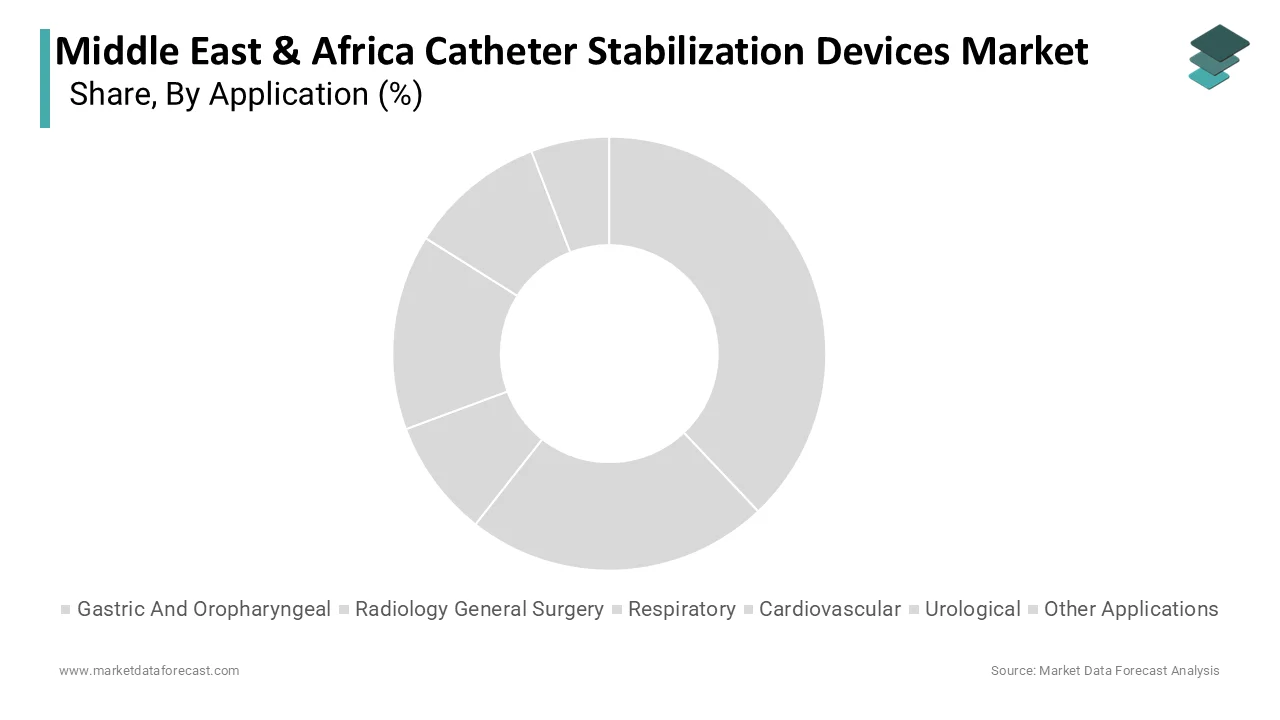
Apart from this, the urological application segment is emerging as the fastest-growing sector in the regional market, with a projected CAGR of 7.8% between 2026 and 2034. This swift growth of the segment is fueled by the increasing incidence of urinary tract disorders, prostate conditions,s and the aging population, which requires long-term urinary catheterization. Research supported by the International Continence Society shows that urinary retention and incontinence risks increase significantly with age, necessitating comprehensive geriatric healthcare strategies. In countries like South Africa and Egypt, the rising burden of benign prostatic hyperplasia and bladder cancer has led to a surge in urological surgeries and subsequent catheter use. The World Health Organization projects that the population aged 60 and older in the African region will triple by 2050, requiring countries to reform public health policies to support aging populations. Urinary catheters are prone to accidental remov, al, which can cause trauma and infection,n making effective stabilization crucial for patient comfort and safety. Healthcare providers are increasingly adopting adhesive securement devices over traditional tape to reduce skin irritation and maintain hygiene. Furthermore, the growth of home healthcare services for elderly patients has amplified the demand for user-friendly urological stabilization solutions that caregivers can manage easily. These demographic and clinical trends collectively drive the accelerated growth of the urological segment.
By Product Insights
The Central Venous Catheter Securement Devices segment dominated the Middle East and Africa Market and accounted for a substantial share in 2025. Factors such as its critical role in intensive care oncology and dialysis settings have contributed to the dominance of this segment. These devices are designed to anchor central lines securely to prevent migration and reduce the risk of catheter-related bloodstream infections. The dominance is driven by the high utilization of central venous access for chemotherapy, long-term antibiotic therapyy and hemodialysis. Central lines are the preferred vascular access for many dialysis patients, particularly in acute settings where arteriovenous fistulas are not yet mature. In Gulf nations where medical tourism drives high standards of care,e the adoption of sutureless securement devices is widespread to enhance patient comfort and minimize scarring. The high cost of treating infections associated with loose or displaced catheters further incentivizes healthcare facilities to invest in premium securement solutions. This clinical necessity ensures that central venous catheter securement devices remain the most consumed product type in the regional market.
On the contrary, the Peripheral Securement Devices segment is predicted to witness the highest CAGR of 8.2% over the forecast period due to the vast volume of peripheral intravenous cannulations performed in emergency departments, outpatient clinics, and general wards. Unlike central lines,s peripheral IVs are used for short-term fluid administration, medication delivery,y and blood sampling, making them the most common vascular access method. According to the Infusion Nurses Society, millions of peripheral IVs are inserted each year globally,r with a significant portion occurring. The shift toward preventing phlebitis and accidental dislodgement in busy hospital environments has increased the adoption of adhesive stabilization platforms over traditional tape. Tape is often insufficient for active patients or those with sweaty skin conditions common in hot climates, es leading to higher failure rates. Hospitals in countries like Kenya and Nigeria are increasingly recognizing the cost benefits of reducing IV restarts,s which waste nursing time and supplies. Furthermore, the rise of ambulatory care centers where patients receive infusion therapies on an outpatient basis drives demand for securement devices that allow mobility without compromising line integrity. These factors contribute to the rapid expansion of the peripheral securement device segment.
By End User Insights
The hospitals segment was the largest in the Middle East and Africa Catheter Stabilization Devices Market and held a commanding share in 2025. This prominence of the segment was credited to their role as the primary centers for acute care surgical procedures and intensive treatment. These facilities handle the highest volume of catheter insertion,s including central lines, urinary catheters, and chest tube,s requiring consistent procurement of stabilization devices. The dominance is driven by the concentration of specialized medical services and the presence of trained healthcare professionals who adhere to strict infection control protocols. Public and private hospitals in Saudi Arabia and the United Arab Emirates invest heavily ihigh-qualityty medical supplies to maintain their reputation and patient safety records. Additionally, the high prevalence of chronic diseases requiringhospital-basedd treatments such as dialysis and chemotherapy ensures a steady demand for catheter stabilization products. The centralized procurement systems in large hospital groups also facilitate bulk purchasing of standardized security devices, reinforcing their leading position in the market.
However, the Home Healthcare Providers segment is estimated to register the fastest CAGR of 9.5% from 2026 to 2034 owing to the shifting paradigm of care from institutional settings tohome-basedd environments for chronic disease management and post-operative recovery. As healthcare costs rise and hospital beds become scarce, governments and insurers are promoting home care as a cost-effective alternative. Patients with long-term vascular access needs, such as those undergoing parenteral nutrition or antibiotic therapy,y require reliable catheter securement that can withstand daily activities at home. Sutureless stabilization devices are preferred in this setting because they are easier for family caregivers to manage and reduce the risk of accidental removal. Regional frameworks supported by the Gulf Health Council focus on improving the quality of long-term care by encouraging member states to build integrated home health networks for patients with chronic diseases. This trend creates a new revenue stream for manufacturers who are developing user-friendly, secure kits with clear instructions for non-professional users. The expansion of home care agencies and the increasing acceptance of home-based medical services fuel the rapid growth of this segment.
COUNTRY LEVEL ANALYSIS
Saudi Arabia Catheter Stabilization Devices Market Analysis
Saudi Arabia remained the leading country in the Middle East and Africa Catheter Stabilization Devices Market and captured a 30.5% share in 2025. The leading position in this market was attributed to a highly developed healthcare infrastructure and strong government investment in medical modernization under Vision 2030. Moreover, the country has a high prevalence of diabetes and cardiovascular diseases, which drives the demand for vascular access and stabilization solutions. According to the General Authority for Statistics, Saudi Arabia operates 516 hospitals alongside thousands of integrated primary care facilities designed to meet modernized public safety standards. The push for healthcare privatization and the expansion of specialty hospitals have increased the procurement of advanced medical devices, including sutureless catheter securement systems. The Saudi Food and Drug Authority maintains rigorous regulatory standards,s ensuring that only high-quality products enter the market. Additionally, the kingdom is a hub for medical tourism in the region,n attracting patients who expect premium care and minimal complications. These factors, combined with a high per capita healthcare expenditure, make Saudi Arabia the primary driver of market growth in the Middle East.
United Arab Emirates Catheter Stabilization Devices Market Analysis
The United Arab Emirates was the next prominent player in the Middle East and Africa market and occupied a 20.3% share in 2025 because of its world-class healthcare facilities and status as a global medical tourism destination. In addition, the country has invested heavily in building state-of-the-art hospitals in Dubai and Abu Dhabi that cater to both residents and international patients. Through the Dubai Health Authority, the emirate regulates the "Dubai Health Experience" (DXH) platform to attract global medical tourists by enforcing elite healthcare standards. This drives the adoption of premium catheter stabilization devices that reduce infection risks and enhance patient comfort. The UAE has a high prevalence of lifestyle-related diseases such as obesity and diabetes, leading to frequent hospitalizations and procedural interventions. The regulatory environment is supportive of innovation with fast-track approvals for new medical technologies. The presence of multinational healthcare providers and insurance companies that cover advanced treatments further stimulates demand for high-quality stabilization products. These dynamics position the UAE as a sophisticated and high-value market in the region.
South Africa Catheter Stabilization Devices Market Analysis
South Africa maintains a noteworthy position in the regional market owing to a dual healthcare system comprising a well-funded private sector and a resource-constrained public sector. The World Health Organization Kobe Centre highlights that South Africa’s private healthcare infrastructure consumes nearly half of national health funding while covering roughly 16% of the population. Moreover, the Council for Medical Schemes indicates that private medical fund expenditures total hundreds of billions of Rands annually, reflecting intensive commercial investment per beneficiary. The public sector faces challenges such as budget limitations and supply chain issues, es but still consumes a large volume of basic stabilization products due to the high burden of infectious diseases like HIV and tuberculosis. The National Department of Health is working to improve infection control practices, which include better vascular access management. The presence of local distributors and manufacturing partnerships helps mitigate some supply chain challenges. South Africa's role as a regional leader in medical research and training also contributes to the adoption of best practices in catheter care.
Egypt Catheter Stabilization Devices Market Analysis
Egypt holds a significant share of the Middle East and Africa market due to a large population base and a growing focus on improving healthcare infrastructure. The country faces a high burden of noncommunicable diseases,ses including diabetes and kidney failure, which necessitate frequent dialysis and vascular access procedures. Governed by national legislation, Egypt is executing its Universal Health Insurance system through a phased rollout across all governorates to extend comprehensive healthcare coverage to all citizens. This has led to increased investment in hospital equipment and consumables, including catheter stabilization devices. The private healthcare sector is expanding rapidly in Cairo and other major cities, catering to a middle class that demands higher standards of care. However, economic challenges and currency fluctuations can impact the affordability of imported medical devices. Local manufacturing initiatives are beginning to emerge to reduce dependency on imports. Despite these challenges, es the sheer volume of patients and the ongoing modernization of public hospitals ensure steady demand for catheter stabilization products in Egypt.
COMPETITIVE LANDSCAPE
The competition in the Middle East and Africa Catheter Stabilization Devices Market is characterized by the dominance of global medical technology giants alongside regional distributors and emerging local manufacturers. Established multinational corporations leverage their brand reputation,tion extensive product pportfoliosnd robust clinical evidence to maintain leadership positions. However, they face increasing pressure from cost-sensitive buyers in public healthcare systems who often prefer cheaper alternatives like tape and sutures. Local players are gaining traction by offering affordable, basic security solutions and faster delivery times, although they often lack the advanced features of premium brands. The market exhibits moderate fragmentation with no single entity holding absolute control due to varying regulatory standards and procurement practices across countries. Competitive dynamics are influenced by factors such as currency fluctuations,s import tariffs, fs and the ability to provide consistent supply. Companies differentiate themselves through after-sales support, training programs, and compliance with international safety standards. Strategic alliances with local entities are crucial for navigating bureaucratic hurdles and ensuring market access. Overall, the market remains dynamic with continuous innovation and adaptation to local needs shaping the competitive landscape.
KEY MARKET PLAYERS
Some of the companies that are playing a dominating role in the Middle East & Africa (MEA) Catheter Stabilization Devices Market include
- Medtronic plc
- 3M Company
- Baxter International Inc.
- Merit Medical Systems, Inc.
- ConvaTec Group plc
- Centurion Medical Products Corporation
- Smiths Group plc
- C. R. Bard, Inc. (BD)
- B. Braun Melsungen AG
- M.C. Johnson Company, Inc.
TOP LEADING PLAYERS IN THE MARKET
- Becton Dickinson and Company maintains a strong presence in the Middle East and Africa market by offering a comprehensive portfolio of vascular access solutions,s including advanced sutureless stabilization devices. The company actively collaborates with regional healthcare authorities to promote best practices in infection prevention and catheter care. Recently,l,y Becton Dickinson expanded its educational initiatives in Saudi Arabia and South Africa, ca providing training programs for nurses on proper securement techniques to reduce complications. This strategic focus on clinical education enhances product adoption and builds trust among healthcare professionals. The company also invests in local distribution networks to ensure timely delivery of critical supplies to remote areas. By aligning its products with international safety standards ,rds Becton Dickinson supports hospitals in achieving accreditation and improving patient outcomes across the region.
- Medtronic plc contributes significantly to the market through its innovative vascular access technologies and commitment to improving patient safety in the Middle East and Africa. The company offers a range of catheter stabilization devices designed to minimize skin trauma and prevent ddislodgement during long-termtherapies. Medtronic recently strengthened its position by partnering with leading hospital groups in the United Arab Emirates to implement standardized protocols for central line management. These collaborations facilitate the integration of premium securement devices into routine clinical practice. The company also focuses on digital health solutions that monitor catheter status and alert staff to potential issues. By leveraging its global expertise and local partnerships, Medtronic ensures that healthcare providers have access to high-quality, reliable stabilization tools. These resources ultimately enhance care efficiency and patient comfort.
- 3M Health Care plays a vital role in the market by providing trusted adhesive technologies and securement solutions widely used in hospitals across the Middle East and Africa. The company’s Tegaderm and other branded products are recognized for their reliability and ease of use in diverse clinical settings. 3M recently launched targeted marketing campaigns in Egypt and Kenya to highlight the cost-effectiveness of its stabilization devices in reducing catheter-related complications. The company also engages in joint ventures with local distributors to improve supply chain resilience and product availability. By offering customized training workshops for medical staff, 3M promotes proper application techniques that maximize device performance. These efforts reinforce its reputation as a key partner in advancing vascular access safety and supporting healthcare infrastructure development throughout the region.
TOP STRATEGIES USED BY KEY MARKET PARTICIPANTS
Key players in the Middle East and Africa Catheter Stabilization Devices Market primarily employ strategies focused on strategic partnerships and localized education to drive adoption. Companies collaborate with regional distributors and healthcare institutions to navigate complex regulatory environments and ensure efficient product distribution. Investing in clinical training programs is a common approach to educate nurses and physicians on the benefits of sutureless securement over traditional methods. Product customization is another major strategy where firms develop solutions suitable for hot climates and diverse skin types prevalent in the region.Additionallyl,y companies engage in tender bidding for public hospital contracts to secure large volume sales. Expanding manufacturing or assembly capabilities locally helps reduce costs and mitigate supply chain risks. These multifaceted strategies enable market participants to build brand loyalty and overcome economic and logistical barriers in diverse healthcare landscapes.
MARKET SEGMENTATION
This research report on the MEA Catheter Stabilization Devices Market has been segmented and sub-segmented into the following categories.
By Application
- Gastric And Oropharyngeal
- Radiology General Surgery
- Respiratory
- Cardiovascular
- Urological
- Other Applications
By Product
- Peripheral Securement Devices
- Abdominal Drainage Tubes Securement Devices
- Arterial Securement Devices
- Epidural Securement Devices
- Chest Drainage Tube Securement Devices
- Central Venous Catheter Securement Device
- All-Site Devices
By End User
- Hospitals
- Home Healthcare Providers
- Emergency Clinics
- Diagnostic Centres
By Country
- KSA
- UAE
- Israel
- rest of the GCC countries
- South Africa
- Ethiopia
- Kenya
- Egypt
- Sudan
- rest of MEA