- Product Description Description
- Table of Contents TOC
- List of Table & Figure LOT
- Get Free Sample PDF Sample PDF
Middle East and Africa Dairy Alternatives Market Size
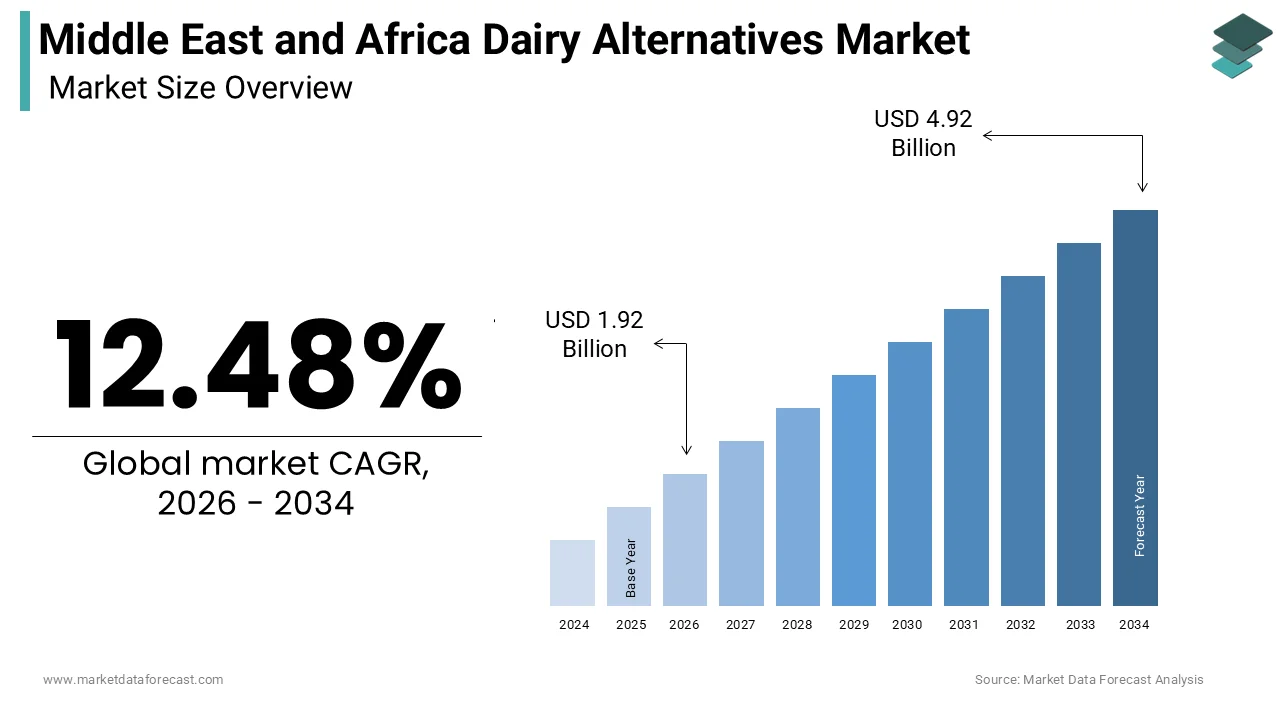
The dairy alternatives market size in the Middle East and Africa was worth USD 1.71 billion in 2025. The MEA market is estimated to be growing at a CAGR of 12.48% from 2026 to 2034 and be worth USD 4.92 billion by 2034 from USD 1.92 billion in 2026.
Dairy alternatives are plant-based foods and beverages engineered to substitute traditional mammalian dairy products like milk, cheese, yogurt, and butter. This market includes offerings derived from soy, almonds, oats, coconuts, and other botanical sources that cater to consumers seeking lactose-free vegan or environmentally sustainable options. The fundamental shift towards these alternatives is driven by changing dietary preferences, health consciousness, and ethical considerations regarding animal welfare. In the Middle East, cultural and religious practices significantly influence consumption patterns, with Halal certification being a critical requirement for market entry. Data from the Food and Agriculture Organization (FAO) highlights that livestock supply chains account for approximately 14.5 percent of global greenhouse gas emissions; concurrently, independent consumer market research indicates a rising interest in lower-impact, plant-based food choices among urban demographics in the Middle East. Gastroenterological and genetic research confirms that lactose intolerance affects a vast majority of the adult population across Africa and the Middle East; consumer market analysts note that this widespread biological trait underpins a major, expanding domestic demand for non-dairy alternatives. The market definition extends beyond mere substitution to include functional benefits such as fortified vitamins and minerals that address specific nutritional deficiencies prevalent in the region. Regulatory bodies in countries like Saudi Arabia and South Africa are increasingly standardizing labeling requirements for plant-based products to ensure consumer safety and transparency. This evolving landscape requires manufacturers to navigate complex supply chains and diverse consumer expectations while maintaining product quality and affordability. The integration of local ingredients such as dates and sesame also presents unique opportunities for regional differentiation and cultural relevance in product formulations.
MARKET DRIVERS
Rising Prevalence of Lactose Intolerance Drives Demand for Non-Dairy Solutions
The high prevalence of lactose intolerance across various demographics in the region is a key reason for the growth of the Middle East and Africa dairy alternatives market. Many individuals in these regions lack the enzyme lactase necessary to digest lactose, leading to digestive discomfort and health issues when consuming traditional dairy products. Biomedical data from the National Institutes of Health (NIH) indicates that lactose malabsorption affects up to 90 percent of adults in specific East Asian and African demographics; consumer market analysis indicates that this widespread biological trait provides a strong foundation for the growth of lactose-free product sectors. This physiological constraint forces consumers to seek alternative sources of calcium and protein that do not trigger adverse reactions. Plant-based milks such as almond, soy, and oat varieties provide viable substitutes that are naturally free from lactose. Clinical literature across regional medical journals shows that lactose intolerance diagnoses are rising due to better public health awareness and diagnostics; concurrently, food industry analysts point to this diagnostic shift to justify the expansion of specialized free-from dietary lines. Manufacturers are responding by fortifying these alternatives with essential nutrients to ensure they meet daily dietary requirements. The availability of these products in mainstream retail outlets has improved accessibility for affected individuals. Additionally, the growing middle class in countries like Nigeria and Kenya has increased purchasing power for premium health-focused foods. This demographic shift enables consumers to prioritize health over cost, driving sales of specialized non-dairy items. The cultural acceptance of plant-based diets in certain communities also facilitates smoother adoption of these alternatives.
Increasing Health Consciousness and Lifestyle Diseases Fuel Premium Product Adoption
Growing awareness of the link between diet and chronic diseases is prompting consumers in the region to adopt healthier eating habits, including the consumption of these alternatives, which further propels the Middle East and Africa dairy alternatives market. The rising incidence of obesity, diabetes, and cardiovascular diseases in the region has led to a surge in demand for low-calorie and low-saturated-fat food options. According to epidemiological tracking by global health authorities, the number of adults living with diabetes in the Middle East and North Africa has more than tripled over the last two decades, underscoring an urgent public health mandate for systemic dietary interventions. Plant based milks often contain fewer calories and less saturated fat than cow's milk making them attractive to health conscious individuals. Data from the Global Burden of Disease Study establishes that sub-optimal dietary habits are a primary risk factor for mortality across many African nations; in response, local health authorities are shaping public wellness initiatives aimed at improving balanced nutrition and reducing heavy sodium intake. Consumers are increasingly reading labels and seeking products with clean ingredients and no added sugars. This trend is particularly evident in urban areas where exposure to global health trends is higher. Social media and digital health platforms play a crucial role in disseminating information about the benefits of plant-based diets. Influencers and healthcare professionals advocate for reduced dairy consumption to manage weight and improve metabolic health. Consequently, brands that offer transparent labeling and health-certified products gain a competitive advantage. The shift towards preventive healthcare rather than curative measures further sustains this demand. Governments are also supporting initiatives that encourage healthy eating, indirectly boosting the market for nutritious dairy alternatives.
MARKET RESTRAINTS
High Cost of Imported Raw Materials Limits Affordability and Market Penetration
The high cost of raw materials required for producing these alternatives is a significant restraint on the Middle East and Africa dairy alternatives market growth. Many key ingredients, such as almonds, oats, and soybeans, are not locally sourced in sufficient quantities and must be imported, exposing manufacturers to currency fluctuations and trade barriers. Macroeconomic reports from the World Bank emphasize that a high dependency on imported agricultural commodities exposes many African nations to severe global market shocks; food industry analysts note that this systemic vulnerability directly drives price volatility for raw inputs, inflating production costs for local manufacturers. This economic reality makes plant-based milks significantly more expensive than traditional dairy products, limiting their accessibility to lower and middle-income households. Data from the International Monetary Fund (IMF) confirms that skyrocketing inflation and currency pressures have severely strained household purchasing power across multiple African nations; concurrently, retail market tracking shows that this economic squeeze is forcing consumers to prioritize basic household essentials over premium products. The lack of local processing infrastructure for crops like almonds further exacerbates supply chain inefficiencies and increases production costs. Consumers in price-sensitive markets are less likely to switch to dairy alternatives if the price differential is substantial. This financial barrier restricts market penetration to affluent urban segments, hindering mass adoption. Additionally, tariffs on imported machinery and packaging materials add to the overall cost burden for local manufacturers. The inability to achieve economies of scale due to limited demand further keeps prices high. Without government subsidies or incentives for local cultivation of alternative crop sources, the cost structure remains unfavorable. This economic constraint prevents the market from expanding beyond niche demographics.
Limited Awareness and Cultural Preference for Traditional Dairy Products Hinders Adoption
Deep-rooted cultural preferences for traditional dairy products and limited awareness about the benefits of these alternatives are major barriers to the expansion of the Middle East and Africa dairy alternatives market. Dairy items such as camel milk, goat milk, and laban are integral to the culinary heritage and daily diets of many communities in the region. The Food and Agriculture Organization (FAO) underscores that livestock production is a vital cornerstone of rural livelihoods and food security across Africa; agricultural analysts note that while this reinforces a deep economic reliance on livestock, the prominence of commercial dairy processing varies significantly by region due to localized climate constraints and market infrastructure. This strong cultural attachment makes consumers resistant to switching to plant-based substitutes, which are often perceived as foreign or inferior in taste and nutritional value. Lack of education regarding the environmental and health benefits of dairy alternatives further slows adoption rates. Many consumers are unaware of the potential risks associated with excessive dairy consumption or the advantages of plant-based nutrition. Marketing efforts often struggle to overcome these entrenched habits and misconceptions. The perception that dairy alternatives are only for those with medical conditions rather than a lifestyle choice limits their appeal. Additionally, the limited availability of diverse and tasty options in local markets reduces trial and repeat purchases. Overcoming these cultural and informational barriers requires sustained educational campaigns and product localization strategies.
MARKET OPPORTUNITIES
Expansion of Local Ingredient Sourcing Creates Unique Product Differentiation
The utilization of locally available crops such as dates, sesame, sorghum, and teff unlocks potential for innovation and cost reduction in the Middle East and Africa Dairy Alternatives Market. By leveraging indigenous ingredients, manufacturers can create unique products that resonate with local tastes and reduce reliance on expensive imports. Extensive research from the International Crops Research Institute for the Semi-Arid Tropics (ICRISAT) proves that sorghum and millet are highly nutritious, drought-resilient crops central to African food security; food scientists separately note that these grains' rich nutritional profiles make them ideal inputs for regional plant-based beverages. These crops are drought-resistant and well-adapted to local climatic conditions, ensuring a stable and sustainable supply chain. Developing products from these local sources allows brands to differentiate themselves in a crowded market and appeal to national pride. Lower transportation and import costs can make these products more affordable for a broader consumer base. Additionally, local sourcing aligns with government initiatives promoting food security and agricultural development. Consumers are increasingly interested in supporting local businesses and sustainable practices. This trend provides an opportunity for brands to market their products as eco-friendly and community supportive. Innovation in processing technologies can enhance the texture and flavor of these local ingredients, making them competitive with international standards. Collaborations with local farmers can further strengthen supply chains and improve rural incomes.
Growth of E-Commerce and Digital Marketing Enhances Consumer Reach and Education
The rapid expansion of e-commerce platforms and digital marketing channels offers a powerful opportunity to educate consumers and distribute dairy alternatives across the region, which is likely to promote the expansion of the Middle East and Africa dairy alternatives market. Online retail allows brands to reach remote and underserved areas where physical distribution networks are limited. Digital platforms enable targeted marketing campaigns that can effectively communicate the health and environmental benefits of dairy alternatives to specific demographic groups. According to digital tracking metrics from the International Telecommunication Union (ITU), internet penetration in Africa has more than quadrupled over the last decade, opening up an exponentially expanding digital audience for online engagement and e-commerce platforms. Brands can use social media influencers and educational content to overcome cultural barriers and build trust with potential customers. Direct-to-consumer models allow for personalized recommendations and subscription services that enhance customer loyalty. Online reviews and testimonials also play a crucial role in influencing purchasing decisions in this category. The ability to gather real-time feedback helps manufacturers refine their products and marketing strategies. Furthermore, digital platforms facilitate cross-border trade, allowing regional brands to expand into neighboring markets. Investment in logistics and last-mile delivery infrastructure is improving the reliability of online orders. This digital transformation lowers entry barriers for new players and fosters competition. By leveraging technology, companies can build strong brand communities and drive sustained growth in the dairy alternatives sector.
MARKET CHALLENGES
Supply Chain Instability and Infrastructure Deficits Disrupt Production and Distribution
Inadequate infrastructure and supply chain instability are major obstacles for the consistent production and distribution of these alternatives in the region, which negatively impacts the growth of the Middle East and Africa dairy alternatives market. Poor road networks, unreliable electricity supply, and limited cold chain facilities hinder the efficient movement of raw materials and finished products. The African Development Bank (AfDB) indicates that structural infrastructure gaps hamper the continent's annual GDP growth by approximately 2 percent. Industrial observers emphasize that this deficit severely compounds cold-chain logistics challenges for regional food processors. Perishable ingredients used in dairy alternatives require careful handling and storage, which is often compromised by frequent power outages and temperature fluctuations. The World Bank's Logistics Performance Index (LPI) confirms that several nations across the African continent rank low in overall infrastructure and transit efficiency; supply chain experts note that these systematic transport frictions directly exacerbate transit delays and perishable food spoilage. These operational inefficiencies increase costs and reduce product availability in retail outlets. Political instability and conflict in certain regions further disrupt supply chains and create uncertainty for investors. Manufacturers face difficulties in sourcing consistent quality raw materials due to fragmented agricultural sectors. The lack of standardized quality control measures across borders complicates regional trade and expansion. Additionally, bureaucratic hurdles and customs delays at ports increase lead times and inventory holding costs. Companies must invest heavily in private infrastructure solutions such as generators and warehouses to mitigate these risks. This additional capital expenditure reduces profitability and limits resources for innovation and marketing. Ensuring a reliable supply chain remains a critical challenge for sustaining market growth and meeting consumer demand.
Regulatory Fragmentation and Labeling Standards Create Compliance Complexities
The lack of harmonized regulatory frameworks and labeling standards for these alternatives across the region creates significant compliance issues for manufacturers within the Middle East and Africa dairy alternatives market. Each country has its own set of rules regarding ingredient definition,s nutritional claims, and packaging requirements, making regional expansion complex and costly. In Africa, regulatory bodies vary widely in their capacity and enforcement capabilities, leading to inconsistent market access conditions. Manufacturers must navigate a maze of local regulations, which often require separate product formulations and labeling for different markets. This fragmentation increases administrative burdens and legal risks for companies operating in multiple countries. Ambiguity in defining terms such as milk or yogurt for plant-based products can lead to legal disputes and marketing restrictions. Some countries prohibit the use of dairy terms for non-dairy products, forcing brands to rebrand and repackage. The lack of clear guidelines on fortification levels and health claims also creates uncertainty for product development. Companies must invest in local legal expertise and regulatory affairs teams to ensure compliance. This complexity slows down product launches and increases time to market. Harmonization of standards is essential for facilitating trade and fostering a unified regional market.
REPORT COVERAGE
| REPORT METRIC | DETAILS |
| Market Size Available | 2025 to 2034 |
| Base Year | 2025 |
| Forecast Period | 2026 to 2034 |
| CAGR | 12.48% |
| Segments Covered | By Type, Formulation, Application, And Region |
| Various Analyses Covered | Global, Regional & Country Level Analysis; Segment-Level Analysis; DROC, PESTLE Analysis; Porter’s Five Forces Analysis; Competitive Landscape; Analyst Overview of Investment Opportunities |
| Regions Covered | UK, France, Spain, Germany, Italy, Russia, Sweden, Denmark, Switzerland, Netherlands, Turkey, and the Czech Republic |
| Market Leaders Profiled | Sanitarium Health & Wellbeing Company, Blue Diamond Growers, The WhiteWave Foods Company, Freedom Foods Group Limited, Daiya Foods Inc., Nutriops S.L., SunOpta Inc., The Hain Celestial Group Inc, Earth’s Own Food Company, Archer Daniels Midland Company, and Eden Foods, Inc. |
SEGMENTAL ANALYSIS
By Type Insights
The soy milk segment dominated the Middle East and Africa Dairy Alternatives Market and accounted for a 41.5% share in 2025. This dominance of the segment was driven by its superior nutritional profile and cost-effectiveness compared to other plant-based options. It is the closest alternative to cow's milk in terms of protein content, making it a preferred choice for consumers seeking a direct dietary substitute. While data from the Food and Agriculture Organization (FAO) establishes that soybeans dominate global legume cultivation, regional manufacturers must still actively navigate international commodity price volatility and trade logistics to secure an affordable raw supply chain. The high protein content of approximately 7 grams per cup matches that of dairy milk, which appeals to health-conscious individuals and athletes. Research establishes that soy protein contains all nine essential amino acids, providing a complete plant-based protein source that effectively supports muscle maintenance and metabolic health. This nutritional equivalence drives its adoption in households where protein intake is a primary concern. Additionally, soy milk is naturally lactose-free and cholesterol-free, addressing common health issues prevalent in the region, such as lactose intolerance and cardiovascular diseases. The versatility of soy milk in cooking and baking also contributes to its dominance, as it behaves similarly to dairy milk in various recipes. Established production facilities and widespread availability in retail stores make it accessible to a broad consumer base. The long history of soy consumption in certain cultural diets within the region also facilitates acceptance. Manufacturers benefit from economies of scale in soy processing, allowing them to offer competitive pricing that attracts price-sensitive consumers in emerging markets across Africa.
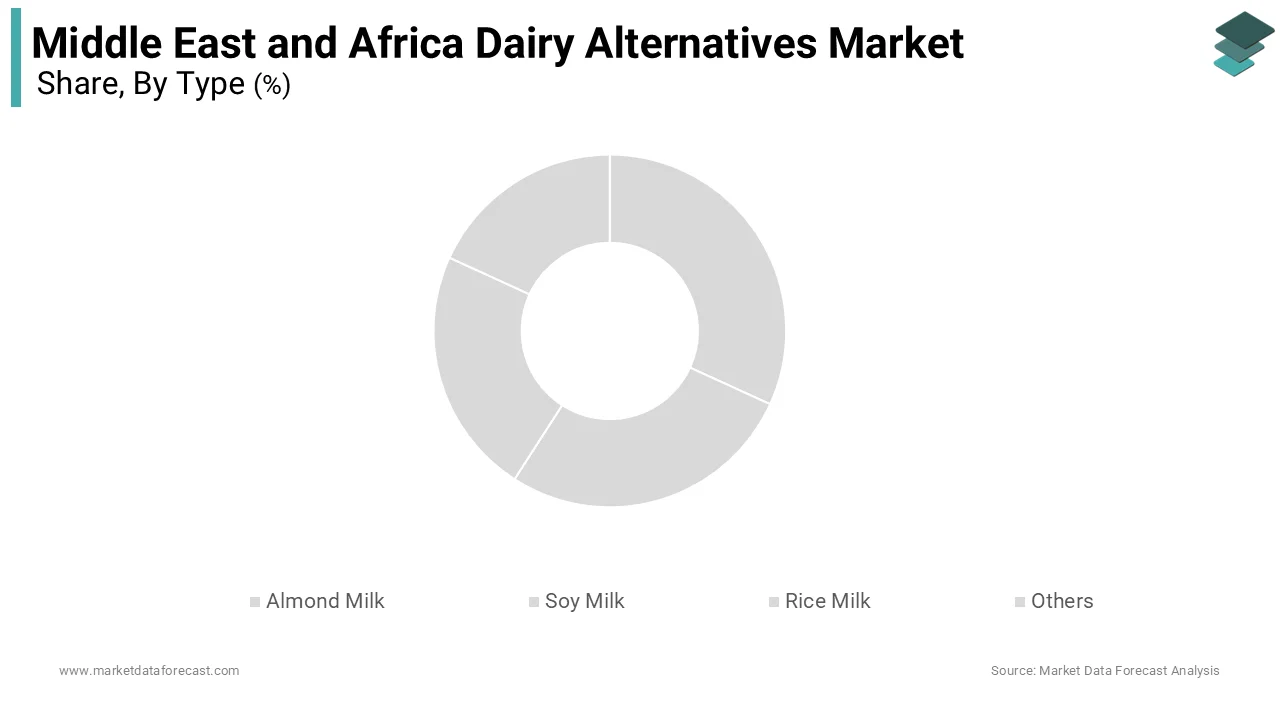
But the almond milk segment is on the rise and is expected to be the fastest-growing segment in the market by witnessing a CAGR of 12.5% between 2026 and 2034 due to increasing consumer preference for premium low-calorie beverages. The rise in disposable income among the middle class in Gulf Cooperation Council countries has led to greater spending on high-value health products. Almond milk is perceived as a luxurious and sophisticated alternative, often associated with modern lifestyles and global trends. The Almond Board of California confirms that almonds are an exceptional source of vitamin E and antioxidants that measurably support skin health. Concurrently, consumer data shows these functional benefits strongly appeal to beauty- and health-conscious demographics. The low-calorie content of unsweetened almond milk makes it attractive for weight management, a growing concern in urban centers. Moreover, the International Diabetes Federation (IDF) confirms that obesity and diabetes rates in the Middle East are among the highest in the world. In response to this public health reality, nutritionists and market analysts note a growing consumer shift toward low-energy-density dietary options. Social media influence and the popularity of Western dietary trends further accelerate the adoption of almond milk in cafes and restaurants. Brands are introducing flavored and fortified variants to enhance appeal and differentiation. The expansion of international coffee chains in the region has also increased the visibility and consumption of almond milk as a standard menu option. Import capabilities in key markets like Saudi Arabia ensure a consistent supply despite local production limitations. This combination of health benefits, status symbol, and culinary versatility positions almond milk for rapid expansion.
By Formulation Insights
The plain unsweetened segment was the largest in the Middle East and Africa dairy alternatives market and occupied a 58.7% share in 2025. This prominence of the segment was supported by the growing emphasis on reducing sugar intake and managing chronic health conditions. Consumers are increasingly aware of the negative health impacts of added sugars, such as weight gain and increased risk of diabetes. Epidemiological guidelines from the World Health Organization (WHO) establish that high sugar intake is a core driver of obesity and diabetes. In line with these global warnings, several regulatory bodies across the Middle East and Africa have independently implemented strict sugar taxes and front-of-pack labeling mandates. This regulatory environment encourages manufacturers to produce and promote unsweetened options. Technical regulations enforced by the Gulf Standardization Organization (GSO) require food manufacturers to clearly disclose added sugars on product labels. Retail market tracking indicates that these mandatory transparency laws are helping drive regional consumer shifts toward clean-label alternatives. Plain unsweetened varieties allow consumers to control their sweetness levels by adding natural sweeteners like dates or honey, aligning with traditional preferences. This flexibility appeals to health-conscious individuals who monitor their glycemic index. Clinical parameters established by the American Heart Association (AHA) emphasize that reducing added sugars is a critical component of cardiovascular health. Locally, regional nutritionists frequently leverage this medical consensus to advise patients to opt for unsweetened beverage alternatives. The versatility of plain unsweetened milk in savory dishes and coffee also drives its popularity. It does not alter the flavor profile of recipes, making it a preferred ingredient for chefs and home cooks. The availability of these products in major supermarkets and health food stores has improved accessibility. Manufacturers are investing in marketing campaigns that highlight the purity and naturalness of unsweetened formulations. This trend is supported by the growing fitness culture in urban areas where clean eating is prioritized. The demand for authentic and unprocessed food experiences further cements the leading position of plain unsweetened alternatives.
On the other hand, the flavoured sweetened segment is expected to exhibit a noteworthy CAGR of 11.8% during the forecast period, owing to the demand for convenient and ready-to-drink options among younger demographics. The busy lifestyles of urban consumers in cities like Dubai, Cairo, and Johannesburg have increased the preference for grab-and-go beverages that require no preparation. Flavoured variants such as chocolate, vanilla, and strawberry appeal to children and young adults who find plant-based milks less palatable. The indulgence factor associated with sweetened flavors positions these products as treats rather than just nutritional supplements. Marketing campaigns often target schools and family gatherings, emphasizing taste and enjoyment. Research indices indicate that the demand for indulgent snacks and sweet beverages remains highly robust across emerging markets; retail analysts note that this persistent craving for familiar sweet flavors is directly accelerating the growth of flavored dairy alternatives. Innovations in natural sweeteners and flavorings allow brands to offer healthier versions that still satisfy sweet cravings. The expansion of quick service restaurants and cafes offering flavored plant-based drinks further boosts visibility and trial. Social media influencers promoting trendy and Instagram-worthy beverages also drive demand. This segment benefits from impulse purchases and emotional connections to comfort foods. The ability to mask the distinct tastes of certain plant bases like soy or oats with strong flavors also enhances consumer acceptance.
By Application Insights
The food and beverages application segment held the majority share of the Middle East and Africa Dairy Alternatives Market in 2025 because of the extensive use of plant-based milks in both household cooking and commercial food service industries. Dairy alternatives are integral ingredients in a wide range of products, including baked goods, desserts, sauces, and beverages. A study confirms that the regional food processing sector is expanding rapidly alongside a rising demand for specialized ingredients; while the FAO advocates for agro-processing to curb food waste, separate corporate reports document this commercial ingredient boom. Coffee shops and restaurants are increasingly offering plant-based milk options to cater to vegan lactose-intolerant customers, normalizing their use in daily consumption. Research reveals that non-dairy milk options have transitioned from a specialty trend to a standard consumer expectation in urban centers, which is subsequently driving consistent bulk B2B procurement by hospitality businesses. In household settings, consumers use these alternatives for preparing traditional dishes such as puddings, soups, and curries, where they provide similar texture and richness to dairy. The versatility of soy and coconut milk in savory applications makes them indispensable in many African and Middle Eastern cuisines. Manufacturers are developing specific formulations for culinary use, such as barista blends that foam well and do not curdle when heated. This technical innovation supports wider adoption in professional kitchens. The integration of dairy alternatives into mainstream food products like ice cream and yogurt also contributes to the segment's dominance. Consumer familiarity with these applications reduces barriers to trial and encourages regular usage.
However, other application segments are predicted to witness the highest CAGR of 10.2% from 2to and 2034. This swift growth of the segment is propelled by the increasing incorporation of plant-based ingredients in cosmetics and hygiene products. Dairy alternatives such as almond milk and oat milk are rich in vitamins and antioxidants that are beneficial for skin and hair health. Manufacturers are leveraging the moisturizing and soothing properties of plant milks to create lotions, shampoos, and face masks. A study indicates that the Halal cosmetics sector is growing rapidly; while Halal standards strictly regulate animal sourcing rather than banning it, manufacturers are increasingly using plant-based formulations to naturally satisfy both Halal and vegan compliance simultaneously. The ethical and cruelty-free positioning of these ingredients aligns with the values of modern consumers. Industrial applications also include the use of plant proteins in biodegradable plastics and packaging materials, supporting sustainability initiatives. Frameworks from the United Nations Environment Programme (UNEP) strongly advocate for a transition toward circular economic models; in response to this shifting global paradigm, manufacturing industries are actively pivoting toward bio-based raw materials to minimize environmental impacts. The growth of the wellness tourism sector in countries like Morocco and Turkey further boosts demand for spa products containing natural plant extracts. Research and development investments are focusing on extracting functional compounds from dairy alternative sources for high-value applications. This diversification reduces dependency on food markets and opens new revenue streams. The premium nature of these personal care products allows for higher profit margins. Regulatory support for green chemistry and sustainable manufacturing also favors this segment.
REGIONAL ANALYSIS
Saudi Arabia Dairy Alternatives Market Analysis
Saudi Arabia continued to be a prominent country in the Middle East and Africa Dairy Alternatives Market and captured a 24.5% share in 2025. This growth of the country’s market was driven by government health initiatives under Vision 2030 and the rapid expansion of modern retail infrastructure. The kingdom is witnessing a shift towards healthier lifestyles as part of national quality of life programs. This environment fosters demand for nutritious dairy alternatives. The retail sector is transforming with the entry of international supermarket chains and e-commerce platforms. Also, the Saudi Ministry of Investment (MI) allows for expanded foreign ownership in retail; food industry analysts note that this open-market policy has directly diversified shelf variety and product availability across the Kingdom. The young population demographic is particularly open to trying new food trends influenced by social media and global travel. Demographic indicators from the World Bank show that Saudi Arabia possesses one of the youngest populations in the region; consumer market research confirms that this tech-savvy, youthful consumer base is a primary driver behind the rapid adoption of innovative food and beverage trends. The presence of major global dairy alternative brands in the market ensures high-quality standards and consumer trust. Local manufacturers are also emerging, leveraging data and sesame resources to create unique offerings. The government's support for local food production enhances supply chain security. Religious considerations regarding Halal certification are strictly adhered to, ensuring broad market acceptance. The growing cafe culture in cities like Riyadh and Jeddah further integrates dairy alternatives into daily routines. Investment in food technology and startups is accelerating innovation in this sector.
United Arab Emirates Dairy Alternatives Market Analysis
The United Arab Emirates plays a major role in the Middle East and Africa dairy alternatives market because of an affluent consumer base and a vibrant tourism and hospitality sector. Dubai and Abu Dhabi are hubs for international food trends, with a high concentration of vegan health-focused restaurants. The international exposure drives local adoption and sets high standards for product quality and variety. Also, the UAE has a high prevalence of expatriates from Western and Asian countries who are accustomed to consuming dairy alternatives. Official data from the Federal Competitiveness and Statistics Centre (FCSC) establishes that expatriates comprise the vast majority of the UAE's resident population; consumer behavior analysts point to this unique demographic mix to explain the country's highly diverse and sophisticated food retail market. Retailers in the UAE offer an extensive range of imported and local dairy alternative brands, catering to niche preferences. The government's focus on food security and sustainability encourages innovation in alternative protein sources. Directives from the UAE Ministry of Climate Change and Environment (MOCCAE) heavily prioritize sustainable agriculture and vertical farming to boost localized food security. Concurrently, the broader green economy framework is encouraging food tech firms to invest in regional plant-based ingredient innovations. The luxury retail environment allows for premium pricing strategies, attracting high-end brands. Digital marketing and influencer collaborations are highly effective in a tech-savvy market. The availability of advanced cold chain logistics ensures product freshness and quality. The UAE serves as a gateway for regional distribution, influencing trends in neighboring countries. The strong regulatory framework ensures safety and transparency, building consumer confidence.
South Africa Dairy Alternatives Market Analysis
South Africa outperformed other countries in the Middle East and Africa dairy alternatives market and accounted for a 29.8% share in 2025. This dominance of the country’s market was fuelled by a mature retail sector and increasing health awareness among its urban population. The country has a well-developed supermarket infrastructure that facilitates the distribution of specialized food products. Statistics South Africa (Stats) confirms that the retail trade sector remains a vital contributor to national GDP. Separate retail market analyses highlight that major corporate supermarket chains dominate this landscape, constantly diversifying their product ranges on store shelves. Health consciousness is rising due to the high burden of communicable diseases. Public health tracking by the South African Medical Research Council (SAMRC) warns that national obesity and diabetes rates have reached alarming levels. Concurrently, commercial retail data indicate that these health concerns are driving a consumer shift toward functional, healthier food alternatives like plant-based milks. The vegan and vegetarian movements are gaining traction, supported by active civil society organizations and media coverage. Local manufacturers are innovating with indigenous crops such as rooibos and baobab to create unique dairy alternatives. The export potential to neighboring countries positions South Africa as a regional leader. Economic challenges, however, affect affordability, limiting mass market penetration. The middle class remains the primary target for premium dairy alternatives. Regulatory standards for food labeling are well established, ensuring consumer protection. Educational campaigns by health professionals reinforce the benefits of reducing dairy consumption. The presence of international brands alongside local players creates a competitive and dynamic market environment. Innovation in packaging and sustainability is becoming a key differentiator.
Egypt Dairy Alternatives Market Analysis
Egypt witnessed a steady growth in the Middle East and Africa dairy alternatives market due to its substantial population and growing urban middle class, although traditional dietary habits remain strong. The sheer size of the consumer base offers significant volume opportunities for affordable plant-based products. Official census data from Egypt's Central Agency for Public Mobilization and Statistics (CAPMAS) confirms the national population exceeds 100 million, with a major and densely packed urban population centered heavily in metropolitan areas like Cairo and Alexandria. Lactose intolerance is prevalent, creating a natural demand for non-dairy options. Gastroenterological highlights that lactose malabsorption is a widespread biological trait among North African adults. Observers point out that this widespread digestive sensitivity naturally supports consumer interest in dairy-free alternatives. However, price sensitivity is a major constraint, requiring manufacturers to focus on cost-effective solutions. Local production using soy and rice can help reduce costs. The government's support for agricultural development may facilitate the cultivation of alternative crops. Directives from Egypt's Ministry of Agriculture and Land Reclamation prioritize crop diversification to secure essential national food staples and reduce import reliance. Food tech companies note that these expanding domestic agricultural frameworks could eventually offer raw input options for local processors. Traditional beverages such as horchata made from tiger nuts offer a cultural bridge to modern dairy alternatives. Modern retail channels are expanding, improving access to specialized products. Social media is playing a role in educating younger consumers about global food trends. The market is still in early stages compared to the Gulf countries, but it shows steady growth potential. Affordability and cultural relevance are key success factors. Local brands are beginning to emerge to cater to specific taste preferences.
Kenya Dairy Alternatives Market Analysis
Kenya is an upcoming market for dairy alternatives in the regional market during the forecast period, owing to rapid urbanization and the growth of a health-conscious middle class in Nairobi and other major cities. The country has a strong dairy culture, but lactose intolerance and lifestyle diseases are driving interest in alternatives. The middle class is expanding, with higher disposable income for premium health products. Plant-based milks made from soy and almonds are gaining popularity in urban supermarkets and health food stores. The vegan community in Kenya is active and influential, promoting plant-based living through events and social media. Local startups are innovating with indigenous ingredients such as macadamia and coconut. The retail sector is modernizing, with international chains entering the market and improving product availability. Challenges include limited local production capacity and reliance on imports, which affect prices. Government policies supporting local manufacturing could enhance competitiveness. The youth demographic is open to experimentation, driving trial and adoption. Digital platforms are facilitatdirect-to-consumerumer sales and education. The market is poised for growth as infrastructure and awareness improve.
COMPETITION OVERVIEW
The competitive landscape of the Middle East and Africa Dairy Alternatives Market is characterized by a mix of multinational corporations and emerging local brands vying for market share. International players leverage their established supply chains and brand recognition to dominate urban centers, while local manufacturers focus on affordability and cultural relevance. Competition is intensifying as companies innovate to offer unique flavors and textures that appeal to diverse consumer preferences. Regulatory compliance and Halal certification serve as critical differentiators influencing consumer trust and purchase decisions. The market sees frequent product launches and promotional activities aimed at educating consumers about the health and environmental benefits of plant-based diets. Price sensitivity remains a significant factor, particularly in African markets where affordable options gain traction over premium imports. Strategic alliances with retail chains and food service providers enhance market access and visibility. Digital platforms are increasingly used for direct consumer engagement and feedback collection. The entry of new startups specializing in indigenous ingredients adds further complexity to the competitive environment. Companies must continuously adapt to changing consumer trends and economic conditions to maintain their position. Sustainability and ethical sourcing are becoming key battlegrounds for brand differentiation. This dynamic environment fosters innovation but requires substantial investment in marketing and infrastructure to succeed.
KEY MARKET PLAYERS
A few major players of the Middle East and Africa Dairy Alternatives Market include
- Sanitarium Health & Wellbeing Company
- Blue Diamond Growers
- The WhiteWave Foods Company
- Freedom Foods Group Limited
- Daiya Foods Inc
- Nutriops S.L
- SunOpta Inc
- The Hain Celestial Group Inc
- Earth’s Own Food Company
- Archer Daniels Midland Company
- Eden Foods, Inc
Top Strategies Used by Key Market Participants
Key players in the Middle East and Africa Dairy Alternatives Market primarily employ product localization and strategic partnerships to enhance their competitive position. Companies invest in research and development to create formulations that align with local taste preferences and dietary requirements, such as Halal certification. Mergers and acquisitions are utilized to expand geographic reach and acquire specialized technologies for plant-based processing. Brands frequently collaborate with local retailers' e-commerce platforms to improve distribution efficiency and product visibility. Digital marketing campaigns targeting health-conscious consumers play a crucial role in building brand awareness and educating the public about the benefits of dairy alternatives. Sustainability initiatives, including eco-friendly packaging and responsible sourcing, are increasingly adopted to appeal to environmentally aware demographics. Manufacturers also focus on pricing strategies that balance affordability with premium quality to capture both mass and niche markets. These combined approaches enable firms to navigate regulatory complexities and cultural nuances while driving sustained growth and consumer loyalty in the dynamic regional landscape.
Leading Players in the Middle East and Africa Dairy Alternatives Market
- Alpro has established a strong presence in the Middle East and Africa by leveraging its reputation for high-quality plant-based nutrition. The company focuses on educating consumers about the benefits of soy and almond milk through digital campaigns and retail partnerships. Recent actions include expanding distribution networks in key urban centers like Dubai and Johannesburg to enhance product accessibility. Alpro actively collaborates with local retailers to secure prominent shelf space and introduce limited-edition flavors tailored to regional tastes. The brand emphasizes sustainability in its packaging and sourcing, which resonates with environmentally conscious consumers in the region. By participating in local food festivals and health expos, Alpro increases brand visibility and engages directly with potential customers. Their commitment to non genetically modified ingredients builds trust among health-aware demographics. Alpro also invests in training programs for retail staff to improve product knowledge and customer service. These strategic initiatives help the company maintain a competitive edge and foster long-term loyalty in a growing market.
- Danone strengthens its position in the Middle East and Africa Dairy Alternatives Market through its special plant-based brands, such as Alpro and Silk. The company prioritizes innovation by developing products that address local nutritional needs and dietary preferences. Recent efforts include launching fortified oat and coconut milk variants enriched with calcium and vitamin D to appeal to health-conscious families. Danone partners with healthcare professionals to promote the clinical benefits of plant-based diets for managing lactose intolerance and cholesterol levels. The firm invests in sustainable agriculture projects in the region to secure raw material supplies and support local farmers. Digital marketing campaigns target young urban consumers who value convenience and wellness. Danone also enhances its e-commerce capabilities to reach remote areas where physical retail presence is limited. By aligning with global sustainability,oals the company appeals to ethical consumers. Their focus on transparent labeling and clean ingredients reinforces brand credibility. These actions collectively drive growth and deepen market penetration across diverse consumer segments in the Middle East and Africa.
- Nestlé contributes significantly to the Middle East and Africa Dairy Alternatives Market by offering a diverse portfolio of plant-based products under brands like Garden Gourmet and Native Forest. The company leverages its extensive distribution network to ensure widespread availability in supermarkets and convenience stores. Recent actions include introducing affordable soy and rice milk options to cater to price-sensitive consumers in emerging markets. Nestlé invests in research and development to improve the taste and texture of its dairy alternatives, making them more appealing to traditional dairy users. The company actively engages in community outreach programs to educate consumers about the nutritional benefits of plant-based diets. Nestlé also focuses on sustainable sourcing practices to minimize environmental impact and support local agricultural communities. Strategic partnerships with food service providers help integrate their products into menus across hotels and restaurants. By utilizing data analytics, Nestlé tailors its marketing strategies to specific regional preferences. These efforts enhance brand relevance and drive consistent growth in the competitive landscape of the Middle East and Africa.
MARKET SEGMENTATION
This research report on the Middle East and Africa dairy alternatives market is segmented and sub-segmented based on the following categories.
By Type
- Almond Milk
- Soy Milk
- Rice Milk
- Others
By Formulation
- Plain Sweetened
- Plain Unsweetened
- Flavoured Sweetened
- Flavoured Unsweetened
By Application
- Food & Beverages
- Others
By Country
- KSA
- UAE
- Israel
- Rest of the GCC Countries
- South Africa
- Ethiopia
- Kenya
- Egypt
- Sudan
- Rest of MEA