- Product Description Description
- Table of Contents TOC
- List of Table & Figure LOT
- Get Free Sample PDF Sample PDF
Market Size, 2025
$210.09 MnMarket Estimate, 2026
$208.59 MnMarket Forecast, 2034
$279.60 MnCAGR, 2026–2034
3.73%Middle East and Africa Feed Acidifiers Market Size, Trends & Forecast (2026–2034)
- Market Scope: Comprehensive regional analysis of the MEA feed acidifiers market covering organic acid types, livestock applications, formulation forms, country-level breakdowns, and core growth drivers.
- Market Valuation: Valued at USD 201.09 million (2025), estimated at USD 208.59 million (2026), and projected to reach USD 279.60 million by 2034, registering a steady CAGR of 3.73% from 2026 to 2034.
- Primary Growth Drivers: Rising demand for protein-rich foods like dairy and meat, increasing emphasis on animal health, growing awareness of feed quality, and the influence of international standards such as the European Union's ban on antibiotic growth promoters. Market expansion is further supported by the need for nutritive feed, effective operating cost management, and expanding livestock populations.
Key Market Segment Metrics (2026–2034)
| Category | Leading Segment (2025 Position) | Fastest-Growing Segment |
|---|---|---|
| By Type | Propionic Acid & Blended Organic Acids (key nutritional and preservative standards) | Specialized Formulations & Lactic Acid Derivatives |
| By Livestock | Poultry & Ruminants (driven by high meat and dairy production volumes) | Aquaculture & Swine Sectors |
| By Form | Acidifier Blends (dominant for broad-spectrum microbial control) | Liquid Formulations & Advanced Delivery Systems |
| By Region / Country | KSA, UAE, and South Africa (leading regional agricultural hubs) | Rest of GCC and Emerging East African Markets (Ethiopia, Kenya) |
Major Market Players & Market Structure
Market Structure: Highly competitive landscape featuring major multinational chemical and feed additive manufacturers competing on product efficacy, gut health optimization, pathogen prevention, nutrient digestibility, and sustainable animal nutrition solutions.
Key Companies: Kemira OYJ, Yara International, Kemin Industries, BASF SE, Biomin Holding GmbH, Impextraco, Novus International, ADDCON GmbH, and Perstorp AB.
 Download Free Sample Report
Middle East and Africa Feed Acidifiers Market Size
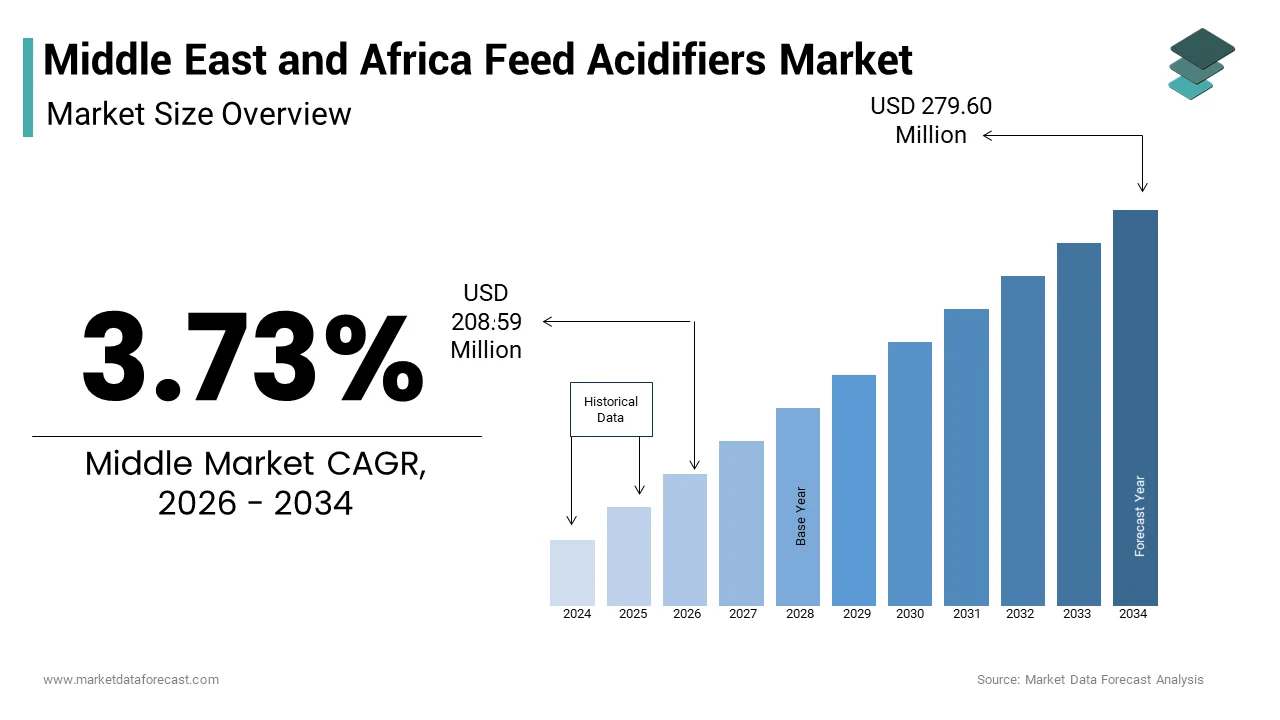
The Middle East and Africa feed acidifiers market size was valued at USD 201.09 million in 2025 and is anticipated to reach USD 208.59 million in 2026 to reach USD 279.60 million by 2034, growing at a CAGR of 3.73% from 2026 to 2034.
According to the Food and Agriculture Organization of the United Nations, livestock production accounts for a major share of the total agricultural gross domestic product in many African nations, underscoring the economic necessity of efficient animal husbandry practices. As per the World Organisation for Animal Health, the prevalence of zoonotic diseases in the region necessitates stricter biosecurity measures, driving the adoption of non-antibiotic alternatives like feed acidifiers. The market is characterized by a shift towards coated and buffered acid products that ensure stability during feed processing and targeted release in the gut. With the growing population in Sub Saharan Africa and the Gulf Cooperation Council countries demanding higher quality protein sources, the pressure on poultry and swine producers to optimize feed conversion ratios has intensified. This dynamic environment positions feed acidifiers not merely as supplements but as essential components of modern sustainable livestock management strategies aimed at ensuring food security and public health safety across the diverse climatic and economic landscapes of the region.
MARKET DRIVERS
Stringent Regulations on Antibiotic Growth Promoters Driving Alternative Adoption
The implementation of strict regulatory frameworks banning or limiting the use of antibiotic growth promoters is a key factor boosting the feed acidifiers market growth in the Middle East and Africa. Governments and regional health organizations are increasingly recognizing the public health risks associated with antimicrobial resistance, prompting a decisive shift toward natural and chemical alternatives that maintain animal health without contributing to resistant bacterial strains. According to the World Health Organization, antimicrobial resistance causes hundreds of thousands of deaths globally each year, with low and middle income countries in Africa bearing a disproportionate burden due to limited healthcare infrastructure. As per the African Union Interafrican Bureau for Animal Resources, several member states have initiated national action plans to phase out prophylactic antibiotics in livestock feed, mandating the use of safer additives such as organic acids. This regulatory pressure forces poultry and swine producers to seek effective substitutes that can prevent enteric diseases and improve gut health. Feed acidifiers offer a proven mechanism for controlling pathogens like Clostridium perfringens and Salmonella, which are prevalent in the warm climates of the region. The transition is further supported by international trade requirements, as exporting countries must comply with stringent residue limits imposed by European and Asian markets. Consequently, large scale commercial farms are rapidly integrating acidifiers into their feeding programs to ensure compliance and maintain productivity. This driver is reinforced by consumer awareness campaigns that highlight the benefits of antibiotic free meat, creating market pull for producers who adopt these sustainable practices.
Rising Demand for High Quality Animal Protein Due Population Growth
The rapid population growth and urbanization in the Middle East and Africa are driving an unprecedented demand for high quality animal protein and this requires efficient livestock production methods that utilize feed acidifiers. As incomes rise and dietary habits shift, consumption of poultry, pork, and dairy products is increasing significantly, placing immense pressure on producers to maximize output and minimize costs. According to the United Nations Department of Economic and Social Affairs, the population of Africa is projected to reach billions in the coming decades, requiring a substantial increase in food production to ensure nutritional security. As per the OECD FAO Agricultural Outlook, per capita meat consumption in the Middle East is expected to grow steadily over the next decade, driven by expanding middle class populations in countries like Saudi Arabia and the United Arab Emirates. To meet this demand, farmers must optimize feed conversion ratios, as feed constitutes a significant majority of total production costs. Feed acidifiers enhance nutrient digestibility by activating endogenous enzymes and improving mineral absorption, allowing animals to gain weight more efficiently on the same amount of feed. This efficiency is crucial in regions where feed ingredients such as corn and soybean meal are often imported and subject to price volatility. By improving gut health and reducing mortality rates, acidifiers help stabilize supply chains and ensure consistent protein availability. This demographic driver ensures that the adoption of performance enhancing feed additives remains a priority for agricultural stakeholders aiming to sustainably feed a growing populace.
MARKET RESTRAINTS
High Volatility in Raw Material Prices Impacting Production Costs
The fluctuation in prices of key raw materials used in the production of feed acidifiers, such as formic acid, propionic acid and citric acid is a significant restraint on market growth in the Middle East and Africa. Many of these organic acids are derived from petrochemical processes or agricultural fermentation, making them susceptible to global energy price swings and crop yield variations. According to the International Energy Agency, global energy prices experienced volatile shifts in recent years, directly impacting the cost of synthesizing chemical acidifiers. As per the World Bank, agricultural commodity prices can fluctuate notably annually due to climate change and supply chain disruptions, affecting the cost of bio based acidifiers like citric and lactic acid. For small and medium sized feed mills in Africa, which operate on thin margins, these cost increases are often passed on to livestock farmers who may be reluctant to pay premium prices for additives. The lack of local manufacturing capabilities for certain specialized acids means that many countries rely on imports, exposing them to currency exchange rate risks and logistical delays. When input costs rise sharply, farmers may revert to cheaper, less effective alternatives or reduce dosage levels, compromising animal health outcomes. This financial uncertainty discourages long term investment in advanced acidifier formulations and limits the ability of suppliers to offer stable pricing contracts. Until local production capacities are expanded and supply chains are stabilized, price volatility will remain a persistent barrier to widespread adoption.
Limited Technical Awareness among Smallholder Farmers
The lack of technical knowledge and awareness regarding the benefits and proper application of feed acidifiers among smallholder farmers is another major restraint in the Middle East and Africa market. A significant portion of livestock production in the region is managed by small scale farmers who rely on traditional practices and may view chemical additives with skepticism or indifference. According to the International Fund for Agricultural Development, smallholder farmers produce a vast majority of the food consumed in Sub Saharan Africa, yet they often have limited access to extension services and modern agricultural training. As per the Food and Agriculture Organization, only a fraction of small scale livestock keepers in rural Africa receive regular technical advice on feed optimization and disease prevention. Without proper education, farmers may not understand the mechanism by which acidifiers improve gut health and feed efficiency, leading to underutilization or incorrect usage. Misapplication can result in poor palatability or ineffective results, reinforcing negative perceptions about the product’s value. Additionally, the complexity of choosing between different types of acidifiers, such as single versus blended or coated versus uncoated, can be overwhelming for users without scientific background. The absence of localized demonstration projects and success stories further hinders adoption. Until comprehensive educational programs and grassroots outreach initiatives are implemented to bridge this knowledge gap, the market potential among the vast smallholder segment will remain largely untapped.
MARKET OPPORTUNITIES
Expansion of Organic Livestock Farming Creating Niche Demand
The growing trend towards organic and natural livestock farming is a significant opportunity for the feed acidifiers market, particularly for organic acids that are certified for use in organic production systems. Consumers in the Middle East and affluent segments in Africa are increasingly seeking meat and dairy products that are free from synthetic chemicals and antibiotics, driving producers to adopt natural feed solutions. According to the Global Organic Trade Guide, the organic food market in the Middle East is expanding rapidly annually, with strong demand in the United Arab Emirates and Qatar. As per the International Federation of Organic Agriculture Movements, certified organic land in Africa has increased steadily in recent years, reflecting a gradual but steady shift in agricultural practices. Organic acids such as citric, lactic, and acetic acid are naturally derived and approved for use in organic livestock feed, offering a compliant alternative to synthetic additives. This segment allows manufacturers to differentiate their products and command higher price points due to the premium nature of organic certification. Partnerships with organic certification bodies and participation in natural food expos can help companies build brand credibility in this niche. Furthermore, government incentives supporting sustainable agriculture and environmental protection encourage the adoption of eco-friendly feed additives. By developing specialized organic acidifier blends that meet strict regulatory standards, companies can capture a loyal customer base willing to pay for quality and sustainability, thereby diversifying their revenue streams beyond conventional markets.
Development of Locally Sourced Bio Based Acidifiers
The development and production of bio based acidifiers using locally available agricultural by products offer a promising opportunity to reduce dependency on imports and lower costs in the Middle East and Africa. Countries in the region possess abundant biomass resources, such as date pits in the Gulf, cassava peels in West Africa, and citrus waste in North Africa, which can be fermented to produce organic acids like lactic and citric acid. According to the African Development Bank, utilizing agricultural waste for value added products can increase farmer incomes significantly while reducing environmental pollution. As per the King Abdullah University of Science and Technology, research into bio conversion technologies in Saudi Arabia has shown promising results for producing high purity organic acids from date syrup waste. Local production reduces logistics costs and currency exposure, making acidifiers more affordable for small and medium sized farms. It also aligns with national visions for circular economy and food security, attracting government support and investment. Establishing local biorefineries creates jobs and stimulates rural economies, fostering community acceptance of modern feed technologies. Companies that invest in these localized supply chains can gain a competitive advantage by offering fresher, cost effective products tailored to regional needs. This opportunity not only strengthens market resilience but also contributes to sustainable agricultural development by turning waste into valuable nutritional inputs for livestock.
MARKET CHALLENGES
Inconsistent Regulatory Frameworks across Countries
The lack of harmonized regulatory frameworks for feed additives across different countries in the Middle East and Africa poses a significant challenge to market expansion and operational efficiency. Each nation has its own set of approval processes, labeling requirements, and safety standards, creating a complex landscape for multinational suppliers and local manufacturers. According to the World Trade Organization, non tariff barriers related to differing technical regulations can increase compliance costs notably for exporters targeting multiple African markets. As per the Gulf Standardization Organization, while some progress has been made in harmonizing standards within the Gulf Cooperation Council, significant discrepancies remain with neighboring countries in Asia and Africa. This fragmentation requires companies to maintain separate product formulations and documentation for each market, increasing administrative burdens and time to market. In some countries, the registration process for new feed additives can take several years, delaying the introduction of innovative products. The absence of clear guidelines on maximum residue limits and permissible acid types creates uncertainty for producers and regulators alike. Informal trade channels further complicate enforcement, allowing substandard or unregistered products to circulate freely. Until regional bodies establish unified regulatory protocols and mutual recognition agreements, companies will face persistent hurdles in scaling their operations and ensuring consistent product quality across borders.
Supply Chain Disruptions and Infrastructure Deficits
Inadequate infrastructure and frequent supply chain disruptions is another major challenge to the reliable distribution of feed acidifiers in many parts of the Middle East and Africa. Poor road networks, limited cold storage facilities, and inefficient port operations can lead to delays, product degradation, and increased logistics costs. According to the World Logistics Performance Index, several countries in Sub Saharan Africa rank low in logistics efficiency, with transport times often doubling those in developed regions. As per the African Union Programme for Infrastructure Development in Africa, deficits in rail and road connectivity hinder the movement of goods from production centers to remote farming communities. Feed acidifiers, particularly liquid forms, require careful handling and storage to prevent leakage and contamination, which is difficult in areas with unreliable electricity and warehousing. Political instability and conflict in certain regions further exacerbate supply chain vulnerabilities, causing sudden interruptions in the flow of essential agricultural inputs. Small scale distributors often lack the resources to maintain robust inventory buffers, leading to stockouts during peak demand periods. These logistical challenges increase the final cost of products and reduce their accessibility to rural farmers who need them most. Investing in resilient supply chain solutions and partnering with local logistics providers is essential, but the inherent infrastructural gaps remain a persistent obstacle to market penetration and growth.
REPORT COVERAGE
| REPORT METRIC | DETAILS |
| Market Size Available | 2025 to 2034 |
| Base Year | 2025 |
| Forecast Period | 2026 to 2034 |
| CAGR | 3.73% |
| Segments Covered | By Type, Livestock, Form, Region. |
| Various Analyses Covered | Global, Regional & Country Level Analysis, Segment-Level Analysis, DROC, PESTLE Analysis, Porter’s Five Forces Analysis, Competitive Landscape, Analyst Overview on Investment Opportunities |
| Regions Covered | KSA, UAE, Israel, South Africa, Ethiopia, Kenya, Egypt, Sudan, Rest of GCC Countries, and Rest of MEA |
| Market Leaders Profiled | Kemira OYJ, Yara International, Kemin Industries, BASF SE, Biomin Holding GmbH, Impextraco, Novus International, ADDCON GmbH, Perstorp AB. |
SEGMENTAL ANALYSIS
By Type Insights
The formic acid segment held the major share of the Middle East and Africa feed acidifiers market in 2025 due to its potent antimicrobial properties and cost effectiveness in controlling pathogenic bacteria such as Salmonella and Escherichia coli. It is widely recognized for its ability to lower gastric pH rapidly, which enhances protein digestion and nutrient absorption in monogastric animals like poultry and swine. According to the Food and Agriculture Organization of the United Nations, salmonellosis remains a significant cause of economic loss in the poultry sector across Africa, driving the demand for effective acidifiers like formic acid that can mitigate these risks without antibiotics. As per the European Food Safety Authority, formic acid has been extensively studied and proven to reduce bacterial load in the gut significantly, making it a preferred choice for producers aiming to improve flock health and food safety. The simplicity of its chemical structure allows for easy integration into feed formulations, and its relatively low production cost compared to other organic acids makes it accessible for small and medium scale farmers in developing economies. Furthermore, formic acid acts as a preservative in feed storage, preventing mold growth and mycotoxin formation, which is crucial in the humid climates of parts of Africa. Its dual function as a gut health enhancer and feed preservative solidifies its dominance in the regional market, where efficiency and cost management are paramount for livestock profitability.
On the other hand, the butyric acid segment is estimated to exhibit a CAGR of 8.1% in the regional market over the forecast period owing to its unique role in maintaining intestinal integrity and modulating immune responses. Unlike other short chain fatty acids, butyric acid serves as the primary energy source for colonocytes, which is promoting the development of villi and enhancing the barrier function of the gut lining. According to the World Organisation for Animal Health, the incidence of necrotic enteritis in poultry has increased due to the withdrawal of antibiotic growth promoters, creating an urgent need for additives that support gut health specifically. As per research published by the Journal of Animal Science, supplementation with coated butyric acid can improve feed conversion ratios by 5% to 10% in stressed animals, offering a tangible economic benefit to producers. The growth is further accelerated by the development of microencapsulated forms that protect the acid from premature absorption in the upper gastrointestinal tract, ensuring targeted release in the lower gut where it is most effective. This technological advancement addresses previous limitations regarding palatability and stability, making butyric acid more appealing to formulators. Additionally, its anti-inflammatory properties help animals cope with heat stress, a common challenge in the Middle East, thereby improving overall resilience and productivity. These specific physiological benefits position butyric acid as a premium solution for high performance livestock operations.
By Livestock Insights
The poultry segment led the market by holding the largest share of the regional market in 2025. The growth of the poultry segment in the regional market is attributed to the region’s heavy reliance on chicken meat and eggs as primary sources of affordable animal protein. Poultry production is highly intensive and susceptible to rapid disease outbreaks, making the use of feed acidifiers critical for maintaining biosecurity and optimizing growth rates. According to the Food and Agriculture Organization of the United Nations, poultry meat consumption in the Middle East has grown substantially over the last decade, driven by population growth and urbanization. As per the International Poultry Council, the adoption of non antibiotic growth promoters is highest in the poultry sector, with a majority of commercial farms in countries like Saudi Arabia and Egypt using acidifiers to control Clostridium and Salmonella. The short production cycle of broilers means that any improvement in feed efficiency or reduction in mortality has an immediate impact on profitability, encouraging widespread adoption of acidifiers. Furthermore, the high density of poultry farming in the region increases the risk of disease transmission, necessitating robust gut health management strategies. Feed acidifiers provide a cost effective method to enhance digestive efficiency and reduce the need for therapeutic antibiotics, aligning with both economic goals and regulatory pressures. The established infrastructure for poultry processing and distribution also facilitates the integration of specialized feed additives, reinforcing this segment’s leadership position.
However, the aquatics segment is experiencing the fastest growth in the Middle East and Africa feed acidifiers market and is predicted to record a CAGR of 9.12% over the forecast period due to the expansion of aquaculture operations and the need for sustainable fish farming practices. As wild fish stocks decline, countries in the region are investing heavily in aquaculture to ensure food security, particularly in coastal nations and those with large water bodies like Egypt and Nigeria. According to the Food and Agriculture Organization of the United Nations, aquaculture production in Africa has increased notably in recent years, creating a burgeoning demand for high quality feed additives. As per the Global Aquaculture Alliance, water quality management and gut health are critical challenges in intensive fish farming, where acidifiers help stabilize pH levels in the digestive tract and reduce the shedding of pathogens into the water. This reduces the risk of disease outbreaks and improves survival rates, which are key determinants of profitability in aquaculture. The use of acidifiers also enhances the digestibility of plant based proteins, which are increasingly used to replace expensive fish meal, thereby lowering feed costs. Government initiatives supporting blue economy development and sustainable fishing practices further drive the adoption of advanced feed technologies. As consumer preference for seafood grows and production scales up, the aquatics segment will continue to outpace others in terms of growth rate.
By Form Insights
The acidifiers blends segment accounted for the major share of the regional market in 2025 because they offer a synergistic effect that combines the benefits of multiple organic acids, providing broader spectrum antimicrobial activity and improved palatability. Single acids often have limitations in terms of efficacy against diverse pathogens or may negatively affect feed taste, whereas blends can be formulated to optimize pH reduction in different parts of the gastrointestinal tract. According to the Journal of Applied Poultry Research, blended acidifiers containing formic and propionic acid show significantly higher efficacy in reducing bacterial counts compared to single acid applications. As per industry surveys conducted by Alltech, a vast majority of feed manufacturers in the region prefer blended products because they offer a balanced approach to gut health management and feed preservation. Blends allow for lower inclusion rates of individual acids, reducing the risk of corrosion in feeding equipment and improving handling safety for workers. Additionally, manufacturers can customize blends to address specific regional challenges, such as high ambient temperatures or particular disease pressures. This flexibility makes blends more attractive to large scale integrators who require consistent performance across varied production conditions. The ability to combine buffered and unbuffered acids in a single product also enhances stability during feed processing, ensuring that the active ingredients reach the target site in the gut. These advantages sustain the dominance of blends in the market.
However, the single component acidifiers segment is predicted to record a CAGR of 7.2% over the forecast period in the regional market during the forecast period owing to the rising demand for transparency and specific functional benefits in niche applications. Smallholder farmers and specialized organic producers often prefer single acids like citric or lactic acid because they are naturally derived and easier to understand in terms of dosage and effect. According to the International Federation of Organic Agriculture Movements, the use of single ingredient additives is preferred in certified organic livestock production to maintain compliance with strict labeling and sourcing standards. As per market analysis by Grand View Research, the rise of precision nutrition strategies encourages the use of single acids to target specific metabolic pathways, such as using citric acid to improve mineral availability or lactic acid to enhance probiotic growth. This segment is also benefiting from the development of high purity grades that minimize impurities and improve safety profiles. In regions where technical expertise is limited, single components offer a simpler entry point for farmers experimenting with feed additives without the complexity of proprietary blends. Furthermore, local production of single acids from agricultural by products, such as citrus waste for citric acid, supports this growth by providing cost effective and locally sourced options. These factors contribute to the rapid adoption of single component acidifiers in specific market niches.
COUNTRY ANALYSIS
Kingdom of Saudi Arabia Feed Acidifiers Market Analysis
The Kingdom of Saudi Arabia occupied 26.2% of the regional market share in 2025 and is poised to maintain robust market dominance and accelerate domestic agricultural self-sufficiency initiatives over the next few years. The country imports a significant portion of its feed grains, making efficient utilization of resources through acidifiers critical for economic viability. According to the Ministry of Environment, Water and Agriculture, Saudi Arabia aims to increase local poultry production to meet a high percentage of domestic demand, prompting investments in modern farming technologies. As per the General Authority for Statistics, the livestock sector contributes significantly to the agricultural GDP, with a focus on reducing antibiotic use to meet export standards. The hot climate necessitates the use of acidifiers to manage heat stress and maintain gut health in birds. Large integrated poultry companies dominate the market, driving demand for high quality blended acidifiers. Regulatory frameworks are becoming stricter regarding feed safety, encouraging the adoption of proven additives. The presence of major international feed additive suppliers in the kingdom ensures access to advanced products. Vision 2030 initiatives promoting agricultural self-sufficiency further stimulate market growth. These factors position Saudi Arabia as the primary hub for feed acidifier consumption in the Gulf region.
United Arab Emirates Feed Acidifiers Market Analysis
The United Arab Emirates is expected to experience steady advancement in smart agricultural adoption and high value biosecurity implementations over the next few years. The United Arab Emirates represents a sophisticated market for feed acidifiers, characterized by high tech farming practices and a strong focus on food safety and quality. Although smaller in volume compared to Saudi Arabia, the UAE commands a significant share due to its high value livestock production and re export capabilities. According to the Ministry of Climate Change and Environment, the UAE is investing heavily in smart agriculture and controlled environment farming, which relies on precise nutritional management including acidifiers. As per the Dubai Municipality, strict regulations on residual antibiotics in meat products drive producers to adopt alternative gut health solutions. The country serves as a logistical hub for the region, facilitating the distribution of premium feed additives to neighboring markets. High consumer awareness of health and wellness influences production standards, favoring the use of natural and effective acidifiers. The presence of multinational agribusinesses and research centers fosters innovation in feed formulation. Government subsidies for local food production encourage the adoption of efficiency enhancing technologies. The UAE’s strategic location and advanced infrastructure support the rapid adoption of new feed technologies, maintaining its position as a key market for high end feed acidifiers.
Israel Feed Acidifiers Market Analysis
Israel is projected to sustain its leadership in agricultural technology innovation and precision nutritional management over the next few years. Israel holds a technologically advanced position in the Middle East and Africa Feed Acidifiers Market, driven by its innovative agricultural sector and emphasis on sustainability and resource efficiency. Despite its small geographic size, Israel is a leader in agricultural technology, including precision feeding and gut health management. According to the Israeli Ministry of Agriculture and Rural Development, the country achieves high productivity in poultry and dairy sectors through advanced nutritional strategies, including the use of specialized acidifiers. As per the Central Bureau of Statistics, Israel exports significant amounts of agricultural technology and knowledge, influencing regional practices. The focus on water conservation and feed efficiency makes acidifiers valuable for optimizing nutrient uptake. Research institutions collaborate with private companies to develop novel acidifier formulations tailored to local conditions. The regulatory environment is stringent, ensuring high safety standards for feed additives. The integration of digital tools in farming allows for precise monitoring of acidifier effects on animal performance. Israel’s role as an innovation hub drives the adoption of next generation acidifiers, setting trends for the broader region. Its emphasis on scientific validation and efficacy ensures that only high quality products gain market traction.
COMPETITIVE LANDSCAPE
The competition in the Middle East and Africa Feed Acidifiers Market is characterized by a mix of multinational corporations and emerging local manufacturers striving to capture market share through product differentiation and service excellence. Global players leverage their established brands and technical expertise to offer premium blended and coated acidifiers, while local producers compete on price and accessibility for basic single component acids. The market sees increasing competition as more companies enter the region to capitalize on the growing demand for antibiotic alternatives in livestock feed. Price sensitivity remains a key factor, particularly among smallholder farmers, prompting suppliers to offer tiered product portfolios. Differentiation is achieved through superior technical support, customized formulations, and proven efficacy in local field trials. Regulatory variations across countries create barriers to entry but also opportunities for companies with strong compliance capabilities. Collaboration with local distributors and feed mills is essential for market penetration. Overall, the competitive landscape is dynamic, with success depending on the ability to deliver value through reliable products and effective customer engagement strategies.
KEY MARKET PLAYERS
These are some of the market players dominating the Middle East and Africa feed acidifier market.
- Kemira OYJ
- Yara International
- Kemin Industries
- BASF SE
- Perstorp Holding AB
- Biomin Holding GmbH
- Impextraco
- Novus International
- ADDCON GmbH
- Perstorp AB
Top Players In The Market
- BASF SE is a global leader in the feed additives sector with a strong presence in the Middle East and Africa through its comprehensive portfolio of organic acids and blended solutions. The company focuses on providing high quality formic and propionic acid products that enhance animal health and feed preservation. Recent actions include expanding its technical service teams in key markets like Saudi Arabia and South Africa to provide localized support and education to farmers. BASF actively collaborates with regional feed mills to develop customized acidifier blends that address specific climatic and disease challenges. The company also invests in research and development to create more stable and efficient coated acid products. By leveraging its global expertise and local partnerships, BASF strengthens its position as a trusted provider of sustainable livestock nutrition solutions. Its commitment to innovation and customer support ensures consistent growth and influence in the regional market.
- Kemin Industries Inc contributes significantly to the Middle East and Africa Feed Acidifiers Market through its specialized brands such as KemGest and CitriStim which offer unique organic acid formulations. The company emphasizes science based solutions that improve gut health and nutrient absorption in poultry and swine. Recent actions involve establishing new distribution partnerships in Egypt and Kenya to enhance product accessibility for small and medium scale farmers. Kemin also conducts extensive field trials in the region to demonstrate the efficacy of its acidifiers in local conditions. The company provides robust technical training programs for veterinarians and nutritionists to promote best practices in feed additive usage. By focusing on measurable performance outcomes and sustainable production methods, Kemin builds strong relationships with commercial integrators. Its strategic investments in local infrastructure and customer education reinforce its reputation as a premium provider of feed acidification technologies in the region.
- Perstorp Holding AB is a prominent player in the feed acidifiers market known for its Propimax and ProPhorce product lines which are widely used in the Middle East and Africa. The company specializes in buffered and coated organic acids that offer improved handling safety and targeted release in the gastrointestinal tract. Recent actions include launching new marketing campaigns in the Gulf Cooperation Council countries to highlight the benefits of its proprietary acidifier technologies. Perstorp also participates in major agricultural exhibitions across the region to engage with key industry stakeholders and showcase its innovations. The company works closely with local distributors to ensure reliable supply chains and timely delivery of products. By focusing on product quality and technical excellence, Perstorp maintains a competitive edge in the market. Its dedication to sustainability and animal welfare aligns with regional regulatory trends, strengthening its long term position in the growing feed additives sector.
Top Strategies Used By Key Market Participants
Key players in the Middle East and Africa Feed Acidifiers Market primarily employ strategies centered on local partnership development, technical education initiatives, and product customization for regional conditions. Companies establish strong distribution networks with local agents to overcome logistical challenges and ensure widespread product availability across diverse geographies. Investing in farmer education and technical support helps build trust and demonstrates the value of acidifiers in improving livestock productivity. Manufacturers customize their formulations to address specific regional challenges such as heat stress and prevalent diseases like salmonellosis. Strategic participation in local agricultural trade shows enhances brand visibility and facilitates direct engagement with potential customers. Additionally, companies focus on regulatory compliance and certification to meet varying national standards across the region. These approaches enable participants to navigate market complexities while driving adoption and sustaining growth in the competitive landscape.
MARKET SEGMENTATION
This research report on the Middle East and Africa feed acidifiers market is segmented and sub-segmented into the following categories:
By Type
- Propionic Acid
- Fumaric Acid
- Lactic Acid
- Acetic Acid
- Formic Acid
- Butyric Acid
- Others
By Livestock
- Poultry
- Swine
- Cattle
- Aquatics
- Others
By Form
- Acidifiers blends
- single composingle-componers
By Country
- KSA
- UAE
- Israel
- rest of GCC, the country
- South Africa
- Ethiopia
- Kenya
- Egypt
- Sudan
- rest of MEA