Middle East And Africa Frozen Seafood Market Research Report – Segmented By Distribution Channel (Supermarkets And Hypermarkets, Independent Retailers, Convenience Stores, Speciality Retailers And Others), And Country (KSA, UAE, Israel, Rest Of GCC Countries, South Africa, Ethiopia, Kenya, Egypt, Sudan And Rest Of MEA) – Analysis On Size, Share, Trends & Growth Forecast (2026 To 2034)

ID: 4147
Pages: 130

Market Size, 2025

$2.50 Bn

Market Estimate, 2026

$2.67 Bn

Market Forecast, 2034

$4.49 Bn

CAGR, 2026–2034

6.72%

Middle East and Africa Frozen Seafood Market Size

The size of the Middle East and Africa Frozen Seafood market was calculated to be USD 2.50 billion in 2025 and is anticipated to be worth USD 4.49 billion by 2034 from USD 2.67 billion In 2026, growing at a CAGR of 6.72% during the forecast period.
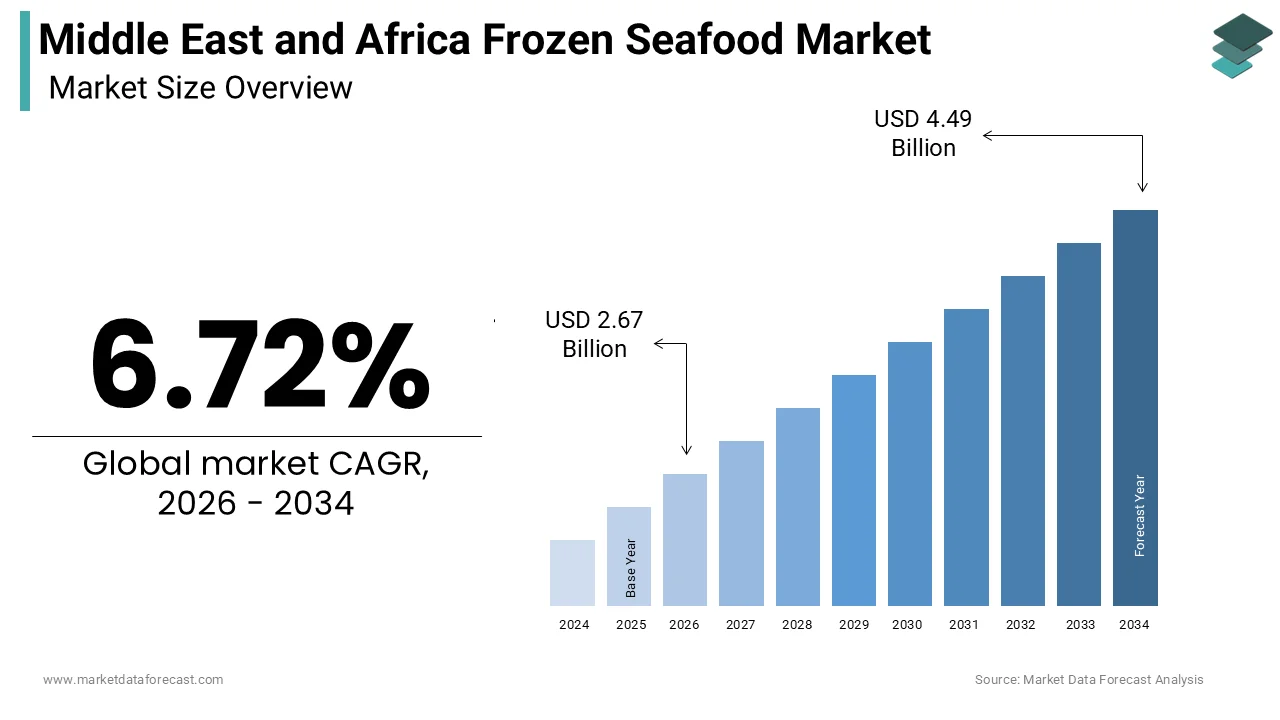
The size of the Middle East and Africa Frozen Seafood market was calculated to be USD 2.50 billion in 2025 and is anticipated to be worth USD 4.49 billion by 2034

Frozen fish and seafood are food items which are packaged in order to increase the shelf life of the products. Due to the rising urbanization, there has been an increase in the demand for convenient food products which are easy and quick to make. A rise in the working women population base, improving living standards and the growth of urban settlements are adding to the popularity of convenience food products which in turn drives the growth of the market. However, various health concerns and the need to reduce fish contamination remain key challenges for leading vendors.

This research report on the Middle East and Africa Frozen Seafood Market has been segmented and sub-segmented based on the following categories.

Middle East and Africa Frozen Seafood Market By Distribution Channel

  • Supermarkets
  • Hypermarkets
  • Independent Retailers
  • Convenience Stores
  • Speciality Retailers
  • Others

Among these, supermarkets and hypermarkets dominated the market and are expected to retain their leading position over the forecast period. This segment is finding increased acceptance among sellers as a highly attractive retail outlet to sell different types of frozen fish and seafood, because of the accessibility it grants to a vast range of products at discounted prices. Convenience stores and independent retailers are also projected to obtain a considerable market share over the forecast period on account of the growing sales of frozen fish and seafood across different countries.

Middle East and Africa Frozen Seafood Market By Region

  • KSA
  • UAE
  • Israel
  • Rest of GCC countries
  • South Africa
  • Ethiopia
  • Kenya
  • Egypt
  • Sudan
  • Rest of MEA

On the basis of geography, the market is analysed under various regions namely middle east and Africa.

KEY MARKET PLAYERS

Key players operating in the market include Leroy Seafood, High Liner Foods, Marine Harvest, and Iglo Group. Other prominent vendors include Beijing Princess Seafood International Trading, Austevoll Seafood, Fishery Products International, Clearwater Seafood, AquaChile, Sajo Industries, Lyons Seafoods,Shanghai Kaichuang, Hansung Enterprise, Marine International, Surapon Foods Public, Tri Marine International, Tassal Group,and Toyo Suisan Kaisha.

Trusted by 500+ companies. We respect your privacy and never share your data.

Please wait. . . . Your request is being processed

Frequently Asked Questions

1. What factors are driving the growth of the Middle East and Africa frozen seafood market?

Rising demand for convenient food products, increasing seafood consumption, expanding cold chain infrastructure, and growing urbanization are major growth drivers.

2. Which frozen seafood products are most popular in the market?

Frozen fish, shrimp, prawns, tuna, salmon, and shellfish are among the most widely consumed frozen seafood products in the region.

3. How is changing consumer lifestyle influencing the frozen seafood market?

Busy lifestyles and increasing preference for ready-to-cook and easy-to-store food products are boosting demand for frozen seafood.

4. What role does cold chain infrastructure play in the frozen seafood market?

Efficient cold storage and transportation systems help maintain product quality, extend shelf life, and improve seafood distribution across the region.

5. What are the major trends in the frozen seafood market?

Key trends include sustainable seafood sourcing, premium seafood products, value-added frozen seafood meals, and eco-friendly packaging solutions.

6. What challenges does the Middle East and Africa frozen seafood market face?

Challenges include fluctuating seafood prices, supply chain disruptions, limited cold storage facilities in some regions, and strict food safety regulations.

7. What impact does e-commerce have on the frozen seafood market?

Online grocery platforms and food delivery services are increasing the availability and convenience of frozen seafood products.

8. How is sustainability influencing the frozen seafood industry?

Manufacturers are adopting sustainable fishing practices, traceability systems, and eco-friendly packaging to meet consumer and regulatory expectations.

9. What opportunities exist in the Middle East and Africa frozen seafood market?

Opportunities include expanding seafood exports, increasing investment in cold chain logistics, and introducing premium and ready-to-cook seafood products.

10. What is the future outlook for the Middle East and Africa frozen seafood market?

The market is expected to witness steady growth due to rising seafood consumption, increasing urbanization, and improvements in storage and distribution infrastructure.

Related Reports

Access the study in MULTIPLE FORMATS
Purchase options starting from $ 1600

Didn’t find what you’re looking for?
TALK TO OUR ANALYST TEAM

Need something within your budget?
NO WORRIES! WE GOT YOU COVERED!

REACH OUT TO US

Call us on: +1 888 702 9696 (U.S Toll Free)

Write to us: sales@marketdataforecast.com

Click for Request Sample