Middle East And Africa Frozen Yogurt Market Segmented By Fat Content (Low Fat And No Fat), Type (Regular Frozen Yogurt And Sugar Free Frozen Yogurt), Flavour (Peach, Chocolate, Strawberry, Chocolate, Banana, Lemonade, Pineapple And Other Flavours), Distribution Channels (Supermarkets And Hypermarkets, Speciality Stores, Online Stores, Grocery Stores And Other Distribution Channels), and Country (KSA, UAE, Israel, rest of GCC countries, South Africa, Ethiopia, Kenya, Egypt, Sudan and Rest of MEA) – Size, Share, Trends, Growth, Forecast (2026 to 2034)

ID: 3656
Pages: 1445

Market Size, 2025

$0.10 Bn

Market Estimate, 2026

$0.11 Bn

Market Forecast, 2034

$0.12 Bn

CAGR, 2026–2034

2.75%

Middle East and Africa Frozen Yogurt Market Size

The Middle East and Africa Frozen Yogurt Market size was calculated to be USD 0.10 billion in 2025 and is anticipated to be worth USD 0.12 billion by 2034, from USD 0.11 billion In 2026, growing at a CAGR of 2.75% during the forecast period.
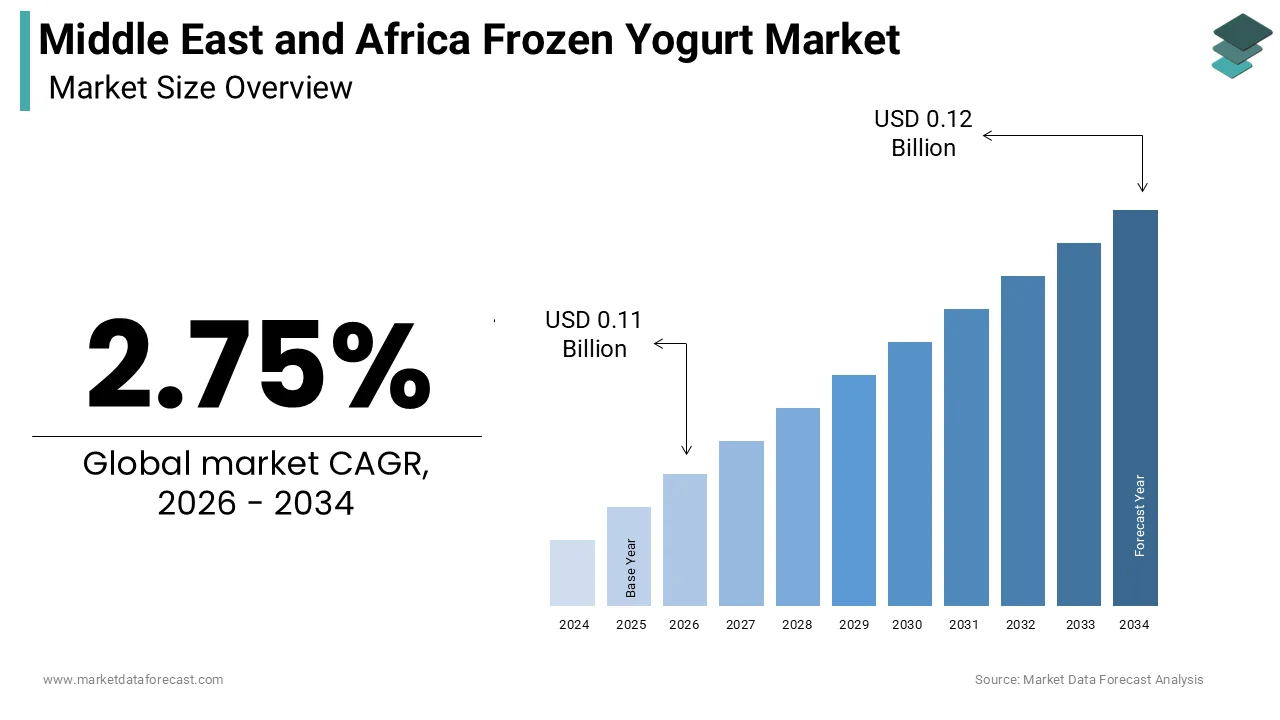
Middle East and Africa Frozen Yogurt Market size was calculated to be USD 0.10 billion in 2025 and is anticipated to be worth USD 0.12 billion by 2034

Frozen yogurt is a dessert which is made from yoghurt. It is typically more tart than ice cream and has lower fat. It may contain live or active bacteria. Frozen yogurt in the current days is used a lot like ice cream, and served in a wide range of styles and flavours. A lot of companies allow consumers the option of adding several toppings, from bananas to strawberries, or ordering their frozen yogurt in cones or in cups. Certain companies produce sugar-free varieties. Frozen yogurt made by a few chains is tarter and similar in taste to the original recipe, whereas other companies concentrate on preparing their frozen yogurt taste similar to ice cream.

Market Drivers

The Middle East and Africa Frozen Yogurt market is driven by factors like low fat as compared to conventional desserts, improving distribution channels, increasing penetration of players and preference of kids for frozen yogurt among others. Moreover, a wide variety of flavours are also being available in the market which is propelling the growth.

SEGMENTAL ANALYSIS

Middle East and Africa Frozen Yogurt Market By Fat Content

  • Low fat
  • No fat

Middle East and Africa Frozen Yogurt Market By Type

  • Regular frozen yogurt
  • Sugar free frozen yogurt

Middle East and Africa Frozen Yogurt Market By  Flavour

  •  Peach
  • Chocolate
  • Strawberry
  • Chocolate
  • Banana
  • Lemonade
  • Pineapple
  • Other flavours

Middle East and Africa Frozen Yogurt Market By Distribution Channels

  • Supermarkets and hypermarkets
  • Speciality stores
  • Online stores
  • Grocery stores
  •  Other distribution channels

In this segment, speciality stores is expected to have the largest share which is followed by supermarkets and hypermarkets. 

Middle East and Africa Frozen Yogurt Market By Region

  • KSA
  • UAE
  • Israel
  • rest of GCC countries
  • South Africa
  • Ethiopia
  • Kenya
  • Egypt
  • Sudan
  • Rest of MEA

Factors such as rising disposable income and health benefits offered by frozen yogurt is expected to drive the market growth in the region.

Key Players in the Market

Major Key Players in the MEA Frozen Yogurt Market are Menchie's Frozen Yogurt Company, Pinkberry, Honey Hill Farms, Scott Brothers Dairy, Red Mango, Inc, Yogurtland Inc, Gujarat Cooperative Milk Marketing Federation Ltd, TCBY,and Nestle

Trusted by 500+ companies. We respect your privacy and never share your data.

Please wait. . . . Your request is being processed

Frequently Asked Questions

1. What is driving the growth of the Middle East and Africa frozen yogurt market?

The market is driven by increasing health consciousness, rising demand for low-fat desserts, growing urbanization, and expanding retail and foodservice sectors.

2. What are the major product types in the frozen yogurt market?

The market includes plain frozen yogurt, flavored frozen yogurt, and non-dairy or plant-based frozen yogurt.

3. Which application segment dominates the frozen yogurt market?

The foodservice segment, including frozen yogurt shops, cafés, and restaurants, dominates the market, followed by retail sales through supermarkets and convenience stores.

4. What are the key benefits of frozen yogurt?

Frozen yogurt is rich in probiotics, generally lower in fat than ice cream, contains essential nutrients such as calcium and protein, and appeals to health-conscious consumers.

5. Which flavors are most popular in the market?

Popular flavors include vanilla, chocolate, strawberry, mango, blueberry, and mixed fruit, along with region-specific flavors.

6. What factors are increasing demand for frozen yogurt in the region?

Rising disposable incomes, changing dietary preferences, increasing awareness of healthier desserts, and the growing popularity of premium frozen treats are boosting demand.

7. What challenges does the Middle East and Africa frozen yogurt market face?

Challenges include seasonal demand fluctuations, high refrigeration costs, competition from ice cream and other frozen desserts, and limited cold chain infrastructure in some areas.

8. What trends are shaping the Middle East and Africa frozen yogurt market?

Key trends include clean-label products, probiotic-rich formulations, plant-based frozen yogurt, reduced-sugar offerings, and premium customization options.

9. What is the future outlook for the Middle East and Africa frozen yogurt market?

The market is expected to experience steady growth, driven by increasing health awareness, expanding retail infrastructure, continuous product innovation, and rising demand for nutritious frozen desserts.

10. What role does tourism play in the frozen yogurt market?

Tourism supports demand by increasing consumption in hotels, shopping malls, entertainment venues, and restaurants across popular destinations.

Related Reports

Click for Request Sample