- Product Description Description
- Table of Contents TOC
- List of Table & Figure LOT
- Get Free Sample PDF Sample PDF
Market Size, 2025
$0.24 BnMarket Estimate, 2026
$0.25 BnMarket Forecast, 2034
$0.40 BnCAGR, 2026–2034
6.08%Middle East and Africa Glucose Monitoring Devices Market Size, Share, & Growth Analysis (2025–2034)
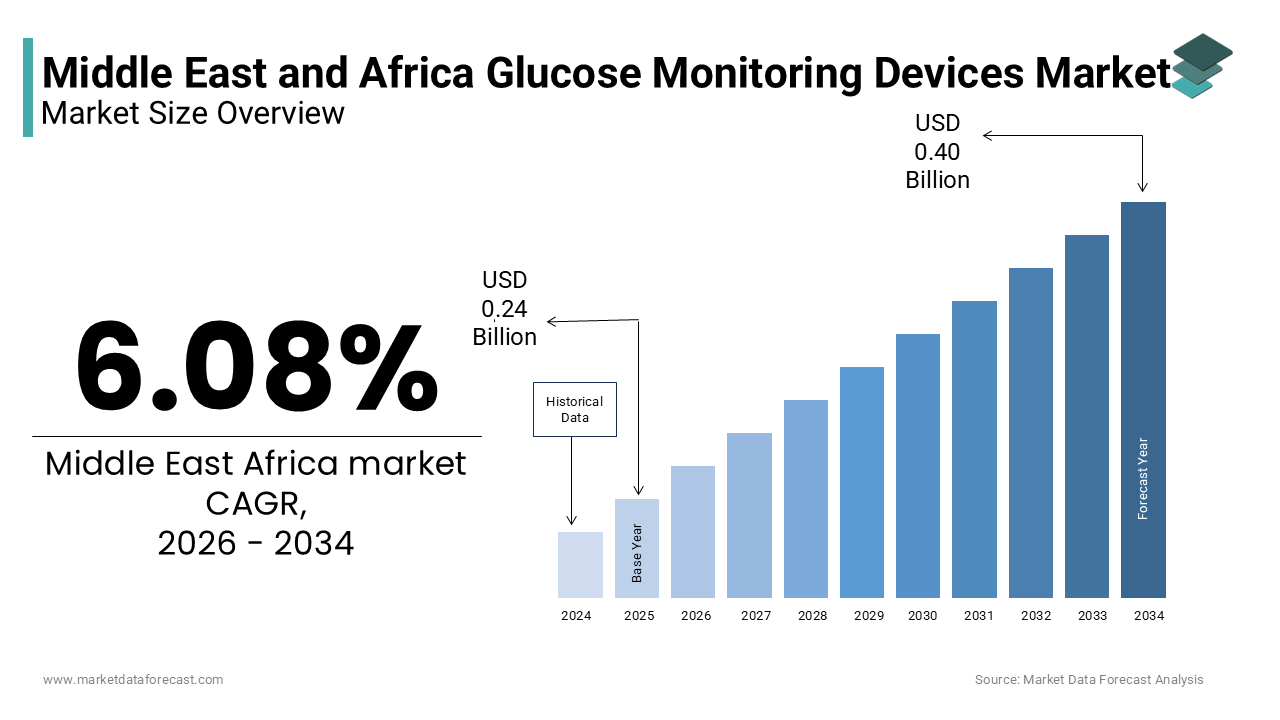
The Middle East and Africa glucose monitoring devices market was valued at USD 0.24 billion in 2025, estimated at USD 0.25 billion in 2026, and is projected to reach USD 0.40 billion by 2034, registering a CAGR of 6.08% during the forecast period from 2026 to 2034. The market expansion is primarily propelled by the escalating regional prevalence of type 2 diabetes and obesity, alongside proactive government-led chronic healthcare modernization initiatives.
- Market Valuation: USD 0.25 billion (2026) to USD 0.40 billion by 2034 (6.08% CAGR).
- Primary Growth Drivers: High regional diabetes incidence (MENA recording world-leading prevalence rates), expanding government diabetes management frameworks, and integration with digital health tools.
- Key Market Restraints: High out-of-pocket health expenditures, affordability barriers for continuous devices, and limited specialized healthcare infrastructure in rural areas.
Middle East and Africa Glucose Monitoring Devices Market Segment Metrics (2026–2034)
| Category | Leading Segment Focus | Segment Overview & Key Details | Alternative / Growth Focus |
|---|---|---|---|
| By Device Type | Self-Monitoring Devices | Holds the major regional share due to significantly lower costs and broad accessibility across price-sensitive patient segments. | Continuous wearable glucose monitoring devices (growing via affluent GCC adoption and medical tourism). |
| By Application | Home Setting | Accounts for the largest share driven by daily self-management needs for chronic conditions outside clinical facilities. | Clinics and diagnostic centres, hospitals, and ambulatory settings. |
| By Country | Saudi Arabia & UAE | Saudi Arabia leads the region (23.5% share in 2025) backed by Vision 2030 initiatives, followed by the UAE and Israel. | South Africa, Egypt, Israel, Ethiopia, Kenya, Sudan, and rest of MEA. |
Major Market Players & Market Structure
Market Structure: Intense competitive landscape featuring global multinational medical device corporations and regional distributors competing through localized assembly, public tenders, and digital health software integration.
Key Companies: Roche Diagnostics, LifeScan, Bayer Health Care, Abbott Diabetes Care Inc., AgaMatrix Inc., Arkray Inc., Medtronic, DexCom Inc., Nova Biomedical Corporation, and Terumo Europe NV.
 Download Free Sample Report
Middle East and Africa Glucose Monitoring Devices Market Size
The Middle East and Africa glucose monitoring device market size was valued at USD 0.24 billion in 2025 and is anticipated to reach USD 0.25 billion in 2026 from USD 0.40 billion by 2034, growing at a CAGR of 6.08% during the forecast period from 2026 to 2034.
As per the International Diabetes Federation, the Middle East and North Africa region recorded a diabetes prevalence rate of 16.2%, which stands as the highest globally, affecting approximately 73 million adults. According to the World Health Organization, diabetes-related complications account for nearly 15% of all hospital admissions in Gulf Cooperation Council countries, highlighting the critical need for regular glycemic surveillance. As per data from the African Union, only 10% of individuals with diabetes in Sub-Saharan Africa have access to essential medicines and diagnostics, creating a massive gap in disease management infrastructure. Furthermore, according to the United Nations Economic Commission for Western Asia, lifestyle changes and urbanization have led to a significant increase in obesity rates over the last decade, directly correlating with rising type 2 diabetes incidences. These epidemiological realities define the functional scope of the market, where device adoption is driven by clinical necessity, government mandates, and the growing availability of affordable point-of-care testing solutions rather than discretionary consumer spending.
MARKET DRIVERS
Escalating Prevalence of Type 2 Diabetes and Obesity
The skyrocketing prevalence of type 2 diabetes and obesity is primarily fuelling the demand for glucose monitoring devices across the Middle East and Africa. According to the International Diabetes Federation, the number of adults living with diabetes in the Middle East and North Africa is projected to reach 82 million by 2030, representing a significant public health crisis. This metabolic epidemic is closely linked to rapid urbanization and sedentary lifestyles, with the World Health Organization reporting that obesity rates in Saudi Arabia and Kuwait exceed 35% among adults. In Egypt, the Ministry of Health noted that over 15% of the adult population suffers from diabetes, necessitating daily glucose checks to prevent complications such as neuropathy and retinopathy. Similarly, in South Africa, the Medical Research Council reported a 10% annual increase in new diabetes diagnoses, driving the need for accessible home monitoring solutions. Governments are increasingly recognizing the economic burden of untreated diabetes, which strains public healthcare systems. Consequently, national health strategies in countries like Qatar and Oman prioritize early detection and management through widespread distribution of blood glucose meters. This demographic shift ensures a consistent and growing patient base that requires regular testing supplies, creating a stable demand foundation for device manufacturers regardless of broader economic fluctuations.
Government Initiatives for National Diabetes Management Programs
Aggressive government-led initiatives to establish national diabetes management programs are further aiding the Middle East and African glucose monitoring devices market growth. According to the Saudi Vision 2030 framework, the kingdom has allocated substantial resources to enhance chronic disease management, including the provision of free glucose monitors and test strips to citizens through primary care centers. The United Arab Emirates Ministry of Health and Prevention launched a national diabetes registry to track patient outcomes and ensure consistent supply of monitoring equipment to registered users. In Morocco, the Ministry of Health expanded its coverage for diabetic supplies under the mandatory health insurance scheme, resulting in a 25% increase in device utilization among low-income patients. The World Bank supports these efforts by providing financing for healthcare infrastructure improvements that include diagnostic equipment for rural clinics. In Kenya, the Ministry of Health partnered with international NGOs to distribute over 50,000 glucose meters to community health workers, enabling remote monitoring of diabetic patients in underserved areas. These policy-driven interventions create predictable demand channels for manufacturers who can secure long-term supply contracts with public health authorities. By integrating glucose monitoring into standard care protocols, governments are transforming these devices from luxury items into essential medical tools, ensuring broad market penetration.
MARKET RESTRAINTS
High Out-of-Pocket Expenditure and Affordability Constraints
Significant financial barriers stemming from high out-of-pocket expenditure and limited insurance coverage are hampering the Middle East and African glucose monitoring devices market expansion. According to the World Bank, out-of-pocket health expenditure accounts for over 50% of total health spending in many Sub-Saharan African countries, such as Nigeria and Ethiopia, forcing patients to prioritize essential medications over monitoring supplies. The International Diabetes Federation notes that the average cost of a continuous glucose monitoring sensor remains prohibitively expensive for the majority of the population in the region, where monthly incomes are often limited. In Egypt, the Central Agency for Public Mobilization and Statistics reported that 40% of diabetic patients skip recommended glucose tests due to financial constraints, leading to poor disease control. Public insurance schemes in many African nations do not fully cover the recurring costs of test strips and lancets, which represent a significant ongoing expense. Even in wealthier Gulf nations, uninsured expatriate workers often face high costs for premium monitoring devices. This affordability gap limits the market primarily to basic blood glucose meters and restricts the uptake of newer technologies like flash glucose monitoring. Consequently, manufacturers struggle to expand beyond entry-level products, as price sensitivity remains the dominant factor influencing purchasing decisions for both patients and healthcare providers.
Limited Healthcare Infrastructure and Specialist Shortages
The scarcity of specialized healthcare infrastructure and trained endocrinologists severely limits the effective prescription and management of glucose monitoring devices in rural and remote areas, which is further hindering the glucose monitoring devices market growth in this region. According to the World Health Organization, the ratio of endocrinologists to population in Sub-Saharan Africa is exceptionally low and far below the levels required for adequate chronic disease management. In countries like Sudan and Yemen, the lack of reliable electricity and cold chain storage complicates the distribution and maintenance of electronic monitoring devices. The African Society of Endocrinology highlights that primary care physicians often lack sufficient training to interpret complex glucose data from continuous monitoring systems, leading to underutilization of advanced devices. In nearby developing areas, similar infrastructure gaps exist where patients must travel long distances to access diagnostic services. The absence of structured diabetes education programs means that many patients do not understand how to use monitoring devices correctly, resulting in inaccurate readings and discontinued use. This human resource and infrastructure deficit creates a structural bottleneck preventing the full potential of modern glucose monitoring technologies from being realized. Until healthcare systems are strengthened and workforce capacity is built, the market will remain fragmented and inefficient.
MARKET OPPORTUNITIES
Integration of Digital Health and Telemedicine Platforms
The rapid integration of digital health solutions and telemedicine platforms is a prominent opportunity for the Middle East and African glucose monitoring devices market. According to the International Telecommunication Union, mobile broadband penetration in Africa reached 50% enabling the deployment of connected glucose meters that transmit data directly to healthcare providers. In South Africa, several private insurers have launched telemedicine programs that reimburse patients for using Bluetooth-enabled glucose monitors, allowing real-time remote consultation and adjustment of treatment plans. The World Health Organization includes digital health interventions in its guidelines for non-communicable disease management, encouraging the adoption of smart monitoring tools. In the United Arab Emirates, the Department of Health approved several digital therapeutic apps that integrate with glucose monitors to provide personalized lifestyle coaching. These innovations reduce the need for frequent clinic visits, which is particularly beneficial for patients in remote areas. Manufacturers can leverage this trend by developing interoperable devices that connect seamlessly with popular health apps. This convergence of hardware and software creates new revenue streams through subscription-based services and data analytics. By positioning glucose monitors as part of a comprehensive digital ecosystem, companies can differentiate their offerings and drive adoption among tech-savvy younger demographics.
Expansion of Local Manufacturing and Assembly Facilities
The strategic shift toward local manufacturing and assembly of glucose monitoring devices offers significant opportunities to reduce costs and improve supply chain resilience. According to the African Union, the Continental Free Trade Area agreement aims to boost intra-African trade in medical devices by reducing tariffs and harmonizing regulations. Several countries including Egypt and Kenya have introduced incentives for foreign companies to establish local production facilities to meet domestic demand. In Saudi Arabia, the National Industrial Development and Logistics Program encourages localization of medical device manufacturing to reduce dependency on imports. By producing devices locally, manufacturers can avoid high import duties and currency fluctuation risks, making products more affordable for local consumers. The World Bank notes that local production can reduce the final cost of glucose meters by up to 20% enhancing accessibility. Additionally, local assembly allows for faster response to market demands and customization of products to suit regional preferences. Partnerships with local distributors and government entities further facilitate market entry and expansion. This localization strategy not only strengthens supply chains but also aligns with national economic development goals, creating a favorable regulatory and business environment for long-term growth in the region.
MARKET CHALLENGES
Regulatory Fragmentation and Approval Delays
Navigating the complex and fragmented regulatory landscape across diverse Middle Eastern and African nations poses a significant challenge for glucose monitoring device manufacturers. According to the World Health Organization, only a few countries in the region such as South Africa and Saudi Arabia have mature regulatory frameworks comparable to those in Europe or North America. In many other nations, regulatory requirements vary widely, requiring separate clinical data submissions and local testing, which increases compliance costs by up to 30%. The African Harmonization Working Party notes that a lack of mutual recognition agreements forces companies to maintain multiple dossier formats, delaying time to market significantly. In Nigeria, the National Agency for Food and Drug Administration and Control reported extended review timelines for Class II medical devices compared to more streamlined markets. This fragmentation discourages smaller innovators from entering the region and limits patient access to cutting-edge therapies. Even when approvals are granted, post-market surveillance requirements vary widely, complicating supply chain management. The absence of regional harmonization means that economies of scale are difficult to achieve, forcing manufacturers to operate with higher operational overheads. Until regulatory convergence improves, market expansion will remain uneven and slower than potential, perpetuating disparities in product availability across borders.
Supply Chain Disruptions and Logistics Constraints
Persistent supply chain disruptions and logistical bottlenecks continue to challenge the consistent distribution of glucose monitoring devices and consumables across the Middle East and Africa. According to the African Development Bank, poor road networks and limited cold chain capabilities increase delivery times significantly in landlocked countries like Chad and Niger. Temperature-sensitive components in electronic meters require strict thermal control, which is often unavailable during last-mile transport. The World Logistics Performance Index ranks several African nations in the bottom quartile for supply chain efficiency, citing frequent port congestions and customs delays. In Somalia, humanitarian agencies reported that 20% of medical supplies were damaged or spoiled due to inadequate storage facilities. Even in more stable markets like Egypt, inland distribution faces hurdles due to bureaucratic clearance processes. Manufacturers struggle to maintain consistent inventory levels, leading to stockouts of test strips, which renders meters useless. The high cost of logistics, which can account for a substantial share of the final product price in remote areas, makes affordable care delivery difficult. These operational fragilities undermine confidence in just-in-time models and force providers to hold excessive safety stock, tying up capital. Consequently, market evolution is slowed despite clinical readiness, as reliability concerns outweigh feature advancements in purchasing decisions.
REPORT COVERAGE
| REPORT METRIC | DETAILS |
| Market Size Available | 2025 to 2034 |
| Base Year | 2025 |
| Forecast Period | 2026 to 2034 |
| CAGR | 6.08% |
| Segments Covered | By Device Type, Application and Region. |
| Various Analyses Covered | Global, Regional & Country Level Analysis, Segment-Level Analysis, DROC, PESTLE Analysis, Porter’s Five Forces Analysis, Competitive Landscape, Analyst Overview of Investment Opportunities |
| Regions Covered | KSA, UAE, Israel, the rest of GCC countries, South Africa, Ethiopia, Kenya, Egypt, Sudan, and Rest of MEA. |
| Market Leaders Profiled | Roche Diagnostics, LifeScan, Bayer Health Care, Abbott Diabetes Care Inc., AgaMatrix Inc., Arkray Inc., Medtronic, DexCom Inc., Nova Biomedical Corporation, and Terumo Europe NV. |
SEGMENTAL ANALYSIS
By Device Type Insights
The self-monitoring blood glucose devices segment had the major share of the regional market in 2025. The dominance of self-monitoring segment in this regional market is attributed to their significantly lower cost compared to continuous monitoring systems, making them accessible to the vast majority of the diabetic population. According to the World Bank, out-of-pocket health expenditure accounts for over 50% of total spending in many Sub-Saharan African countries, forcing patients to seek the most economical diagnostic options. The International Diabetes Federation notes that the average cost of a self-monitoring meter is much lower, whereas continuous glucose monitors impose higher recurring sensor expenses. In Egypt, the Ministry of Health reported that over 80% of diabetic patients rely on traditional finger-prick testing because it remains the only affordable option for daily management. Public insurance schemes in countries like Morocco and Tunisia primarily reimburse self-monitoring strips rather than advanced sensors, further cementing their market leadership. The widespread availability of these devices in local pharmacies and general retail outlets ensures easy access even in rural areas where specialized medical supply stores are absent. This economic reality dictates that while advanced technologies exist, the volume-driven segment remains firmly rooted in basic self-monitoring tools that provide essential data without imposing financial ruin on patients. Consequently, manufacturers prioritize high-volume, low-margin strategies for this segment to capture the broadest possible user base across diverse socioeconomic groups.
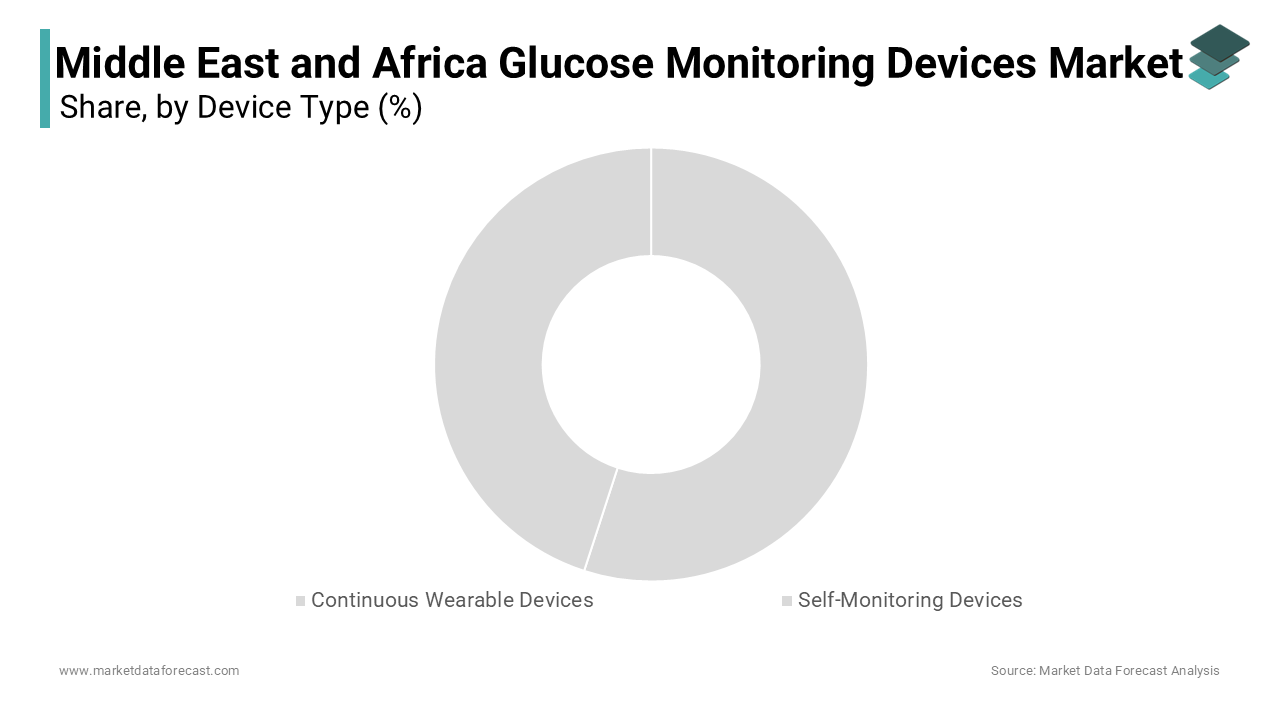
On the other side, the continuous wearable glucose monitoring devices segment is expected to expand at a promising CAGR over the forecast period owing to the increasing adoption among affluent populations in Gulf Cooperation Council countries and the expanding medical tourism sector. According to the Dubai Health Authority, medical tourism revenues in the United Arab Emirates grew by 15% in a recent period, with diabetes management being a key service area attracting international patients seeking advanced care. These patients often prefer continuous monitoring for its convenience and accuracy, driving demand in private hospitals and specialty clinics. The Saudi Commission for Health Specialties reported that thousands of international patients underwent chronic disease management programs in the kingdom, many of whom utilized continuous glucose monitors. Private insurers in Qatar and Bahrain have begun covering these devices for high-risk patients, recognizing their value in preventing costly complications. The growing middle class in these nations has higher disposable income and greater health awareness, making them willing to pay premium prices for superior technology. Manufacturers are leveraging this trend by introducing flash glucose monitoring systems that do not require frequent finger pricks, appealing to lifestyle-conscious consumers. This niche but rapidly expanding customer base is driving robust growth rates as continuous monitoring transitions from a luxury item to a standard of care in wealthy urban centers.
By Application Insights
The home setting segment held the largest share of the Middle East and African glucose monitoring devices market in 2025 due to the chronic nature of diabetes, which requires daily self-management and regular tracking outside of clinical environments. According to the International Diabetes Federation, individuals with type 1 diabetes need to test their blood glucose levels multiple times a day while those with type 2 test regularly depending on their treatment regimen. This frequency generates massive volume demand for home-use devices and consumables. The World Health Organization emphasizes that self-management education is a cornerstone of diabetes care, empowering patients to make informed decisions about diet, exercise, and medication. In countries like Jordan and Lebanon, where healthcare facilities are often overcrowded, patients are encouraged to manage their condition at home to reduce the burden on public hospitals. The availability of user-friendly meters with large displays and simple interfaces makes home testing accessible even for elderly patients. Furthermore, the rise of family-centered care models in the Middle East means that relatives often assist in monitoring, ensuring consistent usage. This cultural and clinical dynamic ensures that the home setting remains the primary site for glucose monitoring, driving steady and predictable sales of personal devices and test strips across the region.
However, the clinics and diagnostic centres segment is anticipated to record a healthy CAGR in this regional market over the forecast period owing to the expansion of primary care screening programs aimed at early detection of diabetes and pre-diabetes. According to the World Health Organization, early diagnosis is critical for preventing complications, and many Middle Eastern and African countries have launched national screening initiatives targeting high-risk populations. In Saudi Arabia, the Ministry of Health deployed thousands of screening units in primary care clinics equipped with advanced glucose monitoring devices to identify undiagnosed cases. The International Diabetes Federation estimates that nearly 50% of people with diabetes in the region are undiagnosed, creating a massive opportunity for clinic-based testing. In South Africa, the National Department of Health expanded its chronic disease screening protocol to include random blood glucose tests for all adults visiting primary care facilities. This policy directive has led to a surge in procurement of professional-grade meters and bulk test strips for clinic use. Additionally, private diagnostic chains in the United Arab Emirates and Kuwait are offering comprehensive metabolic panels that include glucose monitoring as part of preventive health packages. These institutional drivers are creating a robust and rapidly growing demand channel for devices used in professional settings distinct from home use.
COUNTRY ANALYSIS
Saudi Arabia Glucose Monitoring Devices Market Analysis
The Kingdom of Saudi Arabia occupied 23.5% of the regional market share in 2025 due to its high diabetes prevalence and robust healthcare infrastructure. The country serves as the primary hub for advanced diabetes management in the Gulf, driven by the Vision 2030 initiative, which prioritizes chronic disease prevention and control. According to the Saudi Ministry of Health, the kingdom has millions of diagnosed diabetic patients, creating substantial demand for both self-monitoring and continuous glucose monitoring devices. The Saudi Food and Drug Authority has streamlined regulatory processes for medical devices, facilitating faster market entry for global manufacturers. The government provides free glucose monitors and test strips to citizens through primary care centers, ensuring high utilization rates. Additionally, the rise of medical tourism and private healthcare investment is driving adoption of premium continuous monitoring systems. Local manufacturing incentives encourage companies to establish assembly facilities, enhancing supply chain resilience. The presence of leading endocrinology societies and research institutions fosters a culture of clinical excellence that prioritizes advanced diagnostics. This combination of volume, regulatory stability, and strategic investment ensures Saudi Arabia’s continued dominance in the regional market.
United Arab Emirates Glucose Monitoring Devices Market Analysis
The United Arab Emirates occupies a significant position in the regional market through a highly developed private healthcare sector and status as a medical tourism hub. The country benefits from world-class infrastructure and a regulatory environment that facilitates rapid adoption of innovative technologies. According to the Dubai Health Authority, medical tourism revenues grew by 15% in a recent period, with diabetes management being a key service area attracting international patients. This demand boosts sales of premium continuous glucose monitors and smart insulin pens in private clinics. The UAE Ministry of Health and Prevention reported an increase in equipment procurement to support new specialized diabetes centers. The country also serves as a regional distribution hub, with many multinational companies basing their Middle East headquarters in Dubai. This strategic location allows for efficient logistics and faster delivery to neighboring markets. Furthermore, the government’s focus on preventive care has led to widespread screening programs, increasing demand for diagnostic devices. These factors collectively sustain the UAE’s strong standing as a key growth engine and technology showcase in the regional glucose monitoring landscape.
Israel Glucose Monitoring Devices Market Analysis
Israel represents a technologically advanced market in the Middle East and is characterized by high innovation and digital health integration. The country is a global leader in medical technology development, with numerous startups creating cutting-edge continuous glucose monitoring and artificial intelligence solutions. According to the Israeli Ministry of Health, the nation has a high density of endocrinologists per capita globally, ensuring high utilization of advanced monitoring devices. The healthcare system, which combines public and private insurance, supports rapid adoption of new technologies such as closed-loop insulin delivery systems. Israeli hospitals reported an increase in continuous glucose monitor prescriptions driven by clinical evidence of improved outcomes. The country also exports a significant portion of its domestically produced diabetes technologies, influencing regional standards. Regulatory approval through the Ministry of Health is rigorous but efficient, fostering trust in high-quality equipment. Academic collaborations with international institutions facilitate knowledge transfer and clinical validation of new products. This blend of indigenous innovation and clinical excellence allows Israel to maintain its influential position as a technology leader in the regional market.
COMPETITIVE LANDSCAPE
The competition in the Middle East and Africa glucose monitoring devices market is characterized by intense rivalry among global multinational corporations and emerging regional distributors who strive to capture share through innovation and strategic localization. Major participants compete on the basis of technological superiority clinical evidence and after sales service quality rather than price alone in affluent segments. The market features a mix of established leaders with broad product portfolios and niche specialists focusing on specific applications like continuous monitoring or pediatric care. Competitive dynamics are influenced by varying regulatory requirements across countries which necessitate agile market entry strategies and localized compliance efforts. Companies differentiate themselves by offering comprehensive training programs and financial solutions to healthcare providers facing budget constraints. The rise of public private partnerships has created new competitive arenas where vendors must demonstrate value based outcomes to secure long term contracts. Local assembly initiatives are becoming a key differentiator as they reduce costs and improve supply reliability. This evolving landscape demands continuous adaptation and investment in customer relationships to maintain competitive advantage in a fragmented yet growing regional market.
KEY MARKET PLAYERS
Companies playing a dominating role in the MEA Monitoring Devices Market include
- Roche Diagnostics
- LifeScan
- Bayer Health Care
- Abbott Diabetes Care Inc.
- AgaMatrix Inc.
- Arkray Inc.
- Medtronic
- DexCom Inc.
- Nova Biomedical Corporation
- Terumo Europe NV.
Top Players in the Market
Abbott Laboratories
Abbott Laboratories maintains a dominant presence in the Middle East and Africa by delivering innovative continuous glucose monitoring solutions tailored to regional healthcare needs. The company recently expanded its distribution network in South Africa and Saudi Arabia to improve access to FreeStyle Libre systems for diabetic patients. Abbott actively collaborates with government health ministries to support national diabetes management programs through education and device donations. Its introduction of flash glucose monitoring technology has significantly enhanced patient compliance and clinical outcomes in major medical centers across the Gulf. The company also invests in local workforce development by establishing training academies for healthcare professionals. These strategic efforts strengthen its reputation as a trusted partner in chronic disease management while ensuring consistent availability of advanced monitoring technologies throughout diverse market segments.
Roche Diabetes Care
Roche Diabetes Care strengthens its position in the Middle East and Africa market through reliable self-monitoring blood glucose systems and comprehensive digital health integration. The company recently launched enhanced versions of its Accu Chek devices featuring Bluetooth connectivity for seamless data sharing with healthcare providers. Roche partners with large hospital chains in the United Arab Emirates and Egypt to implement remote patient monitoring solutions that improve care coordination. It invests heavily in research and development to create user friendly interfaces that cater to elderly populations with limited technical skills. The company also focuses on sustainability initiatives by introducing recyclable packaging for test strips. These actions enhance brand loyalty among patients and drive adoption of its high quality monitoring portfolios across both public and private healthcare sectors in the region.
Ascensia Diabetes Care
Ascensia Diabetes Care serves the Middle East and Africa market with a robust portfolio of blood glucose monitoring systems focusing on accuracy and affordability. The company recently upgraded its manufacturing capabilities in Europe to ensure reliable supply of Contour Next devices to key markets like Kenya and Nigeria. Ascensia engages in strategic partnerships with non governmental organizations to distribute monitoring kits in underserved rural communities. It prioritizes customer education programs to train patients on proper testing techniques and data interpretation. The company also supports professional training for pharmacists to enhance their role in diabetes care management. These initiatives reinforce its commitment to improving health outcomes and expand its footprint in emerging markets where accessibility and ease of use are critical factors for consumer choice.
Top Strategies Used by the Key Market Participants
Key players in the Middle East and Africa glucose monitoring devices market primarily employ strategies focused on expanding access through affordable pricing models and local partnerships to navigate complex regulatory landscapes. Companies increasingly invest in digital health platforms that integrate with monitoring devices to offer remote patient management and personalized coaching services. Strategic collaborations with government health authorities and international NGOs are common to secure large volume tenders and support public health initiatives. Manufacturers also prioritize educational campaigns to raise awareness about the importance of regular glucose monitoring and proper device usage. Additionally firms are developing ruggedized and easy to use devices suitable for resource constrained environments with limited infrastructure. These multifaceted approaches enable sustained growth and deeper market penetration in a heterogeneous and rapidly evolving regional landscape.
MARKET SEGMENTATION
This research report on the Middle East and Africa Glucose Monitoring Devices Market has been segmented and sub-segmented into the following categories:
By Device Type
- Continuous Wearable Devices
- Self-Monitoring Devices
By Application
- Hospitals
- Clinics & Diagnostic Centres
- Home Setting
- Ambulatory Settings
By Country
- KSA
- UAE
- Israel
- rest of GCC countries
- South Africa
- Ethiopia
- Kenya
- Egypt
- Sudan
- rest of MEA