- Product Description Description
- Table of Contents TOC
- List of Table & Figure LOT
- Get Free Sample PDF Sample PDF
Market Size, 2025
$2.52 BnMarket Estimate, 2026
$2.72 BnMarket Forecast, 2034
$4.91 BnCAGR, 2026–2034
8.04%Executive Summary: Middle East and Africa GMO Seed Market
- Market Scope: Regional analysis of genetically modified seed technologies, biological traits, and agricultural innovations designed to address food security, water scarcity, and pest challenges across the Middle East and Africa.
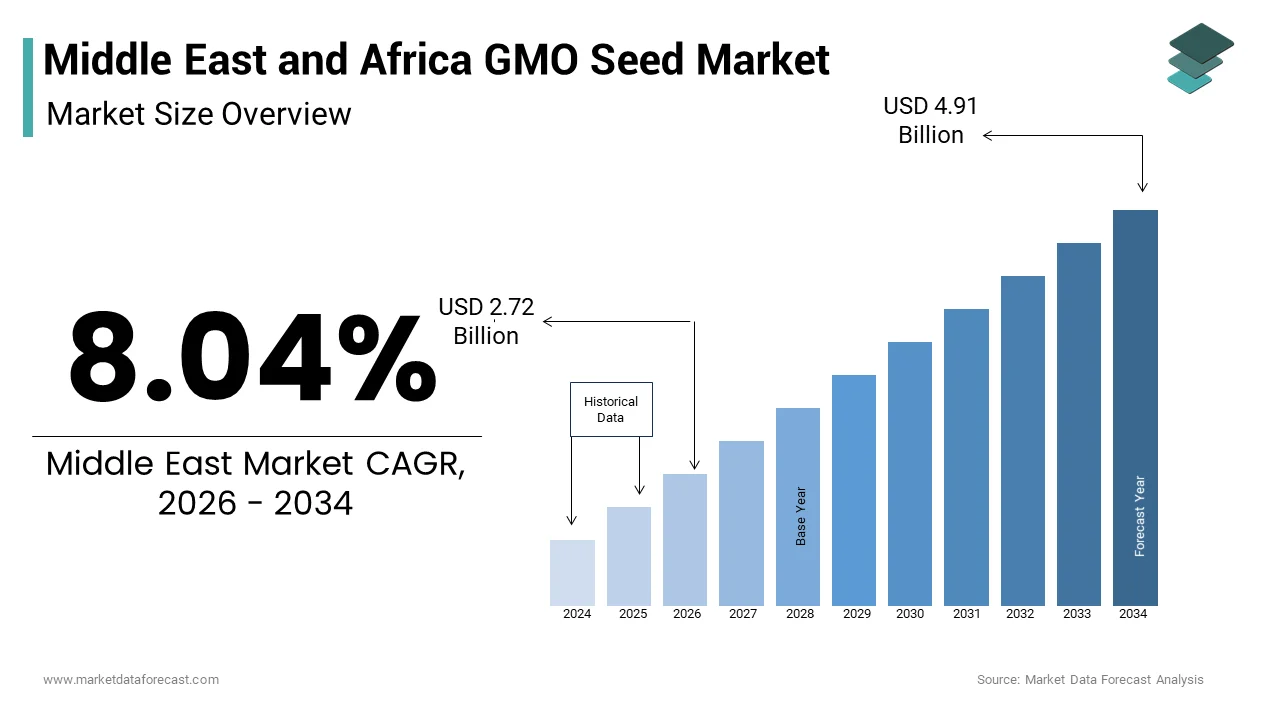
- Market Valuation: Valued at USD 2.52 billion (2025), estimated at USD 2.72 billion (2026), and projected to reach USD 4.91 billion by 2034, registering a compound annual growth rate (CAGR) of 8.04% (2026–2034).
- Primary Growth Drivers: Extreme prevalence of severe water scarcity requiring drought-tolerant crops, relentless threats of insect infestations, and the urgent necessity to boost staple crop yields amidst degrading land conditions.
Key Market Segment Metrics (2026–2034)
| Category | Leading Segment (2025 Position) | Fastest-Growing Segment |
|---|---|---|
| By Product | Cotton (dominating with 36.5% market share in 2025 due to critical protection needs against lepidopteran pests) | Corn (projected at a 9.2% CAGR driven by massive domestic consumption and national food security mandates) |
| By Trait | Insect-resistant (holding the highest regional share in 2025 via internal biological protection against stem borers and bollworms) | Herbicide-tolerant (expected to register a 10.4% CAGR fueled by severe rural labor shortages and efficient weed management needs) |
| By Country / Region | South Africa (capturing 44.7% of the regional market share in 2025 backed by advanced agricultural infrastructure) | Nigeria and Kenya (experiencing rapid growth due to recent regulatory breakthroughs and climate adaptation initiatives) |
Major Market Players & Market Structure
Market Structure: Competitive regional landscape shaped by multinational agroscience corporations and local research institutions focusing on R&D investments, climate-resilient trait development, and strategic public-private partnerships.
Key Companies: Monsanto, Bayer CropScience, Corteva, Syngenta, DowDuPont, and Groupe Limagrain.
Middle East and Africa GMO Seed Market Size
The Middle East and Africa GMO seed market size will reach USD 2.52 billion in 2025 and is anticipated to reach USD 2.72 billion in 2026 to reach USD 4.91 billion by 2034, growing at a CAGR of 8.04% during the forecast period from 2026 to 2034.
According to the Food and Agriculture Organization, the Middle East and Africa region faces significant constraints on arable land, while struggling to sustain a rapidly expanding population. The World Bank indicates that the total population in this region is projected to reach approximately 3.4 billion people by the year 2050. The United Nations Environment Programme states that nearly 50% of the landmass in the Middle East and North Africa region is affected by land degradation, making traditional farming methods increasingly insufficient. Genetically modified seeds offer a critical biological intervention by introducing traits, such as profound drought tolerance and enhanced pest resistance. According to the International Service for the Acquisition of Agribiotech Applications, the adoption of biotech crops in developing nations has significantly reduced the yield gap between potential and actual harvest. As per the World Resources Institute, closing this yield gap is essential to avert severe food deficits in arid climates. Therefore, the integration of advanced genetic traits into staple crops forms the foundation of this vital agricultural sector.
MARKET DRIVERS
The urgency of addressing severe water scarcity
The extreme prevalence of severe water scarcity and the urgent need for drought-tolerant crops is driving the growth of the Middle East and African GMO seed market. The Middle East and Africa face some of the most intense water stress globally. According to the World Resources Institute, over 80% of the population in the Middle East lives in areas of extremely high water stress. Traditional crop varieties fail rapidly under these conditions, leading to catastrophic harvest losses. Genetically modified seeds engineered for drought tolerance possess modified root structures and stomatal regulation mechanisms that allow them to maintain photosynthesis and grain production with minimal moisture. According to the World Bank, adverse climatic events such as droughts can reduce potential crop harvest values by nearly 30% in affected African agricultural regions. By deploying drought-resistant genetically modified maize and sorghum, farmers can stabilize their yields even during prolonged dry spells. The International Crops Research Institute for the Semi-Arid Tropics notes that introducing water-efficient genetic traits can improve crop survival rates in arid environments. Furthermore, the United Nations Convention to Combat Desertification emphasizes that cultivating drought-adapted crops is a viable strategy to maintain agricultural productivity in degrading soils. Consequently, the relentless pressure of diminishing freshwater resources guarantees a continuous and robust demand for advanced, water-efficient seed varieties across the region.
The necessity for robust biological pest protection
The relentless threat of devastating pest infestations and the critical necessity for enhanced crop protection are further boosting the Middle East and African market expansion. Agricultural production in the region is constantly undermined by destructive insects such as the fall armyworm and the cotton bollworm, which can annihilate entire fields within days. According to the Centre for Agriculture and Bioscience International, these pests cause over 2 billion dollars in crop losses annually across the African continent. Traditional chemical pesticides are often too expensive for smallholder farmers, and fail to provide complete protection against burrowing insects. Genetically modified seeds engineered to express specific bacterial proteins provide internal biological protection that kills target pests upon ingestion. According to the International Service for the Acquisition of Agribiotech Applications, the adoption of insect-resistant cotton in regions like Sudan and Burkina Faso has reduced pesticide applications by over 50%, while simultaneously increasing raw fiber yields. The World Bank indicates that reducing the reliance on expensive chemical agrochemicals significantly improves the profit margins of rural farming communities. Furthermore, the Food and Agriculture Organization states that biological pest resistance embedded directly in the seed genetics ensures continuous protection throughout the entire growth cycle, regardless of weather conditions that might wash away topical sprays. Consequently, the uncompromising need to secure harvests against biological threats ensures the sustained expansion of pest-resistant seed technologies.
MARKET RESTRAINTS
Navigating complex regulatory and societal hurdles
The implementation of stringent regulatory frameworks and the profound public skepticism regarding biological modifications are impeding the growth of the Middle East and African GMO seed market. The deployment of genetically modified crops requires navigating a complex labyrinth of biosafety protocols and environmental risk assessments. Many nations in the Middle East and Africa lack the specialized scientific infrastructure required to conduct comprehensive, long-term ecological impact studies. According to the United Nations Environment Programme, less than 30% of African countries have fully established and functional national biosafety frameworks to evaluate and approve new seed varieties. This regulatory ambiguity causes massive delays in the approval process, preventing farmers from accessing improved seeds for multiple planting seasons. Furthermore, the World Health Organization notes that widespread public skepticism, fueled by misinformation regarding the safety of consuming genetically modified foods, creates immense political pressure on governments to maintain strict import bans. The African Union indicates that consumer resistance in key regional markets forces policymakers to adopt highly precautionary stances, prioritizing perceived natural food safety over scientific consensus. According to the International Food Policy Research Institute, this profound societal pushback significantly limits the geographic footprint of seed manufacturers who must avoid markets with high regulatory risks. Consequently, the heavy administrative burden and the intense public opposition act as substantial bottlenecks preventing the unrestricted expansion of the market.
Overcoming financial and logistical barriers for rural farmers
The exorbitant initial procurement costs, and the severe lack of localized distribution networks, significantly hinder the widespread adoption of genetically modified seeds among rural smallholder farmers. Genetically modified seeds are significantly more expensive to produce and purchase than conventional open-pollinated varieties, due to the massive research and development investments required by biotechnology corporations. According to the World Bank, over 60% of the population in Sub-Saharan Africa relies on small-scale subsistence farming operating on extremely tight financial margins. The International Food Policy Research Institute states that the premium price of patented seeds can consume up to 40% of a smallholder farmer's total seasonal operating budget, making them entirely unaffordable without substantial credit access. Furthermore, the lack of robust rural distribution infrastructure prevents these advanced seeds from reaching remote agricultural communities. According to the Food and Agriculture Organization, inadequate road networks and localized storage facilities in rural Africa result in severe supply chain disruptions, ensuring that seeds often fail to arrive before the critical planting windows. The African Development Bank emphasizes that without targeted government subsidies or specialized microfinance programs, the vast majority of rural cultivators simply cannot access these yield-enhancing technologies. Consequently, the profound financial barriers and the logistical complexities of rural distribution act as formidable restraints limiting the overall market penetration.
MARKET OPPORTUNITIES
Advancing crop nutrition and climate resilience
The strategic development of climate-resilient and biofortified crop varieties presents a massive opportunity for the Middle East and African GMO seed market. Modern genetic engineering allows scientists to not only protect crops from pests but also to enhance their nutritional profile and environmental adaptability. The Middle East and Africa suffer from some of the highest rates of "hidden hunger" and micronutrient deficiencies globally. According to the World Health Organization, over 40% of pregnant women and young children in the region suffer from severe iron and vitamin A deficiencies, leading to profound developmental issues. Genetically modified crops engineered to produce higher concentrations of essential vitamins and minerals offer a highly cost-effective biological intervention to combat these health crises. Furthermore, the Intergovernmental Panel on Climate Change states that rising global temperatures will drastically reduce the viable growing seasons for traditional staple crops in arid zones. By developing genetically modified varieties that can thrive in highly saline soils or withstand extreme heat waves, agricultural researchers can secure future food supplies. The International Centre for Biosaline Agriculture notes that introducing salt-tolerant genetic traits can restore agricultural productivity in millions of hectares of degraded coastal and inland lands. Consequently, the ability to engineer crops for both human health and environmental survival unlocks immense commercial and social value.
Expanding collaborative research and technology transfer
The rapid expansion of public-private partnerships and the strategic transfer of biotechnological knowledge to regional research institutes offer a highly lucrative pathway for the Middle East and African GMO seed market. Historically, the development of genetically modified seeds has been dominated by a few massive multinational corporations, limiting the availability of traits tailored to specific regional crops like cassava or sorghum. However, a profound shift toward collaborative research is changing this landscape. According to the African Agricultural Technology Foundation, numerous public-private partnerships are now facilitating the transfer of advanced genetic traits from corporate laboratories to national agricultural research systems. The World Bank indicates that these collaborative frameworks have accelerated the development of new, locally adapted crop varieties specifically designed for the unique ecological zones of the continent. Furthermore, the United Nations Food and Agriculture Organization emphasizes that empowering regional scientists to utilize advanced genetic tools ensures that the resulting seeds address the exact priorities of local farmers rather than global commodity markets. The International Service for the Acquisition of Agribiotech Applications notes that technology transfer initiatives significantly reduce the final retail cost of seeds by eliminating expensive international licensing fees. By fostering these collaborative ecosystems, biotechnology companies can establish deep roots in emerging markets while simultaneously fulfilling critical regional food security mandates.
MARKET CHALLENGES
Managing ecological risks and gene flow
The profound ecological risks associated with unintended gene flow to wild plant relatives, and the potential disruption of native biodiversity is a significant challenge to the Middle East and African GMO seed market expansion. The release of genetically modified crops into diverse and often fragile ecosystems carries the inherent risk of cross-pollination with native wild plant species. According to the United Nations Environment Programme, the Middle East and Africa contain numerous unique centers of botanical diversity where wild relatives of major staple crops naturally grow. If genetically modified traits such as extreme drought tolerance or herbicide resistance transfer to these wild plants, it could create highly invasive "super weeds" that are impossible to control. The International Union for Conservation of Nature states that the proliferation of such invasive species could permanently alter local ecosystems and outcompete native flora essential for regional wildlife. Furthermore, the Food and Agriculture Organization emphasizes that monitoring and containing gene flow in vast, open agricultural landscapes is practically impossible due to the wind and insect-mediated dispersal of pollen. The World Resources Institute notes that the potential loss of native genetic diversity severely limits the future breeding pool available for developing new conventional crop varieties. Consequently, the immense difficulty of managing these complex ecological interactions forces regulators to impose strict isolation zones, significantly complicating commercial cultivation and expanding operational costs.
Resolving legal and intellectual property conflicts
The intense intellectual property disputes and the complex legal frameworks governing biological patents are further challenging the regional market expansion. The commercialization of genetically modified seeds relies heavily on strict patent protections to recoup the massive investments required for genetic research. However, many nations in the Middle East and Africa have legal traditions that recognize the collective rights of farming communities over indigenous plant genetic resources. According to the World Intellectual Property Organization, the intersection of international patent laws and regional biodiversity treaties creates a highly volatile legal environment for seed manufacturers. The African Union emphasizes that local governments frequently resist stringent intellectual property enforcement, fearing that corporate monopolies will control the foundational food supply and exploit local farmers. The International Treaty on Plant Genetic Resources for Food and Agriculture mandates the fair sharing of benefits arising from genetic resources, which directly conflicts with the exclusive licensing models of biotechnology corporations. Furthermore, the United Nations Conference on Trade and Development states that navigating these conflicting legal paradigms requires immense financial resources for litigation and compliance monitoring. Consequently, the persistent threat of legal challenges, and the profound philosophical clash over the ownership of biological genetic material, severely complicates market entry and long-term commercial strategy for global seed developers.
REPORT COVERAGE
| REPORT METRIC | DETAILS |
| Market Size Available | 2025 to 2034 |
| Base Year | 2025 |
| Forecast Period | 2026 to 2034 |
| CAGR | 8.04% |
| Segments Covered | By Product, Trait, Country |
| Various Analyses Covered | Global, Regional, and Country Level Analysis, Segment-Level Analysis; DROC, PESTLE Analysis; Porter’s Five Forces Analysis; Competitive Landscape; Analyst Overview of Investment Opportunities. |
| Regions Covered | KSA, UAE, Israel, rest of GCC countries, South Africa, Ethiopia, Kenya, Egypt, Sudan, rest of MEA |
| Market Leaders Profiled | Monsanto, Bayer CropScience, Corteva, Syngenta, DowDuPont, Grooupe Limagrain, Syngenta. |
SEGMENT ANALYSIS
By Product Insights
The cotton segment dominated the market by capturing 36.5% of the regional market share in 2025. The absolute necessity to protect cash crop yields from devastating lepidopteran pests secures the overwhelming dominance of cotton. The cultivation of this vital textile crop is constantly threatened by the pink bollworm and the cotton bollworm, which can annihilate entire fields and destroy the livelihoods of millions of rural farmers. According to the International Cotton Advisory Committee, these destructive insects cause over two billion dollars in annual yield losses across the African continent, making chemical control economically unviable for small-scale growers. Genetically modified cotton varieties engineered to express specific bacterial proteins provide internal biological protection that eliminates these target pests upon ingestion. The World Bank indicates that the adoption of these pest-resistant cotton seeds in nations like Sudan and South Africa has reduced pesticide applications by over 50%, while simultaneously increasing raw fiber yields by 30%. Furthermore, the Food and Agriculture Organization states that biological pest resistance embedded directly in the seed genetics ensures continuous protection throughout the entire growth cycle, regardless of weather conditions that might wash away topical sprays. Consequently, the uncompromising need to secure harvests against biological threats ensures the sustained expansion of this product segment.
However, the corn segment is estimated to showcase a promising CAGR of 9.2% during the forecast period owing to the urgent mandate to ensure national food security, and the massive domestic consumption of maize as a staple food, propels the rapid expansion of corn. Maize is the primary source of daily caloric intake for hundreds of millions of people across the region, making its consistent availability a matter of national survival. According to the World Food Programme, over 30 million people in the Horn of Africa and Southern Africa face severe acute food insecurity driven by consecutive seasons of poor maize harvests. Genetically modified corn varieties specifically engineered for high-yield potential and resistance to local pathogens offer a critical biological intervention to stabilize national food supplies. The International Food Policy Research Institute states that deploying improved corn seeds can increase average regional yields by up to 25% compared to traditional open-pollinated varieties. Furthermore, the United Nations Children's Fund highlights that securing a stable and abundant maize supply is absolutely essential for preventing widespread malnutrition and stunting among vulnerable pediatric populations. Consequently, the relentless demographic pressure and the absolute necessity for staple food sovereignty guarantee the fastest growth trajectory for corn.
By Traits Insights
The insect resistant segment led the market by holding the highest share of the MEA market in 2025. The relentless biological pressure from devastating stem borers and bollworms secures the absolute dominance of insect-resistant traits. Traditional agricultural practices in the Middle East and Africa are constantly undermined by highly destructive lepidopteran pests that burrow into the stems and bolls of staple crops, rendering topical chemical sprays largely ineffective. According to the Centre for Agriculture and Bioscience International, these hidden pests cause over two billion dollars in crop losses annually across the continent, devastating the economic stability of millions of small-scale farming households. Genetically modified seeds engineered to express specific bacterial proteins provide continuous, internal biological protection that eliminates target pests upon ingestion before they can cause significant structural damage. The International Service for the Acquisition of Agribiotech Applications states that the adoption of these insect-resistant traits in crops like cotton and corn has reduced pest-related yield losses by over 40% in approved cultivation zones. Furthermore, the Food and Agriculture Organization emphasizes that biological pest resistance embedded directly in the seed genetics ensures absolute protection throughout the entire growth cycle, regardless of environmental conditions. Consequently, the uncompromising need to secure harvests against hidden biological threats guarantees the sustained supremacy of this trait segment.
However, the herbicide-tolerant segment is expected to register a CAGR of 10.4% during the forecast period. The severe rural labor shortages, and the urgent need for highly efficient weed management practices, propel the rapid expansion of herbicide-tolerant traits. The rapid migration of young populations from rural agricultural communities to urban centers has created a massive deficit of manual labor required for traditional hand-weeding operations. According to the International Labour Organization, the agricultural workforce in several Sub-Saharan nations has shrunk by over 15% in the last decade, leaving farmers unable to manually control aggressive weed infestations that choke crop yields. Genetically modified seeds engineered to tolerate specific broad-spectrum herbicides allow farmers to apply chemical weed control agents directly over the top of the growing crop without causing any phytotoxic damage. The World Bank indicates that adopting herbicide-tolerant crops reduces the total labor hours required for weed management by up to 60%, freeing up valuable human resources for other critical farming activities. Furthermore, the Food and Agriculture Organization emphasizes that efficient chemical weed control prevents the severe yield penalties associated with early-season weed competition, ensuring that crops can access maximum soil nutrients and sunlight. Consequently, the profound demographic shift and the necessity for labor-saving technologies guarantee the fastest growth rate for this trait segment.
REGIONAL ANALYSIS
South Africa GMO Seed Market Analysis
South Africa held 44.7% of the regional market share in 2025 and is projected to maintain its leadership position in the regional landscape over the next few years due to its advanced agricultural infrastructure and widespread commercial adoption of biotechnology. According to the International Service for the Acquisition of Agribiotech Applications, South African farmers planted over 2.8 million hectares of biotech crops in the recent agricultural cycle, primarily focusing on maize and soybeans. The Department of Agriculture, Land Reform and Rural Development indicates that the adoption of these advanced seeds has increased national grain yields by over 20%, ensuring absolute food security for the domestic population. Furthermore, the World Bank notes that the commercial farming sector relies heavily on these biotechnological solutions to remain globally competitive in international export markets. This profound commitment to agricultural modernization and strict biosafety compliance guarantees sustained and highly profitable market growth across the entire nation.
Egypt GMO Seed Market Analysis
Egypt will likely continue to strengthen its influential regional position in the coming years by aggressively utilizing advanced agricultural research to address environmental constraints. Egypt is a pioneer in confined field trials and agricultural innovation. The aggressive deployment of pest-resistant genetic traits to combat the cotton leafworm and protect national textile exports is also aiding the market expansion in Egypt. According to the Ministry of Agriculture and Land Reclamation, the regional cotton sector historically lost over 30% of its total yield to destructive bollworms before the introduction of biological resistance solutions. The Food and Agriculture Organization states that the integration of genetically modified cotton varieties in experimental plots has demonstrated a remarkable reduction in pesticide applications while simultaneously increasing fiber quality. Furthermore, the World Bank indicates that rising domestic population pressures are forcing the government to accelerate the approval processes for drought-tolerant maize varieties to secure the national bread supply. This unwavering commitment to environmental adaptation and crop protection ensures sustained market leadership and robust commercial expansion across the entire nation.
Nigeria GMO Seed Market Analysis
Nigeria is expected to see significant market volume growth in the near future as it leverages its large population and recent regulatory breakthroughs in biotechnology. Nigeria has a foundational consumer base for staple food security and agricultural modernization. The historic approval of genetically modified cowpea and cotton that marks a monumental shift in national agricultural policy is further boosting the market expansion in Nigeria. According to the National Biosafety Management Agency, the deployment of pest-resistant cowpea varieties is projected to save local farmers over 30 million dollars annually in prevented crop losses and reduced chemical spraying costs. The World Bank indicates that the national population recently surpassed 220 million citizens, creating an immense and continuous baseline demand for affordable and abundant protein sources. Furthermore, the African Development Bank emphasizes that empowering small-scale farmers with advanced seed technologies is absolutely critical for lifting rural communities out of extreme poverty and ensuring national nutritional stability. This sheer demographic scale and the profound regulatory breakthroughs guarantee massive and consistent market volume for the foreseeable future.
Kenya GMO Seed Market Analysis
Kenya is projected to advance its strategic position in the continental market over the coming years through the continued expansion of drought-tolerant crop research. According to the Kenya Agricultural and Livestock Research Organization, the continuous evaluation of genetically modified maize varieties has demonstrated the ability to maintain grain production even under severe moisture-deficit conditions. The World Food Programme states that over 3 million citizens in the arid and semi-arid regions face acute food insecurity, necessitating the rapid deployment of climate-resilient seed solutions. Furthermore, the United Nations Environment Programme notes that the recent government decision to lift restrictions on genetically modified food imports has opened massive avenues for regional seed developers to supply essential humanitarian and commercial markets. This profound focus on climate adaptation and food sovereignty guarantees continuous and robust commercial growth across the entire nation.
Middle East and Africa GMO Seed Market Analysis
The Middle Eastern countries hold an emerging position in the global landscape characterized by extreme aridity and the aggressive pursuit of novel agricultural technologies to ensure absolute food sovereignty. According to the International Center for Biosaline Agriculture, the deployment of advanced genetic traits in date palms and greenhouse vegetables has significantly improved water-use efficiency and crop survival rates in desert conditions. The World Bank notes that significant financial investments are currently being made in regional agricultural biotechnology hubs to develop customized seed varieties that can withstand temperatures exceeding 45 degrees Celsius. Furthermore, the Food and Agriculture Organization emphasizes that the continuous expansion of controlled-environment agriculture requires specialized genetically modified seeds optimized for hydroponic and aeroponic systems. As local populations become increasingly urbanized, the demand for advanced electronic and biological agricultural systems is expected to grow steadily, transforming the region into a notable commercial market.
COMPETITIVE LANDSCAPE
The competitive landscape of the regional agricultural biotechnology sector is defined by intense rivalry among established multinational chemical corporations and specialized regional research institutes. Major global brands leverage massive financial resources to dominate commercial farming channels through aggressive research investments and extensive distribution networks. These industry leaders continuously develop advanced drought tolerant and insect resistant genetic traits to ensure absolute compliance with stringent environmental regulations and maximize crop yields. Meanwhile regional players compete fiercely by emphasizing localized breeding capabilities and highly cost effective seed solutions that resonate deeply with budget constrained small scale farmers. The market also witnesses a surge in strategic partnerships as companies seek to consolidate their technological capabilities and navigate complex national biosafety frameworks. Furthermore sustainability initiatives have become a critical competitive differentiator with firms adopting climate resilient agricultural models to appeal to environmentally aware institutional buyers. Ultimately the competitive environment demands continuous adaptation to rapid climatic shifts ensuring that only the most agile and innovative organizations maintain their extended profitability and brand loyalty across all international agricultural markets today and tomorrow globally right here and now across the entire continental farming infrastructure network ensuring absolute operational excellence and food security for all global populations every day.
KEY MARKET PLAYERS
A few of the dominating market players that are in the Middle East and Africa gmo seed market are
- Monsanto
- Bayer CropScience
- Corteva
- Syngenta
- DowDuPont
- Grooupe Limagrain and Syngenta
Top Players In The Market
- Bayer CropScience operates as a monumental force in the global agricultural sector providing exceptional genetically modified seed solutions to farmers worldwide. The corporation leverages its extensive research capabilities to develop advanced insect resistant and herbicide tolerant traits that significantly enhance crop yields. Recently the enterprise launched a comprehensive suite of climate adapted corn varieties specifically engineered for arid environments. This strategic innovation significantly enhances their product portfolio and deeply resonates with modern agricultural demands. By continuously upgrading their biological research facilities the organization successfully reinforces its industry leadership and drives substantial commercial growth across international markets today.
- Syngenta stands as a premier global technology brand actively transforming the agricultural landscape through deep expertise in advanced seed genetics and crop protection. The organization focuses heavily on producing highly reliable drought tolerant and pest resistant seeds that cater to the exacting standards of modern commercial farming. Recently the company completed a massive upgrade to its specialized breeding infrastructure designed to accelerate the development of high yielding staple crops. This operational enhancement significantly improves genetic purity and guarantees superior performance for global agricultural partners. By prioritizing technological excellence the enterprise successfully attracts loyal clients and maintains a highly competitive edge globally right now.
- Corteva Agriscience functions as a highly innovative agricultural company dedicating significant resources toward the development of premium biotechnological seed solutions and digital farming tools. The corporation utilizes its advanced research facilities to create unique genetic traits that perfectly optimize nutrient uptake and maximize harvest volumes under severe environmental stress. In a recent strategic initiative the enterprise introduced a new series of genetically modified soybean varieties specifically engineered for enhanced oil profiles and disease resistance. This technological breakthrough enables the brand to capture the high value processing segment without compromising on field performance. Through continuous product development the company solidifies its formidable presence and accelerates enterprise adoption worldwide today.
Top Strategies Used By The Key Players In The Market
Key players employ several strategic approaches to reinforce their competitive standing and capture evolving agricultural demands. Strategic partnerships remain central as companies collaborate directly with regional government research institutes to localize seed development and navigate complex biosafety regulations. Mergers and acquisitions are another common tactic with major firms purchasing specialized biotechnology startups to instantly acquire advanced genetic traits tailored for arid climates. Investment in sustainable production methods including the development of drought adapted crops and reduced chemical footprint solutions helps meet strict environmental regulations. Geographic expansion particularly into emerging agricultural markets across Sub Saharan Africa allows access to new farming communities and diversified revenue streams. Lastly continuous investment in digital agronomy ensures that all seed solutions remain perfectly optimized against evolving climatic challenges ensuring extended commercial viability and absolute food security for global populations.
MARKET SEGMENTATION
The Middle East and Africa GMO Seed Market is segmented and sub-segmented into following categories:
By Product Type
- corn
- soybean
- cotton
- canola
- others
By Traits Type
- herbicide tolerant
- insect resistant
- others
By Country
- KSA
- UAE
- Israel
- Rest Of GCC Countries
- South Africa
- Ethiopia
- Kenya
- Egypt
- Sudan
- Rest Of MEA