Middle East and Africa Metallic Stearates Market Research Report - Segmented By Type, Application, and Country (KSA, UAE, Israel, South Africa, And Ethiopia, Kenya, Egypt, Sudan, Rest of GCC Countries, and Rest of MEA) - Industry Analysis (2025 to 2033)
Middle East and Africa Metallic Stearates Market Size
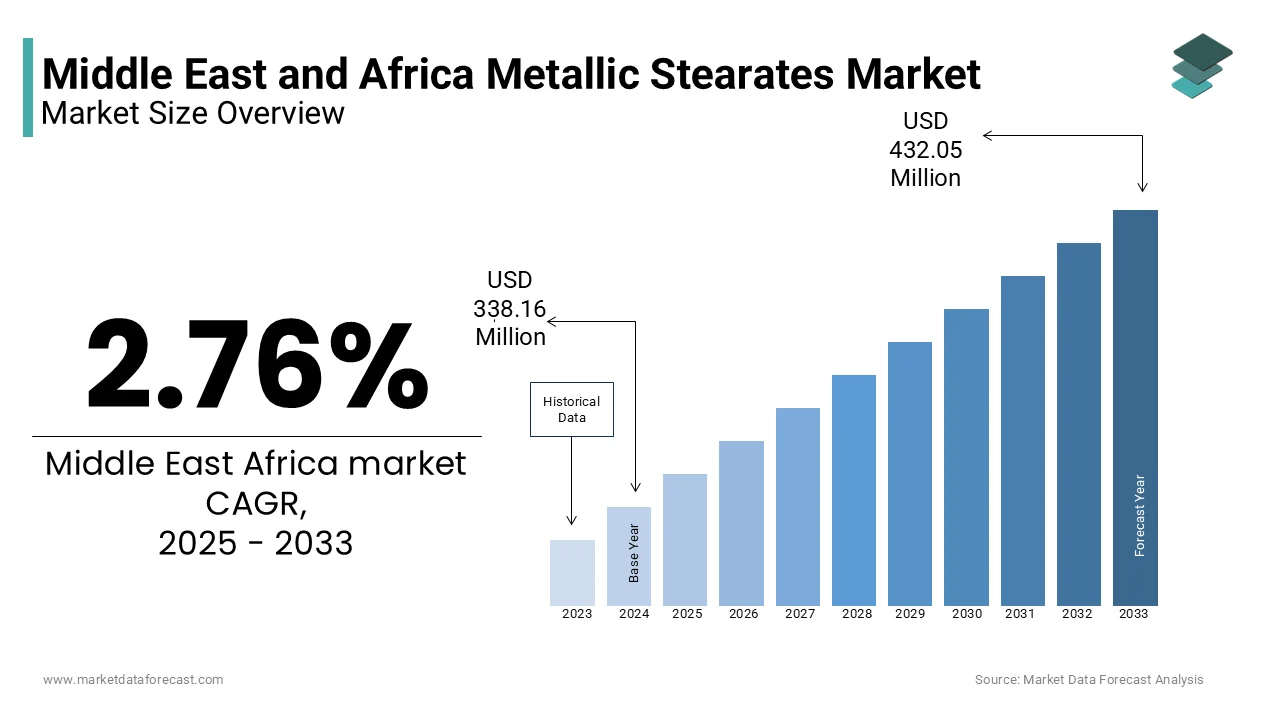
The Middle East and Africa metallic stearates market size was valued at USD 338.16 million in 2024, and the market size is expected to reach USD 432.05 million by 2033 from USD 347.49 million in 2025. The market's promising CAGR for the predicted period is 2.76%.
Metallic stearates are organic compounds formed by the reaction of stearic acid with metal oxides or hydroxides, commonly used as lubricants, stabilizers, and release agents across various industrial applications. In the Middle East and Africa (MEA), the metallic stearates market is primarily driven by growth in manufacturing sectors such as plastics, rubber, paints, and construction materials. Countries like Saudi Arabia, Egypt, South Africa, and the United Arab Emirates are emerging as key consumption hubs due to expanding industrial infrastructure and rising investments in downstream processing industries.
The MEA region has seen a steady increase in polymer production capacity, particularly in the Gulf Cooperation Council (GCC) countries, which has directly influenced demand for metallic stearates as processing aids. For instance, according to the Gulf Petrochemicals and Chemicals Association (GPCA), the GCC polymer industry accounted for 156.2 million metric tons of annual production capacity in 2023. This growing polymer output has amplified the need for effective processing additives, including zinc, calcium, and magnesium stearates.
Moreover, government initiatives aimed at boosting local manufacturing under frameworks such as Saudi Vision 2030 and Egypt’s Industrial Modernization Center have further catalyzed industrial activity.
MARKET DRIVERS
Expansion of the Plastics Industry in the Middle East
The Middle East is the rapid expansion of the plastics manufacturing sector is one of the most significant drivers fueling the growth of the metallic stearates market. The region, particularly the Gulf Cooperation Council (GCC) countries, has emerged as a global hub for polymer production due to abundant feedstock availability and strategic investments in petrochemical infrastructure. This surge in polymer output has led to a corresponding rise in the consumption of metallic stearates, which serve as internal and external lubricants during plastic processing.
Metallic stearates, especially calcium and zinc varieties, are extensively used as heat stabilizers and lubricants in polyvinyl chloride (PVC) and polyolefin production. Their ability to enhance melt flow properties and prevent degradation during high-temperature processing makes them indispensable in extrusion and injection molding applications. With increasing domestic demand for plastic products—ranging from packaging to automotive components—the reliance on metallic stearates has intensified.
Rising Demand from the Construction and Infrastructure Sector in Africa
In Africa, one of the primary growth catalysts for the metallic stearates market is the robust development of the construction and infrastructure sectors. Governments across Sub-Saharan Africa and North Africa are investing heavily in housing, urban development, and public infrastructure projects to meet the needs of rapidly growing populations. Like, infrastructure investment in Africa reached USD 175 billion in 2023, with nearly 60% allocated to transport, energy, and urban development projects.
Metallic stearates play a crucial role in the formulation of construction materials such as cement, gypsum boards, and waterproofing compounds. Calcium stearate, in particular, is widely used as a water-repellent additive in cementitious systems, enhancing durability and reducing moisture absorption. Further, these compounds are employed in the production of PVC pipes and profiles used in plumbing and building interiors. As per the Construction Industry Development Board (CIDB) of South Africa, the country’s construction output grew by 3.8% in 2023, reflecting broader regional trends.
MARKET RESTRAINTS
Fluctuating Prices of Raw Materials
The volatility in raw material prices, particularly those of stearic acid and metal salts is a significant restraint affecting the Middle East and Africa metallic stearates market. Stearic acid, derived primarily from palm oil and tallow, is subject to price fluctuations due to supply chain disruptions, agricultural yield variations, and geopolitical tensions.
This upward trend in raw material costs directly impacts the production expenses of metallic stearates, leading to margin compression for manufacturers in the MEA region. Many local producers rely on imported stearic acid, especially from Asia and Europe, making them vulnerable to exchange rate fluctuations and freight cost increases.
Moreover, the availability of alternative substitutes, such as synthetic lubricants and modified fatty acid derivatives, poses a competitive threat to metallic stearates, particularly when cost becomes a decisive factor for end-users. These dynamics collectively limit the market’s potential for consistent growth.
Environmental and Regulatory Constraints in Urbanized Markets
Environmental regulations and growing awareness around sustainable chemical use pose another challenge to the metallic stearates market in more developed urban centers within the Middle East and Africa. While metallic stearates are generally considered non-toxic and biodegradable, concerns regarding their long-term environmental impact—especially in wastewater systems—are prompting stricter regulatory scrutiny. In cities such as Cape Town, Dubai, and Cairo, municipal authorities have begun enforcing tighter controls on chemical discharge limits, compelling manufacturers to explore greener alternatives.
According to the United Nations Environment Programme (UNEP), several African nations have introduced national chemical management frameworks aligned with the Globally Harmonized System of Classification and Labelling of Chemicals (GHS). These policies aim to reduce the ecological footprint of industrial chemicals, including additives like metallic stearates. In response, some companies have had to reformulate products or invest in advanced purification technologies, thereby increasing operational costs.
Furthermore, consumer preference in certain industrial segments, such as food-grade packaging and medical devices, is shifting toward bio-based and non-metallic lubricants. Such trends are likely to slow down market growth in environmentally conscious urban markets.
MARKET OPPORTUNITIES
Growth of the Automotive Manufacturing Sector in North Africa
The expansion of the automotive manufacturing sector in North Africa, particularly in Morocco and Egypt, presents a substantial opportunity for the metallic stearates market. Both countries have been actively developing their automotive ecosystems through foreign direct investment (FDI), industrial zone development, and policy incentives aimed at boosting local production. According to the Organisation Internationale des Constructeurs d'Automobiles (OICA), Morocco produced over 700,000 vehicles in 2023, marking a 9% increase from the previous year.
Metallic stearates find extensive application in the automotive industry, especially in the production of rubber components, thermoplastic parts, and under-the-hood assemblies. They act as mold release agents, lubricants, and dispersants during the manufacturing of tires, seals, and interior trims. Zinc stearate, in particular, is preferred for its low dusting properties and compatibility with elastomers.
As per the Moroccan Ministry of Industry and Trade, the automotive sector contributes nearly 5% to the country’s GDP and is expected to reach an export value of USD 12 billion by 2025. Similarly, Egypt has launched several automotive assembly plants in partnership with international OEMs, aiming to localize up to 60% of vehicle components by 2030. This industrial momentum presents a lucrative avenue for metallic stearate suppliers seeking to expand their customer base in the automotive supply chain across North Africa.
Increasing Use in Paints and Coatings in the GCC Region
The paints and coatings industry in the Gulf Cooperation Council (GCC) region is witnessing robust growth, offering significant opportunities for the metallic stearates market. The demand for architectural, industrial, and protective coatings has surged due to large-scale urbanization, infrastructure development, and stringent regulatory standards governing coating performance.
Metallic stearates, particularly aluminum and calcium variants, are widely used in coatings formulations as matting agents, rheology modifiers, and anti-sagging additives. Their ability to improve surface finish, enhance weather resistance, and provide controlled viscosity makes them essential in solvent-based and powder coatings. In the UAE, where green building certifications such as LEED and Estidama are gaining traction, there is a growing preference for high-performance coatings that incorporate functional additives like metallic stearates.
MARKET CHALLENGES
Limited Local Production Capacity and Reliance on Imports
The limited domestic production capacity and heavy dependence on imports, particularly from Europe, China, and India, is one of the key challenges facing the Middle East and Africa metallic stearates market. Despite the presence of a growing chemical industry in the Gulf, local manufacturing of metallic stearates remains fragmented and insufficient to meet rising industrial demand. According to the Gulf Petrochemicals and Chemicals Association (GPCA), only a handful of companies in the GCC produce metallic stearates at commercial scale, leaving a significant portion of the market reliant on external suppliers.
This import dependency introduces risks related to supply chain disruptions, fluctuating exchange rates, and trade tariffs. For instance, geopolitical tensions and logistical bottlenecks, such as the Red Sea shipping crisis, have caused delays and increased freight costs for chemical imports into East and Southern Africa.
Moreover, the lack of standardized quality control measures across African markets creates inconsistencies in product performance, affecting end-user confidence.
 Technological Gaps and Lack of R&D Investment
The technological gap and minimal investment in research and development (R&D) is another pressing challenge confronting the metallic stearates market in the Middle East and Africa. Compared to mature markets in Europe and Asia, the MEA region lacks dedicated R&D centers focused on specialty chemicals and additive technologies.
This deficit hampers innovation and limits the development of customized metallic stearate solutions tailored to regional applications. Many local manufacturers continue to rely on outdated production techniques and generic formulations, reducing their competitiveness against international players who offer high-performance, application-specific products. Besides, the absence of technical support services—such as formulation assistance and field trials—deters end-users from adopting locally produced metallic stearates.
Educational institutions and industry bodies have recognized this gap, with initiatives like the Technology Innovation Institute (TII) in the UAE and the CSIR in South Africa promoting chemical engineering research. However, as per the Organisation for Economic Co-operation and Development (OECD), MEA countries allocate less than 1% of GDP on average to R&D activities, far below the global benchmark. Bridging this technological divide will be essential for sustaining long-term growth in the metallic stearates market across the region.
REPORT COVERAGE
| REPORT METRIC | DETAILS |
| Market Size Available | 2024 to 2033 |
| Base Year | 2024 |
| Forecast Period | 2025 to 2033 |
| CAGR | 2.76% |
| Segments Covered | By Type, Application, and Region |
| Various Analyses Covered | Global, Regional, & Country Level Analysis; Segment-Level Analysis; DROC; PESTLE Analysis; Porter’s Five Forces Analysis; Competitive Landscape; Analyst Overview of Investment Opportunities |
| Regions Covered | KSA, UAE, Israel, South Africa, And Ethiopia, Kenya, Egypt, Sudan, Rest of GCC Countries, and Rest of MEA |
|
Market Leaders Profiled | Baerlocher GmbH (Germany), Dover Chemical Corporation (USA), FACI S.p.A (Italy), Sinwon Chemical Co., Ltd. (South Korea), PROMAX Industries ApS (Denmark), Biogenix, Inc. (India), Peter Greven GmbH & Co. KG (Germany), Univar Inc. (USA), Akrochem Corporation (USA), Sun Ace Kakoh (Pte.) Ltd. (Malaysia), Norac Additives (USA), Marathwada Chemical Industries Pvt. Ltd. (India), and others. |
SEGMENTAL ANALYSIS
By Type Insights
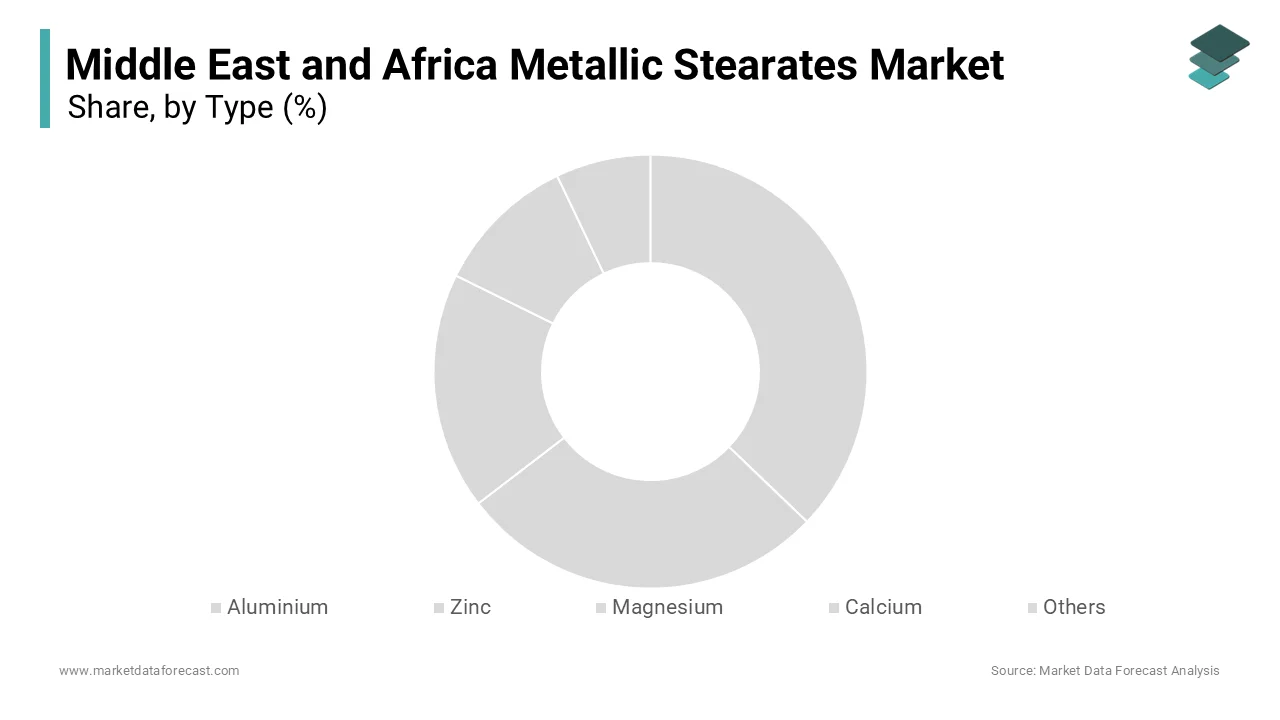
The calcium stearate segment holds the largest market share in the Middle East and Africa Metallic Stearates Market with 35.5% of total consumption in 2024. The expansion of the construction industry in the Gulf Cooperation Council (GCC) countries is One of the key drivers of calcium stearate segment. Apart from these, the increasing use of PVC in building materials such as pipes, window frames, and flooring further amplifies demand. Its widespread use across multiple industrial applications, particularly in the construction, plastics, and rubber sectors is also attributed to the dominance of calcium stearate segment. Calcium stearate functions as a lubricant, water repellent, and stabilizer, making it indispensable in the production of PVC, cement additives, and gypsum boards.
The expansion of polymer manufacturing in the Middle East, especially in Saudi Arabia and Egypt, is another major factor fueling growth. As per the Gulf Petrochemicals and Chemicals Association (GPCA), the region’s PVC production capacity surpassed 3.2 million metric tons in 2023. Calcium stearate is a preferred internal lubricant in PVC processing, enhancing melt flow and preventing thermal degradation.
The zinc stearate segment is projected to be the fastest-growing within the Middle East and Africa Metallic Stearates Market, with a CAGR of 6.2% between 2025 and 2033. The expansion of the automotive manufacturing sector in Morocco and Egypt, where zinc stearate is widely used as a mold release agent and lubricant in rubber and thermoplastic processing, is one of the main growth catalysts of zinc stearate segment. This rapid growth is further driven by its increasing adoption in the automotive and rubber industries, particularly in North Africa and the Gulf region. According to the Organisation Internationale des Constructeurs d'Automobiles (OICA), Morocco produced over 700,000 vehicles in 2023, with a significant portion of automotive components being sourced locally. Zinc stearate plays a critical role in tire manufacturing and rubber part production, where it enhances surface finish and reduces processing time.
The growth of the rubber industry in the Middle East , particularly in Saudi Arabia and the UAE, is another key driver. Zinc stearate is a preferred additive in rubber compounding due to its excellent dispersion properties and compatibility with elastomers.
By Application Insights
The plastics segment dominated the Middle East and Africa Metallic Stearates Market by holding a share of 36.3% in 2023. The growth of the petrochemical sector in Saudi Arabia , where the government has heavily invested in downstream polymer production, is one of the major factors behind the dominance of plastics segment. Metallic stearates, particularly calcium and zinc variants, are essential additives in plastics manufacturing, serving as internal and external lubricants, heat stabilizers, and processing aids. The rapid expansion of the polymer industry in the Gulf Cooperation Council (GCC) countries, which are among the largest producers of polyethylene and polypropylene globally, is also propelling the lead position of this segment. According to the Gulf Petrochemicals and Chemicals Association (GPCA), the GCC region produced over 50 million metric tons of polymers in 2023, with Saudi Arabia accounting for nearly 60% of that output. This surge in polymer production has directly increased the demand for metallic stearates, especially in PVC and polyolefin applications.
Further, the expansion of the packaging and construction industries across the MEA region has further fueled demand for plastic products, thereby boosting the consumption of metallic stearates.
The construction segment is emerging as the fastest-growing application area in the Middle East and Africa Metallic Stearates Market, with a projected CAGR of 6.5% from 2025 to 2033. Increased use of calcium stearate as a water-repellent additive in cement and gypsum-based products is among the key factors fueling this growth of construction segment. Large-scale infrastructure development initiatives across the region , particularly in Saudi Arabia, the UAE, and Sub-Saharan Africa, is fuelling the swift progress of this segment.
In addition, the construction industry in the GCC alone is expected to grow by 5.8% annually through 2030, with major investments in residential, commercial, and infrastructure projects. Calcium stearate enhances the durability of construction materials by reducing water absorption and improving workability, making it a preferred additive in concrete formulations and drywall manufacturing.
Moreover, urbanization and housing shortages in African countries such as Ethiopia, Kenya, and Nigeria are driving demand for cost-effective and durable building materials. These trends are directly boosting the consumption of metallic stearates in the construction sector, making it the fastest-growing application segment in the MEA market.
REGIONAL ANALYSIS
Saudi Arabia
Saudi Arabia secured a dominant position in the Middle East and Africa Metallic Stearates Market by accounting for 27.1% of regional share in 2023. The country’s strong industrial base, particularly in the petrochemicals and plastics sectors , is the primary driver of this position. Saudi Arabia is one of the world’s largest producers of polymers, with a total production capacity exceeding 50 million metric tons per annum , as per the Gulf Petrochemicals and Chemicals Association (GPCA).
The country's strategic focus on downstream petrochemical development under Vision 2030 has led to the expansion of polymer processing industries, which heavily rely on metallic stearates as lubricants and stabilizers. Besides, the growth of the construction sector , supported by mega-projects like NEOM and Riyadh Metro, is further boosting demand for calcium stearate in cement and gypsum board manufacturing.
Moreover, government initiatives aimed at promoting local chemical manufacturing have encouraged investment in specialty additives, including metallic stearates. The Saudi Basic Industries Corporation (SABIC) and other domestic players are increasingly sourcing metallic stearates for internal use and export, reinforcing the country’s leading role in the MEA market.
United Arab Emirates
United Arab Emirates is a significant market for metallic stearates in the Middle East and Africa. The UAE’s strong industrial infrastructure and growing demand for specialty chemicals across multiple sectors contribute to its prominent position in the regional market. Among the key growth drivers is the booming paints and coatings industry , particularly in Dubai and Abu Dhabi. According to the Middle East Coatings Association (MECA), the UAE accounts for nearly 35% of the GCC coatings market , which was valued at over USD 4.2 billion in 2023 . Metallic stearates, especially aluminum and calcium variants, are widely used as rheology modifiers and anti-sagging agents in architectural and industrial coatings. Apart from these, the expansion of the plastics and polymer processing sector is fueling demand for metallic stearates in the UAE. With major infrastructure projects and industrial growth plans, the UAE is expected to maintain its strong market position in the metallic stearates industry.
South Africa
South Africa holds a major position in the African metallic stearates. As the most industrialized economy on the continent, South Africa serves as a key hub for chemical manufacturing, pharmaceuticals, and polymer processing, all of which drive demand for metallic stearates. A primary growth driver is the expansion of the rubber and automotive industries , particularly in Gauteng and the Western Cape provinces. Like, the country produced over 600,000 vehicles in 2023 , with a notable increase in local component manufacturing. Metallic stearates, especially zinc stearate, are extensively used in tire production and rubber molding processes as lubricants and release agents. Further, the growth of the pharmaceutical industry is contributing to rising demand for magnesium stearate, a widely used excipient in tablet manufacturing. As per the South African Health Products Regulatory Authority (SAHPRA), the country’s pharmaceutical sector is valued at over USD 4.5 billion annually , with increasing investments in local drug production. These factors, combined with a well-established industrial base, position South Africa as a key market for metallic stearates in the African region.
Egypt
Egypt is emerging as a major player in the Middle East and Africa Metallic Stearates Market. The country’s growing industrial sector, particularly in construction, plastics, and textiles, is driving demand for metallic stearates as processing additives and lubricants. A key growth factor is the expansion of the construction industry, supported by government-led infrastructure and housing projects. According to the Egyptian Ministry of Housing, the country invested over USD 25 billion in construction and urban development projects in 2023 , including the new administrative capital and industrial zone expansions. Calcium stearate is extensively used in cement additives and PVC pipe manufacturing, making it a critical input for this sector.
Moreover, the growth of the polymer and packaging industries is fueling demand for metallic stearates. As per the Gulf Petrochemicals and Chemicals Association (GPCA), Egypt’s PVC production capacity reached over 1 million metric tons in 2023 , with increasing utilization in building materials and consumer goods.
Kenya
Kenya is gaining prominence in the East African metallic stearates market. As one of the fastest-growing economies in Sub-Saharan Africa, Kenya is witnessing increased industrial activity in construction, packaging, and agro-processing, all of which are key consumers of metallic stearates. A major growth driver is the expansion of the construction and real estate sector , supported by government infrastructure projects and urbanization trends. Calcium stearate is widely used in cement and gypsum board manufacturing, enhancing material durability and workability. Besides, the growth of the plastics industry is contributing to increased consumption of metallic stearates. As per the Kenya Association of Manufacturers, the plastics sector grew by 6.8% in 2023 , driven by demand for packaging, agricultural films, and household goods.
KEY MARKET PLAYERS AND COMPETITIVE LANDSCAPE
Baerlocher GmbH (Germany), Dover Chemical Corporation (USA), FACI S.p.A (Italy), Sinwon Chemical Co., Ltd. (South Korea), PROMAX Industries ApS (Denmark), Biogenix, Inc. (India), Peter Greven GmbH & Co. KG (Germany), Univar Inc. (USA), Akrochem Corporation (USA), Sun Ace Kakoh (Pte.) Ltd. (Malaysia), Norac Additives (USA), Marathwada Chemical Industries Pvt. Ltd. (India), are the key players in the Middle East and Africa metallic stearates market.
The competition in the Middle East and Africa Metallic Stearates Market is characterized by a mix of global chemical suppliers and regional distributors striving to capture market share through differentiated product portfolios and localized service capabilities. While multinational companies dominate due to their extensive resources and established supply networks, regional players are gradually gaining traction by offering cost-effective alternatives and quicker response times to local demand fluctuations. The market remains moderately fragmented, with a growing emphasis on technical support, customization, and sustainability shaping competitive dynamics. Companies are also leveraging digital platforms to streamline procurement and enhance customer engagement. As industrial activity expands across sectors such as construction, automotive, and consumer goods, competition is intensifying not only on price but also on product performance, reliability, and regulatory compliance. This evolving landscape is prompting firms to continuously innovate and adapt their strategies to maintain relevance and secure long-term growth in the MEA region.
TOP PLAYERS IN THE MARKET
Elementis plc
One of the leading companies in the metallic stearates market is Elementis plc. Known for its specialty chemicals portfolio, Elementis has a strong global presence and offers a wide range of metallic stearates used across multiple industries including plastics, rubber, and pharmaceuticals. The company’s focus on product innovation and sustainable manufacturing practices positions it as a key supplier in both developed and emerging markets. Its ability to cater to diverse industrial applications makes it a preferred partner for regional manufacturers seeking high-performance additives.
Kobo Products, Inc.
Another major player is Kobo Products, Inc., a subsidiary of Matsumoto Yushi-Seiyaku Co., Ltd. Kobo specializes in performance additives, including metallic stearates used in cosmetics, pharmaceuticals, and food processing. The company's expertise lies in delivering customized solutions tailored to specific application requirements. With a reputation for quality and technical support, Kobo maintains a competitive edge by addressing niche market demands and enhancing formulation efficiency for end-users across various sectors in the MEA region.
Peter Greven GmbH & Co. KG
Peter Greven GmbH & Co. KG is also a prominent name in the metallic stearates industry. With decades of experience, the German-based company produces high-purity metallic stearates used in polymer processing, coatings, and construction materials. Their commitment to process excellence and environmental responsibility supports their expansion into emerging markets. In the MEA region, Peter Greven has established itself as a reliable supplier, offering stable supply chains and consistent product quality that meet evolving industrial needs.
TOP STRATEGIES USED BY KEY MARKET PLAYERS
Key players in the Middle East and Africa Metallic Stearates Market are increasingly focusing on product diversification and formulation-specific offerings to cater to the unique requirements of different industries. By developing specialized grades of metallic stearates tailored for applications such as pharmaceutical excipients, rubber processing, and polymer lubrication, companies enhance their value proposition and strengthen customer relationships across diverse sectors.
Another crucial strategy adopted by market participants is strategic collaborations and distribution partnerships with local chemical distributors and industrial suppliers in the MEA region. These alliances help in expanding market reach, improving after-sales support, and ensuring timely delivery of products, especially in countries where direct operations may be challenging due to logistical or regulatory constraints.
Apart from these, companies are investing in technical service support and application development centers to assist end-users in optimizing the use of metallic stearates in their processes. Providing formulation guidance, process integration advice, and performance testing helps build long-term trust and loyalty among manufacturers in the region.
RECENT HAPPENINGS IN THE MARKET
- In January 2024, Elementis plc launched a new line of high-purity calcium stearate specifically designed for use in PVC formulations common in the Gulf region. This move was aimed at meeting the rising demand from the construction and infrastructure sector while ensuring superior processability and thermal stability.
- In March 2024, Peter Greven GmbH & Co. KG expanded its distribution network in North Africa by partnering with a local chemical distributor in Egypt. The collaboration was intended to improve logistics efficiency and ensure faster delivery of metallic stearates to key industrial hubs in Cairo and Alexandria.
- In May 2024, Kobo Products, Inc. introduced an advanced technical service initiative in South Africa, offering on-site formulation support for pharmaceutical and cosmetic manufacturers using magnesium stearate. This initiative was designed to strengthen customer relationships and improve product adoption rates.
- In July 2024, a leading regional distributor based in the UAE announced a joint venture with a European metallic stearates manufacturer to set up a blending and packaging facility near Jebel Ali Port. The initiative aimed at reducing lead times and customizing product offerings for local industries.
- In September 2024, Elementis plc conducted a series of training workshops across GCC countries focused on best practices in using metallic stearates in polymer processing. These sessions were part of the company’s broader effort to build technical expertise among local manufacturers and reinforce brand loyalty.
MARKET SEGMENTATION
This research report on the Middle East and Africa metallic stearates market is segmented and sub-segmented into the following categories.
By Type
- Aluminium
- Zinc
- Magnesium
- Calcium
- Others
By Application
- Pharmaceuticals
- Plastics
- Rubber
- Cosmetics
- Construction
- Coatings
By Country
- KSA
- UAE
- Israel
- rest of GCC countries
- South Africa
- Ethiopia
- Kenya
- Egypt
- Sudan
- rest of MEA
Frequently Asked Questions
1. What are the main types of metallic stearates in the Middle East and Africa Metallic Stearates Market?
Key types include zinc, calcium, magnesium, and aluminum stearates in the Middle East and Africa Metallic Stearates Market.
2. What are the main applications in the Middle East and Africa Metallic Stearates Market?
Used mainly in plastics, rubber, pharmaceuticals, cosmetics, and coatings within the Middle East and Africa Metallic Stearates Market.
3. Which countries lead in consumption in the Middle East and Africa Metallic Stearates Market?
Saudi Arabia, UAE, South Africa, and Egypt are the leading consumers in the Middle East and Africa Metallic Stearates Market.
4. Which industries drive demand in the Middle East and Africa Metallic Stearates Market?
Plastics, pharmaceuticals, cosmetics, and construction sectors drive demand in the Middle East and Africa Metallic Stearates Market.
5. What trends shape the Middle East and Africa Metallic Stearates Market?
Increasing pharma use and rising construction activities are key trends in the Middle East and Africa Metallic Stearates Market.
6. Who are the key players in the Middle East and Africa Metallic Stearates Market?
Baerlocher, Dover Chemical, FACI, Peter Greven, and Univar lead in the Middle East and Africa Metallic Stearates Market.
7. What factors contribute to growth in the Middle East and Africa Metallic Stearates Market?
Growth is driven by industrialization, urbanization, and infrastructure projects in the Middle East and Africa Metallic Stearates Market.
8. What challenges does the Middle East and Africa Metallic Stearates Market face?
Challenges include raw material price volatility, import reliance, and regulations for the Middle East and Africa Metallic Stearates Market.
Access the study in MULTIPLE FORMATS
Purchase options starting from
$ 1600
Didn’t find what you’re looking for?
TALK TO OUR ANALYST TEAM
Need something within your budget?
NO WORRIES! WE GOT YOU COVERED!
Call us on: +1 888 702 9696 (U.S Toll Free)
Write to us: sales@marketdataforecast.com