- Product Description Description
- Table of Contents TOC
- List of Table & Figure LOT
- Get Free Sample PDF Sample PDF
Market Size, 2025
$0.23 BnMarket Estimate, 2026
$0.27 BnMarket Forecast, 2034
$0.83 BnCAGR, 2026–2034
15.36%Executive Summary: Middle East and Africa Organic Seeds Market
- Market Scope: Comprehensive regional industry analysis covering organic agricultural inputs, digital sales platforms, compliance frameworks, strategic corporate developments, and competitive landscapes.
- Market Valuation: Valued at USD 0.23 billion (2025), estimated at USD 0.27 billion (2026), and projected to reach USD 0.83 billion by 2034, registering a strong CAGR of 17.8% (2026–2034).
- Primary Growth Drivers: Rising smartphone penetration enabling direct-to-farmer digital sales, government sustainable agriculture initiatives, increasing consumer demand for chemical-free produce, e-commerce platform expansion, and organic certification regulatory support. Restraints include standardization gaps and fraud risks.
Key Market Segment Metrics (2026–2034)
| Category | Leading Segment / Region (Position) | Fastest-Growing Segment |
|---|---|---|
| By Product / Drug Type | Skincare products (largest share via online store investments) & Prescription drugs (dominant by drug type) | Digital agricultural inputs, organic seed varieties, and e-commerce wellness solutions |
| By Application / Channel | Digital direct-to-farmer sales and integrated e-commerce wellness platforms | Smartphone-enabled digital agricultural input procurement |
| By Region / Country | Brazil (predicted market leader driven by pharmacy sales and internet users purchasing online) | Mexico (offering 24/7 digital fulfillment with reduced taxes and fees for prescription/wellness orders) |
Major Market Players & Market Structure
Market Structure: Digitally transforming agricultural and health retail ecosystem driven by integrated online platforms supporting prescription fulfillment, herbal product distribution, and direct consumer sales across developing regional economies.
Key Companies: Rowlands Pharmacy, OptumRx Inc, The Kroger Co., Walgreen Co., Wal-Mart Stores Inc., CVS Health, Express Scripts Holding Company, Giant Eagle Inc., DocMorris (Zur Rose Group AG), and Others.
Middle East and Africa Organic Seeds Market
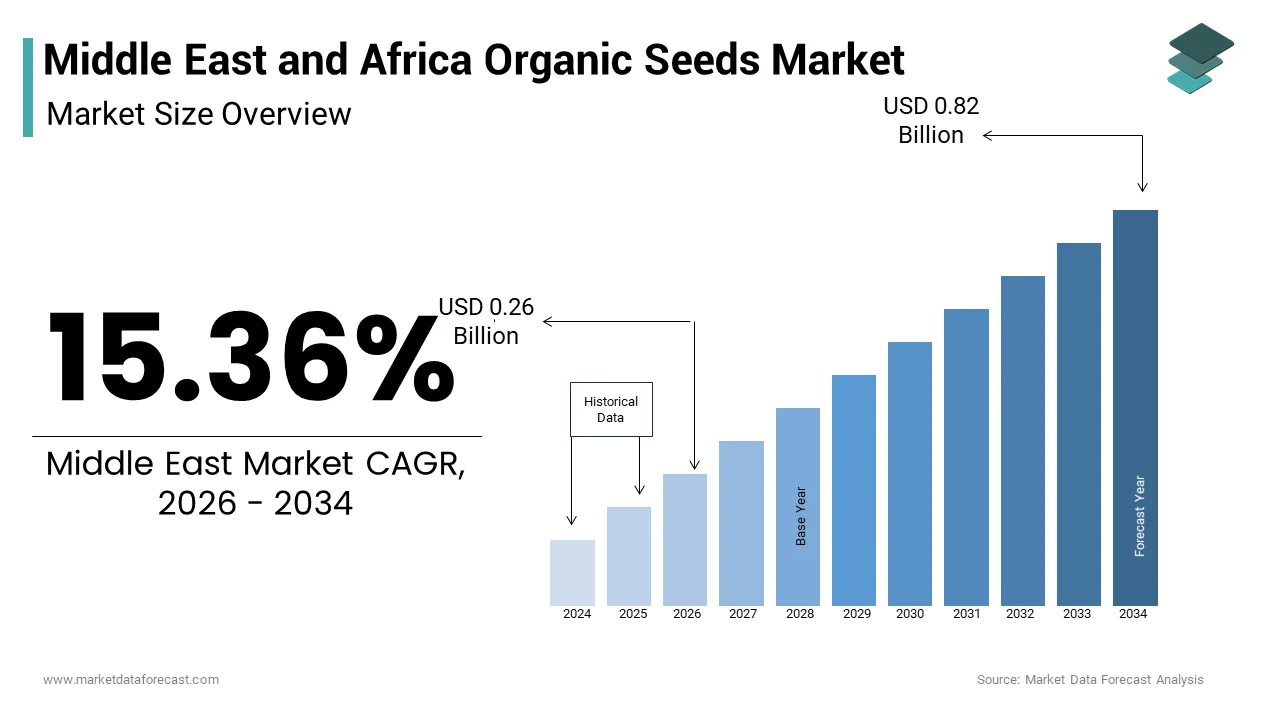
The Middle East and Africa organic seeds market size will reach USD 0.23 billion in 2025 and is anticipated to reach USD 0.27 billion in 2026 to reach USD 0.83 billion by 2034, growing at a CAGR of 15.36% during the forecast period from 2026 to 2034.
Introduction to the Middle East and Africa Organic Seeds Market
Organic seeds are seeds harvested from plants grown without synthetic fertilizers, pesticides, or genetic modification (non-GMO). They are produced according to strict ecological standards, ensuring the parent plants thrived in natural soil and biodiversity. This market serves as the foundational input for sustainable farming systems. The region presents a unique agronomic landscape where traditional farming practices intersect with modern sustainability mandates. According to the Food and Agriculture Organization (FAO), the African continent contains 60% of the world's uncultivated arable land, presenting an immense opportunity to scale up food systems and agricultural investment. In the Middle East, water scarcity drives the adoption of resilient crop varieties that require fewer chemical inputs. Also, the Research Institute of Organic Agriculture (FiBL) shows that multiple North African countries have implemented official national regulatory frameworks for organic certification to facilitate regional and international trade. The demographic shift towards health consciousness among urban populations in Gulf Cooperation Council countries further stimulates demand for organically grown produce. Climate variability remains a critical factor influencing seed selection, with farmers increasingly prioritizing drought resistant and heat tolerant varieties. The integration of digital agriculture tools allows for better tracking of seed provenance and quality assurance. This market dynamics reflect a broader transition towards ecological balance and food security resilience in regions facing significant environmental pressures.
MARKET DRIVERS
Rising Health Consciousness and Demand for Chemical Free Food
Consumer awareness regarding the adverse health effects of synthetic pesticide residues has become a key driver of the Middle East and Africa organic seeds market. Urban populations in countries such as Saudi Arabia, the United Arab Emirates, and South Africa are increasingly scrutinizing food labels and seeking produce grown without chemical interventions. According to reports published by United Nations human rights experts, pesticide poisoning accounts for an estimated 200,000 deaths annually worldwide, driving global concerns regarding agricultural chemical safety. This health driven demand translates directly to the upstream supply chain, where farmers seek certified organic seeds to meet market expectations. In Egypt, the Ministry of Agriculture has noted a steady increase in registered organic farms, driven by domestic consumer preference for safer food options. The rise of middle class households with higher disposable incomes allows for premium pricing on organic goods, incentivizing growers to switch from conventional to organic seed varieties. Furthermore, medical studies linking processed foods with chronic diseases have prompted dietary shifts towards natural and whole foods. Retail chains in major metropolitan areas are expanding their organic sections, creating a reliable outlet for produce derived from organic seeds. This consumer led transformation ensures that seed suppliers must prioritize purity and certification compliance to remain competitive in a market that values transparency and health benefits above cost considerations.
Government Initiatives Supporting Sustainable Agricultural Practices
National governments across the region are implementing robust policy frameworks to promote organic farming, which further propels the growth of the Middle East and Africa organic seeds market. This strategy drives environmental conservation and strengthens food security. These initiatives often include subsidies for organic inputs, technical training for farmers, and the establishment of certification bodies to regulate the sector. The African Union’s Ecological Organic Agriculture (EOA) Initiative explicitly fosters sustainable land practices and ecological farming, which directly underpins the continent's organic seed and crop development. Under Morocco’s current 'Generation Green 2020–2030' agricultural strategy, the government has allocated dedicated resources with the goal of converting 100,000 hectares of farmland to organic cultivation methods by 2030. Similarly, the United Arab Emirates has launched national food security strategies that encourage innovative and sustainable farming techniques, including hydroponics and organic cultivation. These policy measures reduce the financial risk for farmers transitioning to organic methods, thereby increasing the demand for high quality organic seeds. Additionally, international partnerships with organizations such as the United Nations Environment Programme provide technical assistance and funding for organic projects. Regulatory harmonization efforts within regional economic communities facilitate trade in organic products, creating larger markets for farmers who use certified seeds. The alignment of national development goals with global sustainability targets ensures long term governmental support, making organic seeds a strategic asset for agricultural modernization in the region.
MARKET RESTRAINTS
Limited Availability of Certified Organic Seed Varieties
The scarcity of locally adapted and certified organic seed varieties is a significant constraint to the Middle East and Africa Organic Seeds Market. Many farmers struggle to access seeds that are both certified organic and suitable for specific regional climatic conditions, such as high temperatures and low rainfall. The Research Institute of Organic Agriculture (FiBL) indicate that the global organic seed sector remains deeply underdeveloped, accounting for less than 5% of total seed utilization due to the dominance of conventional commercial breeding lines. In sub Saharan Africa, the reliance on saved seeds from previous harvests limits genetic diversity and yield potential, while formal certified organic seeds are often imported at high costs. The lack of local breeding programs focused on organic traits means that available varieties may not perform optimally without synthetic inputs, defeating the purpose of organic cultivation. Certification processes for seeds are complex and expensive, discouraging small scale seed producers from entering the market. In the Middle East, the harsh desert climate requires specialized drought resistant varieties, yet the pipeline for developing such organic seeds is limited. This supply gap forces farmers to either compromise on certification standards or face lower yields due to unsuitable seed genetics. The absence of a robust local seed industry for organic varieties creates a barrier that hinders the scalability of organic farming across the region.
High Costs Associated with Organic Certification and Production
The financial burden of obtaining and maintaining organic certification is also a substantial barrier to the growth of the Middle East and Africa Organic Seeds Market. Certification involves rigorous inspection, documentation, and compliance with international standards, which can be prohibitively expensive for smallholder farmers who constitute the majority of the agricultural workforce. As per the Research Institute of Organic Agriculture, the cost of certification can range from several hundred to thousands of dollars annually, depending on the complexity of the operation and the certifying body. For many farmers in rural Africa, these costs outweigh the potential price premiums offered by organic markets, especially when access to those markets is uncertain. Additionally, organic farming often requires more labor intensive practices such as manual weeding and composting, which increase production costs compared to conventional methods reliant on cheap chemical herbicides. The initial transition period, typically lasting three years, involves lower yields as soil health rebuilds, further straining financial resources. In the Middle East, the high cost of water and energy for irrigation adds to the overall expense of organic production. Without adequate financial support or subsidies, many farmers revert to conventional methods after attempting organic cultivation. This economic constraint limits the pool of producers willing to invest in organic seeds, thereby restricting market growth and keeping organic produce a niche segment rather than a mainstream option.
MARKET OPPORTUNITIES
Expansion of Export Markets for Organic Produce
The growing international demand for organic products unlocks potential for the Middle East and Africa organic seeds market. European and North American consumers are increasingly willing to pay premium prices for certified organic fruits, vegetables, and grains, creating strong export incentives for producers in the region. The European Commission shows that the European Union imports millions of tons of organic agri-food products annually, representing one of the largest destination blocks for global organic trade. Countries such as Kenya, Uganda, and Egypt have already established themselves as key suppliers of organic coffee, tea, and citrus fruits to these markets. To capitalize on this trend, farmers must use certified organic seeds to ensure compliance with strict import regulations. The development of free trade agreements and bilateral partnerships facilitates easier access to these high value markets. In the Gulf region, the proximity to Europe and Asia offers logistical advantages for exporting perishable organic goods. As global retailers commit to sourcing sustainable products, the demand for traceable and certified organic inputs rises. This export orientation encourages investment in local seed production and distribution networks to meet international quality standards. By aligning domestic production with global demand, the region can enhance its foreign exchange earnings while promoting sustainable agricultural practices. The opportunity lies in building a reputation for reliability and quality, which begins with the use of superior organic seeds.
Technological Advancements in Seed Breeding and Digital Agriculture
Emerging technologies in seed breeding and digital agriculture offer transformative opportunities for enhancing the efficiency and resilience of the Middle East and Africa organic seeds market. Advances in molecular marker assisted selection allow breeders to develop organic compatible varieties with improved resistance to pests, diseases, and climate stressors without genetic modification. The Consultative Group on International Agricultural Research (CGIAR) is utilizing artificial intelligence and rapid phenotyping to drastically shorten the timeline for bringing climate-resilient crop varieties to market. Digital platforms and mobile applications enable farmers to access information on seed availability, best practices, and market prices, bridging the knowledge gap in remote areas. Blockchain technology is being explored for supply chain transparency, allowing consumers to verify the organic status of seeds and produce from farm to fork. In Israel, agtech innovations in precision irrigation and seed coating technologies are being adapted for organic systems, improving water use efficiency and seed germination rates. These technological integrations reduce the risks associated with organic farming and increase yields, making it a more viable option for farmers. Investment in research and development partnerships between public institutions and private companies can accelerate the deployment of these technologies. Advanced breeding techniques and digital tools allow the region to overcome traditional constraints. Consequently, these innovations can build a more robust and competitive organic seeds market.
MARKET CHALLENGES
Climate Change and Water Scarcity Impacts
Climate change exacerbates water scarcity and increases the frequency of extreme weather events, which poses a formidable challenge to the Middle East and Africa organic seeds market. The region is particularly vulnerable to rising temperatures and irregular rainfall patterns, which threaten crop productivity and seed viability. According to the Intergovernmental Panel on Climate Change, the Middle East and North Africa are projected to experience temperature increases significantly higher than the global average, leading to severe water stress. Organic farming, which relies on healthy soil and natural water retention, faces difficulties in such harsh conditions if seeds are not specifically bred for resilience. Drought sensitive varieties may fail completely, resulting in economic losses for farmers and reduced supply of organic seeds. The depletion of groundwater resources in countries like Saudi Arabia and Yemen limits the feasibility of irrigation dependent organic crops. Furthermore, changing pest and disease dynamics due to warmer climates require continuous development of new resistant varieties, a process that is slow and resource intensive. Farmers may hesitate to invest in organic seeds if the risk of crop failure is high due to unpredictable weather. Addressing this challenge requires coordinated efforts in climate smart agriculture, including the development of drought tolerant organic seeds and improved water management practices. Without adaptive strategies, climate change could severely constrain the growth of the organic seeds market in the most affected areas.
Lack of Technical Knowledge and Extension Services
The deficiency in technical expertise and inadequate agricultural extension services are critical hurdles for the Middle East and Africa organic seeds market. Organic farming requires specialized knowledge about soil management, pest control, and seed selection that differs significantly from conventional methods. According to the World Bank, the ratio of agricultural extension agents to farmers in many sub Saharan African countries is extremely low, limiting the dissemination of best practices. Many farmers lack understanding of how to properly store, handle, and plant organic seeds to maximize germination and yield. Misapplication of organic techniques can lead to poor results, discouraging continued use of organic inputs. In the Middle East, the rapid modernization of agriculture has sometimes outpaced the development of educational programs focused on sustainable practices. The absence of localized training materials and demonstration farms hinders the transfer of knowledge to smallholder farmers. Without proper guidance, farmers may struggle with weed management and nutrient deficiencies, common challenges in organic systems. This knowledge gap reduces confidence in organic seeds and slows market penetration. Strengthening extension services through government and non governmental organization partnerships is essential to build capacity and ensure successful implementation of organic farming techniques. Investing in education and training is crucial to overcoming this barrier and fostering a skilled workforce capable of sustaining the organic seeds market.
REPORT COVERAGE
| REPORT METRIC | DETAILS |
| Market Size Available | 2025 to 2034 |
| Base Year | 2025 |
| Forecast Period | 2026 to 2034 |
| CAGR | 15.1% |
| Segments Covered | By Crop, Application, Distribution Channel, and Region. |
| Various Analyses Covered | Global, Regional, and Country-Level Analysis, Segment-Level Analysis, DROC, PESTLE Analysis, Porter’s Five Forces Analysis, Competitive Landscape, Analyst Overview of Investment Opportunities |
| Regions Covered | KSA, UAE, Israel, rest of GCC countries, South Africa, Ethiopia, Kenya, Egypt, Sudan, rest of MEA |
| Market Leaders Profiled | Seeds of Change, Johnny’s Selected Seeds, Fedco Seeds, High Mowing Organic Seeds, Seed Savers Exchange, Wild Garden Seeds, HILD Samen, Fleuren, Vitalis Organic Seeds, Navdanya, De Bolster, Maas Plant, Southern Exposure Seed Exchange and Arnica Kwekerij |
SEGMENTAL ANALYSIS
By Crop Insights
Field Crop Seeds
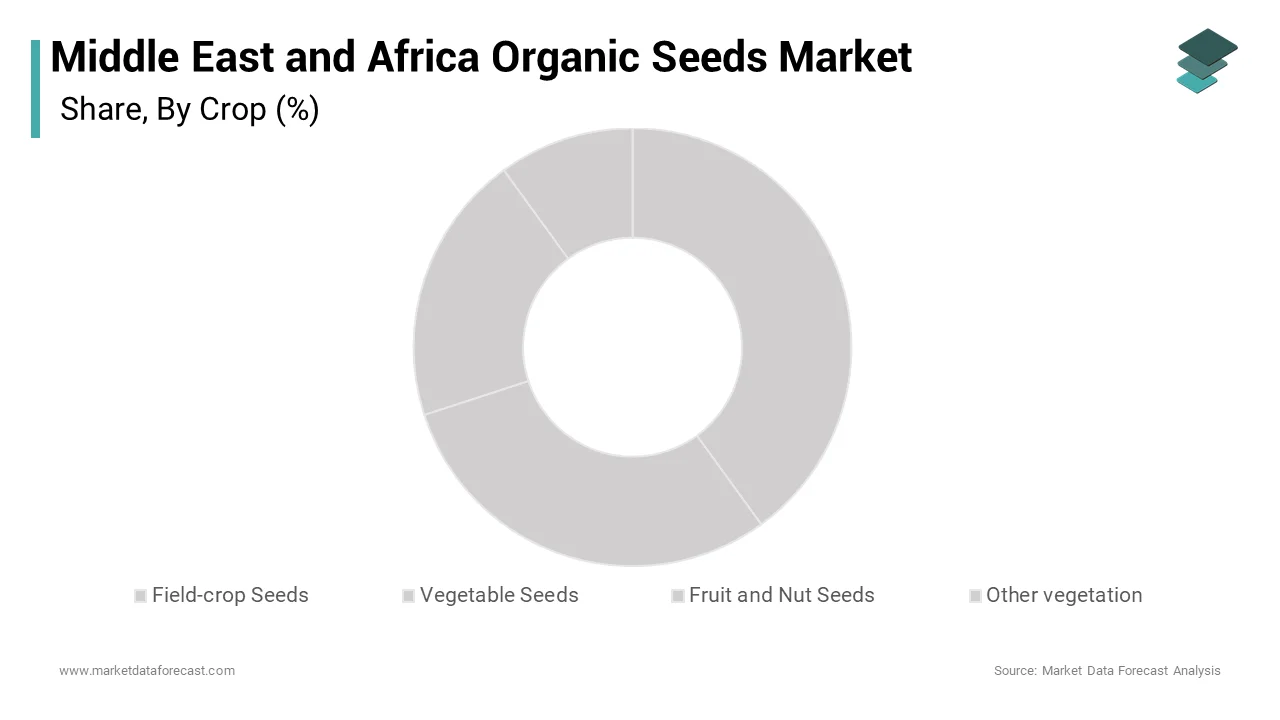
The field crop seeds segment was the largest in the Middle East and Africa organic seeds market and occupied a 45.1% share in 2025. This supremacy of the segment was mainly supported by the region's strategic focus on food security and the cultivation of staple crops essential for national sustenance. Governments across the Middle East and Africa are heavily investing in domestic production of cereals to reduce import dependency. For instance, the Food and Agriculture Organization (FAO) indicate that Near East and North Africa nations rely on imports for approximately 50% of their cereal demands, driving domestic initiatives to expand local grain production fields. The sheer volume of land dedicated to field crops compared to horticulture ensures that seed demand remains consistently high. Furthermore, large scale commercial farms, which are prevalent in nations like South Africa and Egypt, prioritize organic field crop seeds to meet bulk procurement contracts for animal feed and human consumption. The integration of organic field crops into crop rotation systems also enhances soil fertility, making them a preferred choice for sustainable farming practices across the continent.
The relentless pursuit of national food security by governments across the region significantly propels the demand for organic field crop seeds. With the region importing a substantial portion of its staple foods, authorities are incentivizing local production to mitigate supply chain vulnerabilities. As per the African Development Bank, Africa's food import bill is projected to reach 110 billion US dollars by 2025, a statistic that has accelerated policies promoting self sufficiency in grains and oilseeds. In Saudi Arabia, the Ministry of Environment, Water and Agriculture (MEWA) operates strategic initiatives to incentivize sustainable wheat and barley production using advanced water-conserving technologies. Similarly, Egypt’s massive 'New Delta' land reclamation project seeks to convert millions of acres of arid terrain into productive farmland using smart agricultural practices and treated wastewater systems to protect soil health. These national strategies often include subsidies for organic inputs and guaranteed purchase agreements for organic produce, reducing financial risks for farmers. Consequently, the demand for certified organic seeds for major field crops like maize, sorghum, and millet surges as farmers align with state mandates to enhance domestic food reserves and stabilize local markets against global price fluctuations.
The prevalence of large scale commercial farming operations in key African and Middle Eastern nations is a critical driver for the field crop seeds segment. These expansive agribusinesses possess the capital and technical expertise to transition to organic methods, seeking high quality seeds that guarantee uniform germination and yield consistency. According to the World Bank, commercial agriculture accounts for a significant portion of the agricultural GDP in countries like South Africa and Kenya, where vast tracts of land are dedicated to export oriented and domestic staple crops. Large farms in South Africa, for instance, increasingly adopt organic practices for maize and soybeans to access premium European markets that demand strict traceability and certification. The economies of scale available to these operations make the higher initial cost of organic seeds justifiable, as they can absorb the transition period's yield dips and benefit from long term soil health improvements. Furthermore, these commercial entities often partner directly with seed companies to develop customized organic varieties suited to their specific agronomic conditions, fostering a robust B2B market for field crop seeds. Their influence sets industry standards and drives volume sales, cementing the segment's leadership in the regional market.
Vegetable Seeds
The vegetable seeds segment is on the rise and is expected to be the fastest growing segment in the market by witnessing a CAGR of 8.5% during the forecast period. This rapid acceleration of the segment is fueled by shifting dietary patterns and the proliferation of urban agriculture. As urbanization accelerates across the continent, the demand for fresh, locally grown, and chemical free produce has skyrocketed. According to the United Nations, the urban population in Africa is expected to triple by 2050, creating immense pressure on local food systems to provide nutritious vegetables. Urban farming initiatives, including rooftop gardens and community plots in cities like Nairobi and Cape Town, rely heavily on high quality organic vegetable seeds. Additionally, the rising middle class in Gulf Cooperation Council countries exhibits a strong preference for organic salads and vegetables, driven by health consciousness. Retailers are expanding their organic vegetable sections, creating a reliable pull effect that encourages farmers to cultivate these high value crops. The relatively short growing cycles of vegetables also allow for multiple harvests per year, making them an attractive option for farmers seeking quick returns on investment from organic inputs.
The accelerating pace of urbanization across the region is fundamentally altering dietary habits, creating a surging demand for fresh organic vegetables. As populations migrate to cities, traditional diets rich in staples are increasingly supplemented or replaced by diverse, nutrient dense foods, including leafy greens and exotic vegetables. According to the World Health Organization, non communicable diseases linked to poor diet are rising in the region, prompting health campaigns that advocate for increased vegetable consumption. This shift is particularly evident in urban centers like Dubai and Johannesburg, where supermarkets and specialty stores report double digit growth in organic vegetable sales. Consumers in these demographics are willing to pay a premium for produce perceived as safer and more nutritious, directly incentivizing farmers to cultivate organic vegetables. The proximity of urban farms to consumer markets reduces transportation time, ensuring fresher produce and minimizing post harvest losses, which is crucial for perishable vegetables. This urban demand pull is a primary catalyst for the rapid expansion of the organic vegetable seeds segment, as farmers respond to lucrative market signals by diversifying their crop portfolios away from traditional field crops towards high value horticulture.
The rapid adoption of protected cultivation techniques, particularly greenhouse farming, is a major growth enabler for the growth of this segment. Greenhouses allow for year round production of high value vegetables like tomatoes, cucumbers, and peppers, shielding crops from extreme weather and pests. According to the International Society for Horticultural Science, the area under greenhouse cultivation in the Middle East has expanded significantly to address water scarcity and climate challenges. In countries like the United Arab Emirates and Saudi Arabia, government initiatives promote hydroponics and organic greenhouse farming to boost local food production. These controlled environments are highly conducive to organic practices, as they reduce the need for external chemical interventions. Farmers operating greenhouses require premium organic seeds that offer high germination rates, disease resistance, and uniform growth characteristics to maximize yield per square meter. The high capital investment in greenhouse infrastructure necessitates the use of superior inputs to ensure profitability. Consequently, the organic vegetable seeds market benefits from this technological shift, as growers seek specialized varieties that thrive in protected environments and meet the stringent quality standards required by high end retail and hospitality sectors.
By Application Insights
Agriculture
In 2025, the agriculture application segment held a 60.8% majority share of the Middle East and Africa organic seeds market because of the fundamental need for caloric security and the vast land area dedicated to staple crop production across the continent. Agriculture remains the backbone of many African economies, employing a significant portion of the workforce. According to macro-demographic data from the African Development Bank (AfDB), agriculture generates approximately 15% of Africa’s collective GDP and accounts for over 60% of the continent's total employment. The sheer scale of agricultural activities, ranging from smallholder subsistence farming to large commercial estates, drives massive volume demand for seeds. While organic penetration in conventional broadacre farming is still developing, the push for sustainable land management and soil regeneration is increasing the adoption of organic seeds for crops like wheat, maize, and sorghum. Government policies aimed at reducing the environmental footprint of agriculture, such as banning certain synthetic pesticides in Kenya and Rwanda, further compel farmers to transition towards organic inputs. The segment's leadership is also supported by the integration of organic practices into national agricultural development plans, ensuring a steady, albeit gradual, increase in the utilization of organic seeds for primary food production.
The growing emphasis on soil health and regenerative agricultural practices is a key driver for the dominance of the agriculture application segment. Decades of intensive conventional farming have led to soil degradation, nutrient depletion, and reduced water retention capacity across many parts of Africa and the Middle East. According to the United Nations Convention to Combat Desertification, approximately 65 percent of Africa's arable land is degraded, necessitating urgent intervention. Organic farming, which prioritizes soil organic matter and microbial activity, offers a viable solution to restore land productivity. Farmers adopting regenerative techniques, such as cover cropping and composting, require organic seeds to maintain the integrity of their chemical free systems. The use of organic seeds ensures that the entire production cycle, from germination to harvest, aligns with ecological principles, enhancing the long term resilience of the soil. In countries like Ethiopia, large scale land restoration projects incorporate organic farming methods to combat desertification, driving demand for organic seeds for staple crops. This focus on restoring the foundational resource of agriculture arable land ensures that the agriculture segment remains the primary consumer of organic seeds, as farmers seek sustainable inputs to revitalize their soils and secure future yields.
The integration of organic farming principles into national agricultural development plans across the region significantly bolsters the agriculture application segment. Governments recognize that sustainable intensification of staple crop production is essential for food security and environmental preservation. As per the African Union's Agenda 2063, sustainable agriculture and environmental management are key pillars for the continent's socio economic transformation. National strategies often include targets for reducing synthetic fertilizer use and promoting organic alternatives. For example, the Government of Rwanda's Strategic Plan for Agricultural Transformation provides comprehensive extension services and target incentives to farmers to boost cash crop export revenues and local staple food volumes. Similarly, in the Middle East, countries like Jordan have incorporated sustainable water and soil management practices into their national agricultural strategies, encouraging the use of organic inputs for field crops. These policy frameworks create a supportive environment for the adoption of organic seeds by reducing technical barriers and providing market access. The alignment of organic agriculture with national development goals ensures sustained institutional support, making the broadacre agriculture segment the primary driver of organic seed consumption as countries strive to meet both food production targets and sustainability commitments.
Horticulture
The horticulture application segment is expected to exhibit a noteworthy CAGR of 9.2% from 2026 to 2034 due to the high economic value of horticultural crops and their suitability for export markets. Horticulture offers significantly higher returns per hectare compared to traditional field crops, making it an attractive option for commercial farmers and investors. According to the International Trade Centre, Africa's horticultural exports, including cut flowers, fresh fruits, and vegetables, have grown steadily, with the European Union being a major destination. To access these premium markets, producers must adhere to strict organic certification standards, which mandate the use of organic seeds. The segment's growth is also fueled by the rise of high tech farming methods, such as hydroponics and vertical farming, particularly in the Gulf region, where water scarcity limits traditional agriculture. These controlled environments are ideal for organic horticulture, allowing for the precise management of nutrients and pests without synthetic chemicals. The increasing demand for exotic fruits, organic herbs, and decorative plants in urban centers further accelerates the adoption of specialized organic seeds, positioning horticulture as the most dynamic and rapidly expanding application segment.
The high export potential and access to premium international markets are critical drivers for the rapid growth of the horticulture application segment. Horticultural products, such as fresh fruits, vegetables, and cut flowers, command high prices in developed markets like the European Union and North America, where consumer demand for organic produce is robust. According to the United Nations Conference on Trade and Development, African countries have successfully leveraged their comparative advantage in horticulture to increase export revenues, with organic certification being a key differentiator. To maintain access to these lucrative markets, exporters must comply with stringent phytosanitary and organic standards, which require the use of certified organic seeds. Countries like Kenya and Ethiopia have established themselves as major players in the global organic horticulture trade, with farmers increasingly switching to organic seeds to meet buyer requirements. The premium prices paid for organic horticultural products offset the higher costs of organic inputs and certification, providing a strong economic incentive for adoption. This export orientation drives continuous investment in high quality organic seeds for crops like avocados, mangoes, and green beans, fueling the segment's rapid expansion as producers seek to capitalize on global market opportunities.
The rapid adoption of high tech and precision farming methods, particularly in the water scarce regions of the Middle East, is a major catalyst for the growth of the horticulture application segment. Technologies such as hydroponics, aeroponics, and vertical farming allow for the intensive cultivation of high value crops in controlled environments, maximizing resource efficiency and yield. According to the International Water Management Institute, the Middle East and North Africa region faces severe water scarcity, prompting a shift towards soilless cultivation systems that recycle water and nutrients. These high tech systems are highly compatible with organic practices, as the controlled environment reduces the risk of pest infestations and disease, minimizing the need for external interventions. Farmers utilizing these technologies require specialized organic seeds that are bred for performance in specific conditions, such as low light or high humidity. The capital intensive nature of high tech farming necessitates the use of superior inputs to ensure profitability and return on investment. Consequently, the demand for premium organic seeds for horticultural crops like tomatoes, leafy greens, and herbs is surging in the Gulf region, driving the segment's growth as producers embrace innovation to overcome environmental constraints and meet local demand for fresh, locally grown produce.
By Distribution Channels Insights
Wholesalers
The wholesalers segment led the Middle East and Africa organic seeds market and captured a 50.7% share in 2025. This leading position of the segment is attributed to the structure of the agricultural supply chain, where large commercial farms and cooperatives procure seeds in bulk directly from distributors or manufacturers. Wholesalers play a critical role in bridging the gap between seed producers and large scale buyers, offering volume discounts, logistical support, and technical advice. According to the World Bank, the agricultural sector in many African countries is characterized by a dual structure, with a small number of large commercial farms accounting for a significant portion of output. These entities have the purchasing power and storage capacity to buy directly from wholesalers, bypassing retail channels. In the Middle East, large agribusinesses and government procurement programs often rely on wholesale distributors to supply seeds for national food security projects. The ability of wholesalers to maintain extensive inventory and provide credit facilities to large buyers further solidifies their position. Additionally, wholesalers often have exclusive distribution agreements with major international seed companies, giving them control over the supply of premium organic varieties. This centralized distribution model ensures efficiency and scale, making wholesalers the primary channel for organic seed distribution in the region.
The bulk procurement practices of large commercial farms and agricultural cooperatives are the primary drivers for the dominance of the wholesalers segment. These entities operate on a scale that necessitates purchasing seeds in large quantities to cover vast acreages, making direct engagement with wholesalers or distributors more cost effective than retail purchasing. According to the Food and Agriculture Organization, agricultural cooperatives in countries like Kenya and South Africa play a vital role in aggregating produce and procuring inputs for their members. By pooling resources, cooperatives can negotiate better prices and terms with wholesalers, ensuring access to high quality organic seeds for their members. Large commercial farms, which often have dedicated procurement departments, also prefer dealing with wholesalers who can guarantee consistent supply and provide customized logistics solutions. The volume of transactions involved in these bulk purchases significantly contributes to the wholesalers' market share. Furthermore, wholesalers often offer technical support and after sales services tailored to the needs of large scale operations, such as soil testing and agronomic advice. This comprehensive service package strengthens the relationship between wholesalers and large buyers, reinforcing the segment's leadership in the distribution landscape.
The prevalence of exclusive distribution agreements between international seed manufacturers and regional wholesalers is a key factor driving the dominance of this segment. Major global players in the organic seeds market often appoint exclusive distributors for specific countries or regions to manage sales, marketing, and logistics. These agreements grant wholesalers significant control over the supply chain, limiting the availability of certain premium organic seed varieties to other channels. According to industry analysis, exclusive distribution allows manufacturers to ensure brand consistency and provide focused support in complex markets like the Middle East and Africa. Wholesalers, in turn, invest in building the necessary infrastructure and expertise to promote these brands effectively. This arrangement creates high barriers to entry for smaller retailers and direct to farmer models, as they may not have access to the most sought after organic varieties. The control exerted by wholesalers over the supply of critical inputs ensures that they remain the primary point of contact for large scale buyers seeking certified organic seeds. This structural advantage, combined with the economies of scale in logistics and storage, cements the wholesalers' position as the leading distribution channel in the regional market.
Retailers
The retailers segment is predicted to witness the highest CAGR of 7.8% over the forecast period owing to the rise of smallholder farming, urban agriculture, and the increasing digitalization of agricultural inputs. As the trend towards backyard gardening and small scale organic farming gains momentum, individual consumers and smallholders are increasingly turning to retail outlets for their seed needs. According to the United Nations, smallholder farms constitute about 80 percent of all farms in sub Saharan Africa, representing a massive, albeit fragmented, market for agricultural inputs. Retailers, particularly those with a physical presence in rural and peri urban areas, are well positioned to serve this demographic. Furthermore, the proliferation of e commerce platforms specializing in agricultural products is making organic seeds more accessible to a wider audience. Farmers can now browse catalogs, compare prices, and order seeds online, bypassing traditional supply chain inefficiencies. The convenience and variety offered by retail channels, coupled with targeted marketing campaigns promoting home gardening and self sufficiency, are fueling the rapid expansion of this segment as it taps into the growing base of small scale and hobbyist growers.
The surge in smallholder farming and urban agriculture the leading catalyst fueling the growth of this segment. Smallholder farmers, who manage small plots of land, typically purchase seeds in smaller quantities from local agro dealers and retail shops. As awareness of organic benefits spreads among these farmers, demand for small pack organic seeds at the retail level is increasing. Simultaneously, the boom in urban farming, driven by food security concerns and lifestyle trends, has created a new customer base for retail outlets. Urban dwellers growing vegetables on balconies or in community gardens prefer purchasing seeds from local garden centers or online retailers. These retail channels offer the convenience, small packet sizes, and variety that small scale growers require. The proliferation of retail networks, including franchise models and mobile agro dealers, is improving access to organic seeds in remote and underserved areas. This democratization of access ensures that the retail segment captures a growing share of the market as the base of small scale organic producers expands.
The rapid digitalization of the agricultural sector and the increasing penetration of e commerce are significantly accelerating the growth of the retailers segment, particularly online platforms. Mobile internet access is expanding rapidly across Africa and the Middle East, enabling farmers and consumers to access information and purchase inputs digitally. According to the International Telecommunication Union, mobile broadband subscriptions in Africa have grown exponentially, facilitating the rise of agri tech startups and online marketplaces. These platforms allow seed companies to reach customers directly, bypassing traditional distribution layers and offering competitive pricing. Farmers can access detailed product information, user reviews, and agronomic advice online, empowering them to make informed purchasing decisions. The convenience of home delivery is particularly appealing to urban growers and those in areas with limited physical retail infrastructure. E commerce platforms also enable seed companies to run targeted digital marketing campaigns, promoting specific organic varieties to niche audiences. The integration of mobile payment solutions further simplifies transactions, making online seed purchasing accessible even to unbanked populations. This digital transformation is revolutionizing the retail landscape, driving rapid growth in the online distribution of organic seeds and reshaping how farmers and consumers access agricultural inputs.
COUNTRY ANALYSIS
Egypt Organic Seeds Market Analysis
Egypt outperformed other countries in the Middle East and Africa organic seeds market and captured a 18.5% share in 2025. The country's strategic location, vast arable land in the Nile Delta, and strong government support for agricultural exports position it as a regional hub for organic production. The Egyptian government, through the Ministry of Agriculture, has actively promoted organic farming to access premium European markets and preserve soil health in the Nile Valley. According to the Research Institute of Organic Agriculture, Egypt has one of the largest organic agricultural sectors in Africa, with significant acreage dedicated to organic cotton, fruits, and vegetables. This extensive organic farming activity drives substantial demand for certified organic seeds. The country's well established seed industry, comprising both public research institutions and private companies, facilitates the development and distribution of adapted organic varieties. Furthermore, Egypt's participation in international trade agreements enhances its export potential, incentivizing farmers to adopt organic practices. The presence of specialized organic certification bodies and a growing domestic consumer base for organic products further solidify Egypt's leadership in the regional market, making it a critical player in the adoption and distribution of organic seeds.
South Africa Organic Seeds Market Analysis
South Africa followed closely behind in the regional market and held a 15.3% share in 2025. The country possesses a highly developed commercial agricultural sector with advanced infrastructure and strong regulatory frameworks for organic certification. According to the South African Organic Sector Organization, the organic market in South Africa is the most developed on the continent, driven by a health conscious consumer base and robust export channels to Europe. The dominance of large scale commercial farms, particularly in the Western Cape and KwaZulu Natal provinces, creates significant demand for high quality organic seeds for fruits, vegetables, and field crops. These farms often operate under contract farming arrangements for export, requiring strict adherence to international organic standards that mandate the use of certified seeds. The presence of multinational seed companies and local breeders focused on organic varieties ensures a steady supply of adapted inputs. Furthermore, South Africa's research institutions actively collaborate with the private sector to develop climate resilient organic crops, addressing the challenges of water scarcity and climate change. This combination of commercial scale, export orientation, and technological advancement cements South Africa's position as a key market leader in the region.
Saudi Arabia Organic Seeds Market Analysis
Saudi Arabia is a rapidly emerging player in the Middle East and Africa organic seeds market. The kingdom's market is characterized by significant government investment in food security and sustainable agriculture, driven by the need to reduce reliance on food imports in a harsh desert environment. The proliferation of high tech greenhouse projects and vertical farms, particularly in regions like NEOM, is creating a niche but high value demand for specialized organic seeds for vegetables and herbs. These controlled environment agriculture systems require premium seeds that offer high germination rates and disease resistance. Additionally, the growing affluent population in urban centers like Riyadh and Jeddah is increasingly demanding organic produce, stimulating local production. The government's support for agri tech startups and research into drought tolerant crops further accelerates the adoption of organic seeds. Saudi Arabia's focus on innovation and self sufficiency positions it as a dynamic and fast growing market for organic seeds in the Middle East.
Kenya Organic Seeds Market Analysis
Kenya is a pivotal market for organic seeds in the region. The country is a leading exporter of organic horticultural products, particularly tea, coffee, and fresh vegetables, to the European Union. According to the Kenya Organic Agriculture Network, the organic sector in Kenya has grown steadily, supported by a strong network of farmer cooperatives and non governmental organizations that promote sustainable farming practices. The export orientation of Kenyan agriculture necessitates strict compliance with international organic standards, which require the use of certified organic seeds. Smallholder farmers, who dominate the sector, are increasingly organized into cooperatives that facilitate bulk procurement of organic inputs and access to certification. The demand for organic seeds is particularly high for high value crops like French beans, snow peas, and herbs destined for export markets. Furthermore, the domestic market for organic produce is growing in urban areas like Nairobi, driven by health awareness. The presence of local seed companies developing adapted organic varieties for smallholders, coupled with strong institutional support, ensures Kenya's continued prominence in the regional organic seeds market.
United Arab Emirates Organic Seeds Market Analysis
The United Arab Emirates maintains a notable position in the regional market due to its National Food Security Strategy 2051, which aims to boost domestic production through sustainable and innovative agricultural practices. According to the UAE Ministry of Climate Change and Environment, the government is actively promoting organic farming and hydroponics to reduce the environmental footprint of agriculture and enhance self sufficiency. The harsh desert climate necessitates the use of controlled environment agriculture, such as greenhouses and vertical farms, which are highly conducive to organic production. These high tech facilities require premium organic seeds for vegetables, leafy greens, and herbs to maximize yield and quality in limited spaces. The affluent population in Dubai and Abu Dhabi exhibits a strong preference for imported and locally grown organic produce, creating a lucrative domestic market. The UAE's position as a logistics hub also facilitates the re export of organic produce to neighboring Gulf countries. The government's investment in agri tech research and development, including the establishment of specialized zones for sustainable agriculture, further accelerates the demand for high quality organic seeds, positioning the UAE as a key innovation center in the regional market.
COMPETITIVE LANDSCAPE
The competition in the Middle East and Africa organic seeds market is characterized by a mix of multinational corporations, regional seed companies, and local public research institutions. Multinational players leverage their global research capabilities, extensive product portfolios, and strong brand recognition to dominate the high value segments, particularly in commercial farming and export oriented horticulture. They compete on the basis of seed quality, technological innovation, and comprehensive agronomic support. Regional and local companies, on the other hand, possess a deep understanding of local agro ecological conditions and maintain strong relationships with smallholder farmers and cooperatives. They compete by offering adapted varieties at competitive prices and through extensive rural distribution networks. The market is witnessing increased consolidation as larger players acquire smaller niche firms to expand their organic portfolios. Competition is also intensifying in the digital space, with companies vying to provide data driven services to farmers. The regulatory environment, particularly regarding organic certification and seed registration, plays a significant role in shaping competitive dynamics, as compliance costs can be a barrier to entry. Overall, the market is dynamic, with players continuously innovating and forming strategic alliances to capture market share in this rapidly evolving sector.
KEY MARKET PLAYERS
A few of the market players that are dominating the Middle East and Africa organic seed market are
- Seeds of Change
- Johnny’s Selected Seeds
- Fedco Seeds
- Corteva Agriscience
- Bayer AG
- Syngenta Group
- High Mowing Organic Seeds
- Seed Savers Exchange
- Wild Garden Seeds
- HILD Samen
- Fleuren
- Vitalis Organic Seeds
- Navdanya
- De Bolster
- Maas Plant
- Southern Exposure Seed Exchange
- Arnica Kwekerij.
Top Players In The Market
- Bayer AG is a prominent global player with a significant footprint in the Middle East and Africa organic seeds market through its subsidiary and organic breeding programs. The company contributes to the global market by investing heavily in research and development to create high yielding, disease resistant organic varieties for major field crops and vegetables. In the region, Bayer focuses on adapting its seed portfolio to local climatic conditions, such as drought and heat tolerance, which are critical for the Middle East and Africa. The company actively collaborates with local research institutions and agricultural extension services to promote sustainable farming practices and educate farmers on the benefits of organic seeds. Recently, Bayer has strengthened its position by expanding its distribution networks and forming strategic partnerships with regional distributors to ensure wider availability of its organic seed products. The company also engages in digital agriculture initiatives, providing farmers with data driven insights to optimize organic crop management, thereby enhancing the value proposition of its seeds and solidifying its leadership in the sustainable agriculture sector.
- Corteva Agriscience is a key participant in the Middle East and Africa organic seeds market, leveraging its extensive global research capabilities to develop innovative organic solutions. The company's contribution to the global market lies in its commitment to sustainability and its portfolio of organic seed varieties for corn, soybeans, and vegetables. In the Middle East and Africa, Corteva focuses on addressing specific regional challenges, such as water scarcity and soil degradation, by offering seeds bred for resilience and resource efficiency. The company works closely with local stakeholders, including governments and farmer cooperatives, to support the transition to organic farming through technical training and demonstration projects. To strengthen its market position, Corteva has recently invested in expanding its local breeding programs and seed production facilities in key African countries, ensuring a reliable supply of adapted organic seeds. The company also utilizes digital platforms to connect with farmers, providing access to agronomic advice and market information. These efforts enhance farmer productivity and profitability, reinforcing Corteva's role as a trusted partner in the region's shift towards sustainable agriculture.
- Syngenta Group is a major force in the global seeds market and maintains a growing presence in the Middle East and Africa organic seeds sector. The company contributes globally by integrating organic principles into its broader breeding programs, developing varieties that perform well under organic management without compromising on yield. In the Middle East and Africa, Syngenta focuses on crops that are vital for food security and export, such as vegetables and field crops. The company collaborates with international organizations and local partners to promote sustainable intensification and improve smallholder livelihoods. Syngenta's recent actions to strengthen its position include launching specific organic seed brands tailored to the needs of African farmers and expanding its network of agro dealers to improve rural access. The company also invests in capacity building programs that train farmers in organic agronomy and soil health management. Syngenta provides farmers with the tools needed to succeed in organic farming by blending scientific expertise with a deep understanding of local conditions. This approach drives the adoption of its seeds and ultimately contributes to the region's agricultural development.
Top Strategies Used By Key Market Participants
Key players in the Middle East and Africa organic seeds market employ several strategic initiatives to consolidate their positions and drive growth. A primary strategy is strategic partnerships and collaborations with local research institutions, governments, and non governmental organizations to develop regionally adapted organic varieties and promote sustainable farming practices. Companies are also investing heavily in research and development to breed seeds with enhanced traits such as drought tolerance, disease resistance, and higher nutritional value, specifically tailored for organic systems. Expansion of distribution networks, particularly through digital platforms and rural agro dealer networks, is crucial to improve access for smallholder farmers. Furthermore, market participants are focusing on capacity building and farmer education programs to bridge the knowledge gap associated with organic cultivation. Mergers and acquisitions are utilized to acquire niche organic seed companies and expand product portfolios. Finally, companies are leveraging digital agriculture tools to provide value added services, such as precision farming advice and market linkage, thereby increasing farmer loyalty and the overall value proposition of their organic seed offerings.
MARKET SEGMENTATION
By Crop Type
-
Field-crop Seeds
- Vegetable Seeds
- Fruit and Nut Seeds
- Other vegetation
By Application
- Agriculture
- Horticulture
- Other Practices
By Distribution Channels
- Wholesalers
- Retailers
- Cooperatives