- Product Description Description
- Table of Contents TOC
- List of Table & Figure LOT
- Get Free Sample PDF Sample PDF
Market Size, 2025
$5.87 BnMarket Estimate, 2026
$6.12 BnMarket Forecast, 2034
$8.59 BnCAGR, 2026–2034
4.32%Middle East and Africa Pet Food Market Size, Growth, Trends & Forecast (2026–2034)
The Middle East and Africa pet food market size was valued at USD 5.87 billion in 2025, is anticipated to reach USD 6.12 billion in 2026, and is projected to scale up to USD 8.59 billion by 2034, registering a compound annual growth rate (CAGR) of 4.32% during the forecast period from 2026 to 2034. Driven by rapid urban expansion, rising youth populations, surging pet humanization, and a growing consumer emphasis on specialized pet health and wellness across key economic hubs, the regional market continues to experience steady growth.
Key Executive Metrics (At-a-Glance)
- 2025 Base Valuation: USD 5.87 Billion
- 2026 Current Valuation: USD 6.12 Billion
- 2034 Forecast Valuation: USD 8.59 Billion
- Compound Annual Growth Rate (CAGR): 4.32% (2026–2034)
- Dominant Product / Category Segment: Dog Food & Animal Derivatives / Dry Food (holding the largest market shares due to high caloric requirements, traditional livestock supply integration, and thermal stability in hot climates)
- Fastest-Growing Product / Category Segment: Cat Food & Plant Derivatives / Wet Food (propelled by vertical apartment living, urban density, affordability needs, and premiumization trends)
- Dominant Region: United Arab Emirates & South Africa (holding primary regional market shares backed by high affluence, structured retail, and mature pet ownership cultures)
Core Market Drivers
- Pet Humanization: Deepening emotional bonds between owners and companions leading to premium product adoption, natural ingredient scrutiny, and veterinary-guided diets.
- Urbanization & Retail Expansion: Proliferation of modern shopping malls, hypermarkets, and specialized pet stores across metropolitan hubs like Dubai, Riyadh, and Johannesburg.
- Digital Penetration: Accelerated growth of e-commerce platforms and digital subscription models offering access to specialized international brands.
Primary Market Restraints & Challenges
- Import Dependence & Limited Manufacturing: Heavy reliance on overseas production facilities exposing regional supply chains to currency devaluations, import restrictions, and logistic bottlenecks.
- Cultural & Religious Perceptions: Traditional views regarding keeping dogs indoors in certain communities, which temporarily constrains the mass-market geographic scaling of canine nutrition.
Middle East and Africa Pet Food Market Segmentation Breakdown
| Segment Category | Leading Sub-Segment (2025 Base) | Fastest-Growing Sub-Segment (2026–2034) |
|---|---|---|
| By Animal / Ingredient / Form | Dog Food / Animal Derivatives / Dry Food (largest market shares for metabolic needs, meat preference, and shelf stability) | Cat Food / Plant Derivatives / Wet Food (fastest-growing due to urban apartment lifestyle, cost efficiency, and hydration needs) |
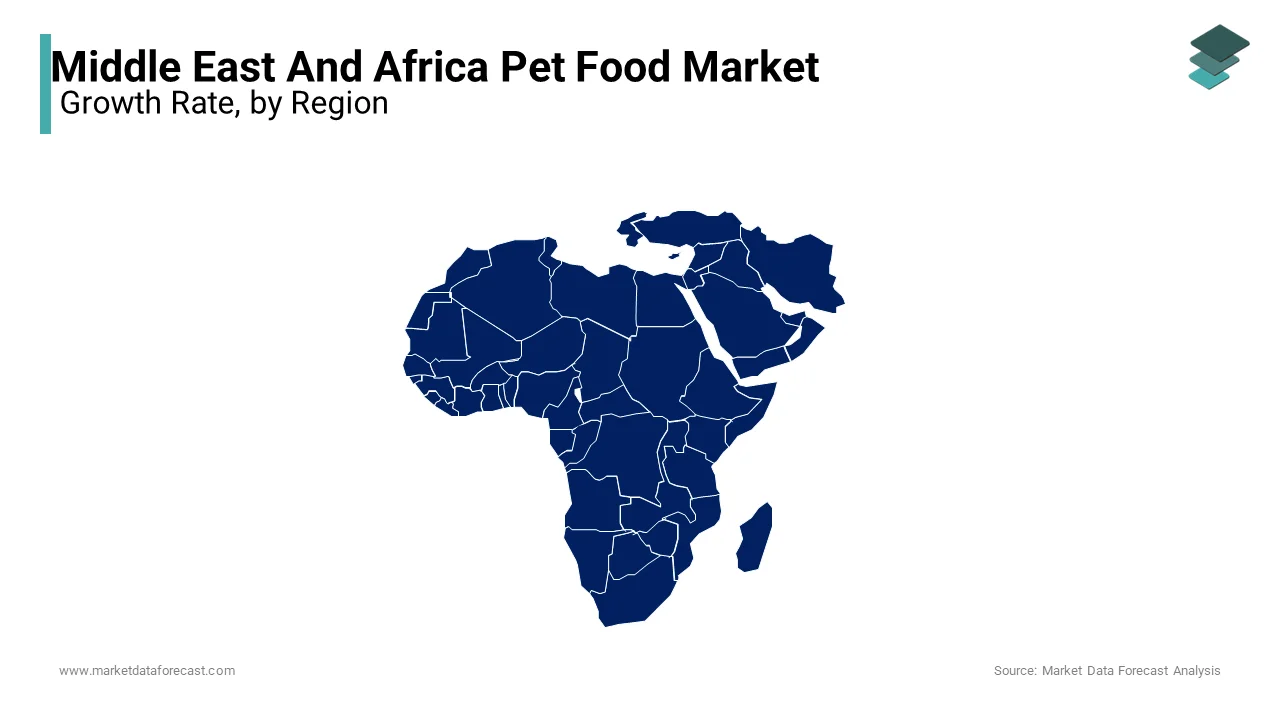
| By Country / Region | United Arab Emirates & South Africa (major regional market leaders in affluence, pet care standards, and manufacturing) | Saudi Arabia (fastest-growing regional market driven by progressive lifestyle shifts, youth adoption, and pet cafes) |
Major Industry Players Profiled
Key enterprises shaping the Middle East and Africa pet food market include Nestlé Purina PetCare, Mars, Inc., Agthia Group, Hill's Pet Nutrition, Armitage Pet Care, Ainawi Group, United Petfood, Provimi Animal Nutrition, Eurovets Veterinary Suppliers, and Vet Products Group.
Middle East and Africa Pet Food Market Size
The Middle East and Africa pet food market was valued at USD 5.87 billion in 2025 and is anticipated to reach USD 6.12 billion in 2026 from USD 8.59 billion by 2034, growing at a compound annual growth rate (CAGR) of 4.32% during the forecast period from 2026 to 2034.
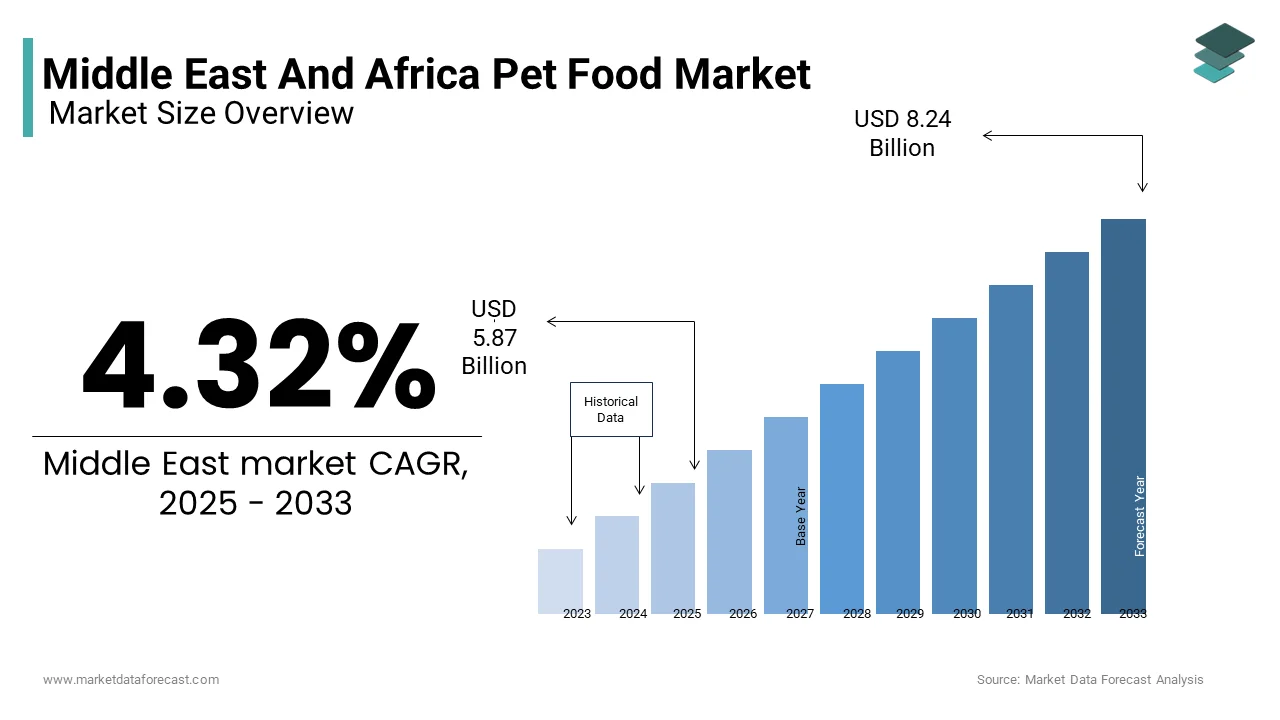
The Middle East and African region exhibits a unique demographic landscape with a rapidly growing youth population that influences consumption patterns toward premium and specialized pet nutrition. Urbanization rates in key economies, such as Saudi Arabia and the United Arab Emirates, have surged, with the United Nations Department of Economic and Social Affairs stating that approximately 83% of the population in the Gulf Cooperation Council countries resides in urban areas. This dense urban living facilitates greater access to retail channels and veterinary services, which are critical for pet ownership sustainability. Furthermore, the rise in disposable income among the middle class in nations like South Africa and Egypt has enabled higher spending on non-essential goods, including high-quality pet food. The cultural shift is also evident in the increasing number of pet-friendly establishments and services across major cities. As per Euromonitor International, the number of households owning pets in the Middle East has grown steadily over the last decade, reflecting a deeper emotional bond between owners and their animals. This evolving dynamic creates a robust foundation for market expansion, as consumers seek better health outcomes and longevity for their companions through superior dietary options.
MARKET DRIVERS
Rising Humanization of Pets Driving Premium Product Adoption
The profound emotional bond between pet owners and their companions has emerged as a major driver propelling the demand for high-quality and specialized pet food formulations across the Middle East and Africa. This phenomenon, known as pet humanization, leads owners to prioritize nutritional value, ingredient transparency, and health benefits in pet diets, mirroring their own dietary choices. In affluent markets, such as the United Arab Emirates and Qatar, consumers are increasingly willing to pay a premium for organic, grain-free, and functional pet foods that promise enhanced vitality and disease prevention. According to Statista, the expenditure on pet care services and products in Saudi Arabia has seen a consistent annual growth rate, reflecting this shift in consumer behavior. The trend is further amplified by the influence of social media, where pet influencers showcase luxurious lifestyles and premium diets, thereby setting new standards for pet care among the broader population. Veterinary associations in the region actively promote the importance of balanced nutrition, leading to a decline in the practice of feeding table scraps, which were traditionally common. As per the American Veterinary Medical Association, global trends indicate that owners who view pets as children are significantly more likely to purchase prescription diets and supplements. This behavioral change forces manufacturers to innovate and introduce products that cater to specific life stages and health conditions, thus driving volume and value growth in the premium segment of the market.
Urbanization and Expansion of Modern Retail Infrastructure
The rapid pace of urbanization, coupled with the extensive development of modern retail infrastructure is further contributing to the pet food market expansion in Middle East and Africa. As populations migrate from rural areas to urban centers, the dynamics of pet ownership change that necessitate convenient and reliable sources of pet nutrition. Major cities like Dubai, Riyadh, and Johannesburg have witnessed a proliferation of supermarkets, hypermarkets, and specialized pet stores that offer a wide variety of branded pet food options. According to the World Bank, the urban population in Sub-Saharan Africa is projected to double to 1.1 billion by 2050, which will significantly expand the consumer base for packaged goods, including pet food. The establishment of large shopping malls and retail complexes in the Gulf region has created dedicated spaces for pet care brands, enhancing visibility and consumer engagement. Furthermore, the growth of e-commerce platforms has bridged the gap for consumers in remote or underserved areas, allowing them to access premium international brands. As per Nielsen IQ, the penetration of modern trade in the fast-moving consumer goods sector in the Middle East has reached substantial levels, facilitating efficient distribution networks for pet food manufacturers. This retail evolution ensures that product availability is no longer a barrier, thereby encouraging trial and repeat purchases among new pet owners who rely on structured retail environments for their procurement needs.
MARKET RESTRAINTS
Limited Local Manufacturing Capabilities and Import Dependence
A significant restraint hindering the optimal growth of the Middle East and Africa Pet Food Market is the heavy reliance on imported products due to limited local manufacturing capabilities and supply chain vulnerabilities. Most countries in the region lack advanced production facilities for high-quality pet food, forcing retailers and distributors to source products from Europe, North America, and Asia. This dependence exposes the market to fluctuations in global raw material prices, currency exchange rate volatility, and logistical disruptions. According to the African Development Bank, import bills for food and agricultural products in Africa remain high, which directly impacts the affordability of premium pet food for the average consumer. Currency devaluations in nations such as Egypt and Nigeria have periodically led to sharp increases in the retail price of imported pet food, making it inaccessible for a large segment of the population. Additionally, the complex regulatory frameworks governing the importation of animal feed ingredients often result in delays at ports, further complicating supply chain efficiency. As per the Food and Agriculture Organization of the United Nations, the cost of importing feed ingredients has risen globally, affecting the competitiveness of local producers who attempt to enter the market. This structural dependency limits the ability of local companies to scale up and offer cost-effective alternatives, thereby constraining market penetration in price-sensitive segments and maintaining a high barrier to entry for new domestic players.
Cultural and Religious Perceptions Regarding Dogs
Deep-rooted cultural and religious perceptions, particularly concerning the keeping of dogs as indoor pets present a notable restraint to the widespread adoption of pet food in certain parts of the Middle East and Africa. In many Islamic communities, dogs are traditionally considered unclean for indoor living, which restricts their role to outdoor guarding or hunting, rather than companion animals residing within the household. This cultural nuance significantly limits the potential market size for dog food, compared to cat food or other small animal nutrition. While attitudes are gradually shifting in cosmopolitan cities, a substantial portion of the population still adheres to traditional views, which dampens the demand for specialized canine nutrition. According to Pew Research Center, religious beliefs play a central role in daily life across the Middle East, influencing consumer choices and lifestyle practices, including pet ownership. Consequently, the market for dog food remains niche and concentrated among expatriate communities and secular urban elites, rather than achieving mass-market status. This cultural barrier requires manufacturers to invest heavily in educational campaigns to reframe the narrative around pet care, which is a slow and resource-intensive process. As per regional sociological studies, the stigma associated with keeping dogs indoors persists in rural and conservative areas, thereby restricting the geographic expansion of the dog food segment and limiting overall market volume growth in these demographics.
MARKET OPPORTUNITIES
Expansion of E-Commerce and Digital Pet Care Platforms
The rapid expansion of e-commerce and digital pet care platforms presents a lucrative opportunity for market players to reach a broader and more engaged customer base across the Middle East and Africa. The digital transformation in the region has accelerated with increasing internet penetration and smartphone usage, enabling consumers to explore and purchase pet products online with ease. Online retailers offer a wider assortment of products, including niche and premium brands that may not be available in physical stores, thus catering to the diverse needs of pet owners. According to Datareportal, internet user growth in Africa has been among the highest globally, with millions of new users coming online each year, creating a vast digital marketplace. Subscription-based models for pet food delivery are gaining traction, as they provide convenience and ensure a consistent supply, which appeals to busy urban professionals. Furthermore, digital platforms facilitate the dissemination of educational content regarding pet nutrition and health, fostering a more informed consumer base that is likely to invest in higher quality products. As per McKinsey and Company, the e-commerce sector in the Middle East is expected to continue its robust growth trajectory, driven by improved logistics and payment systems. This digital ecosystem allows brands to engage directly with consumers through targeted marketing and personalized recommendations, thereby enhancing customer loyalty and driving repeat purchases in a competitive landscape.
Growing Demand for Natural and Organic Pet Nutrition
The escalating consumer preference for natural and organic pet nutrition offers a significant opportunity for manufacturers to differentiate their offerings and capture value in the Middle East and Africa Pet Food Market. Health-conscious pet owners are increasingly scrutinizing ingredient lists and seeking products free from artificial additives, preservatives, and fillers, mirroring the global clean-label trend. This shift is driven by a greater awareness of the link between diet and pet health, including issues such as obesity, allergies, and digestive disorders. In markets like South Africa and the United Arab Emirates, there is a rising demand for locally sourced and sustainably produced ingredients, which resonate with consumers who prioritize environmental responsibility. According to Mintel, global launches of pet food products with natural claims have increased substantially, indicating a strong consumer appetite for transparency and purity. Local manufacturers have the opportunity to leverage indigenous ingredients, such as camel meat or fish, which are perceived as novel and healthy alternatives in the region. As per the Organic Trade Association, the global organic pet food market is expanding rapidly, and this trend is beginning to take hold in emerging markets where disposable incomes are rising. By focusing on natural formulations, brands can command higher price points and build trust with consumers who are willing to pay a premium for products that align with their values and health expectations for their pets.
MARKET CHALLENGES
Supply Chain Instability and Logistical Bottlenecks
Persistent supply chain instability and logistical bottlenecks is a major challenge to the consistent availability and affordability of pet food in the Middle East and Africa. The region faces infrastructural deficits in transportation and storage, which can lead to spoilage and delays in the distribution of perishable pet food products. Political instability in certain areas further exacerbates these issues, by disrupting trade routes and increasing security costs for logistics providers. According to the World Bank Logistics Performance Index, many countries in Africa score low in terms of customs efficiency and infrastructure quality, which hinders the smooth flow of goods. The reliance on long-distance imports means that any disruption in global shipping, such as port congestions or fuel price spikes, has an immediate and amplified impact on local markets. Additionally, the lack of cold-chain infrastructure in many parts of the region limits the ability to distribute fresh or frozen pet food products, thereby restricting product variety. As per the International Monetary Fund, inflationary pressures driven by supply chain constraints have eroded purchasing power in several African nations, making it difficult for consumers to maintain consistent spending on pet care. These logistical challenges require companies to invest heavily in localized warehousing and alternative distribution networks that increases operational costs and reduces profit margins, thereby threatening the sustainability of market operations in less developed areas.
Price Sensitivity and Economic Volatility
High price sensitivity, coupled with economic volatility, represents a critical challenge that constrains the growth of the premium pet food segment in the Middle East and Africa. A significant portion of the population in these regions operates within limited budget constraints, where pet food is often viewed as a discretionary expense that can be reduced during economic downturns. Fluctuating currency values and high inflation rates in countries such as Argentina, Turkey, and various African nations erode real incomes, forcing consumers to trade down to cheaper alternatives or homemade diets. According to the International Labour Organization, unemployment rates in parts of North Africa and the Middle East remain elevated, which further limits household spending power. This economic pressure makes it difficult for premium brands to maintain market share, as consumers prioritize basic necessities over high-end pet nutrition. Additionally, the presence of informal markets selling unbranded or bulk pet food at lower prices creates intense competition for formal retail channels. As per the African Economic Outlook, economic shocks often lead to a contraction in consumer spending on non-essential items, including premium pet care products. Manufacturers must navigate this delicate balance by offering value-oriented packs or introducing mid-tier ranges that cater to budget-conscious consumers, without compromising on quality, thereby ensuring accessibility in a financially volatile environment.
REPORT COVERAGE
| REPORT METRIC | DETAILS |
| Market Size Available | 2025 to 2034 |
| Base Year | 2025 |
| Forecast Period | 2026 to 2034 |
| CAGR | 4.32% |
| Segments Covered | By Animal, Ingredient, For,m, and Country |
| Various Analyses Covered | Global, Regional, and country-level analysis; Segment-Level Analysis, DROC, PESTLE Analysis, Porter’s Five Forces Analysis, Competitive Landscape, Analyst Overview of Investment Opportunities |
| Country's Covered | South America, UAE, Egypt, Nigeria, Kenya, Dubai, Rest Of GCC, Ethiopia, and Rest Of MEA |
| Market Leaders Profiled | Nestlé Purina Pet Care, Mars, Inc., Agthia Group, Hill's Pet Nutrition, Armitage Pet Care, Ainawi Group, United Petfood, Provimi Animal Nutrition, Eurovets Veterinary Suppliers, and Vet Products Group. |
SEGMENTAL ANALYSIS
By Animal Insights
The dog food segment accounted for the largest share of the Middle East and African pet food market in 2025 due to a profound cultural shift in urban centers, where dogs are increasingly accepted as companion animals rather than solely working or guard animals. This transformation is most evident in cosmopolitan hubs, such as Dubai, Abu Dhabi, and Riyadh, where expatriate communities and affluent locals drive demand for premium canine nutrition. The proliferation of dog parks, veterinary clinics, and pet-friendly housing complexes has normalized dog ownership within household settings. As per Euromonitor International, the number of dog-owning households in the United Arab Emirates has increased by double digits over the past five years, reflecting this societal change. Furthermore, the rise of social media influencers focusing on canine care has created an aspirational lifestyle around dog ownership, encouraging consumers to invest in high-quality diets. As per the American Veterinary Medical Association, global data indicates that dog owners spend significantly more on food and treats compared to owners of other pet types, due to the larger size and higher caloric needs of dogs. This spending behavior translates directly into market dominance for the dog food segment. Additionally, the availability of specialized breeds in the region that often require specific nutritional formulations, further cements the leading position of this segment, as manufacturers tailor products to meet these diverse physiological requirements.
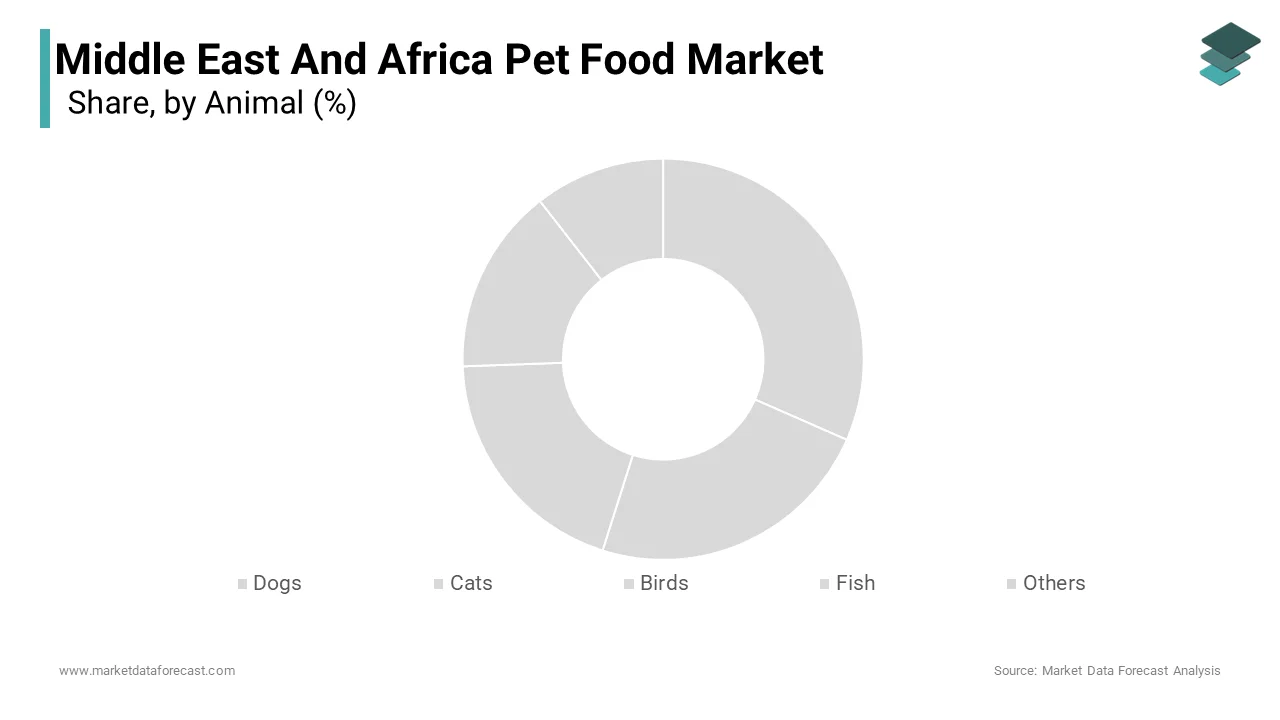
The cat food segment is emerging as the fastest growing category in the Middle East and Africa pet food market and is predicted to record a CAGR of 7.2% during the forecast period owing to the suitability of cats for apartment living in rapidly urbanizing regions. As cities like Cairo, Lagos, and Johannesburg experience vertical growth in residential structures, space constraints make dogs less practical for many households, whereas cats thrive in smaller indoor environments. This demographic shift is supported by the busy lifestyles of young professionals, who prefer pets that require less active engagement and outdoor exercise. According to the United Nations Department of Economic and Social Affairs, urbanization in Africa is accelerating, with millions moving to cities annually, creating a dense population of potential cat owners. The low-maintenance nature of cats aligns perfectly with the time-poor yet income-rich demographic in Gulf countries, where long working hours are common. As per Nielsen IQ, sales data indicates a sharper year-on-year increase in cat food purchases compared to other segments in urban retail outlets. Furthermore, the cultural acceptance of cats in Islamic traditions, where they are considered clean and permissible indoors, removes any religious barriers to ownership, thus facilitating unrestricted market growth. This combination of urban density, lifestyle compatibility, and cultural affinity propels the cat food segment to the forefront of market expansion.
By Ingredient Insights
The animal derivatives segment held the largest share of the Middle East and Africa pet food market in 2025 due to the biological necessity of high-protein diets for carnivorous pets, particularly cats and dogs. Consumers in the region prioritize palatability and nutritional completeness, which animal-based ingredients, such as chicken, beef, and fish meal, provide effectively. The strong preference for meat-based flavors is deeply ingrained in consumer perception, where quality is often equated with real meat content. According to the Food and Agriculture Organization of the United Nations, the consumption of meat in the Middle East has risen steadily, influencing pet food formulations to mirror human dietary preferences for animal protein. This alignment ensures higher acceptance rates among pets, reducing food waste and encouraging repeat purchases. As per Euromonitor International, products listing chicken or lamb as the primary ingredient dominate shelf space in major retailers across the Gulf Cooperation Council countries. The availability of local livestock industries in nations like Saudi Arabia and South Africa also supports the supply chain for these ingredients, making them cost-effective and accessible. Furthermore, the perception that animal derivatives offer superior amino acid profiles, essential for muscle development and immune function, reinforces their dominance. Manufacturers leverage this consumer trust by highlighting meat content on packaging, thereby securing the leading position of this ingredient segment in the market.
On the other side, the plant derivatives segment is witnessing the fastest growth in the Middle East and Africa pet food market and is predicted to grow at a CAGR of 8.4% during the forecast period owing to the rising need for cost-efficient solutions in price-sensitive markets. As economic volatility affects disposable incomes in many African and Middle Eastern nations, consumers are increasingly seeking affordable pet food options that do not compromise on basic nutritional needs. Ingredients such as corn, wheat, rice, and soy provide a cheaper alternative to animal proteins, while still offering essential carbohydrates and fibers. According to the World Bank, inflation rates in several Sub-Saharan African countries have prompted households to optimize spending on non-essential goods, including pet care, leading to a shift toward value-oriented products. Plant-based formulations allow manufacturers to lower production costs and pass these savings to consumers, thereby expanding market reach. As per Statista, the sales volume of mid-tier and economy pet foods containing significant plant derivative content has outpaced premium segments in regions like Egypt and Nigeria. Furthermore, the abundance of agricultural produce in the region ensures a reliable supply of plant ingredients, reducing logistical costs. This economic imperative drives the rapid adoption of plant-derived pet foods, making it the fastest growing segment as manufacturers innovate to improve the nutritional profile of these cost-effective formulations.
By Form Insights
The dry food segment held the leading position in the Middle East and Africa Pet Food Market by holding the leading share of the regional market in 2025 due to its unparalleled convenience and shelf stability, which are critical in regions characterized by hot climates and varying infrastructure. The low moisture content of dry kibble prevents spoilage and bacterial growth, even in high temperatures, making it ideal for storage in households without consistent refrigeration. This practical advantage ensures that pet owners can buy in bulk and store food for extended periods, reducing shopping frequency and effort. According to the World Health Organization, food safety concerns in warm climates drive a preference for processed and preserved food items, including pet food, which minimizes health risks. The ease of serving dry food also appeals to busy urban professionals, who prioritize efficiency in daily routines. As per Nielsen IQ, dry food accounts for the majority of pet food sales volume in the region, due to its accessibility and ease of distribution through both modern and traditional retail channels. Furthermore, the lower shipping weight, compared to wet food, reduces logistics costs, enabling wider distribution to remote areas. This combination of thermal stability, logistical efficiency, and user convenience cements the dominance of dry food in the market, ensuring it remains the primary choice for the majority of pet owners across the Middle East and Africa.
On the other side, the wet or canned food segment is projected to witness a CAGR of 8.4% during the forecast period in the regional market owing to the premiumization and humanization trends that emphasize superior taste and hydration. As pet owners increasingly view their animals as family members, they are willing to invest in higher quality meals that mimic human food in texture and appearance. Wet food is perceived as more appetizing and luxurious, offering a variety of flavors and textures that enhance the dining experience for pets. According to Mintel, the launch of gourmet wet food products featuring real meat chunks and gravies has surged in the region, reflecting this demand for indulgence. The high moisture content of wet food also addresses health concerns related to hydration, particularly for cats, who are prone to urinary issues. As per the American Veterinary Medical Association, veterinarians often recommend wet food to increase water intake and support kidney health, which educates consumers on its benefits. This health-conscious approach, combined with the desire to pamper pets, drives the rapid adoption of wet food. Furthermore, the availability of single-serve pouches and cans facilitates trial and reduces waste, appealing to owners who want to provide fresh meals daily. These factors collectively propel the wet food segment to the fastest growth trajectory in the market.
COUNTRY LEVEL ANALYSIS
United Arab Emirates Pet Food Market Analysis
The United Arab Emirates led the market in 2025 and is expected to maintain its exceptional leadership in the regional pet food sector over the next few years, fueled by a high concentration of affluent urban households and specialized retail development. The country boasts one of the highest pet ownership rates in the region, particularly among expatriate communities who bring diverse pet care habits and preferences. According to the United Nations Department of Economic and Social Affairs, the UAE has an urbanization rate of nearly 100%, which facilitates the concentration of pet services and retail outlets in cities like Dubai and Abu Dhabi. The government’s supportive stance on pet-friendly initiatives, including dedicated beaches and parks, has further encouraged ownership. As per Euromonitor International, the UAE pet care market is valued at hundreds of millions of dollars, with pet food constituting the largest share, driven by demand for imported premium brands. The presence of international pet food manufacturers and distributors ensures a wide variety of choices, ranging from grain-free to veterinary diets. Furthermore, the high penetration of e-commerce platforms allows residents to access niche products easily. The cultural diversity of the population means that trends from Europe and North America are quickly adopted, creating a dynamic and fast-evolving market. This combination of wealth, infrastructure, and cultural openness positions the UAE as a key growth engine for the regional pet food industry.
South Africa Pet Food Market Analysis
South Africa is projected to show highly stable market maturation over the next few years, relying on well-integrated domestic supply loops and a long-standing companion animal ownership culture. The country has a long history of pet care regulation and veterinary services, which supports a robust demand for high-quality nutritional products. According to Statistics South Africa, household expenditure on recreational and cultural services, which includes pet care, has shown resilience despite economic fluctuations, indicating the prioritization of pet welfare. The retail sector in South Africa is highly developed, with major supermarket chains offering extensive pet food aisles featuring both local and international brands. As per the Pet Food Institute of Southern Africa, the local manufacturing capacity is significant, allowing for competitive pricing and consistent supply. The trend toward premiumization is evident, as owners increasingly seek natural and organic options for their pets. Additionally, the rise of independent pet specialty stores has created niches for specialized diets and holistic products. The legal framework protecting animal rights also encourages responsible ownership and spending on proper nutrition. With a large population of dog and cat owners, South Africa continues to dominate the African segment of the market, serving as a benchmark for industry standards and consumer behavior on the continent.
Saudi Arabia Pet Food Market Analysis
Saudi Arabia is poised to register explosive growth in pet industry expenditures over the next few years, stimulated by progressive lifestyle shifts and new commercial pet care establishments. The kingdom is witnessing a cultural transformation, where pet ownership is becoming more mainstream and socially accepted, particularly among the youth and female demographics. According to the General Authority for Statistics, the population of Saudi Arabia is young and increasingly urbanized, creating a fertile ground for pet care consumption. The government’s investment in entertainment and lifestyle sectors has led to the opening of pet cafes, stores, and veterinary hospitals, which normalize pet ownership. As per Statista, spending on pet care in Saudi Arabia is rising rapidly, with a notable shift toward premium and imported brands. The e-commerce sector is also booming, allowing consumers in remote areas to access a wide range of pet food products. Religious interpretations are becoming more nuanced, with scholars emphasizing kindness to animals, which supports the ethical aspect of pet care. The establishment of local manufacturing facilities is also being encouraged to reduce import dependence. These socio-economic dynamics position Saudi Arabia as a key driver of future growth in the regional pet food market, with significant potential for expansion in both volume and value.
COMPETITIVE LANDSCAPE
The competitive landscape of the Middle East and Africa Pet Food Market is characterized by a mix of established multinational corporations and agile regional players vying for dominance in a rapidly evolving sector. Global giants leverage their extensive research and development capabilities to introduce innovative and premium products that appeal to the growing affluent class in Gulf nations. These companies benefit from strong brand recognition and established distribution networks that span across multiple countries. However local manufacturers are gaining ground by offering cost effective alternatives that cater to price sensitive consumers in African markets. The competition is intensifying as businesses focus on differentiating through niche offerings such as organic grain free and functional foods. Digital transformation has also leveled the playing field allowing smaller brands to reach consumers directly through online platforms. Regulatory variations across countries add complexity requiring companies to adapt their strategies to comply with local standards. Overall the market remains dynamic with continuous entry of new products and strategic collaborations shaping the competitive hierarchy and driving overall industry advancement.
KEY MARKET PLAYERS
A few of the market players in the Middle East and Africa pet food market include
- Nestlé Purina PetCare
- Mars, Inc
- Agthia Group
- Hill's Pet Nutrition
- Armitage Pet Care
- Ainawi Group
- United Petfood
- Provimi Animal Nutrition
- Eurovets Veterinary Suppliers
- Vet Products Group
Top Players In The Market
- Nestlé Purina PetCare maintains a dominant presence in the Middle East and Africa through its extensive portfolio of globally recognized brands such as Pro Plan and Friskies. The company leverages its robust distribution networks to ensure widespread availability across both modern retail and traditional trade channels. Recent initiatives include the launch of specialized veterinary diets tailored to regional health concerns affecting pets in hot climates. Nestlé actively engages in consumer education campaigns via digital platforms to promote responsible pet ownership and nutritional awareness. Their investment in local manufacturing facilities in South Africa enhances supply chain resilience and reduces dependency on imports. By focusing on premiumization and product innovation the company continues to strengthen its brand loyalty among affluent urban consumers who prioritize high quality nutrition for their companion animals.
- Mars Petcare significantly influences the regional market with its strong lineup of premium brands including Royal Canin and Pedigree. The company focuses on scientific nutrition and personalized pet care solutions which resonate well with the growing segment of health conscious pet owners in the Gulf countries. Mars has recently expanded its e commerce capabilities by partnering with leading online retailers to improve accessibility and convenience for customers. They also invest heavily in veterinary partnerships to recommend prescription diets thereby building trust and credibility. Their commitment to sustainability is evident in initiatives aimed at reducing environmental impact through responsible sourcing and packaging innovations. These strategic moves help Mars maintain a competitive edge and deepen its engagement with diverse consumer bases across the Middle East and Africa.
- Agthia Group PJSC stands out as a key regional player with its strong foothold in the United Arab Emirates and surrounding Gulf markets. The company distributes and manufactures a variety of pet food products under licensed international brands as well as its own local labels. Agthia focuses on adapting global standards to local preferences ensuring that products meet the specific dietary needs of pets in the region. Recent efforts include expanding its retail footprint through strategic alliances with major supermarket chains and pet specialty stores. The group also emphasizes corporate social responsibility by supporting animal welfare organizations which enhances its brand image. By leveraging its deep understanding of local market dynamics and regulatory frameworks Agthia effectively competes with multinational corporations and strengthens its position as a trusted provider of pet nutrition in the Middle East.
Top Strategies Used By Key Market Participants
Key players in the Middle East and Africa Pet Food Market primarily employ product localization and premiumization strategies to capture diverse consumer segments. Companies are increasingly formulating products that cater to local tastes and cultural preferences such as halal certified ingredients or regionally sourced proteins. This approach helps build trust and relevance among local populations. Another major strategy involves expanding digital presence and e commerce capabilities to reach tech savvy consumers who prefer online shopping for convenience and wider selection. Brands are investing in targeted digital marketing campaigns and social media engagement to educate owners and drive brand loyalty. Strategic partnerships with veterinary clinics and pet care service providers are also common enabling companies to recommend specialized diets and gain professional endorsement. Additionally firms are focusing on supply chain optimization by establishing local manufacturing units to reduce costs and mitigate import related risks. These multifaceted strategies allow participants to navigate economic volatility and cultural nuances while sustaining growth in this emerging market landscape.
MARKET SEGMENTATION
The market research report on the Middle East Africa pet food market is segmented and sub-segmented into the following categories.
By Animal
- Dogs
- Cats
- Birds
- Fish
- Others
By Ingredient
- Animal derivatives
- Plant derivatives
- Vitamins & Minerals
- Others
By Form
- Dry
- Wet/Canned
By Country
- South Africa
- United Arab Emirates
- Egypt
- Nigeria
- Kenya
- Dubai
- Rest of GCC
- Rest of MEA